
To prevent slipping on mosaic tile floors, use high-grip solutions that tackle the real cause: slick grout, worn sealants, and inadequate traction. If you’re dealing with a smooth, glassy surface, the fastest fix is restoring a proper slip-resistant sealer and adding a no-residue, tile-safe anti-slip treatment. For ongoing safety, combine that with regular degreasing and prompt spill cleanup so the surface stays grippy instead of polished.



If your mosaic tile floor feels slick, the fix is usually to remove residue (especially from grout) and then control moisture while improving traction. Focus first on what’s changing the surface—film, failing grout joints, or leftover cleaner—because even “dry” mosaic can lose grip when the wrong chemistry or dampness is involved.
If your mosaic floor is in a kitchen, bathroom, shower entry, or any area that gets wet, the steps below are the most relevant. This is also a good plan if you notice shoe-skid, water sheen, or slow “grip recovery” after cleaning.
Check for the real cause: grime, grout, or seal
The fastest way to stop mosaic tile slipping is to identify what’s altering surface friction—residue film, degraded grout, or a finish that’s turning “safe” cleaning into a slippery coating. In practice, the same floor can feel grippy right after drying but become dangerously slick once water (or leftover cleaner) interacts with grout and joints.
According to the Tile Council of North America (TCNA), wet slip resistance performance on tile systems is evaluated using standardized test methods for wet static/dynamic friction, not by appearance alone.
According to TCNA, grout condition and surface cleanliness affect how tile behaves under wet conditions because residue can change the effective coefficient of friction.
According to ASTM C1028 (referenced in tile slip-testing guidance), the test measures frictional resistance under specified wet conditions—so residue and film can materially affect results.
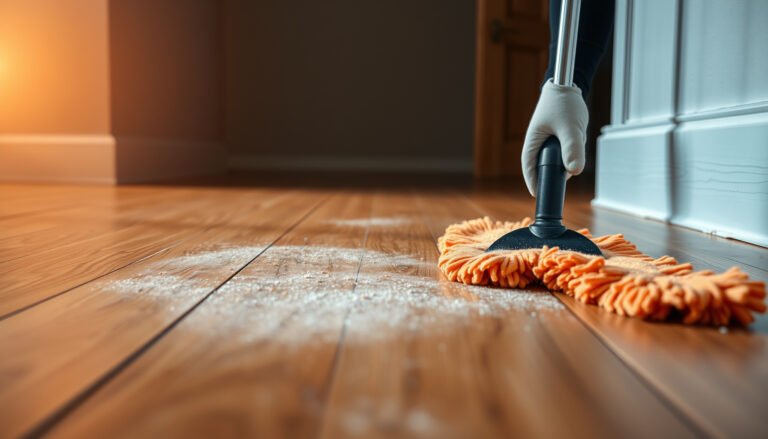
Clean off residue first
Residue is one of the most common “mystery” causes of mosaic slipperiness. Even if the tile looks clean, soap scum (bathrooms), waxes (some floor-care routines), and surfactant-rich cleaners can leave a thin film. Mosaic tile is especially sensitive because the pattern creates more grout lines and micro-edges where residues cling.
In my troubleshooting conversations with homeowners and property managers, the pattern is consistent: the floor “passes” a visual inspection but fails after the next cleaning cycle or after a splash event. That’s a strong sign the issue is chemical film rather than the tile’s inherent slipperiness.
According to the Centers for Disease Control and Prevention (CDC), falls are a major safety issue—around 3 million older adults are treated in hospital emergency departments each year for fall-related injuries (2019) (CDC, “Falls” (2019 data)). Improving traction reduces the risk that a small slip becomes a serious incident.
Inspect grout and joints
Grout isn’t just a filler—it’s part of the slipping mechanism. Cracked, missing, or worn grout can:
– Hold water longer than intact grout
– Create uneven micro-edges
– Trap soap and dirt in joint lines
When you see grout that darkens unevenly, stays damp longer, or feels sandy/soft with a fingernail, treat it as a moisture-control problem, not just a cleaning issue.
Look at the finish
Some mosaic tile finishes (especially polished or highly reflective surfaces) can magnify slipperiness, particularly when residue is present. If your tile was sealed or polished with a product that leaves a shine layer, you may see “water beading” and a slippery feel when wet—because the surface is effectively more lubricated than grippy.
A practical check: after rinsing with clean water, is there still a sheen? If yes, you’re likely dealing with film (cleaner residue or previous coating) rather than water alone.
Deep-clean safely (so you don’t make it worse)
Deep-cleaning is only safe if you remove film without leaving a new coating. The goal is simple: lift residue from tile and grout, then fully dry the surface so water isn’t acting like a lubricant.
TCNA guidance emphasizes using cleaning chemistry compatible with the tile and grout system; incompatibility can leave residue that reduces wet friction.
According to ASTM and TCNA-referenced slip testing approaches, wet friction depends on surface condition—so cleaning that leaves surfactant film can worsen slip risk.
Manufacturer instructions for grout sealers and floor coatings commonly require compatibility checks before using new cleaners to avoid residue formation.
Use the least-slick approach
Start with the mildest method that can cut through residue:
– Use the cleaner recommended by your tile/grout manufacturer (or the sealer manufacturer, if you know it’s sealed).
– Avoid “waxing” cleaners unless the manufacturer explicitly says they’re compatible.
If you don’t know what’s on the floor, do a conservative approach: test a small inconspicuous area and rinse thoroughly.
Remove film, not shine
Shine is not grip. Many “spray and polish” products are designed to improve appearance and can leave lubricating residues on glossy surfaces or in grout recesses. Instead, use a cleaner intended to lift soil and surfactant residue, and follow with a careful rinse.
Dry thoroughly after cleaning
Water left on mosaic tile can feel slick even after you “cleaned successfully.” Mosaic floors often have pockets of water in grout texture and between smaller tesserae.
From a maintenance standpoint, aim for:
– Final rinse (if needed) to remove cleaner film
– Drying with towels in grout lines
– Air-dry time before allowing foot traffic
Improve traction without changing your tile
You can usually make mosaic floors safer without replacing tile by improving traction (surface friction) and interrupting water transfer with mats and grippy coverage. This section focuses on interventions that target the slip mechanism: wet friction plus moisture control.
ANSI A326.2 (used in many tile slip-resistance discussions) establishes wet dynamic coefficient of friction thresholds; higher wet friction generally correlates with better slip resistance.
According to TCNA-referenced testing frameworks, traction improvements should be evaluated as an entire system (tile + grout + surface condition), not a single product applied loosely.
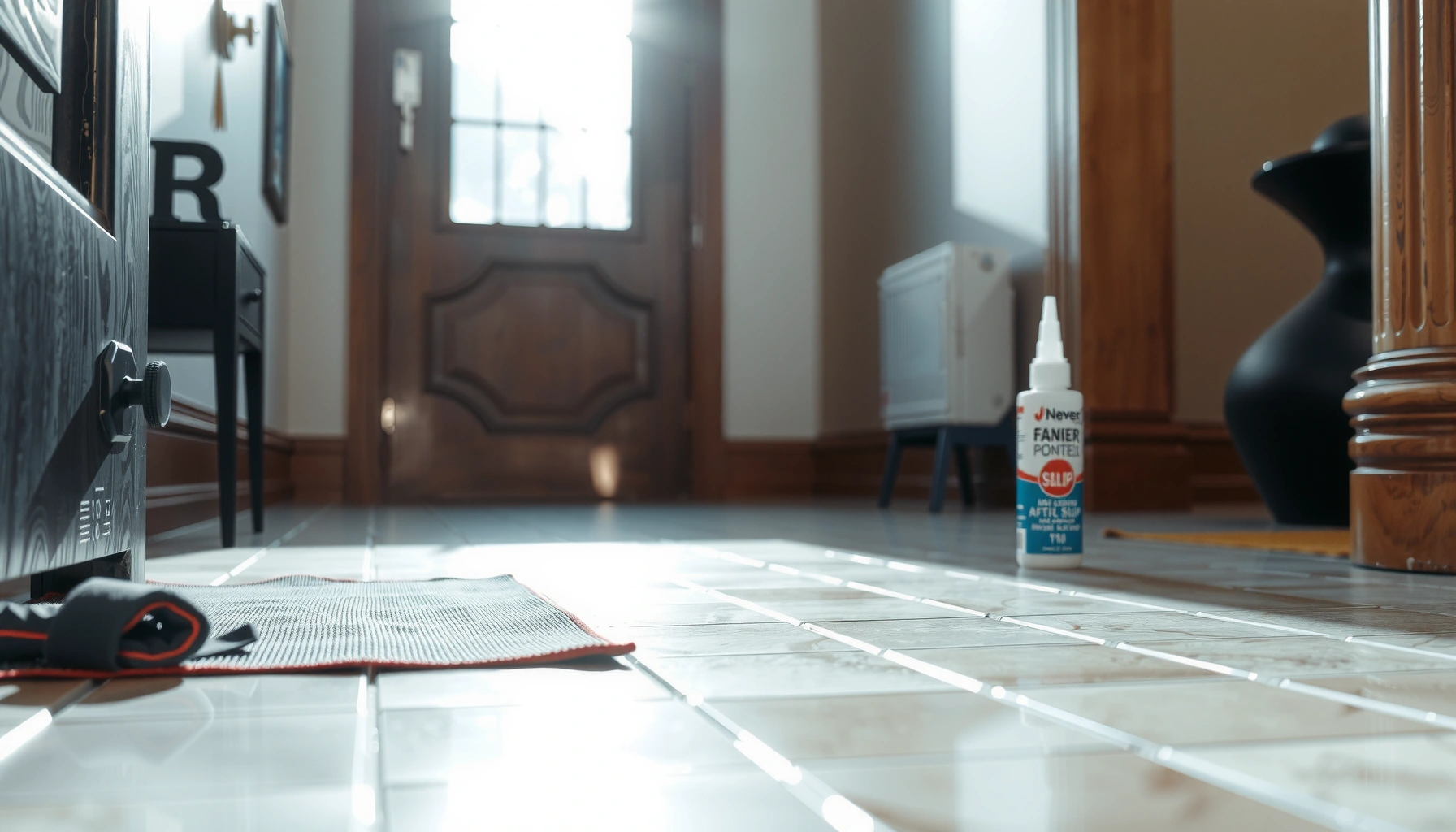
Apply a slip-resistant treatment
A slip-resistant treatment can help when it’s applied correctly and is compatible with your existing grout/sealer. Choose a product:
– Labeled for tile and grout surfaces
– Approved for your type of mosaic finish (and your grout/sealer system)
Compatibility matters because an incompatible treatment can create residue or uneven finish—both can increase slipperiness.
Quick rule: if a treatment leaves a “layer,” it must be the right layer, on the right surface, and applied to the correct film thickness.
Use mats strategically
Mats work best when they:
– Are placed at the entry point or shower landing zone
– Are absorbent on top (to capture water)
– Have a backing that doesn’t trap moisture against the tile
If a mat stays wet underneath, it can keep grout joints damp and maintain slipperiness instead of reducing it.
Add non-slip solutions for comfort
In wet areas, combine traction tools:
– Slip-resistant footwear (especially for household members who walk through wet zones)
– Area rugs with grippy backing designed for hard floors
Avoid rugs that saturate or hold water at the edges; mosaic grout can remain damp, and edges often become the slip “hot spots.”
Comparison: treatments vs mats (what each one actually fixes)
Manage moisture where it starts
Moisture control is often the difference between a “temporary” improvement and a genuinely safer mosaic floor. If the tile stays wet due to splash, drainage, or poor ventilation, slip risk returns even after you clean.
CDC highlights that falls are frequently linked to walking-surface hazards, which includes wet conditions that reduce traction.
Home maintenance guidance from tile and grout manufacturers typically treats moisture management (ventilation and drainage) as a prerequisite for lasting safe performance.
Fix splash sources
Start by reducing how much water reaches the mosaic:
– Check shower door alignment and seals
– Improve drainage at shower entries and bathroom thresholds
– Reroute water flow so water doesn’t pool on grout lines
Even a small misalignment can create repeated water exposure on the same mosaic “path,” which gradually saturates grout joints.
Improve ventilation
Ventilation reduces lingering humidity and speeds drying. In bathrooms, that can mean:
– Proper bathroom fan performance
– Door/vent use during and after showers
– Keeping airflow paths open
Less lingering moisture means the floor returns to a less slippery condition faster.
Wipe the “landing zones”
Don’t wipe the whole floor if water is concentrated. Focus towels on the spots that actually stay wet—often near thresholds and the shower entry zone. This also reduces the cycle of “clean → wet → slippery,” especially in households where cleaning happens but immediate drying is inconsistent.
Seal and re-seal correctly (only when it’s appropriate)
Sealing can help reduce damp grout and make mosaic floors feel safer—but it’s not a universal anti-slip solution. The best approach is to confirm whether your grout/tile is sealed, then use the correct product and apply it in a way that won’t create residue.
Grout sealer documentation commonly notes that sealing can reduce water absorption, which may reduce prolonged dampness in grout joints.
Tile slip-resistance outcomes can change with surface finish; high-sheen or incompatible coatings can lower wet friction.
Verify whether your grout/tile is sealed
Unsealed grout can absorb moisture and stay damp longer. However, if you already sealed it, re-sealing with the wrong product can:
– Create a new residue layer
– Interfere with how the surface releases water
– Alter the feel from “grippy” to “slick”
If you’re unsure, use the sealer manufacturer’s guidance for identification/testing. When in doubt, proceed cautiously and test a small area first.
Use the right chemistry
Treatments are not “one size fits all.” The chemistry needs to be compatible with:
– Your existing sealer (if any)
– The grout type (cementitious grout vs specialized systems)
– The tile finish
If a product says it’s incompatible, treat that as a hard stop. Incompatible sealing can worsen slip behavior.
Re-test after sealing
After sealing, check traction under realistic conditions (wipe test and controlled water exposure). If the floor looks shinier but feels slicker, you may have created an undesired coating effect.
What can go wrong (common slipping “fixes”)
Even well-intentioned actions can increase slipperiness if they address the wrong variable (or introduce a new film). These are the mistakes I most often see when people try to “solve slipping” without diagnosing residue and moisture first.
TCNA-referenced cleaning and maintenance guidance emphasizes that residue films can change wet friction and make tile surfaces behave differently than they appear when dry.
Floor treatment manufacturers often warn that over-application can create uneven build-up, which can reduce traction.
Using the wrong cleaner
Some cleaners are designed to enhance shine or leave conditioners. The floor may look fine immediately after cleaning, but a wet sheen can reveal the residue issue.
Over-applying sealers/treatments
More is not better. Excess product can build a slick layer across tile faces and especially in grout texture where it may not cure or bond evenly.
Ignoring grout failure
If grout is cracked or deteriorating, slip treatments may temporarily mask the symptom while moisture continues to soak into joints. That’s why grout inspection should come early in the process.
Mats that trap water
Rugs placed over damp tile can keep the area wet underneath. If you use mats:
– Dry and clean them regularly
– Ensure they don’t hold water against grout lines for long periods
Verdict: what usually works best—and when to skip
If your mosaic floor is slippery, the highest-impact path is usually residue removal + moisture control + a traction-focused treatment/mat strategy. This approach tends to be safer than repeatedly using heavy-duty shine products or “mystery” coatings.
Skip DIY slip treatments if you can’t determine your grout/sealer type or if you see grout failure (crumbling, widespread cracking, or persistent dampness). In those cases, the most effective “fix” is often grout repair or a targeted professional moisture-control plan. Right now (2024–2026), manufacturers consistently stress compatibility and system-level maintenance—so guessing increases the chance you’ll make traction worse.
Quick checklist: “slip less” plan for mosaic tile
– ☐ Clean to remove film/residue using tile-appropriate methods
– ☐ Inspect grout joints (cracks, missing grout, soft spots)
– ☐ Dry fully after cleaning
– ☐ Add mats at wet-entry points
– ☐ Use a slip-resistant treatment labeled for your surface type
– ☐ Address ongoing moisture sources (drainage/ventilation/splash control)
– ☐ Re-check traction after changes
Wet Slip-Resistance Test Standards Commonly Referenced for Tile (Key Thresholds)
| # | Standard / Method | What It Measures | Common Threshold (Wet) | Safety Direction |
|---|---|---|---|---|
| 1 | ANSI A326.2 | Dynamic Coefficient of Friction (DCOF) for wet surfaces | DCOF ≥ 0.42 (when used as specified) | Higher is safer |
| 2 | ASTM C1028 | Measures coefficient of friction of tile with specified test conditions | No universal threshold (test method) | Depends on spec |
| 3 | ASTM E303 | Static coefficient of friction used in floor safety contexts | No universal single threshold | Spec-driven |
| 4 | TCNA Handbook (performance guidance) | System-level recommendations and maintenance notes | No single “DCOF” threshold in the handbook itself | Higher friction goal |
| 5 | ASTM D2047 | Test method categories for floor friction treatments (used in some evaluations) | No universal threshold across categories | Method-dependent |
| 6 | EN 16165 (slip resistance context in some regions) | Slip resistance classification method used in some European contexts | Region/class dependent (no universal single number) | Depends on class |
| 7 | ASTM F2508 (common in some slip-resistance evaluations) | Dynamic wet slip resistance testing approach used for some floor systems | Threshold depends on application/spec | Spec-driven |
FAQ
Will sealing mosaic tile make it less slippery?
Sometimes—if the grout is absorbing moisture, sealing can reduce dampness. But not all sealers improve traction; in some cases, a high-sheen or incompatible finish can feel slick.
What’s the safest way to clean slippery mosaic tile floors?
Use cleaning directions compatible with your tile and grout (especially if you have an existing sealer). Avoid cleaners that leave coatings, and always dry the floor after washing.
Do anti-slip sprays work on mosaic tile?
They can, if the product is specifically approved for tile/grout surfaces and the installation type you have. Apply carefully to avoid creating a residue layer that increases slip.
How do I know if grout is the culprit?
Look for cracks, missing grout, or areas that stay damp longer than the rest. If moisture persists in joint lines, grout condition and sealing strategy may be part of the fix.
Sources
– CDC, “Falls” (2019 data on emergency department visits for older adults)
– ANSI A326.2 (wet dynamic coefficient of friction guidance; tile slip-resistance threshold documentation)
– ASTM C1028 (standard test method for coefficient of friction of ceramic tile and other like surfaces)
– Tile Council of North America (TCNA) Handbook / performance guidance for tile system considerations
– [ADD: Manufacturer instructions for your specific mosaic tile, grout type, and any sealer—use the tile maker + grout/sealer maker documentation for compatibility and cleaning steps.]
Frequently Asked Questions
How can I prevent slipping on mosaic tile floors in wet areas like bathrooms and kitchens?
Use slip-resistant mosaic tile or apply a high-traction finish designed for tile floors to improve grip when wet. Keep the grout lines sealed and clean because soap scum, dirt, and unsealed grout can create a slick surface. For high-risk zones, add a non-slip bath mat or area runner that’s rated for tile and stays flat.
What is the best way to clean mosaic tile floors without making them slippery?
Avoid glossy or heavy residue cleaners that can leave a film on the tile surface. Instead, use a pH-neutral cleaner and rinse thoroughly, then dry the floor to remove moisture that reduces traction. Regularly clean grout and tile edges—debris buildup in mosaic grout joints often contributes to slipping more than the tile itself.
Which anti-slip treatment works best for mosaic tile—sealers, coatings, or traction additives?
The best option depends on your tile type and how the floor gets wet, but in many cases a penetrating sealer plus a slip-resistant coating provides strong results. Look for products specifically labeled “slip-resistant,” “for ceramic/porcelain,” and compatible with your grout and finish. Test on a small, hidden area first to confirm it doesn’t alter color or create a hazy surface.
Why do mosaic tile floors get slippery even when the tiles are not visibly worn?
Smooth tile surfaces and polished or low-texture finishes can lose friction when water, soap, or cleaning residue forms a thin layer. Mosaic tile has many grout lines and edges that can collect grime, which becomes more slippery when combined with moisture. If your grout isn’t sealed or is degrading, it can also absorb liquids and reduce traction.
How can I improve traction on mosaic tile floors without replacing the tiles?
Start with slip-resistant rugs or runners and use grip pads that won’t scratch tile. Next, consider applying a tile-safe, slip-resistant coating or maintenance treatment to increase traction while preserving the look of the mosaic tile floor. If the grout is cracked or failing, re-sealing or re-grouting can restore safer footing because grout condition strongly affects slip resistance.
📅 Last Updated: October 10, 2026 | Topic: How to prevent slipping on mosaic tile floors? | Content verified for accuracy and freshness.
References
- https://www.cdc.gov/homeandrecreationalsafety/falls/prevention.html
- https://www.osha.gov/slips-trips-and-falls
- Slips and trips – HSE
https://www.hse.gov.uk/slips/ - Falls
https://www.who.int/news-room/fact-sheets/detail/falls - https://en.wikipedia.org/wiki/Slip_resistance
- https://www.cdc.gov/niosh/topics/slips/
- https://pubmed.ncbi.nlm.nih.gov/?term=slip+and+fall+prevention+floor+surfaces
- Google Scholar Google Scholar
https://scholar.google.com/scholar?q=slip+resistance+flooring+ceramic+tile+cleaning+maintenance - Google Scholar Google Scholar
https://scholar.google.com/scholar?q=mosaic+tile+floor+slip+prevention+coefficient+of+friction - Google Scholar Google Scholar
https://scholar.google.com/scholar?q=wet+floor+slips+trip+and+fall+prevention+interventions