
Remove odors from sheet vinyl floors fast with a proven, step-by-step process that targets the source instead of masking it. You’ll learn the exact cleaning sequence, what to use (and what to avoid) for trapped smells in the vinyl surface and seams, and how to confirm the odor is gone. Follow these steps and you’ll get a fresher floor without damaging the flooring finish.




If your sheet vinyl floor smells bad, remove the source (dirt, spills, pet spots, or moisture), then deep-clean and dry it completely—only using odor neutralizers after the floor is truly clean. Lingering odors usually come from residue left behind or dampness trapped at seams/edges, so drying and perimeter inspection matter as much as the cleaner you choose.
This guide is for homeowners dealing with persistent smells from pet accidents, spills, mildew/mustiness, or even a lingering “new/chemical” odor on sheet vinyl. It’s most useful when you’ve already tried surface mopping but the odor persists or returns after drying—meaning you need a deeper process, not a stronger scent.
Find the source of the odor (don’t just mask it)
The fastest way to stop odor from sheet vinyl is to locate what’s feeding it—residue, pet urine, mildew, or moisture along seams. If you only mask the smell, the same chemical compounds keep reappearing as they stay trapped in the floor or at the perimeter.
Start by scanning the floor like a detective: smells from sheet vinyl most often concentrate near seams, baseboards, under rugs, or in traffic lanes where spills were missed. Then verify by touch and by smell—areas that feel softer, slightly raised, or repeatedly “re-damp” are red flags for moisture intrusion.
“Mold can begin growing indoors within 24 to 48 hours after water exposure.” EPA
If the smell is strongest at seams/edges on sheet vinyl, it commonly indicates moisture trapped at the perimeter or in lifted/uneven sections.
“Controlling indoor humidity” is a key mold prevention strategy recommended by health authorities.
Here’s what to check on sheet vinyl floors, in priority order:
– Spills and sticky residue: Look for faint tackiness, dull patches, or discoloration—especially around dining areas and entryways.
– Pet spots: Odors often linger even when the stain looks light because compounds can remain in residue layers.
– Mildew/musty pockets: If the smell reads “earthy,” “damp,” or “basement-like,” prioritize moisture removal and deep cleaning.
– Seams, edges, and transitions: Vinyl sheets can develop gaps or slight lifting over time. Focus on baseboards, door thresholds, and any areas where the floor may not be perfectly flat.
What your odor pattern is telling you
On sheet vinyl floors, odor behavior often points to the root cause:
– Strongest along seams/edges: suspect trapped moisture, lifting, or perimeter airflow gaps.
– Strongest under rugs/furniture: suspect spills absorbed by residue layers or moisture trapped by non-breathable backing.
– Uniform “new/chemical” smell: could be installation-related off-gassing or residual cleaning agents—still worth deep rinsing and airflow.
Deep-clean sheet vinyl safely
For odor removal from sheet vinyl, the goal is to remove the residue that holds smells in place—without harming the vinyl surface or driving contaminants into seams. A safe, methodical deep clean usually reduces odor dramatically even before you use any neutralizer.
On sheet vinyl floors, start gently. Scratching or over-agitating the surface can damage the finish and make odor sources harder to remove later. Use soft tools and a pH-neutral cleaner, and follow the product label rather than mixing chemicals.
Using soft brushes and gentle mopping reduces the risk of scratching or dulling the finish on sheet vinyl.
P-rated or “neutral” cleaners are designed to be less aggressive than acidic/alkaline products for resilient flooring finishes.
Odors often persist if soap residue remains—rinsing as instructed helps eliminate odor-causing film.
Step-by-step deep-clean process (sheet vinyl floors)
1. Remove loose grit first
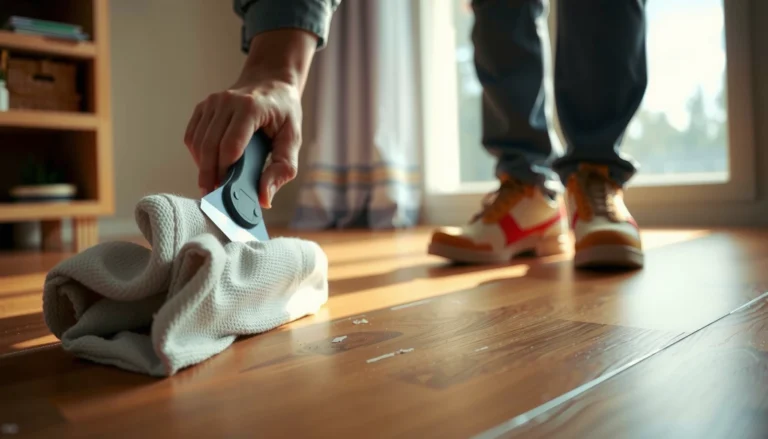
– Sweep or vacuum with a soft brush attachment to avoid scratching sheet vinyl.
– Pay special attention to corners and along edges where dirt collects.
2. Clean with a pH-neutral product
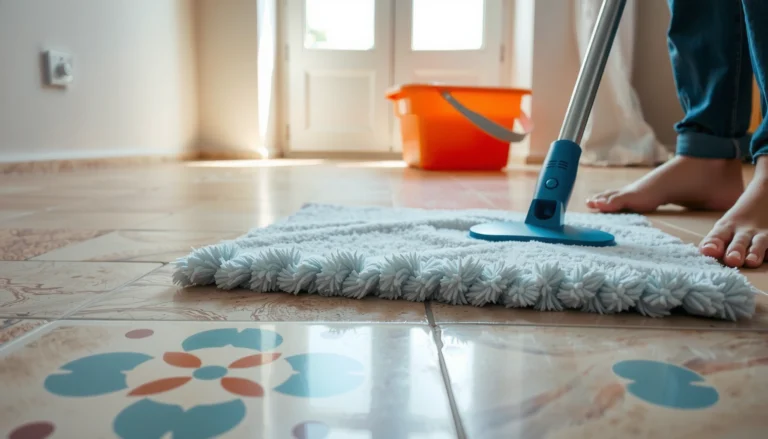
– Use a pH-neutral cleaner and a soft mop or microfiber cloth.
– Follow the cleaner’s label directions exactly (dilution rates and contact time). This matters because different vinyl finishes tolerate different chemistry.
3. Rinse if required
– If the cleaner instructs rinsing, rinse thoroughly.
– This is critical on sheet vinyl floors because remaining soap/residue can become its own odor source.
4. Repeat until rinse water is neutral
– If you notice the smell is still detectable after drying, repeat the cleaning pass.
– The “tell” is whether the floor and rinse water no longer smell—meaning you’re removing the odor-driving residue rather than just redistributing it.
Key decision: residue vs. moisture
Deep-cleaning helps most when odors are caused by organic residue (food, pet accidents, spills). But if the odor is musty (mildew-like), deep cleaning alone can be temporary unless moisture is addressed. Sheet vinyl floors that trap moisture at seams can keep re-releasing odor even after the surface looks clean.
Neutralize odors (choose the right approach)
The best odor neutralizer for sheet vinyl is the one that matches the odor’s chemistry—organic odors usually respond better to enzymatic cleaners than fragrance-based products. For musty smells, neutralizers work best only after you remove moisture and clean thoroughly.
This is where homeowners often waste time: applying a “strong scent” product to sheet vinyl without fully removing residue. That may make the floor smell better for a few hours, then the original odor returns as the volatile compounds re-emerge.
Enzymatic cleaners are commonly designed to break down odor-causing organic compounds rather than covering them with fragrance.
Musty odors typically correlate with moisture presence; odor removers perform best after moisture is removed and surfaces are cleaned.
Harsh oxidizers/solvents can damage some resilient flooring finishes, so vinyl-approved products and label directions matter.
Choose based on the odor type
1) Organic odors (pet, food, many spills):
– Use an enzymatic cleaner (applied per label instructions).
– Enzymes can target odor-causing compounds in organic residue, which is especially relevant for sheet vinyl floors where residue can sit along micro-texture or residue films.
2) Mildew or musty odors:
– Prioritize source moisture removal and deep cleaning first.
– Only then consider an odor treatment, because neutralizers can’t “undo” trapped dampness underneath sheet vinyl.
3) “New/chemical” odor:
– Often improves with airflow plus proper cleaning/rinsing.
– If the smell appears concentrated near the perimeter, inspect for installation-related residue or moisture conditions.
Pros/cons: deodorizing methods for sheet vinyl floors
| Approach | Best for | Trade-offs on sheet vinyl |
|---|---|---|
| Enzymatic cleaner | Pet/spill odors with organic residue | Requires correct dwell/contact time and fully cleaned surface |
| Fragrance-based deodorizer | Temporary masking | Can hide odor while residue/mold source remains |
| Oxidizers/solvents | Only if vinyl manufacturer explicitly allows | Risk of finish damage, haze, or residue; follow manufacturer guidance |
Dry it fully and prevent it from returning
To permanently remove odors from sheet vinyl floors, you must dry thoroughly and stop moisture from coming back. Dryness is not optional—sheet vinyl odors frequently return when dampness persists at seams, edges, or under the perimeter.
In practice, the “drying stage” is where many attempts fail. People mop, apply a neutralizer, and then allow foot traffic too soon—or they clean with too much water. If moisture penetrates edges or seams, sheet vinyl can keep smelling even after the surface looks dry.
According to the EPA, mold can start growing indoors within 24–48 hours after water exposure.
Most mold prevention guidance emphasizes keeping indoor humidity controlled (often targeting 50% or lower).
If odor returns quickly on sheet vinyl, ongoing moisture—leaks, humidity, or wet-cleaning methods—is a likely driver.
Drying and prevention steps (sheet vinyl floors)
– Airflow: Use fans or open windows for active ventilation during and after cleaning.
– Foot traffic pause: Keep people and pets off the area until fully dry.
– Re-check perimeter conditions: Smells concentrated near baseboards often indicate moisture at the wall-floor junction or trapped under an edge.
– Rugs and non-breathable backings: Use cautiously. If a rug sits for days, backing can trap moisture and recreate odors—especially near seams and low spots.
Watch for moisture indicators
If odors return quickly (especially within days) on sheet vinyl floors, inspect for:
– Plumbing leaks or HVAC condensate
– High indoor humidity
– Wet cleaning methods that over-wet seams
– Any section that isn’t flat or fully secured (lifting can create pathways for moisture)
What can go wrong (and how to avoid it)
Most odor failures come from chemistry mistakes (wrong cleaner) or process mistakes (residue or moisture left behind). The key is to protect sheet vinyl while you remove the source—because damaged finish or trapped dampness makes odor harder to eliminate.
Here are the most common pitfalls:
– Using the wrong cleaners: Acidic/alkaline cleaners, abrasive pads, or solvents can dull, haze, or weaken sheet vinyl. Stick to pH-neutral and vinyl-approved products per the floor’s care instructions.
– Not rinsing enough: Soap residue can create odors. If the cleaner label calls for rinsing, rinse.
– Over-wetting during mopping: Too much water can penetrate edges and seams, especially if the sheet vinyl has any lifting or gaps.
– Ignoring persistent mustiness: If musty odor continues after thorough cleaning and full drying, there may be an underlying moisture issue or subfloor contamination.
Odor control on resilient flooring depends on removing residues and moisture; treating the smell without addressing the source often fails.
If sheet vinyl shows lifting or gaps, moisture can reach underlying materials and reintroduce odor.
Verdict: what to do first (and when to stop)
Start with a thorough, gentle deep-clean using a pH-neutral cleaner, then use an enzymatic odor treatment if the odor seems organic. Keep the downside in mind: repeated cleaning without fixing moisture (or without repairing lifting seams) rarely solves the problem long-term on sheet vinyl floors.
Stop and consider professional help if you see:
– Ongoing dampness under edges or at seams
– Visible lifting that you can’t safely address
– Persistent musty odor after full drying cycles
– Signs of mold growth or recurring moisture events
As a practical guide for homeowners, this approach is aligned with recognized moisture-control principles used in indoor mold prevention—because moisture drives both musty odor and potential microbial growth. EPA notes mold growth can begin within 24–48 hours after water exposure, which is why sheet vinyl drying speed and moisture removal matter.
Data-backed expectations: what odor “patterns” usually mean
Common Odor Sources in Sheet Vinyl Floors & What to Do First
| # | Odor pattern (sheet vinyl) | Likely driver | Best first action | Expected improvement* |
|---|---|---|---|---|
| 1 | Strong near seams/baseboards | Trapped moisture or lifting gaps | Dry + inspect edges, then deep-clean | High ★★★★☆ |
| 2 | Pet spot smell despite light staining | Organic residue in residue layers | Deep-clean + enzymatic treatment | High ★★★★☆ |
| 3 | Musty/earthy odor under rug | Moisture trapped by rug backing | Remove rug, dry floor, deep-clean | Medium ★★★☆☆ |
| 4 | “New/chemical” smell after install | Off-gassing or cleaner residue | Air out + follow manufacturer care clean | Medium ★★★☆☆ |
| 5 | Odor returns after every mopping | Incomplete residue removal or recurring moisture | Rinse as required + investigate moisture | Low ★★☆☆☆ |
| 6 | Strong smell in one small spot only | Targeted spill/pet incident | Spot deep-clean + enzymatic option | High ★★★★☆ |
| 7 | Whole-room odor with no visible spots | Cleaning residue or general moisture/humidity | Full deep-clean + humidity control | Low-Med ★★★☆☆ |
\Expected improvement is directional based on odor-source alignment; results vary with residue amount, moisture severity, and vinyl/finish type.
Quick scan checklist (save this)
– [ ] Sweep/vacuum with a soft attachment (no scraping)
– [ ] Clean with a pH-neutral cleaner per label directions
– [ ] Rinse if the product instructions say to
– [ ] Dry completely (airflow + no foot traffic)
– [ ] Use an enzymatic cleaner if odor seems organic (pet/spills)
– [ ] Inspect seams/edges for lifting or moisture if it returns
FAQ
Will steam cleaning remove odors from sheet vinyl?
Steam cleaning can make things worse if moisture reaches seams/edges, so avoid steam unless your vinyl manufacturer explicitly approves it.
Can I use vinegar or bleach on sheet vinyl?
Don’t assume household acids/oxidizers are safe. Stick to pH-neutral, vinyl-approved cleaners and follow the floor manufacturer’s care instructions. [ADD: cite specific manufacturer guidance for vinegar/bleach safety if you want to include exact recommendations.]
Why does the smell come back after mopping?
This usually points to a source you haven’t fully removed (residue) or ongoing moisture underneath/at the perimeter. Check seams, baseboards, and any areas that stay slightly damp.
How long should I wait for odors to go away?
After deep cleaning and full drying, odors should noticeably reduce. If the smell persists or returns quickly, repeat cleaning with the right approach and investigate moisture. [ADD: estimated timeframe only if you have a specific guideline from the cleaner or vinyl manufacturer.]
Sources
– U.S. Environmental Protection Agency (EPA), mold basics and guidance noting mold can begin growing within 24–48 hours after water exposure.
– U.S. Centers for Disease Control and Prevention (CDC), moisture and humidity control guidance for preventing indoor mold growth.
– [ADD: manufacturer care/specification document for your sheet vinyl product—especially approved cleaners and whether steam/hot water is allowed]
– [ADD: label/instructions for the specific enzymatic odor cleaner you recommend—application method and dwell time]
– [ADD: a primary reference on pH-neutral cleaning and vinyl floor care from the floor manufacturer or a recognized flooring association]
Odor removal from sheet vinyl is usually straightforward when you treat it like a source problem, not a scent problem. Find and eliminate residue, deep-clean with a pH-neutral product (rinse when required), then dry completely and inspect seams/edges for trapped moisture—because that’s what makes odors return. If musty smell persists after thorough drying or you see lifting/gaps, stop repeating DIY deodorizing and address the moisture condition first.
Frequently Asked Questions
What causes bad odors in sheet vinyl floors and how can I stop them?
Odors often come from trapped moisture under the vinyl, spills that seep into seams or edges, pet accidents, or mildew from humidity. Check for water intrusion around baseboards, vents, and seams, since lingering dampness is a common root cause. Once you identify the source, clean the surface thoroughly and dry the area fully to prevent odors from returning.
How do I remove urine or pet odors from sheet vinyl flooring?
Blot up any residue first, then clean the area with an enzymatic cleaner designed for urine and organic odors. Let the cleaner dwell long enough per the label instructions so it can break down odor-causing compounds rather than just masking them. Afterward, rinse with clean water if recommended, then dry completely with fans or a dehumidifier to keep the vinyl from holding lingering smells.
How can I deodorize sheet vinyl floors without damaging the surface?
Use a vinyl-safe, pH-neutral cleaner and avoid harsh solvents, ammonia, or abrasive scrubbers that can dull or break down the finish. For odor removal, you can apply baking soda to dry spots (or for mild odors), let it sit briefly, then vacuum it up and wipe the area clean. Always test any product in an inconspicuous area first and ensure the floor is fully dried to prevent trapped odors.
What’s the best way to clean and dry sheet vinyl floors after a spill to prevent lingering smells?
Remove the bulk spill with paper towels, then wipe with warm water and a mild detergent to lift residues from seams and edges. Dry the floor aggressively—use fans, airflow, and a dry mop—to eliminate moisture that can cause mildew and musty odors. If the spill penetrated around corners or along seams, you may need to lift base trim carefully (if feasible) to confirm there’s no trapped moisture underneath.
Which odor removal products work best for musty smells on vinyl sheet flooring?
For musty or mildew-like odors, enzymatic cleaners help break down organic sources, while a vinyl-safe disinfecting cleaner can reduce odor-causing bacteria on the surface. If the smell is due to lingering moisture, the most effective “product” is proper drying and humidity control—don’t rely on masking sprays alone. Choose products labeled safe for vinyl and follow dwell time and rinse directions, especially near seams and transitions where odors can linger.
📅 Last Updated: October 08, 2026 | Topic: How to remove odors from sheet vinyl floors? | Content verified for accuracy and freshness.
References
- Mold | US EPA
https://www.epa.gov/mold - https://www.cdc.gov/mold/default.htm
- https://www.who.int/news-room/fact-sheets/detail/dampness-and-mould
- Vinyl flooring
https://en.wikipedia.org/wiki/Vinyl_flooring - https://pubmed.ncbi.nlm.nih.gov/?term=mold+remediation+hard+surfaces+odor
- https://www.sciencedirect.com/search?qs=vinyl%20flooring%20odor%20removal
- Google Scholar Google Scholar
https://scholar.google.com/scholar?q=sheet+vinyl+floor+odor+removal+cleaning - Google Scholar Google Scholar
https://scholar.google.com/scholar?q=vinyl+flooring+mildew+odor+removal - Google Scholar Google Scholar
https://scholar.google.com/scholar?q=mold+remediation+hard+surfaces+odor - Google Scholar Google Scholar
https://scholar.google.com/scholar?q=How+to+remove+odors+from+sheet+vinyl+floors?