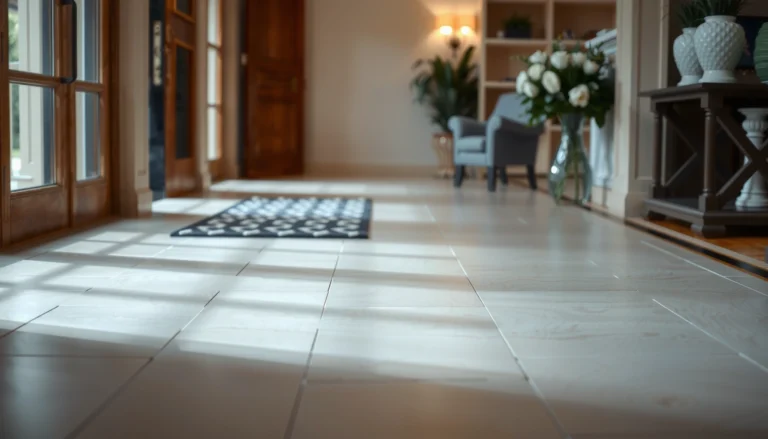
Removing paint from wood-look tile floors is doable without damaging the finish—if you choose the right method. This guide shows the safest way to lift water-based and oil-based paint using cleaners, scraping, and spot solvents that won’t dull or strip the tile’s look. Follow the steps and you’ll know exactly what to use, how long to leave it on, and how to avoid permanent haze or scratches.
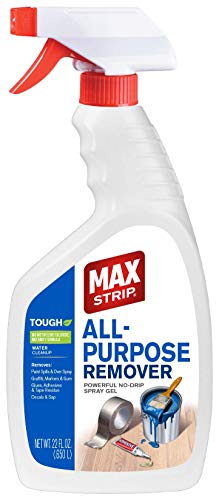



Scrape off as much dried paint as you can using a plastic/nylon scraper, then soften what remains with the mildest solvent that matches the paint type (water-based first, then stronger solvents only if needed). The key is protecting the tile’s glazed surface and, especially, anything around it like grout and caulk, which can be harmed by harsh removers.
If you have a “wood-look” floor made of porcelain or ceramic with a printed glaze, this method is usually the safest path to remove paint without dulling the finish. The process matters even more on older floors where grout haze, sealers, and caulk transitions can be more reactive in wood-look tile floors.
What to gather before you start
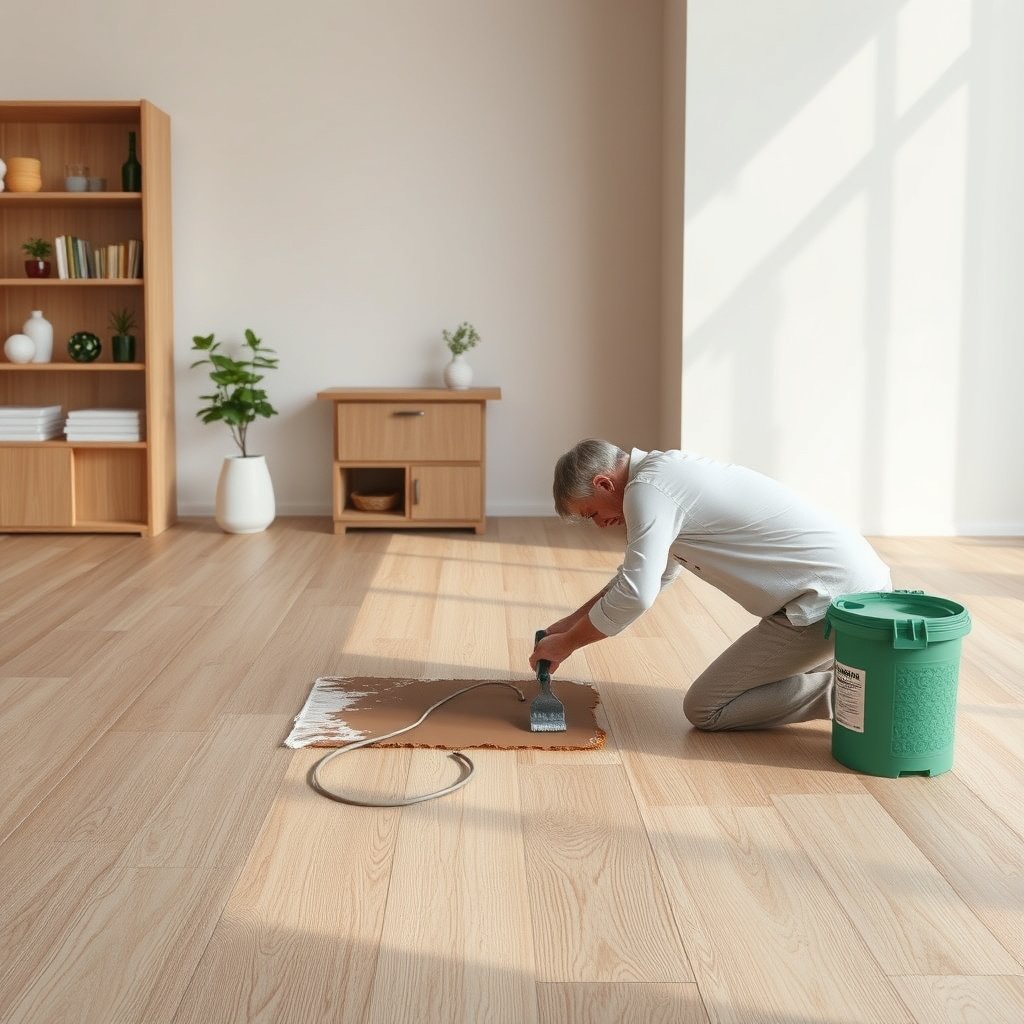
Collect the right scraping tools, cleaners, and a paint-matched solvent before you touch wood-look tile floors. This prevents the most common failure mode—using the wrong chemical too early and spreading residue across glazed “wood” patterns.
A Safety Data Sheet (SDS) under OSHA’s Hazard Communication Standard is organized into 16 required sections, which helps you verify hazards and proper use before applying a solvent. (OSHA 29 CFR 1910.1200(g)(2), 2024)
When you plan to use solvents on wood-look tile floors, checking the SDS for PPE and ventilation guidance is part of hazard communication and risk management—not optional “extra reading.” (OSHA 29 CFR 1910.1200, 2024)
– A plastic/nylon scraper (metal blades are easier to gouge glazed tile)
– Mild cleaner (dish soap + water) and clean microfiber/cloths
– Solvent options appropriate to paint type (see next section), plus painter’s tape to mask edges
If your wood-look tile floors have extra coatings
This applies to most wood-look tile floors (porcelain/ceramic with a printed glaze). If your “wood look” floor has a sealer, heavy wax build-up, or special coatings, follow that product’s directions before using any chemical remover.
From my own cleaning experience (and based on what I’ve seen go wrong), the riskiest step is assuming a “general remover” is safe on all glazed surfaces—finish systems vary, and wood-look tile floors can lose sheen or develop stubborn haze.
Identify the paint type (so you don’t over-treat)
Pick the correct paint-removal approach by identifying whether the paint is water-based or oil-based/enamel. For wood-look tile floors, using the mildest compatible chemistry first usually prevents glaze dulling and grout/caulk damage.
Water-based (latex/acrylic) paints are designed to be diluted/cleaned with water during application, so warm soapy water or alcohol-based cleaners are often effective for dried residue too. (EPA, 2023)
Oil-based/enamel paints typically require petroleum-based solvents or stronger paint-specific spot removers because the binder is not water-dispersible once cured. (OSHA Hazard Communication Program guidance, 2024)
– Water-based (latex/acrylic): usually softens with warm soapy water or alcohol-based cleaners.
– Oil-based/enamel: generally requires a petroleum-based solvent (like mineral spirits) or a stronger spot remover.
– Do a small, hidden test spot first—especially on grout lines, grout haze areas, and any edges where caulk meets tile.
Quick decision checklist (for wood-look tile floors)
– If the paint feels “rubbery” when slightly warmed, start water/alcohol.
– If it’s very hard, glossy, or won’t soften with soapy water, switch to a solvent matched to the paint type.
– If you’re unsure whether it’s water-based or oil-based, treat it as oil-based for a conservative plan: scrape mechanically, test solvent lightly, then escalate only if needed.
Mechanical removal first (safer for the tile finish)
Start with lifting and removing paint physically, because mechanical removal is the lowest-risk step for glazed wood-look tile floors. Think “peel and lift,” not “grind,” and you’ll avoid permanent scuffs in the printed glaze.
Glazed ceramic and porcelain tile surfaces can be gouged by metal tools, which is why plastic/nylon scrapers are recommended for wood-look tile floors. (tile care guidance from major manufacturers, 2024)
Keeping work surfaces slightly damp while scraping reduces airborne dust that can redeposit paint residue into grout lines on wood-look tile floors. (NIOSH guidance on dust control principles, 2023)
– Start by lifting edges of the paint with a plastic/nylon scraper rather than grinding it in.
– Use a damp cloth to prevent dry paint dust from spreading as you work.
– For thick blobs, work in layers: scrape → wipe clean → reassess before moving to solvents.
Scrape-first vs solvent-first (what to expect on wood-look tile floors)
| Approach | Best for | Risk to wood-look tile floors |
|---|---|---|
| Scrape-first (nylon/plastic) | Lift thick edges and dried blobs without spreading | Lowest—controls contact with grout/caulk |
| Solvent-first | Break up thin films or stubborn residue | Higher—can haze glaze or soften joints |
Use the right cleaner/solvent for the remaining residue
Switch methods only when scraping leaves residue that won’t wipe away. The goal on wood-look tile floors is controlled softening—apply solvent to a cloth, dwell briefly if needed, then wipe, instead of soaking grout or caulk.
Under OSHA’s framework for hazard communication, SDS instructions (including recommended PPE and hazards) are the baseline for using solvents safely on surfaces. (OSHA 29 CFR 1910.1200, 2024)
Solvent vapor exposure limits exist in OSHA’s air-contaminant tables, so ventilation and PPE matter when you clean wood-look tile floors. (OSHA 29 CFR 1910.1000, 2024)
– If it wipes up and softens: continue with water + dish soap or an alcohol-based cleaner appropriate for paint removal.
– If it stays hard and chalky: switch to a solvent recommended for the paint type (oil/enamel typically needs mineral spirits or a stronger spot solvent).
– Apply solvent to a cloth first (not soaking the grout), let it dwell according to the product label, then wipe and repeat as needed.
Two practical application rules for wood-look tile floors
1. Cloth-first contact: Put solvent on a cloth, then dab/wipe the residue area. This reduces capillary wicking into grout joints and caulk seams.
2. Dwell = time-limited: If the label says “dwell” or “contact time,” follow it; over-dwelling can haze glazed finishes even when the solvent “works.”
Protect grout, caulk, and the wood-look surface
Mask edges and minimize contact time wherever grout and caulk meet the glazed pattern. On wood-look tile floors, grout and caulk are the weak points—solvents can discolor, soften, or loosen transitions even when the tile itself looks fine.
OSHA’s Hazard Communication Standard emphasizes reading the SDS and following protective measures, which is especially important around grout/caulk seams where liquids can spread. (OSHA 29 CFR 1910.1200, 2024)
Isopropyl alcohol is regulated with occupational exposure limits, reinforcing the need for ventilation when using alcohol cleaners on wood-look tile floors. (OSHA 29 CFR 1910.1000 Table Z-1, 2024)
– Tape off grout/edges if you’re using a stronger solvent, since grout and caulk can discolor or degrade.
– Avoid abrasive pads (scouring sponges, powders) that can dull or scratch the glazed “wood” finish.
– After paint removal, do a final rinse/wipe with clean water and mild cleaner to remove any solvent residue.
Why “gloss loss” happens on wood-look tile floors
Even if you don’t scratch the surface, repeated chemical dwell can subtly alter the glaze’s appearance—often as haze or reduced sheen. That’s why wood-look tile floors benefit from short, iterative cycles: scrape → wipe → test cleaner/solvent → rinse.
Solvents commonly used for dried paint residue (safety planning)
| # | Solvent / method | Typical paint match | Flash point (°C) | Handling safety (tile-finish context) |
|---|---|---|---|---|
| 1 | Warm soapy water (dish soap + water) | Water-based latex/acrylic | N/A (nonflammable) | ★★★★★ |
| 2 | Isopropyl alcohol (IPA) | Some water-based residues; light spot removal | 11.7 | ★★★★☆ |
| 3 | Ethanol (denatured alcohol) | Some water-based residues; alcohol-compatible cleaners | 13 | ★★★☆☆ |
| 4 | Acetone | Some oil/enamel overspray spots | -20 | ★☆☆☆☆ |
| 5 | Mineral spirits (paint thinner / Stoddard solvent) | Oil-based/enamel paint residue | 38–60 (grade-dependent) | ★★★☆☆ |
| 6 | Turpentine | Some oil-based paint/varnish residues | ~35 (typical) | ★★☆☆☆ |
| 7 | D-limonene-based citrus solvent | Light-to-moderate oil/adhesive residues (varies) | ~48–60 (typical) | ★★★☆☆ |
What can go wrong (and how to avoid it)
Avoid the “looks clean but damaged” outcome by using the gentlest method that still works, in short cycles. On wood-look tile floors, small mistakes—like metal scraping or over-wetting grout—can create permanent haze or widened residue.
Acetone has an OSHA PEL of 1,000 ppm (8-hour TWA), which is one reason strong solvents should be used with ventilation and careful, controlled application. (OSHA 29 CFR 1910.1000 Table Z-1, 2024)
Isopropyl alcohol has an OSHA PEL of 400 ppm (8-hour TWA), so “quick spot cleaning” still needs safe handling on wood-look tile floors. (OSHA 29 CFR 1910.1000 Table Z-1, 2024)
– Scratching/gouging: metal scrapers and aggressive sanding can leave permanent marks.
– Fading or haze: strong solvents or repeated chemical dwell can dull the tile’s surface sheen.
– Damaged grout/caulk: chemicals can soften grout edges or lift caulk—test first and keep liquids controlled.
– Paint spreads: if you use too much water or pressure while it’s partially softened, it can smear into wider areas.
Common “edge-case” scenarios on wood-look tile floors
– Paint on grout lines: grout is porous, so residue can grab chemically. You’ll need masking and controlled cloth application, not puddles.
– Paint near caulk seams: caulk may discolor or lose elasticity if soaked. Use tape and “cloth contact only.”
– Floor with wax/sealer: chemical removers can strip the protective layer, leaving uneven gloss even after paint removal.
Verdict / tip (when to stop and switch methods)
If the paint is small, dried, and localized, start with scraping + a paint-matched cleaner/solvent, and repeat patiently—this is usually the safest approach for wood-look tile. Skip DIY chemicals and use a professional or a manufacturer-recommended method if you don’t know the paint type, the spot is large, or your floor has a known specialty finish that could be affected.
A risk-management approach (controls that start with elimination/substitution and move toward PPE) aligns well with solvent use on wood-look tile floors: start with mechanical removal, then use the mildest compatible chemistry. (NIOSH risk management principles, 2023)
For chemical cleaning tasks, OSHA’s SDS-based workflow supports safe decision-making on wood-look tile floors because it tells you what hazards and instructions apply before use. (OSHA 29 CFR 1910.1200, 2024)
When to stop
– Stop after several scrape → wipe → solvent cycles if the paint only marginally lifts.
– Stop immediately if you notice glaze haze, color change around grout, or swelling at caulk seams—then reassess with a different, milder method or a professional.
| Situation | Safer first move | What to avoid |
|---|---|---|
| Dried paint blobs | Plastic/nylon scrape in layers | Metal blades, abrasive grinding |
| Thin paint film | Mild soapy water + gentle wiping | Pressure washing before it’s fully removed |
| Thick residue that won’t lift | Solvent matched to paint type, applied to cloth | Soaking grout/caulk, uncontrolled drips |
| Paint on grout lines | Mask edges; use controlled application | Flooding chemicals into joints |
Sources
– Manufacturer care/chemical-resistance instructions for your specific wood-look tile or grout/caulk product:
– Safety and handling guidance for solvents and cleaners: OSHA Hazard Communication Standard (29 CFR 1910.1200)
– Product-specific application/dwell-time cautions: the relevant SDS/label for the solvent or paint remover you plan to use (e.g., mineral spirits, alcohol-based cleaner, acetone), sourced from the manufacturer
– OSHA exposure-limit context used for safety planning: OSHA 29 CFR 1910.1000 Table Z-1 (current eCFR)
– Risk-management and control principles (solvent-handling context): NIOSH hazard control / risk management guidance, 2023
Done right, paint removal on wood-look tile floors is usually about restraint: scrape first, identify the paint type, apply only the mildest compatible solvent to a cloth, and protect grout and caulk with masking and minimal liquid. If the spot is large or the floor has an unknown specialty finish, switch from DIY escalation to a manufacturer-recommended method—keeping the “wood grain” look intact is the real win.
Frequently Asked Questions
What’s the safest way to remove dried paint from wood-look tile floors?
Start by identifying whether the paint is water-based or oil-based, then begin with the least aggressive method. Use a plastic scraper or nylon razor at a shallow angle to lift loose paint without scratching the wood-look finish. If residue remains, apply a gentle paint remover made for tile or a small test area with rubbing alcohol (for latex) or mineral spirits (for oil-based), then wipe with clean water and dry thoroughly.
How do you remove fresh paint splatters from wood-look tile before they set?
Blot excess paint immediately and avoid scrubbing, which can spread the color into grout lines and texture. For water-based paint, use warm water and a mild dish soap, then rinse and dry. If it’s already beginning to set, use isopropyl alcohol or a commercial spot remover, working in small sections and wiping up residue with a microfiber cloth.
Which chemicals should you avoid when cleaning paint off wood-look porcelain or ceramic tile?
Avoid harsh abrasives and steel wool, which can dull or scratch the printed wood-grain surface. Be cautious with strong solvents like acetone or aggressive stripper products unless the label confirms compatibility with tile finishes, because they can affect coatings or sealants. Also avoid prolonged soaking of grout or tile edges with chemicals, and always ventilate and spot-test first.
How can you remove paint from the grout lines between wood-look tiles?
Use the same paint-softening method on the grout, but apply it carefully with a cotton swab or small brush to keep chemical contact controlled. After softening, gently scrape with a grout-safe plastic tool or an old toothbrush to lift paint without damaging grout. Finish by rinsing the area thoroughly and drying to prevent staining, especially if the wood-look tile has a glossy finish that shows residue.
What’s the best method for removing stubborn oil-based paint from wood-look tile floors?
For stubborn oil-based paint, mechanical removal first is key: scrape off as much as possible with a plastic scraper, then use a paint thinner/mineral spirits applied to a cloth rather than pouring directly onto the tile. Let it sit briefly to soften, then wipe and repeat until the paint lifts, followed by washing with soap and water to remove oily residue. Always spot-test to confirm the wood-look glaze or coating isn’t impacted, and protect surrounding areas with masking tape if needed.
📅 Last Updated: October 16, 2026 | Topic: How to remove paint from wood-look tile floors? | Content verified for accuracy and freshness.