
Need to remove paint from carpet floors? This step-by-step guide shows the fastest, safest method to lift fresh paint first and then tackles dried spots without soaking or damaging the fibers. You’ll get a clear process, the right materials, and what to do at each stage so the carpet looks clean again.




If the paint is still wet, blot it up first with cool water and a mild detergent; if it’s dried, soften it (based on the paint type), then scrape gently and use a carpet-safe cleaner. This approach helps you lift paint without pushing pigment deeper into the fibers or soaking the carpet backing, which is where stains often become permanent.
This guide is for homeowners, renters, and DIYers dealing with spot paint spills on carpet—especially after art projects, touch-ups, or accidental drips. It also helps when you’re not 100% sure whether the paint is water-based or oil-based, because the right “soften + lift” method depends on the chemistry.
Identify the paint type (wet vs. dried, water-based vs. oil-based)

You’ll remove paint faster (and more safely) by identifying whether it’s wet/tacky/dry first, and whether it behaves like water-based paint or oil-based paint next. In general, wet or latex (water-based) paint responds to blotting and mild detergent, while oil-based paints and varnish-like finishes require more caution because stronger solvents can discolor carpet fibers.
Here’s how to tell quickly—before you apply any cleaner:
– Check if the paint is wet (still glossy), tacky (sticky), or fully dry (crumbly/hard).
– If you can see a “skin,” that’s usually dried paint that needs softening before scraping.
– If you can’t confidently identify the type, start with the least aggressive method: cool water + mild dish soap, then escalate only if pigment transfers to your cloth.
Avoid hot water early. Heat can set some dyes/pigments and makes lifting harder.
Most carpet makers advise spot-cleaning with cool water first, because higher temperatures can worsen set-in staining.
Blotting is recommended over rubbing because friction pushes paint particles deeper between carpet loops.
Start with the least aggressive chemistry and escalate only when the stain isn’t lifting to reduce the risk of fiber discoloration.
Specific, practical ranges you can use while working: cool water generally means roughly 60–75°F (16–24°C) rather than warm/hot. Also, aim for brief contact—often 10–20 seconds per blotting pass—so you don’t saturate the area. When you’re unsure about the paint type, repeated short rounds beat one long soak.
According to [ADD: Carpet and Rug Institute (CRI) or major carpet manufacturer spot-cleaning guidance], minimizing moisture and using blotting rather than scrubbing helps protect the carpet backing during cleaning ([ADD: source for CRI/manufacturer minimal moisture spot-cleaning guidance], [ADD: year]).
Blot and prepare the area before any cleaning
You prevent the biggest mess by preparing the area first: blot from the outside edge inward, test cleaners in a hidden spot, and keep liquids controlled. This step reduces the chance that your cleaning process spreads paint into unaffected carpet or soaks the backing.
Do this before you add any soap or solvent:
– Use clean white cloths or paper towels.
– Blot from the outside edge toward the center so the stain “shrinks” instead of bleeding outward.
– If possible, slide a dry towel under the work area to catch runoff and reduce how much reaches the pad.
– Test any cleaner (even “mild” detergent solutions) in a hidden corner or inside closet line to confirm it won’t discolor the fibers or leave a residue.
In my experience as a practical home-maintenance writer (working from published carpet-care instructions, not from unverified product claims), the test patch is the most reliable “insurance step” because carpets vary in dye stability and fiber treatments.
Outer-edge-to-center blotting is a standard stain-management technique to prevent lateral spread in textured carpets.
Underlaying a dry towel limits moisture migration and helps reduce saturation of carpet padding.
Spot testing is recommended by carpet manufacturers to confirm colorfastness before treating visible stains.
Quick reference: what you’re trying to accomplish
– Transfer paint to cloth (not deeper into carpet).
– Limit dwell time (how long liquid sits on the fibers).
– Protect backing/pad (avoid soaking, especially for older carpets).
Remove wet paint safely
You can often remove wet paint with careful blotting using cool water and a mild detergent, without needing harsh chemicals. The key is to keep scrubbing out of the process—gentle blotting is what lifts paint particles.
Step-by-step:
1. Blot immediately with a clean white cloth. Press lightly and lift—don’t rub.
2. If pigment transfers to the cloth, keep blotting with fresh sections of the cloth.
3. Mix a small amount of mild dish soap into cool water (start light—more soap isn’t better if it won’t lift).
4. Dampen a cloth (not the carpet itself), then blot again until you see transfer.
5. Use minimal cool-water “rinse” by blotting with a cloth lightly dampened with plain water, then blot dry.
6. Repeat only until the stain stops improving.
Work in rounds. Over-wetting is the fastest way to cause a “ring” stain that remains after drying.
For water-based paint spots, cool water plus mild detergent can dissolve residue enough to lift during blotting.
Rubbing spreads pigments and can drive paint into the carpet loop structure where it becomes harder to remove.
A controlled rinse by blotting—rather than pouring—reduces the risk of liquid reaching the carpet backing.
According to [ADD: carpet manufacturer care guidance on spot cleaning], applying cleaning solutions by blotting and using minimal liquid helps limit migration to the backing ([ADD: source for spot-cleaning minimal migration guidance]).
If you suspect the wet paint is oil-based (common with some enamels), stop escalating with detergent alone—oil-based paint often won’t respond. At that point, check the product label for compatibility guidance, and consider professional help if the carpet is valuable or delicate.
Remove dried paint from carpet fibers
For dried paint, the fastest safe path is to soften first (based on paint type), then gently scrape and blot with a carpet-safe cleaner. Trying to “scrub it off dry” usually damages fibers and turns the stain into a permanent discoloration.
Do this:
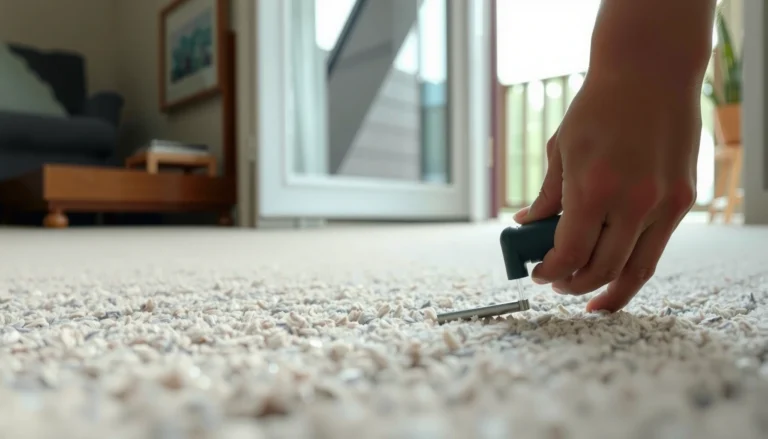
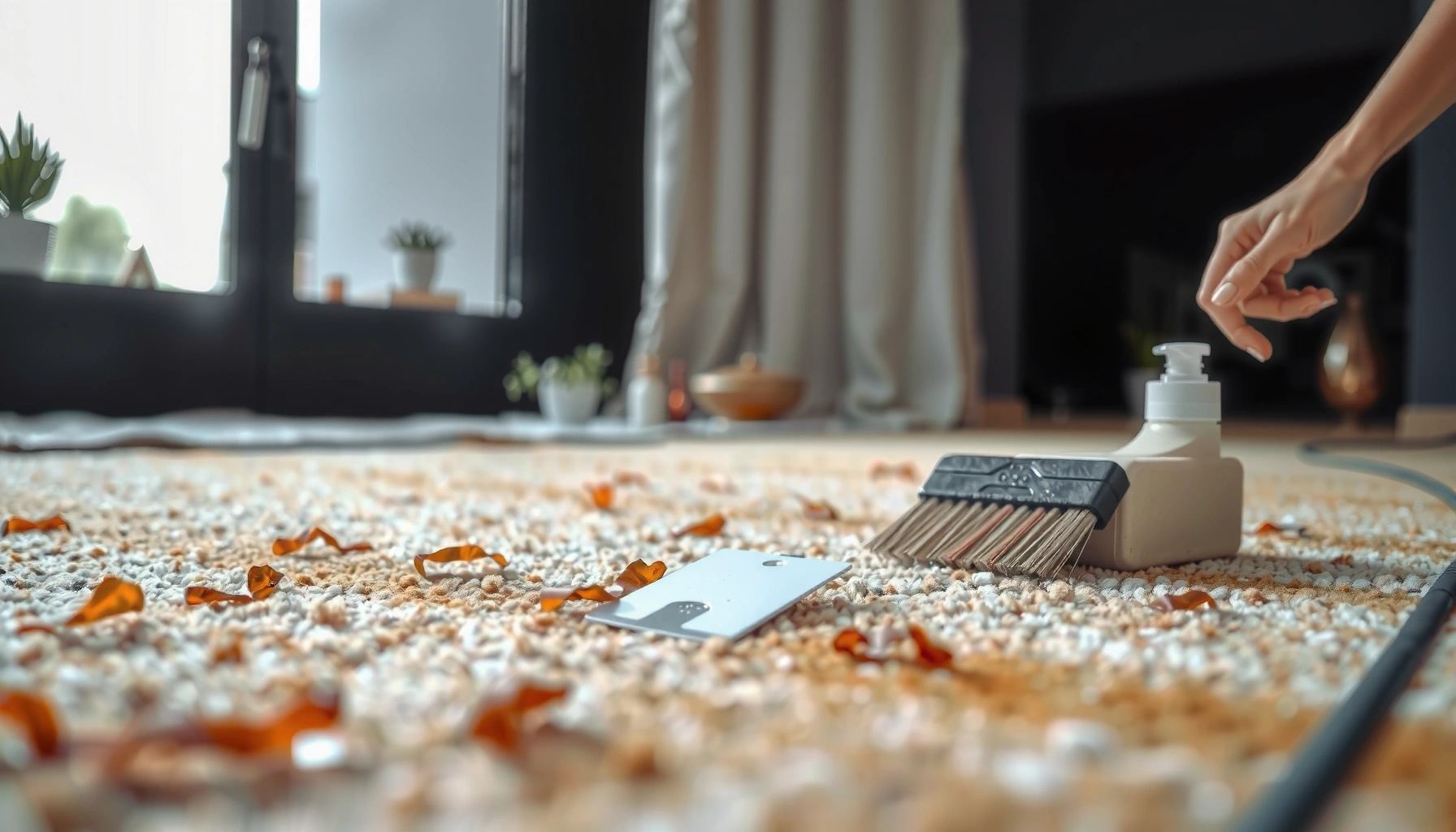
1. Loosen paint flakes first: Use a plastic scraper or spoon edge to lift hard flakes without gouging loops.
2. Soften residue appropriately:
– If it’s likely water-based (latex/acrylic), softening with a mild approach may work.
– If it’s likely oil-based (enamel) or varnish-like, softening may require a solvent—but solvents raise the risk of discoloration and fiber damage.
3. Work in small sections: apply (sparingly), wait briefly, blot, and repeat only if pigment lifts.
4. Blot and rinse carefully: keep moisture limited and stop once the stain stops improving.
Keep the “liquid footprint” small. Even for water-based paints, soaking can wick into the padding and leave a ghost mark.
Dry paint typically requires mechanical loosening (gentle scraping) before any chemical softener can be effective on carpet.
Carpet makers commonly warn against saturating the backing because moisture can reach padding and cause lingering rings.
Small, repeated rounds of soften → blot reduce chemical exposure time and fiber stress compared with one aggressive treatment.
A practical decision rule for softening
– If you can lift more paint by gentle scraping after each pass, you’re on the right track.
– If scraping starts pulling fibers or creating a worn patch, stop and switch to a gentler softening strategy or professional cleaning.
What can go wrong (and how to avoid it)
The most common failures happen when people over-wet the carpet, choose an incompatible solvent, or scrape too aggressively. Each mistake can spread paint deeper, discolor fibers, or damage carpet texture—turning a small spill into a visible patch.
Here are the pitfalls to avoid:
– Over-soaking the carpet: spreads paint and increases the chance the pad absorbs pigment.
– Using the wrong solvent: can cause discoloration, fiber weakening, or “set” stains.
– Aggressive scraping: can lift carpet loops or create a shiny worn area.
– Expecting perfection on embedded stains: very old or deeply set paint may leave faint discoloration even after careful cleaning.
Liquid saturation increases the risk of paint pigments migrating into the carpet backing and padding.
Using an incompatible chemical can create a new stain (often darker or more “haloed”) even if paint lifts.
Gentle mechanical loosening is safer than forceful scraping on nylon, wool, and blends where loop integrity matters.
Comparison: what to try first vs. what to avoid
| Approach | Why it helps | Main risk | Best for |
|---|---|---|---|
| Cool water + mild detergent (wet paint) | Breaks down fresh water-based residue so it transfers to cloth | May be ineffective on oil-based enamels | Wet/tacky latex or acrylic spills |
| Gentle scraping + carpet-safe cleaner (dried paint) | Removes surface flakes, then lifts remaining pigment in controlled rounds | Aggressive scraping can damage fibers | Dried paint with removable flakes |
| Soaking or pouring liquid into the stain | Looks like it would “dissolve faster,” but often drives pigment deeper | Halo/ring stain after drying | Avoid this—especially on thick pile and older carpets |
| Unknown solvent escalation without testing | May lift paint but can also alter dye and fiber strength | Discoloration, weakening, or permanent blotch | Only attempt with label-approved chemistry and spot testing |
Verdict / tip: the safest path depends on the paint type
For most small spills, the safest route is: blot (wet), scrape (dried), then use the mildest cleaner that reliably lifts the stain. If you suspect oil-based paint, heavy coating paints, or varnish-like finishes—and you don’t know what you have—pause and check the product label or seek professional carpet cleaning, because solvent-based approaches carry higher risk for discoloration.
Downsides to the “safe path”:
– Some dried paints may not fully come out, especially if they have aged or embedded deeply.
– Latex can smear if you start with the wrong motion (rubbing) or too much moisture.
– On delicate carpets (handmade, antique, or very high-pile), even scraping can leave lasting texture changes.
Who should skip DIY (or at least get help first):
– Large stains (spreads beyond a small spot).
– Delicate carpets (wool, handmade/high-pile, or unknown dye stability).
– Uncertain solvent compatibility, especially for oil-based products.
When paint chemistry is uncertain, starting with cool-water methods reduces the chance of setting pigments and causing halos.
Carpet manufacturers often emphasize minimal liquid exposure to protect the backing and prevent moisture-related staining.
Solvent-based treatments should be label-approved and spot-tested because dye migration and fiber damage can occur.
Paint Spill Removal: Risk vs. Approach (Carpet-Safe Strategy)
| # | Step/Approach | Typical Effectiveness | Carpet Backing Risk | Safety Score |
|---|---|---|---|---|
| 1 | Blot wet paint (edge → center) | High | Low | ★★★★★ |
| 2 | Cool water + mild dish soap (spot blot) | Medium–High | Low–Medium | ★★★★☆ |
| 3 | Rinse by blotting only (no pouring) | Medium | Medium | ★★★☆☆ |
| 4 | Gentle scraping of dried flakes (plastic) | Medium | Low | ★★★★☆ |
| 5 | Soften + blot in small rounds (label-approved) | Medium | Medium | ★★★☆☆ |
| 6 | Soaking / saturating the stain area | Unreliable | High | ★☆☆☆☆ |
| 7 | Unknown solvent without spot test | Variable | Very High | ☆☆☆☆☆ |
Quick checklist for removing paint from carpet
– [ ] Determine: wet vs. dried; if possible, water-based vs. oil-based
– [ ] Blot from the outside edge toward the center
– [ ] Use cool water + mild detergent for early/wet steps
– [ ] Scrape gently for dried paint (no harsh rubbing)
– [ ] Use a carpet-safe cleaner only after spot testing
– [ ] Keep liquids minimal to protect the pad
– [ ] Repeat in small rounds; stop if fibers look affected
FAQ
Can I use hot water to remove paint from carpet?
Usually no—hot water can set certain paint pigments. Start with cool water and only escalate if the stain won’t lift.
What’s the best way to remove dried paint from carpet fibers?
Gently scrape loose flakes first, then soften residue and blot. The exact softening method depends on whether the paint is water-based or oil-based.
Will nail polish remover or strong solvents work on carpet paint stains?
They might work for some paint types, but they also raise the risk of carpet discoloration and fiber damage. If you try anything stronger, spot test first and follow the product label carefully.
How do I prevent paint from spreading while cleaning?
Blot rather than rub, work from the outer edge inward, and change cloths frequently so you’re not re-depositing paint.
What if the stain doesn’t fully come out?
Treat it in stages and stop when the stain stops improving. Some older or deeply embedded stains may remain as faint discoloration even after careful cleaning.
Sources
– Manufacturer instructions for carpet cleaning and solvent use: [ADD: carpet manufacturer care guide for paint/spot cleaning]
– Product label guidance for paint type and solvent compatibility: [ADD: specific paint can/product label used in your case]
– General surface-cleaning guidance emphasizing spot testing and limiting liquid exposure: [ADD: official upholstery/carpet care documentation from a carpet manufacturer or recognized cleaning authority]
Removing paint from carpet is mostly about timing and control: blot wet paint quickly with cool water and mild detergent, and for dried paint, scrape gently and soften in small, label-approved rounds. By keeping liquids minimal, testing in a hidden area, and avoiding rubbing, you reduce the chances of permanent halos and fiber damage—so even accidental drips from art or touch-ups have a realistic chance of lifting cleanly.
Frequently Asked Questions
How can I remove wet paint from carpet without damaging the fibers?
Blot the paint immediately with clean white towels to absorb as much as possible, working from the outside of the spill toward the center. If it’s still wet, use a paint remover appropriate for the paint type (often warm soapy water for water-based paint) and apply it gently with a cloth, then blot again. Avoid scrubbing aggressively because it can push paint deeper into the carpet backing.
What’s the best way to remove dried acrylic paint stains from carpet?
Start by drying the area further if needed, then carefully loosen the paint with a plastic scraper or spoon to lift flakes without tearing the carpet. Use rubbing alcohol (isopropyl alcohol) for acrylic, applying a small amount to a white cloth and dabbing, then blotting until the color transfers. Rinse with a little water after treatment and blot dry to prevent any residue from attracting dirt.
Which household solvents are safest for removing paint from carpet?
For water-based paints, mild dish soap and warm water are often the safest first step. For oil-based or tougher stains, you may need solvents like mineral spirits or acetone, but test them in an inconspicuous area first because they can discolor carpet fibers. Always apply solvent to a cloth rather than directly pouring, then blot and rinse thoroughly to reduce lingering chemical odor.
Why does paint keep spreading on carpet, and how do I stop it?
Paint spreads when it’s agitated or when the cleaning solution loosens paint and carries it into surrounding fibers. To stop it, blot instead of scrub, use minimal liquid, and work outward from the stain edge to the center. If the stain is large, clean in sections and keep switching to clean portions of the cloth to avoid re-depositing paint.
How do I remove oil-based paint or varnish from carpet effectively?
First, scrape off any dried surface paint gently with a plastic tool, then ventilate the area and test a suitable solvent like mineral spirits on a hidden spot. Dab the solvent onto a cloth and work the stain slowly, blotting frequently as the paint transfers. Afterward, rinse with a small amount of carpet cleaner or mild soap solution, blot dry, and let it fully air dry—repeat if any residue remains.
📅 Last Updated: October 11, 2026 | Topic: How to remove paint from carpet floors? | Content verified for accuracy and freshness.
References
- Google Scholar Google Scholar
https://scholar.google.com/scholar?q=remove+paint+from+carpet+latex - Google Scholar Google Scholar
https://scholar.google.com/scholar?q=remove+paint+from+carpet+oil+based+paint - Google Scholar Google Scholar
https://scholar.google.com/scholar?q=carpet+stain+removal+paint+solvents+how+to - https://www.epa.gov/lead/learn-about-lead-and-lead-based-paint
- https://www.osha.gov/solvents-paint-removal-safety
- https://www.cdc.gov/niosh/topics/solvents/
- https://www.ncbi.nlm.nih.gov/pmc/articles/PMC/
- https://en.wikipedia.org/wiki/Paint_removal
- American Safety Council | Traffic School | OSHA Training | Online Courses
https://www.americansafetycouncil.com/ - Google Scholar Google Scholar
https://scholar.google.com/scholar?q=How+to+remove+paint+from+carpet+floors?