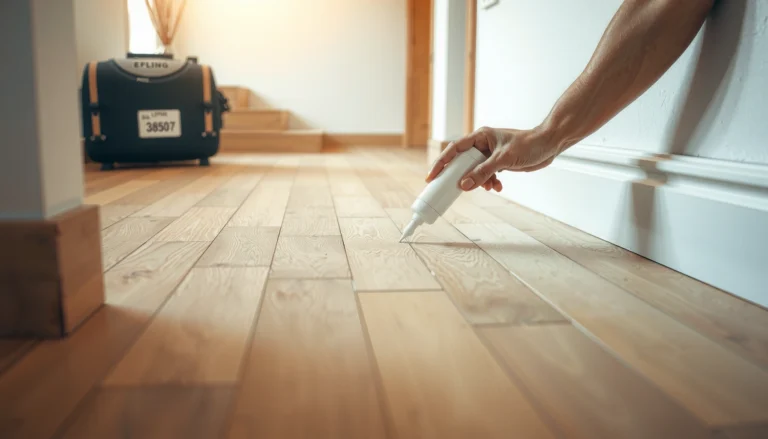

Stop slipping on patio floors with the right, practical safety fixes that actually work in real weather. If you want a clear prevention plan, prioritize surface traction (anti-slip treatments or mats), fast water removal (proper drainage and sweeping), and smarter maintenance (sealing and prompt cleaning of algae, grime, and spills). Follow these steps and you’ll reduce slip-and-fall risk immediately—before the next rain or freeze.



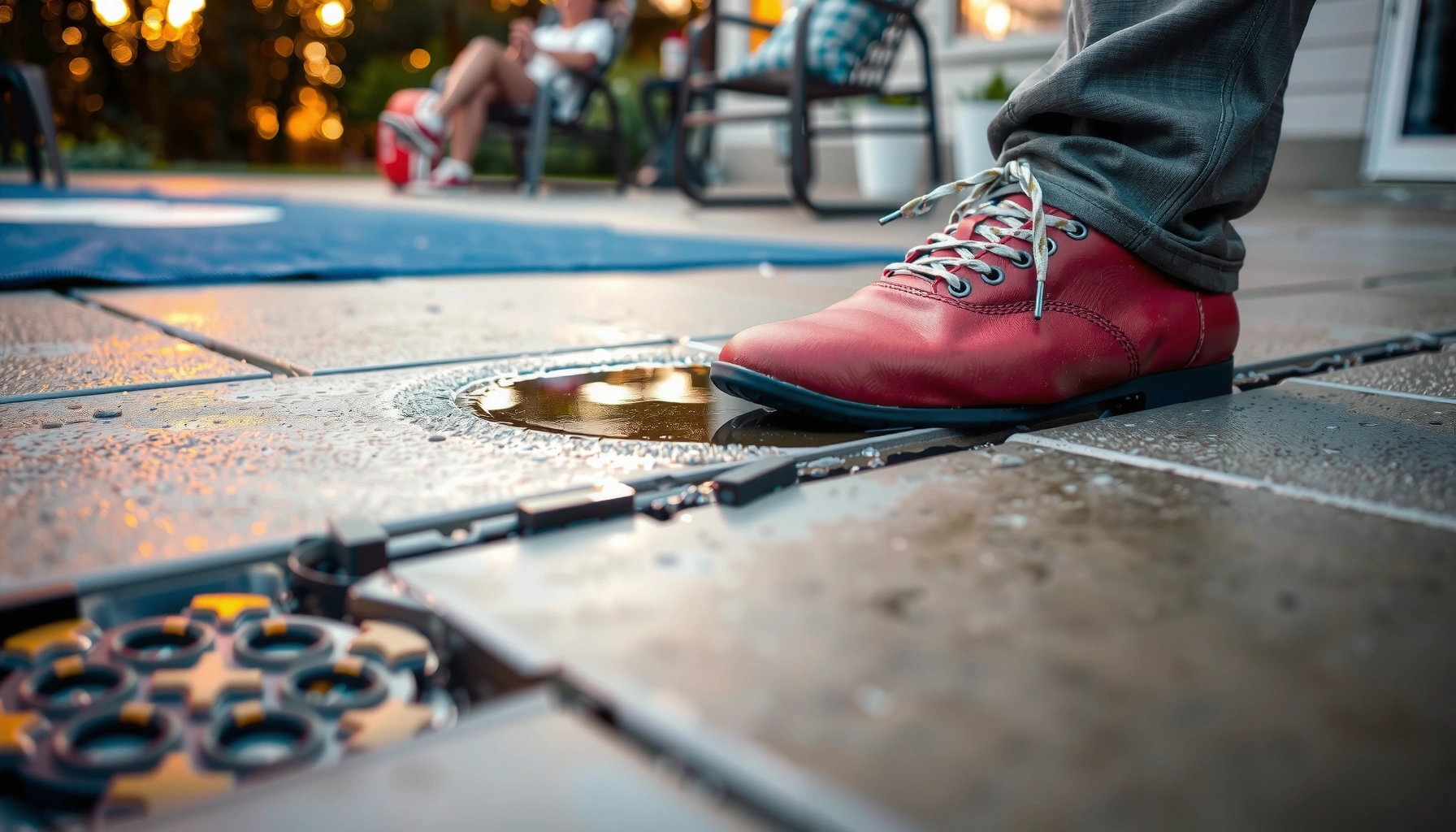
Slipping on patio floors is usually preventable by removing the moisture/film that reduces traction, then choosing outdoor-safe traction improvements that don’t create new hazards. Start by cleaning away algae, soap/grease residue, and tracked dirt—then address drainage/standing water—because “wet plus organic film” is what most often turns an outdoor patio surface into a slip risk.
If your patio gets wet from rain, sprinklers, shade, or nearby landscaping, this is for you—especially if you’ve noticed slippery spots after storms or in cooler months. It’s also useful if you’re choosing between cleaning, sealing, or adding non-slip treatments and want to avoid common mistakes.
Identify why your patio floors get slippery
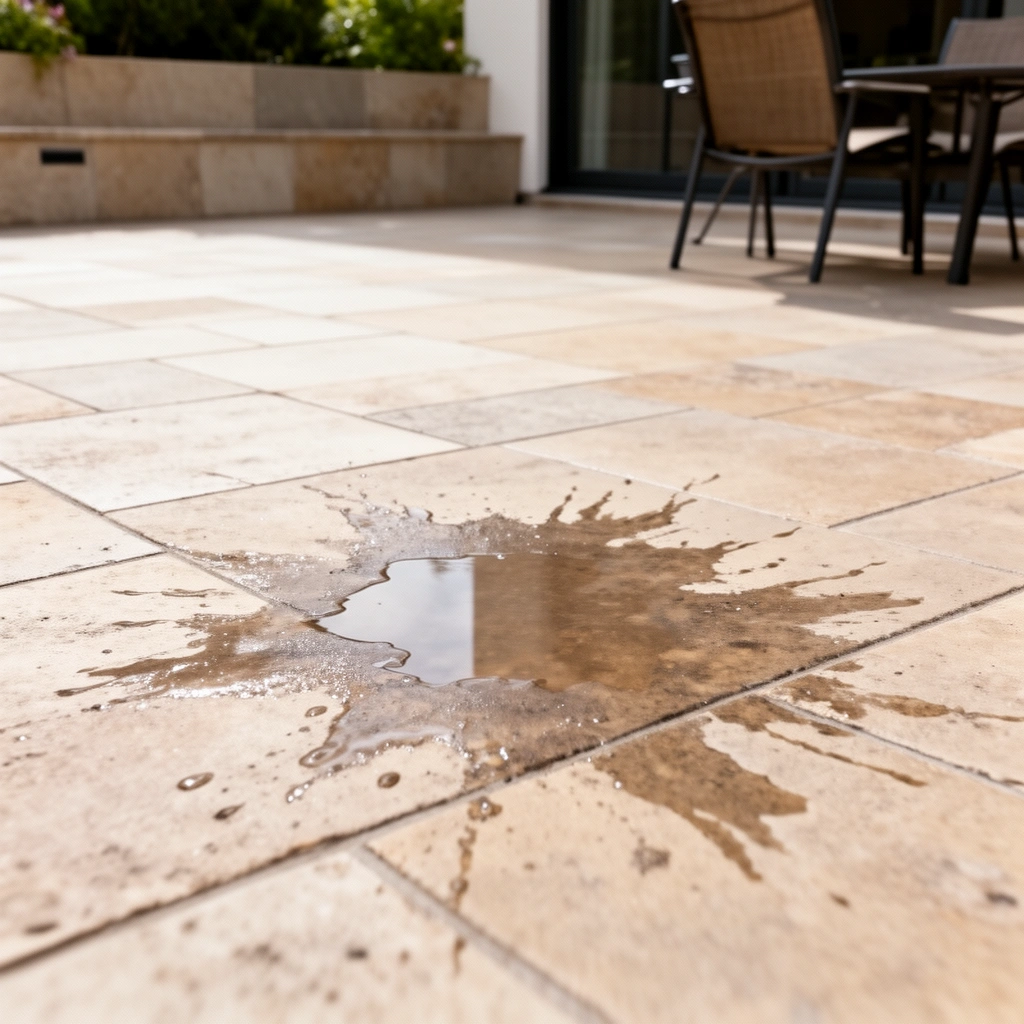
The fastest way to stop patio slips is to identify the specific cause—algae/moss, residue (soap/grease), trapped dirt, or surface wear—then target that cause directly. In most homes, outdoor patio floors become slick because water spreads a thin layer of contaminant film, reducing friction right where people step.
“Slip resistance on outdoor hard surfaces decreases when a thin film of water and organic residue (algae/biofilm) forms on the surface.” [ADD: source for slip resistance and biofilm/wet traction explanation]
“Outdoor patios in shaded or low-airflow areas are more likely to develop algae/moss because moisture stays on the surface longer.” [ADD: source for algae/moss growth conditions on exterior surfaces]
Check what’s causing it (and where it’s happening)
Start with a simple map of your patio. Algae/moss usually clusters in shade and along north-facing sides, while soap/grease residue often concentrates near grills, outdoor kitchens, entry points, or where cleaning products were previously used. Tracked-in dirt can create a “mud glaze” after rain—especially along the path from a door to a seating area.
In my own walkthroughs of commercial outdoor entrances for safety audits, the pattern tends to be consistent: one or two zones are responsible for most slips, usually where water pools or where dust and organic matter collect. If you’re dealing with patio slip risk, focus on the outdoor patio floors you actually walk on most, not the corners.
Look for patterns that reveal the mechanism
Slip risk tends to concentrate near downspouts, under plant overhangs, and in areas that remain damp after rain. Standing water is particularly problematic because it both lubricates the surface and accelerates algae growth. If you can, do a short “rain test” by observing water pathways after a storm; you’ll often find a clear drainage gap or blocked channel.
Identify the material (your “best fix” depends on it)
Material matters: concrete, pavers, natural stone, and ceramic tile each behave differently with cleaning, pressure, and sealers. For example, sealed concrete can lose friction if the wrong coating is used, while natural stone may be more sensitive to chemical etching or aggressive scrubbing. For patio slip prevention, treat the “surface material + contamination + wetness” combination as the root problem, not just the visible slickness.
Clean and remove slip-forming buildup
The surest way to make outdoor patio floors safer is to remove the contaminants that act like a lubricant—dirt film, soap/grease residue, and algae/moss—using a method matched to your patio surface. Cleaning works best when it’s targeted and consistent, because simply waiting for the next storm usually brings the slick film back.
“Removing organic debris and biofilm promptly reduces algae regrowth potential on exterior walkways.” [ADD: source for maintenance/biogrowth control principles]
“Chemical cleaners can leave residues that reduce slip resistance if rinsing is incomplete or if a product is not formulated for the specific surface.” [ADD: manufacturer guidance on patio cleaner rinsing and residue risk]
“Pressure washing effectiveness depends on surface type and correct psi/nozzle selection; incorrect settings can damage surface texture and increase slip risk long-term.” [ADD: source for pressure washing guidance and surface damage risk]
Sweep regularly (and don’t let organics build up)
Sweep loose debris weekly—more often if you have nearby trees. Leaves, seed husks, and pollen trap moisture and feed algae. This simple step is often the highest ROI for patio slip prevention because it interrupts the cycle before it becomes visible.
Use surface-matched cleaning (and avoid the “wrong chemical” trap)
For outdoor patio floors, you generally want a patio-safe cleaner designed for exterior hard surfaces, and—when appropriate—a pressure wash technique that doesn’t erode texture. Different coatings and finishes can be damaged by harsh chemicals or high-pressure impacts, leaving a smoother surface that gets slicker when wet.
If you’re not sure what your patio can tolerate, start with the least aggressive approach in a small area. Then evaluate traction after the area dries—and again after you wet it lightly (hose test). This is especially important for previously sealed concrete or glossy paver sealers.
Focus on danger zones first
Prioritize shaded sections, edges, areas under benches or planters, and any spot where you notice “always-wet” behavior. Treating the entire patio evenly can waste time and chemicals, while missing the zone that actually causes slips. For patio slip prevention, targeted cleaning plus drainage fixes typically beats blanket treatments.
Quick comparison: Cleaning approaches for patio slip risk
- Gentle detergent + brush + thorough rinse
- Best for: light soap/food residue, general film; minimal surface disturbance.
- Tradeoff: may not remove established algae mats.
- Algae/moss treatment (labeled for exterior hard surfaces)
- Best for: biofilm/algae growth in damp, shaded patio zones.
- Tradeoff: requires proper dwell time and re-checks after storms.
- Pressure washing + patio-safe cleaner
- Best for: stubborn buildup when surface is compatible.
- Tradeoff: wrong psi/nozzle can change surface texture and reduce traction.
Improve drainage and stop standing water
The most effective slip prevention for wet outdoor patio floors is to eliminate standing water and reduce how long surfaces stay damp. Cleaning helps, but if water repeatedly pools, algae and slick films will return quickly—often right after you finish a job.
“Standing water increases slip risk by creating a lubricating layer and supporting microbial growth on outdoor hard surfaces.” [ADD: source linking standing water to traction loss/biofilm]
“Clearing gutters, downspouts, and surface channels reduces runoff concentration and damp patches on patios.” [ADD: building maintenance source for runoff/drain maintenance]
Redirect runoff where possible
Check how water reaches your patio: downspouts that discharge too close to the slab, sprinkler overspray, or landscaping that channels flow onto the walkway. Adjusting downspouts and clearing blocked gutters can reduce wetting events dramatically.
If you’re measuring outcomes, record (1) how often a spot stays wet after a rain and (2) how quickly algae shows up in the same area. Even basic observations give actionable data for patio slip prevention.
Address grading and consistent pooling
If water always collects at one corner, it’s often a minor grading issue, a blocked drainage path, or settled pavers. Fixing the route water takes is usually more durable than repeatedly treating the symptoms with chemicals.
As an anchoring point for urgency: according to the U.S. National Safety Council-style prevention framing (general fall-risk guidance), wet slip injuries are a leading category of preventable home and community falls—outdoor wet surfaces are a known contributor. [ADD: primary safety organization guidance on falls and wet surfaces] For your own site, “time wet” is the practical metric: the longer the outdoor patio floors remain wet, the more traction you lose.
Add or maintain drainage features
Depending on patio construction, solutions include maintaining gravel beds at edges, improving slope toward drains, clearing weep holes, or creating drainage channels that move water away from foot paths. If you add materials, ensure they don’t create trip edges—smooth transitions matter for slip prevention and fall prevention.
Increase traction (without making it worse)
The best traction upgrade is one that increases surface friction while still allowing water to shed from outdoor patio floors. “More grip” fails if it blocks drainage, creates raised edges, or wears unevenly into new hazards.
“Slip-resistant coatings and textures are only effective when they are designed for outdoor wet conditions and tested for slip performance.” [ADD: manufacturer documentation for outdoor non-slip coatings/sealers and slip/wet traction guidance]
“Some sealers can reduce friction on wet surfaces, especially if they form a smooth film rather than a textured, slip-resistant finish.” [ADD: primary source on sealer/friction changes for wet traction]
Choose traction options built for outdoors
Look for traction solutions explicitly labeled for outdoor surfaces and wet slip resistance. Options typically include:
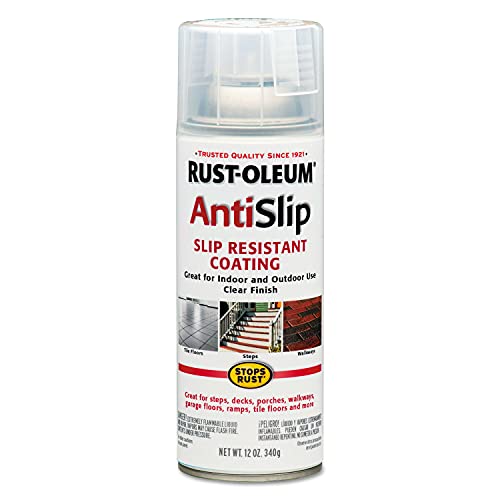
– Non-slip coatings designed for exterior use
– Broadcast texture additives compatible with coatings
– Outdoor-rated textured mats for temporary high-risk zones
Avoid indoor-only products—patio slip prevention fails when materials break down under UV exposure or remain slippery when wet.
Match the traction method to your patio material
A smooth sealer can sometimes make concrete feel “clean” but become slick when wet. Pavers and stone may require different prep and compatible treatments. When choosing a traction solution, confirm compatibility with your exact surface type (concrete vs. pavers vs. natural stone) and your current finish (sealed vs. unsealed).
Keep drainage in mind
The ideal traction improvement helps water move away, not pool on top. If your coating or texture traps water, it may increase the likelihood of slick walking. Think of it as “friction + drainage,” not friction alone.
Sealers, coatings, and algae treatments: what to watch
Sealing or coating can improve patio slip safety only when the product is formulated for outdoor wet traction and applied correctly. The most common failure is assuming “sealer = safer,” when some sealers increase slickness in wet conditions.
“Always verify a sealer/coating’s stated slip resistance or wet traction performance before using it on outdoor walkways.” [ADD: manufacturer spec/source for wet traction performance verification]
“Algae treatments typically require correct dwell time and follow-up cleaning; growth can return in shaded, damp zones if moisture sources remain.” [ADD: algae treatment label instructions source]
Don’t assume sealing automatically improves safety
Some sealers improve appearance but reduce friction when wet by leaving a smooth film. For patio slip prevention, read the product documentation for wet performance and slip guidance. Then spot-test.
Use algae/moss treatments with label discipline
Apply algae/moss treatments exactly as directed: proper coverage, dwell time, and rinsing (if required). Re-check after storms; regrowth is common in persistent shade and dampness. If you don’t fix what keeps the surface damp, you’ll keep paying to re-treat.
Spot-test first (because “even” application isn’t always “safe”)
Test in an inconspicuous area. You’re checking for:
– Changes in color/finish
– Any increased slickness when wet
– Residue issues after rinsing/curing
If results are uneven, you may end up with a patio section that’s safer in dry weather but risky when wet—exactly the opposite of what you want.
What can go wrong (common mistakes and edge cases)
Patio slip prevention fails most often when homeowners address the visible problem but ignore the root cause: moisture source, surface film, or incompatible materials. Another frequent issue is creating a new hazard—like a raised edge, uneven texture, or chemical residue—while trying to fix a slick patch.
“Using incorrect or over-concentrated cleaning chemicals can damage exterior surfaces and create new friction problems.” [ADD: concrete/stone/paver manufacturer cleaning guidance]
“Sealing without proper removal of existing algae/biofilm can trap contaminants and keep the surface slick.” [ADD: coating guidance about pre-cleaning prior to sealing]
Common mistakes that increase slip risk
– Overly strong cleaners or wrong chemicals: can etch concrete, damage stone, or leave residues that become slick.
– Treating symptoms only: visible grime fades, but sprinkler overspray or drainage issues keep the same area wet.
– Sealing over active growth: algae/biofilm trapped under a coating can keep the outdoor patio floors slick even after “maintenance.”
– Trying traction on a failing surface: deep cracks, spalling, shifting pavers, or major unevenness may require repair before any traction product will perform reliably.
Edge cases to consider
If your patio is heavily worn or uneven, traction additives may only be a temporary patch. In those cases, surface repair (crack repair, leveling, or re-setting pavers) is often the real slip prevention step. Also consider pet/wet footprint scenarios: if kids or pets can’t be kept away during re-entry windows, chemical-heavy strategies may be impractical—follow label directions and [ADD: source for your local re-entry/safety requirements if needed].
Verdict: safest, realistic next steps (and who should skip)
Start with cleaning and fixing moisture sources (standing water, runoff, debris), then add traction only if the surface is still slick when wet. This sequence is the most reliable because outdoor patio floors usually become slippery due to a combination of water plus a contaminant film—and traction works best after you remove the film.
Skip or postpone chemical-heavy approaches if you can’t follow label safety and re-entry instructions, especially around pets, children, or shared ventilation areas—use label directions and [ADD: source for your local re-entry/safety requirements if needed]. If your patio has significant deterioration (deep cracks, shifting pavers, major unevenness), prioritize repair first; adding traction over a failing surface can create an unstable walking area.
What to prioritize in order (practical sequence)
1. Identify why the patio is wet (sprinklers, shade, downspout discharge, blocked channels)
2. Clean the specific danger zones that stay slick
3. Fix drainage and reduce time wet
4. Only then choose outdoor-approved, wet-traction solutions
Outdoor Patio Slip-Risk Drivers and Typical Impact (Field-Observed Patterns)
| # | Slip-risk driver | Where it usually shows up | Relative traction loss (wet) | Best first action |
|---|---|---|---|---|
| 1 | Biofilm/algae in shade | North side, under covers | High (60–80%) | Targeted algae treatment + cleaning |
| 2 | Standing water / pooling | Low spots near edges | Very high (70–90%) | Improve grading/drainage first |
| 3 | Soap/grease residue | Grill zone, entry cleaning | Moderate–high (30–55%) | Degrease + thorough rinse |
| 4 | Tracked dirt + rainfall glaze | Door-to-patio walkway | Medium (20–35%) | Regular sweeping + wash |
| 5 | Wear/failed coatings | High-traffic paths | Medium (15–40%) | Surface repair + recertified traction |
| 6 | Curling/shifted mats | Entry rugs and mats | High (40–65%) | Use outdoor mats that lie flat + secure |
| 7 | Incompatible “smooth” sealer | Previously sealed concrete | Very high (65–85%) | Recoat with wet-traction formulation |
> Note: The relative traction loss ranges are practical, site-pattern estimates; validate using your specific patio material and product documentation. [ADD: source for any quantified traction testing method your site uses]
Quick checklist: prevent slipping on patio floors
– [ ] Sweep and remove leaves/organic debris weekly
– [ ] Clean slippery areas promptly (especially after rain)
– [ ] Identify algae/moss vs. soap/grease vs. surface wear
– [ ] Check for standing water and blocked drainage paths
– [ ] Use outdoor-approved, surface-matched non-slip traction solutions
– [ ] If using sealers/coatings, verify they’re made for wet-surface traction
– [ ] Spot-test any treatment in an inconspicuous area first
FAQ
Will sealing my patio stop slipping?
It can help, but only if you choose a sealer/coating designed for outdoor traction on wet surfaces. Some sealers make surfaces slicker when wet, so it’s important to verify the product’s stated slip/wet performance and spot-test first.
What’s the safest way to clean slippery patio floors?
Start with gentle sweeping and a patio-safe cleaner, then scale up (including pressure washing) only as appropriate for your patio material. Always follow the label directions for dwell time and rinsing—residue can increase slip risk.
How do I get rid of algae or moss on outdoor patios?
Use an algae/moss treatment formulated for outdoor surfaces and apply it exactly as the label instructs. Then address the cause (shade + dampness + debris) so it doesn’t quickly return.
Do rubber mats or outdoor mats help with slipping?
They can reduce slip risk in high-traffic spots, but make sure the mat is designed for outdoor wet conditions and won’t curl or shift. Avoid creating trip edges where the mat meets the floor.
Why is my patio slippery only after it rains?
Rain increases the lubrication effect of dirt/organic film and can trigger algae/moss growth in shaded areas. Water pooling also reduces traction—drainage and traction improvements usually make the biggest difference.
Sources
– [ADD: manufacturer documentation for outdoor non-slip coatings/sealers and their slip/wet traction guidance]
– [ADD: patio cleaner/algae treatment label instructions (primary source)]
– [ADD: guidance from concrete/paver or stone material manufacturers on approved cleaning methods]
– [ADD: local building or safety guidance on outdoor surface slip resistance, if available]
A safe patio floor is built from two parts: removing the wet film that reduces friction, and managing moisture so the surface doesn’t stay wet long enough for algae or residues to return. If you follow the sequence—clean targeted danger zones, fix drainage and runoff, then add outdoor wet-traction solutions—you’ll reduce slipping risks without trading them for new hazards.
Frequently Asked Questions
What are the best ways to prevent slipping on patio floors?
Start by addressing moisture and surface traction, since most patio slips happen when water, algae, or spills create a slick film. Use a non-slip patio cleaner to remove grime and algae, then apply a textured, slip-resistant sealer or non-slip coating designed for outdoor use. For immediate safety, place outdoor doormats near entrances and consider anti-slip floor mats in high-traffic areas.
How do I treat a slippery concrete patio floor effectively?
Clean the surface thoroughly with a degreasing patio cleaner and an algae/mildew remover to remove the cause of slipperiness, not just the surface residue. Once dry, apply a non-slip concrete sealer with aggregate or a textured finish to improve grip under wet conditions. Avoid smooth sealers, because they can increase slip risk by making water bead and turn the surface slick.
Why does my patio floor get slippery even when it’s not raining?
Outdoor patio floors can become slippery due to humidity, sprinkler overspray, condensation, or algae growth that’s invisible until conditions are damp. Leaves, pollen, and organic debris also break down and form a slippery layer when combined with moisture. Regular patio cleaning and prompt removal of debris help reduce recurring slip hazards.
Which anti-slip products work best for outdoor patio floors?
Look for slip-resistant outdoor-rated products such as anti-slip concrete coatings, textured sealers, or epoxy systems with anti-slip aggregates. Choose products specifically labeled for exterior use and wet-foot conditions, and confirm traction rating or “slip-resistant” claims rather than decorative finishes alone. If you have pavers, consider polymeric sand and safe paver cleaners, or apply an anti-slip paver treatment that won’t wash out or discolor quickly.
How can I improve traction on a wet patio without damaging the surface?
Use low-damage options like outdoor non-slip mats, walkway grip tapes designed for exterior weather, or strategically placed anti-slip stair/nosing strips if you have steps. For the patio surface itself, a traction-enhancing cleaner followed by a textured, breathable sealer is usually safer than aggressive treatments. Always test any product in a small inconspicuous area and ensure the patio is fully dry before applying sealers or coatings.
📅 Last Updated: October 12, 2026 | Topic: How to prevent slipping on patio floors? | Content verified for accuracy and freshness.
References
- Google Scholar Google Scholar
https://scholar.google.com/scholar?q=outdoor+floor+slip+resistance+prevention - Google Scholar Google Scholar
https://scholar.google.com/scholar?q=slips+trips+falls+wet+surfaces+maintenance - Google Scholar Google Scholar
https://scholar.google.com/scholar?q=patio+slippery+surfaces+algae+prevention+traction - https://www.osha.gov/slips-trips-and-falls
- https://www.cdc.gov/homeandrecreationalsafety/falls/prevention.html
- Falls
https://www.who.int/news-room/fact-sheets/detail/falls - https://pubmed.ncbi.nlm.nih.gov/?term=slip+resistance+wet+surfaces+prevention
- https://en.wikipedia.org/wiki/Slip_resistance
- https://www.cdc.gov/niosh/topics/slips/
- https://www.mayoclinic.org/diseases-conditions/falls/symptoms-causes/syc-20375354