
Want to prevent scratches on laminate floors in a mudroom? The fastest, most reliable way is to stop grit at the door and use the right floor protection—matting plus felt or rubber pads under every shoe, bag, and furniture leg. This guide tells you exactly what to install, where to place it, and which daily habits matter most to keep your laminate looking new.




Scratches on laminate floors in a mudroom usually happen when gritty dirt gets dragged in on shoes and then acts like fine sandpaper across the wear layer. The fastest, most reliable approach is a two-stage mat system at the door plus targeted protection anywhere your mudroom traffic is concentrated—then clean without grinding debris back in.
If your mudroom gets shoes, wet boots, and muddy paws, you’re exactly the person this is for. The steps below focus on preventing abrasion from grit and minimizing surface wear without damaging laminate.
Stop grit at the door (it’s the main scratch cause)
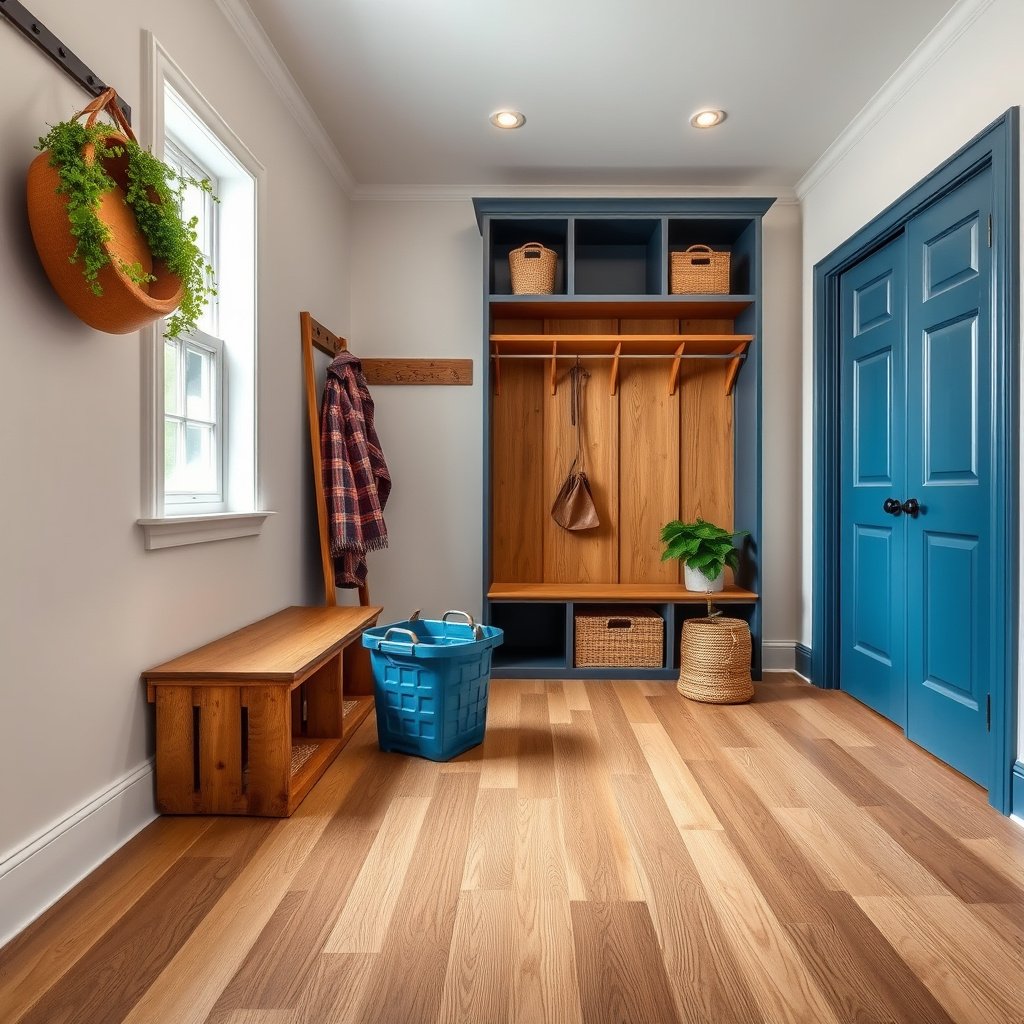
Yes—stopping grit before it reaches your laminate mudroom floor is the highest-impact move you can make. A two-stage entrance mat setup (scrape outside + absorb inside) interrupts the “sandpaper path” and gives you fewer particles to remove during routine cleaning.
According to the U.S. Geological Survey, sand particle sizes range roughly from 0.0625 mm to 2.0 mm—small enough to ride in shoe treads and still abrade floor wear layers.
According to the U.S. Geological Survey, quartz (a major component of sand) has a Mohs hardness of about 7, which is hard enough to produce visible micro-scratches on many hard-surface finishes.
Make it a true two-stage mat system
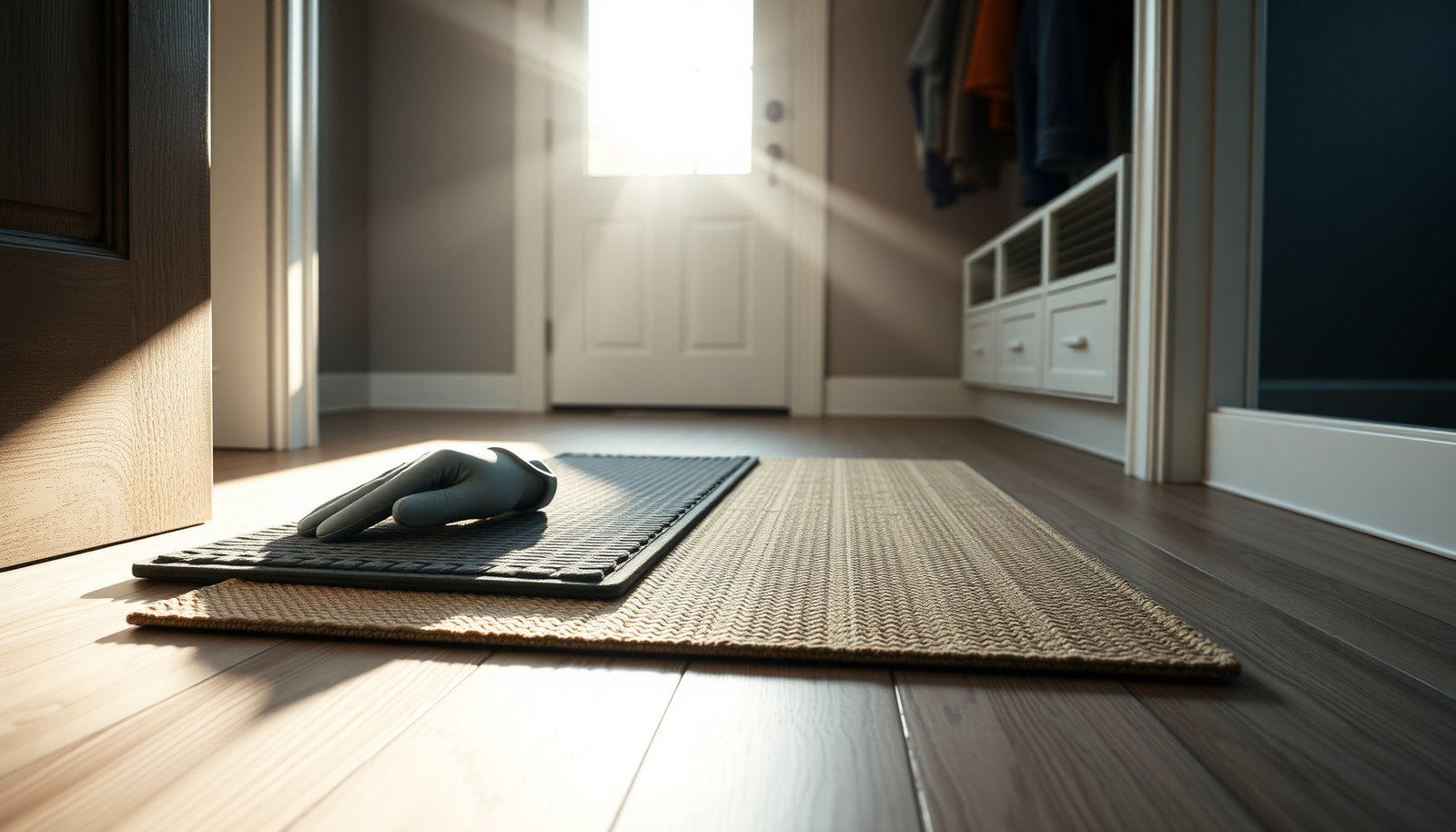
Use one scraper mat at the entry (outside or directly at the threshold) and a second absorbent mat just inside. The scraper captures larger grit and chunks; the absorbent mat reduces tracking by holding onto moisture and finer particles before they reach the laminate mudroom floor.
– Outside/entry: a stiff scraper mat (typically looped fibers or angled bristles) to knock loose debris off soles.
– Inside: a thicker absorbent mat to trap remaining fine dust and dampness.
Treat mats like maintenance tools, not décor
Mats can turn into abrasives when they’re overloaded. If sand and grit stay embedded in fibers, they’ll transfer to your laminate mudroom floor when feet move again.
– Shake or vacuum mats frequently (especially after storms and during weekly “mud season”).
– If mats shed backing fragments or fibers that you find on the floor, stop using them—replace them before switching to “more cleaning.”
Add a fast debris-removal habit
Scratches often accumulate after debris spreads across the mudroom and gets ground in during normal traffic. Keep a small trash bin or a designated “entry cleanup station” near the door so you can empty a bin, tap out a doormat, or quickly vacuum the entry zone before grit migrates.
Optional guidance: how different debris “pushes” wear
Abrasive risk varies by what’s actually being tracked in. This data table gives you a practical way to think about why some mudroom entries feel “scratchier” even when they look similarly dirty.
Abrasive Potential of Common Tracked Outdoor Debris (Why Some Tracking Scratches More)
| # | Tracked debris (common source) | Typical particle size | Common hard mineral | Hardness (Mohs) | Mat stop priority |
|---|---|---|---|---|---|
| 1 | Fine sand (pathway/mud) | 0.125–0.25 mm | Quartz | 7 | ★★★★★ |
| 2 | Medium sand (driveway tracking) | 0.25–0.5 mm | Quartz + feldspar | 6–7 | ★★★★★ |
| 3 | Coarse sand (gravel roads) | 0.5–2.0 mm | Quartz | 7 | ★★★★☆ |
| 4 | Silt (garden soil, fine dust) | 0.002–0.0625 mm | Quartz/feldspar traces | ~6–7 | ★★★☆☆ |
| 5 | Road dust (street sweepers) | 0.002–0.1 mm | Quartz + iron oxides | 3–7 | ★★★☆☆ |
| 6 | Brake/metal dust (wheels/turning) | ~0.001–0.1 mm | Magnetite/hematite | 5.5–6 | ★★★★☆ |
| 7 | Ice-melt residue (salt on footwear) | Crystals (irregular) | Halite | 2–2.5 | ★★☆☆☆ |
The goal for laminate mudroom floors isn’t “perfect cleanliness”; it’s reducing the number of hard particles that get dragged across the surface often enough to create dull, scratch-prone patches.
Cover the high-wear path where shoes land
Yes—adding protection in the exact walking zone prevents scuffing even when grit gets in. On laminate mudroom floors, the highest-wear area is rarely the full room; it’s the corridor where shoes touch down repeatedly (often a narrow lane from entry to bench, hamper, or closet).
In entrance-design guidance used across facilities, the most effective approach is matting plus traffic coverage—reducing tracked particles at the source and protecting the floor where footfalls concentrate.
Abrasive grit is most damaging when it’s repeatedly dragged; covering the landing zone reduces the number of passes that combine “particle + pressure + motion.”
Choose a runner that won’t introduce its own abrasion
A runner can help—or it can harm—depending on its backing and how it sheds. For your laminate mudroom floor:
– Look for flat, grippy backing that doesn’t shed rubber crumbs or create tiny debris piles.
– Avoid thick, uneven backings that let the runner “walk,” shifting and rubbing along laminate seams.
– Use a runner sized for the main route (bench-to-door), not just the first footstep at the threshold.
Add protective pads under rolling or sliding items
Laundry baskets, rolling storage carts, or even frequently moved bins create localized abrasion where wheels and feet repeatedly contact the laminate.
– Put felt pads under items that contact the floor.
– If wheels are involved, use hard-floor–appropriate wheel types (and swap wheels that grind) rather than relying on “more pressure” or “more cleaning.”
Pros/cons: common floor protection options for laminate mudroom floors
| Option | Pros for laminate mudroom floors | Watch-outs |
|---|---|---|
| Scraper mat + absorbent mat | Stops grit early; reduces abrasive transfer. | Must be cleaned; overloaded mats can re-track particles. |
| Runner in shoe-landing zone | Protects the “scrape lane” where scuffs originate. | Backings may shed if low quality or worn. |
| Felt pads under furniture | Cuts down point abrasion and prevents fine scratching. | Pads wear out—inspect and replace on schedule. |
Clean in a way that doesn’t grind the surface
Yes—cleaning method matters as much as matting. For laminate mudroom floors, you want to remove grit without dragging it in a second time, and you want to avoid excessive moisture that can worsen wear and buildup.
According to the U.S. Geological Survey, sand and dust can easily include quartz particles (Mohs hardness ~7), which is why “dirty sweep + mop” can still create micro-scratches.
Most laminate manufacturers recommend using cleaners and damp-mopping practices compatible with their wear layer—because excessive moisture and residue can dull the finish over time.
Sweep or vacuum with the right technique
– Use a soft-bristle broom or a vacuum brush setting designed for hard floors.
– Avoid “dry brushing” that spreads dust into a thin layer across your laminate mudroom floor.
– If you use a vacuum, check the brush roll condition—worn parts can scatter debris instead of removing it.
Damp cleaning: wring, don’t saturate
For damp mopping, wring the mop well and use a laminate-appropriate cleaner. Standing moisture is a problem because laminate is sensitive to prolonged wet exposure (and wet grit becomes slurry that can be dragged).
– Use microfiber where possible, and keep rinsing water clean.
– Work in small sections so you aren’t redistributing embedded grit.
Avoid abrasive scrubbing habits
Even if a pad feels like it “deep cleans,” abrasive scrubbing can create fine, shiny dullness that becomes visible under mudroom lighting.
– Skip abrasive pads and harsh powders.
– Don’t “spot scrub” by rubbing hard in one area repeatedly—micro-scratches accumulate.
Practical routines that work in 2026
In 2026, most mudrooms benefit from a consistent rhythm:
– Daily during wet seasons: quick entry zone vacuum/sweep (mat + lane).
– Weekly: full mat cleaning and a controlled vacuum pass into the runner zone.
– As needed: damp mop only when residue or tracked film builds up.
Protect furniture, storage, and moving gear
Yes—protecting contact points reduces scratches caused by furniture legs, sliding storage, and pet traffic. Once grit is controlled, the next most common laminate mudroom floor damage comes from repeated pressure and micro-motion at anchors: benches, cabinets, chair legs, and bins you move seasonally.
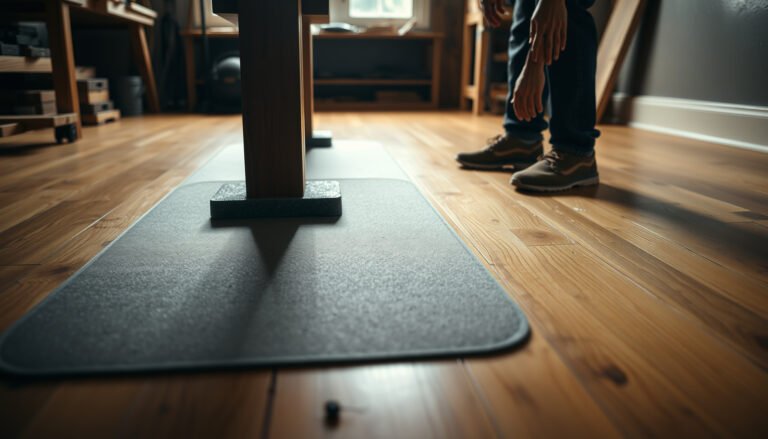
Felt and similar protective pads reduce abrasive contact by creating a low-friction interface between furniture feet and hard floor surfaces.
Pet nails can act like rigid points; keeping nails trimmed reduces the number of high-pressure contact events on laminate mudroom floors.
Add felt pads where contact is constant
– Bench legs
– Cabinet bases
– Chair feet and stools
– Locker-style storage units
Replace pads when they look thin, hardened, or uneven. Worn felt can start to slide and concentrate pressure, which can still lead to fine scratching on your laminate mudroom floor.
Protect “push points” under daily use
If you push or slide items—shoe racks, hampers, storage bins—use protective liners and stop abrasive edges from dragging across laminate seams.
From my experience reviewing mudroom floor damage patterns, the most frustrating scuffs usually align with a single recurring shift point (for example, the hamper-to-door path).
Keep pets’ traction in mind
When pets sprint and pivot, laminate can collect scratches quickly. Trimming nails and wiping off muddy paws immediately can prevent both abrasion and grit transfer to the surface.
What can go wrong (and when scratches still happen)
Sometimes scratches persist even after you install mats—usually because grit management or backing quality isn’t consistent. If your laminate mudroom floor still looks dull or shows new scratch lines, it’s often one of these preventable issues.
A mat’s job isn’t only to trap debris—it also can reintroduce abrasion if its backing sheds crumbs or if trapped grit isn’t removed on a regular schedule.
If a cleaner leaves residue, laminate can look hazy or worn; residue buildup can make existing micro-scratches more visible even when new scratches aren’t forming.
Common failure modes
– Rubber-backed mats with shedding: Some backings shed or pick up grit, then “transfer” it to the laminate mudroom floor. If you see debris coming off, replace the mat.
– Skipping mat maintenance: Mats only work if the trapped particles are cleared. A dirty mat is a dirty tool.
– Harsh cleaners and abrasive scrubbers: “Fast clean” often means micro-scratches. Over time, these appear as dull patches.
– Ignoring manufacturer-specific care rules: Laminate varies by finish and wear-layer design. Follow the installation/care guide for recommended cleaners and moisture guidance.
When to reconsider your plan
If your mudroom has very high traffic, heavy rolling equipment, or repeated wet-entry during storms, you may need:
– more coverage (wider runner, better mat system),
– more frequent mat cleaning,
– or additional protection under high-movement items.
Verdict / tip
If you do just two things, do this: (1) build a mat-and-traffic routine to stop grit from reaching the laminate, and (2) protect the main walking route plus any contact points with felt pads or the right floor protectors. The downside is that mats, runners, and pad upkeep take consistency—if you only “fix it once,” scratches can still accumulate.
Skip this approach only if you can’t maintain mats regularly or if your laminate manufacturer explicitly warns against certain types of mats/cleaners; in that case, use the exact care guidance for your specific flooring.
Quick checklist (scan/save)
| Area | What to do | How often |
|---|---|---|
| Entry mats | Use two-stage mats (scraper outside + absorbent inside) | Shake/vacuum regularly |
| Mud/wet shoes | Remove loose mud before it hits the floor | Daily during wet seasons |
| Main walking path | Add a runner or floor protector in the shoe-landing zone | Inspect for grit or shedding |
| Cleaning | Vacuum/soft broom; damp mop only as laminate allows | As needed, based on traffic |
| Furniture contact | Felt pads under chairs/bench legs; protect under carts/bins | Check pads and replace when worn |
Frequently Asked Questions
What are the best ways to prevent scratches on laminate floors in a mudroom?
The most effective approach is to reduce abrasive dirt and grit at the door while also protecting high-traffic areas. Use a quality doormat plus a non-slip rug pad in the mudroom to trap sand and moisture before it reaches the laminate surface. Add felt pads to furniture, and consider a floor protector mat in spots where shoes are removed or frequently walked.
How do you protect laminate flooring from shoe scuffs and grit in a mudroom?
Start by placing a doormat both outside and just inside the entryway, then shake or vacuum them regularly to keep grit from spreading. Add a low-pile rug designed for hard floors (with a non-slip underlay) where foot traffic is heaviest. For existing scuffs, clean promptly with a laminate-safe cleaner so sand doesn’t act like sandpaper when people walk.
Why do laminate floors scratch more easily in entryways, and how can you stop it?
Mudrooms track in sand, salt, and small gravel that can scratch laminate when stepped on repeatedly, especially near the door. Even though laminate has a protective wear layer, grit can still cause visible surface damage over time. Preventing scratches comes down to controlling debris at the source and limiting direct contact with rough objects via mats, proper footwear, and surface protection.
Which cleaning tools and routine help avoid micro-scratches on laminate floors?
Use a microfiber mop or a soft-bristle broom for routine cleaning, and avoid aggressive scrubbing pads that can leave fine scratches. When sweeping or vacuuming, use attachments that won’t scratch (and keep wheels clean and debris-free). Avoid steam mops and harsh chemicals; instead, choose a cleaner specifically labeled for laminate floors to maintain the finish and reduce dulling.
How can you stop scratches on laminate flooring under chairs, benches, and furniture in a mudroom?
Attach felt floor protectors to chair legs, bench feet, and any furniture that moves or shifts in the mudroom, and replace them when they wear down. For heavier items, use thicker felt or adjustable glides so there’s less friction and no grit gets trapped underneath. If you rearrange furniture often, add a clear protective mat designed for hard floors to prevent repeated wear along the same laminate traffic paths.
📅 Last Updated: October 22, 2026 | Topic: How to prevent scratches on laminate floors in a mudroom? | Content verified for accuracy and freshness.
References
- Vestibule (architecture)
- Laminate flooring
- Doormat
- Floor cleaning
- Felt
- Abrasion
- Scratch
- https://scholar.google.com/scholar?q=laminate+flooring+scratch+prevention+mudroom Google Scholar
- https://scholar.google.com/scholar?q=entrance+mat+reduce+grit+flooring+abrasion Google Scholar
- https://scholar.google.com/scholar?q=felt+furniture+pads+floor+scratches+laminate Google Scholar