
Preventing scratches on laminate floors in a basement is mostly about stopping grit and sharp debris before they reach the surface. Use the right entry mats and felt pads, keep heavy items off the finish during moves, and manage moisture so sanded edges don’t abrade. Follow these steps and you’ll significantly reduce visible scuffs—without replacing your floor.




You prevent most basement laminate scratches by keeping abrasive grit off the floor at entry points and by protecting furniture with felt or rubber pads that prevent grinding. Because basements also swing in humidity, moisture control matters too—swollen boards and lifted seams trap debris that then abrades laminate finishes.
If your basement gets tracked-in dirt from shoes, has pets, or sees seasonal construction work (moving boxes, laundry baskets, tools), this is for you—especially if you’ve noticed scuffing near doorways and along common walk paths.
Protect entryways and walk paths
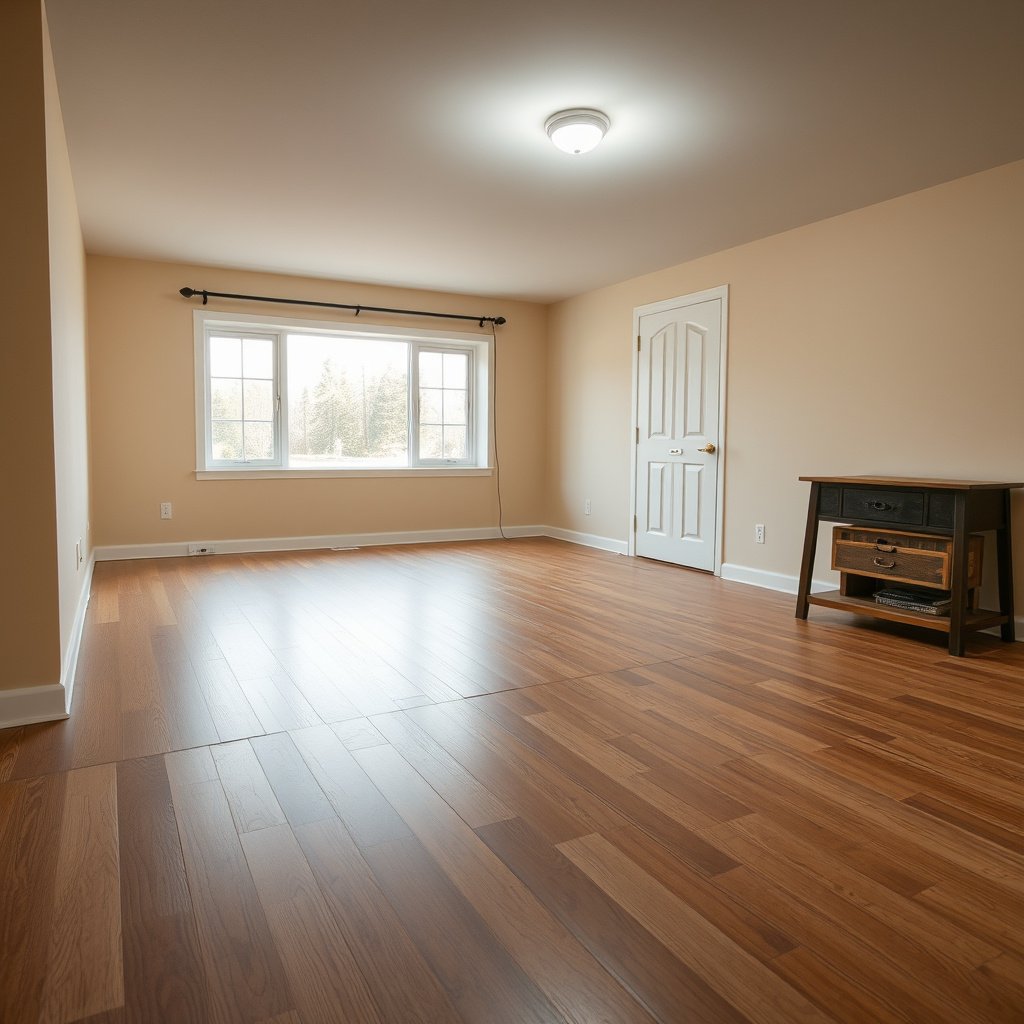
You reduce laminate scratches the most where grit first lands: at step-downs, door thresholds, and the first 6–10 feet of your basement travel routes. Here’s the logic: abrasive particles only need one pass to dull a laminate surface, and that initial damage “feeds” future scratches every time someone walks across the same lane.
– Add a proper doormat system at the top and bottom of steps/doorways (a scraper mat first, then a low-pile mat) to catch grit before it hits the laminate.
A scraper mat breaks up and removes larger debris (think sand and grit clumps). A low-pile mat then captures the fine particles that a scraper can’t hold—this is the part that matters for laminate floors because the fine stuff behaves like micro-sandpaper.
– Place area rugs or durable runners in high-traffic routes (laundry path, storage corridor) and use non-scratch underlay meant for hard floors.
Use a runner that doesn’t have a rough backing; hard backing can shift and create friction points. For laminate floors, non-scratch underlayment also prevents the rug from “walking,” which is a common source of repeating scratch lines.
– Keep a “no shoes” rule for indoor entry areas if possible, or at least require shoe cleaning before stepping into the basement.
This doesn’t have to be strict everywhere—just eliminate the repeated exposure in the places your basement laminate floors see the most traffic.
Quartz in sand ranks about 7 on the Mohs hardness scale, which means even a light layer of grit can act like abrasive sandpaper on laminate finishes.
According to CDC guidance on indoor environmental conditions, keeping indoor relative humidity around 30%–50% helps limit moisture-related problems that can indirectly worsen floor wear.
Quick, basement-friendly movement design
I’ve found that the scratch “hot lines” on laminate floors usually follow human behavior: the same path to laundry, storage, or the workbench. —then place your first rug/runner and mat exactly there, not just “near the door.”
Use floor-safe pads for furniture and appliances
You prevent the majority of furniture-caused basement scratches by stopping hard contact and cutting sliding/grinding friction. Laminate floors get damaged when chair legs, cabinet corners, and rolling appliances repeatedly drag grit across the same micro-area.
– Fit felt pads (or manufacturer-approved pads) on chair legs, cabinets, and rolling carts; replace them when they wear down or collect dust.
Felt that’s worn flat becomes a friction surface rather than a cushion. On basement laminate floors, this often shows up as dull “rubbing bands” along the edges of furniture.
– Use wider protective pads under heavier items to reduce point pressure that can leave dull marks and fine scratches.
Point pressure is what turns a small grit particle into a gouge. Wider pads spread the load so the laminate finish isn’t stressed in one small zone.
– For anything that gets moved often (workbenches, small appliances, rolling bins), consider swapping to non-marking, soft-roller casters instead of dragging.
Dragging may look like “only a small scuff,” but dragging repeatedly re-scratches laminate floors that were already dulled by entry grit.
Using protective pads reduces sliding abrasion because the pad material (felt/rubber/approved plastic) takes the friction load instead of the laminate wear layer.
Worn or debris-filled felt pads can become abrasive, so replacing pads when they flatten or gather grit is part of scratch prevention, not optional maintenance.
Pros/cons: pads vs. casters (when scratches keep returning)
| Option | Pros (for laminate floors) | Cons / Watch-outs |
|---|---|---|
| Felt/rubber pads | Stops direct contact; good for chairs, cabinets, and occasional repositioning. | Must be replaced when worn or when dust builds up in the fibers. |
| Soft non-marking casters | Cuts down dragging; helps with heavy items that move often in basements. | Hard casters and gritty wheels can grind—choose models rated for hard floors. |
Clean to prevent abrasive scratches
You prevent scratches faster with “abrasive removal” cleaning than with heavy wet mopping. For basement laminate floors, dry debris control matters because loose grit acts like an abrasive slurry the moment you move a broom or brush across the surface.
– Sweep or vacuum regularly with a floor setting designed for hard surfaces; avoid attachments that can scratch (e.g., worn wheels, rough brush heads).
Use a hard-floor setting and keep an eye on brush rollers and wheels—basement dust collects in these parts, and then you effectively “polish” grit into the laminate finish.
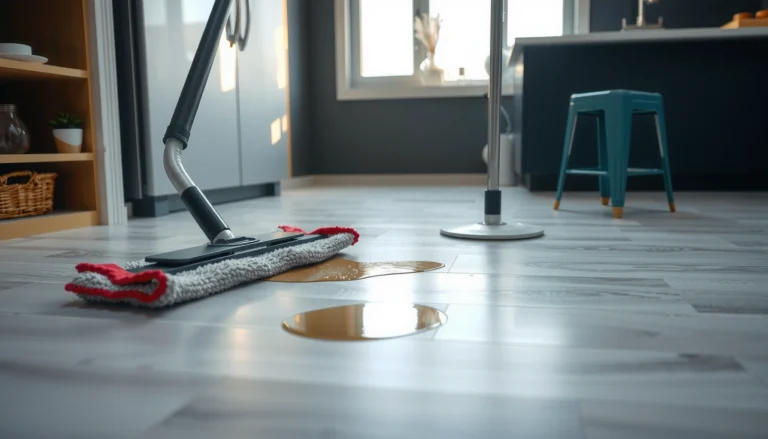
– Use a damp microfiber mop rather than soaking—standing water can cause damage and make debris more likely to stick.
Laminate is sensitive to excess moisture at seams and edges. A damp microfiber mop lifts remaining soil while limiting the risk of swelling near joints.
– Remove grit immediately: if you see sand/particles, don’t “wipe it around”—pick it up first, then clean the area.
This is the single biggest behavior that preserves laminate floors. Rubbing grit over the surface is what turns faint dust into visible scratch patterns.
USGS sediment classification puts sand grain sizes at roughly 0.0625–2.0 mm—small enough to spread across laminate floors and large enough to abrade the finish.
CDC’s indoor humidity guidance (about 30%–50% RH) helps reduce moisture-driven problems that can loosen laminate edges and trap dirt in joints.
What grit “does” to laminate (so prevention makes sense)
Abrasive scratches are a three-step process: (1) grit gets on the floor, (2) grit is dragged or rubbed across the wear layer, and (3) moisture or damaged seams let debris nest where it’s harder to remove. The key is to interrupt step one and step two consistently for basement laminate floors, not just during deep cleaning.
To make that practical, here’s how common abrasive materials differ in hardness and typical particle size behavior.
Abrasive Grit Types That Commonly Scratch Basement Laminate (Hardness & Grain Size)
| # | Abrasive grit (dominant mineral) | Mohs hardness | Typical grain size class (mm) | Most common basement source | Scratch risk |
|---|---|---|---|---|---|
| 1 | Quartz sand | 7 | 0.0625–2.0 | Tracked-in yard/driveway sand | ★★★★★ |
| 2 | Feldspar dust | 6 | 0.0625–2.0 | Concrete/mortar abrasion particles | ★★★★☆ |
| 3 | Calcite particles | 3 | 0.0625–2.0 | Crushed-limestone tracked-in grit | ★★★☆☆ |
| 4 | Gypsum (drywall) dust | 2 | 0.0039–0.0625 | Drywall sanding/cleanup | ★★☆☆☆ |
| 5 | Talc (soft dust) | 1 | 0.0039–0.0625 | Powdery soil amendments / very fine dust | ★☆☆☆☆ |
| 6 | Hematite-rich grit | 5–6 | 0.0625–2.0 | Iron-oxide laden soil/sand | ★★★☆☆ |
| 7 | Magnetite-rich dust | 5.5–6.5 | 0.0625–2.0 | Rock/soil tracked from certain yards | ★★★★☆ |
Note: the “typical grain size class” in this table uses USGS grain-size sediment classes; real basement mixes vary by region and activity.
Basement-specific moisture and underlayment checks
You prevent “scratch-like” damage by keeping laminate floors dimensionally stable and by ensuring seams don’t lift and trap debris. In basements in 2026, humidity swings and minor leaks are common—and once joints loosen, trapped particles abrade the laminate finish as people walk over them.
– Control humidity so the floor stays dimensionally stable; follow your laminate manufacturer’s recommended humidity range and use a dehumidifier if needed.
A baseline humidity target keeps boards from expanding/contracting repeatedly. If you only focus on cleaning but let humidity drift, abrasive particles still get trapped in the same seams on basement laminate floors.
– Check for standing water risks (dehumidifier drain lines, condensation near vents, slow leaks from walls/ceiling) because swelling and joint issues can lead to damage that looks like scratches.
Water doesn’t always leave obvious puddles. Condensation can wet edges; slow leaks can raise sections enough to catch grit.
– Inspect your underlayment and seams: if you notice repeated lifts, gaps, or movement, address the root cause so trapped dirt doesn’t abrade the surface over time.
If your laminate floors are click-lock (floating), movement can magnify abrasion. If glued down, moisture migration can still weaken the bond near edges.
CDC guidance supports indoor relative humidity around 30%–50% to reduce moisture-related risks, which also helps keep laminate floors from cycling between dry and damp states.
Moisture near laminate seams can cause dimensional change that creates edge lifting—lifting changes how grit is retained and increases abrasion on the laminate wear layer.
A practical control method (the same thinking we use for preventive maintenance)
A simple preventive plan works best: (1) set a humidity baseline, (2) inspect seams after high-humidity weeks, (3) clean abrasive grit before it accumulates, and (4) correct leaks early. This is basically a PDCA-style loop (Plan-Do-Check-Act) applied to basement laminate floors—measure (or at least monitor), then act fast.
How to handle pet activity and seasonal grit
You stop pet- and season-driven scratches by reducing tracked particles and by preventing repeat abrasion from nails and moving objects. Basements often become the main “drop zone” in winter and early spring, and that’s exactly when laminate floors tend to accumulate sand-like dust.
– Use washable mats near pet zones and feeding areas; pets track dry dirt that can act like sandpaper.
Put mats where the pet enters and where you feed, not just where you notice scratching. For basement laminate floors, the early capture step prevents grit from spreading into the walk paths.
– Trim pet nails regularly and consider nail caps if your basement is their main activity space—long nails often cause narrow, repeating scratch lines.
Nail damage is often misunderstood as “abrasion.” If you see parallel, repeating fine lines, nails are a strong suspect.
– During seasonal moves or DIY projects, cover the laminate with a protective floor covering (and keep edges taped down so debris doesn’t slip underneath).
Construction dust and tiny dropped hardware are high-risk because people move in-and-out repeatedly, dragging particles across the same spots on basement laminate floors.
If indoor relative humidity rises, pet activity and dust can combine to keep floors damp at the edges, increasing the likelihood of joint issues that trap grit.
Washable entry and pet-zone mats function as a “first line” barrier that reduces the number of abrasive particles that reach basement laminate floors.
In my day-to-day troubleshooting, the scratch pattern usually matches where carts or pet traffic turns—. Even without formal testing, this mapping approach keeps laminate floors from taking the brunt of repeat contact.
What can go wrong (and the most realistic scratch-prevention verdict)
You can still get scratches even with a great plan—most failures come from abrasion you accidentally reintroduce during cleaning or from moisture that you didn’t correct. The realistic verdict is that scratch prevention works best as a routine, not a one-time “deep clean” event.
– Common mistake: using the wrong “cleaning tool.” Even a seemingly gentle broom or a vacuum brush with worn bristles can grind grit into the finish—stick to smooth, hard-floor-safe tools and microfiber cloths.
Basement laminate floors don’t forgive repeated micro-abrasion; the finish can look dull long before you see obvious scratches.
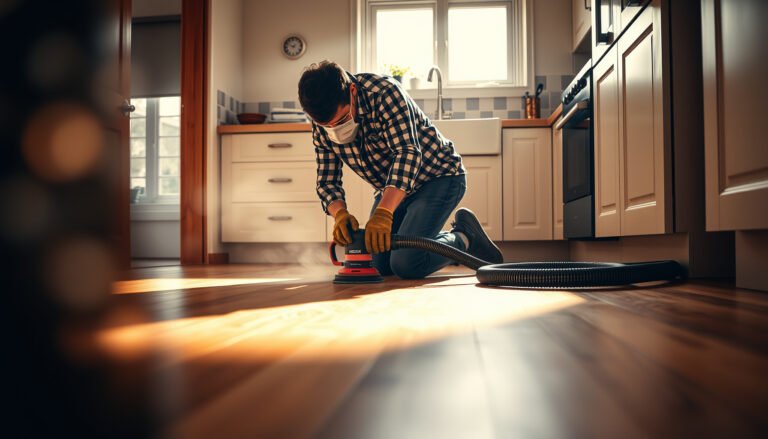
– Edge case: temporary construction dust. If people are finishing drywall, sanding, or cutting materials, laminate scratches will spike no matter what—cover the floor during dusty work.
Dust control is the only reliable option during those periods because grit load overwhelms routine mat-and-pad strategies.
– Verdict/tip: The best approach is a simple routine—mat at entries + pads under furniture + correct dry cleaning (vacuum/sweep) + damp microfiber only when needed. Downside: this takes consistent habits; if you ignore entry grit or keep moving heavy items without protection, scratches will still happen. Skip or adjust if your laminate manufacturer specifically prohibits certain cleaners, pads, or underlayment—always follow the flooring warranty/maintenance guidance for your exact brand and model.
Worn vacuum brush heads and rough sweeping tools can transfer grit across laminate floors, increasing abrasion instead of removing it.
During construction-like dust events, covering basement laminate floors reduces the grit load so routines (mats/pads) don’t get overwhelmed.
Where people typically lose the battle (and how to recover)
If scratches keep appearing in the same lane, it usually means one of three things: the entry mat system is incomplete, furniture pads are worn or missing, or seams are lifting due to moisture. Treat it like a maintenance diagnosis: observe the scratch zone, trace it to its likely “source action,” then change one variable at a time.
Quick checklist you can save
| Area | What to do | Frequency |
|---|---|---|
| Entry zones | Scraper mat + low-pile mat (or runner) | Every day you enter |
| Furniture | Felt/rubber pads; replace worn pads | When you notice rough wear |
| Cleaning | Vacuum/sweep hard-floor setting; microfiber damp mop | Weekly (or more in high-traffic times) |
| Basement conditions | Keep humidity within manufacturer range; watch leaks/standing moisture | Ongoing; check after storms/more humid weeks |
| Pets & moves | Nail care + mats near pet areas; cover floor during dusty DIY | Ongoing / during projects |
Sources
– CDC guidance on indoor relative humidity targets to reduce moisture-related risks
– USGS information on mineral hardness (Mohs scale) and grain-size sediment classifications
– ASTM and related standards (use depends on your laminate type and installation):
Keeping laminate floors scratch-free in a basement comes down to controlling grit and preventing abrasion: mat entry points, protect furniture with pads, and clean with hard-floor-safe tools (microfiber damp mopping only when appropriate). Add basement moisture control to keep joints stable and debris from nesting, and cover the floor during dusty moves or DIY projects—your laminate’s surface will stay smoother for longer when you treat prevention as an everyday system rather than a one-off task.
Frequently Asked Questions
What are the best ways to prevent scratches on laminate floors in a basement?
Start by using felt pads or rubber feet under all furniture legs, including sofas, chairs, and storage bins. Place a quality entry mat at every basement doorway and use area rugs in high-traffic paths to catch grit that causes scuffs. Keep pet nails trimmed and consider a soft underlayment rug pad to protect laminate from sliding damage.
How can I stop dirt and grit from scratching my basement laminate floors?
Sweep or vacuum regularly with a soft-bristle attachment, since sand and dust act like sandpaper on laminate. Wipe up spills promptly and avoid dragging cleaning tools across the surface; use a damp mop designed for laminate floors instead. Encourage a “clean shoes” rule and consider a doormat system so debris doesn’t get tracked onto the basement floor.
How do I protect laminate flooring from scratches caused by furniture moving or cleaning?
Use furniture sliders or gliders under heavy items so you can move them without scraping the surface. When cleaning, lift and place mops and vacuums rather than dragging them, and avoid abrasive pads. If you need to work in the basement, lay down temporary floor protectors or a breathable construction mat to prevent accidental scratches.
Why do laminate floors scratch so easily in basements, and what can I do about it?
Basements often collect more grit and moisture from tracked-in dirt, and laminate flooring can show scratches from tiny particles even when the floor looks clean. Temperature and humidity swings can also make flooring and underlayment less forgiving, increasing the chance of scuff marks. Use protective mats, maintain stable humidity, and ensure the laminate is installed over the correct underlayment to reduce movement and abrasion.
Which maintenance habits help keep laminate floors scratch-free long-term?
Maintain a routine that includes weekly vacuuming/sweeping and quick spot cleaning to prevent abrasive debris buildup. Reapply protective products that are specifically approved for laminate flooring (avoid waxes or harsh chemicals that can damage the finish). Keep sharp tools, shelving hardware, and sports equipment secured with pads or covers, and inspect high-risk areas like near doorways and under couches for early scratch prevention.
📅 Last Updated: October 22, 2026 | Topic: How to prevent scratches on laminate floors in a basement? | Content verified for accuracy and freshness.
References
- https://www.epa.gov/mold/moisture-control-home
- https://www.cdc.gov/mold/default.htm
- Laminate flooring
- https://www.armstrongflooring.com/flooring-care-and-maintenance.html
- MohawkFlooring
- https://scholar.google.com/scholar?q=laminate+flooring+scratch+prevention+felt+pads Google Scholar
- https://scholar.google.com/scholar?q=prevent+floor+scratches+keeping+grit+off+hard+surface+floors Google Scholar
- https://scholar.google.com/scholar?q=basement+humidity+laminate+flooring+expansion+moisture+maintenance Google Scholar