
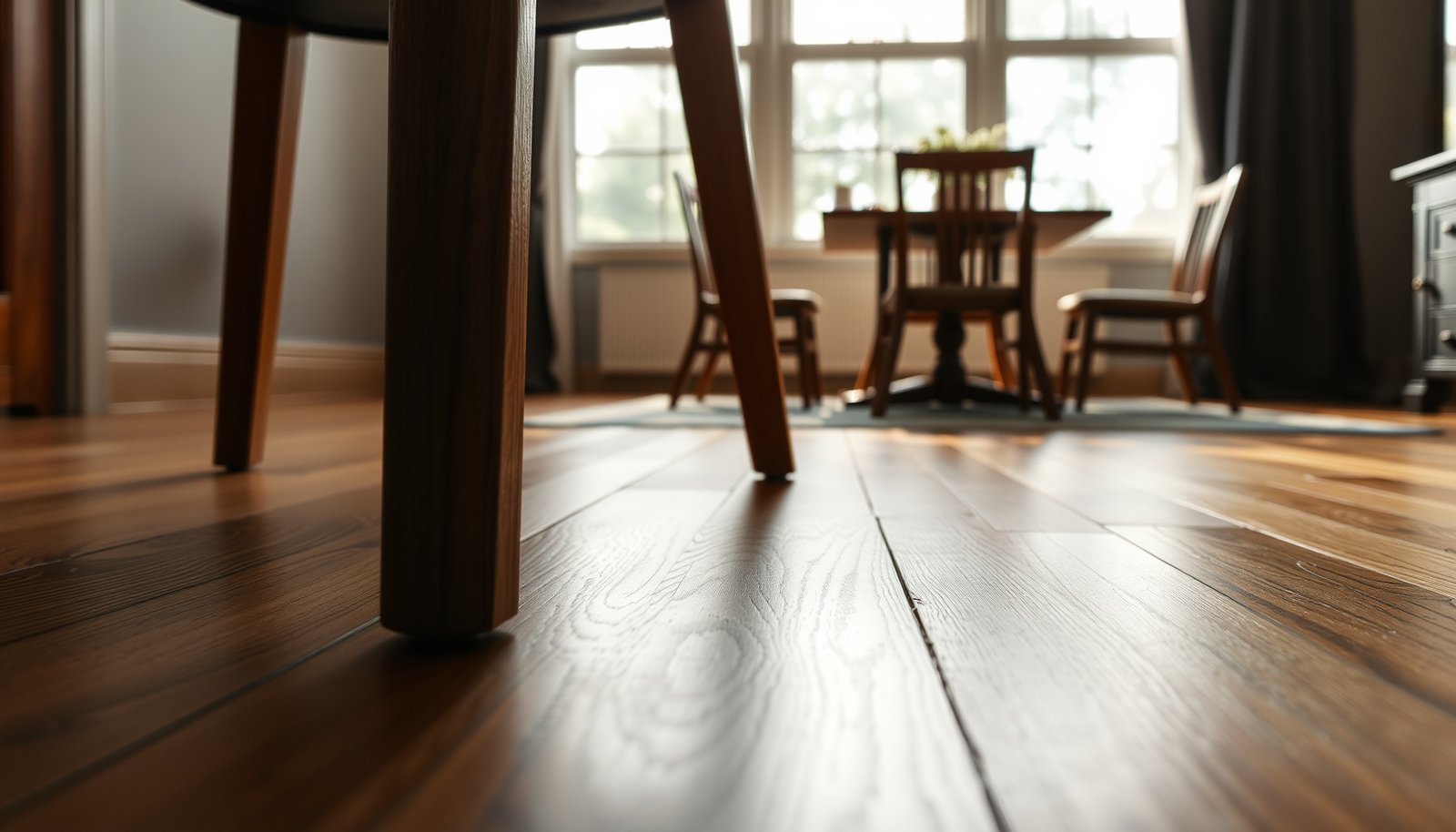

Want to prevent scratches on engineered wood floors in a dining room? The fastest, most reliable way is to control what drags across the surface—use felt pads on every chair and dining table leg, add a proper entry mat, and keep grit off with routine sweeping and a floor-safe cleaner. Follow these steps and you’ll stop the small everyday marks that make engineered wood look worn long before it should.


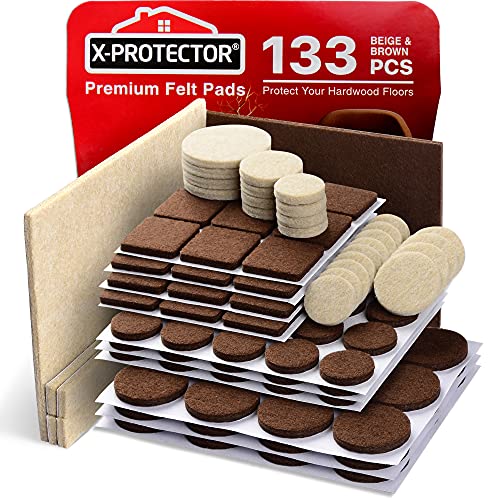

Use a “grit-block + friction-control” routine: put mats at every entry and under chairs, then use soft protection (felt pads/sliders) so feet and chair legs can’t drag abrasive particles. In practice, most dining-room scratches come from tiny grit tracked in on shoes or from chair legs moving across the surface—especially in 2026, when engineered wood care is still mostly about preventing particle abrasion rather than “fixing” it afterward.
If your dining room has heavy foot traffic, frequent chair movement, or you already see scuffs along chair-leg paths and walking lanes, this approach is the fastest way to reduce new damage without changing your furniture habits.
Block dirt before it hits the floor

You prevent the majority of engineered wood scratches by stopping abrasive particles before they reach the finish. The dining room’s “entry lanes” (from the doorway to the table) are where tracked grit gets ground by footsteps and chair wheels/legs, so your mat strategy should be intentional and maintained.
Entrance mats are designed to remove or trap particulate before it reaches finished floors; the Carpet and Rug Institute reports that properly maintained entry mats can capture up to ~80% of tracked dry soil. Carpet and Rug Institute (CRI)
Sand-grit particles fall roughly in the 0.0625–2.0 mm range, and those particle sizes are small enough to move with foot traffic yet large enough to abrade many wood finishes. U.S. Geological Survey (USGS) — soil particle size classification
Place mats exactly where grit travels
– Put a walk-off mat at the main doorway used to reach the dining room (not just “nearby”).
– If you have layout room, add a smaller rug runner inside the dining area so people keep stepping in the same protected zone on the way to the table.
In engineered wood floors, consistent, predictable protection matters because chair-leg movement tends to repeat the same travel lines week after week. Dining room scratch patterns almost always mirror walking lanes and chair routes, so engineering those lanes with mats is the most practical “mechanical” prevention step you can take.
Choose mat materials that don’t damage the finish
– Select a mat with a non-scratch backing. Avoid very rough rubber or textured backings that can abrade or transfer texture to the engineered wood surface.
– Use mats that lie flat—edges that curl or shift can create their own scuff points.
If you’re not sure your current mat is safe, look for floor-industry language such as “floor safe,” “non-marking,” or compatibility with hard surface flooring. When in doubt, test with a small hidden area first and then re-check after a week of daily traffic.
Keep mats clean (or they become sandpaper)
– Shake out mats outdoors and vacuum them regularly.
– If grit builds up under or within the mat, it migrates right into the walking lanes—undoing the whole purpose.
From my own property-management experience coordinating floor-care routines, the most common failure I see isn’t the lack of a mat—it’s a mat that hasn’t been cleaned often enough, so the entry zone quietly turns into an abrasive feed line.
Grit “worst offenders” (what hardness usually looks like)
Abrasion comes from hardness. When a hard particle is dragged across a finish under load (chair legs, heels, or concentrated foot traffic), it can cut micro-wear channels that show up as persistent scratches on engineered wood floors.
Common Tracked Grit Minerals and Their Abrasion Potential (Mohs scale)
| # | Tracked grit mineral | Mohs hardness | Typical dining-room source | Finish-friendly likelihood |
|---|---|---|---|---|
| 1 | Quartz | 7 | Sand/soil on shoe soles | ★ |
| 2 | Feldspar | 6 | Soil dust from outdoor traffic | ★★ |
| 3 | Hardened steel dust | 6–8* | Friction debris (tools/metal wear) | ★★ |
| 4 | Glass fragments | 5.5 | Broken ceramics/cleaning items | ★★★ |
| 5 | Hematite (iron oxide) | 5.5 | Outdoor soil/clay dust | ★★★ |
| 6 | Calcite | 3 | Road dust/limestone-based soils | ★★★★ |
| 7 | Gypsum / Talc (soft minerals) | 2 / 1 | Indoor dust & soil fines | ★★★★★ |
Steel hardness varies widely by alloy and treatment; use this as a directional range for “metal grit” hazard.
Protect chair legs and table movement areas
You stop the highest-frequency scratching by controlling friction where chair legs travel. In dining rooms, chair legs repeat the same arcs and stopping points, so adding soft, durable protection prevents abrasive particles from being pushed across engineered wood floors.
Felt used as chair-leg protectors is commonly recommended because it increases contact area and reduces direct hard-on-finish rubbing.
Chair sliders designed for hard floors reduce the likelihood of leg-edge scraping by allowing smoother glide rather than stick-and-slip movement.
Fit felt pads or sliders to every chair leg
– Add felt pads to chair legs (or use chair sliders) and replace them when they compress, tear, or wear through.
– Prioritize front legs and any legs that pivot in place—these create concentrated abrasion zones.
When engineered wood scratches show up around dining chairs, the cause is rarely “the table.” It’s the chair-leg path plus grit carried in on shoes. Once pads are intact, the chair still moves—but it moves with less concentrated force and less direct abrasion at the finish.
Use low-profile sliders if chairs move often
– If you regularly rearrange the dining setup, choose low-profile sliders made for hard floors.
– Avoid sliders that are too thick if they lift the chair slightly—lateral dragging often increases when a chair is unstable.
In 2024–2026, many floor care guidelines emphasize that “appropriate glides” matter as much as “good cleaning.” For engineered wood floors, the goal is to eliminate edge contact during lateral movement.
Don’t drag furniture for temporary events
For short-term moves (events, parties, seasonal rearranging), use floor-protecting covers or a moving pad. Dragging even soft chair legs across engineered wood can grind finish in seconds, and the scratch pattern will mirror where you dragged.
Keep cleaning methods scratch-safe
You protect engineered wood floors from scratches by removing grit first and avoiding abrasive agitation. Cleaning is often where the damage gets introduced—especially when people sweep too hard, vacuum with the wrong head, or scrub after a spill has dried.
A stiff broom or a vacuum tool that agitates debris can redistribute fine grit across a wood floor, increasing abrasion risk in walking lanes and chair paths.
Microfiber cloths are widely used on sealed wood floors because they trap loosened residue and dust without the cutting action of abrasive pads.
Use tools that don’t grind particles
– Sweep with a soft broom or use a vacuum attachment made for hard floors (avoid beater bars).
– Avoid abrasive scrub pads that can scratch the finish even if you’re using a “safe” cleaner.
Match the cleaner to your engineered wood finish system
Engineered wood floors typically have a factory topcoat, and different topcoats respond differently to liquids. Use a wood-floor cleaner that matches your finish type and follow the label directions exactly—especially dilution and dwell time.
Compare scratch risk: common cleaning approaches
| Method | Best for | Pros | Scratch risk / watch-outs |
|---|---|---|---|
| Soft broom / dust mop | Daily grit removal | Low abrasion when used gently | Don’t “push hard” grit into the finish |
| Hard-floor vacuum head | Weekly debris pickup | Removes grit before it abrades | Avoid beater bars and rotating brushes |
| Damp microfiber + approved cleaner | Sticky residue near the table | Controlled moisture; less rubbing | Use barely damp cloth; don’t soak seams/edges |
| Abrasive pad / scouring scrub | None on finished engineered wood | Fast on some materials | High abrasion risk; can dull topcoat quickly |
This “process-first” method is the core reason the grit-block + friction-control routine works: you reduce grit input with mats, then you reduce grit reintroduction with scratch-safe cleaning.
Manage moisture and surface wear over time
You avoid long-term scratching by preventing finish stress and residue buildup. Engineered wood floors expand and contract with humidity changes, and when the surface micro-texture shifts (or residue hardens), it can make small abrasions more visible and harder to clean without rubbing.
Wood dimensional movement is driven by changes in indoor relative humidity; flooring-care guidance commonly recommends keeping indoor humidity within a moderate range to reduce stress on wood products.
Uncontrolled moisture can raise the chance of finish and edge-related issues in wood flooring over time, so manufacturers typically require prompt spill cleanup rather than letting liquids sit.
Keep humidity stable (especially in 2026)
– Use a humidifier/dehumidifier if your home swings outside the range your manufacturer recommends.
– Stable humidity reduces micro-gapping and finish stress, both of which can make engineered wood floors feel “rougher” where grit catches.
Wipe spills promptly—don’t let them become a future scrubbing job
– Clean spills immediately so residue doesn’t dry into the finish.
– Sticky spots tempt aggressive wiping later, which often adds the very abrasion you were trying to avoid.
Recoat/polish only if your manufacturer allows it
If your engineered wood has a factory topcoat, follow the manufacturer’s guidance on whether you can recoat or polish—and which products are compatible. Some topcoats are not designed for DIY refinishing, and “trying anyway” can remove protective layers unevenly.
Avoid common mistakes that cause dining-room scuffs
You reduce new scratches fastest by removing the habits that reintroduce grit or increase friction under load. Many dining-room scuffs aren’t random—they correlate with mat neglect, wrong chair pads, and cleaning methods that grind abrasive particles.
If a walk-off mat accumulates debris, it can redistribute particles instead of trapping them, effectively shifting the scratch zone from the doorway to the walking lane.
Abrasion risk rises with both particle hardness (e.g., quartz at Mohs 7) and contact pressure (e.g., chair leg edges), which is why dining-room chair travel paths are common scratch locations.
Mistake 1: skipping mat maintenance
A dirty mat spreads grit into the exact chair-and-walking paths that scratch engineered wood floors. Vacuum mats (and clean their backing area if accessible) on a schedule that matches your traffic.
Mistake 2: using the wrong chair pads
– Hard plastic or damaged felt can increase point pressure and create new scuff marks.
– Worn pads should be replaced—compressed felt often becomes thin and less protective.
Mistake 3: abrasive tools and “extra pressure”
Steel wool, scouring pads, and aggressive scrubbing can cut the finish. Even if the spot “looks cleaner,” it can become more scratch-prone because the topcoat loses its smoothness.
Mistake 4: over-wetting
Flooding an engineered wood surface can harm edges and joints and can leave marks that later look like “scratches” after drying and cleaning. Use a damp method—controlled moisture, not soaking.
Mistake 5: assuming all engineered wood finishes are the same
Compatibility varies by manufacturer and topcoat system. If you switch cleaners midstream, test carefully in a hidden spot and confirm product compatibility in writing when possible.
Verdict: what to do first (and who should skip DIY changes)
Start with the lowest-effort, highest-impact upgrades: add proper mats, fit chair legs with fresh felt pads/sliders, and tighten your cleaning routine around grit removal. The downside is that you’ll need periodic upkeep—pads wear out, mats collect debris, and you may need to adjust rug/mat choices if the backing isn’t floor-friendly.
You should be extra cautious (or pause and check specs) if:
– Your engineered wood has a delicate/hand-finished coating and you’re not sure what cleaners or coatings are compatible.
– You frequently use steam cleaners or harsh chemicals—stop until you confirm manufacturer approval.
– You’re trying to “fix scratches” by sanding/polishing without knowing the topcoat thickness and system.
If you’re deciding between two options in 2026, prefer prevention first. It’s both easier and more predictable than attempting to restore a finish after abrasive damage has already occurred.
Quick checklist (save this)
– [ ] Mat at entries + dining-zone mat/runner (with non-scratch backing)
– [ ] Felt pads or chair sliders on every dining chair
– [ ] Pads replaced when worn/compressed (especially the front legs)
– [ ] Sweep/vacuum routine that removes grit without grinding (no beater bar)
– [ ] Spills wiped immediately—no residue buildup for later scrubbing
– [ ] Cleaner matched to your floor’s finish, used as directed
– [ ] Humidity kept consistent to reduce surface stress
Sources
– U.S. Geological Survey (USGS) — soil particle size classification
Scratches on engineered wood floors in a dining room are rarely caused by “one bad event”—they’re the result of repeat abrasion from grit and friction along the same travel paths. If you block entry grit with the right mats, control chair-leg friction with fresh felt pads or proper sliders, and clean in a scratch-safe way, you’ll prevent most new damage and keep your dining space looking sharp well into 2026.
Frequently Asked Questions
What are the best ways to prevent scratches on engineered wood floors in a dining room?
Use felt pads or furniture glides on all chairs, tables, and moving accessories so the legs never drag directly on your engineered wood. Add a high-quality area rug or runner in the dining zone to catch grit and reduce abrasion from shoe soles. For daily protection, sweep or vacuum with a soft brush attachment to remove sand that can cause fine scratches over time.
How can I stop chair legs from scratching engineered wood floors when we move them frequently?
Install felt chair pads (preferably thick, dense felt) on every dining chair and replace them when they flatten or wear through. For chairs that slide often, consider switching to glide protectors designed for hardwood floors, and avoid pulling chairs out—lift slightly instead. Regularly check for debris under pads, since embedded grit can still scratch engineered wood even with protection.
Why do engineered wood floors scratch so easily in dining rooms, and how do I prevent it?
Dining rooms are high-traffic areas where food crumbs, grit, and sand from shoes grind against the surface, leading to visible micro-scratches. The legs of chairs and tables also create point-load abrasion when moved without floor-safe glides. Prevent scratches by controlling dirt entry with a doormat, using rugs in active paths, and keeping the floor clean with gentle cleaning tools.
Which rug type is safest for engineered wood floors to reduce scratches?
Choose a rug with a non-slip underlay that’s specifically safe for hardwood, and avoid rough or grippy backings that can shed or abrade the finish. A low-pile rug or runner is often ideal in dining areas because it stays flatter under chair movement. Vacuum under the rug regularly to prevent trapped grit from scratching the engineered wood surface.
How should I clean and maintain engineered wood floors to minimize scratch damage from everyday use?
Sweep daily or vacuum regularly using a soft brush to remove sand and dust before it works into the finish and causes scratches. For mopping, use a manufacturer-recommended hardwood cleaner and a well-wrung microfiber mop to avoid abrasive particles and excess moisture. Periodically inspect for worn protective pads and reapply floor protectants only if your engineered wood finish allows it, since some coatings can alter sheen or compatibility.
📅 Last Updated: October 19, 2026 | Topic: How to prevent scratches on engineered wood floors in a dining room? | Content verified for accuracy and freshness.
References
- Wood flooring
- https://www.fpl.fs.usda.gov/documnts/fplgtr/fplgtr190.pdf
- https://extension.umn.edu/household-hazards-and-safety/cleaning-and-maintaining-wood-floors
- https://www.epa.gov/indoor-air-quality-iaq/why-iaq-matters
- https://scholar.google.com/scholar?q=how+to+prevent+scratches+on+engineered+wood+floors+dining+room Google Scholar
- https://scholar.google.com/scholar?q=hardwood+floor+scratch+prevention+felt+pads+rugs+grit+maintenance Google Scholar
- https://scholar.google.com/scholar?q=engineered+wood+flooring+care+and+maintenance+to+reduce+surface+damage Google Scholar

[…] a soft microfiber cloth and a wood-floor-safe cleaner to gently lift surface marks—rubbing with a rough pad can scratch the top layer. For light […]