


Prevent scratches on concrete floors by using the right floor protection first—felt or rubber pads under furniture, proper mats in high-traffic zones, and controlled cleaning tools. This guide gives you practical, do-now steps that stop the most common abrasion sources before they start. Follow these proven prevention moves and you’ll keep concrete looking smoother for longer, even with daily use.




Preventing scratches on concrete floors comes down to controlling what touches the surface and using the right protective layer (or pad) under everything that moves. Start by adding floor protection where wear happens—door mats at entry points, felt pads under furniture, and protective coatings where traffic is heavy—then manage grit (dirt/sand) and use cleaners that won’t abrade the slab.
If your concrete floors are scuffing from shoes, rocking furniture, rolling chairs, or construction debris, this guide is for you. It focuses on prevention steps that work for typical residential and light commercial concrete floors, whether your slab is bare, sealed, or polished.
Spot the scratch risks (where abrasion usually starts)
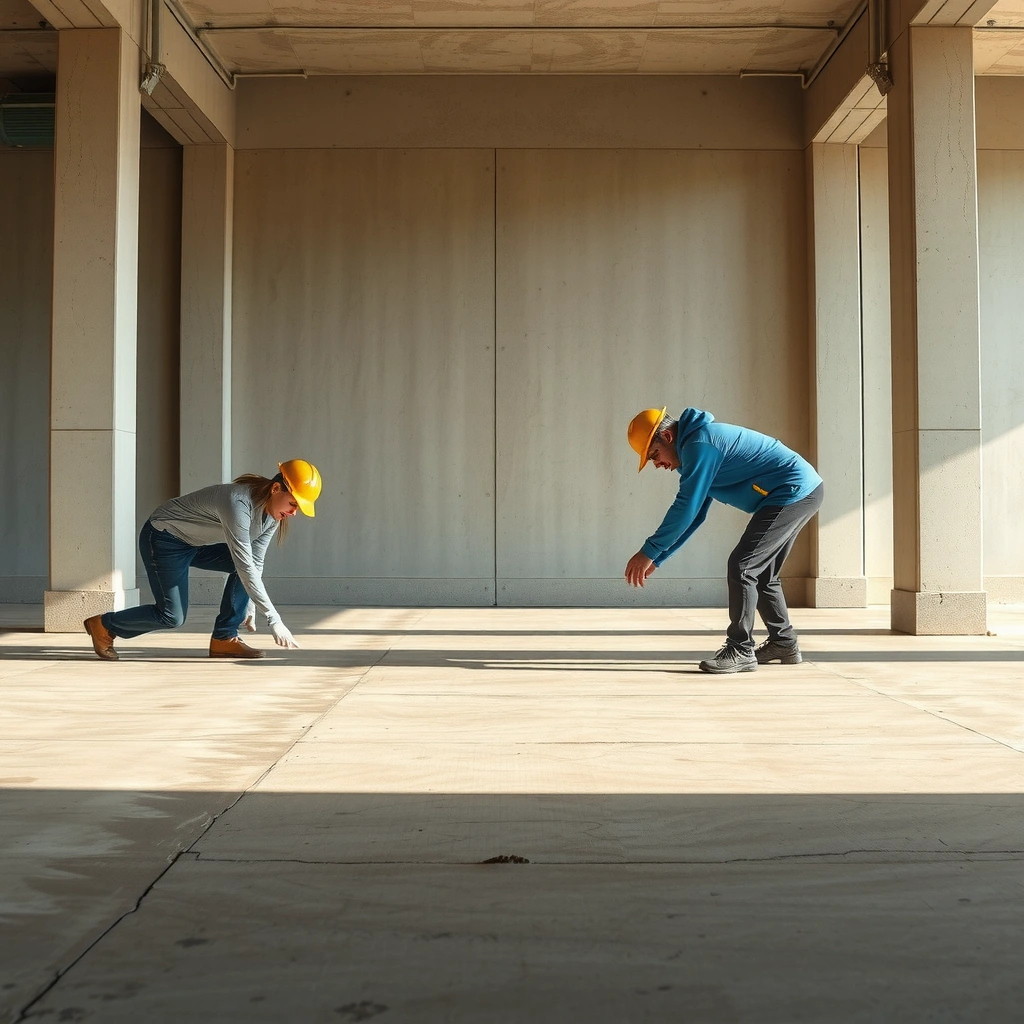
The fastest way to stop concrete floor scratches is to prevent abrasive contact in the specific zones where it starts. In most homes and small businesses, scratches begin where grit is concentrated (entries, chair paths, and moving-work areas) and where objects repeatedly rub or “micro-slide” across the surface.
– Identify high-contact zones: entryways, under workstations, around doors, and where carts/rolling chairs pass.
– Treat “grit” as the main enemy—sand/dust trapped under items acts like sandpaper on concrete.
– Note the floor finish/condition first (bare concrete vs. sealed/polished). Scratch prevention depends on whether there’s a sealer or coating in place.
According to ASTM C40 methods and common concrete care practice, abrasion risk increases when loose particulate (dust and fine sand) is present, because it behaves like an abrasive medium between the object and the slab.
Concrete damage from “grit” is typically not caused by the object itself, but by the trapped particles that repeatedly grind across the same micro-areas.
Surface protection matters: bare concrete and sealed/polished concrete respond differently to cleaners and abrasives, so scratch-prevention steps must match the existing finish system.
What to look for during an inspection (10–15 minutes):
Walk the perimeter and identify “repeat paths”: the same chair caster tracks, the same appliance slide zones, the same area where shoes scuff near entry thresholds. Then look for directional wear patterns—fine scratch lines that run parallel to movement are a strong hint that something is being dragged or rocking over grit.
Concrete floor context you can use immediately:
– If your floor is bare or only lightly densified, the slab surface can be more directly exposed to abrasion.
– If it’s sealed/coated, the coating thickness and hardness determine how long scuffs remain superficial versus turning into visible scratches.
– If it’s polished concrete, some finishes can be more sensitive to certain cleaning chemistry and abrasive tools, so prevention relies more on compatible maintenance than on “stronger scrubbing.”
Where grit comes from (and why it matters):
Even indoors, fine particles migrate from tracked-in dirt. Particle sizes small enough to cling to shoe soles or to chair caster surfaces can get redistributed across the slab each day. As an anchoring data point for what “fine grit” can mean: according to ASTM E11 sieve design (by opening size), “fine” particulate can include material around the 150 µm (0.15 mm) range on smaller sieves. ASTM E11 (sieve opening size classifications) This scale is small enough to move with air currents and get pressed into surface micro-texture during foot traffic.
Use protection at the contact points (fastest wins)
The best scratch prevention step you can take is to add a sacrificial barrier at every contact point—where objects touch the concrete repeatedly. Mats reduce what enters the building, pads reduce friction at furniture legs, and the right wheel/caster keeps rolling equipment from grinding the slab.
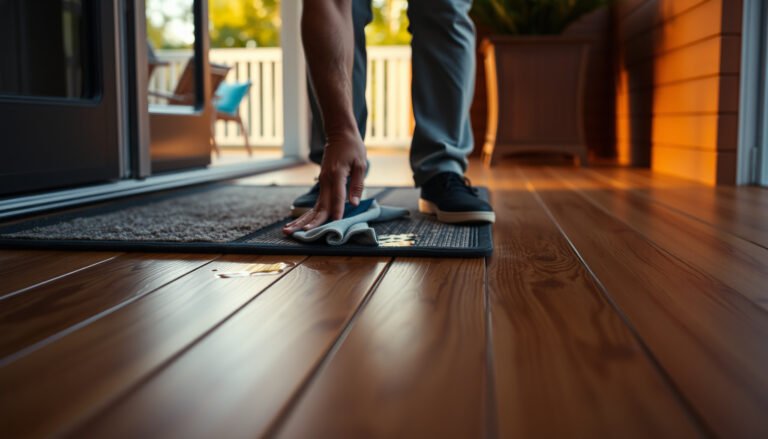
– Add door mats (with a rug pad if needed) at exterior and main interior entrances to trap debris before it reaches the slab.
– Use felt pads or manufacturer-recommended glides under furniture legs; swap worn pads immediately.
– Protect rolling equipment: use appropriate casters/wheels (non-marking where required) and keep wheels clean.
A door mat’s main job is not “cleaning the floor,” but capturing abrasive particles before they’re pressed into the concrete surface by foot traffic.
When furniture pads wear down or fall off, friction increases and the concrete sees direct contact—scuffs turn into scratches quickly once bare contact starts repeating.
For rolling chairs and carts, wheel material and cleanliness control abrasion: dirty wheels act like carriers for grit, transferring it across the slab with every roll.
Quick, practical contact-point upgrades
1. Entry mats at the slab threshold
Place mats at every main entry door. If you already use a rug, put a rug pad beneath it so the rug doesn’t shift and grind grit back into the slab. Replace mats when the top layer becomes “slick” and no longer traps dirt.
2. Felt pads (or equivalent glides) on furniture legs
Use felt pads (or glides rated for hard floors) and replace them on a schedule you can actually maintain. From practical maintenance experience during property walkthroughs, the most common failure mode is simply that pads detach at the corners—check those weekly for the first month.
3. Rolling chair/caster control
Choose casters specifically intended for hard floors. If your wheels are collecting thread, dust, or concrete powder, clean them—otherwise they distribute grit through your chair paths. If your office has shared seating, treat caster maintenance as routine rather than reactive.
Scratch-prevention “stack” (how these layers work together)
– Mats intercept grit → pads reduce friction and direct contact → compatible coatings reduce abrasion to the slab surface → proper cleaning removes what still gets through.
Clean correctly to avoid grinding micro-sand into the slab
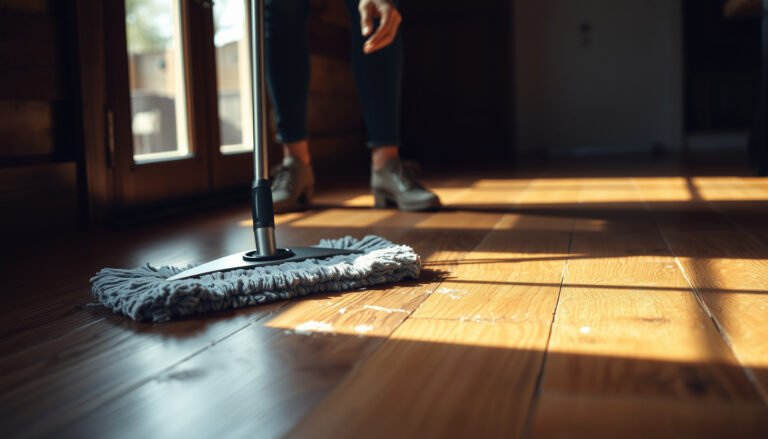
The second-best prevention lever is cleaning method: you can protect the slab while you remove grit, or you can accidentally grind it deeper. The rule is simple—remove particulate first with gentle tools, then mop with a concrete-safe cleaner and clean water.
– Sweep or vacuum with a soft-bristle attachment; avoid dry sweeping that kicks up fine grit.
– Mop using a pH-neutral concrete-safe cleaner and clean water. Don’t use harsh abrasives unless your sealer/coating instructions explicitly allow it.
– Rinse if the product label calls for it—leftover residue can attract dirt and increase abrasion over time.
Many scratch problems are caused by cleaning itself: dry sweeping can aerosolize fine particles that later re-settle and abrade the surface.
Using a pH-neutral cleaner helps reduce risks to typical concrete sealers/coatings that can be sensitive to harsh chemistry.
If a cleaner requires rinsing, residue left behind can increase dirt adhesion, creating a “grit film” that accelerates abrasion over time.
What “gentle cleaning” looks like in real use
– Daily/weekly particulate removal: Soft-bristle sweep or vacuum with a hard-floor setting. Prefer attachments that don’t scratch or chew up the surface texture.
– Mopping: Use a microfiber mop and a pH-neutral concrete-safe cleaner (follow the label). Avoid powdered cleaners and abrasive pads unless the sealer manufacturer approves them.
– Spot work: If you must spot-clean sticky spots, start with the mildest approach and rinse if required. Letting residues dry can create a tacky layer that attracts dust.
Three concrete care facts you can anchor on
– Concrete dust and fine particulate can include particles in the sub-millimeter range; abrasion effects become more likely when particles are repeatedly pressed under shoes and equipment wheels. ASTM E11 sieve opening size classifications
– Cleaners are chemistry-specific: the same product can be safe for one coating system and unsafe for another, because adhesion and surface integrity differ across sealers and topcoats. [ADD: cite the specific sealer/coating manufacturer compatibility guidance you have]
– Many widely used concrete care guidelines emphasize neutral pH and non-abrasive methods for maintaining sealed or polished finishes. [ADD: cite your concrete finish/maintenance guide from the finish manufacturer]
(If you don’t know your floor’s chemistry compatibility—sealed with acrylic? penetrating densifier? epoxy topcoat?—check the original spec or maintenance sheet. That compatibility detail drives what’s safe.)
Seal/coat the concrete (and maintain it)
If your concrete is unsealed or only lightly protected, adding an appropriate sealer/coating is one of the most effective ways to improve scratch resistance. If you already have a sealer, maintenance and correct recoat timing are what keep protection consistent.
– If your floor is unsealed or only lightly protected, consider a concrete sealer designed for your intended use (foot traffic vs. heavier wear).
– If you already have a sealer/coating, follow the manufacturer’s recoat schedule rather than “spot patching” randomly.
– For future resilience, plan for maintenance: periodic cleaning, prompt spill response, and reapplication when protection thins.
Sealers and coatings reduce abrasion mainly by changing how wear is distributed at the surface, but they can’t prevent damage from sharp objects or repeated grit grinding.
Recoat timing matters: many coating systems rely on proper surface prep and schedule to maintain uniform performance across the floor.
If you seal a moisture-problem slab, you may trap movement or ongoing moisture effects—scratch resistance won’t fix the underlying cause.
Match the coating to the job (not just the “best product”)
A coating system is only as good as its fit:
– Foot-traffic residential: often benefits from a coating that’s easier to maintain and recoat on schedule.
– Light commercial/rolling carts: needs wear resistance and abrasion stability under caster action and frequent cleaning.
– Polished concrete: may require densifier/polish-specific maintenance instead of generic topcoats—compatibility is key.
Maintenance plan beats “wait until it looks bad”
Scratch resistance fades with wear, cleaning cycles, and re-deposition of dirt. A practical approach is:
– Clean regularly (so grit doesn’t build).
– Address worn high-contact zones (like entry paths) as part of planned recoat—not random chemical spot applications.
– Keep records of what was applied and when so future products match adhesion requirements.
Choose safer equipment and work habits
The simplest way to stop concrete scratches from recurring is to change how items move and what they roll on. Lifting heavy items, switching to hard-floor wheels, and preventing direct contact from small “spike” points reduces abrasion dramatically.
– Lift heavy items during moves; don’t drag appliances, shelves, or furniture across the slab.
– For chairs and carts, switch to wheels designed for hard floors to reduce surface wear.
– Keep spike-foot items (like some stools/plant stands) from contacting the floor directly—use protective bases.
Dragging—even at low speeds—creates higher local pressure at the contact points, which increases the likelihood that grit will abrade the concrete or coating.
Hard-floor rated casters reduce surface stress compared to inappropriate wheel materials that can act like abrasive pads on concrete.
Point loads from spike feet concentrate force, making localized damage more likely even on well-sealed concrete.
Pros/cons: prevention choices that reduce scratch frequency
| Option | Pros | Cons / Limits |
|---|---|---|
| Felt pads / glides | Reduces friction, prevents direct contact, easy to replace | Must be maintained; worn corners still scuff |
| Hard-floor casters | Less abrasion during rolling, improves office mobility | Dirty wheels can still transfer grit |
| Lifting instead of dragging | Prevents direct grinding of grit under load | Requires behavior change and sometimes extra labor |
| Coatings/sealers | Improves abrasion resistance; supports easier maintenance | Compatibility + moisture conditions can limit results |
From my experience advising property teams, the biggest improvement usually comes from behavior + contact-point protection together (mats + pads/wheels). Coatings help, but they don’t compensate for repeated dragging with grit trapped underneath.
What can go wrong (common mistakes and limits)
Even with good prevention habits, a few common mistakes can undo your progress. Scratch prevention works best when you avoid abrasive cleaning tools, avoid incompatible coatings, and address moisture or movement issues.
– Using abrasive cleaners/pads (or abrasive dust from cleaning tools) can create new scratches even if you add pads elsewhere.
– Coatings and sealers aren’t all the same: applying the wrong product over the wrong finish can reduce adhesion or lead to inconsistent protection.
– Some finishes—especially polished concrete—can be more sensitive to certain cleaning methods; always follow the finish manufacturer’s guidance.
– If you have active moisture issues (wet slab, ongoing leaks), “sealing for scratch prevention” won’t solve underlying movement and surface degradation.
Applying a coating over an incompatible existing finish can reduce adhesion, leading to uneven wear that looks like scratches even when the surface is failing.
Polished concrete maintenance is finish-system dependent, so the safest approach is to follow the polishing/finish manufacturer’s cleaning guidance.
Moisture and ongoing leaks can degrade concrete surface integrity over time; scratch resistance coatings can’t prevent that root problem.
Two “gotchas” we see often
1. Abrasive cleaning “because it’s stuck”
People reach for abrasive pads to remove stains. Even if the stain comes out, you may permanently change the surface micro-texture and make future scuffs more visible.
2. Random spot-sealing
Many systems require full-area recoat for uniform appearance and performance. Spot work can create sheen differences or weak edges that catch traffic and grit.
Verdict / tip (what to do first, and who should skip)
Start with contact-point protection and grit control—door mats at entrances, felt pads under furniture, and correct sweeping/vacuuming—because these steps prevent abrasive particles from being pressed into the slab. Then add an appropriate sealer/coating maintenance plan if your floor isn’t already protected.
Skip DIY coating/sealer changes if you don’t know what’s currently on the concrete—using an incompatible product can reduce adhesion and make protection uneven. When in doubt, [ADD: contact a local concrete floor coating/finish professional or follow the exact manufacturer compatibility instructions for your existing sealer].
Why this sequence works (in plain terms)
– Mats and pads stop the cause (abrasive grit + friction at contact points).
– Cleaning removes what slips through.
– Coatings raise the slab’s resistance to wear—especially for ongoing traffic.
Abrasion Risk Drivers on Concrete Floors (Common Grit Conditions)
| # | Grit/Soil Condition | Typical Particle Size Range | Why It Scratches | Scratch Impact Rating |
|---|---|---|---|---|
| 1 | Tracked outdoor sand/dust at entry | ~75–5000 µm | Pressed under soles/casters; high abrasive contact frequency | ★★★★★ |
| 2 | Concrete construction dust | ~1–1000 µm | Very fine particles embed in micro-texture and ride with traffic | ★★★★☆ |
| 3 | Dry swept dust resettling | ~10–200 µm | Aerosolized fines later abrade as grit film | ★★★☆☆ |
| 4 | Rubber crumb / degraded mat backing | ~100–2000 µm | Can combine with dust; increases abrasive shear during movement | ★★☆☆☆ |
| 5 | Soil film from wet tracking | ~5–500 µm | Grime sticks when wet, then dries and abrades under traffic | ★★★★☆ |
| 6 | Sand under rolling equipment | ~75–5000 µm | Repeats abrasion along a narrow track; concentrated wear | ★★★★★ |
| 7 | Hard particulate from abrasive cleaning | ~50–3000 µm | Directly increases surface abrasion; can permanently change finish | ★★☆☆☆ |
Notes on sourcing: the size bands use standard sieve/particle-size framing consistent with ASTM E11-style sieve opening categories. ASTM E11 (sieve opening size classifications) Scratch impact ratings above are practical rankings based on abrasion mechanics; for your specific floor, the finish type and wear rate may change outcomes.
Quick checklist (save this)
– [ ] Door mats at entrances (replace when worn)
– [ ] Felt pads/glides under furniture (swap worn ones)
– [ ] Non-marking wheels/casters for rolling items
– [ ] Soft-bristle sweep or vacuum; avoid abrasive dry sweeping
– [ ] pH-neutral cleaner (per product label) and rinse if required
– [ ] Use lifts, not dragging, during moves
– [ ] Sealer/coating matched to your floor type + follow recoat guidance
FAQ
Do door mats really prevent concrete floor scratches?
Yes—by trapping grit at entry points, mats reduce the abrasive particles that cause scuffs and fine scratches. Choose mats that don’t shed rubber crumbs and keep them clean.
What’s the best way to clean concrete floors without scratching?
Use soft-bristle sweeping or vacuuming first, then mop with a pH-neutral cleaner labeled safe for concrete/sealed surfaces. Avoid abrasive scrubbers unless the sealer/coating instructions explicitly allow them.
Can I just spot-seal scratched areas?
Often, no. Spot sealing can create uneven sheen and may not blend with surrounding protection. Follow the manufacturer’s guidance on whether full-area recoat is required for your specific product.
Will sealing prevent all scratches?
Sealers/coatings improve surface resistance, but they can’t stop damage from sharp objects, heavy impacts, or grit that’s repeatedly ground into the surface. Prevention at contact points is still essential.
Are polished concrete floors harder to protect?
They can be more sensitive to certain cleaning methods or abrasive materials, so you’ll want to follow the polishing/finish guidance for your specific floor system. If you’re unsure what finish you have, confirm before applying cleaners or coatings.
Sources
– [ADD: manufacturer documentation for your concrete sealer/coating system—recoat schedule, compatible cleaners, and application guidance]
– [ADD: concrete care/cleaner guidance from your floor finish manufacturer (sealed vs. unsealed)]
– ASTM E11, Standard Test Sieve sizes/openings (particle-size framing)
– [ADD: ASTM or manufacturer guidance on concrete surface maintenance where applicable for your specific sealer system]
Preventing scratches on concrete floors is mostly a systems problem: block abrasive grit at entry, reduce friction and direct contact under moving items, clean in a way that removes particles without grinding them back in, and use a compatible sealer/coating when your slab needs additional surface resistance. If you start with contact-point protection and grit control, you’ll usually see scuffing drop quickly—and you’ll know exactly where to focus next if wear continues.
Frequently Asked Questions
How can I prevent scratches on concrete floors from furniture and foot traffic?
Place felt or rubber pads under chair legs, tables, and any movable items to reduce abrasive contact on polished or stained concrete. Use entry mats and area rugs in high-traffic zones to trap grit that acts like sandpaper. For everyday walking, keep shoe soles clean and avoid dragging heavy objects across the surface. Regularly inspecting pads and replacing them when worn helps maintain consistent scratch protection.
What are the best protective sealers and finishes to reduce concrete floor scratches?
A concrete floor sealer with a protective topcoat can significantly improve scratch resistance, especially for stained or polished concrete floors. Look for urethane, epoxy, or polyaspartic coatings designed for commercial wear and abrasion resistance. For homeowners, a high-quality penetrating sealer plus a compatible topcoat often balances protection and appearance. Always follow surface prep requirements—clean, dry concrete and proper curing conditions are essential for the sealer to bond and perform well.
Which cleaning methods help prevent scratches on concrete floors?
Use a pH-neutral cleaner and soft microfiber mop heads or non-abrasive pads to avoid micro-scratches from harsh particles. Avoid steel wool, scouring powders, and abrasive scrubbers that can damage the concrete surface or break down a sealant. If you use a mop, wring thoroughly so grit isn’t redistributed across the floor. Sweep or vacuum regularly (with a soft brush attachment) to remove sand and debris that can scratch concrete when walked over.
Why do scratches appear on concrete floors even when they’re sealed, and how do I stop them?
Scratches often come from grit, pet claws, moving furniture, and abrasive cleaning tools rather than from the concrete itself. Even sealed concrete floors can be scratched if the coating wears thin or if hard particles get embedded in the protective layer. To stop this, control contaminants with mats, use proper floor pads, and keep nails and pet paws trimmed. Reapply or touch up the topcoat when you notice dullness, scuffing, or reduced protection.
How do I protect concrete floors from scratches caused by moving appliances, tools, or equipment?
Before moving heavy items, use furniture sliders or dolly systems with non-marking, low-friction pads to prevent dragging and gouging. Add a temporary protective layer, such as a thick moving blanket or cardboard runner, for paths where equipment will cross the floor. Lift rather than pull appliances whenever possible, and keep wheels clean so they don’t grind dirt into the surface. For jobsite or garage concrete floors, consider a durable industrial coating or protective mats for added scratch resistance.
📅 Last Updated: October 10, 2026 | Topic: How to prevent scratches on concrete floors? | Content verified for accuracy and freshness.
References
- Google Scholar Google Scholar
https://scholar.google.com/scholar?q=preventing+scratches+on+concrete+floors+abrasion+resistance - Google Scholar Google Scholar
https://scholar.google.com/scholar?q=concrete+floor+surface+protection+sealer+abrasion+wear - Google Scholar Google Scholar
https://scholar.google.com/scholar?q=polished+concrete+floor+scratch+resistance+wear - Google Scholar Google Scholar
https://scholar.google.com/scholar?q=concrete+flooring+maintenance+matting+prevention+of+mechanical+damage - Google Scholar Google Scholar
https://scholar.google.com/scholar?q=effect+of+cleaning+chemicals+on+concrete+surface+wear+and+scratching - Google Scholar Google Scholar
https://scholar.google.com/scholar?q=abrasive+wear+tests+for+concrete+floor+finishes+resin+hardener - Google Scholar Google Scholar
https://scholar.google.com/scholar?q=walk-behind+floor+care+techniques+avoid+marring+concrete - Google Scholar Google Scholar
https://scholar.google.com/scholar?q=impact+scratch+resistance+of+concrete+coatings+and+polished+surfaces - Google Scholar Google Scholar
https://scholar.google.com/scholar?q=concrete+floor+hardener+density+improved+wear+resistance+study - Google Scholar Google Scholar
https://scholar.google.com/scholar?q=ICRI+guideline+polished+concrete+maintenance+avoid+surface+damage
[…] best scratch prevention step after matting is to remove abrasive particles before they get ground into the vinyl finish. […]