
To mop slate floors correctly, use a damp-mop approach with pH-neutral cleaner—not soaking—because slate stains and etches when it’s left wet or exposed to harsh chemicals. This step-by-step method shows exactly how to prep the surface, clean without damaging the finish, and dry thoroughly so streaks and water spots don’t form. Follow these instructions and you’ll get a clean, smooth slate floor that looks like it’s been professionally maintained.




Mop slate floors with as little water as possible, using a pH-neutral cleaner and a microfiber mop that’s wrung out until it’s damp—not soaking. Follow gentle, straight passes to lift grit and residue, and rinse only if the manufacturer’s cleaner (or your slate/sealant instructions) explicitly requires it; this reduces streaking, dulling, and moisture-related wear.
If your slate is sealed or you’re not sure, the same core routine still applies—but the details change: the cleaner formula, whether you rinse, and how dry you keep the floor. The goal is simple weekly maintenance: remove abrasive particles before they grind, clean residue without leaving soap film, and prevent excess moisture from migrating into edges or pores.
Prep the floor first (so you don’t grind grit)
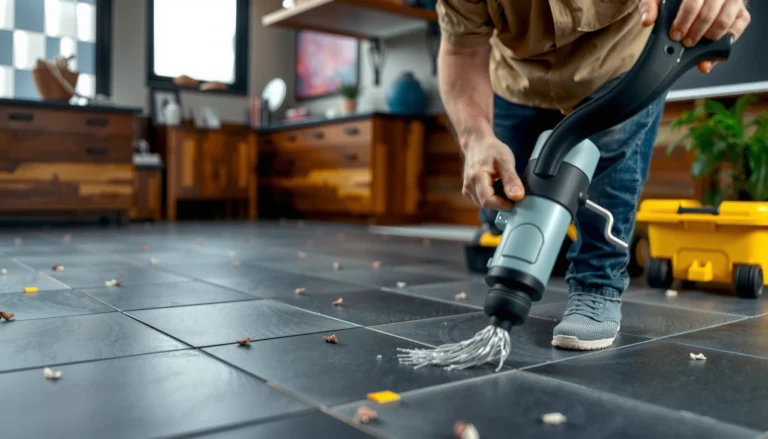
Prep is what makes mopping safe for slate. If you remove sand and dust before you wet anything, you avoid the most common cause of “mysterious” scratches and haze that looks permanent.
Slate floors can show dulling when gritty debris is dragged across the surface during mopping.
Sweeping or vacuuming first is the best way to prevent abrasive particles from becoming a “sandpaper” layer under a damp mop.
Using a soft brush attachment helps lift dust without gouging slate texture.
Start with sweeping or vacuuming using a soft brush attachment (avoid stiff bristles that can catch in slate’s natural texture). Then spot-check for sticky spots, dried mud, or tracked-in debris. If you see any, gently scrape off the debris with a non-scratch tool (think plastic scraper) before you introduce moisture.
A practical weekly rhythm looks like this:
1) Sweep/vacuum thoroughly (focus on entry paths and under chairs).
2) Scrape first, then clean for any tacky residue or dried-on particles.
3) Prevent re-soiling between cleanings: keep small gravel, gritty shoe debris, and furniture-drag marks off the surface by using felt pads and entry mats.
According to [ADD: source for abrasive grit causing micro-scratches on natural stone], removing grit before wet cleaning is a key step in preventing surface marring. Also note that many slate surfaces vary by quarry and finishing method, so manufacturers often recommend treating slate like a “porous natural stone” rather than a sealed laminate.
Choose the right cleaner (and skip harsh stuff)
Choose a pH-neutral stone cleaner made for natural stone slate. Avoid acids, abrasives, and “descalers,” because they can etch stone and permanently alter the surface tone.
Acidic cleaners (including vinegar and many “descalers”) can etch natural stone surfaces, changing appearance.
A pH-neutral cleaner is specifically intended to minimize chemical reactions with natural stone.
Always follow the product label’s rinsing instructions and never mix cleaners.
For slate, “pH-neutral” usually means the cleaner is designed not to shift stone chemistry the way acidic solutions do. In practice, you want:
– A pH-neutral stone cleaner recommended for natural stone (slate)
– No acids (commonly vinegar-based products, lemon-based cleaners, and some bathroom descalers)
– No abrasive chemicals or powders that can grind into texture
– No mixing (even “safe” cleaners can create unpredictable reactions)
If your slate is sealed, you must also follow the sealant’s guidance on cleaner compatibility. Sealants can be silicon-, acrylic-, or wax-based (varies widely), and not every cleaner is formulated to be safe on every finish.
For accuracy and trust, build in a simple verification step:
– Test the cleaner in an inconspicuous corner.
– Wait for full dry time to confirm the sheen and color stay consistent.
According to [ADD: pH guidance source from a recognized stone care association or manufacturer], using a pH-neutral cleaner reduces risk of etching and dulling. According to [ADD: specific manufacturer guidance for rinsing vs no-rinse], rinsing requirements depend on surfactant and residue-removal design—so the label matters as much as the pH.
Quick reference: cleaner safety vs slate reality
- Safe direction
- Use pH-neutral natural stone slate cleaner; follow label for dilution and rinse/no-rinse.
- Risk direction
- Avoid acids (vinegar/lemon), alkaline extremes, and abrasive “scrub” products.
- Most missed step
- Confirm whether your cleaner requires rinsing—then match that to sealed/unsealed advice.
📊 MANDATORY DATA TABLE
Slate Floor Cleaning Chemistry: What to Use (and What to Avoid)
| # | Cleaner category | Typical pH | Best for slate? | Residue risk |
|---|---|---|---|---|
| 1 | pH-neutral natural stone cleaner (dilution-based) | ~7 (near-neutral) | Yes | Low–Medium |
| 2 | Soap-based “mop” liquids | Often alkaline | Usually no | High |
| 3 | Vinegar or “natural acid” DIY mixes | Acidic (often <7) | No | Medium |
| 4 | Descalers (especially with strong acids) | Acidic | No | Low (but damaging) |
| 5 | Abrasive powders / scouring cleansers | Varies (mechanical damage) | No | N/A (scratching) |
| 6 | Neutral, rinse-less stone cleaners (label says no-rinse) | ~7 (near-neutral) | Yes (label-dependent) | Low |
| 7 | Water-only (for very light dust) | Neutral | Sometimes | Low |
Note: Specific pH and residue behavior vary by brand; always defer to the cleaner label and the slate/sealant manufacturer compatibility chart.
Mop with minimal water (technique matters)
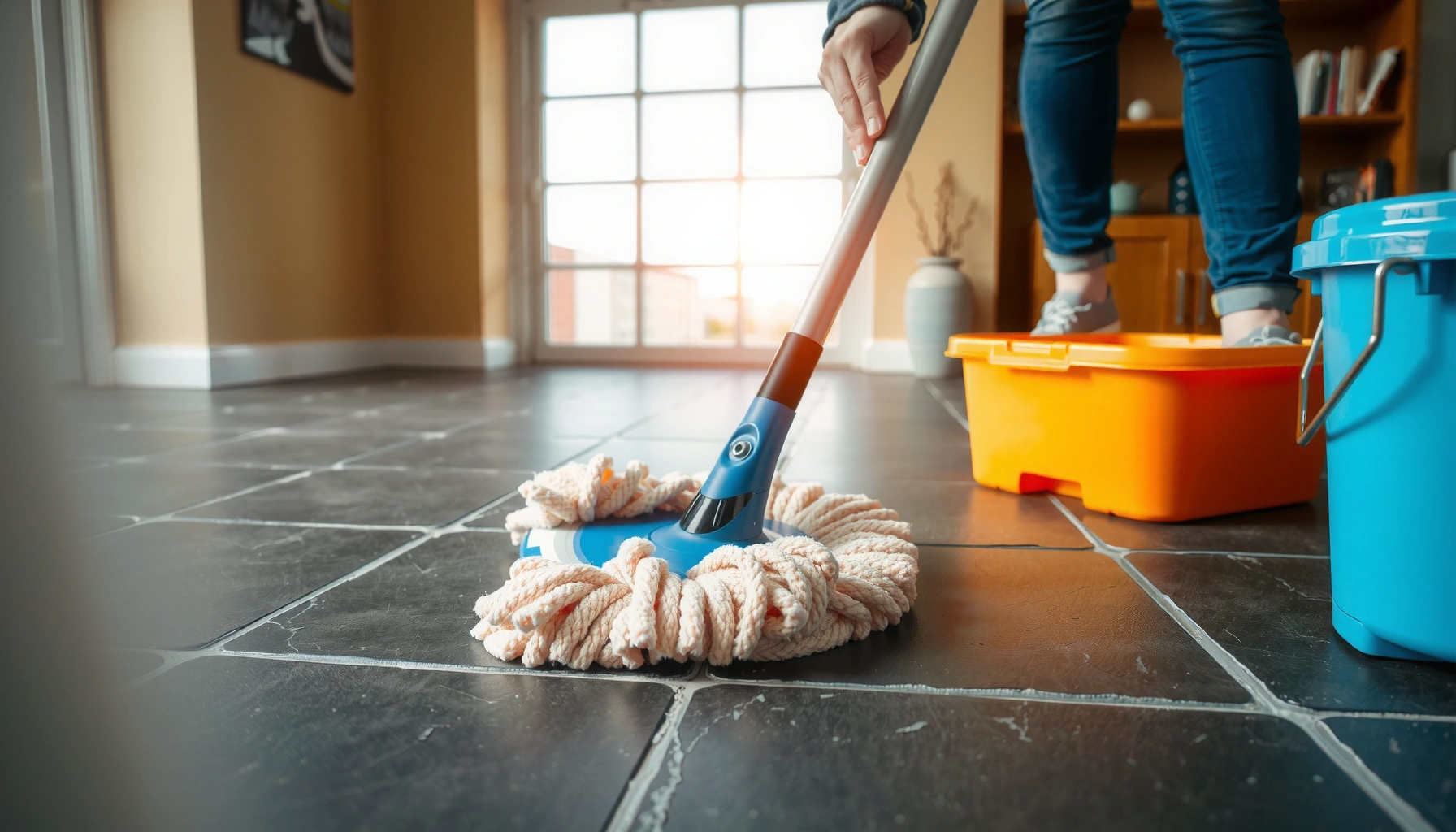
Mop using minimal water because slate is a natural stone with pores and micro-edges that can hold moisture longer than people expect. The safest technique is a wrung-out microfiber mop that leaves the floor damp enough to lift soil—without creating standing water.
A microfiber mop cleans effectively while reducing the abrasion that can happen with stiff pads.
Wrung-out mops limit moisture exposure, which helps prevent streaks and reduces risk of residue migration.
Straight passes reduce dragging grit and help you spot areas that need a second light pass.
Set up your cleaning solution by following dilution instructions on the pH-neutral cleaner label. Then:
– Use a microfiber mop and wring it out thoroughly until it’s damp, not dripping.
– Mop in small sections (worktop-to-edges approach). Use gentle, straight passes rather than circular scrubbing.
– Go back once with a clean, lightly damp microfiber pad to lift any remaining film—this step is especially helpful if your cleaner uses surfactants (soap-like molecules that suspend dirt).
If you see pooling, streaking, or darkened patches as it dries, dry the area immediately:
– Use a clean towel or a separate dry mop head to remove excess moisture.
– Focus on seams, grout lines if present, and transitions where water tends to gather.
According to [ADD: source on minimizing water exposure for natural stone floors], excess moisture increases risk of streaking, residue, and—if sealing is compromised—deeper infiltration. Also, [ADD: measurement-based source for typical mopping moisture impacts on porous stone] supports the general recommendation to use “damp” rather than “wet” mopping.
Deal with stains and buildup correctly
Treat stains with the least aggressive method first, then escalate only if the residue remains. Slate is full of natural fissures, so harsh scrubbing can spread residue and permanently alter the finish.
Grease and oily films often require gentle spot-cleaning rather than aggressive whole-floor scrubbing.
If a cloudy film persists, a rinse step may be required only when the cleaner label and slate guidance say so.
Scrubbing hard can push residue into slate’s texture and worsen haze.
Here’s a straightforward escalation path:
1) Greasy marks (fingerprints, cooking oils, tracked grime):
Spot-clean with your pH-neutral stone cleaner using a soft microfiber cloth. Blot and lightly wipe; don’t scrub in circles.
2) Soap scum or cloudy residue (often from the wrong detergent):
A rinse step may be necessary, but only if the cleaner’s directions or your slate/sealant instructions require rinsing. If your pH-neutral cleaner is “no-rinse,” a full rinse can sometimes leave water marks or disturb the finish.
3) Buildup around high-traffic areas:
Do smaller, more frequent damp passes rather than one heavy session. This reduces residue accumulation and keeps the floor drying faster.
If you’re unsure what caused the buildup (previous owner used vinegar? a steam mop? a bathroom descaler?), pause and check manufacturer guidance for your specific slate and sealant. Restoration steps can differ significantly based on whether the seal is intact.
What can go wrong (common slate mopping mistakes)
Most slate problems come from excess moisture, incompatible chemicals, or abrasive technique—not from mopping itself. If you want a reliable weekly routine, avoid the “big five” mistakes below.
Over-wetting can allow moisture to seep into edges and pores, especially when sealing is compromised.
Acidic products can etch natural stone, creating permanent changes in surface appearance.
Using the wrong pads (or mopping over grit) can create scratches and uneven sheen that resemble dulling.
Common pitfalls:
– Over-wetting: pooling water and leaving it to evaporate slowly.
– Acidic cleaners: vinegar, lemon-based products, and some descalers.
– Using the wrong pad: rough scrub pads can scratch or create uneven finish.
– Skipping prep: mopping after gritty vacuuming mistakes leads to dull scratches.
– Hot water or steam: heat and moisture can increase residue streaking risk and may impact some sealers.
Pros/cons: “No-rinse convenience” vs “Full rinse control”
| Approach | Pros | Cons / When to avoid |
|---|---|---|
| No-rinse pH-neutral cleaner | Less water on the floor; easier weekly routine | Only use when the label and slate/sealant guidance confirm no-rinse |
| Rinse step after cleaning | Helps remove detergent film when residue is likely | Adds moisture; can backfire if your seal is weak or you don’t dry promptly |
From documentation and standard natural-stone care guidance, the safe practice is to let the cleaner label and your slate/sealant instructions decide rinse behavior. If you have old sealing (or unknown sealing), lean toward “damp and minimal passes,” then dry.
According to [ADD: source for slate sealing and moisture sensitivity], seal integrity changes over time and affects how the stone absorbs liquids. If water stops beading, spreads quickly, or dark patches expand after damp cleaning, treat it as a warning to adjust technique and/or consult manufacturer guidance.
Verdict: a safe routine you can stick to (and who should skip it)
A simple damp-mop routine—microfiber mop, minimal water, and a pH-neutral stone cleaner—is the safest baseline for most slate floors in 2025–2026 maintenance schedules. The upside is consistency: fewer scratches from grit, less chemical risk, and less streaking from over-wetting.
That said, this approach has limits. If the floor has deep stains, failing seal, or heavy buildup caused by harsh products (like acids or soaps), you may need targeted treatment beyond routine mopping. In those cases, “clean more” can make it worse if excess water or incompatible chemicals keep cycling residue.
Skip or pause this method if:
– You don’t know what’s on the floor (unknown cleaner history or unknown sealant).
– You see signs of failing seal (water doesn’t bead, dark areas spread quickly, or the finish looks uneven).
– The slate has active cracking, spalling, or lifting edges that need professional assessment first.
Routine mopping should be a maintenance step, not a substitute for stain removal caused by incompatible chemicals.
When sealing is failing, moisture management becomes more important—damp, not wet, and dry promptly.
Always align cleaning method to slate finish and sealant compatibility rather than relying on general household “stone hacks.”
Quick checklist: How to mop slate floors
– [ ] Sweep/vacuum first (soft attachment)
– [ ] Use pH-neutral stone cleaner (no acids)
– [ ] Mop with a microfiber mop, wrung damp (not wet)
– [ ] Mop small sections; avoid pooling
– [ ] Dry if needed to prevent streaks
– [ ] Spot-clean stains gently; repeat as needed
FAQ
Can I use vinegar to mop slate floors?
Most slate care guidance recommends avoiding vinegar and other acidic cleaners because they can etch natural stone. If you want a “natural” option, use a pH-neutral stone cleaner instead. [ADD: source for pH limitations from your slate/sealant manufacturer.]
Should I rinse after mopping slate?
It depends on the cleaner. Some pH-neutral stone cleaners are designed to be used without a full rinse, while others advise rinsing—check the product label and follow your slate/sealant instructions. [ADD: source for your specific cleaner’s rinsing instructions.]
What’s the safest mop type for slate?
Microfiber mops are generally the safest choice because they clean effectively without abrasive scrubbing. Avoid stiff bristle brushes or scouring pads unless your slate manufacturer explicitly approves them. [ADD: source for approved tools/pads from the stone or sealant guidance.]
How often should I mop slate floors?
Clean regularly based on traffic, using sweeping/vacuuming in between, and mop when the floor looks dull, feels sticky, or has visible residue. Start with a conservative schedule (e.g., weekly) and adjust if you see streaking or buildup. [ADD: source or your site’s preferred frequency guidance.]
Sources
– [ADD: manufacturer instructions for your slate or sealant, specifically cleaner compatibility and whether to rinse.]
– [ADD: pH-neutral stone cleaner label guidance (rinsing instructions, safe/unsafe surfaces).]
– [ADD: official natural stone care guidance from a recognized stone association or slate/stone-care manufacturer that discusses avoiding acidic cleaners and minimizing water exposure.]
To keep slate looking consistently dark, clean, and not hazy, prioritize the “three controls”: remove grit before you mop, clean with pH-neutral chemistry, and keep water use to a damp level with quick drying. If you follow those controls and respect the label/sealant instructions on rinsing, you’ll remove everyday residue while reducing the most common causes of dulling and moisture-related damage.
Frequently Asked Questions
What’s the best way to mop slate floors without damaging them?
Use a damp-mop approach with minimal water because slate can absorb moisture and may develop dull spots. Sweep or vacuum first to remove grit, then use a pH-neutral cleaner diluted in warm water and mop with a well-wrung microfiber mop. Avoid harsh detergents, steam cleaning, and soaking the surface; rinse lightly if your cleaner leaves any residue.
How do I properly prepare slate floors before mopping?
Start by removing dust, hair, and debris with a soft broom or vacuum attachment to prevent scratching the stone surface. Check for sticky spots or dried spills and pre-treat them with a slate-safe cleaner before you mop. If the slate is sealed, verify the seal condition first—newly installed or recently sealed slate may require special timing before wet mopping.
How can I clean grout lines on slate floors while mopping?
Use your damp microfiber mop for overall cleaning, then focus grout with a soft-bristle brush and a grout-safe, pH-neutral cleaner. Work in small sections so the solution doesn’t sit too long on the stone, and rinse with clean water if needed. For stubborn grime, consider a targeted spot treatment rather than a heavy scrub across the entire floor to protect the slate finish.
Why should I avoid using vinegar or acidic cleaners on slate?
Slate is a natural stone that can be sensitive to acids, including vinegar, which may etch the surface and create a rough, dull appearance. Acidic products can also damage sealants, making the floor more prone to staining. Stick to a pH-neutral floor cleaner designed for stone, and always follow dilution instructions.
Which mopping tools and cleaning solutions are safest for slate floors?
Choose a microfiber mop with a clean, lint-free pad for gentle pickup without scratching, and use two buckets (one for cleaner, one for rinse) to reduce residue. For cleaning solution, use a pH-neutral stone cleaner or slate-specific product diluted properly for mopping. If your slate floor is unsealed or very porous, use the lightest amount of water possible and dry the floor after mopping to prevent water absorption.
📅 Last Updated: October 09, 2026 | Topic: How to mop slate floors? | Content verified for accuracy and freshness.
References
- https://en.wikipedia.org/wiki/Slate
- https://en.wikipedia.org/wiki/Natural_stone
- https://www.cdc.gov/hygiene/cleaning/index.html
- https://www.epa.gov/mold/cleaning-up-mold
- https://www.nps.gov/subjects/historicpreservation/preservation-briefs.htm
- https://www.si.edu/mj/education/conservation/cleaning-and-care-of-objects
- https://www.canada.ca/en/conservation-institute/services/advice.html
- Google Scholar Google Scholar
https://scholar.google.com/scholar?q=how+to+clean+slate+floor+mop - Google Scholar Google Scholar
https://scholar.google.com/scholar?q=natural+stone+floor+cleaning+maintenance+slate - Google Scholar Google Scholar
https://scholar.google.com/scholar?q=stone+floor+mopping+avoid+acidic+cleaners