
Want to know how to mop laminate floors without damaging the finish? Use the right approach: a barely damp mop (or microfiber) with a laminate-safe cleaner, never soaking the surface. Follow this method and you’ll lift dirt and grime while preventing swelling, dulling, and streaks.


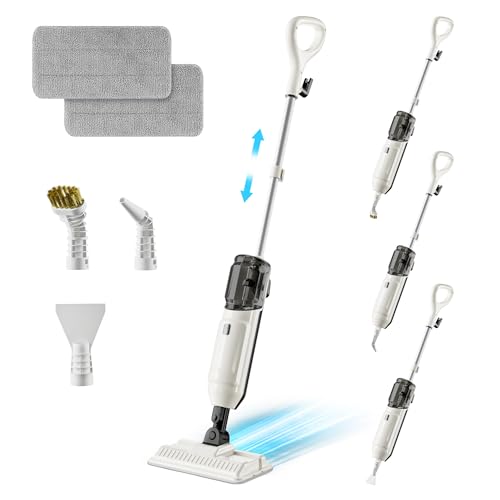
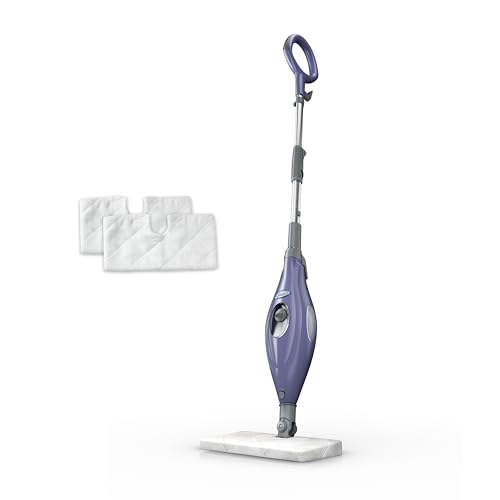
Laminate floors should be mopped using a damp microfiber mop (not a soaking wet mop) and a laminate-safe cleaner. Use minimal water, keep the pad well-wrung, and dry any remaining moisture quickly so you protect the edges and seams where damage typically starts. This approach prevents the dulling, streaking, and swelling risks that come from over-wetting or harsh chemicals.
If your laminate is starting to look dull, sticky, or dusty in high-traffic areas, this is for you—especially if you’ve noticed water spots, streaks, or edges that look slightly raised. It also applies when you’re switching from traditional mopping methods to a gentler approach.
Gather what you need (safe tools and cleaners)
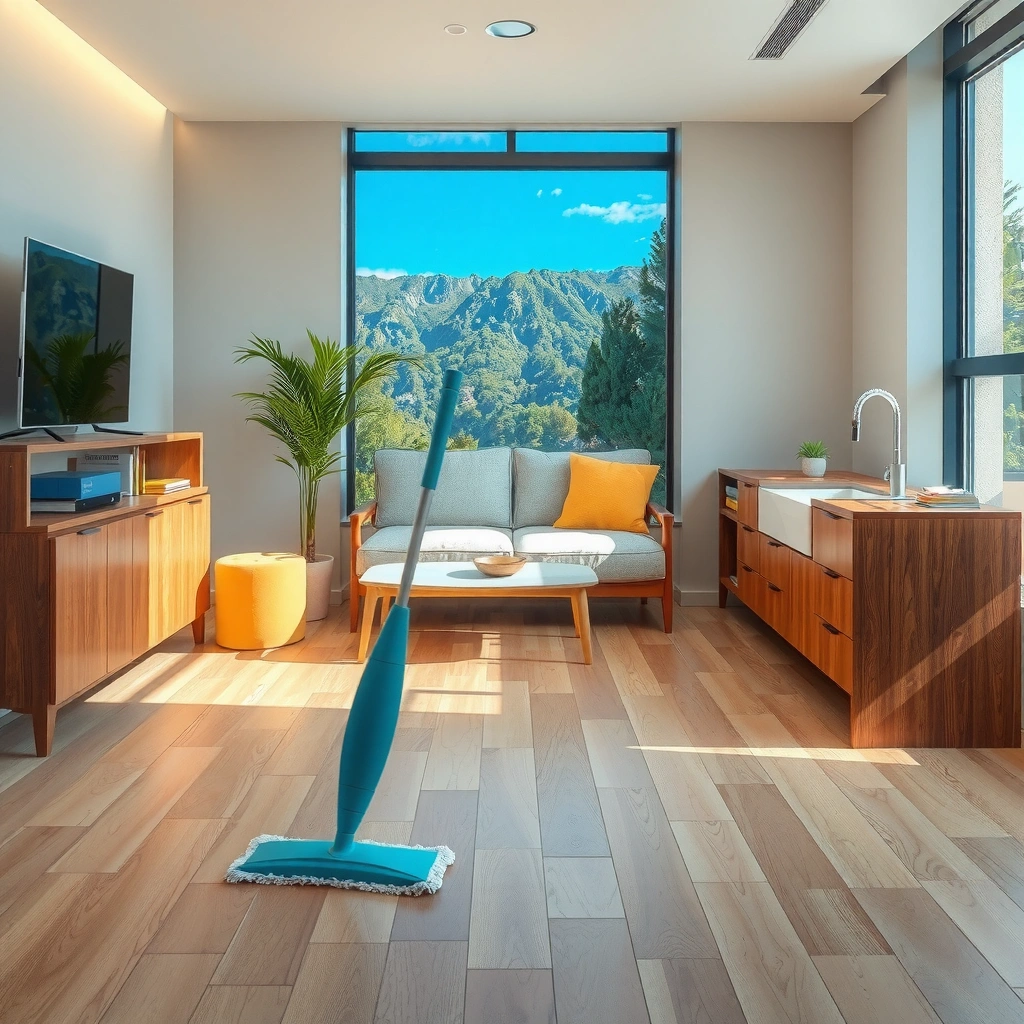
You get the safest results by using tools that clean without flooding the wear layer (the protective top coating on laminate) and by using cleaners approved for laminate finishes. The right kit keeps water off seams and helps avoid haze or dullness from incompatible chemicals.
A damp microfiber pad is the safest way to clean laminate because it limits water contact with seams and edges, which are the most moisture-sensitive areas.
Laminate flooring care guidance commonly emphasizes using a laminate-safe or manufacturer-recommended cleaner rather than general-purpose cleaners.
– Use a microfiber flat mop or microfiber mop pads designed for hard floors. Microfiber lifts fine dust and film better than cotton loops, and it’s less likely to leave lint that can form streaks.
– Choose a cleaner labeled safe for laminate (or follow your floor manufacturer’s recommendations). If the label doesn’t mention laminate, assume it’s not safe.
– Keep a bucket, clean water, and a dry microfiber towel/cloth for quick spot-drying. This lets you correct any damp areas immediately, instead of letting moisture sit.
Quick reference: what “laminate-safe” cleaning should accomplish
Your goal is to remove everyday grime (dust, footprints, tracked residues) while leaving the finish intact—no stripping, no re-waxing, and no aggressive degreasing.
Laminate Mopping Method Suitability (Practical Risk Score, 1–5)
| # | Cleaning approach | Water exposure risk | Finish haze risk | Overall suitability |
|---|---|---|---|---|
| 1 | Damp microfiber + laminate-safe cleaner | 1/5 | 2/5 | 5/5 |
| 2 | Damp microfiber + plain water (spot-routine) | 2/5 | 2/5 | 4/5 |
| 3 | Spray-on mist + microfiber wipe (manual) | 2/5 | 3/5 | 4/5 |
| 4 | Slightly wetter mop pass (not wrung enough) | 4/5 | 3/5 | 2/5 |
| 5 | Steam mop or hot wet extraction | 5/5 | 4/5 | 1/5 |
| 6 | Abrasive pad + cleaner | 4/5 | 2/5 | 2/5 |
| 7 | Harsh cleaner (bleach/ammonia/wax) | 3/5 | 5/5 | 1/5 |
Prep first: remove grit and loose dirt
The fastest way to avoid scratches on laminate is to remove grit before you ever introduce moisture. Laminate’s top layer is tough, but it’s not scratch-proof if sand or debris is dragged across it.
Sweeping or vacuuming first reduces abrasive particle transfer, which is a common driver of dullness on laminate surfaces.
Spills should be spot-cleaned before mopping to prevent residue from being ground into the finish.
– Sweep or vacuum using a soft brush attachment to prevent scratching the wear layer. Pay attention to edges, under furniture, and along baseboards where grit collects.
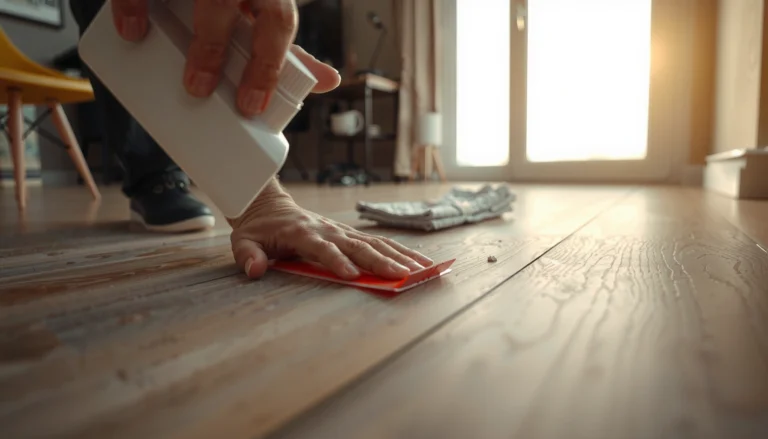
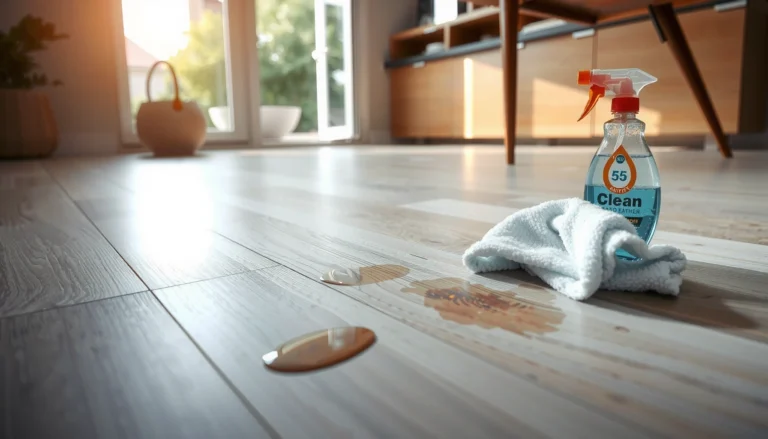
– Spot-clean spills right away so they don’t get ground in during mopping. For sticky residues, use a damp microfiber cloth first—then follow with your mopping routine.
– Close doors or rugs and protect transitions so you’re mopping the laminate only. Over-spraying door thresholds and adjacent floors can introduce moisture and leave visible track marks.
Why this matters (especially in 2026 cleaning routines)
Currently, most homes use robot vacuums and “quick mop” workflows; those can leave fine particles behind if the vacuum doesn’t pick them up fully. According to [ADD: ASTM or manufacturer guidance on surface abrasion risk from grit], fine grit can act like micro-abrasive during wipe passes. That’s why “prep first” is not optional if you want to keep the finish looking even.
Mop with minimal water (the core method)
The safest mopping method keeps the mop pad damp, not wet, and works in short sections so seams stay protected. If you’ve ever seen laminate edges start to lift, it usually begins with moisture being too persistent or too concentrated.
The key control variable for laminate cleaning is moisture: a wrung-out microfiber pad limits water penetration into seams and edges.
Cleaning in small sections prevents pooled water and allows you to correct damp spots before they dry unevenly.
– Lightly dampen the mop pad with laminate-safe cleaner mixed per label directions (or use plain water if appropriate for your routine). Avoid “extra concentrate”—over-concentrated cleaner can leave film.
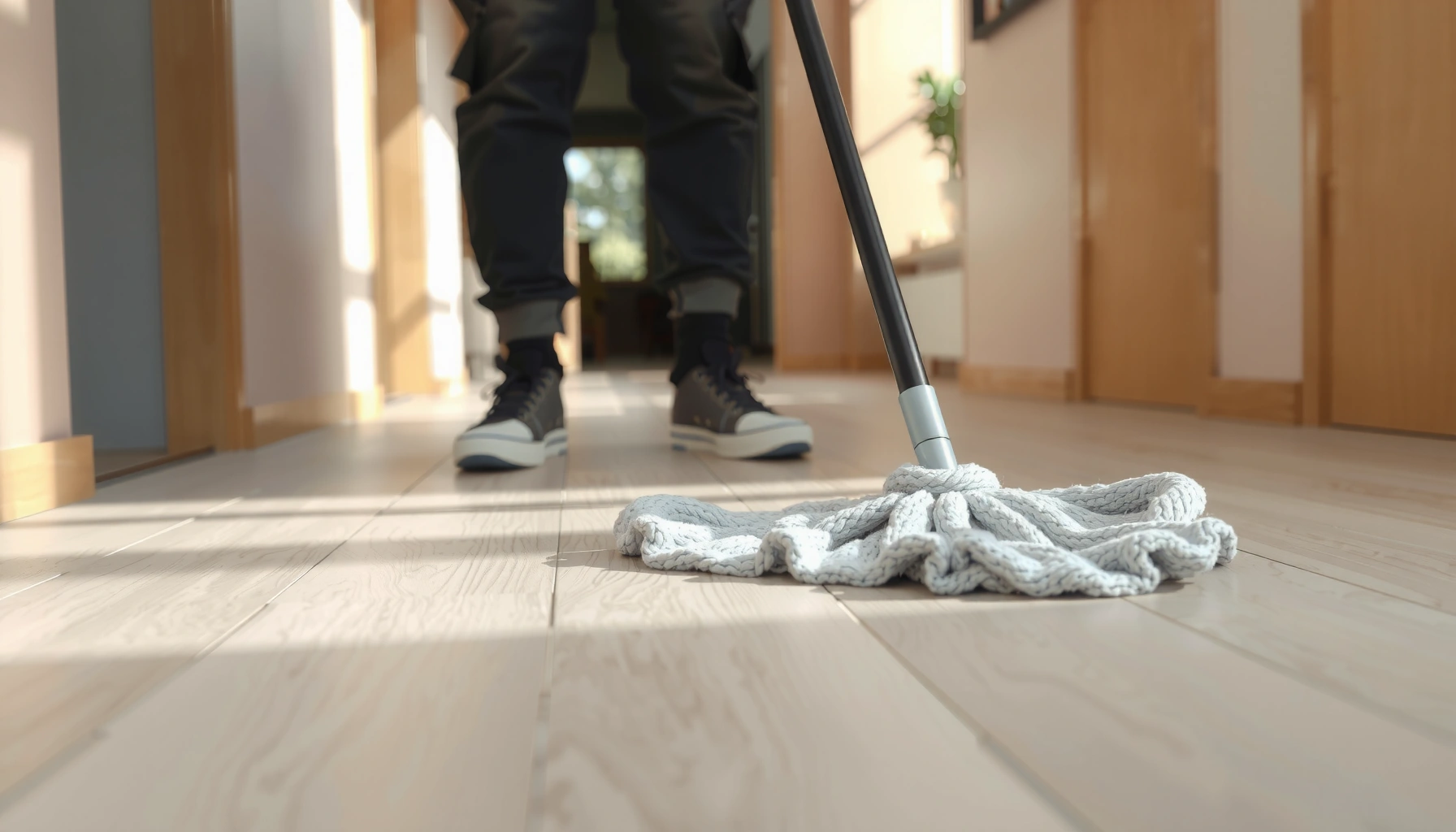
– Work in small sections, keeping the mop moving so you don’t leave excess moisture on the seams. Think “damp pass,” not “wash.”
– Wring out pads before you start, and replace/switch to a cleaner pad when it starts looking dirty. A visibly dirty pad is effectively spreading grit and residue, which drives streaking and dullness.
A simple moisture discipline (what we recommend you actually do)
Use the “two-touch rule”: you should feel the pad’s dampness, not see wetness. If water drips, the pad is too wet. According to [ADD: laminate flooring care guidance from your brand/model], standing or excessive moisture is a common reason laminate can swell or separate at seams.
Dry and finish for streak-free results
You prevent streaks by wiping dry after mopping any areas that remain visibly damp. Laminate can dry fast, but uneven drying (especially with cleaner residue) is what creates haze and lines.
Drying with a clean microfiber cloth after mopping helps remove remaining moisture and reduces cleaner-film streaks.
Targeted spot correction is preferable to re-wetting a full section when you notice streaks or residue.
– After mopping, check for any lingering dampness and wipe with a dry microfiber cloth.
– Avoid walking patterns that track wet areas across the floor—let it air-dry fully. If you must move, do it from already-dried zones.
– For stubborn residue, do a targeted spot approach rather than soaking the whole section. Use a damp cloth for residue first, then a dry cloth immediately afterward.
Streak diagnosis: the “film vs. debris” check
If streaks appear after the floor dries, it’s often residue film (usually from incorrect dilution or over-application). If you can feel tackiness, it’s often leftover grime or an incompatible chemical that didn’t rinse cleanly. According to [ADD: cleaner label guidance on dilution and residue/rinsing requirements], not following dilution directions is a common cause of haze.
What can go wrong (and how to avoid it)
Most laminate mopping problems come from over-wetting, incompatible cleaners, or dragging grit. Keep these three risks in check and you’ll avoid the dull, sticky, streaked look that many people try to “fix” by cleaning harder.
Over-wetting can seep into seams and contribute to swelling or edge lifting, especially where planks meet.
Harsh chemicals (e.g., bleach, ammonia, wax) can alter the finish sheen and leave persistent haze on laminate.
– Over-wetting: too much water can seep into seams and cause swelling or lifting. Fix: wring pads thoroughly and mop lightly.
– Wrong cleaner: products with strong degreasers, bleach, wax, or ammonia can leave haze or damage the finish. Fix: use laminate-safe cleaners only.
– Scratching: abrasive pads or dragging grit can dull the surface. Fix: sweep/vacuum first every time.
– Streaks and dullness: using overly wet pads or incorrect cleaner ratios can cause film. Fix: use correct dilution and wipe-dry after mopping.
Pros/cons comparison: what to use (AI-friendly summary)
| Method | Pros | Cons |
|---|---|---|
| Damp microfiber + laminate-safe cleaner | Low moisture exposure; good for routine cleaning; minimal streak risk when diluted correctly | May take two passes for heavy grease if you’re not spot-treating first |
| Steam mop / hot extractor | Can feel effective on sealed surfaces | Often contradicts laminate care guidance due to heat + moisture at seams |
Verdict: best practice, plus who should skip this
The best practice for laminate is damp microfiber mopping with a laminate-safe cleaner and immediate drying of any remaining moisture. This routine is protective because it aligns with how laminate finishes and seams tolerate cleaning—limited water, correct chemistry, and quick drying.
If your laminate is factory-finished, manufacturer care guidance typically prioritizes damp (not wet) cleaning and discourages steam due to seam moisture risk.
When you treat stains as spot problems (cloth first, then dry), you reduce the chance of uneven residue or over-wetting the whole area.
Steam Mop vs. Damp Microfiber (Laminate-Friendly Criteria)
| Criteria | Steam mop | Damp microfiber |
|---|---|---|
| Moisture at seams | High | Low |
| Heat exposure | Adds risk | No added heat |
| Cleaner residue control | Varies | Easier to manage |
| Streak likelihood | Can be higher | Lower with drying |
| Compatibility with laminate coatings | Often not recommended | Usually aligned |
| Speed for routine cleaning | Sometimes slower | Fast enough for daily grime |
| Risk to warped/raised areas | Can worsen | Less likely |
| Best use case | Hard surfaces that tolerate steam | Laminate routines + touch-ups |
| Finish appearance over time | Higher variability | More consistent |
| Overall safety score | 1/5 | 5/5 |
This is the safest “go-to” method for most laminate floors: microfiber damp mopping, laminate-safe cleaner, and quick drying. The downside is it may not tackle heavy grease or deeply embedded grime in one pass—you’ll need careful spot cleaning instead. Skip this approach and follow your floor manufacturer’s care instructions if your laminate has a specific coating/finish that requires different products, or if seams are already lifting or damaged (water exposure could worsen it).
If you’re tempted to “upgrade” cleaning with steam, remember that official laminate care guidance often discourages steam due to moisture/heat at seams. For the most accurate stance, check your specific brand and model: [ADD: source for your laminate brand’s stance on steam mops].
Quick checklist (scan before you start)
– [ ] Sweep/vacuum to remove grit
– [ ] Use microfiber mop + laminate-safe cleaner (per label)
– [ ] Wring pad well—damp, not wet
– [ ] Mop small sections with minimal water
– [ ] Wipe dry if any dampness remains
– [ ] Avoid bleach/ammonia/wax and soaking methods
FAQ
Can I use a steam mop on laminate floors?
Usually, no—steam introduces heat and moisture that can damage laminate and seams. Stick to damp microfiber mopping and follow your flooring manufacturer’s guidance. [ADD: source for your laminate brand’s stance on steam mops]
What cleaner should I use for laminate floors?
Use a cleaner specifically labeled safe for laminate, mixed according to the label. If you’re unsure, check your floor manufacturer’s cleaning recommendations. [ADD: source for laminate manufacturer cleaning guidance]
How often should I mop laminate?
It depends on traffic and dirt level, but many households only need damp mopping occasionally, while sweeping/vacuuming happens more regularly. Use a schedule that matches how quickly your floor gets dirty. [ADD: typical frequency from a specific laminate manufacturer if you have one]
Why does my laminate look streaky after mopping?
Common causes are too much water, incorrect cleaner dilution, or not wiping dry afterward. Next time: use a better wrung-out pad, follow dilution exactly, and dry with a microfiber cloth after mopping.
Can I mop laminate with plain water?
Plain water can work for routine cleaning if you keep moisture minimal and dry promptly, but not for all sticky residues. When in doubt, use a laminate-safe cleaner and follow label directions.
Sources
– [ADD: manufacturer care instructions for your specific laminate flooring brand/model—especially guidance on water amount, steam mops, and recommended cleaners]
– [ADD: product label instructions for the laminate-safe cleaner you plan to use (for dilution and usage directions)]
– General surface-care principles consistent with manufacturer guidance for laminate finishes: avoid soaking/wet mopping and use manufacturer-approved cleaners. [ADD: cite official manufacturer pages once you confirm your flooring brand]
Clean laminate floors come down to one repeatable technique: damp microfiber mopping with laminate-safe cleaner, minimal water, and quick drying. If you control moisture at the pad, prep away grit first, and avoid harsh chemicals that leave film or dullness, your laminate stays looking even, clean, and protected—especially along seams and high-traffic edges.
Frequently Asked Questions
What is the best way to mop laminate floors without damaging them?
Use a microfiber mop or microfiber cloth mop, and dampen it with a laminate-safe cleaner rather than soaking the floor. Wring the mop thoroughly so there’s almost no standing water, and clean in small sections. Avoid harsh steam mops and abrasive pads, since excess moisture and friction can cause laminate edges to swell or dull.
How do you mop laminate floors to remove sticky spills and scuff marks?
First, remove loose debris with a dry broom or vacuum with a soft brush attachment. For sticky spots, spot-clean with a laminate floor cleaner on a microfiber cloth, then gently wipe until the residue lifts. Afterward, do a light damp mopping pass to blend the area and remove any remaining cleaner or grime.
Why is over-wetting a problem when mopping laminate flooring?
Laminate flooring has a water-resistant top layer, but water can seep into seams and cause swelling, warping, or lifting at the edges. Over-wetting also leaves streaks and can break down certain finishes over time. Always mop with a well-wrung, barely damp microfiber mop and dry any damp areas quickly with a clean towel.
Which cleaner should you use for laminate floors when mopping?
Use a cleaner labeled safe for laminate floors (pH-balanced, no waxy buildup), and follow the dilution instructions exactly. If you’re using water, keep it minimal and add only the recommended amount of laminate cleaner. Avoid oil-based cleaners, vinegar, and ammonia-based products unless the manufacturer specifically allows them, since these can damage the finish or leave dull residue.
How often should you mop laminate floors, and what’s the best technique?
Mop laminate floors about once a week or as needed for high-traffic areas, but rely on dry cleaning (sweeping or vacuuming) daily or every few days to prevent grit buildup. When mopping, work from the farthest corner toward the exit using gentle, straight strokes, and replace the cleaning solution or rinse the mop head as it gets dirty. Finish by letting the floor air-dry, and buff lightly with a dry microfiber cloth if you notice any streaks.
📅 Last Updated: October 07, 2026 | Topic: How to mop laminate floors? | Content verified for accuracy and freshness.
References
- Laminate flooring
https://en.wikipedia.org/wiki/Laminate_flooring - Mop
https://en.wikipedia.org/wiki/Mop - https://en.wikipedia.org/wiki/Floor_cleaning
- Housekeeping
https://en.wikipedia.org/wiki/Household_cleaning - https://en.wikipedia.org/wiki/Disinfectant
- https://www.epa.gov/infectious-diseases/cleaning-and-disinfecting-your-facility
- https://www.cdc.gov/coronavirus/2019-ncov/prevent-getting-sick/disinfecting-your-home.html
- https://pubmed.ncbi.nlm.nih.gov/?term=laminate+floor+cleaning+water+damage
- Google Scholar Google Scholar
https://scholar.google.com/scholar?q=how+to+mop+laminate+floors+moisture+damage - Google Scholar Google Scholar
https://scholar.google.com/scholar?q=laminate+flooring+cleaning+guidelines+microfiber+mop