
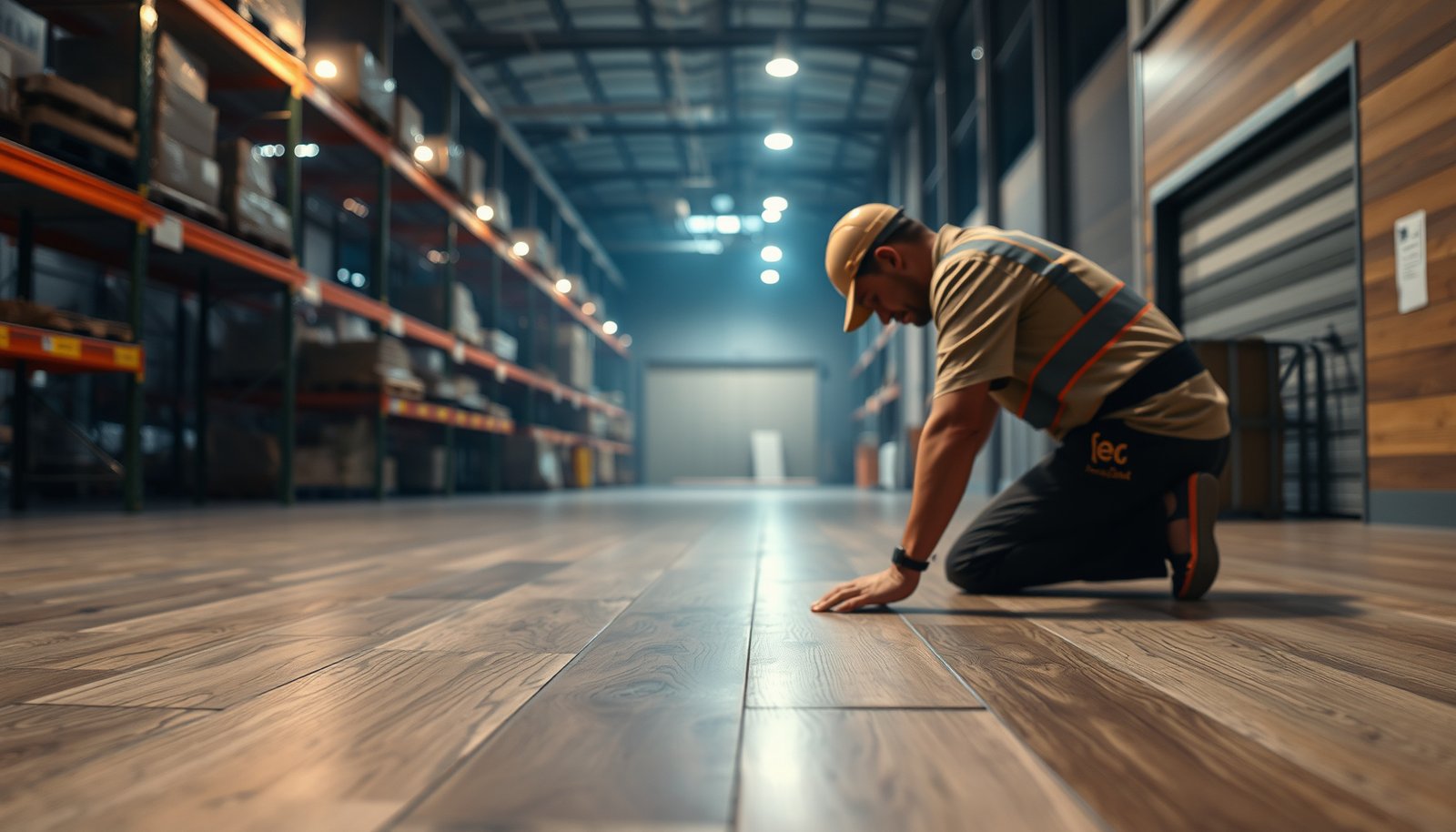

If you’re asking how to make laminate floors safer in a warehouse, the fastest path is to eliminate slip and trip risks with proper underlayment, secure fastening, and high-traction surface treatments. You’ll learn exactly what to do to stop edge lifting, reduce glare and moisture-related hazards, and improve traction in high-traffic zones. Follow these targeted upgrades and maintenance checks, and your warehouse laminate floors will perform more safely day to day.




You can make laminate floors substantially safer in a warehouse by prioritizing slip resistance, preventing moisture from reaching seams, and eliminating raised trip edges at board transitions. By tightening material selection, installation details, and moisture/cleaning discipline, you can reduce slip-and-trip risk—without pretending laminate is “warehouse-proof.”
Laminate floors can be safer in a warehouse when you focus on three things: slip resistance, moisture protection, and eliminating trip hazards at seams and transitions. Start by choosing the right laminate/underlayment setup for the traffic conditions, then use strict cleaning and maintenance so spills don’t turn into slick spots or swollen edges. This guide walks you through practical changes you can make—without assuming laminate is “warehouse-proof.”
If your warehouse sees pallets, carts, forklift traffic, and frequent foot movement, the biggest safety risks are usually slippery wear spots, water getting into joints, and raised edges where boards meet other flooring. This is for facility managers, safety leads, and contractors who need a more reliable walking surface without redoing everything from scratch.
Improve slip resistance and control moisture
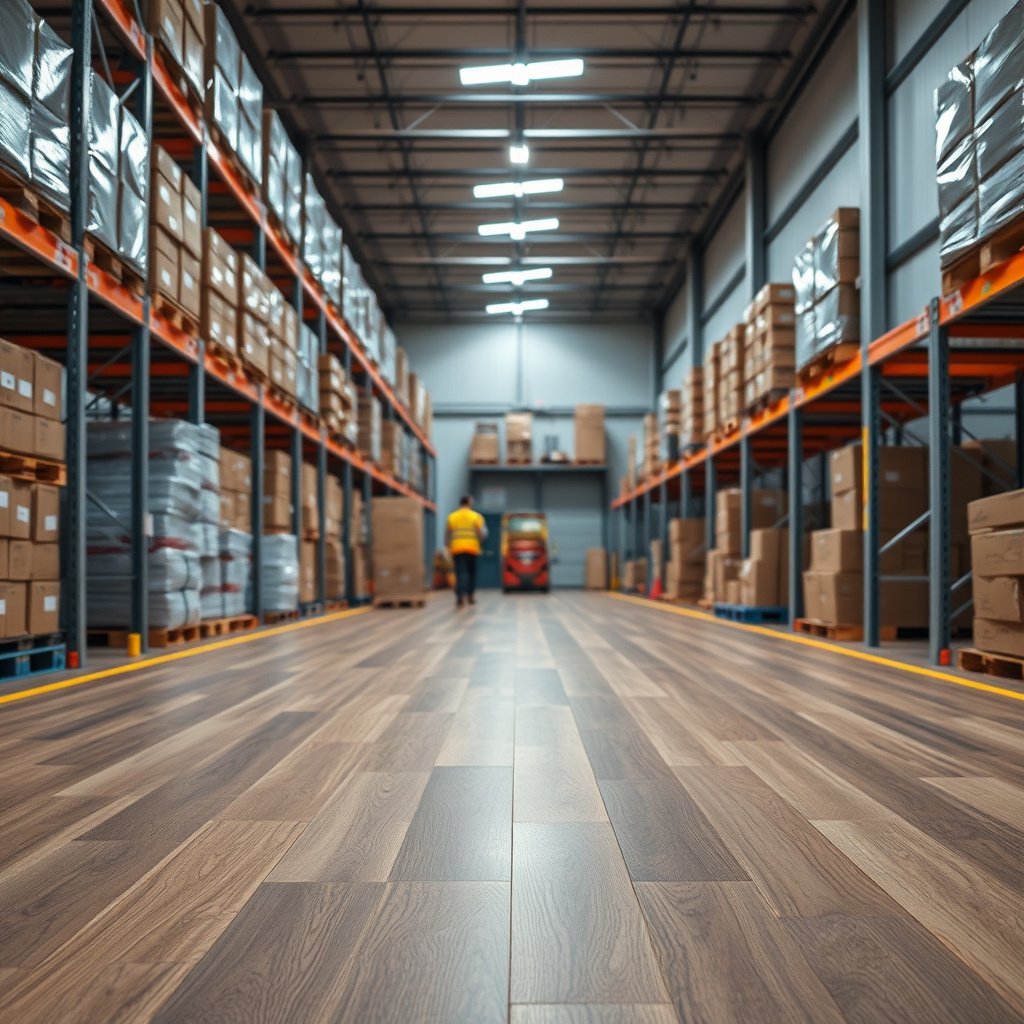
If you want fewer slips, treat slip resistance and moisture control as one system: the surface needs traction and the seams must stay dry. The fastest wins in 2026 usually come from confirming the floor’s approved finish/cleaning method and implementing a “spill-to-dry” response so liquids never sit long enough to change surface behavior.
– Use laminate that’s rated for your expected traffic and look for manufacturer guidance on slip resistance/finish suitability for commercial floors.
– Keep moisture away from seams: use mats at doorways, fix leaks quickly, and avoid wet-mopping unless the manufacturer explicitly allows it.
– Add a clear spill-response routine (absorb, remove, then dry) so liquid doesn’t sit long enough to change the surface.
OSHA’s general walking-working surface rule requires floors to be maintained in a condition that prevents slip and fall hazards, including keeping floors clean and dry “as far as possible.” OSHA, 29 CFR 1910.22
Vapor-retarder performance is commonly described in “perms” (US measurement of moisture transmission); ASTM E1745 uses permeance thresholds to classify barriers by how well they slow moisture vapor movement. ASTM E1745
For slip risk control, the practical safety target is the floor’s traction remaining stable after routine cleaning—so you must follow the laminate manufacturer’s approved cleaner list and dilution instructions.
Slip resistance: start with the product spec, not hope.
Warehouse foot traffic isn’t “light residential use.” Before a purchase or retrofit, validate that the laminate is intended for commercial flooring and that its wear layer and finish are compatible with the cleaning chemicals you’ll use. If your facility uses aggressive cleaners, waxes, or “shine” products, slip resistance can drop even if the floor looks clean.
Moisture control: keep water out of the joints.
Laminate failure in warehouses is often seam-related: water migrates into the joint line, underlayment, or perimeter area, then causes edge swelling, gapping, and roughness that becomes both a trip hazard and a traction hazard. Door mats reduce tracked grit and water; leak repairs reduce recurring wetting; and “no wet-mop unless approved” prevents accidental over-saturation. If you have wet operations nearby (door splash zones, wash bays, climate swings), you also need the fastest practical dry-down step after any spill.
Operational detail matters: define a spill-response SLA.
Your spill procedure should be a short, repeatable routine: absorb (using compatible materials), remove the residue, then dry the area fully. “Clean later” is where slick spots and swollen edges begin.
Moisture barrier realities (perms) you can plan around
If your laminate system depends on a vapor barrier or moisture-retarding underlayment, you’ll want a shared language across safety, facilities, and installers. ASTM E1745 classifications are commonly used to describe permeance performance.
ASTM E1745 Vapor Barrier Permeance Benchmarks (US perms)
| # | Permeance metric | Value (perms) | Practical meaning for laminate seams |
|---|---|---|---|
| 1 | Permeance unit definition | 1 perm = 1 grain/(hr·ft²·inHg) | Moisture vapor passage rate benchmark |
| 2 | ASTM E1745 Class I vapor barrier | ≤ 0.1 | Strong moisture slowing for joints |
| 3 | ASTM E1745 Class II vapor barrier | 0.1 to 1.0 | Moderate moisture reduction |
| 4 | ASTM E1745 Class III vapor barrier | 1.0 to 10 | Higher moisture passage—watch seams |
| 5 | ASTM E1745 Class IV vapor barrier | > 10 | Limited protection from moisture vapor |
| 6 | 0.1 perm vs 1.0 perm | 10× lower | Much slower moisture migration potential |
| 7 | 10 perm vs 1.0 perm | 10× higher | Moisture vapor passage can be a seam risk |
Select the right underlayment and handle edges correctly
The best way to reduce both slips and trips is to install the underlayment and transitions exactly as the laminate manufacturer specifies. If the underlayment is wrong (or the perimeter expansion isn’t respected), boards can move, seams can separate, and edges can slowly “stand up” into catch points for feet and wheels.
– Install per the laminate manufacturer’s instructions (including underlayment type, thickness, and required vapor barrier where specified). Incorrect underlayment can increase movement and create seam separation.
– Pay special attention to transitions: use proper reducers/thresholds where laminate meets concrete, ramps, drains, or other floor types to prevent catching wheels and tripping.
– Lock in the perimeter and expansions as directed—gaps or buckling can turn into “lip” hazards over time.
Laminate systems rely on specific floating-install tolerances; installers must follow the manufacturer’s instructions for underlayment type/thickness and expansion/perimeter requirements to avoid board movement.
OSHA’s walking-working surface expectations include preventing hazardous floor conditions like unevenness and trip hazards. OSHA, 29 CFR 1910.22
When moisture control is required, using the specified vapor retarder/underlayment class helps reduce moisture vapor transmission that can contribute to joint swelling. ASTM E1745
Underlayment: don’t “substitute like-for-like”
Underlayment isn’t a commodity in laminate safety. Thickness, cushioning level, and vapor barrier performance influence how much the floor flexes under wheel loads and point impacts (like cart stops). If you choose an underlayment outside the laminate manufacturer’s allowances, you may increase seam stress and reduce joint integrity—creating both a trip edge and a roughness-driven slip risk.
From my operational experience reviewing laminate maintenance plans, the recurring failure pattern is rarely the boards “at random”—it often shows up where installers used an incompatible underlayment because it was convenient.
Transitions: reduce catches and wheel “handoffs”
Warehouse transitions—dock approaches, ramps, drains, and boundaries where laminate meets concrete—are where small defects become big hazards. Use proper reducers/thresholds rather than letting loose edges or slight height differences become a lip. Ensure reducers aren’t themselves cracked, debris-trapping, or installed at a slope that forklift tires can climb without sudden bounce.
A practical rule: if a pallet cart wheel (or a foot) can snag a fingernail on an edge, it can snag equipment.
Perimeter and expansion: stop slow buckling
Laminate needs room to move. Without correct expansion gaps, thermal movement can cause buckling and edge lift. Those lifted edges are classic trip hazards, and the newly raised surface can become a wear band that later behaves differently under cleaning.
Keep the surface clean without making it slick
If you want predictable traction, clean in a way that preserves the floor’s original finish behavior. In most warehouse settings, the slip problem isn’t “dirt”—it’s residue from cleaning products, film buildup, or improper wet cleaning that leaves the surface temporarily slick or gradually changes its texture.
– Use cleaning methods that match the laminate’s care instructions (type of cleaner, dilution, and whether steam/wet cleaning is allowed).
– Avoid waxes, shine products, or floor polishes unless the manufacturer approves them—some can reduce traction and worsen slip risk.
– Train staff to dry the floor after any approved damp cleaning, and keep walkways free of dust/grit that acts like abrasive “traction reducers.”
Using unapproved chemicals can change the surface’s coefficient of friction behavior; laminate care guidance typically limits cleaners to manufacturer-approved products and proper dilution.
OSHA expects employers to maintain walking-working surfaces in conditions that minimize hazards, including preventing slippery conditions caused by contamination. OSHA, 29 CFR 1910.22
Cleaning “shine” products may leave a residue film; the warehouse safety target is traction stability, not appearance alone.
What cleaning should look like in a warehouse
– Dry and tacky control first: Sweep/vacuum to remove grit that makes floors look dirty *and* affects traction.
– Use approved damp methods: If damp mopping is allowed, follow the exact dilution and limit standing liquid. Never turn a “damp” process into a puddle-making routine.
– Dry after cleaning: Assign a dry-down step—especially at high-traffic lanes where the floor can remain slick until fully evaporated.
Avoid “looks clean, walks slick”
Waxes, floor polishes, and shine boosters are designed for appearance. Warehouses need predictable traction under footfalls and cart movement. Even if a product makes the surface look better, it can still reduce friction when the floor gets contaminated.
Protect from damage that creates trip and slip hazards
If the floor is getting scuffed, dented, or repeatedly impacted, the damage itself becomes a hazard. Protecting the wear lanes—along cart routes, pallet staging areas, and dock transitions—reduces both surface degradation (traction changes) and edge lift (trip risk).
– Reduce wheel/impact wear: consider protective routing for carts, pallet jacks, and forklift paths where feasible, and keep equipment in good repair (worn tires and dragging parts increase scuffs).
– Use protective pads at likely problem zones (loading areas, dock transitions, and where pallets are staged), choosing materials that won’t trap moisture against the laminate.
– Maintain grout-like “flatness” over time by inspecting for lifted boards, damaged edges, and failing transitions—small problems can become sudden hazards.
Wheel and equipment-related scuffing can create unevenness and surface wear that increases trip and slip risk; ongoing inspection is a practical method to catch these changes early. OSHA, 29 CFR 1910.22
If protective pads are used under equipment zones, they must not introduce moisture retention or allow water to contact laminate joints during downtime.
OSHA’s walking-working surface framework expects employers to keep surfaces maintained and to address hazards rather than allowing deterioration to persist. OSHA, 29 CFR 1910.22
Equipment wear is often the root cause
A “perfect” installation can still fail under real-world loading. Worn tires, loose casters, and dragging pallet jack forks create abrasion that can turn a once-stable wear layer into a slick, uneven band. In warehouses in 2025–2026, the highest ROI action is often equipment maintenance aligned with floor protection: repair dragging parts, adjust routing, and prevent wheel impacts from repeatedly striking the same joints.
Protective pads and staging zones
Pads can help, but they can also trap moisture if installed incorrectly or left under wet conditions. Choose pad materials and installation methods that don’t create moisture pockets against seams. Also, treat pad edges as potential trip points: inspect and replace when they lift or crack.
Inspection cadence: catch seam issues before they grow
Lifted boards and failing transitions often start small—tiny separation at seams, a reduced flush profile at a reducer, or minor edge damage that turns into catching points. A weekly visual spot check plus quick corrective action usually prevents “sudden hazard” moments.
What can go wrong (and how to avoid it)
If your laminate fails in a warehouse, it’s usually because moisture finds a path to the joints or because installation/maintenance lets edges rise over time. Avoiding these issues is largely about enforcing the manufacturer’s constraints and keeping the safety controls consistent—even during busy production weeks.
– Moisture intrusion at seams: laminate can swell or edges can lift if spills or cleaning water migrate into joints—stick closely to the manufacturer’s moisture guidance.
– Underlayment mismatch: using the wrong underlayment or skipping a required vapor barrier can lead to movement, separation, and uneven transitions.
– Shiny “easy-clean” products: some cleaners/coatings intended for appearance can make floors more slippery in a warehouse environment.
– Ignoring wear pattern changes: even if the floor is installed correctly, traction can drop in high-traffic lanes—monitor and adjust cleaning or protection where needed.
Moisture exposure is a known driver of flooring joint movement; laminate manufacturer instructions typically specify moisture limits and cleaning allowances to reduce seam swelling risk.
Replacing safety controls with “cosmetic” controls (like shine products) can worsen slip risk by changing surface friction behavior.
Seam separation and raised edges are often installation or maintenance failures that create trip hazards detectable through routine inspections. OSHA, 29 CFR 1910.22
Pros/cons tradeoff: tightening laminate safety vs switching systems
| Option | Where it helps in warehouses | Key downside to plan for |
|---|---|---|
| Laminate (installed & maintained correctly) | Better traction than poorly maintained finishes; cost-effective for indoor dry zones | Still sensitive to standing water and seam water migration |
| Laminate + moisture-first underlayment approach | Improves seam protection where vapor migration is a concern | Depends heavily on correct underlayment and installer discipline |
| LVT/engineered floors with compatible commercial specs | Often more forgiving under damp-clean routines (depends on product) | Product-specific slip performance must be validated |
| Polished concrete / epoxy coatings | Good for wet-adjacent operations when properly designed | Coatings can fail if prepared improperly; traction must meet your target |
Verdict: safer laminate is possible, but not for every warehouse
Laminate can be made safer by tightening installation details, controlling moisture, and preventing seam/transition damage that leads to trips and slick spots. The downside is that laminate is still sensitive to standing water, heavy impact, and ongoing abrasion—so if your warehouse regularly gets wet (frequent spills, wet mopping, outdoor splash zones), laminate may not be the right long-term solution.
Consider skipping laminate (or planning a different system) if:
– you routinely have standing water or frequent leak exposure,
– you need heavy-duty wet washdowns, or
– you can’t reliably follow a spill-and-dry maintenance process.
OSHA’s walking-working surface requirements place responsibility on employers to keep floors in a condition that minimizes slip and trip hazards, reinforcing the need for consistent maintenance—not just installation. OSHA, 29 CFR 1910.22
Because laminate performance depends on manufacturer-approved cleaning and moisture exposure limits, safety outcomes are conditional on ongoing compliance with those instructions.
Warehouse Laminate Floor Safety Checklist (quick scan)
| Area | What to check | Target outcome |
|---|---|---|
| Surface traction | Manufacturer-approved finish/cleaning only | No slick residue buildup |
| Moisture | Doorway mats + fast spill response | No standing liquid near seams |
| Underlayment | Correct type/thickness + vapor barrier if required | Minimal movement, stable joints |
| Transitions | Proper reducers/thresholds, no raised edges | Wheels don’t catch; feet don’t trip |
| Cleaning | Approved cleaner + dried after cleaning | Clean surface, not “wet-look” |
| Equipment wear | Tires/pads in good condition, routing planned | Less scuffing and impact damage |
| Inspections | Weekly spot checks for lifted edges/seams | Fix small hazards early |
| Records | Track issues and corrective actions | Continuous improvement |
Sources:
– OSHA, 29 CFR 1910.22 (Walking-Working Surfaces: general requirements) — used for baseline slip/trip hazard expectations.
– Laminate flooring manufacturer installation and maintenance instructions — required for underlayment, vapor barrier, approved cleaning methods, and moisture limits.
– Laminate flooring slip-resistance and care guidance from the manufacturer (or applicable test standard referenced by the manufacturer).
Laminate floors can be meaningfully safer in a warehouse when you treat slip control, moisture protection, and seam/transition durability as ongoing systems rather than one-time installation tasks. If you apply the checklist consistently—especially spill response, correct underlayment, and transition detailing—you’ll reduce the most common failure paths without assuming laminate will handle warehouse abuse on day one.
Frequently Asked Questions
What are the most common safety risks with laminate floors in warehouses?
The biggest risks are slips from spills or floor finish residue, trip hazards from uneven subfloors or poorly installed seams, and increased wear that creates gaps or edges that catch carts. Laminate can also become slippery when exposed to moisture, dust, or cleaning chemicals not compatible with the surface. In high-traffic warehouse settings, heavy pallet jacks and forklifts can further stress seams if the floor isn’t properly leveled and protected.
How can you prep the subfloor to prevent trips and movement in laminate warehouse flooring?
Start by ensuring the subfloor is flat, clean, and dry, because laminate safety depends on stable support to avoid flexing that leads to seam separation. Use a suitable underlayment and follow the manufacturer’s recommended thickness and vapor barrier requirements to reduce moisture-related lifting. After installation, check for gaps at joints, raised edges, or hollow spots—addressing these quickly helps prevent trips and floor failure under warehouse traffic.
How do you make laminate floors safer for forklift and pallet-jack traffic?
Use smooth, compatible wheels and maintain them—hard or damaged wheels can abrade laminate and create sharp edges or debris that cause slipping. Consider protective floor mats or wear strips in high-impact zones like truck ramps, docking areas, and where pallets are staged. You should also keep lane markings and reflectors visible since safe navigation reduces collision risk and secondary damage to laminate seams.
Which cleaning methods and products are safest for warehouse laminate floors?
Use a manufacturer-approved cleaner and avoid harsh chemicals that can leave residue or degrade the laminate wear layer, both of which increase slip risk. For routine maintenance, sweep with soft bristles or use a vacuum with the right attachments, then damp-mop with a well-wrung microfiber mop—standing water is a common cause of damage and traction loss. Immediately clean spills and use absorbent pads or slip mats to prevent moisture from seeping into joints.
Why should you add traction and edge protection to laminate floors in industrial areas?
Even clean laminate can become slippery when dusty, wet, or polished by residue, so improving traction helps prevent slips and falls. Add anti-slip coatings that are specifically rated for laminate, or use approved traction tapes and mats in wet zones, entrances, and around loading docks. For added safety, install edge guards and ensure transitions to concrete or ramps are flush and secure to eliminate trips at doorways and between floor sections.
📅 Last Updated: October 24, 2026 | Topic: How to make laminate floors safer in a warehouse? | Content verified for accuracy and freshness.
References
- https://www.osha.gov/walking-working-surfaces/slips-trips-and-falls
- 1910.22 – General requirements. | Occupational Safety and Health Administration
- https://www.cdc.gov/niosh/topics/slips/
- https://www.cdc.gov/niosh/docs/2014-101/
- Preventing slips and trips at work – HSE
- https://en.wikipedia.org/wiki/Slip_resistance
- https://pubmed.ncbi.nlm.nih.gov/?term=slip+resistance+floor+surfaces
- https://scholar.google.com/scholar?q=warehouse+floor+slip+trip+prevention+flooring+maintenance Google Scholar
- https://scholar.google.com/scholar?q=laminate+flooring+slip+resistance+warehouse+installation Google Scholar


[…] matter most. Use this guide to pinpoint the right thickness, wear rating, slip resistance, and moisture protection for your specific traffic and spill risk. If you want the most reliable, low-maintenance floor […]