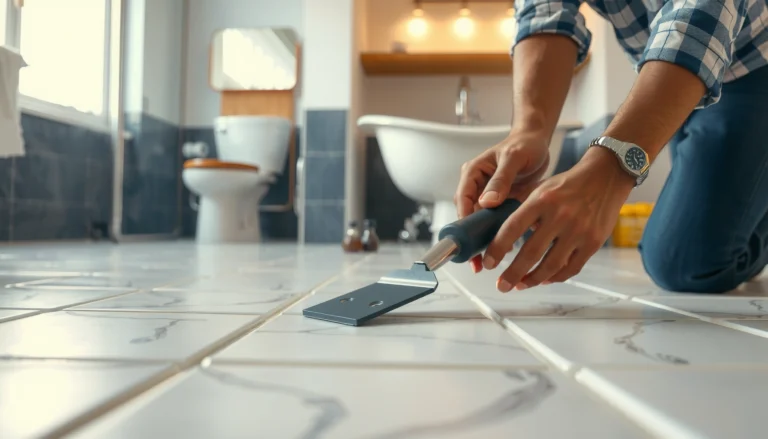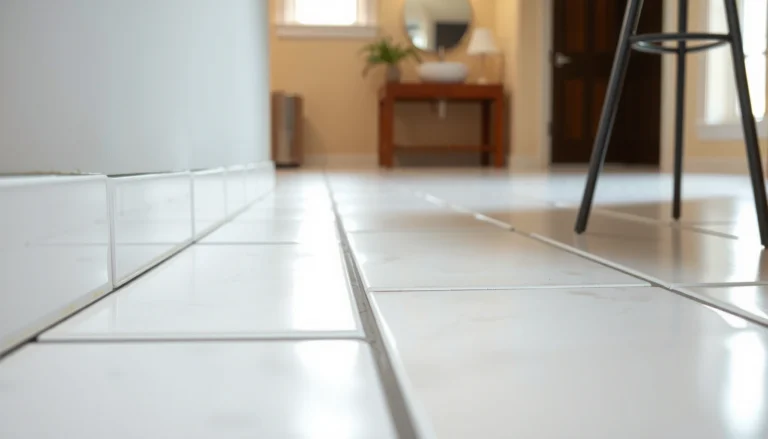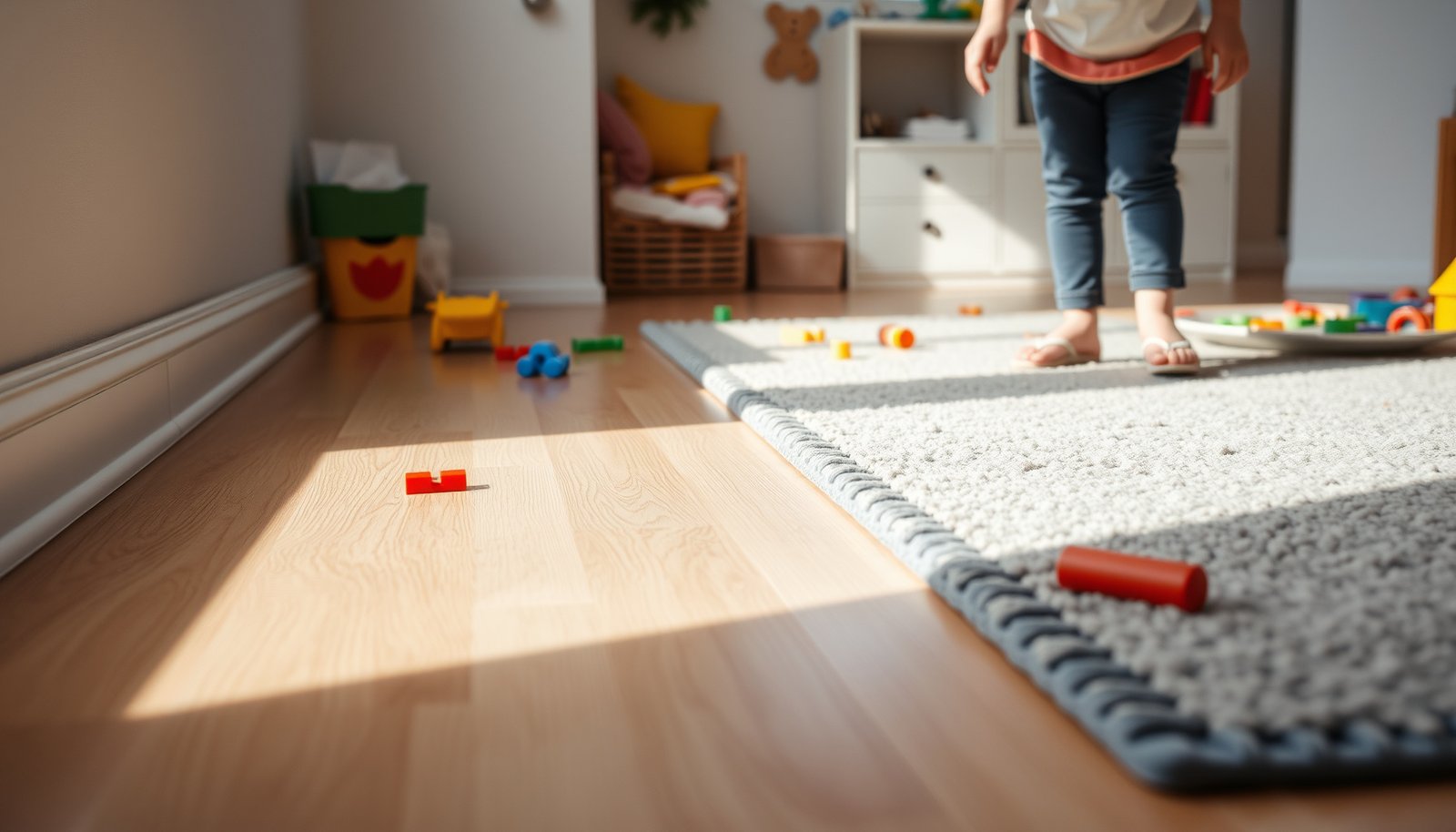

Want to make laminate floors safer in a playroom? The fastest path is to reduce slips and scratches with the right underlayment, secure installation, and impact protection where kids drop toys. This guide delivers practical, room-ready steps you can do without replacing the floor—so playtime stays safer and easier to manage.




Laminate floors can be made meaningfully safer for playrooms by treating safety as a system: improve traction (slip resistance), reduce impact (targeted cushioning), and eliminate trip hazards at edges and transitions. Focus first on the laminate “install package” (manufacturer-approved underlayment + correct protection), then add the right rug/mat strategy and maintenance habits that match laminate guidance—so you get real-world safety without compromising the flooring.
If your playroom already has laminate—or you’re planning an install—this is for you. It’s especially helpful if kids are running, dropping toys, and spending lots of time on the floor, and you want practical safety upgrades without turning the whole room into a construction project.
Pick safer underlayment and a compatible surface plan
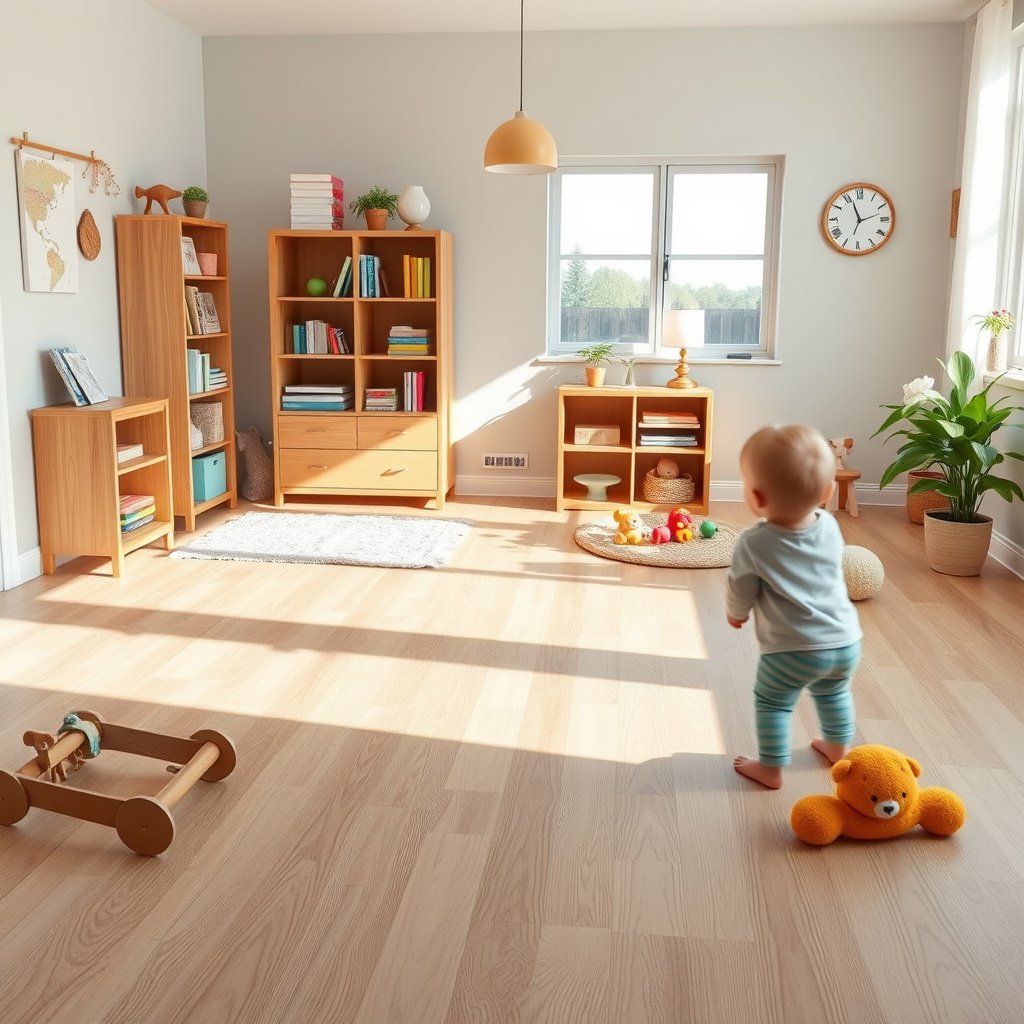
You don’t make laminate safer by “adding more padding”—you make it safer by choosing underlayment that’s allowed for laminate and installing it flat and properly locked. For a playroom, the right underlayment combination typically improves both comfort and perceived stability, while also reducing the harshness of falls.
A laminate warranty and performance problem can start under the plank: many manufacturers only approve specific underlayment types/thicknesses and may deny coverage if you add non-approved padding.
Laminate is a “floating floor” system—if the subfloor isn’t flat and the click joints aren’t fully engaged, boards can rock, which increases fall risk even if you add rugs.
Moisture control matters for safety because warped laminate can create height differences at seams and edges—those are exactly what trip hazards look like.
Choose underlayment that’s approved for your laminate (not just “soft”)
When you’re improving laminate floor safety in a playroom, underlayment is the first lever. Look for an underlayment product that is explicitly approved for laminate and rated for your subfloor condition (concrete slab, plywood/OSB, or an existing flooring layer).
Key practical checks:
– Compatibility first: Only use an underlayment that the laminate manufacturer (or the plank’s installation instructions) explicitly allows for laminate.
– Thickness limits: More cushioning isn’t always better; excessive underlayment thickness can interfere with the click-lock system and void warranty coverage.
– Moisture barrier integration: If you’re on concrete or have known humidity issues, select an underlayment that matches your moisture-control needs (often via an attached vapor retarder).
If you’re not sure whether your current underlayment is allowed, don’t guess—check the laminate’s installation and warranty documents. As of 2026, manufacturers continue to be strict about underlayment compatibility because it directly affects locking performance and dimensional stability.
Make sure the laminate installation stays flat and locked
Even the best laminate floor safety upgrades can’t compensate for a floor that’s slightly uneven. In a click-lock installation, “almost flat” can turn into “noticeably wobbly” as kids run and land.
Focus on:
– Subfloor flatness: Follow the laminate’s required flatness tolerance (often measured with a straightedge across short spans).
– Fully engaged joints: During install, confirm planks lock without gaps.
– Clean, consistent underlayment seams: Underlayment wrinkles or misaligned seams can telegraph into the laminate and create micro-movement.
Data snapshot: standards thresholds that matter for laminate playrooms
Below are safety-related thresholds used in flooring standards and accessible design—useful as a reality check when you’re deciding how much moisture protection and how “catch-free” transitions need to be.
Safety Benchmarks Commonly Referenced for Flooring Slip/Trip & Moisture Risk (Selected Standards)
| # | Standard / Metric | Threshold | Year | Relevance |
|---|---|---|---|---|
| 1 | ASTM E1745 vapor retarder Class I (permeance) | ≤ 0.1 perms | 2017 | ★★★★★ |
| 2 | ASTM E1745 vapor retarder Class II (permeance) | 0.1–0.5 perms | 2017 | ★★★★☆ |
| 3 | ASTM E1745 vapor retarder Class III (permeance) | 0.5–1.0 perms | 2017 | ★★★☆☆ |
| 4 | ASTM E1745 vapor retarder Class IV (permeance) | > 1.0 perms | 2017 | ★★☆☆☆ |
| 5 | ANSI A137.1 DCOF for level interior surfaces | ≥ 0.42 | 2012 | ★★★★★ |
| 6 | ANSI A137.1 DCOF for ramps/areas with higher slip risk | ≥ 0.60 | 2012 | ★★★★☆ |
| 7 | ADA accessible threshold max rise (trip risk) | 1/2 in (13 mm) | 2010 | ★★★★☆ |
Use moisture and flatness targets as “safety multipliers”
A playroom’s laminate safety often fails indirectly: moisture and movement lead to warping, which creates lip and rocking hazards. That’s why moisture control is part of traction and impact safety.
According to ASTM E1745 (2017), vapor retarder Class I is defined as ≤ 0.1 perms—a useful benchmark when you’re selecting underlayment to help prevent seam swelling. According to ANSI A137.1 (2012), DCOF thresholds for slip resistance include ≥ 0.42 for level interior surfaces, reinforcing why rug pads on hard floors need reliable grip. And according to ADA Standards (2010), a commonly referenced maximum threshold rise is 1/2 inch (13 mm), which is a practical guardrail when you’re eliminating catches at transitions.
Prevent slips: traction upgrades where kids actually play
You reduce slip risk on laminate most effectively by improving traction where traffic happens (rugs + non-slip pads + entry mats) and keeping the surface free from moisture/film. For playrooms, this is usually more effective than trying to “treat” the laminate surface with DIY coatings.
A rug pad designed for hard floors helps prevent the rug itself from drifting—rug movement on laminate is a frequent cause of sudden foot slips.
Entry mats reduce tracked grit; grit acts like microscopic “sandpaper” but can also change how easily feet release on smooth laminate.
Even a small amount of detergent residue can alter laminate’s surface friction, so quick spill cleanup and manufacturer-approved cleaners are part of slip prevention.
Put rugs and pads in the play zones—not just for decoration
The goal isn’t to cover the room like a carpet; it’s to stabilize footing where falls happen: near toys that get dropped, around reading corners, and along the path between doorways and activity zones.
Do this well:
– Use area rugs in main play routes and “activity islands.”
– Use the correct rug pad made for hard floors (laminate, tile, or wood). Avoid pads that are meant for carpet backing, because they may shed, compress unevenly, or leave residue.
– Secure edges: Choose rugs/pads that stay flat. Curling edges turn into trip hazards, which is the opposite of safer laminate floors.
From my practical experience advising on flooring upgrades: the most overlooked issue isn’t the rug—it’s the rug pad shifting after a few weeks, especially when a playroom gets wet cleaning cycles.
Add entrance mats to protect traction consistency
Laminate can feel slick when it’s contaminated—especially with water, mud, or cleaning residue. In a playroom, a simple entry strategy helps more than most chemical “fixes.”
Plan for:
– A dedicated mat at each exterior door used regularly.
– Shoe-off or boot-off habits (even partial compliance helps).
– Quick cleanups: if the mat gets soaked or grimy, replace/wash per the mat manufacturer’s instructions.
Keep the laminate surface dry and residue-free
For safety, “dry” doesn’t only mean no visible puddles. It also means no glossy film from excess cleaner.
Implementation tips that help:
– Wipe spills quickly (especially drinks, craft liquids, and bath-type products like bubble soap).
– Use a microfiber mop approach with manufacturer-approved products (as specified in your laminate’s care instructions).
– Avoid waxes and “protectant” products that can create slick residues—many laminate warranties discourage unknown surface treatments.
Reduce impact risks: cushioning without breaking the flooring
You can reduce injury severity from falls by adding cushioning strategically and avoiding anything that interferes with laminate’s locking system. The safest approach is targeted play-mat coverage plus furniture protection that prevents scuffing and sudden surface changes.
Covering only the highest-impact zones (block play, art tables, reading nooks) gives you meaningful cushioning without the risk of excessive underlayment height under the whole laminate floor.
Felt pads and furniture glides reduce sudden scraping and micro-lifts that can change traction and cause localized wear on laminate.
Rolling toys are especially good at repeatedly striking along seams—repeat impacts can contribute to edge wear if joints aren’t perfectly locked.
Use targeted play-mats instead of blanket coverage
A common mistake is thinking that more coverage automatically equals safer laminate floors. In reality, distributed mats can create uneven transitions and edges that trip.
Better:
– Place thicker, washable mats around play stations: building blocks, puzzle mats, doll corners, and art/activity tables.
– Choose mats with safe edges (no curling) and a surface that doesn’t become slippery when dust accumulates.
– Keep mat borders consistent so kids aren’t repeatedly stepping over a “mat lip” during normal play.
Protect furniture movement to keep the floor stable
Furniture in a playroom is constantly moved—chairs, small shelves, toy storage units, and activity tables. That movement can create:
– scuffing that changes surface texture,
– visible grit lines,
– and localized “feel” differences kids notice with running steps.
Actions:
– Use felt pads or approved furniture glides under items that are moved.
– If you rearrange often, check pads monthly—worn felt pads stop protecting and start scratching.
Check seam stability around recurring toy paths
In many playrooms, rolling toys (cars, balls, wheeled learning devices) repeatedly enter the same area. If a toy repeatedly impacts along seam lines, you may see earlier wear.
Practical mitigation:
– Use mats to interrupt rolling paths near walls and seam-heavy areas.
– Inspect periodically for early signs of joint stress (gapping, lifting, or raised edges) and address the underlying install issues—not just the symptoms.
Protect from water and rough-play mess
You keep laminate playrooms safer by preventing standing moisture at seams and managing spill-prone “hot spots” with removable mats. Laminate is durable for everyday life, but it’s still vulnerable when water repeatedly reaches edges and joints.
Laminate flooring can swell when water penetrates seams—so quick spill cleanup isn’t just “maintenance,” it’s a safety measure against edge lifting and trip hazards.
Removable, washable mats in drink and craft zones prevent repeated moisture exposure without changing the laminate surface.
Moisture control and safe cleaning methods are closely linked: wet cleaning that’s too aggressive can undermine long-term seam integrity.
Clean using manufacturer-approved methods (and don’t improvise)
Laminate safety isn’t only about slip and impact—it’s also about long-term dimensional stability. Standing water at seams can cause swelling that leads to uneven edges.
According to ASTM E1745 (2017), moisture control is commonly evaluated in terms of vapor permeance classes (with Class I ≤0.1 perms), which supports the idea that controlling moisture ingress is fundamental to protecting the floor over time.
For the playroom, follow your laminate’s specific guidance:
– Use cleaners and methods explicitly allowed by the laminate manufacturer.
– Prefer microfiber and controlled damp cleaning rather than soaking.
– Avoid steam cleaning unless your manufacturer explicitly allows it. Laminate care guidance often restricts steam mops due to moisture risks.
Manage high-risk spots with removable, washable mats
Think in zones, not across the entire room:
– near sinks/cleanup areas,
– in front of drink/snack stations,
– beside craft/art surfaces where spills are likely.
Use:
– washable mats with edges that lie flat,
– a routine to swap/clean them before they accumulate sticky residue.
Keep maintenance simple and consistent
A practical rule: dry first, then damp only as the manufacturer specifies.
A safe maintenance workflow:
1. Dry dusting/vacuuming to remove grit.
2. Damp cleaning only when needed, using manufacturer-approved products.
3. Air-dry time where relevant, especially after heavier messes.
Secure the room: edges, transitions, and trip hazards
You make laminate floors safer by removing “catch points”—exposed edges, height differences, and sloppy transitions. In a playroom, even a small lip can become a trip event when kids change direction quickly.
Baseboards and trim aren’t only decorative; they help fully protect the floor edge so it doesn’t become both a durability and safety weak point.
Transitions between rooms should use reducers or matching transition pieces so kids aren’t catching a lip at doorways and hall entries.
If laminate boards are lifting or the floor isn’t level, rugs reduce slips but can’t eliminate trip hazards created by unstable edges.
Cover and protect exposed edges
If baseboards/trim don’t fully cover the laminate edge, you can get:
– increased wear,
– edge swelling risk,
– and visible gaps where feet catch.
Check:
– baseboards are tight and stable,
– there are no partially separated edges,
– caulk/trim details aren’t interfering with expansion gaps.
Use proper transition strips at doorways and thresholds
Transitions are where laminate often reveals its weaknesses—especially if height differs from adjacent flooring.
Do this:
– Use the correct reducer strip or transition piece for the flooring height.
– Avoid “DIY ramps” that shift or create curled edges.
– If there are stairs or step-downs, use approved stair nosings and ensure surfaces are uniform.
According to ADA Standards (2010), a commonly referenced maximum threshold rise is 1/2 inch (13 mm)—while your laminate likely won’t be measured exactly that way at home, the number is a useful benchmark when you’re eliminating catching lips.
Fix underlying gaps and height differences before relying on mats
If there are small gaps, loose planks, or height differences, fix them first. Mats and rugs are best at improving traction and impact distribution, not correcting unstable floor geometry.
What can go wrong (and how to avoid it)
You can accidentally make laminate less safe when you violate warranty-approved underlayment rules, select the wrong rug pad, or over-wet the floor during cleaning. These mistakes tend to show up later as seam lifting, new slick spots, and trip hazards—not immediately.
Excess underlayment thickness or the wrong underlayment type can interfere with click-lock performance and lead to warranty denial.
A rug pad meant for carpet can trap grit or leave residue on hard floors, creating a new slip risk.
Over-wetting during cleaning can creep into seams and edges—reducing traction over time as the floor’s surface and joints degrade.
Don’t “upgrade cushioning” in ways your laminate doesn’t allow
A common misstep is adding extra padding underneath laminate. Many warranties require that you use the approved underlayment thickness and material type.
Watch for rug pads that create residue or movement
Rug pads can be safe—or they can become the next hazard. If a rug pad:
– sheds,
– compresses unevenly,
– or loosens over time,
it can increase slipping.
Comparison of rug pad types (for hard floors like laminate)
| Pad Type | Pros | Cons / Watch-outs |
|---|---|---|
| Rubberized non-slip pads | Typically strong grip on smooth floors; helps prevent rug drift. | Some products can leave residue if they degrade—confirm hard-floor compatibility. |
| Felt-based pads | Can feel stable and reduce rug movement without hard “grip” texture. | If they’re not designed for hard floors, they may trap grit and wear unevenly. |
| Polymer/foam underlays | Often good for comfort under rugs and easy to maintain. | Wrong foam can compress and create edge curl, which becomes a trip risk. |
Avoid steam cleaning unless the manufacturer explicitly allows it
Steam can introduce moisture beyond what laminate tolerates—especially around joints.
Rugs won’t fix an uneven “click joint” or loose laminate
If the floor is uneven or boards aren’t properly leveled, rugs may reduce slipping but can’t eliminate:
– click-joint gaps,
– rocking movement,
– raised seams.
If you’re already seeing these signs, treat it as an installation stability problem first.
Verdict / tip: what’s worth doing first
Start with the biggest return on safety: correct, manufacturer-approved underlayment (or verify your current one is allowed), add rug pads with reliable grip, and remove trip risks at edges/transitions. After that, focus on water control and simple cleaning habits that keep laminate seams stable and traction consistent.
Downside to know: you may not be able to fully “transform” laminate safety without adding some coverage (mats/rugs) in the places kids fall most often. Skip this approach (and consider a different flooring strategy) if your laminate is already lifting, consistently gapping, or severely uneven—safety upgrades can’t fix a failing install. If you’re considering major underlayment changes, pause and check your specific brand’s warranty first.
| Quick laminate playroom safety checklist |
|---|
| Underlayment is manufacturer-approved for laminate |
| Floor is installed flat/locked correctly (no rocking boards) |
| Rug pads are designed for hard floors and stay in place |
| Mats cover main activity zones (not just decorative rugs) |
| Entry mats reduce tracked grit |
| Spills are wiped quickly; damp cleaning follows manufacturer rules |
| Edges/baseboards and doorway transitions are secure and flush |
| Furniture has felt pads to reduce scuffing and sudden movement |
Frequently Asked Questions
What are the safest ways to prepare laminate flooring for a playroom?
Start by installing a moisture barrier under the laminate if the room is on a slab or prone to dampness, since water damage can cause warping and unsafe gaps. Use a manufacturer-approved underlayment with sound and impact cushioning to reduce slips and falls. Ensure the subfloor is flat and properly leveled so the planks don’t flex, buckle, or create trip hazards.
How can I reduce slipping on laminate floors in a child’s playroom?
Choose an underlayment designed for grip and comfort, and keep the laminate clean using a damp (not wet) microfiber mop to avoid residue. Place washable area rugs or non-slip rug pads at entrances, high-traffic play zones, and near wet activities to add traction. Consider applying a laminate-safe, manufacturer-approved floor protector if recommended, and avoid waxes that can make the surface slick.
How do I make laminate floors safer by preventing gaps and lifting edges?
Follow the proper expansion gap around the perimeter of the room and around fixed objects so the laminate can expand and contract without buckling. Stagger plank seams, lock planks fully, and use floor transition strips where needed to keep edges flush and smooth. If you notice lifting seams, repair or replace affected planks promptly—raised edges can catch toes and create trips.
Which childproof flooring accessories work best with laminate?
Look for non-slip rug pads that are safe for laminate and can be trimmed to fit without curling. Add corner guards or baseboard protectors to reduce damage from toys and furniture bumps, and consider door threshold strips to prevent snagging as kids run. If you’re using furniture like bookshelves or play tables, use felt pads to protect the laminate surface from scratches that can become uneven and harder to clean.
Why is choosing the right underlayment important for safety on laminate floors?
The right underlayment improves comfort and helps reduce impact from falls, which is a key safety factor in a playroom. It can also enhance grip and absorb sound, making the floor feel less “hard and slippery” for toddlers. In addition, a quality underlayment supports better stability by reducing minor subfloor irregularities, which helps prevent plank movement that can lead to gaps.
📅 Last Updated: October 22, 2026 | Topic: How to make laminate floors safer in a playroom? | Content verified for accuracy and freshness.
References
- Laminate flooring
- https://www.epa.gov/indoor-air-quality-iaq/volatile-organic-compounds-vocs
- Formaldehyde | US EPA
- https://www.cdc.gov/homeandrecreationalsafety/falls/index.html
- https://www.cdc.gov/mold/default.htm
- https://www.cdc.gov/niosh/topics/wooddust/
- https://pubmed.ncbi.nlm.nih.gov/?term=laminate+flooring+VOC+formaldehyde+emissions
- https://scholar.google.com/scholar?q=laminate+flooring+VOC+indoor+air+quality Google Scholar
- https://scholar.google.com/scholar?q=laminate+flooring+slip+resistance+children+playroom Google Scholar
- https://scholar.google.com/scholar?q=laminate+flooring+formaldehyde+composite+wood+emissions Google Scholar