
If you’re trying to make laminate floors safer in a hallway, the fastest win is reducing slip and trip risk at the source: install the right underlayment, add grip-enhancing transition strips at doorways, and tighten or replace any loose planks. This article tells you exactly what to check, what products to choose, and how to correct common hallway hazards before they cause falls. You’ll leave with a clear, step-by-step safety plan tailored to high-traffic laminate flooring.




Make laminate floors safer in a hallway by improving traction first, then fixing trip points (seams, edges, and transitions), and finally controlling moisture so the surface stays grippy. If your hallway sees heavy foot traffic, has rugs, or sits near an entry that brings in water and sand, these steps matter—especially if you’ve noticed clicking boards, raised edges, or slipperiness after cleaning.
If your hallway gets heavy foot traffic, has rugs, or is near an entry that brings in water/sand, these steps are especially relevant. This is also useful if you’ve noticed clicking boards, raised edges, or areas that feel slippery after cleaning.
Improve traction to reduce slip hazards
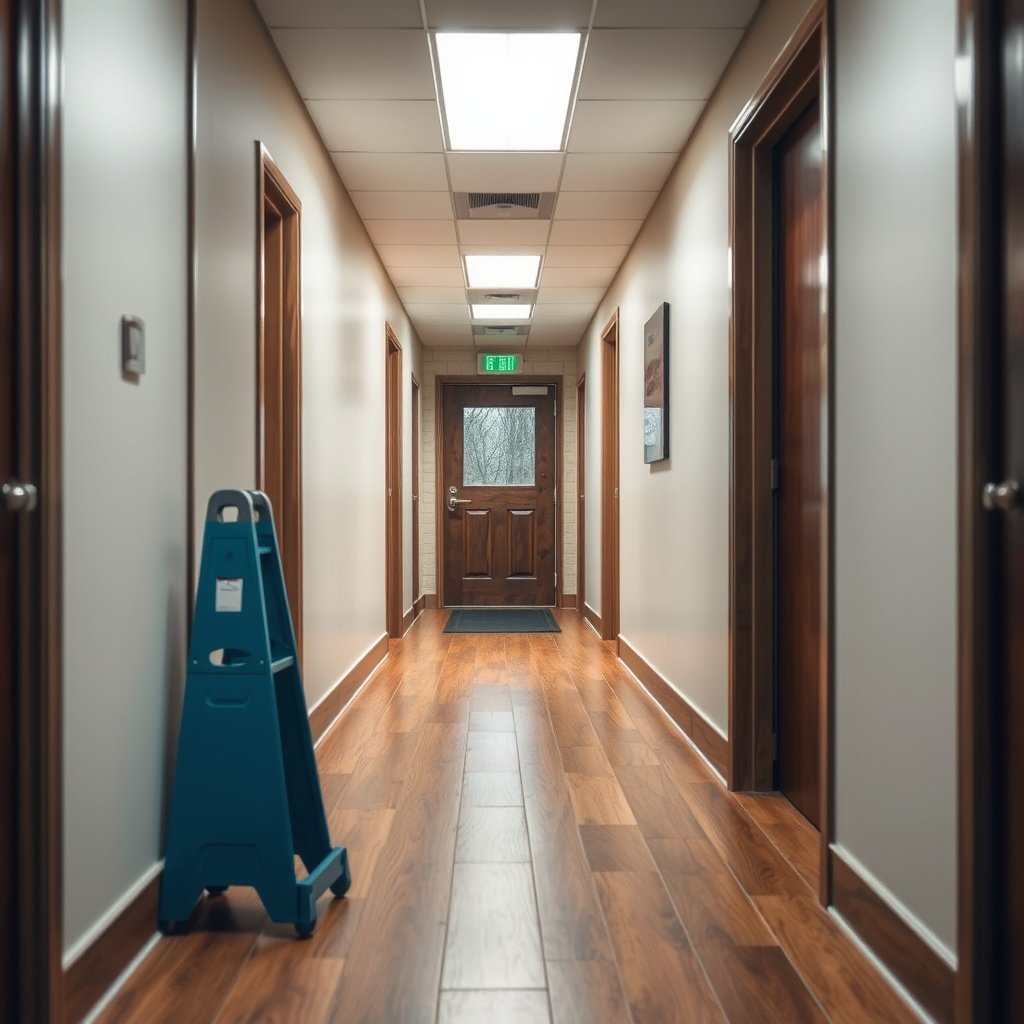
Improve traction by reducing tracked-in grit and keeping laminate floors clean using manufacturer-approved damp cleaning methods. When laminate floors feel slick, the usual causes are moisture residue, abrasive debris, or a finish that’s been altered by the wrong cleaner.
A non-slip rug pad designed for hard floors helps prevent laminate floors from becoming slippery at rug edges.
Laminate care instructions typically call for a damp (not wet) cleaning approach to avoid moisture weakening seams and reducing surface grip.
Target entry areas where slip risk starts
– Put a non-slip mat or runner at the entry and any “wet path” spots (front door to the hallway). Use a rug pad designed for hard floors so corners don’t curl.
This matters because laminate floors in hallways are usually hit first by wet shoes, damp umbrellas, and gritty salt deposits. As of 2026, most household slip injuries happen during short, high-traffic transitions—entry-to-hallways—so controlling what lands on the laminate is your first safety layer.
Clean in a way that preserves grip
– Use manufacturer-approved cleaning (typically a damp—not wet—method). Avoid soaking, because moisture can reduce grip on laminate finishes and at seams.
Moisture can also interfere with the floor’s floating performance by swelling or loosening edges over time, turning a “slightly slick” zone into a raised seam or a recurring clicking problem.
Keep the floor dry and grit-free
– Keep the floor dry and clean by wiping up spills immediately and using entry mats to reduce tracked-in water/grit.
According to the CDC, one in four adults aged 65+ experiences a fall each year (2022) CDC. While your hallway may not be a clinical environment, the same physics applies: water and grit lower friction where people step and pivot.
Fix seams, edges, and transitions that cause trips
Fix trip hazards by ensuring laminate floors have flush seams and smooth transitions at thresholds and floor-type changes. Many hallway injuries start with a “small” height difference that people don’t notice until the last step.
Raised laminate seams and uneven transitions are common trip origins in hallways because feet land repeatedly at the same pivot points.
If laminate boards click or lift, the cause is often installation-related (underlayment fit, expansion gap, or subfloor flatness), not a cleaning issue.
Inspect for height differences that build up over time
– Check for height differences at seams, around thresholds, and where laminate meets tile/vinyl. Small ridges can turn into a trip point over time.
In practice, these ridges often show up where temperature swings expand/contract boards, or where traffic concentrates near doorways and hallway bends.
Repair loose boards before movement escalates
– Repair loose or separating boards (or have it addressed) before it becomes a bigger movement problem. If boards are lifting, the cause is often installation-related (underlayment fit, expansion gap, or subfloor issues).
When a laminate floor “works” and boards shift, seam edges can become sharp enough to catch a toe or heel—especially with socks, slippers, or worn footwear.
Smooth the roll-over at doorways and floor changes
– Add/adjust transition strips at doorways or major changes in floor height so feet roll over smoothly, not catch on edges.
This is especially important where laminate meets tile or vinyl, because different materials respond differently to moisture and temperature.
ADA 2010 Surface & Transition Thresholds That Reduce Trip Risk (Relevant to Laminate Hallways)
| # | Trip-Point Check | ADA 2010 Limit | Why it matters for laminate | Safety impact rating |
|---|---|---|---|---|
| 1 | Running slope (hallway “incline”) | ≤ 1:20 (5%) | Limits gradual slips on laminate | ★★★★★ |
| 2 | Cross slope (side-to-side) | ≤ 1:48 (~2.08%) | Helps prevent “lean” slips at turns | ★★★★☆ |
| 3 | Ramp slope | ≤ 1:12 (8.33%) | Guides how smooth transitions should feel | ★★★★☆ |
| 4 | Maximum vertical change at transitions | ≤ 1/4 in (6.4 mm) | Targets lip/ridge that catches toes | ★★★★★ |
| 5 | Threshold height (doorway transition) | ≤ 1/2 in (13 mm) | Helps evaluate laminate-to-tile steps | ★★★★☆ |
| 6 | Minimum clear width on accessible routes | ≥ 36 in (915 mm) | Reduces crowding where people clip edges | ★★★☆☆ |
| 7 | Crossing changes in level should be controlled | Bevel/transition guidance applies when > 1/4 in | Smoother edges reduce toe catch on laminate | ★★★★☆ |
Clean in a way that doesn’t make laminate slick
Clean laminate floors safely by using damp microfiber methods that match the manufacturer’s instructions. If you notice slippery laminate after mopping, it’s usually residue, over-wetting, or a cleaner that leaves a film.Wringing microfiber to a damp—not wet—state is the simplest way to avoid excess moisture at laminate seams.
Varnishes/cleaners that leave film can lower traction on laminate floors even when the surface looks “clean.”
Use the “damp cloth” approach
– Use the “damp cloth” approach: wring out microfiber so you’re cleaning, not flooding. If you see streaks or a film, stop and switch to the laminate-safe method recommended by the manufacturer.
In 2026, many laminate brands emphasize surface cleanliness without saturation—because water can migrate through joints and soften edges. For hallway laminate floors, the goal is to remove grit and residues that act like lubricants.
Avoid residue-forming products
– Avoid waxes, oil-based cleaners, and heavy-duty degreasers unless the laminate brand explicitly says they’re safe. Those can leave residues that feel slippery.
If your hallway has a history of “conditioning” products, the slipperiness can linger until residues are fully removed with the brand’s recommended cleaner.
Be careful with steam mops
– If you use a steam mop anywhere in the home, confirm it’s permitted for your specific laminate line—many aren’t recommended because heat and moisture can damage seams.
Steam introduces both heat and moisture; both can compromise seam integrity and cause a slippery film effect after partial drying.
Cleaner choice: a simple pros/cons comparison
| Approach | Pros (safety) | Cons / risk |
|---|---|---|
| Damp microfiber + laminate-approved cleaner | Targets dirt without soaking seams; maintains traction | Requires correct dilution and frequent wringing |
| Steam mopping (if not approved) | Can remove grime quickly | May loosen seams and reduce slip resistance |
| Wax/oil-based “shine” products | May improve appearance temporarily | Can leave a slippery residue film |
Upgrade underlayment and under-floor conditions (where appropriate)
Upgrade laminate safety by correcting the foundation issues that cause movement, gaps, and unevenness—because uneven laminate floors can create both trip and slip risk. Underlayment and subfloor flatness show up first in hallways, where people repeatedly walk in the same lines.
Wrong or incompatible underlayment can increase laminate movement, which eventually lifts edges and creates trip hazards.
A stable, flat subfloor reduces clicking and gaps—often the real cause behind “safety” problems that cleaners can’t fix.
Verify underlayment compatibility
– Verify your underlayment choice matches the laminate manufacturer’s requirements (type, thickness, and whether it includes moisture protection). Wrong underlayment can contribute to unevenness and movement that leads to safety issues.
Many laminate systems are engineered around specific underlayment properties; mismatches can amplify flex and create repeating seam failures.
Confirm the subfloor is flat and stable
– Ensure the subfloor is flat and stable in the hallway area. Uneven support often shows up first as clicking, gaps, or a “wavy” feel underfoot.
From a practical standpoint, if you press down on the laminate at a seam and it flexes, that flex can loosen edges and increase the chance of toe-catching.
Fix without breaking the installation system
– If you’re not reinstalling the floor, focus on fixes that don’t violate the installation system—like correcting transitions and maintaining expansion space—rather than adding ad-hoc layers.
Adding random padding can change height, increase movement, and create new hazards at thresholds.
Reduce accidents with hallway layout and visibility
Reduce hallway accidents by improving visibility, clearing the walking lane, and managing rugs so laminate floors stay predictably grippy. Safety improvements fail when people can’t see the edge or when items narrow the path during daily routines.
Better lighting along laminate hallway runs helps people detect raised seams and threshold edges early—reducing late-step trips.
Entry and rug placements change traction; using hard-floor-rated pads prevents rug movement that can destabilize laminate flooring zones.
Improve lighting so trip points aren’t hidden
– Improve lighting so shadows don’t hide raised seams or threshold edges. In hallways, better light can prevent the “last-second” trip.
This is especially relevant for laminate floors with textured visuals, where a slight height change is hard to read in low light.
Keep the walking lane clear
– Keep pathways clear: avoid furniture bases, cords, or temporary items that narrow the walking lane (especially at turns).
Even when the laminate itself is fine, hallway clutter creates “micro-corrections” that increase slip likelihood during wet shoe transitions.
Use visual cues carefully
– Use contrasting visual cues where safe/appropriate—like ensuring rugs don’t leave abrupt, hard-to-see edges at entrances.
A rug that ends abruptly can create an unanticipated change in friction and foot placement.
What can go wrong
Laminate floors can still be unsafe if you fix symptoms instead of causes. Most “it’s still slippery” or “it still clicks” situations trace back to residue, moisture, subfloor movement, or incompatible installation choices.
If laminate feels slick right after cleaning, the problem is often residue or a cleaner that leaves a film—not the laminate surface itself.
Repeated gaps, clicking, or lifting after cleaning often indicates installation/root-cause issues like expansion gap or subfloor flatness.
– Using the wrong cleaner: if the floor gets slick after mopping, the issue is often residue buildup or a product not approved for laminate finishes.
– Ignoring installation causes: raised seams, clicking boards, or repeated “small gaps” usually point to subfloor flatness, expansion gap problems, or underlayment mismatch—fixing only the surface won’t solve the root cause.
– Overconfidence with mats: cheap mats can slide or curl, which creates new trip hazards. Always use hard-floor-rated non-slip backing/pads and replace worn ones.
– Over-wetting during “deep cleans”: even if the floor looks clean, excess moisture can weaken seams and make the surface less grippy until it fully dries.
Verdict / tip
For most hallways, the safest improvement is a simple priority order: traction first (mats + proper cleaning), then trip points (transitions + seam/edge fixes), and finally moisture control. The downsides: you may still need professional help if the laminate is already uneven, lifting, or repeatedly separating—surface fixes won’t fix an underlying subfloor/installation issue.
If your hallway has active buckling, persistent gaps, or boards lifting after cleaning, pause DIY surface changes and address the installation problem instead.
Quick scan checklist (save this):
| Area to check | What to do | “Done” signs |
|---|---|---|
| Entry and wet path | Add hard-floor non-slip mat/runner + pad | Mat doesn’t slide; fewer tracked-in puddles/grit |
| Seams/edges | Inspect for raised ridges or separation | Feet glide over seams; boards stop clicking |
| Transitions | Ensure smooth threshold/transition strips | No catching at doorway or height changes |
| Cleaning method | Damp clean only; laminate-approved products | No residue film; floor feels grippy, not waxy |
| Moisture habits | Wipe spills immediately; avoid soaking | Floors dry quickly; seams don’t swell |
| Visibility | Improve lighting along hallway | Raised spots are easy to see |
Sources
– —use the official installation guide and care/cleaning instructions for safety-approved cleaning methods, underlayment requirements, and expansion gap guidance.
– U.S. Department of Labor, OSHA—slip/trip hazard guidance in workplace walking surfaces (e.g., 29 CFR 1910.22).
– ASTM International (primary test standards for friction/slip characterization): .
– Americans with Disabilities Act (ADA) Standards for Accessible Design (2010) — dimensional thresholds used for evaluating transition/trip risk.
– Centers for Disease Control and Prevention (CDC) — household/older-adult fall risk statistics used to contextualize slip/trip importance (2022).
A safer hallway laminate floor is usually achievable without a full replacement: improve traction with correct mats and damp cleaning, remove trip points by addressing seam/edge and transition height differences, and protect laminate performance by preventing moisture from lingering at joints. If you see persistent clicking, buckling, or lifted edges—especially after cleaning—treat those as installation issues, not routine maintenance, and address the root cause.
Frequently Asked Questions
What are the most important safety upgrades to make laminate floors safer in a hallway?
Start with slip resistance, especially in high-traffic entry and hallway areas where moisture and debris collect. Add non-slip underlayment or a compatible moisture barrier, and consider using safer rugs or runners with a grippy backing. Also check transitions at doorways and to adjacent flooring so you don’t have trip hazards from height differences or loose edges.
How can I reduce slips and falls on laminate flooring in my hallway?
Keep the floor dry by using a doormat at entrances and wiping up spills immediately. Choose a laminate underlayment designed for traction and, if needed, apply a manufacturer-approved non-slip floor treatment that won’t damage the finish. Vacuum or sweep regularly to remove grit that can make laminate floors slick, and keep hallway runners secured with non-skid pads.
Why do laminate floors become hazardous in hallways, and how can I prevent it?
Laminate can become hazardous due to excess moisture, uneven subfloors, worn edges, or poor installation that leads to gaps. Water under laminate can cause swelling or warping, while an unlevel base can create noticeable height changes and trip points. Prevent these issues by addressing moisture sources, confirming the subfloor is level before installation, and tightening or replacing any loose transition strips promptly.
Which flooring accessories or products are best for making laminate floors safer?
Look for a compatible underlayment that offers moisture protection and added grip, plus quality foam or rubber expansion spacers during installation to reduce edge buckling. Use approved transition strips (t-moldings, reducers, or threshold strips) at carpet edges and doorways to eliminate elevation differences. For day-to-day safety, use a hallway runner with a non-slip backing and replace it if it curls or wears thin.
What’s the best way to secure rugs and runners on laminate flooring for safer hallway walking?
Choose a runner sized for the hallway so it lies flat without bunching, and pair it with a non-slip rug pad made for hard floors. Avoid double-sided tapes that can leave residue or damage the laminate finish; instead, use grippy, low-profile pads. Regularly inspect and clean both the rug and laminate to prevent debris buildup under the runner, which can increase slipping risk.
📅 Last Updated: October 21, 2026 | Topic: How to make laminate floors safer in a hallway? | Content verified for accuracy and freshness.
References
- https://www.cdc.gov/homeandrecreationalsafety/falls/adultfalls.html
- https://www.osha.gov/slips-trips-and-falls
- Slips and trips – HSE
- https://www.cdc.gov/niosh/topics/slips/
- Falls
- Bioidentical hormones: Are they safer? – Mayo Clinic
- Laminate flooring
- https://scholar.google.com/scholar?q=laminate+flooring+slip+resistance Google Scholar
- https://scholar.google.com/scholar?q=laminate+flooring+installation+underlayment+subfloor+flatness+guidelines Google Scholar
- https://scholar.google.com/scholar?q=slips+trips+flooring+maintenance+home+prevention Google Scholar