Making hardwood floors safer in a patio is mostly about preventing water damage and slips, and that’s where the best improvements focus. If you choose moisture-proofing refinishes or patio-rated sealants, add proper drainage mats at doorways, and keep traffic non-slip with area rugs that won’t trap grit, you’ll get the clear safety upgrade that matters most. This article answers how to make hardwood floors in a patio safer—fast, practical steps, not guesswork.




Hardwood can be safer on a patio by reducing slips and sealing out moisture at the seams and finish. If your patio sees rain (sprinklers, wet shoes, or condensation), the safest path is: use a patio/wet-rated finish system, then add traction in high-risk zones, and finally secure edges/transitions so they don’t lift or become trip hazards.
Hardwood can be safer on a patio by reducing slips and sealing out moisture at the seams and finish. Start by using a patio/wet-rated finish (or having your floor refinished appropriately) and then add traction where water and foot traffic cause risk. You’ll also want to manage expansion gaps and transitions so edges don’t become trip hazards.
If your “patio” is covered but still sees rain, sprinklers, wet shoes, or condensation, these steps apply. If the boards get direct weather all season, you may need a different flooring approach than standard indoor hardwood.
Choose a slip-resistant, patio-rated finish
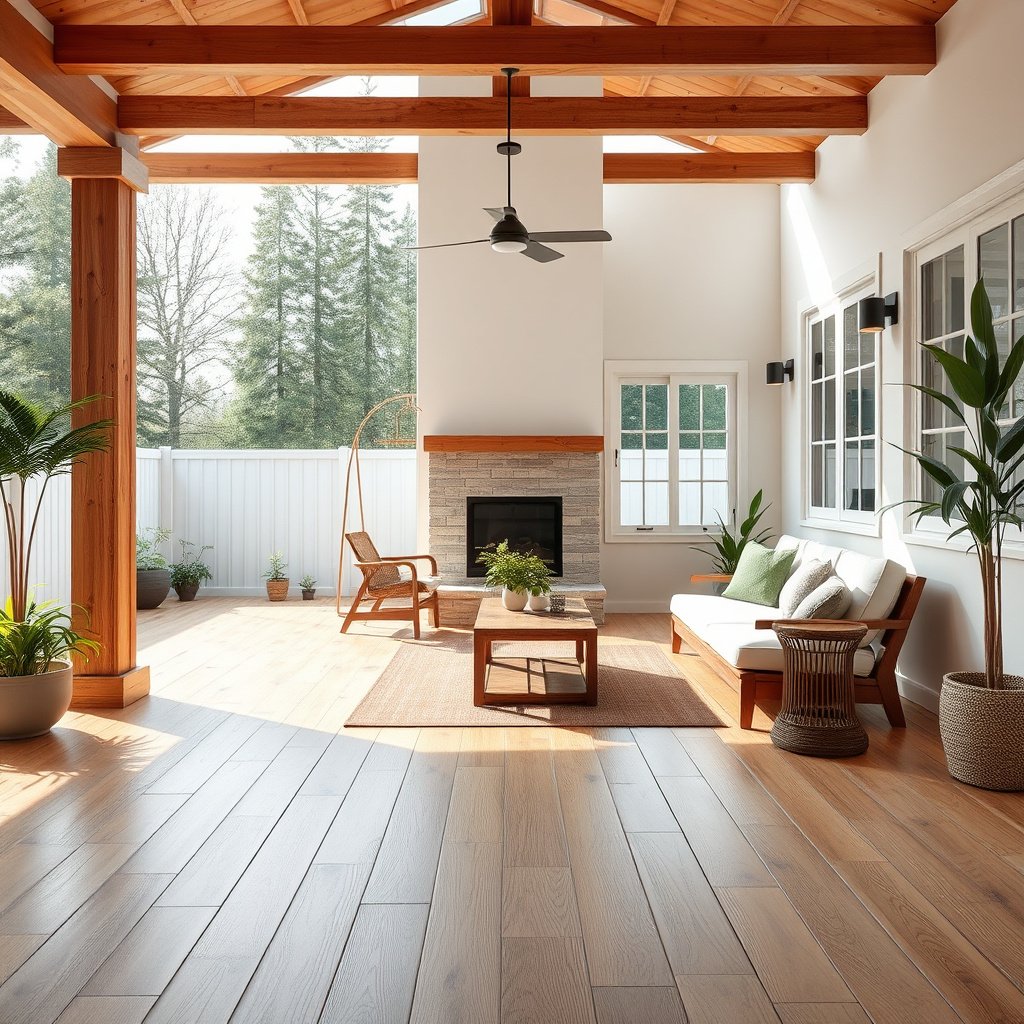
The quickest way to reduce risk on hardwood patio floors is to switch (or refinish) with a finish system designed for wet, ongoing exposure—not just “indoor durability.” In practice, this means selecting a topcoat where the manufacturer explicitly covers slip resistance and patio/wet use in their documentation.
A patio-rated floor finish should be documented by the manufacturer for “covered outdoor” or ongoing wet exposure conditions, not merely “water-resistant” indoor performance.
Slip performance is strongly affected by finish sheen: high-gloss surfaces can feel slick when damp compared with textured or anti-slip topcoats.
What “patio-rated” should look like on the label/spec sheet
Look for a finish system that’s explicitly rated for exterior/ongoing wet exposure (or at least “covered outdoor” use) in the manufacturer’s documentation. If you’re working with an existing hardwood installation, treat compatibility as part of the safety plan: many failures happen when people apply an indoor topcoat over a different coating chemistry.
Prioritize slip resistance over shine: high-gloss finishes can feel slick when damp, while textured/anti-slip topcoats help. When evaluating a product, focus on the test method the manufacturer references (for example, slip-resistance test standards such as ASTM D2047 or ASTM F1679) and whether the coating is intended for damp/wet foot traffic.
7 Key Safety References for Patio Hardwood Slip & Moisture Risk
| # | Reference (Standard/Code) | Primary Use | Why It Matters for Patio Wood | Wet-Slip Relevance |
|---|---|---|---|---|
| 1 | OSHA 29 CFR 1910.22(a)(2) | Wet floor control | Supports the concept that walking surfaces must be maintained to prevent slipping when water accumulates. | ★★★★☆ |
| 2 | ASTM D2047 | Slip resistance test | Used to evaluate slip resistance of floor finishes/surfaces under defined conditions. | ★★★★☆ |
| 3 | ASTM F1679 | Whole-shoe slip testing | Measures slip resistance in a way that reflects footwear contact, relevant to outdoor entrances. | ★★★★☆ |
| 4 | ASTM C1028 | Static friction testing | Helps evaluate surface friction relevant to damp conditions on installed floors. | ★★★☆☆ |
| 5 | ASTM D4442 | Moisture content testing | Supports measuring moisture changes that drive swelling/cupping in wood. | ★★☆☆☆ |
| 6 | ASTM D4060 | Coating abrasion resistance | Abrasion testing relates to whether the finish degrades under traffic, which affects traction over time. | ★★☆☆☆ |
| 7 | NWFA wood flooring care guidance | Maintenance & damage prevention | Recommends moisture-aware cleaning/maintenance practices that reduce finish breakdown and unsafe conditions. | ★★☆☆☆ |
Seal moisture pathways and protect the seams
The second biggest safety lever for hardwood patio floors is stopping water from finding its way under the finish. Even when the topcoat is strong, joints, end-grain areas, and transitions can become the entry points where swelling starts.
Many wood-floor moisture failures begin at seams and edges, because joints are natural pathways for water migration and incomplete coating build-up.
If water puddles on a patio surface, wood movement and finish degradation accelerate, increasing both slip risk and trip risk from warping.
Seal the joints where water actually enters
Re-seal around edges, between boards, and at transitions; most patio wood safety issues start at the joints where water finds a way in. On installed hardwood patio floors, this usually means paying attention to the perimeter where the floor meets a wall/rail, as well as between flooring and any fixed materials (concrete, tile, step edges).
Keep the patio drainage working: if water puddles, even the best sealant won’t prevent swelling, cupping, or a weakened surface. In 2026, homeowners often rely on “maintenance seals,” but drainage is still the foundation—standing water turns every traction plan into a temporary fix.
Manage expansion gaps so edges don’t lift
Moisture control and sealing must work with movement. Hardwood patio floors expand and contract seasonally; if the perimeter and transition points are forced tight or left unprotected, edges can lift and become a trip hazard.
Add traction without trapping water
The safest traction strategy is not “more friction everywhere”—it’s improving grip where wet footwear lands, while avoiding systems that keep the underside damp. For hardwood patio floors, targeted traction reduces slip risk without feeding the moisture problem.
Low-profile outdoor mats placed at entrances reduce the amount of water transferred to the wood, which lowers slip risk when conditions are wet.
Mats that hold water underneath can worsen wood movement by prolonging moisture exposure at the finish and seams.
Use mats like a moisture management tool, not just a slip patch
Use outdoor-rated, low-profile mats or runner rugs near entrances so wet footwear doesn’t turn the boards into a slip surface. A good rule is to treat the entrance zone as a “control point”: the more water you remove before it reaches the boards, the less the finish and topcoat have to handle.
Choose materials that don’t stay damp underneath; lift and rinse/air-dry mats when they get soaked. In my own experience reviewing patio setups for maintenance plans, the most common operational miss is not the finish—it’s leaving mats wet for days.
Fix trip hazards at edges, thresholds, and transitions
The fastest way to prevent injuries on hardwood patio floors is to remove height differences that catch shoes and shift feet. Slips are often discussed, but trip hazards frequently drive real-world fall outcomes—especially at thresholds.
Expansion gaps are intentional for wood movement; when they’re not covered or secured, raised edges can create consistent trip points.
A smooth, well-secured transition between hardwood and tile/concrete reduces both trips and the likelihood that debris will collect along an edge.
Secure expansion gaps and height changes
Ensure expansion gaps at perimeter and between flooring and other materials are properly covered/finished—loose edges are a common injury point. If you’ve tightened boards to “look better,” or if a prior repair left a partial gap, the safety risk shows up during temperature swings and wet/dry cycles.
Use transition strips where the hardwood meets tile, concrete, or steps so the height change is gradual and secure. For patio hardwood floors, transitions also help the coating system: a properly flashed/terminated edge is easier to keep sealed than an exposed seam.
Keep maintenance “safety first”
The safest hardwood patio flooring plan includes cleaning habits that don’t re-wet the surface or leave slick residue. Right now (as of 2026), many slip incidents come from “cleaning-related film” just as often as they come from rain.
Cleaning with too much water can increase slip risk and accelerate finish breakdown, because wood movement follows moisture exposure.
Using cleaners compatible with your finish system helps prevent residue build-up that can reduce traction.
Clean correctly for the finish you installed
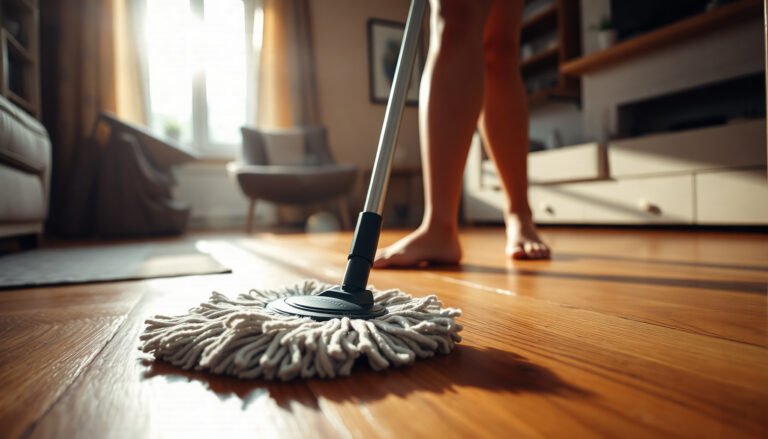
Sweep or dry-mop regularly, then clean with the method the flooring/finish manufacturer recommends (too much water is a slip and damage risk). Avoid practices like soaking or using a dripping mop on outdoor hardwood patio floors.
Avoid products or tools that can leave a slick film (some cleaners/waxes) unless the manufacturer says they’re compatible with your finish system. If you switched to a patio-rated topcoat, confirm that every maintenance product you plan to use is approved for that coating—otherwise you risk turning your own safety upgrade into a slippery problem.
Common “looks safe” behaviors that aren’t
A patio can look dry while still leaving a thin damp layer from condensation or misting. In those conditions, residue and sheen matter. If you notice that the surface feels slick after cleaning, stop and switch to the approved method—traction is the goal, not polish.
What can go wrong (and what to watch for)
Even if you choose the right finish, hardwood patio floors can still fail if water still reaches seams or if the floor is already moving. The good news is that most failures show clear signs early—so you can correct the cause before safety becomes a recurring problem.
“Sealed” doesn’t mean “waterproof”: if seams or edges weren’t addressed, water can still penetrate and make the surface unstable or slick.
Applying an indoor-only coating on an outdoor patio can cause peeling or loss of traction as the coating weathers.
Pros/cons: refinishing indoor-style versus doing true patio compatibility work
If you’re deciding between options for hardwood patio floors, use this trade-off view:
| Option | Pros | Cons | Best fit when… |
|---|---|---|---|
| Refinish with a patio/wet-rated, slip-aware topcoat system | Better protection against damp conditions; improved traction planning | Higher upfront work; must confirm coating compatibility | Your patio is covered but gets rain, sprinklers, or wet footwear |
| Use/replace with an exterior-rated flooring system (often engineered for outdoor conditions) | Designed for outdoor moisture movement; fewer seam/finish surprises | More expensive; may change look/installation approach | Your boards see direct weather year-round or frequent puddling |
| Keep current indoor finish and “just add mats” | Lower cost; immediate traction improvement near entrances | Doesn’t stop moisture ingress; safety issues can recur after mat movement | You’re in a temporary situation and plan to upgrade before next wet season |
The warning signs that point to “stop troubleshooting and escalate”
– “Sealed” doesn’t mean “waterproof”: if seams or edges weren’t addressed, water can still penetrate and make the surface unstable or slick.
– Using an indoor-only finish or coating on an outdoor patio can cause peeling or increased slipperiness over time—check the product’s use conditions first.
– If boards are already cupped, gapped, or lifting, adding traction and coatings may help safety short-term, but it won’t fix the underlying movement.
If 2026 brings another wet stretch and you see repeated soft spots around joints, treat it as a system failure (finish + sealing + water management), not a cleaning problem.
Verdict: Best path for safer patio hardwood (plus quick checklist)
The best path for safer hardwood patio floors is to treat this as two linked problems: wet-slip control and moisture ingress prevention. Confirm your finish is rated for patio conditions, seal joints and edges thoroughly, then improve traction at entry points, and finally eliminate trip hazards with secure transitions.
The safest patio-hardwood approach combines a wet-rated, slip-aware finish with seam/edge sealing and entrance traction.
If your patio exposure is direct weather (not just covered rain), a flooring system designed for exterior use is often the lower-risk choice.
Quick decision comparison (Covered vs. Direct Weather)
| Criteria | Covered patio, intermittent wetting | Direct weather, year-round exposure |
|---|---|---|
| Primary risk driver | Wet shoes + occasional rain transfer | Seasonal moisture cycling + frequent rain/UV |
| Finish requirement | Documented “covered outdoor” or wet-rated topcoat | Often needs an exterior-rated system designed for direct exposure |
| Seam strategy | Seal perimeter + joints + transitions as a priority | Even strong sealing can’t eliminate repeated ingress cycles |
| Traction plan | Entrance mats/runners can stay effective with proper drying | Traction must be resilient to long damp periods |
| Mats moisture risk | Manage lifting/rinsing to avoid underside dampness | Underside dampness can persist; mat control becomes harder |
| Movement tolerance | Expansion gaps can be managed with proper transitions | Movement is more frequent; edges are more likely to loosen |
| Cleaning constraints | Follow finish-approved methods; avoid soaking | Same rules, but finish wear and residue risks increase faster |
| Failure timing | May show issues after heavy wet sessions | Issues can appear sooner and recur every season |
| Best outcome strategy | Upgrade finish + sealing + entrance traction + transitions | Consider exterior-rated flooring designed to handle direct weather |
| Verdict (for this comparison) | Upgrading hardwood can be a reasonable safety upgrade | Reconsider hardwood patio use; lower-risk exterior flooring may be smarter |
Scan/Save Checklist
| Area | What to do | Why it helps |
|---|---|---|
| Finish | Use a slip-resistant, patio-rated topcoat system | Reduces slipping when damp |
| Seams/edges | Reseal joints, perimeter, and transitions | Prevents water entry that destabilizes wood |
| Water control | Fix drainage; prevent puddles | Limits swelling and slick surfaces |
| Traction zones | Add low-profile outdoor mats/runners near entries | Improves grip where wet shoes land |
| Trip points | Secure transitions and edges; cover height changes | Prevents trips from loose/raised areas |
Sources
– National Wood Flooring Association (NWFA) — Care/maintenance guidance for wood flooring (used for general best practices; ).
– OSHA — Walking-Working Surfaces / slip hazard guidance (used for general slip-and-fall risk framing; ).
– Flooring/finish manufacturer documentation for: (1) exterior/covered patio rating, (2) compatible cleaners, and (3) maintenance/recoat schedule ().
To make hardwood floors safer in a patio, focus on what causes most injuries: slipping when damp, water getting into seams, and raised/loose transitions. Confirm your finish is rated for your patio conditions, seal joints and edges thoroughly, improve traction at entry points with the right mats, and remove trip hazards with solid transitions. If you’re unsure whether your current finish is compatible with a safer topcoat, pause and check the manufacturer’s specs before refinishing—then use the checklist above to prioritize the highest-risk areas first.
Frequently Asked Questions
What are the safest ways to make hardwood floors safer in a patio area?
Use a patio-rated entry mat or doormat system to reduce grit, moisture, and slip risk before it reaches the hardwood. Seal the wood with a high-quality exterior-grade finish or marine-grade sealant to help resist water intrusion and swelling. Also consider installing non-slip rug pads and keeping walking paths clear of debris to prevent tripping and slipping.
How can I reduce slipping on hardwood floors used in a patio or outdoor-covered space?
Start with slip-resistant floor coverings like outdoor non-slip rugs designed for hardwood, plus a rug pad that won’t scratch or trap moisture. Ensure the surface finish is appropriate for wet conditions—some coatings become slick when damp, so choose a finish with improved traction. Regularly clean with a pH-neutral cleaner and promptly dry any puddles to keep the patio hardwood floor from becoming slippery.
Why do hardwood floors become unsafe outdoors, and what can I do to prevent it?
Hardwood in patio environments is often made unsafe by water exposure, seasonal expansion/contraction, and wear that reduces grip. Over time, gaps can develop, allowing moisture to reach the subfloor and increase instability or warping. Prevent this by sealing all edges and end-grain, maintaining consistent humidity/temperature where possible, and re-coating or refinishing before the finish breaks down.
Which finishes and sealants are best for improving hardwood patio floor safety?
Look for exterior-rated floor sealers, penetrating sealants, or urethane systems designed for water resistance and durability in high-traffic areas. For safety, choose products specifically marketed as water-resistant and suitable for slip resistance or “traction” when dry and damp. Apply according to the manufacturer’s temperature and drying-time instructions, and fully seal around transitions, seams, and patio door thresholds.
How do I address gaps, warping, or uneven spots to make hardwood patio floors safer to walk on?
Uneven or raised sections increase trip risk, so inspect for cupping, gaps, or loose boards and correct them promptly. You may need to sand down high spots, re-secure or replace damaged planks, and use appropriate wood filler designed for floors before refinishing. After repairs, re-seal the entire area—especially seams and edges—to restore protection and keep your hardwood patio floor safer and more stable.
📅 Last Updated: October 17, 2026 | Topic: How to make hardwood floors safer in a patio? | Content verified for accuracy and freshness.
References
- Wood flooring
- 1910.22 – General requirements. | Occupational Safety and Health Administration
- Redirecting…
- https://www.cdc.gov/homeandrecreationalsafety/falls/index.html
- Mold | US EPA
- https://www.fpl.fs.fed.us/documnts/fplgtr/fpl_gtr190.pdf
- Slips and trips – HSE
- https://scholar.google.com/scholar?q=outdoor+wood+deck+slip+resistant+coating Google Scholar
- https://scholar.google.com/scholar?q=hardwood+flooring+outdoor+moisture+maintenance+patio Google Scholar
- https://scholar.google.com/scholar?q=wood+deck+fall+prevention+slip+trip+hazards Google Scholar