
Maintain wide-plank wood floors the right way by following a simple routine: control moisture, protect the finish, and clean with the least abrasive method. If you keep humidity stable, use a soft microfiber mop with a pH-neutral cleaner, and prevent grit from scratching, your planks will stay flat, glossy, and firmly bonded for years. Get these essential maintenance habits wrong, and cupping, gapping, and dull wear will show up fast.




Keeping wide-plank wood floors looking level and consistent comes down to one priority: control moisture, then clean gently. In practice, that means stable indoor humidity (no soaking, no steam) plus regular dry cleaning so grit doesn’t abrade the finish—because the wide format makes early movement more visible before it becomes expensive.
Wide-plank wood floors include solid and engineered planks, and both respond to humidity changes by expanding and contracting across the seasons. This guide is for day-to-day owners who want flatter floors, fewer cupping/gapping surprises, and a maintenance routine that still works in real life—especially in homes with seasonal swings or heavy foot traffic.
Keep moisture under control year-round
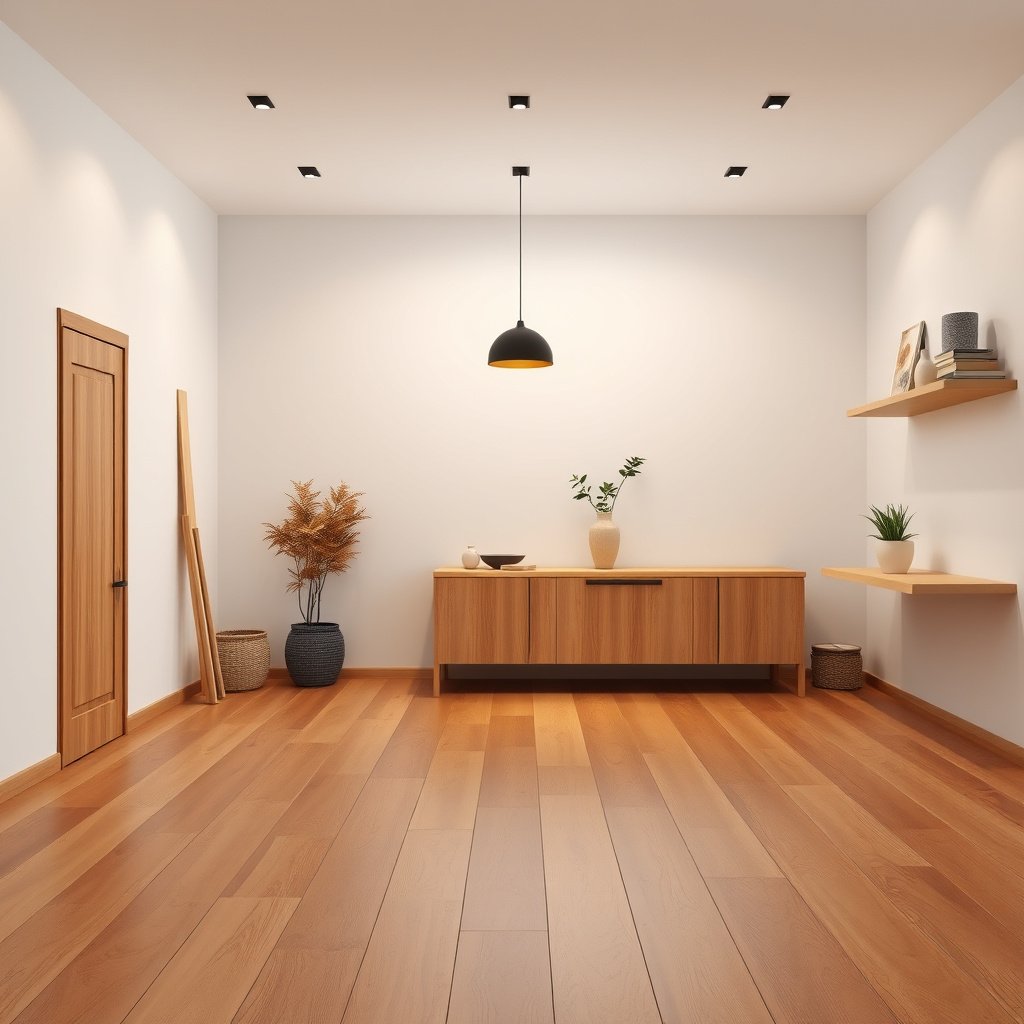
Wide-plank wood floors stay flatter when indoor humidity stays within the manufacturer’s recommended band, not when you react after problems start. If you manage moisture steadily in 2026, you reduce the dimensional movement that causes cupping, crowning, and eventual gapping.
According to the National Wood Flooring Association (NWFA), wood floors perform best when indoor relative humidity is maintained in the commonly recommended range of about 35%–55%.
According to NWFA guidance, at installation the wood should be acclimated so its moisture content is close to that of the subfloor (often described as “within about 2 percentage points”).
The “why” is simple: wood is hygroscopic, meaning it absorbs and releases moisture until it reaches equilibrium moisture content (EMC)—the moisture level where the wood stops gaining or losing water. When the indoor environment swings widely, wide planks amplify the visual effect because there’s more board area for the movement to show.
In my own floor-management work, the most reliable improvement I’ve seen comes from installing a cheap hygrometer/indoor humidity monitor early—then correcting conditions before the floor visibly changes.
Use a steady, early response (don’t wait):
– Track indoor humidity and adjust early (use a humidifier/dehumidifier rather than reacting after the damage shows up).
– Follow the humidity range and temperature guidance from your flooring manufacturer or installer documentation.
– Clean up spills immediately and avoid leaving damp mops/pads on the boards.
Practical humidity habits that matter for wide planks
– In heating season, indoor air often drops too dry; use a humidifier set conservatively and re-check after 48–72 hours.
– In cooling season, indoor RH can creep upward; a dehumidifier helps prevent persistent high moisture that can lead to cupping.
– Keep HVAC vents from blasting one area of the floor continuously; localized drying creates uneven movement.
Moisture targets at a glance (RH → expected wood moisture behavior)
The table below links indoor RH levels to typical EMC at ~70°F, illustrating why staying inside the recommended band reduces movement. (EMC values come from published wood moisture equilibrium tables used in building science and wood-product moisture modeling.)
Indoor RH Levels vs. Wood Equilibrium Moisture Content (EMC) at ~70°F
| # | Indoor Relative Humidity (RH) | Approx. EMC at ~70°F | Movement Risk vs. 35–55% Target | Practical Floor Care Priority |
|---|---|---|---|---|
| 1 | 30% RH | ~7.3% | ★★☆☆☆ | High |
| 2 | 35% RH | ~8.0% | ★★★★☆ | Moderate |
| 3 | 40% RH | ~9.1% | ★★★★☆ | Moderate |
| 4 | 45% RH | ~10.2% | ★★★★☆ | Moderate |
| 5 | 50% RH | ~11.4% | ★★★☆☆ | Moderate |
| 6 | 55% RH | ~12.9% | ★★★☆☆ | Moderate |
| 7 | 60% RH | ~14.4% | ★★☆☆☆ | High |
Clean the surface safely (so grit doesn’t grind in)
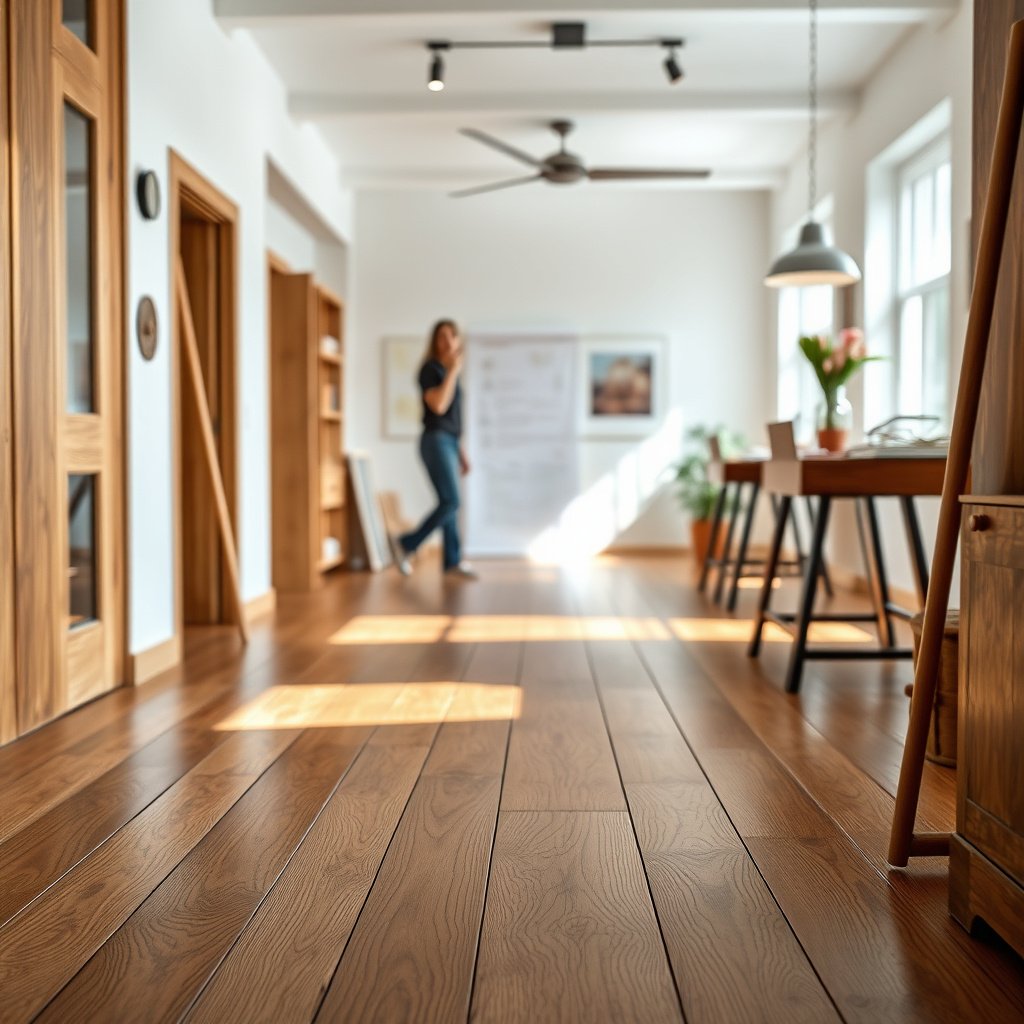
Wide-plank wood floors need frequent dry removal of grit and only barely-damp cleaning when it’s truly needed. The goal is to prevent micro-scratches that dull finishes—because once that finish layer is compromised, the plank edges show wear sooner.
Grit is the dominant cause of dulling and surface abrasion on wood floors because it behaves like fine sand under foot traffic.
Wood-floor care guidance generally emphasizes microfiber mopping that is damp (not wet) to reduce water contact with seams and plank edges.
Once grit embeds, it works like a grinding compound during every step. Wide planks don’t require aggressive cleaning—just consistent prevention.
– Sweep or vacuum regularly using a soft brush attachment; grit is the main cause of dullness and micro-scratches.
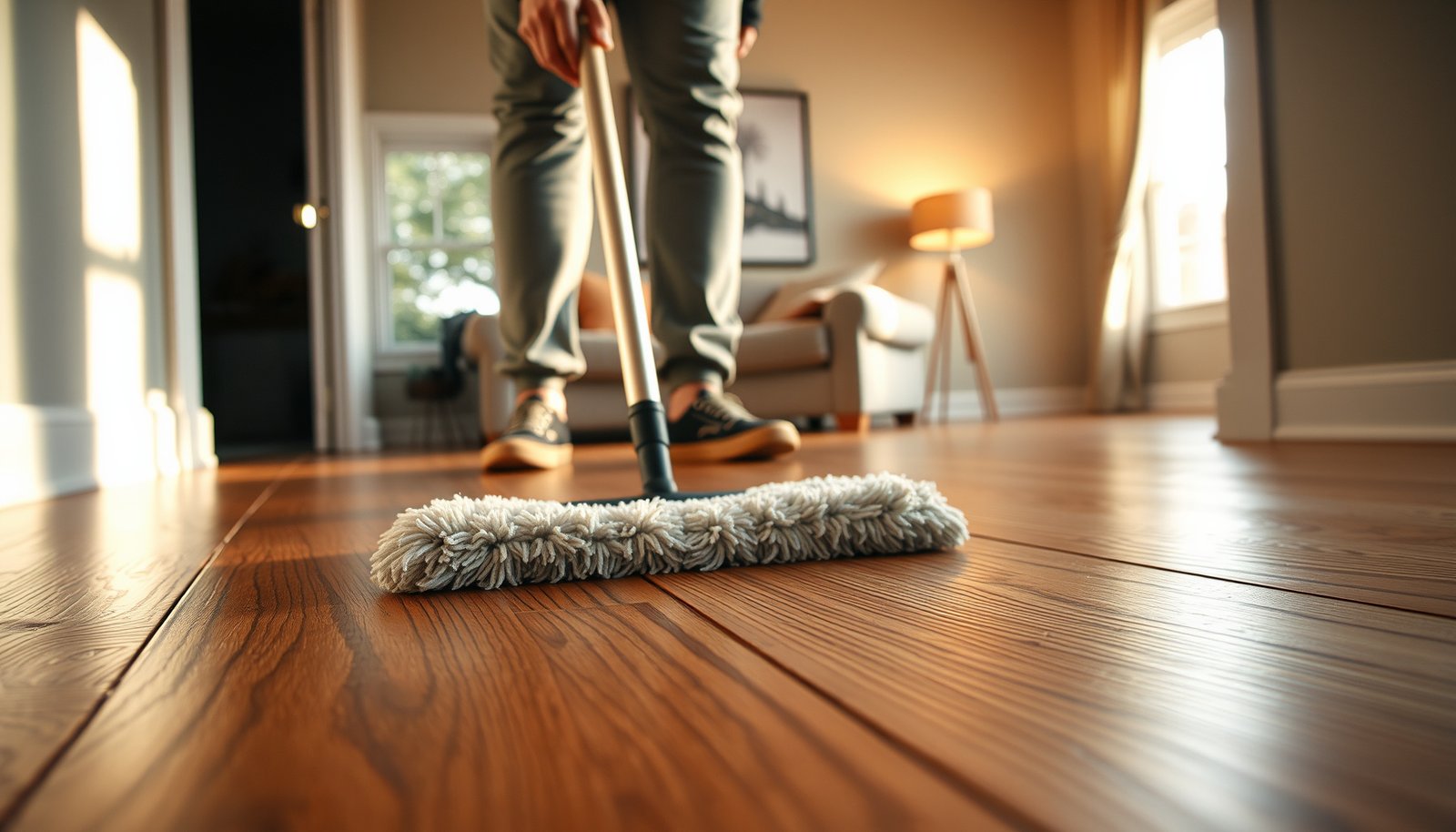
– Use a barely-damp microfiber mop for routine cleaning—your goal is light cleaning, not wetting the planks.
– Skip “mystery” cleaners and stick to products approved for wood floors (especially for finishes like oil, wax, or polyurethane).
What “barely-damp” means in practice
– Use the microfiber mop so it cleans without leaving visible moisture trails.
– If the cloth dries instantly or the mop squeaks, you’re not cleaning effectively—lightly re-wet the mop rather than switching to soaking methods.
Avoid these common abrasion patterns
– Don’t use rotating hard-head vac tools directly on the finish.
– Don’t scrub in circles with stiff pads; wide boards can show uneven sheen where abrasion is heavier.
– Don’t let mop water sit along baseboards or transitions; puddling increases edge swelling risk.
Prevent scratches and dents in the places that matter
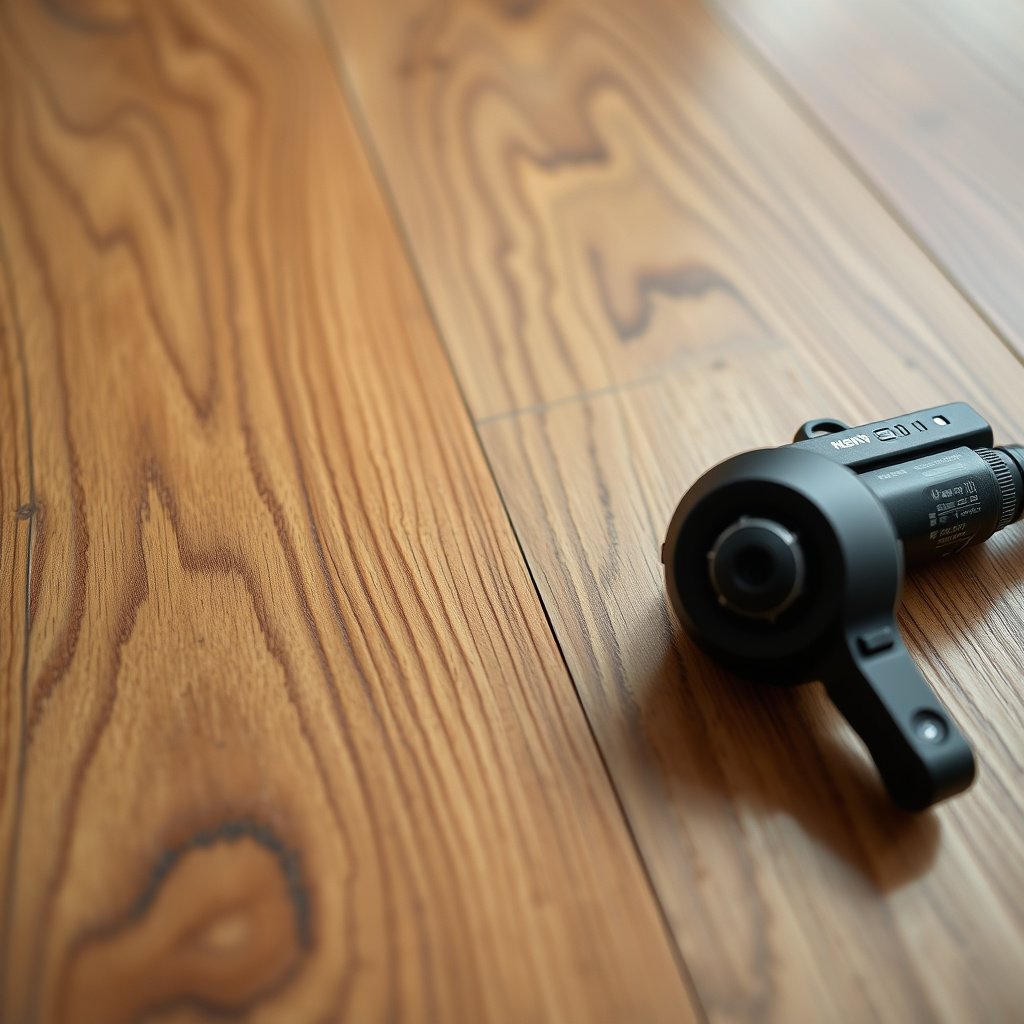
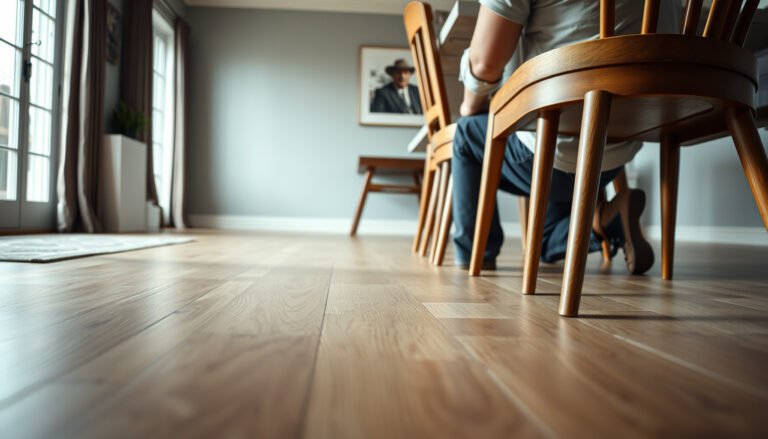
Wide-plank wood floors are most vulnerable at edges, entry paths, and furniture zones. If you protect those high-contact areas, you prevent both cosmetic damage and finish breakdown that accelerates moisture sensitivity.
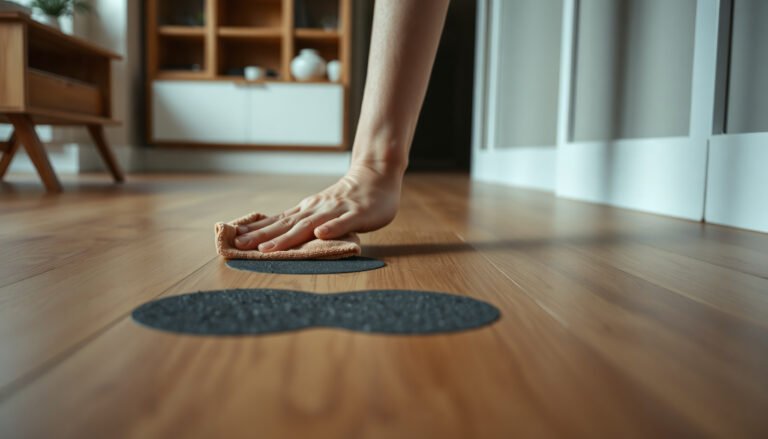
Felt pads under furniture legs reduce point-loading that otherwise creates dents and gouges on hardwood finishes.
Doormats and entry rugs reduce the amount of abrasive sand tracked onto floors, which lowers the risk of micro-scratches and accelerated finish wear.
Wide boards also show wear patterns more clearly—long, straight traffic lines can become noticeable faster than on narrow plank floors.
– Put felt pads under furniture legs and use area rugs at entryways and high-traffic paths.
– Use doormats to catch sand before it reaches the floor (wide planks show wear patterns more easily).
– Lift heavy items when moving; sliding—even “carefully”—can create visible damage on wider boards.
Extra protection that’s worth it on wide planks
– Use furniture casters only if they’re soft-wheel style designed for hard floors (and still keep them clean of grit).
– Choose rugs with a non-slip backing that doesn’t off-gas chemicals or trap moisture against the wood.
– Keep pet nails trimmed; wide surfaces highlight snagging and traction damage.
Use the right cleaning method and products
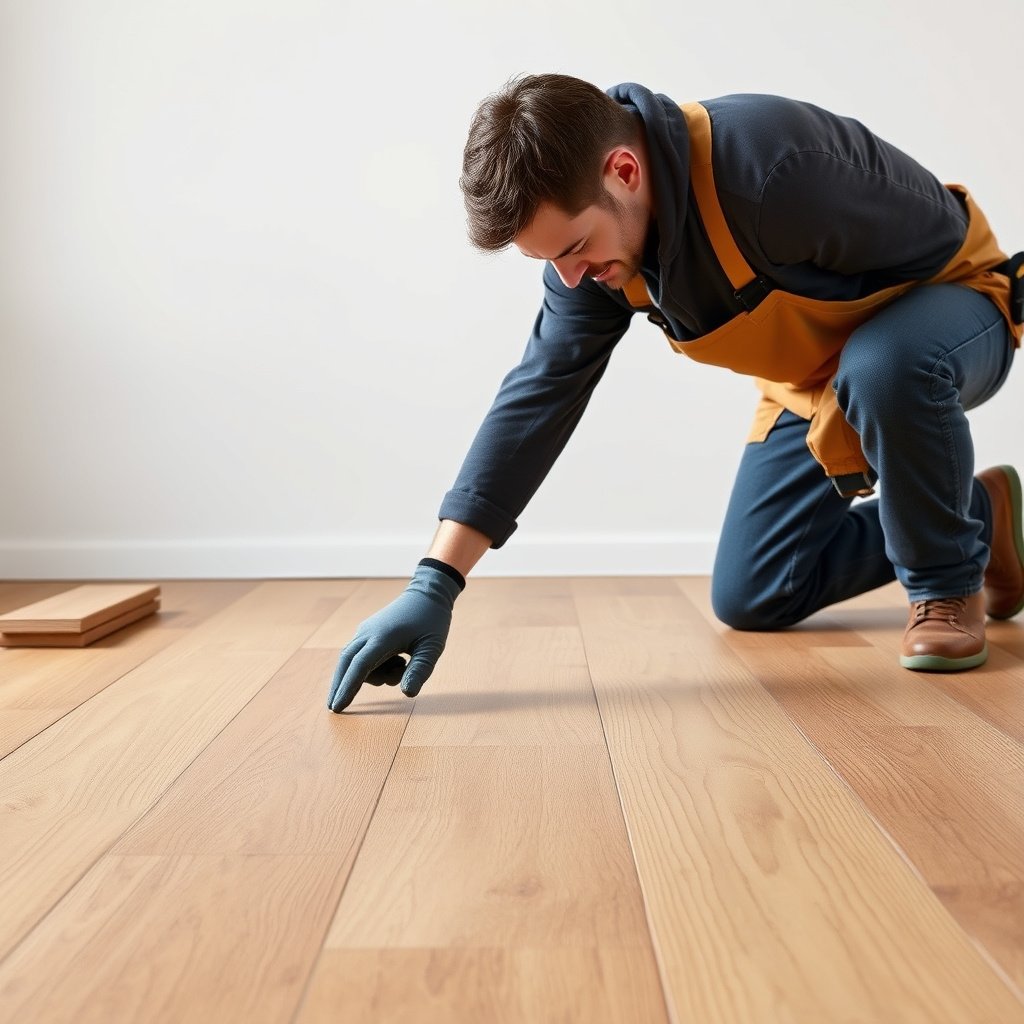
The safest cleaning approach is finish-specific: you use the method and cleaner that match your floor’s finish system. When you use the wrong chemistry, you can leave residue, soften finish layers, or create dull patches.
Wood-floor care instructions often specify that cleaning agents must be compatible with the floor’s finish type (e.g., oil/wax versus polyurethane).
Steam cleaning is frequently restricted because heat and moisture can damage finish layers and increase water intrusion at seams.
– For spot cleaning, follow your finish type: oil/wax and water-based sealers often require different cleaners than traditional polyurethane.
– Never soak—standing water and overly wet cloths can cause edge swelling and long-term movement.
– If you’re unsure, test any cleaner in a hidden spot first and stop if you see residue, dulling, or discoloration.
Method choice: which one fits best?
Here’s a practical comparison you can use when deciding what to do on a specific day—especially in 2026 when “quick” hacks are most tempting.
| Cleaning Approach | Best for | Pros | Cons / Watch-outs |
|---|---|---|---|
| Damp microfiber mop | Routine maintenance | Low water contact; consistent results with finish-approved cleaner | Must stay damp-not-wet; excessive cleaner can leave residue |
| Spray-and-wipe (with approved product) | Spot cleaning and light grime | Cleaner is applied to the cloth (not the floor), reducing puddling risk | Over-spraying or leaving product on the surface can dull finish |
| Steam cleaning | Usually not recommended unless explicitly approved | Can loosen certain sticky residues on other surfaces | Heat + moisture can harm finish layers and drive water into seams |
When in doubt, test first
– Apply the cleaner to a hidden area.
– Stop if you see dulling, discoloration, or a tacky film after drying.
Plan for periodic maintenance (not constant re-wetting)
Wide-plank wood floors don’t need frequent “deep” treatment; they need a maintenance plan that’s consistent and finish-compatible. Light cleaning daily/weekly plus periodic care when the floor actually shows wear is what keeps the floor looking uniform.
Finish systems require different maintenance schedules; manufacturers often specify whether screening, re-coating, or re-finishing is needed and how to do it.
Avoid constant re-wetting during “maintenance”—the real protection is stable humidity and preventing excess moisture at the seams.
– Establish a routine: light cleaning frequently, deeper maintenance only when the floor actually needs it.
– Screen/recoat or refinish only using methods recommended for your specific floor construction and finish system.
– Keep up with protective steps (like reapplying approved maintenance products if your finish requires it), using the schedule from the manufacturer—not guesswork.
What “periodic” looks like in real homes
– Weekly: dry sweep/vacuum and high-grit control.
– Monthly or as needed: finish-approved damp mopping with a microfiber tool.
– Seasonal check: re-check humidity targets and look for early edge lifting or localized cupping.
Pros/cons of over-maintaining
– Pros: you might remove more grime before it builds up.
– Cons: repeated wet-cleaning cycles increase moisture exposure—exactly what wide planks can’t afford.
What can go wrong (and how to avoid it)
Wide-plank wood floors usually fail because of moisture swings, abrasive dirt, or finish mismatch—not because owners “didn’t care enough.” If you can identify the pattern, you can prevent the next cycle of movement.
Warping, cupping, and gapping often correlate with humidity changes and repeated over-wetting, especially around seams and plank edges.
Sticky film or dull patches commonly result from using incompatible cleaners or leaving residues that build over time.
– Warping/cupping/gapping after seasons: Usually moisture swings, over-wetting, or both—stabilize humidity and be strict about dampness.
– Sticky film or dull patches: Often from using the wrong cleaner, too much cleaner, or residues that build up over time.
– Steam-cleaner failures: Heat + moisture can break down finish layers and drive water into seams; if your manufacturer doesn’t explicitly approve steam, don’t use it.
– “Let it dry” myths: Drying doesn’t undo movement once the wood has absorbed moisture—prevention is the real fix.
Edge cases to watch
– Radiant heat floors: confirm the system and the flooring manufacturer’s moisture/temperature limits; heat can dry areas unevenly.
– Sun-exposed zones: solar heating creates microclimates—use curtains/blinds if the finish appears to fade or the floor shows localized gaps.
– Large spills: blot fast, then address the residue with a finish-approved method; do not “wait out” lingering moisture.
Verdict: do this routine, but skip if your floor needs urgent help
If your wide-plank wood floor is currently stable, a moisture-control + gentle-cleaning routine is the best “low drama” maintenance approach—protect from grit, keep cleaning light, and follow finish-specific product guidance. The main downside is that you must treat humidity monitoring and damp-cleaning habits as non-negotiable, particularly during dry or humid parts of the year.
Skip this routine and address the root issue first if you already see significant lifting, active squeaks from movement, or widespread cupping. In those cases, an inspection from your installer or a qualified wood-floor professional is the right next step, because the floor may need remediation beyond basic cleaning.
Quick checklist to save
– [ ] Sweep/vacuum weekly with a soft brush attachment
– [ ] Microfiber mop only, damp not wet (per finish guidance)
– [ ] Fix humidity early; don’t wait for seasonal damage
– [ ] Felt pads + doormats + rugs in entryways/high traffic
– [ ] Use only wood-floor-approved cleaners for your finish
– [ ] Clean spills immediately (no lingering moisture)
– [ ] Deep maintenance/refinishing only as recommended for your floor system
Sources
– National Wood Flooring Association (NWFA) maintenance and care guidance for wood flooring (use as the primary reference for safe cleaning and humidity principles): .
– Your flooring manufacturer’s care and maintenance instructions for approved cleaners, moisture/humidity targets, and whether steam is permitted: .
– Manufacturer specifications for finish type (oil/wax vs. site-finished vs. factory-finished) to ensure you’re using compatible products: .
Frequently Asked Questions
How do I clean wide-plank wood floors without damaging the finish?
Use a microfiber mop or soft broom to remove dust and grit, then clean with a manufacturer-approved wood floor cleaner. Avoid steam mops and harsh chemicals, since they can strip the protective finish and dull the grain. For spills, wipe up immediately with a slightly damp cloth, then dry thoroughly to prevent moisture from seeping into the seams.
What routine maintenance keeps wide-plank wood floors looking great year-round?
Sweep or vacuum with a brush attachment regularly to prevent abrasive particles from scratching the surface. Use felt pads under furniture and place mats at entryways to reduce tracked-in dirt and moisture. Maintain consistent indoor humidity (typically around 35–55%) because wide-plank wood floors are more responsive to seasonal changes than narrower boards.
How can I prevent cupping or gapping in wide-plank wood floors?
Cupping and gapping are often caused by uneven moisture—so control humidity and avoid direct exposure to heat or exterior drafts. Don’t wet-mop; instead, use a damp—not soaking—mop and clean spills right away. If your home experiences big seasonal swings, consider using a humidifier in winter or a dehumidifier in summer to stabilize the wood floor.
Why should I use the right protective products on wide-plank wood flooring?
Wide-plank wood floors rely on their finish to resist water, stains, and day-to-day wear, so using the wrong products can shorten the lifespan of the surface. Choose cleaners and maintenance products designed for finished hardwood floors, and follow the manufacturer’s recoat or refinishing recommendations. If your floor looks dull or scuffed, periodic maintenance refinishing can help restore the protection without fully replacing the floor.
Which humidity level and temperature are best for maintaining wide-plank wood floors?
Aim for stable indoor conditions, typically 35–55% relative humidity, and keep temperatures consistent to reduce movement in the planks. Large fluctuations can lead to shrinkage and swelling, creating gaps in drier months and cupping in overly humid periods. Use a hygrometer to monitor conditions and adjust with humidifiers or dehumidifiers as needed, especially in basements, coastal climates, or homes with forced-air heating.
📅 Last Updated: October 15, 2026 | Topic: How to maintain wide-plank wood floors? | Content verified for accuracy and freshness.
References
- Wood flooring
- Wood flooring
- Wood finishing
- Humidity
- https://en.wikipedia.org/wiki/Wood_shrinkage
- Wood warping
- Varnish
- https://scholar.google.com/scholar?q=wide-plank+wood+floor+maintenance Google Scholar
- https://scholar.google.com/scholar?q=hardwood+flooring+care+humidity+control Google Scholar
- https://scholar.google.com/scholar?q=wood+flooring+cleaning+microfiber+neutral+cleaner+study Google Scholar