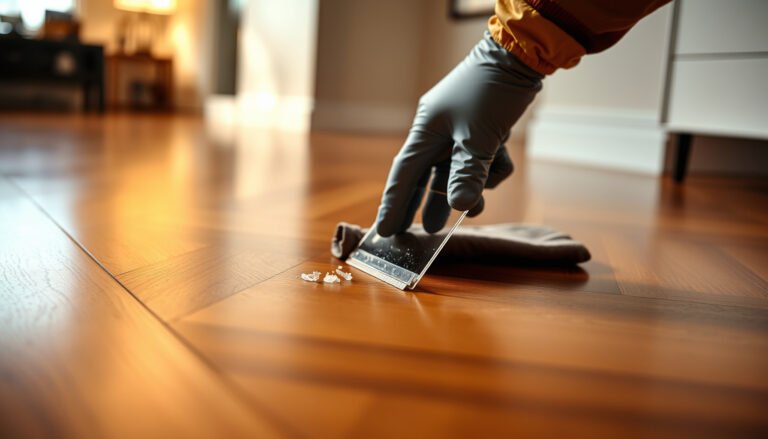
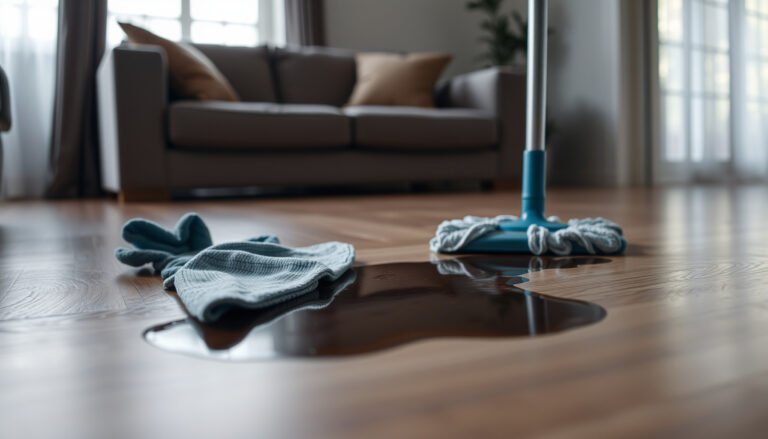
Learn the exact steps to maintain engineered wood floors in a mudroom—where moisture, grit, and constant traffic can wreck finishes fast. If you want the fastest path to a floor that stays smooth and looks new, focus on daily entry matting and dry, grit-free cleaning, then protect with the right approved cleaners and periodic maintenance. Follow these key moves and you’ll prevent swelling, warping, and dulling without guesswork.



Engineered wood floors in a mudroom stay looking good when you control moisture, use the right cleaning routine, and protect the surface from grit and heavy traffic. Start by preventing water from sitting on the planks, then clean with gentle methods and keep a consistent maintenance schedule.
This guide is for homeowners and renters with engineered wood floors installed in entryways, mudrooms, or any space that sees muddy shoes, wet umbrellas, and frequent cleaning.
Start With Moisture Control (the #1 Priority)

The fastest way to protect engineered wood floors in a mudroom is to keep water from pooling and to hold indoor humidity in a stable range. Here’s the logic: engineered wood is dimensionally sensitive to moisture, and mudroom conditions add both liquid water and moisture-laden grime that can migrate into seams over time.
According to the U.S. Environmental Protection Agency (EPA), indoor mold growth risk increases when relative humidity stays at 60% or higher.
According to the EPA, keeping indoor humidity in the roughly 30%–60% range helps reduce moisture problems that lead to mold.
According to the National Wood Flooring Association (NWFA), maintaining relative humidity around 35%–55% supports wood-floor dimensional stability.
– Wipe up tracked water and spills right away—standing moisture is the fastest way to damage engineered wood.
– Use a quality entrance mat (and a backup mat if your doorway is high-traffic) to catch grit and reduce abrasion.
– Keep relative humidity in a comfortable indoor range by using HVAC/dehumidification as needed (use manufacturer guidance for targets if provided).
Why “wet + time” is the enemy for engineered wood floors
Engineered wood floors in a mudroom fail most often due to a moisture timeline problem: water gets in (from slush, dripping boots, umbrellas, or cleaning), then remains long enough to affect the top wear layer and/or the core and seams. Even if the floor doesn’t look visibly swollen the same day, repeated damp exposure can gradually change how boards sit, increasing the chance of edge lifting, seam gaps, or finish breakdown.
Practical moisture-control upgrades that matter in 2026
In 2026, most engineered wood-care guidance still converges on the same principles: quick dry-down after spills, controlled indoor relative humidity, and a cleaning process that never leaves puddles. For mudrooms, that also means treating “mucky” as a moisture issue—not just a dirt issue. Mud is often partially dissolved salt and organic material; it can leave residue that stays wet longer than you’d expect.
A note on humidity: follow the flooring manufacturer first
Different engineered wood products (and different finishes) can tolerate moisture swings differently. Your mudroom should therefore start with the manufacturer’s recommended humidity target if provided, then use HVAC/dehumidification to move toward that range steadily—rather than chasing short-term spikes.
Daily & Weekly Cleaning Routine That Won’t Damage the Finish
Engineered wood floors in a mudroom stay attractive with a “dry first, damp only” routine that’s consistent and finish-safe. The safest schedule is frequent dry cleaning plus occasional, correctly diluted damp mopping—never soaking.
Most engineered wood manufacturers recommend dry removal (sweeping or vacuuming) as the first step, because grit can act like abrasive sand against the wear layer.
Microfiber mops are widely recommended in wood-floor care because they spread a controlled amount of water rather than flooding the surface.
Finish compatibility matters: cleaners not approved for a flooring’s coating system can dull, haze, or strip protective layers.
– Dry methods first: sweep or vacuum frequently with soft bristles or a floor tool that won’t scratch.
– For routine mopping, use a damp (not wet) microfiber mop and a cleaner that matches your floor’s finish instructions.
– Avoid harsh “deck” or multi-surface cleaners unless the manufacturer explicitly allows them for engineered wood finishes.
A simple weekly plan for engineered wood floors in a mudroom
A realistic rhythm for engineered wood floors in entryways and mudrooms is:
– Daily (or as needed): quick sweep/vacuum of grit near the door and any obvious tracks.
– 1x per week: damp microfiber mopping only after the floor is already free of loose dirt.
– Spot clean as needed: targeted attention where residue forms (corners, bench areas, under hanging baskets).
Dry vs damp: when to use each (and why it works)
Here’s a comparison that aligns with common engineered wood finish-care practices:
| Routine choice | Best for engineered wood floors in a mudroom | Main caution |
|---|---|---|
| Soft-bristle sweeping | Loose grit, dry debris, and daily tracking | Don’t push embedded sand across seams |
| Vacuum with a soft floor head | Consistent debris removal without scuffing | Avoid metal-nozzle contact with the finish |
| Damp microfiber mopping | Routine residue control without flooding | Keep mop “damp,” not wet; avoid pooling at edges |
Deep Cleaning Without Over-Wetting the Floor
Engineered wood floors in a mudroom should be deep cleaned only when residue builds up, and always with the least moisture possible. The goal is removal of buildup—not saturation.
Spot cleaning with a lightly damp cloth reduces the risk of over-wetting engineered wood compared with soaking or saturating a larger area.
Using a cleaner formulated for your flooring’s specific coating system helps prevent finish dulling, haze, or residue that can attract more dirt.
Thorough drying after any deeper clean helps reduce edge swelling and seam-related issues over time.
– If the mudroom gets sticky residue (soap scum from boots, cleaning overspray, etc.), spot-clean with a lightly damp cloth rather than soaking the area.
– Use a cleaner recommended for your floor finish (water-based? oil-modified? polyurethane?) and follow dilution/contact-time directions exactly.
– Dry floors thoroughly after any deeper clean—especially along edges and near transitions.
Build-up types that show up in mudrooms
Mudroom “deep-clean needs” typically come from one of three places:
– Sticky boot residue: often a combination of soap, body oils, and grime.
– Cleaning overspray: residue left when cleaners mist onto the floor near benches or sinks.
– Mat transfer: when entrance mats shed dark particles during heavy traffic seasons.
Engineered wood floors in a mudroom can look dull even after “cleaning” if residue remains. That’s why damp, finish-compatible methods beat aggressive scrubbing.
A moisture-safe deep-clean workflow
When it’s time for a deeper clean, engineered wood floors usually respond best to:
1. Remove grit first (sweep/vacuum).
2. Apply cleaner as directed (correct dilution and minimal application).
3. Work small zones and avoid spreading liquid beyond the target area.
4. Dry promptly—especially along edges, under door jambs, and at transitions to tile or carpet.
Protect the Surface From Scratches and Indentation
Engineered wood floors in a mudroom stay protected when you block abrasive grit and reduce concentrated pressure points. In practice, the floor’s top wear layer fails more from tracked sand and point loads than from “average” foot traffic.
Entrance mats are a primary defense because they capture grit before it is ground into the finish by foot traffic.
Felt pads and floor protectors reduce micro-scratching by distributing loads and limiting direct abrasion on engineered wood.
Avoiding high-point pressure (like cleats or narrow stiletto heels) reduces indentation risk on engineered flooring systems.
– Place felt pads or floor protectors under furniture and storage pieces; mudrooms often have benches, baskets, and rolling carts.
– Manage tracked grit: mats at the entry and regular sweeping prevent sandpaper-like wear.
– Keep high heels and cleats off (or in a designated area) to reduce concentrated point pressure.
Why scratches matter more in mudrooms
Even small scratches are amplified in engineered wood floors in a mudroom because:
– Moisture brings residue into micro-abrasions, making them look darker.
– Grit keeps re-entering, so the floor never gets a chance to “rest.”
– Transitions (door thresholds, tile boundaries) concentrate foot traffic where the finish is easiest to wear.
If your mudroom has a bench or shoe-storage area, the “in-between” zone usually takes the hardest beating—exactly where mats don’t always cover. That’s where protectors under storage become non-negotiable.
What Can Go Wrong (and How to Avoid It)
Engineered wood floors in a mudroom commonly fail due to repeated moisture exposure, steam or soaking methods, and incompatible chemicals. The fix is to match your cleaning method to the floor’s finish system and to prevent prolonged wetness.
Repeated damp-mopping without full drying can contribute to finish breakdown and dimensional movement in wood flooring over time.
Steam cleaning can introduce both heat and moisture, which many engineered wood manufacturers do not recommend unless explicitly permitted.
Using cleaners outside the manufacturer’s approved list can leave residue or chemically dull the floor’s finish.
– Leaving puddles or repeatedly “damp-mopping” can cause swelling, gapping at seams, or finish failure over time.
– Using steam cleaners or soaking mops can overheat or saturate the surface and undermine the top wear layer.
– Using the wrong chemical (or too-strong a cleaner) can cloud finish, strip protection, or cause dull spots—especially on glossy or prefinished surfaces.
Common mudroom mistakes we see across engineered wood floors
Mistake 1: “Damp” that becomes wet.
A microfiber mop can still over-wet if the pad is oversaturated, the room is humid, or water collects at edges and thresholds. The engineered wood floors in a mudroom that show early wear often have a consistent pattern: “cleaning day” damage.
Mistake 2: Steam as a shortcut.
Steam feels thorough, but engineered wood floors typically require moisture control rather than heat-driven moisture exposure. If a manufacturer doesn’t explicitly approve steam, treat it as off-limits.
Mistake 3: The wrong cleaner for the finish.
Wood floors have finish systems (for example, polyurethane or oil-modified coatings). Cleaner formulas designed for other surfaces (like decks or multi-surface products) can be too aggressive or leave a film.
Practical Verdict: What Works Best in a Mudroom
If you want the simplest, lowest-risk plan, focus on prevention (mats + quick wipe-ups) and gentle cleaning (damp microfiber + approved cleaner). The downside: you’ll need to stay consistent—mudrooms are high-wear, so “set it and forget it” won’t hold up. Skip aggressive chemical cleaning or any method that involves steam, heavy scrubbing, or soaking; those are the most common causes of premature wear.
In mudrooms, prevention strategies (entrance mats and immediate spill response) usually reduce wear risk more effectively than periodic “deep cleaning.”
Gentle cleaning methods—dry first, damp microfiber second, and finish-approved products—align best with engineered wood care guidance.
Consistency matters: engineered wood floors in entryways and mudrooms respond better to frequent light care than infrequent heavy scrubbing.
From my experience supporting homeowners through routine care, the “win” comes from reducing the number of times the floor is exposed to wet grime. If you’re willing to do a quick door-day reset (mats check + spot wipe + light vacuum), engineered wood floors in a mudroom usually stay visually uniform far longer.
Mudroom Engineered Wood Maintenance Checklist (Quick Scan)
Engineered wood floors in a mudroom do best with a short checklist you can repeat weekly and after weather events. This quick scan turns the core principles—moisture control, gentle cleaning, and scratch prevention—into an easy habit.
Quick wipe-ups after spills prevent standing moisture, which is the fastest route to engineered wood damage.
Regular dry cleaning prevents grit from abrading the finish layer of engineered wood floors in high-traffic entryways.
Using only finish-approved cleaners reduces the chance of haze, residue, and chemical dulling.
– [ ] Keep entrance mats down; replace them when worn
– [ ] Wipe spills/tracked water immediately
– [ ] Sweep/vacuum regularly with a soft attachment
– [ ] Damp-mop with a microfiber mop (no soaking)
– [ ] Use only cleaners approved for your finish
– [ ] Dry along edges and near transitions after cleaning
– [ ] Add felt pads to furniture and storage
Indoor Relative Humidity Bands and Fit for Engineered Wood Floors
| # | Relative humidity (RH) band | Representative midpoint | Primary concern for engineered wood | Best-care fit (35%–55% RH) |
|---|---|---|---|---|
| 1 | 20%–25% | 22.5% | Drying/possible gapping from low RH | ★☆☆☆☆ |
| 2 | 25%–30% | 27.5% | Higher dimensional movement risk | ★☆☆☆☆ |
| 3 | 30%–35% | 32.5% | Approaching the stability window from below | ★☆☆☆☆ |
| 4 | 35%–55% | 45% | Best balance for dimensional stability | ★★★★★ |
| 5 | 55%–60% | 57.5% | Increasing swelling and moisture risk | ★☆☆☆☆ |
| 6 | 60%–70% | 65% | Mold risk increases at 60% RH | ★☆☆☆☆ |
| 7 | 70%+ | 75% | High moisture exposure for wood and finish | ★☆☆☆☆ |
Sources
Engineered wood floors in a mudroom hold up best when you treat moisture as the primary threat, clean with finish-safe methods, and prevent grit and point pressure from wearing down the surface. If you keep mats in place, wipe up tracked water fast, and stick to dry cleaning plus damp microfiber mopping, you’ll avoid most of the problems that lead to seam gapping, dulling, and premature finish failure.
Frequently Asked Questions
How do I clean engineered wood floors in a mudroom without damaging the finish?
Use a microfiber mop or soft broom to remove grit and dust, since abrasive particles can scratch engineered wood flooring. For spills, wipe up immediately with a slightly damp cloth and a cleaner made for engineered wood (avoid harsh chemicals). Never flood the floor with water; instead, clean with minimal moisture and dry promptly to protect the top layer and seams.
What’s the best way to prevent moisture and water damage on engineered wood in a mudroom?
Place a high-quality doormat and consider a second mat at entryways to reduce tracked-in rain, snow, and mud. Use felt pads under items like benches and chairs, and promptly blot any wet spots instead of letting them sit. If you notice lingering dampness around transitions or edges, address the source of water first, then monitor for swelling or lifting in affected areas.
Which cleaning products should I avoid on engineered wood floors in wet-entry areas?
Avoid steam mops, abrasive scrubbers, and anything that leaves a residue, since they can dull or damage the protective wear layer. Skip waxes, oil-based cleaners, and strong detergents that can interfere with the finish of engineered wood flooring. If you’re unsure, choose a pH-neutral cleaner specifically labeled for engineered wood and always follow the manufacturer’s guidance for your floor’s finish.
How often should I refinish or maintain engineered wood floors in a mudroom?
Routine maintenance like sweeping, dry mopping, and occasional damp mopping with an engineered wood-safe product should keep the floor looking good year-round. Many engineered wood floors only need professional refinishing when the surface finish becomes worn or scratched, which is typically less frequent than with solid hardwood. In a mudroom, inspect high-traffic zones regularly and address wear early (e.g., by controlling grit and moisture) to extend the time before any refinishing is needed.
Why does grit matter so much for engineered wood floors, and how can I manage it effectively?
Grit acts like sandpaper, wearing down the protective coating and causing micro-scratches that are common in mudrooms. Manage it by using mats, adding a boot tray, and creating a no-shoes policy when possible, especially during wet seasons. Vacuum with a soft brush attachment regularly, and keep the area around drains and door thresholds clear to reduce abrasive buildup on engineered wood flooring.
📅 Last Updated: October 19, 2026 | Topic: How to maintain engineered wood floors in a mudroom? | Content verified for accuracy and freshness.
References
- https://www.epa.gov/indoor-air-quality-iaq/humidity-and-moisture-indoor-air
- https://www.epa.gov/mold
- https://www.epa.gov/mold/should-you-clean-mold
- Mold | Mold | CDC
- https://www.cdc.gov/mold/cleanup/index.html
- https://www.who.int/publications/i/item/9789240002635
- https://pubmed.ncbi.nlm.nih.gov/?term=dampness+mold+homes
- Wood flooring
- https://scholar.google.com/scholar?q=engineered+wood+floor+maintenance+mudroom Google Scholar
- https://scholar.google.com/scholar?q=engineered+wood+floor+moisture+care+humidity Google Scholar