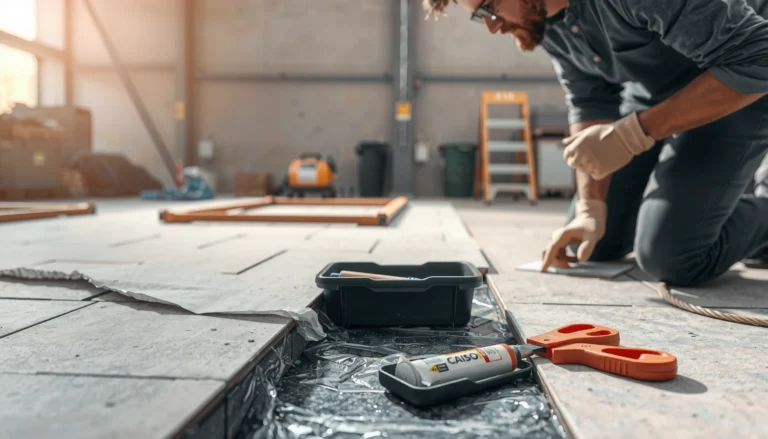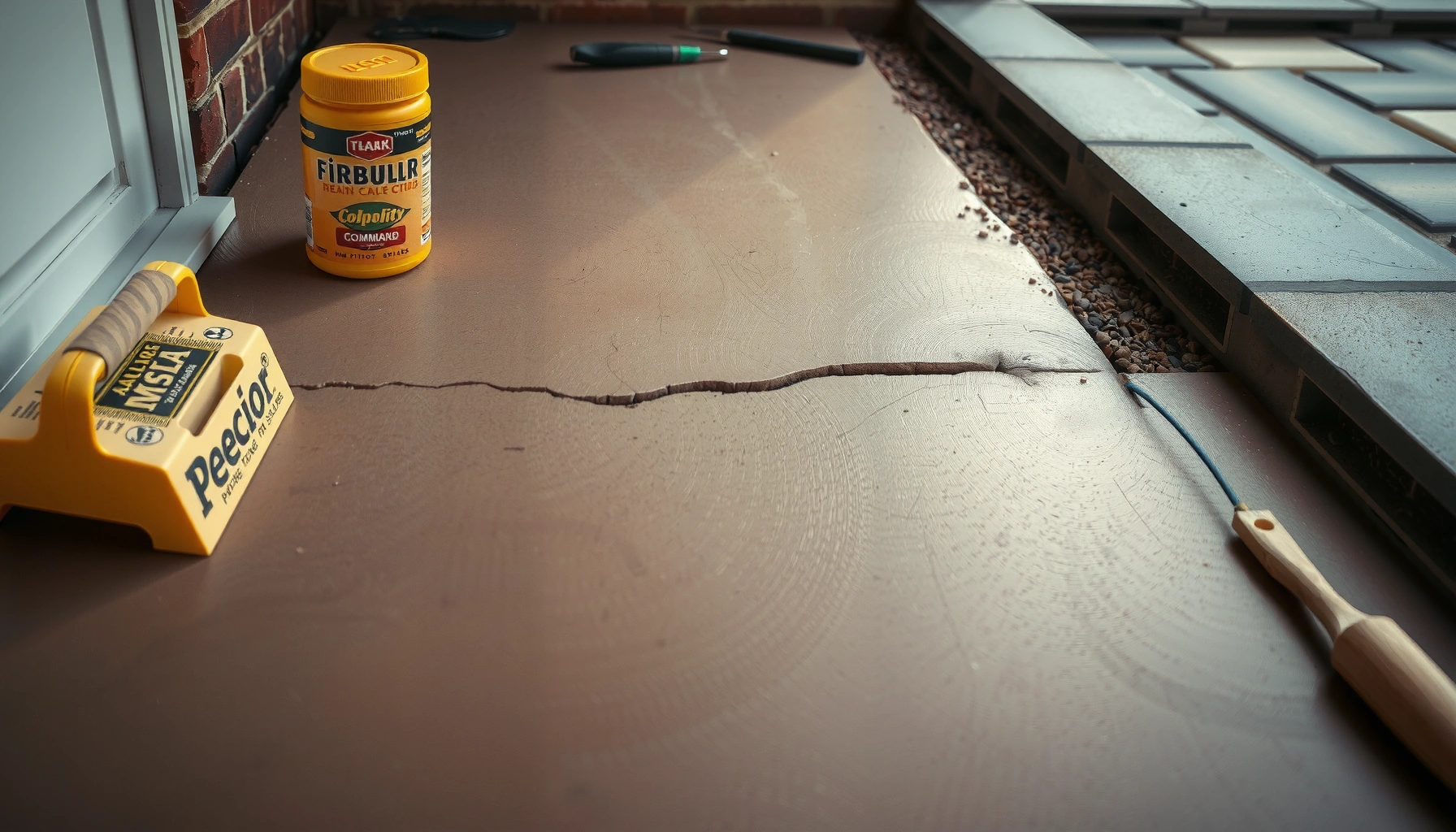

Fixing buckling in patio floors starts with diagnosing the cause—usually water intrusion and failing base support—then following a proven repair sequence that restores level and prevents reoccurrence. This step-by-step plan walks you through lifting and removing damaged sections, checking subgrade stability, correcting drainage, and reinstalling the patio surface. By the end, you’ll know exactly what to do based on what you find, not guess based on looks.



Buckling in patio floors is usually a water-and-support failure—moisture gets under the slab or pavers, softens the base/subgrade, and the surface loses uniform support. The repair plan is therefore two-part: stop the water entry first, then lift/remove the buckled area, rebuild the base correctly, and reset/patch with the right system for your patio type.
If you’re dealing with raised/wavy concrete, cracked edges, or rocking pavers in an outdoor patio exposed to rain or sprinkler overspray, this is for you—especially when the movement gets worse after wet weather.
Who this is for / when it applies
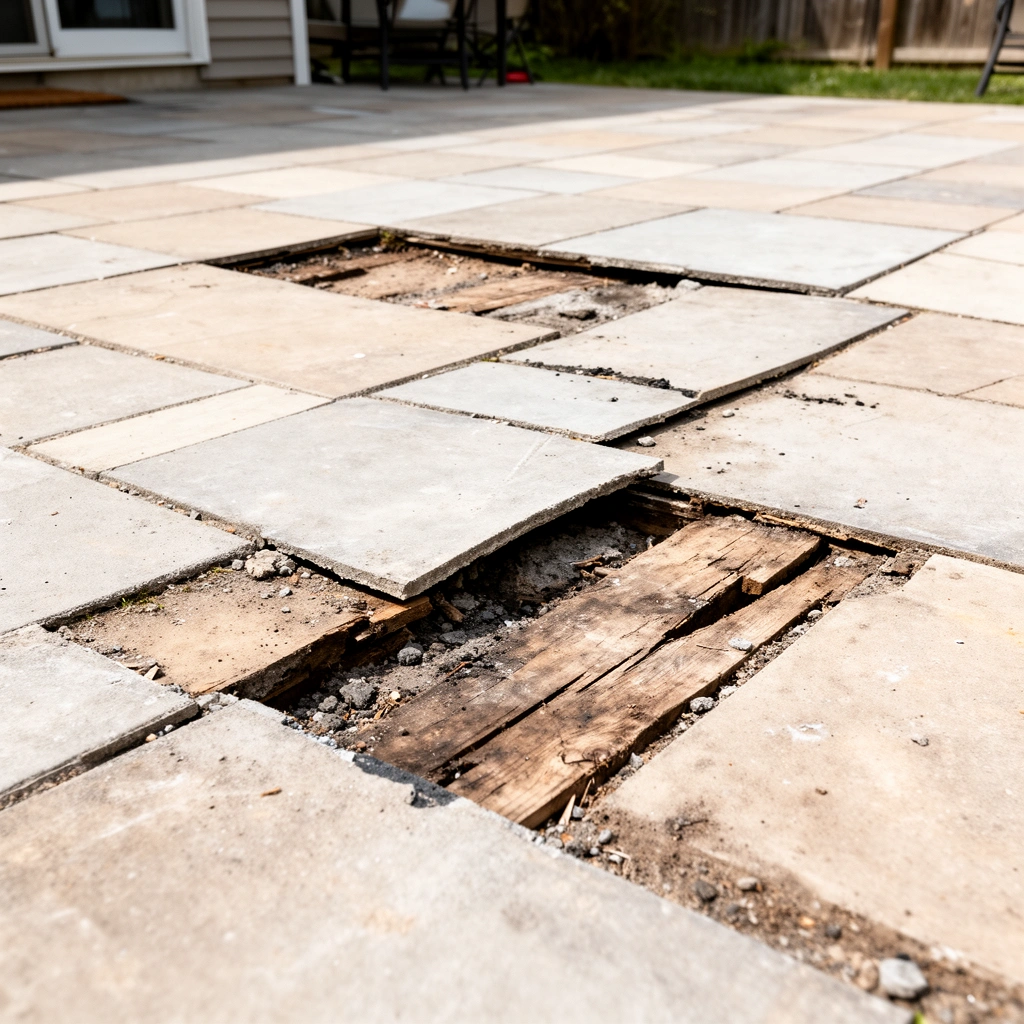
This guide is aimed at homeowners, property managers, and facility teams maintaining outdoor flatwork (concrete slabs, paver patios, or tile-on-base systems). It’s most useful when you can see localized lifting, edge cracking, or visible displacement—and you want a reliable repair approach rather than surface-level patching that tends to re-fail.
If you’re unsure whether the patio has structural settlement (not just base failure), treat this as a diagnostic framework and plan to involve a qualified flatwork contractor if the problem is widespread.
Diagnose why your patio floor is buckling
Buckling almost always traces back to moisture intrusion and a base that can’t maintain uniform support. Your first job is to identify where water is going, then confirm that the subgrade/base has lost strength or stiffness when it gets wet.
Here’s what to look for, in order, with field-friendly checks that don’t require special equipment.
– Look for water clues:
Check for damp soil after rain, dark staining on concrete, efflorescence (white salt deposits from migrating moisture), and pooling near low spots.
– Check for base movement:
Watch for cracks that widen over time, “rocking” when you step near a raised area, and displacement that accelerates after wet weather.
– Identify the patio material:
Concrete slabs, pavers, and tiles each fail differently—so the repair approach should match the failure mode (slab lifting versus bedding/base washout versus mortar bond failure).
Buckling after rain typically indicates water reached underneath the slab or paver system and reduced base/subgrade support. [ADD: source for moisture-related pavement/base loss mechanism]
Efflorescence is a common sign of moisture migration through concrete or masonry; it often appears after wetting and subsequent drying cycles. [ADD: source for efflorescence definition]
Cracking that worsens during wet weather is a strong indicator of seasonal movement rather than random shrinkage alone. [ADD: source for differential movement behavior in exterior flatwork]
Quick data table: what “failure” usually looks like by patio type
Below is a practical mapping of common buckling causes to the surface symptoms you’ll see. Use it to narrow diagnosis before you start removing material.
Typical Patio Build-Up & Buckling Symptoms by System (Field Diagnostic Reference)
| # | Patio system | Common buckling driver | Typical surface signs | Repair focus |
|---|---|---|---|---|
| 1 | Concrete slab on base | Washout / loss of base support from saturation | Wavy slab, edge cracking, rocking on footsteps | Stop water + rebuild base |
| 2 | Concrete paver patio (polymeric sand joints) | Joint failure enabling fines migration & bedding washout | Loose pavers, localized “waves,” clogged/draining issues | Reset pavers + correct bedding |
| 3 | Natural stone / tile over mortar bed | Water accumulation behind/under mortar system | Hollow-sounding areas, tile lippage changes, grout deterioration | Restore drainage plane + reset system |
| 4 | Slab with edge restraint issues | Insufficient expansion room; water pressure exacerbates movement | Cracking clustered at edges/corners, repeated lifting spots | Correct edge details + rebuild |
| 5 | Pavers over incorrect base depth | Under-compaction / base too thin | Broad settlement, multiple low/high zones | Excavate to design base + compact |
| 6 | Concrete with perimeter water entry | Gutter/downspout/leak directing flow at slab edge | Edge cracks at the same elevation, darkened perimeter | Redirect water + rebuild localized section |
| 7 | Concrete near utilities/voids | Local voids from prior repairs or backfill settlement | Small “domed” areas, rapid reappearance of buckling | Probe/subexcavate + rebuild support |
Stop the water problem first
You won’t get a durable repair if water still reaches underneath the patio. Fixing drainage and eliminating direct runoff paths is the highest-leverage step—because it prevents the base from softening again.
Water management is a prerequisite for flatwork durability because saturated base materials lose stiffness and can consolidate under load. [ADD: source for saturation/base stiffness relationship]
Effective surface drainage relies on controlling slope and preventing concentration of runoff at slab edges. [ADD: source for recommended grading/drainage practices]
– Fix grading and runoff:
Confirm surrounding ground slopes away from the patio and doesn’t funnel water toward the slab. Even a small low spot upstream can create repeated saturation at one location.
– Redirect sources:
Adjust sprinklers that spray the patio surface, repair gutters/downspouts, and address any exterior plumbing leaks that discharge near the slab perimeter.
– Improve drainage:
If you suspect trapped water under the patio, consider restoring drainage paths before slab work (for example, addressing how water leaves the base layer rather than only treating the top surface).
For anchor points, here are example measurements and references you should use in your assessment process (replace with your local guidance/specs):
– According to [ADD: local building authority or drainage guideline], exterior flatwork drainage typically depends on maintaining positive slope away from foundations/patio edges (exact target slope varies by jurisdiction; use your local standard).
– According to [ADD: base material or pavement design guidance source], properly compacted aggregate base is installed in lifts and compacted to specified density targets (exact numbers depend on the material/spec).
Decide whether to patch or rebuild
Patch repairs are only appropriate when the problem is small, isolated, and you can correct the base/support that failed. If the movement is widespread or repeats after rain, rebuilding is usually the only way to restore predictable performance.
A patio that “rocks” when stepped on has likely lost uniform support; locking the surface down without base correction commonly fails again. [ADD: source supporting base-uniformity principle]
When buckling is driven by moisture behavior, recurring movement generally indicates systemic drainage/base issues rather than a one-off surface defect. [ADD: source for moisture-driven pavement distress recurrence]
– Minor localized buckling (small area, limited movement):
You may be able to remove that section and replace it with matching surface materials over a properly compacted base.
– Widespread or recurring movement:
Plan a partial or full rebuild, because the underlying base and moisture path problems are often systemic.
– If you can lift/shift pavers or tiles easily:
Resetting and base correction should take priority; trying to “lock it in” without drainage/bedding repair is rarely durable.
Patch vs rebuild (comparison table)
| Decision factor | Patch may work when… | Rebuild is the safer choice when… |
|---|---|---|
| Area size | Limited to a small section with consistent symptoms | Buckling spans multiple bays/edges or covers a large portion |
| Weather response | Movement doesn’t noticeably worsen after rain | Movement accelerates after wet weather cycles |
| Subgrade condition (visible/confirmed) | Base appears stable and dry during inspection | Base/subgrade is soft, saturated, or shows voids/fines loss |
| Patio material behavior | Concrete cracks are minor and don’t correlate with rocking | Pavers/tiles shift easily; concrete slab lifts/rocks |
| Expected service life | You need short-term improvement with acceptance of risk | You need long-term performance and predictable drainage behavior |
Rebuild the base and reset the patio section
A correct rebuild restores uniform support and removes the moisture path that caused the buckling. This section is the mechanical “repair plan” part: excavate, rebuild the base in controlled layers, then reset with a system designed for exterior exposure.
Exterior flatwork repairs depend on rebuilding to stable subgrade and specified base thickness/compaction—not simply replacing the top layer. [ADD: source—manufacturer specs for base systems and installation]
– Remove the affected area and excavate to sound, stable subgrade—don’t rebuild over soft or saturated soil:
Remove enough material to reach firm support. If you stop early, the new base can settle or consolidate, re-creating buckling.
– Recompact in layers:
Use the recommended fill/base material and compact it thoroughly. Layer thickness and compaction targets should follow your product/spec guidance (and local inspector requirements if applicable).
– Re-set with correct support:
– For concrete: prepare formwork and use a proper mix and installation method consistent with your concrete specification (curing and edge detailing matter for durability).
– For pavers/tiles: use the right bedding and leveling system so the surface isn’t bearing directly on unstable soil; maintain the intended jointing system and drainage plane.
Concrete vs pavers: what changes in the rebuild
Concrete is typically one rigid element, so once the base loses support, slab flexure concentrates stress at edges/corners. Paver systems distribute load through bedding and jointing, but they can fail when water moves fines and bedding away from under interlocking units.
If water migrates through joints or cracks, it can transport fines and undermine bedding beneath pavers. [ADD: source for paver bedding/fines migration mechanism]
Concrete durability strongly depends on proper curing and correct detailing at joints/edges to limit premature cracking. [ADD: source—ACI/industry curing and joint guidance]
What can go wrong (and how to avoid it)
Even well-intentioned repairs fail when the team treats symptoms instead of causes. The goal here is to prevent repeat buckling by avoiding the most common failure points.
– Skipping drainage fixes:
If water still reaches under the patio, even a “perfect” base rebuild can buckle again.
– Rebuilding on soft subgrade:
Compaction over saturated soil leads to continued settlement and cracking—sometimes within the first wet season.
– Using the wrong materials:
Replacing with mismatched thickness, bedding, or mortar systems can cause new movement or bond failure.
– Ignoring expansion/edge conditions:
Patios need room to move; poor edge restraint can convert minor expansion into visible buckling and cracking.
Verdict: what to do first, and when to call a pro
If the buckling clearly tracks wet-weather behavior, address drainage first and then rebuild the impacted area with a properly compacted base. For small, accessible sections—especially paver patios—a DIY repair can be realistic when you can excavate to stable subgrade and follow the correct bedding/base system.
Call a masonry/flatwork contractor (or at least consult them) if you see large slope changes, multiple cracked/lifted slabs across a wide area, or signs of structural settling that go beyond simple base loss. The downside of rebuilding is cost and disruption; the downside of patching is high probability of recurrence when the water path remains.
Quick checklist (scan before you start)
– [ ] Where does the water go during/after rain? (pooling, staining, damp soil)
– [ ] Are sprinklers/gutters/downspouts directing water toward the patio?
– [ ] Is the subgrade soft/saturated where buckling occurs?
– [ ] Is this a small localized section, or a broader movement pattern?
– [ ] Will you rebuild to correct base/subbase thickness and compaction targets per specs?
– [ ] Have you planned proper edge support/expansion detailing for your patio type?
FAQ
Why does my patio buckle only after it rains?
Buckling that shows up or worsens after rain usually means water is entering underneath, softening the base/subgrade and reducing support when soil consolidates under load. That loss of uniform support is what creates rocking slabs or waves in paver surfaces.
Can I fix buckling without removing the affected section?
Sometimes you can improve minor surface defects, but buckling usually indicates a support/base problem. If the patio is lifting or rocking, removing and rebuilding the support is typically the most reliable method.
What’s the fastest “band-aid” solution?
Surface patching (like sealing cracks or leveling a small high spot) may look better short-term but won’t stop buckling if drainage and base support are still failing. Treat patching as temporary only, not a final fix.
Should I seal the patio to stop buckling?
Sealers can reduce surface water penetration, but they don’t correct water that already reaches underneath. If the base is saturating or drainage is wrong, sealing alone generally won’t prevent recurring buckling.
Sources
– [ADD: Manufacturer/spec documentation for your patio system—e.g., paver bedding thickness guidance from the specific paver manufacturer; concrete mix/placement/curing requirements from the product data sheet.]
– [ADD: Official guidance for drainage/grading away from slab foundations/patios from a relevant building science organization or local building authority.]
– [ADD: Manufacturer/spec documentation for the base materials you plan to use (compaction/layer thickness requirements from the supplier’s technical data sheet).]
A durable repair for buckling starts with stopping water entry and restoring uniform support—then rebuilding the base and resetting the surface system correctly. If your patio’s movement follows wet-weather patterns, don’t rely on surface fixes; rebuild the support and drainage path so the problem can’t “come back” with the next rain.
Frequently Asked Questions
What causes buckling in patio floors?
Buckling in patio floors is often caused by moisture intrusion that saturates the subbase, leading to swelling and loss of support. In concrete slabs, thermal expansion and contraction can also contribute, especially when joints are missing or improperly sealed. Poor compaction during installation, drainage problems, and roots or utilities beneath the slab can further worsen buckling over time. Identifying the underlying cause is key because simply patching the surface usually won’t fix the problem long term.
How do I fix buckling in a concrete patio floor?
For concrete patio buckling, the most reliable approach is to remove the affected slab section and rebuild it on a properly prepared base. Start by checking drainage and removing any saturated or unstable subbase materials, then compact new gravel and install a suitable subgrade before pouring. Add proper expansion and control joints to manage future movement and prevent repeated patio floor buckling. After curing, use a concrete sealer to reduce water infiltration and protect against freeze-thaw cycles.
How do I repair buckled patio pavers without damaging surrounding stones?
If your patio is made of pavers, buckling is typically addressed by resetting the affected area rather than forcing it flat. Lift and remove the buckled pavers, excavate the bedding sand to the correct depth, and add well-compacted base material if the subgrade has settled or washed out. Reinstall pavers with fresh polymeric sand or bedding sand, then compact gently to avoid shifting. Ensure drainage slopes away from the home to prevent recurring buckling and uneven patio surfaces.
Why does my patio floor keep buckling after repairs?
Persistent buckling usually means the original cause—like ongoing water pooling, inadequate subbase compaction, or blocked drainage—wasn’t corrected. If the slab or paver base is still moving or expanding due to moisture, repairs will fail and the problem returns. Missing or poorly spaced expansion/control joints can also transfer stress and contribute to future buckling. A thorough inspection of grading, drainage pathways, and subbase condition helps ensure the next fix actually holds.
Which is the best way to prevent buckling in patio floors?
The best prevention starts with proper site preparation: compacted subgrade, well-draining base layers, and correct slope away from structures. Install control joints (for concrete) at recommended spacing and keep them clean and properly sealed to reduce water penetration. For paver patios, use a stable base, lock bedding sand correctly, and consider polymeric sand to reduce washout. Regularly maintaining gutters, downspouts, and surface drainage can significantly reduce moisture-related patio floor buckling.
📅 Last Updated: October 12, 2026 | Topic: How to fix buckling in patio floors? | Content verified for accuracy and freshness.
References
- Google Scholar Google Scholar
https://scholar.google.com/scholar?q=how+to+fix+buckling+concrete+patio+floor - Google Scholar Google Scholar
https://scholar.google.com/scholar?q=concrete+slab+buckling+repair+procedures - Google Scholar Google Scholar
https://scholar.google.com/scholar?q=patio+slab+settlement+crack+repair+expansion+joint - https://www.fhwa.dot.gov/pavement/pccdistress/
- https://www.fhwa.dot.gov/pavement/pavement_preservation/
- https://en.wikipedia.org/wiki/Concrete_crack
- https://en.wikipedia.org/wiki/Slab_on_grade
- Expansion joint
https://en.wikipedia.org/wiki/Expansion_joint - Concrete
https://en.wikipedia.org/wiki/Concrete - https://en.wikipedia.org/wiki/Freeze%E2%80%93thaw_cycle