
You can dispose of sheet vinyl floors safely without guesswork—if you follow the right handling and disposal route based on whether the sheet contains asbestos or other regulated materials. This guide tells you the quickest, safest path: how to prepare the vinyl, minimize dust, package it correctly, and choose the proper local drop-off or pickup service. You’ll get clear steps to prevent illegal dumping, protect workers, and meet common environmental and waste rules.



If you’re removing sheet vinyl, the safest disposal route is to cut it into manageable pieces, contain the dust, and follow your local rules for vinyl waste (often by landfill or a designated bulky/material-recovery stream). If the floor has a history of lead/asbestos risk, treat it as a hazards problem first—don’t bag it casually and hope for the best. This guide walks you through sorting, protecting yourself, and choosing the right disposal method step by step.
If you’re dealing with a home remodel, rental turnover, or you’re cleaning out after water damage, this is for you—especially if you want to avoid nasty messes and comply with typical municipal requirements. Because disposal rules vary by city/county, you’ll also see where to check locally and what to document before you call it “done.”
Because sheet vinyl and its backing/adhesive can fall under different local classifications (regular construction debris, bulky waste, or hazardous-material handling when risk exists), the “right” answer depends on two things: (1) what’s in the material and (2) how your jurisdiction wants it packaged. In 2026, the quickest way to stay compliant is to plan your workflow before you cut—so you can control dust, separate materials if required, and deliver the waste to the correct stream without rework.
Check whether it’s hazardous (before you remove anything)
Treat sheet vinyl as potentially hazardous until you verify what’s in your specific flooring and adhesive system. If you’re in an older building (or the vinyl/backing/adhesive is unknown), the safe move is to check for lead and asbestos risk first, then proceed with contained removal only after you know the rules.
OSHA sets exposure limits for asbestos at 0.1 fibers per cubic centimeter (f/cc) as an 8-hour TWA—this is one reason older flooring removal can require special handling. (OSHA, asbestos PEL)
OSHA sets a lead exposure limit of 50 micrograms per cubic meter (µg/m³) as an 8-hour time-weighted average—surface scraping and dust control matter when lead is a concern. (OSHA, lead PEL)
If asbestos-containing material is suspected, many jurisdictions require notification or professional involvement before demolition-type activities. (EPA/NESHAP framework, jurisdictional implementation)
You reduce compliance risk most effectively by verifying the material status before you start cutting and collecting debris.
– If your sheet vinyl or backing may contain hazardous materials (commonly a concern in older homes), confirm what applies to your situation before demolition.
– Look for any documentation you have (installer paperwork, prior test results) and then [ADD: source for local hazardous-waste guidance, e.g., city/county environmental services] if you’re unsure.
Why this step changes everything
Most of the time, vinyl flooring is disposed of as construction debris. But safety and disposal pathways diverge when there’s potential lead-based components (common in older paint/finishes and sometimes in older adhesive-related dust risk during renovation) or asbestos-containing materials (often discussed in relation to older building components and demolition practices). The key point: disposal “how” can become legally tied to disposal “what,” and “what” can change based on testing outcomes.
From a practical standpoint, you’ll also save time. If you discover you need hazard handling after the floor is already cut, you may have to repackage, remobilize controls, and coordinate an approved pickup/drop-off. If you discover you don’t need it, you still benefit from having documented what you checked and what you used for containment.
Prep for disposal: protect yourself and contain debris
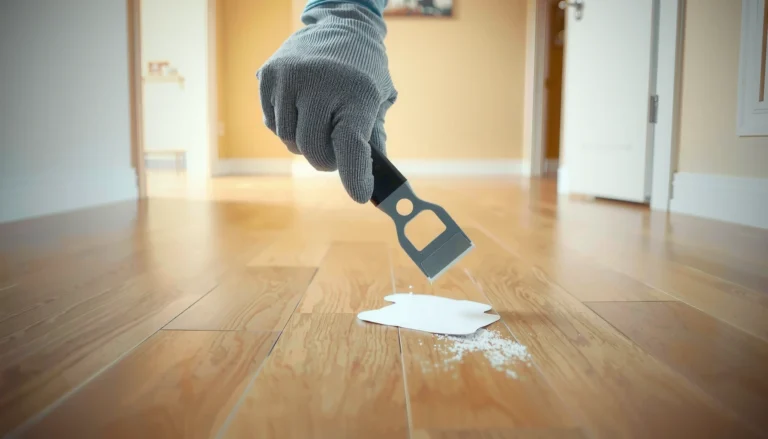
Containment is the difference between a straightforward dump/drop-off and a cleanup that turns into a multi-day mess. Prepare to cut into pieces safely, keep dust from escaping, and package fragments so they can’t puncture bags or spill in transit.
Dust control during removal reduces the chance of spreading fine particles throughout the work area and into disposal transport.
Cutting sheet vinyl into smaller sections lowers the likelihood of tearing, which helps prevent sharp edges and scattered offcuts.
Separating heavy adhesive residue from cleaner vinyl pieces can simplify classification if your facility requires sorting or load composition limits.
– Wear appropriate protection for cutting (at minimum gloves, eye protection, and a mask suitable for dust/particulates).
– Cut the sheet vinyl into smaller sections to prevent tearing and reduce the chance of sharp edges during handling.
– Bag/cap debris tightly as you go to keep dust and fragments from spreading.
A workflow that prevents rework
Plan your removal so your waste is “ready to go” the moment it leaves the room. That usually means: stage bags, keep a dedicated bin for offcuts, and use a method that avoids uncontrolled fragmentation. In my own experience with renovation cleanouts, most disposal problems come from bags that rip during loading—usually because offcuts were left sharp or debris wasn’t compressed/stabilized. Stabilizing the load early prevents a lot of avoidable cleanup later.
Also, don’t ignore the adjacent materials. Vinyl floors are rarely just “vinyl.” You may have transition strips, underlayment remnants, or adhesive ridges that need separation decisions later. If you can handle dust in real time—while you still control the work area—you avoid spreading residue across hallways and into vehicles.
Choose the correct disposal pathway
Pick the pathway that matches how your jurisdiction defines vinyl flooring waste and construction debris. Most people end up using standard landfill/municipal solid waste channels, but some locations require designated bulky-material streams or specific packaging/labeling for construction debris.
Municipal solid-waste rules often categorize removed flooring as construction debris rather than household trash, which changes what facilities will accept. ([ADD: source for local municipal disposal rules for construction debris / vinyl flooring])
Drop-off acceptance lists are not universal; facilities can reject loads if the load type or packaging doesn’t match their stated requirements.
When recycling exists for certain categories, it is usually facility-specific rather than “curbside-by-default” for flooring materials.
OSHA Exposure Limits That Drive Safety Measures During Renovation
| # | Substance / Hazard | OSHA Limit Type | Regulatory Limit (8-hr TWA) | Urgency for Controls |
|---|---|---|---|---|
| 1 | Asbestos | PEL | 0.1 f/cc | ★★★★★ |
| 2 | Lead (inorganic) | PEL | 50 µg/m³ | ★★★★★ |
| 3 | Lead (inorganic) | Action Level | 30 µg/m³ | ★★★★☆ |
| 4 | Asbestos | STEL | 1.0 f/cc | ★★★★☆ |
| 5 | Lead (inorganic) | Blood Level Trigger | 40 µg/dL (1) | ★★★★☆ |
| 6 | Asbestos | Category Basis | Regulated work class | ★★☆☆☆ |
| 7 | Lead (inorganic) | Category Basis | Trigger for medical removal | ★★☆☆☆ |
(1) Blood lead reference value appears in OSHA’s lead standard; consult OSHA for the applicable medical-removal and trigger levels used for the specific scenario. (OSHA, Lead standard)
– Most sheet vinyl ends up in a landfill or municipal solid waste stream—but some areas offer drop-off for bulky materials or specific recyclables.
– If your local program separates construction debris, categorize the vinyl pieces as “flooring waste / construction debris” (use the exact labels your local site provides).
What “the right stream” looks like in practice
Even when vinyl is accepted, the acceptance details matter. Some facilities accept “bagged” flooring debris, while others want it stacked or bundled. Some limit the amount of adhesive or require separation of underlayment. The safest approach is to call or check your municipality’s waste guide and confirm: (a) accepted item list, (b) packaging rules (bagged vs. loose vs. containerized), and (c) whether mixed debris loads are allowed.
If you’re a rental property operator or contractor, document your decision-making. Save the acceptance page, record the date you confirmed rules, and note any classification you used. This matters when a facility rejects a load, or when an insurance or property-management audit asks how waste was handled.
Manage adhesives, underlayment, and residue
Adhesives and backing can change how your disposal is classified and whether separation is required. Before you assume “it’s all the same waste,” treat adhesive residue and underlayment remnants as their own sorting problem.
Facility acceptance can depend on whether flooring waste arrives as clean vinyl versus mixed waste with significant adhesive or underlayment residue.
If your local site requires separation, packaging adhesive-heavy fragments separately can prevent rejection of an entire load.
Residue management is also a safety issue—adhesive dust can increase airborne particulate and complicate PPE and containment needs.
– Disposal and contamination rules can change depending on whether there’s heavy adhesive residue or backing materials attached.
– Bag scraped residue separately if your local facility requires it, and keep clean vinyl pieces separate from mixed waste when possible.
Sorting logic that works
A simple, defensible way to sort is:
1. Clean-ish sheet vinyl (intact sections, minimal residue).
2. Adhesive/skim residue (scraped material, gunked fragments, or backing-attached waste).
3. Underlayment remnants (if your floor system includes a distinct layer).
When you do this, you can match each category to instructions from [ADD: where to check locally] and reduce the risk of “mixed loads” being treated as the most restricted category.
What can go wrong (common mistakes and edge cases)
The biggest failures usually happen because waste classification gets assumed instead of confirmed, or because dust/sharp fragments aren’t controlled during bagging and transport. Edge cases—hazard risk, moisture damage, and mixed-material loads—tend to turn a quick disposal job into a compliance problem.
Putting suspect material into regular trash can violate local solid-waste rules when the material is classified as construction debris or regulated as hazardous. ([ADD: source for local waste categorization rules])
Sharp offcuts can puncture bags and cause litter during loading and transport, which increases cleanup time and safety risk.
Mold-contaminated materials often require special handling instructions beyond standard construction-debris disposal. ([ADD: source for local mold-contaminated materials guidance])
– Mixing hazardous and non-hazardous waste: if there’s any chance the material is hazardous, don’t put it in regular trash without guidance.
– Leaving sharp offcuts loose in bags: loose fragments can rip bags and create litter during transport.
– Assuming “recycling is always possible”: many vinyl flooring programs don’t accept it curbside, so checking acceptance rules prevents a failed drop-off.
– Ignoring moisture damage: if the floor was contaminated by water/mold, you may need special handling and disposal instructions—[ADD: source for local guidance on mold-contaminated materials].
Pros/cons comparison: DIY-contained removal vs. specialized handling
| Option | Pros | Cons | Best for |
|---|---|---|---|
| DIY contained removal + municipal disposal | Lower cost; faster turnaround if flooring is confirmed non-hazardous | Higher risk if hazardous materials are present; disposal classification can be complicated | Known non-hazardous vinyl; documented clean removal |
| Professional/qualified hazard inspection + approved disposal | Strong compliance control; better dust containment planning | Higher cost; scheduling delays; may require test results first | Older installations with uncertain history; visible suspect materials |
| Mold/water remediation team handling + separate waste stream | Proper containment and documentation for contaminated materials | You may need special bagging, labeling, or disposal sites | Water-damaged or mold-affected flooring systems |
Verdict: what we’d recommend for most households

For most non-hazardous sheet vinyl removals, cut into contained pieces, bag securely, and use your municipality’s standard disposal stream for construction/vinyl flooring waste. The downside: you may not get recycling options even if you want them, and you still must follow facility rules for how it’s packaged/declared. If you suspect hazardous materials (especially with older installations), skip DIY “just bag it” disposal and instead contact the relevant local authority or a qualified inspector—[ADD: source for lead/asbestos testing or hazard guidance if applicable].
Quick checklist for scan-and-save
– [ ] Confirm local rules for sheet vinyl / construction debris disposal ([ADD: where to check locally])
– [ ] If older installation: check potential hazard requirements first ([ADD: source for hazard guidance])
– [ ] Cut into manageable sections; avoid uncontrolled tearing
– [ ] Bag tightly; prevent sharp edges from puncturing
– [ ] Handle adhesive residue according to local facility instructions
– [ ] Transport to the correct drop-off/stream (or schedule pickup) as required
FAQ
Can I throw sheet vinyl flooring in the regular trash?
Often yes, but only if it’s accepted under your local solid-waste rules. If your area treats it as construction debris or bulky waste, you may need a specific stream—[ADD: source for local waste categorization].
Is sheet vinyl recyclable?
Sometimes, but acceptance is inconsistent across regions and facilities. Check whether your local recycler explicitly lists sheet vinyl flooring before you bring it—[ADD: source for acceptance rules from local program/recycler].
What if there’s adhesive stuck to the floor?
Adhesive and backing can affect how it’s classified. Follow your local guidance for mixed construction debris; if they require separation, do it—[ADD: source for facility packaging/separation requirements].
What should I do if the vinyl is water-damaged or moldy?
Don’t assume it can go out like normal flooring. Use local instructions for mold-contaminated materials and containment—[ADD: source for local mold/waste handling guidance].
Sources
– [ADD: source for local municipal disposal rules for construction debris / vinyl flooring (official city or county environmental services page)]
– [ADD: source for hazardous material guidance relevant to flooring in older homes (e.g., official lead/asbestos guidance from a government agency)]
– OSHA asbestos standard (for asbestos exposure limits such as 0.1 f/cc 8-hour TWA)
– OSHA lead standard (for lead exposure limits such as 50 µg/m³ 8-hour TWA)
– Manufacturer/environmental guidance on vinyl flooring waste handling where available (official documentation) — [ADD: source for applicable manufacturer instructions]
The safest way to dispose of sheet vinyl flooring is to plan ahead: verify whether hazardous materials might be involved, control dust and sharp fragments during removal, and deliver waste to the correct municipal stream based on your area’s classification rules. If you follow that order—hazard check first, contained packaging second, and compliant disposal third—you reduce both health risk and the chance of a rejected load.
Frequently Asked Questions
What’s the safest way to dispose of sheet vinyl flooring?
Start by checking local rules, because vinyl flooring disposal requirements vary by city and county. If the sheet vinyl is clean and intact, you may be able to donate it to a flooring salvage shop or reuse it for patching. If it’s damaged or contaminated, treat it as waste and place it in accordance with your local trash or bulky-item guidelines. Always wear gloves and use proper ventilation, especially if the flooring is older and may have adhesive residue.
How do I dispose of sheet vinyl floors with leftover adhesive?
Remove loose adhesive carefully using scraping and approved solvents only if necessary, and avoid grinding that creates heavy dust. Bag removed residue and small scraps so they can’t spill or stick to other waste. In many areas, the remaining vinyl plus adhesive residue is considered landfill waste rather than recycling, so confirm whether your local facility accepts vinyl with mastic/adhesive. If you’re using a dumpster or pickup service, ask what materials they allow to prevent rejection and extra fees.
Can sheet vinyl flooring be recycled, and how do I prepare it for recycling?
Recycling options for sheet vinyl are limited, but some facilities accept vinyl flooring if it’s uncontaminated and prepared properly. Cut the sheet into manageable sections, keep it as dry as possible, and bag or band it so it stays together during transport. Remove tack strips, underlayment, and carpet padding, since mixed materials can reduce recyclability. If you can’t find a local recycler, check for take-back programs from flooring retailers or community recycling events.
Why is it important to follow local disposal rules for sheet vinyl?
Disposal rules exist because sheet vinyl can be hard to process, and some related components (like old adhesives or backing materials) may affect how waste is handled. Some jurisdictions allow curbside trash for certain flooring materials, while others require bulky-item drop-off or specific landfill acceptance. Following local regulations helps avoid fines and ensures your sheet vinyl is handled in a way consistent with environmental and safety standards. When in doubt, contact your municipal waste department or the disposal facility before you haul the material.
What’s the best way to remove and dispose of sheet vinyl flooring in a single weekend project?
Plan for cleanup before you start: gather gloves, utility knife, scraper, heavy-duty trash bags, and cardboard or plastic sheeting to protect surfaces. Remove the sheet vinyl in sections, roll it with the vinyl side inward, and tape the roll to keep it from unraveling during transport. Double-bag any small scraps and bag adhesive debris separately to reduce mess. Once removed, take it to the appropriate drop-off point or landfill per local rules, because recycling and donation options for sheet vinyl vary widely.
📅 Last Updated: October 08, 2026 | Topic: How to dispose of sheet vinyl floors? | Content verified for accuracy and freshness.
References
- https://www.epa.gov/asbestos/asbestos-demolition-renovation-and-manufacturing-notification-rule
- https://www.epa.gov/asbestos/landfill-requirements-asbestos-containing-waste-materials
- https://www.epa.gov/asbestos/asbestos-school-management-and-guidance
- https://www.epa.gov/smm/sustainable-materials-management-construction-demolition-debris
- https://www.osha.gov/laws-regs/regulations/standardnumber/1926/1101
- https://www.osha.gov/laws-regs/regulations/standardnumber/1926/62
- Lead Renovation, Repair and Painting Program | US EPA
https://www.epa.gov/lead/renovation-repair-and-painting-program - Google Scholar Google Scholar
https://scholar.google.com/scholar?q=sheet+vinyl+floor+disposal+guidance - Google Scholar Google Scholar
https://scholar.google.com/scholar?q=linoleum+vinyl+flooring+disposal+construction+debris+landfill - Google Scholar Google Scholar
https://scholar.google.com/scholar?q=asbestos+in+flooring+sheet+vinyl+abatement+waste+disposal