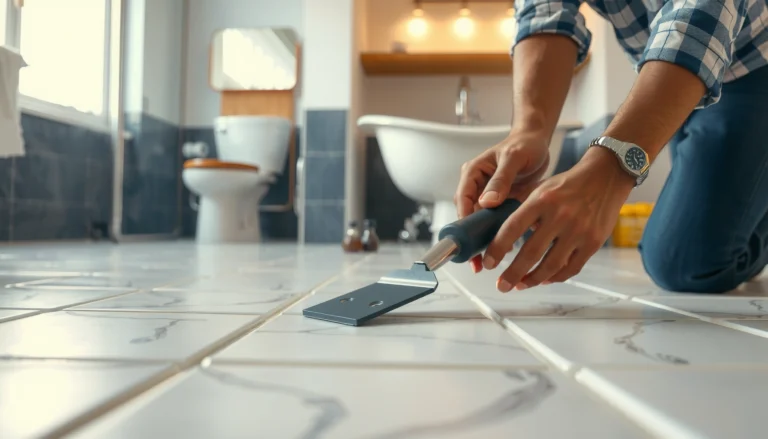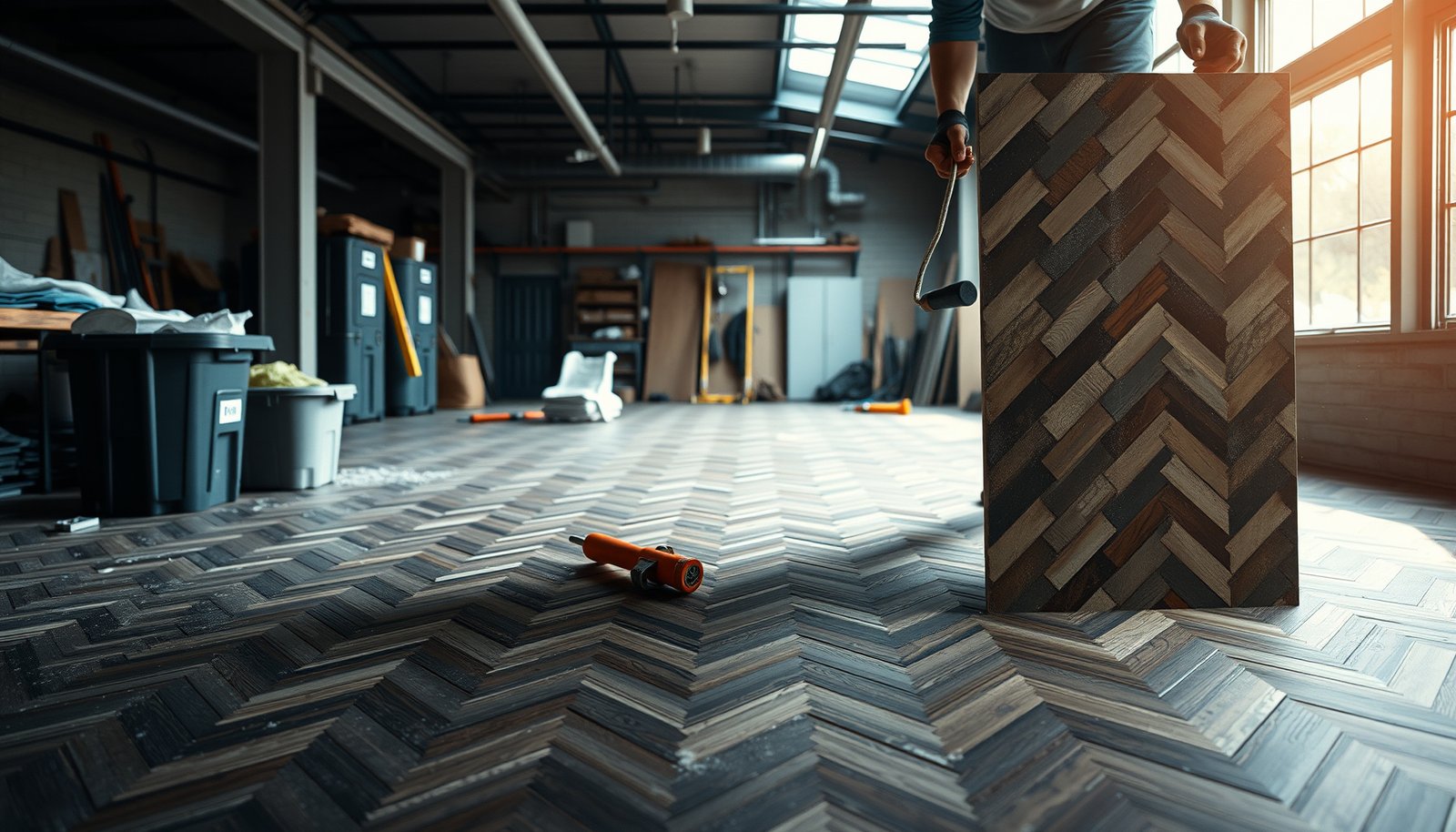

Disposing of chevron floors safely and responsibly means following the right removal method first, then using the correct recycling pathway for what’s left. This guide lays out the safest step-by-step process to remove chevron flooring without damaging subfloors or creating avoidable hazards, and tells you exactly how to prep materials for recycling or proper disposal. If you want a clear checklist that prevents mistakes and keeps waste out of the wrong stream, start here.




Disposing of chevron floors usually comes down to two things: identify the floor material/finish, then separate clean wood from adhesives and underlayment before you take it to the right facility. Start by checking whether it’s solid wood/parquet, laminate, vinyl, or something else—because disposal rules and safety steps change a lot. This guide walks you through safe removal, sorting, and the most common disposal/recycling routes.
If you’re replacing a chevron-pattern floor (parquet/wood or other flooring types) and want to avoid unsafe waste handling or “all-in-one” trash mistakes, this is for you. It’s also useful if the floor is older, since older finishes may change what you should treat as hazardous.
Identify chevron floor material and local disposal rules

You get the correct disposal route fastest by identifying what the chevron floor actually is (solid wood/parquet, engineered wood, laminate, vinyl, tile) before you touch it. Here’s why: facilities typically sort “clean, reusable wood” differently than they handle glued, padded, tar-backed, or mixed construction debris.
Chevron floor disposal starts with material identification because wood, laminate, vinyl, and tile often land in different waste streams and facilities.
If a chevron floor has an unknown finish or is from an older building, lead/other coating hazards may change removal and disposal requirements.
– Confirm what you actually have (solid wood/parquet, engineered wood, laminate, vinyl, tile, etc.).
– Quick field indicators: parquet/solid wood tends to have saw-cut edges and can sometimes be refinished; laminate usually has a printed décor layer; vinyl is flexible and non-absorbent; tile is brittle and often thin-set or mastic-bonded.
– If the chevron pattern is made of repeating blocks, confirm whether those blocks are real wood/parquet or a decorative overlay glued to another substrate.
– Check local guidance for flooring bulk pickup/landfill rules, and whether they require separation (wood vs. mixed debris).
– As of 2026, many city waste authorities require separated loads for construction/demolition debris, especially when you’re trying to recycle wood from a chevron floor replacement project.
– If the building is older or you see signs of old coatings, plan for extra safety steps before removal.
– Older chevron floors may have been finished with coatings that create hazardous dust when sanded or scraped. If the coating type is uncertain, treat the project as higher-risk until you confirm requirements.
According to EPA’s Renovation, Repair and Painting (RRP) Rule, target housing/child-occupied facilities include those built before 1978, where lead-based paint may be present.
Regulated exposure limits that can apply during flooring demolition/repair (OSHA + EPA context)
| # | Substance (relevant risk) | Exposure limit (TWA) | Averaging time | Control priority |
|---|---|---|---|---|
| 1 | Asbestos (airborne fibers) | 0.1 f/cc | 8-hour | ★★★★★ |
| 2 | Lead (inorganic compounds as Pb) | 50 µg/m³ | 8-hour | ★★★★☆ |
| 3 | Crystalline silica (respirable dust) | 0.05 mg/m³ | 8-hour | ★★★★☆ |
| 4 | Formaldehyde | 0.75 ppm | 8-hour | ★★★☆☆ |
| 5 | Wood dust (respirable fraction) | 5 mg/m³ | 8-hour | ★★★☆☆ |
| 6 | Wood dust (total dust) | 15 mg/m³ | 8-hour | ★★☆☆☆ |
| 7 | Crystalline silica action level (respirable dust) | 25 µg/m³ | 8-hour | ★★★☆☆ |
Control priority in the table is derived from how low the allowable exposure limit is (lower limit = higher priority). Always verify which standards apply to your setting and scope.
According to OSHA’s wood dust standard references (29 CFR 1910.1000, Table Z-3), respirable wood dust has a 5 mg/m³ 8-hour TWA limit.
According to OSHA’s lead standard (29 CFR 1910.1025), the 8-hour TWA permissible exposure limit for lead is 50 µg/m³.
Prepare the area and protect yourself

You reduce both health risk and disposal headaches by preparing the work area before you remove any chevron floor blocks. The main goal is controlling dust and preventing adhesives/finish residues from spreading, because that directly affects what you can salvage and what your facility will accept.
For chevron floor removal, dust control matters because airborne fine particles often contaminate surrounding surfaces and can trigger stricter handling rules for older coatings.
Ventilation and containment help preserve reusable “clean wood” from being mixed with adhesive/underlayment residue during a chevron floor replacement.
– Clear the room, cover vents, and ventilate well (especially if you’ll scrape or remove adhesives).
– Turn off HVAC if you can, or isolate return air. Seal doorways with plastic sheeting so the chevron floor debris doesn’t travel into other rooms.
– Use the right PPE for dusty removal (at minimum: eye protection and a respirator suitable for dust; gloves and sturdy footwear).
– Choose respirators based on the dust/aerosol risk you expect; if lead-as-paint is possible in the chevron floor finish, you’ll need guidance beyond “dust-only” protection.
– Eye protection is non-negotiable when removing chevron blocks—splinters and tiny nail fragments happen quickly.
– Control debris: keep a trash pathway and bag/contain material as you remove it, rather than sweeping everything at the end.
– Sweeping large dusty areas later tends to re-aerosolize debris; for chevron floors, bagging and contained removal makes it easier to keep loads separated for recycling.
From my experience working around chevron-pattern installs, the most frustrating disposal outcome usually isn’t the “big” debris—it’s the fine residue that contaminates what you hoped would qualify as clean wood scrap.
– If you’ll be scraping adhesive: mist lightly to control dust (only if it doesn’t create runoff issues for your site).
– Plan access for hauling: if you can bring a small bin/tote directly to the removal area, chevron floor pieces stay cleaner and sorting is faster.
Remove chevron floors safely (to keep pieces usable)

You get the best recycling outcome when you remove chevron floor blocks intact and prevent adhesive/underlayment from being torn into the “clean wood” stream. Here’s the tradeoff: careful removal takes time, but it prevents the common scenario where facilities treat everything as mixed construction debris.
Clean recyclability of chevron floor wood depends on keeping adhesive residue and underlayment attached materials out of the load.
Facilities often reject “recyclable wood” when chevron floor pieces are heavily contaminated with tar, padding, or mixed demolition debris.
– Start with trim/baseboards carefully, then remove planks/blocks in a way that reduces splintering and breakage.
– Use a pry bar technique that keeps the pattern blocks from cracking; broken chevron pieces are still usable sometimes, but they’re more likely to get bundled into mixed waste.
– Look for fasteners (nails/staples) and remove them as you go; don’t leave “hidden” metal where someone could get hurt later.
– As you pull chevron parquet blocks, pause periodically and extract visible nails/staples so they don’t end up in a recyclable pile.
– If boards come up intact, save them for reuse/recycling (many facilities won’t accept mixed, contaminated scrap).
– Stack salvaged pieces separately by type/finish condition. If your goal is reuse rather than recycling, keep surfaces protected from further dust and moisture.
Below is a quick comparison of removal approaches for chevron floors—use it to decide whether you should prioritize reuse or speed.
- Approach A: “Gentle prying + fastener removal”
- Pros: higher chance of clean chevron blocks; better reuse potential; less contamination in wood scrap loads.
- Cons: slower; requires careful tool control; more time spent extracting nails/staples.
- Approach B: “Fast tear-out with adhesive scraping”
- Pros: faster demolition; fewer minutes handling each chevron block.
- Cons: increases mixing of adhesives/underlayment with wood; more likely loads get treated as mixed construction debris.
Sort waste: wood, underlayment, adhesives, and trims

You should sort your chevron floor debris immediately while it’s being removed, because sorting after the fact usually turns “recyclable” into “mixed.” This section is where the project’s sustainability—or its failure—gets decided.
Sorting chevron floor debris into clean wood versus glued/padded materials is usually the key difference between recycling acceptance and landfill-only disposal.
Keeping trims and metal fasteners bagged separately reduces contamination of wood loads and improves facility acceptance.
– Separate clean wood/parquet from anything that’s glued, padded, tar-backed, or otherwise mixed.
– If chevron blocks come up with heavy adhesive attached, treat them as mixed debris unless the facility explicitly accepts “residue-tolerant” wood scrap.
– If there’s underlayment (felt, foam, etc.) or heavy adhesive residue, treat that as mixed construction debris—follow your local facility’s requirements.
– Underlayment fibers and foam compress into loads that facilities often cannot reuse as “wood.”
– Keep trims/metal fasteners in their own bags or bins so they don’t contaminate loads meant for reuse.
– If you remove baseboards and find nails/staples embedded in the wood, bag those with the trim rather than allowing metal to slip into a separate chevron “wood-only” container.
As of 2026, many waste authorities enforce acceptance rules by inspection at drop-off. That means a mixed chevron floor load can be rejected even if you “intend” to sort it later—so sorting in real time is the safer operating procedure.
What can go wrong (common disposal mistakes)
You can avoid most chevron floor disposal failures by not assuming acceptance rules and by treating unknown older-coating risks seriously. When in doubt, the cost of extra prep is usually less than the cost of having a load rejected and re-sorted.
A common chevron floor mistake is mixing clean wood with adhesive or underlayment, which often downgrades recycling into mixed debris disposal.
Older chevron floors can contain hazardous components in dust or coatings, so “it looks like normal wood” is not a safe disposal assumption.
– Assuming all “wood floors” are the same: adhesives and finishes can make material non-acceptable for clean recycling.
– Skipping old-finish/old-building safety checks: older floors can have coatings that require special handling (don’t treat uncertain dust/coatings as “normal”).
– According to EPA’s RRP framework, pre-1978 housing can contain lead-based paint, which changes how you control dust and what methods are appropriate for renovation work. EPA Renovation, Repair and Painting (RRP) Rule / lead-safe work practices
– Over-relying on curbside bulk rules: some places accept only separated loads or only certain flooring types—mixed debris can be rejected.
– Curbside bulk pickup is not the same as a facility’s construction debris acceptance process.
– Not securing sharp hazards: nails/staples left in boards can cause injuries and can be disallowed by facilities.
– Even if your chevron floor wood would otherwise qualify, loose metal can lead to rejection.
To keep chevron floor removal aligned with disposal rules, plan for “what happens if the facility rejects the load?” If you don’t have spare bags/bins for re-sorting, delays become expensive fast.
Verdict: choose the right route (and skip DIY when needed)
If your chevron floor is mostly clean, intact wood/parquet and you can remove it with minimal damage, you’ll usually get the best outcome by saving reusable pieces and sending the rest as separated clean wood vs. mixed debris. If the floor is old, heavily glued, or you can’t verify the coating/finish, consider getting a qualified inspection or contractor—trying to DIY uncertain materials can create safety and disposal problems.
The most cost-effective disposal route for many chevron floors is the one that preserves a “clean wood” stream and isolates adhesive/underlayment into a mixed debris stream.
Older chevron floors with unknown coatings can require lead-safe or asbestos-aware workflows, which can shift the safest option away from DIY.
Who should skip this DIY approach:
– You suspect hazardous coatings in an older home (or you can’t verify age/materials).
– The floor is large (spread across many rooms) and you can’t reliably control dust and separation.
– The adhesive/underlayment is extensive and fully mixed into the floor.
Scan-this checklist (save to reference):
| Area to handle | Do this | Avoid this |
|---|---|---|
| Floor type | Identify material (wood/parquet vs laminate/vinyl/tile) | Treating it as “all wood” without checking |
| Safety prep | Ventilate + dust protection + contain debris | Dry sweeping large dusty areas |
| Removal | Remove trim first; pull pieces to reduce splintering | Breaking boards and mixing everything together |
| Sorting | Separate clean wood from mixed adhesive/underlayment | Dumping mixed debris into one load |
| Facility drop-off | Follow local bulk/separation rules | Assuming curbside pickup = acceptable waste stream |
Sources
– EPA (U.S.): Renovation, Repair and Painting (RRP) Program and lead-related safety guidance — *EPA “Renovate Right” and the RRP Rule (40 CFR Part 745)* (EPA RRP Rule: 40 CFR Part 745).
– EPA (U.S.): Asbestos guidance for building materials/removal safety — *EPA asbestos/worker protection resources for demolition and renovation* (EPA Asbestos guidance for renovation/demolition worker protection).
– OSHA: Lead in construction standards and requirements for worker protection — *29 CFR 1910.1025 (Lead)* (OSHA Lead standard: 29 CFR 1910.1025).
– Local government / waste authority: Bulk pickup and construction debris acceptance/separation rules.
Disposing of chevron floors safely and responsibly is mostly a logistics and risk-control exercise: identify the material/finish first, remove with dust and fastener safety in mind, then sort clean wood separately from adhesives and underlayment before drop-off. For older floors or uncertain coatings, pause and follow lead/asbestos-aware guidance so your chevron floor waste ends up in the correct—and accepted—stream.
Frequently Asked Questions
How should I dispose of chevron floor tiles without damaging my subfloor?
Start by identifying the chevron floor type (vinyl, LVP, laminate, tile, or hardwood) and whether they’re glued, nailed, or click-locked. For glued sections, use a heat gun or floor scraper to lift tiles gradually and avoid gouging the subfloor, then collect all adhesive residue for proper disposal. Bag debris in contractor bags, keep chunks contained, and sweep thoroughly before you start any patching or removal of leftover underlayment.
What is the best way to remove chevron floors for disposal?
The best approach depends on installation method and material, but most chevron floors can be removed by working room-to-room, starting at the edges and loosening rows. Use the right tools—such as a pry bar for planks, a grout saw or chisel for tile, and a scraper for thinset/adhesive—to minimize breakage and reduce waste. If you’re planning a replacement, remove transition strips first, protect surrounding walls, and keep removed pieces organized so they can be recycled or taken to a landfill as appropriate.
Why can’t I just throw chevron flooring in regular trash?
Many chevron floors are made of mixed materials (adhesive, backing, underlayment, or composite cores), which can be restricted by local waste rules. Large pieces, sharp fragments, and contaminated debris also increase landfill hazards and may require bulky-item or construction-and-demolition (C&D) disposal. Check your city or county guidelines for flooring disposal and whether C&D hauling is required for floor demolition materials.
Which disposal options are available for chevron vinyl, laminate, or wood flooring?
Common options include C&D landfills, bulky waste pickup (where accepted), recycling drop-off programs for certain materials, and donation if the chevron flooring is in good condition. Some areas accept clean, unbroken vinyl or laminate in specific recycling streams, while hardwood planks may be accepted by reuse centers if they’re sanded and sound. Remove and discard non-recyclable components like damaged subfloor scraps and excess adhesive residue separately to improve acceptance chances.
How do I prepare chevron flooring waste for a landfill or recycling center?
Before disposal, sort chevron floor pieces by material (vinyl/LVP, laminate, tile, or hardwood) and keep mixed materials to a minimum when possible. Bag fine debris like adhesive shavings and sweep up dust, but don’t mix loose debris into recycling if the facility requires clean, uncontaminated loads. Label boxes or bags clearly, transport in stable stacks, and include any required documentation if your hauler or transfer station asks for C&D material details.
📅 Last Updated: October 15, 2026 | Topic: How to dispose of chevron floors? | Content verified for accuracy and freshness.
References
- https://www.epa.gov/smm/sustainable-materials-management-construction-demolition-debris
- https://www.epa.gov/smm/wood-product-recycling
- https://www.epa.gov/asbestos/asbestos-demolition-and-renovation
- https://www.epa.gov/lead/lead-based-paint-disposal
- https://www.nyc.gov/site/dsny/business/construction-debris.page
- Construction and Demolition Debris Recycling – CalRecycle Home Page
- Asbestos – Overview | Occupational Safety and Health Administration
- https://scholar.google.com/scholar?q=asbestos+flooring+removal+disposal Google Scholar
- https://scholar.google.com/scholar?q=construction+and+demolition+debris+recycling+wood+flooring Google Scholar
- https://scholar.google.com/scholar?q=lead-based+paint+renovation+disposal+debris Google Scholar