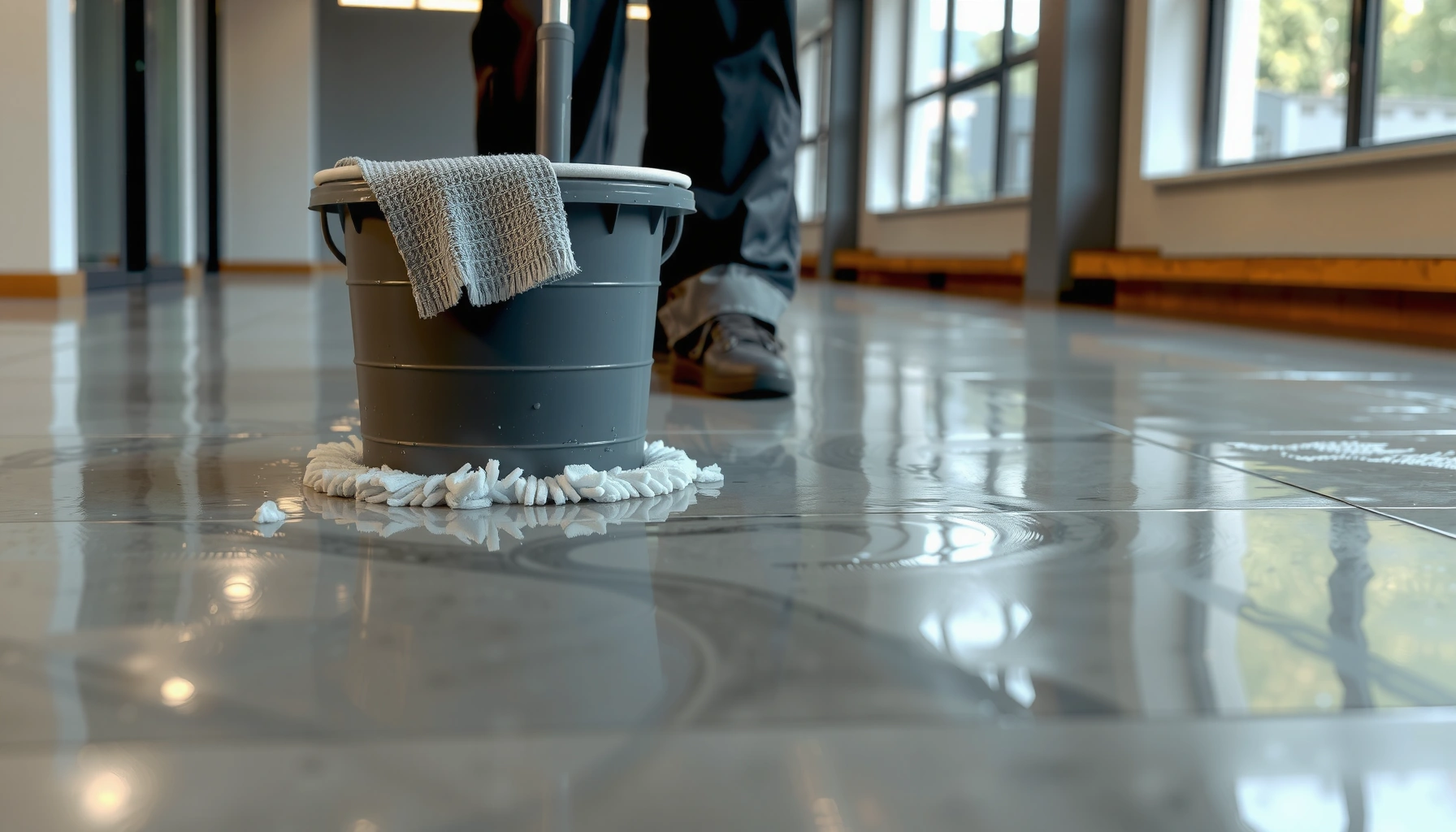

Deep cleaning polished concrete without dulling the shine comes down to two things: using a pH-balanced (pH-neutral) cleaner and cleaning with gentle agitation plus a controlled rinse/wet-pickup step. Start with thorough dust removal, then use a neutral cleaner on microfiber or a soft pad, and finish by extracting rinse water so residue doesn’t build into haze over time.
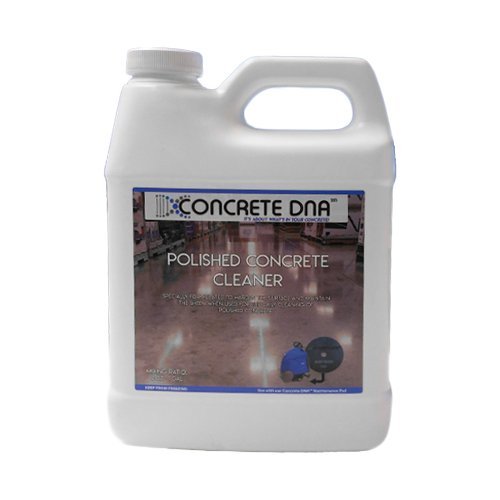



If your polished concrete looks hazy, feels sticky, or has embedded grime in high-traffic zones, a deep clean is usually the right fix before you consider mechanical re-polishing. This is especially relevant for sealed or densified polished concrete, where harsh chemicals, abrasive tools, or over-wetting can compromise the finish.
What “deep clean” means for polished concrete
A deep clean for polished concrete is a targeted reset of surface cleanliness—removing residue and embedded grime—without changing the finish level (shine) or scratching micro-abrasive pathways in the top surface. The goal is to eliminate the cause of haze and stickiness while keeping agitation gentle and chemistry compatible with the existing sealer/densifier system.
Deep cleaning is not “more scrubbing,” because polished concrete finishes can look dull simply from abrasive pad use or gritty solution residue. Instead, you’re focusing on three common failure modes: residue haze, abrasion dulling, and grime buildup in surface pores.
Polished concrete haze is frequently caused by leftover cleaning residue that refracts light differently than the clean surface—so rinsing/extraction matters as much as the cleaner.
A “pH-neutral” cleaner is designed to be compatible with finished mineral surfaces, because extreme pH chemistry can disturb hydration products near the surface.
Gentle agitation with microfiber or soft pads lifts oils and soil without creating new scratch patterns that reduce reflectivity.
Key outcomes you should be able to see
– Reflectivity returns: the floor looks clearer and less “milky” under lights.
– Sticky feel disappears: oily film and polymer residue no longer attract dust.
– High-traffic zones match: footprints and tracked-in grime stop accumulating quickly.
Quick reality check: when you’re not really “deep cleaning”
If the floor has active failure (widespread etching, flaking topical coating, or severe surface damage), deep cleaning alone won’t restore the finish. In those cases, you may need resurfacing, honing, or resealing—processes that depend on the exact finish system.
According to the pH definition, pH is calculated as pH = −log₁₀[H⁺], meaning small pH shifts can represent large concentration changes (chemistry reference: IUPAC pH definition).
At pH 7, the hydrogen ion concentration is 10⁻⁷ mol/L (25°C reference for neutral pH commonly used in chemistry) (chemistry reference: standard pH scale and definition).
A pH scale is commonly presented from 0 to 14, with neutrality at pH 7 (chemistry reference: standard pH scale).
Prep: clear the floor and protect the finish
Prep is the fastest way to prevent damage during deep cleaning. If you leave grit on the surface and then introduce water/cleaner, you can effectively “scrub sand” into the polished finish.
This is also where most operators accidentally harm shine: hard attachments, abrasive broom heads, or dragging debris across the floor. You want controlled removal first, then cleaning, then extraction.
Vacuuming before wet cleaning reduces the chance that suspended grit creates micro-scratches during pad agitation.
Limiting free water near edges and joints reduces the likelihood of staining or discoloration where moisture migrates.
Step 1: Remove dry soil thoroughly
– Sweep/ vacuum using a soft floor attachment.
– If you have a wet-dry extractor, use it—because it captures fine particulate that a broom can redistribute.
Avoid: steel wool, abrasive razor tools, and attachments with stiff plastic “bristles” that can chew edges.
Step 2: Pre-mop only if the floor truly needs it
– If the floor is coated with loose dust only, you may not need pre-mopping—vacuum may be enough.
– If there’s powdery dirt (e.g., from HVAC dust) that could turn into slurry, do a light damp microfiber pre-pass with clean water.
– Let the floor return to a “no puddles” condition before applying any cleaner.
From my experience coordinating maintenance for commercial interiors, the difference between “no puddles” and “still damp in corners” is often the difference between uniform shine and streaky haze—especially in rooms with uneven airflow.
Choose the right cleaner (and avoid the common wrong ones)
The right cleaner is typically pH-neutral (non-acidic, non-alkaline) and compatible with your polished concrete finish system. Wrong chemistry is a primary cause of dull patches, etching, and sticky residue that reappears days later.
Because polished concrete finishes vary (densifier vs. penetrating sealer vs. topical/burnished systems), compatibility matters. When in doubt, test a small area first.
Avoid acid cleaners and “descalers” on polished or finished concrete unless the manufacturer explicitly approves them for your specific system.
Using a pH-neutral, non-acidic cleaner helps minimize the risk of chemical dulling and surface disruption compared with high-pH or acidic formulations.
A small hidden test patch helps confirm whether a cleaner leaves a film or reduces reflectivity before you clean the full floor.
What to look for on the label
– pH-balanced / pH-neutral
– Non-acidic and not marketed as a descaler
– Compatible with polished concrete or finished concrete surfaces
– If it’s a gel, foam, or concentrate: follow label dilution exactly (do not “strengthen” it)
What to avoid
– Acidic cleaners (often marketed for lime scale)
– Strong degreasers unless they explicitly state safe use on polished/finished concrete
– Any “strong cleaner” that doesn’t mention compatibility with your finish system
Cleaner compatibility note for enhanced finishes
If your floor uses an enhanced finish (burnished, topical sealer, concrete coating system), follow the manufacturer’s guidance here:
[ADD: source/spec link or brand name for your specific sealer/topical finish].
Practical comparison: which cleaner approach is safest?
Below is a decision guide you can use before the first bucket goes down.
| Cleaning approach | Best for | Main risk |
|---|---|---|
| pH-neutral polished concrete cleaner | General grime & haze | Over-wetting if you don’t extract |
| Topical/Sealer-compatible cleaner | Polished systems with topical protection | If the chemistry is wrong, residue can build |
| High-pH / alkaline degreaser | Heavily soiled oil areas (only if approved) | May dull or leave persistent film |
| Acid/descaler product | Only for known lime scale on approved surfaces | Can etch/damage polished finish |
Recommended pH Targets for Cleaner Selection (Practical Maintenance Guidance)
| # | Target cleaner pH range | Polished concrete use | Risk rating | Why it matters |
|---|---|---|---|---|
| 1 | 6.0–8.0 | Preferred for routine deep cleaning | ★★★ | Minimizes chemical dulling/film risk |
| 2 | 8.1–9.5 | Use only if manufacturer allows | ★★☆☆ | Higher pH can leave residue if over-applied |
| 3 | 9.6–11.0 | Occasional spot use (approved systems only) | ★☆☆☆ | Greater chance of dull patches without proper rinse |
| 4 | 3.0–5.9 | Usually avoid for polished finishes | ★☆☆☆ | Acid can etch/mineral-alter the surface |
| 5 | 2.0–2.9 | Only with explicit written approval | ☆☆☆☆ | High etch likelihood without a protective barrier |
| 6 | Neutral detergent (no citrus/acid additives) | Often safe if label says polished-safe | ★★★ | Designed to remove soil without altering shine |
| 7 | “Descaler” / unknown pH | Do not use unless verified compatible | ☆☆☆☆ | Label cues often indicate etching chemistry |
Step-by-step deep cleaning method
A safe deep clean uses the least aggressive process that reliably removes soil: spot-treat stains, clean in sections with gentle agitation, and then rinse/extract according to the cleaner label. This method protects the polished surface by minimizing abrasive contact and preventing residue buildup.
Work methodically—polished concrete responds well to systematic passes, but it shows streaks quickly if sections dry unevenly or if rinse water isn’t extracted.
Cleaning in smaller sections helps you control dwell time and prevents cleaner residue from drying on the surface and creating haze.
If a polished concrete cleaner requires rinsing, wet pickup/extraction is the most reliable way to prevent film that can dull appearance.
Microfiber mops and non-abrasive pads clean by lifting soil, not by sanding—so they preserve reflectivity better than scouring pads.
Step 1: Spot-treat first (don’t start with the whole floor)
– Identify stain category:
– Oils/grease: often need degreasing chemistry that’s still compatible with polished/finished concrete.
– Organic staining: may respond better to a cleaner designed for organic soil (still pH-balanced if used on polished surfaces).
– Apply minimal product and follow the label’s dwell time.
– Use a microfiber cloth or a small pad rather than spreading chemicals across large areas.
If you’re unsure, do not “power through.” Start with the mildest compatible method and increase only if the label supports it.
Step 2: Clean in sections with controlled agitation
– Apply pH-neutral cleaner per label dilution.
– Use microfiber mop or a soft, rated pad.
– Agitate gently—especially on corners, edges, and areas with a more burnished look.
Avoid: abrasive scrubbers, aggressive floor machines, or pads that shed grit.
Step 3: Rinse and extract (only if the label requires it)
Not every cleaner requires rinsing, but residue risk rises with:
– higher dilution variability,
– hard water,
– and floors with topical layers.
If rinsing is required:
– rinse with clean water in sections
– then wet pick up or use a controlled damp/dry method so the surface returns to “dry to touch”
Step 4: Dry completely to lock in uniform shine
– Maintain airflow (fans if appropriate).
– Don’t leave standing moisture along seams or edges.
– Let each section reach consistent dryness before moving on—uneven drying can create visible differences in reflectivity.
From a maintenance workflow perspective, I recommend treating drying as part of the cleaning step, not an afterthought. When crews rush the end, haze often shows up within 24–72 hours—exactly when residue has time to dry and refract light.
What can go wrong (and how to prevent it)
This is where polished concrete is most unforgiving: a small chemistry mistake or an abrasive pad choice can change appearance immediately. The good news is that most problems are predictable and avoidable with process control.
Keep an eye on five failure modes: dulling/scratching, haze/film, etching, edge over-wetting, and uneven shine.
Scratching and dulling are most often caused by grit and abrasion—either left on the floor during prep or introduced by pad selection.
Haze frequently points to residue left on the surface—so switching to pH-neutral chemistry and performing extraction can correct the appearance.
Etching and permanent dull patches can result from acidic/alkaline cleaners that are not labeled safe for polished or finished concrete surfaces.
Common problems and prevention
– Dulling or scratching
– Cause: abrasive pads/scrubbers or grit left behind during prep
– Prevention: vacuum fully; use least aggressive pad that works
– Hazy film or streaks
– Cause: wrong cleaner chemistry or not rinsing/extracting properly
– Prevention: pH-neutral products + follow label rinse instructions
– Etching or dull patches
– Cause: acidic or high-alkaline products
– Prevention: if the label doesn’t explicitly approve use on polished/finished concrete, don’t guess
– Over-wetting edges and joints
– Cause: excessive solution volume or poor extraction
– Prevention: controlled application; wet pickup/extraction
– Inconsistent shine
– Cause: different sections drying at different rates or missed residue in corners
– Prevention: systematic sections; consistent drying and final extraction
Verdict: the safest approach for most floors
For most polished concrete floors, the safest deep-clean approach is: (1) vacuum/sweep thoroughly, (2) use a pH-neutral cleaner designed for polished/finished concrete, (3) clean with gentle agitation using microfiber or a soft pad, and (4) rinse and extract when the product label requires it. This combination protects shine because it addresses both chemistry (residue/film formation) and mechanics (abrasion and scratch risk).
The downside is that deep cleaning can’t reverse true surface damage. If your floor has widespread etching, flaking topical coatings, or severe embedded contamination that requires aggressive chemistry or mechanical refinement, appearance may not fully recover without professional resurfacing.
Skip this DIY process if you’re unsure which sealer/topical finish is on the floor, if the surface is actively failing (flaking, widespread etching), or if your system requires manufacturer-specific resurfacing steps—then [ADD: recommend contacting a concrete floor care professional / the sealer manufacturer].
Deep Clean Readiness for Polished Concrete
| ✓ | Step | Goal |
|---|---|---|
| ✓ | Vacuum/sweep fully | Remove loose grit |
| • | Confirm cleaner is pH-neutral & compatible | Prevent chemical dulling |
| • | Spot-test in a hidden area if unsure | Check for film or dulling |
| • | Clean in sections with gentle agitation | Control dwell and lift soil |
| • | Rinse/extract if label calls for it | Avoid residue haze |
| • | Dry completely; don’t leave puddles | Uniform finish |
FAQ
Can I use vinegar or other acid cleaners on polished concrete?
Usually not. Acidic cleaners can damage or dull polished concrete finishes. Use pH-neutral, label-compatible products instead, and if you’re working over a specific sealer/topical system, confirm compatibility: [ADD: source for your sealer’s cleaning instructions].
What pad should I use for deep cleaning polished concrete?
Use the least aggressive pad that still removes grime—typically microfiber or a soft, non-abrasive pad. Avoid scouring/abrasive pads unless your floor is specifically designed for that level of mechanical abrasion.
Why does my polished concrete look hazy after cleaning?
Common causes are leftover cleaning residue (often from not rinsing/extracting) or uneven drying. Re-clean using a pH-neutral method and follow the cleaner’s rinse instructions; if haze persists, it may require a different chemical or mechanical approach: [ADD: source for haze/residue removal method for polished concrete].
How often should I deep clean polished concrete?
It depends on traffic, contaminant type (dust vs. oils), and your routine maintenance. A practical starting point is to deep clean when you see noticeable dulling, sticky residue, or persistent grime—then adjust after you evaluate results.
Sources
– IUPAC: definition of pH and pH scale (chemistry reference for pH = −log₁₀[H⁺])
– [ADD: manufacturer/specification for your polished concrete sealer/topical system—cleaning and chemical compatibility instructions]
– [ADD: concrete floor care manufacturer guidance for pH-neutral cleaning of polished/finished concrete (primary documentation)]
– [ADD: official guidance from a recognized polished concrete surface/maintenance authority on safe cleaners and pad selection]
Polished concrete deep cleaning is successful when you protect the finish from abrasion and from incompatible chemistry. If you vacuum well, use a pH-neutral cleaner, agitate gently with microfiber/soft pads, and rinse/extract when needed, you typically restore clarity and reduce haze without sacrificing long-term shine.
Frequently Asked Questions
What is the best way to deep clean polished concrete floors without damaging the finish?
Start by dry vacuuming and using a pH-neutral cleaner made for polished concrete to avoid etching the surface. Use microfiber mops or a soft floor pad to loosen and lift embedded dirt, then rinse thoroughly with clean water if the product requires it. Avoid acidic cleaners, steam that’s too hot, and abrasive scrubbers that can dull the shine or leave scratches. Test the cleaner in a small hidden area first to confirm it won’t affect gloss.
How do I remove ground-in dirt and stains from polished concrete during a deep clean?
Begin with a degreaser or targeted stain remover that’s compatible with polished concrete, especially for oil or food stains. Work the solution into the area using a soft brush or micro-scrub pad, and allow dwell time so the chemistry can break down grime. After agitation, extract or mop up residue and rinse if recommended to prevent streaking. For stubborn spots, repeat the process rather than increasing abrasiveness.
How often should I deep clean polished concrete floors?
In most homes, deep cleaning polished concrete every 3–6 months helps maintain appearance and prevent buildup in pores and micro-texture. High-traffic areas, commercial spaces, or homes with pets may require deep cleaning every 1–3 months depending on dirt load and foot traffic. Routine wet mopping with a pH-neutral cleaner between deep cleans reduces the need for harsh scrubbing. If you notice dullness, recurring streaks, or a worn-out look, it’s a sign the surface needs a deeper clean.
Which cleaning solution and pad should I use for polished concrete?
Use a pH-neutral cleaner specifically labeled safe for polished concrete to protect the shine and minimize residue. For agitation, choose a microfiber mop for general cleaning and a soft floor pad for deep cleaning; avoid steel wool and aggressive pads that can scuff. If your floor has a sealant, make sure the cleaner is compatible with sealed polished concrete. When in doubt, consult the manufacturer’s care instructions or apply a small test area first.
Why does my polished concrete look cloudy or streaky after cleaning, and how can I fix it?
Cloudiness and streaks usually come from using the wrong cleaner (often acidic), not rinsing properly, or leaving cleaning residue behind. Use clean water or a manufacturer-recommended rinse step, then re-mop with a fresh microfiber pad to lift remaining film. If the surface still looks dull, you may need a specialized concrete polishing or restorative cleaner designed for polished concrete. Prevent recurrence by using pH-neutral products and changing mop heads/pads frequently.
📅 Last Updated: October 10, 2026 | Topic: How to deep clean polished concrete floors? | Content verified for accuracy and freshness.
References
- Google Scholar Google Scholar
https://scholar.google.com/scholar?q=how+to+deep+clean+polished+concrete+floors - Google Scholar Google Scholar
https://scholar.google.com/scholar?q=polished+concrete+floor+maintenance+stripping+burnishing - Google Scholar Google Scholar
https://scholar.google.com/scholar?q=polished+concrete+floor+cleaning+chemical+methods+densifier - https://en.wikipedia.org/wiki/Polished_concrete
- https://en.wikipedia.org/wiki/Concrete_polishing
- Concrete
https://en.wikipedia.org/wiki/Concrete - https://en.wikipedia.org/wiki/Floor_stripping
- https://en.wikipedia.org/wiki/Floor_polish
- https://www.britannica.com/technology/concrete
- https://www.cdc.gov/mold/cleanup/index.html