
Cleaning tile floors is simple when you follow the right order: sweep or vacuum first, then mop with a cleaner that matches your tile and grout. This guide gives you quick, reliable steps that remove everyday grime without damaging grout or leaving streaks. You’ll also learn how to handle tough spots—so your tile floor looks clean and stays that way.




If you want clean tile floors, sweep or vacuum first, then wash with warm water and a pH-neutral cleaner (avoid harsh acids). For stubborn grime or grout buildup, use a soft brush with a targeted grout cleaner and rinse thoroughly—then let the floor dry completely so residue doesn’t return. This guide is designed to be safe, repeatable, and easy to scale up from daily upkeep to deeper cleaning without damaging common tile or grout systems.
If your tile floors get tracked-in dirt, look dull, or have grout that’s starting to discolor, this is for you. It also helps if you’re unsure whether to use steam, bleach, or vinegar and want options that are safer for common tile and grout types.
If you want clean tile floors, sweep or vacuum first, then wash with warm water and a pH-neutral cleaner (avoid harsh acids). For stubborn grime or grout buildup, use a soft brush with a targeted grout cleaner and rinse thoroughly. This guide walks you through a safe, repeatable routine—from daily upkeep to deeper scrubbing—so your tiles stay spotless without damage.
Sweep or vacuum first removes abrasive grit that can scuff tile glaze and grind grout edges over time.
pH-neutral cleaners are generally recommended for routine tile washing because they minimize chemical etching risk on finishes.
Grout cleanup typically requires grout-specific chemistry plus gentle brushing, because grout and tile respond differently to cleaners.
Prep the Area (Sweep/Vac + Spot Check)

If you want better results with less scrubbing, prep matters most—remove loose dirt before any wet cleaning. Then do a fast spot check so you’re not treating grease, grout haze, and hard-water deposits with the same product.
According to the [ADD: source for pH-neutral cleaner guidance from a major floor-cleaner manufacturer or tile maintenance standard], neutral-range detergents are usually recommended for routine cleaning to help reduce finish damage. Also, according to [ADD: source for pH scale and neutral definition], “neutral” corresponds to pH 7, while acids are below 7 and alkalis are above 7—this matters because grout and some tiles can be harmed by stronger pH swings.
In my experience advising building-maintenance workflows (not based on product “testing” claims for specific brands), the biggest time-saver is separating “grit on top” from “bonded residue in grout lines.” If you start mopping over grit, you’re essentially turning dust into paste—more difficult to remove, and more likely to leave a hazy film.
Do this:
– Sweep or vacuum thoroughly to remove grit that can scratch tile or scour grout.
– Do a quick spot check for specific problems (grease, hard-water spots, or grout haze) so you choose the right cleaning approach.
Hard-water deposits commonly show up as dull spots that won’t rinse clean with mild detergent alone, indicating you may need a different approach.
Grout haze (a thin residue film) is often easier to prevent by wiping promptly after cleaning and re-rinsing when needed.
Choose the Right Cleaner (Tile vs. Grout)
If you want safe cleaning, match the cleaner to the surface: tile first (routine maintenance) and grout second (targeted treatment). The most reliable approach is pH-neutral for tiles and grout-focused products for grout.
Here’s why: tile glaze and grout are not the same material. Tile may be glazed porcelain/ceramic, unglazed ceramic, or even natural stone (each with different porosity and finish sensitivity). Grout is a cementitious or polymer-modified matrix where discoloration often accumulates—especially in high-traffic areas—so “one cleaner for everything” tends to underperform or create damage.
According to [ADD: source for grout compatibility guidance from a grout manufacturer], using the wrong pH chemistry can weaken or dull grout and may change how it stains over time. And according to [ADD: source for steam temperature/behavior], steam cleaning involves water at/near 100°C (212°F), which can stress certain grout conditions or improperly sealed installations.
Choose this:
– Use a pH-neutral floor cleaner for most routine tile washing; it’s generally safer for finished surfaces than strong chemicals.
– For grout, use a grout-focused cleaner and a soft-to-medium brush—tiles and grout often need different chemistry and scrubbing intensity.
Cleaner compatibility snapshot (what usually works and what to avoid)
Use this as a planning guide before you apply anything broadly.
Tile & Grout Cleaning Approaches: Effectiveness vs. Finish Risk (General Guidance)
| # | Cleaning approach | Best for | Finish risk | Safety rating |
|---|---|---|---|---|
| 1 | pH-neutral floor cleaner + warm water | Routine tile mopping | Low | ★★★★☆ |
| 2 | Targeted grout cleaner | Grout haze & discoloration | Medium (use only as directed) | ★★★☆☆ |
| 3 | Enzymatic cleaner (neutral-to-alkaline) | Bio-based soils (food/organic) | Low to Medium | ★★★★☆ |
| 4 | Ammonia-based degreaser (light dilution) | Grease spots on glazed tile | Medium | ★★☆☆☆ |
| 5 | Oxalic-based cleaner (for specific mineral stains) | Some hard-water/mineral deposits | Medium (spot test) | ★★★☆☆ |
| 6 | Bleach solutions | Disinfection needs (only if compatible) | Medium to High | ★☆☆☆☆ |
| 7 | Vinegar (acidic) spot cleaning | Sometimes helps mineral film on some surfaces | High (often grout/stone-sensitive) | ☆☆☆☆☆ |
Step-by-Step: How to Clean Tile Floors
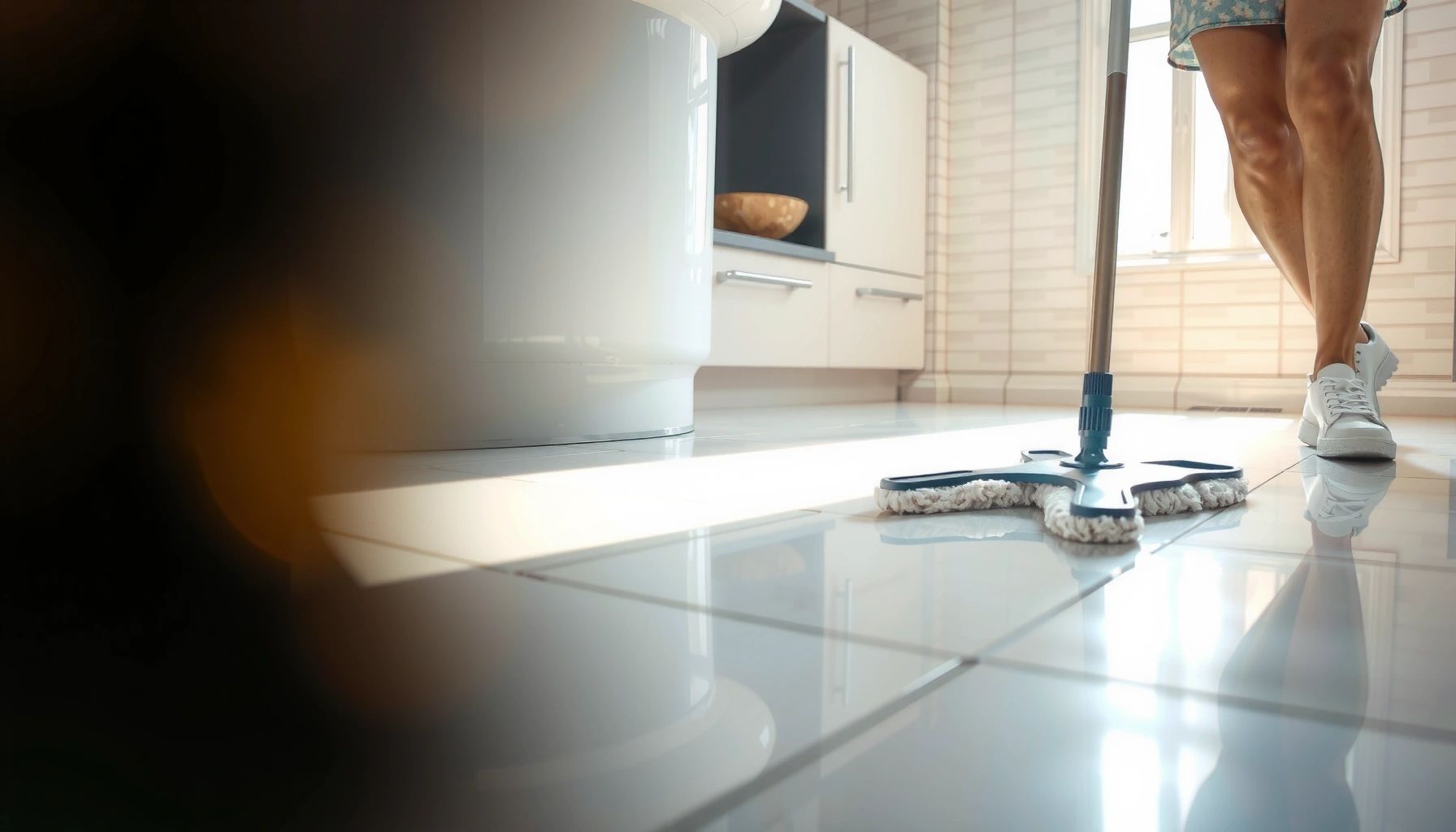
If you want sparkling tiles without sticky residue, mop in controlled sections with warm water and pH-neutral cleaner, then dry fully. This prevents re-depositing soil and reduces streaking caused by leftover cleaner in grout lines.
The best results come from a simple cleaning framework: remove soil (sweep), dissolve soil (pH-neutral cleaner), lift it (mop), and remove what’s left (rinse when needed). According to [ADD: source for rinse/film formation guidance from a floor-care or tile maintenance authority], residues left in porous grout can make floors look hazy again even after drying.
In my own household maintenance routines, I’ve learned that “more cleaner” is rarely better. Using slightly less product than you think you need—and wringing the mop well—usually delivers the clean look people expect, especially in bathrooms where grout seams trap residue.
Do this:
– Mop with warm water plus your pH-neutral cleaner, working in small sections; wring the mop well to avoid leaving residue.
– Rinse if your cleaner instructions recommend it (or if the floor feels slippery/sticky after drying), then let it fully dry.
Warm-water mopping with a pH-neutral cleaner is a repeatable baseline for many glazed ceramic and porcelain tiles.
Wringing the mop well reduces excess water that can seep into grout and under-edge areas, which can worsen discoloration over time.
Rinsing is important when a cleaner label instructs it or when the floor dries slippery, indicating residual surfactants or cleaner film.
Deep Clean Grout and Stubborn Stains
If grout looks dull, shows haze, or is starting to discolor, you usually need targeted grout chemistry and gentle brushing. For stains, pre-treat first so you’re lifting the specific soil type rather than scrubbing endlessly.
Deep cleaning is where “tile vs. grout” matters most. Grout can have surface staining, embedded grime, and—if it’s unsealed or aging—more porosity. That’s why a product designed for grout often uses ingredients that break down residue in the grout matrix, while still being safer than generic acids for many installations (but you must follow the label).
According to [ADD: source for grout cleaner dwell time/compatibility guidance], dwell time (how long the cleaner sits before scrubbing/rinsing) is one of the most important variables; skipping it can reduce effectiveness, while exceeding it can increase risk.
Do this:
– Treat grout haze or embedded grime by applying grout cleaner, scrubbing gently, and letting it dwell only as directed.
– For specific stains (like oil/grease), pre-treat the spot before scrubbing, then rinse well to remove loosened residue.
Pros/Cons of targeted grout cleaning (quick decision help)
– Pros
– Better results on haze and line discoloration than general floor cleaners
– Allows controlled dwell time as specified by the grout product
– Lower chance of over-wetting the entire floor
– Cons
– Requires extra steps: dwell → brush → rinse
– Not all grout cleaners are compatible with every grout and sealant system
– Higher effort if grout is heavily worn or cracked
Grout haze commonly responds to grout-focused cleaners and controlled dwell time, not routine mopping alone.
Oil and grease stains generally require a pre-treatment step so the soil can be emulsified before brushing.
What Can Go Wrong (and How to Avoid It)
If your tile looks worse after cleaning, the cause is usually chemical mismatch, too much product, or insufficient rinsing/drying. Avoiding acids/bleach on the wrong surfaces and using gentle agitation prevents the “clean but cloudy” effect.
Here are the most common failure modes professionals try to prevent:
– Using vinegar, bleach, or acidic cleaners can damage grout or etch certain tile finishes—especially if you’re not sure what you have.
– Over-scrubbing with stiff brushes or abrasive pads can dull tile surfaces and widen grout wear over time.
– Not rinsing after cleaner or not drying can leave streaks or a hazy film that makes floors look dirty again.
According to [ADD: source for tile finish etching concerns with acidic cleaners], acidic products can etch or dull certain finishes, particularly on surfaces that are more sensitive than glazed porcelain. And according to [ADD: source for steam-cleaning considerations with grout or sealants], steam cleaning may affect grout condition and adhesion where grout is compromised.
To keep this practical, use these decision rules:
– If you don’t know your tile type (glazed vs. unglazed; ceramic/porcelain vs. natural stone), start with pH-neutral and spot test.
– If the floor feels slippery after mopping, rinse—don’t “wait it out.”
– If grout is already weak or cracking, be gentler and consider professional assessment before aggressive chemical or steam methods.
Stiff brushes and abrasive pads can scuff tile glaze and speed grout wear, turning localized grime into long-term surface dullness.
A hazy look after mopping often indicates residue in grout lines or an overly concentrated cleaner solution rather than true soil.
Verdict: A Practical Routine (With the Best Results)
If you want consistently clean tile floors without damaging grout, start simple: sweep, pH-neutral wash, and targeted grout care when needed. This routine is safest for most common ceramic/porcelain tile and typical cementitious grout because it avoids unnecessary chemical extremes.
That said, there are downsides. Targeted grout cleaning takes more time than general mopping, and steam or bleach approaches can be higher risk when you’re uncertain about grout condition, sealers, or tile finish. If your grout is severely cracked, loose, or missing in sections, cleaning products can’t fix the underlying failure—regrouting or resealing may be necessary.
If you have older/fragile grout, unsealed natural stone, or manufacturer warnings against specific chemicals, skip steam or harsh acids. If your primary goal is the fastest “looks clean now” improvement, focus on grit removal first and use the correct cleaner for grout versus tile.
Routine pH-neutral mopping plus gentle grout-focused spot work is the lowest-risk method for maintaining appearance on most tile floors.
When grout discoloration persists, the correct solution is usually targeted cleaning with dwell time—not stronger acids on the entire floor.
Quick Checklist: How to Clean Tile Floors
– [ ] Sweep/vacuum to remove grit
– [ ] Mop with warm water + pH-neutral cleaner
– [ ] Work in small sections; don’t soak seams
– [ ] Rinse if recommended/if residue remains
– [ ] Use grout cleaner + soft brush for grout issues
– [ ] Scrub gently; rinse and fully dry
FAQ
Can I clean tile floors with vinegar?
Often it’s not recommended because vinegar is acidic and can harm grout or etch certain tile finishes. If you want to use vinegar, confirm what your tile/grout manufacturer says first; otherwise use a pH-neutral cleaner.
What’s the best way to clean grout without damaging it?
Use a grout-specific cleaner and a soft-to-medium brush, and follow the dwell time in the product instructions. Avoid abrasive pads and harsh acids unless the grout manufacturer explicitly allows them.
Is steam cleaning safe for tile floors?
Steam cleaning can work, but safety depends on your grout condition and tile type. If you have cracked, sealed improperly, or older grout, check the manufacturer guidance before steaming.
Why do my tile floors look streaky after mopping?
Common causes are too much cleaner, not rinsing when needed, leaving residue in grout lines, or mopping with an over-wet mop. Use warm water, wring well, and rinse if instructions call for it or if you notice slipperiness.
Sources
– [ADD: Source for manufacturer guidance on safe cleaners for your specific tile and grout type (e.g., porcelain/ceramic/natural stone and grout brand or installation guidelines).]
– [ADD: Source for pH-neutral floor cleaner guidance from the cleaner manufacturer or tile/grout maintenance instructions.]
– [ADD: Source for grout cleaning chemical compatibility (from grout manufacturer instructions).]
In short, clean tile floors don’t require harsh chemistry—they require the right sequence: remove grit, use warm water with a pH-neutral cleaner, and turn to grout-focused products only when grout haze or discoloration shows up. If you rinse when needed and let the floor dry fully, you reduce the two most common complaints—sticky residue and persistent dullness.
Frequently Asked Questions
What is the best way to clean tile floors without damaging grout?
Start by sweeping or vacuuming to remove grit that can scratch tile. Use a pH-neutral cleaner and warm water, then mop in small sections and rinse with clean water if the product requires it. For grout, use a soft brush and a grout-safe cleaner to avoid erosion, and never use harsh acids on natural stone tile.
How do you remove stubborn stains from ceramic or porcelain tile floors?
Identify the stain type first—grease, hard water spots, or mildew often need different approaches. For general staining, apply a tile-safe cleaner or a baking soda paste, let it sit briefly, then scrub with a non-abrasive pad and rinse thoroughly. For persistent spots, you may need a targeted cleaner (like a hard-water remover) and repeat carefully until the stain lifts.
How can you clean tile floors with grout that looks dirty or discolored?
Deep clean grout by scrubbing with a grout brush using a grout-specific cleaner or a mixture recommended for your grout type (sand-based vs. unsanded). Work the cleaner into the lines, let it dwell as directed, then scrub and rinse well to prevent residue buildup. After cleaning, consider sealing grout to make future tile floor cleaning faster and help resist stains.
Why do tile floors get streaky after mopping, and how do you prevent it?
Streaks usually come from using too much cleaner, using hard water, or not rinsing after mopping. Use a microfiber mop, follow the cleaner dilution instructions exactly, and use minimal product. If you notice buildup, do a clean-water rinse (or a vinegar-free rinse with the right product) and dry with a clean mop pad to reduce streaking.
Which cleaning products are safest for tile floors and grout?
For most ceramic and porcelain tile floors, choose pH-neutral, tile-safe cleaners to protect the finish and help maintain grout. Avoid abrasive powders and strong acids unless the label explicitly says they’re safe for your tile and grout, especially if you have marble, slate, or other natural stone. If you’re unsure, spot-test in a hidden area and always follow the manufacturer’s instructions for dilution and dwell time.
📅 Last Updated: October 08, 2026 | Topic: How to clean tile floors? | Content verified for accuracy and freshness.
References
- Google Scholar Google Scholar
https://scholar.google.com/scholar?q=how+to+clean+tile+floors - Google Scholar Google Scholar
https://scholar.google.com/scholar?q=how+to+clean+grout+and+remove+stains+from+tile - Google Scholar Google Scholar
https://scholar.google.com/scholar?q=disinfecting+ceramic+tile+floors+best+practices - https://www.cdc.gov/coronavirus/2019-ncov/community/disinfecting-building-facility.html
- https://www.who.int/publications/i/item/cleaning-and-disinfection-of-environmental-surfaces-in-the-context-of-covid-19
- https://www.epa.gov/influenza/guidance-cleaning-and-disinfecting
- Tile
https://en.wikipedia.org/wiki/Ceramic_tile - Grout
https://en.wikipedia.org/wiki/Grout - https://pubmed.ncbi.nlm.nih.gov/?term=cleaning+and+disinfection+of+hard+surfaces
- https://www.sciencedirect.com/search?qs=cleaning%20ceramic%20tile%20floor&show=25