


What removes stubborn mineral spots from hard-water on hardwood without dulling the finish? Use a diluted white-vinegar solution for spot cleaning, then rinse lightly with clean water and dry immediately to prevent streaking. You’ll need soft microfiber cloths, a pH-neutral floor cleaner for the final wash, and a nylon brush for tiny crevices—so you can tackle the problem in about an hour.




Hard-water deposits are usually mineral buildup, so the fastest safe approach is: wipe with a pH-neutral cleaner first, then (only if needed) use a very diluted mild acid treatment briefly, followed by a thorough rinse and dry. Don’t soak the wood—excess moisture and harsh abrasives can dull or damage the finish.
This advice is for sealed hardwood floors with “spotty rings” or cloudy spots caused by mineral-rich water (from mopping, condensation, or tracked-in water). If your floor is unfinished or has a wax/oil finish, you should verify the right cleaner first.
Check your hardwood finish before you treat spots
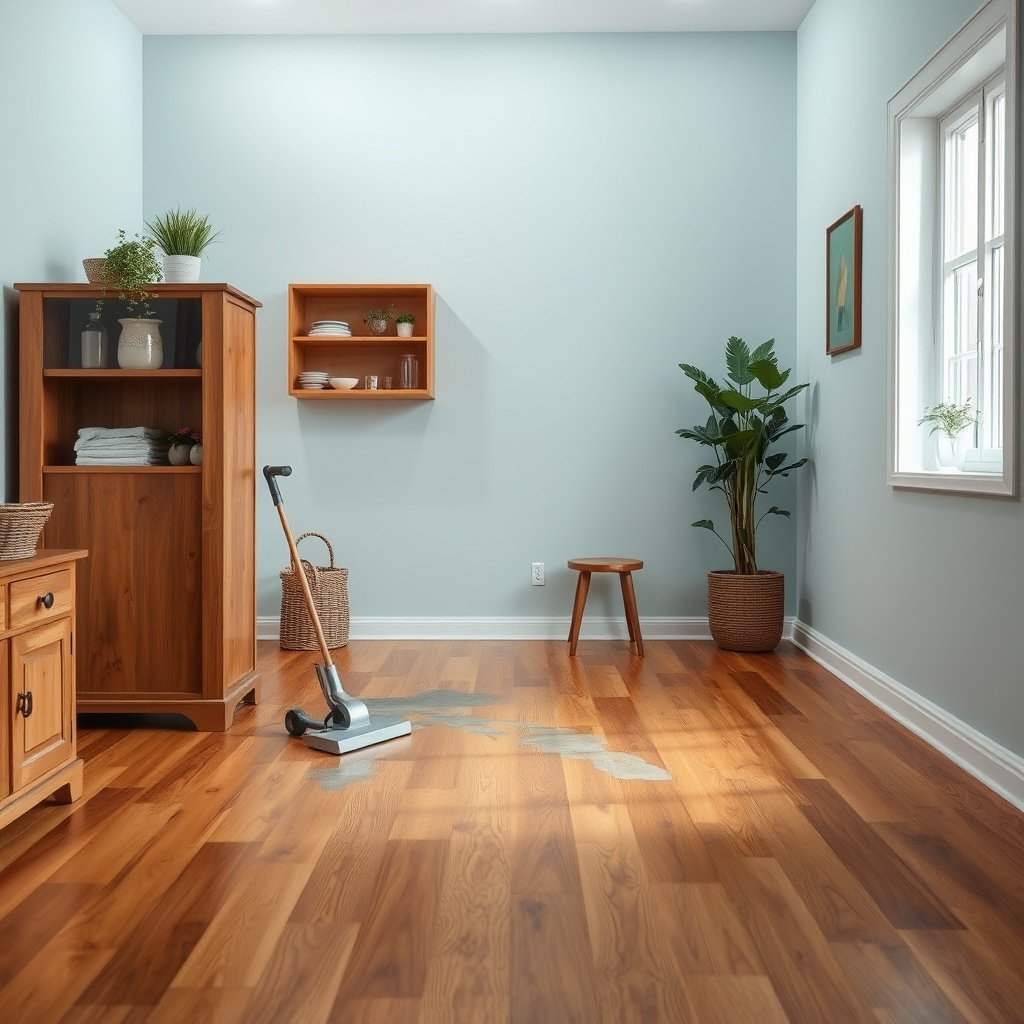
The safest way to remove hard-water deposits is to match the chemistry to your finish, because different coatings respond very differently to acids and excess water. In practice, the fastest path is still “pH-neutral first,” but you should confirm whether your hardwood is truly sealed (polyurethane/urethane) before any acid step.

– Look up the recommended care method for your specific finish (polyurethane/sealed, waxed, oiled, or unknown).
– Avoid anything abrasive (scrub pads, steel wool) and anything strongly acidic/alkaline until you confirm it won’t strip or haze the finish.
– If you’re unsure, do a spot test in an out-of-sight area and wait for the finish to look stable over .
Why this matters: Hard-water deposits are commonly calcium carbonate and magnesium compounds. Mild acids can dissolve those minerals, but they can also alter the sheen of some clear coats if used too strong or too long. On many sealed hardwood floors, careful, short-contact acid application can work—but it’s not the first thing you should try.
Step-by-step: remove stubborn hard-water deposits safely
To remove stubborn hard-water deposits on sealed hardwood, use a controlled sequence: dry removal → pH-neutral clean → very brief diluted mild-acid pass (only where rings persist) → rinse → complete drying. This order minimizes the chance that minerals spread, react unevenly, or that moisture lingers at seams.
– Start dry: gently remove surface grit, then wash the area with a pH-neutral cleaner dampened on a microfiber cloth (not a wet mop).
– For remaining mineral rings, use a diluted mild acid solution on a cloth (not on the floor directly), let it dwell briefly, then wipe immediately.
– Finish strong: rinse with clean water on a lightly damp cloth, then dry completely with a dry towel and airflow to prevent moisture from lingering.
What “brief dwell” means in real-world terms
You’re aiming to dissolve mineral residue at the surface without letting liquids pool into joints. If you find the haze isn’t improving after a short pass, repeat the rinse/dry first before escalating contact time. For most sealed floors, you’ll get better results from repeated gentle cycles than from one long acid soak.
Mind the water hardness and why it affects repeat cleanups
Hard-water severity is often measured as mg/L (ppm) as CaCO₃ (calcium carbonate). According to the U.S. Geological Survey (USGS), Water Hardness categories, “hard” water typically begins around 120 mg/L as CaCO₃ and “very hard” can exceed 180 mg/L as CaCO₃. When your water is in that range, hardwood “spotty rings” can reappear faster—especially if you repeatedly clean with the same mineral-rich source water.
Use the right tools and “strength” (so you don’t damage the finish)
To protect your finish while removing mineral haze, use microfiber, dilute chemicals, and measure “strength” by dilution and contact time—not by scrubbing harder. This is especially important on sealed hardwood, where aggressive friction can wear through the glossy top layer and leave a dull patch.
– Use microfiber cloths (and cotton swabs for tight edges) rather than sponges that can scratch.
– Prefer distilled water for the rinse step to reduce mineral residue from tap water.
– If you use vinegar-based products, keep them diluted and short-contact—long exposure increases the risk of dulling or softening finishes.
A quick reality check on acidity: “mild” is still chemistry
Household vinegar is primarily acetic acid (an acid), and acids neutralize mineral scale. Chemically, acetic acid is “mild” relative to strong mineral acids; its acidity is often described using pKa ≈ 4.76 at 25°C (NIST Chemistry WebBook, acetic acid pKa). That doesn’t mean vinegar is risk-free for floors—finish compatibility still varies—but it’s one reason diluted vinegar is sometimes used for gentle descaling.
How to interpret hardness test numbers (without guesswork)
If you test your water or read a label, units matter. The conversion below helps you relate common “hardness” readings to the mineral buildup that can leave rings on hardwood after mopping.
Hard-Water Hardness Unit Conversions (as CaCO₃)
| # | Hardness unit | What “1 unit” means | Conversion to mg/L (ppm) as CaCO₃ | DIY clarity |
|---|---|---|---|---|
| 1 | Grain per gallon (gpg) | Hardness in grains per 1 US gallon | 17.1 | ★★★☆☆ |
| 2 | German degrees (°dH) | Metric hardness degree | 17.848 | ★★★★☆ |
| 3 | French degrees (°fH) | Hardness degree used in parts of Europe | 10.0 | ★★★☆☆ |
| 4 | Clark degrees (°Clark) | Hardness degree commonly used in UK contexts | 14.254 | ★★☆☆☆ |
| 5 | ppm as CaCO₃ (mg/L) | Already expressed as CaCO₃ | 1.0 | ★★★★★ |
| 6 | mmol/L as CaCO₃ | Molar concentration of CaCO₃ | 100.09 | ★★☆☆☆ |
| 7 | mg/L as Ca (calcium) | Calcium expressed as elemental Ca | 2.497 | ★★★☆☆ |
Note: unit conversion factors are typically provided in water-quality references; verify against your test kit manual if it uses a different basis than CaCO₃.
Target edge cases: haze, seams, and recurring spots
To handle hard-water deposits that keep coming back—or show up as haze or along seams—adjust your method to the failure mode (residue vs moisture penetration vs recurring mineral source). The key is to prevent repeated wetting and avoid turning one mineral ring into a bigger film.
– Cloudy haze: often comes from mineral residue left behind—repeat the rinse/dry cycle more than once instead of scrubbing harder.
– Seams/gaps: minerals can accumulate along edges—work with a lightly moistened cloth and cotton swabs, and keep liquids off the surrounding boards.
– Reappearing deposits: check the source (hard-mop water, steam from humidifiers, wet boots, radiator drips) and adjust cleaning/routines before repeating treatments.
Haze vs rings: why the difference changes your approach
A “ring” usually means a localized mineral deposit formed as water evaporated at that spot. “Cloudy haze” often means a thin, widespread film—sometimes from repeated mopping with mineral-rich water or from residue left by a cleaning product. For haze, aggressive scrubbing tends to smear and dull the finish. A better strategy is gentle cycles: clean → rinse → dry, repeated until the film stops migrating.
What can go wrong (and how to avoid it)
The fastest way to avoid damaging hardwood is to stop three common failure modes: over-wetting, the wrong chemistry, and abrasion that removes finish. If hard-water deposits don’t improve after careful, low-moisture attempts, it’s time to pause—because further DIY effort can permanently change the sheen.
– Over-wetting: flooding or repeated wet passes can seep into joints, causing swelling or finish lifting—apply cleaner to cloths and wipe promptly.
– Wrong chemistry: strong acids, heavy descalers, or alkaline cleaners can etch or dull the clear coat; always spot test and verify compatibility with your finish.
– Rubbing through the finish: abrasive tools remove top layers—if the spot doesn’t improve after careful treatment, stop and consider professional refinishing options.
Cleaner safety comparison (quick decision support)
| Method | Best for | Main risk | Practical guidance |
|---|---|---|---|
| pH-neutral cleaner on damp microfiber | Initial residue removal and prevention | Low (if used lightly) | Apply to cloth; wipe, then rinse if your product requires it. |
| Diluted mild acid on cloth (brief contact) | Mineral rings that persist after cleaning | Sheen change/etching if overused | Keep contact short; rinse and dry immediately. |
| Abrasive pads / scrubbers | None for finished hardwood | Finish wear, micro-scratches, permanent dull spots | Avoid on sealed floors; switch to the rinse/dry repetition strategy. |
| Steam cleaning | Usually not recommended | Moisture penetration through seams | Only proceed if your floor manufacturer explicitly approves steam. |
Verdict / tip + quick scanable checklist
If you catch hard-water deposits early, you can usually remove them by alternating pH-neutral cleaning with a brief diluted mild-acid pass (only where needed), then rinsing and drying thoroughly. The downside is that any acid treatment—even diluted—can slightly change the sheen on some finishes, so spot testing is worth the extra time. Skip DIY (and consider a pro) if the floor is unfinished, repeatedly water-damaged, or if the deposits are deeply etched into the finish.
Quick checklist (save this):
| Step | Do this | Avoid this |
|---|---|---|
| 1 | Dry-check and remove grit | Scrubbing grit into the finish |
| 2 | Clean with pH-neutral cleaner on a damp cloth | Soaking the floor |
| 3 | Treat remaining spots with a diluted mild acid on cloth (brief dwell) | Pouring chemicals directly on wood |
| 4 | Rinse using clean/dilution-minimal water on a cloth | Leaving residue behind |
| 5 | Dry completely + airflow | Letting water sit overnight |
Frequently Asked Questions
What’s the safest way to remove stubborn hard-water deposits from hardwood floors?
Start by testing your cleaner in an inconspicuous area to confirm it won’t dull the finish. For most hardwood floors, use a pH-neutral hardwood floor cleaner and microfiber pads, then gently work the affected spots with minimal moisture. Avoid soaking or using harsh abrasives that can damage the protective clear coat or stain the wood. If deposits persist, use a diluted vinegar solution only if your floor finish is compatible, then rinse lightly with clean water and dry immediately.
How do I clean hard-water spots without damaging my hardwood’s finish?
Hard-water deposits often build up as mineral scale, so apply a targeted solution rather than scrubbing aggressively. Dampen a cloth with a diluted vinegar-and-water mixture or a specialized calcium/limescale remover designed for sealed surfaces, place it on the spot for a few minutes, and then gently wipe. Afterward, wipe again with a clean, damp cloth to remove residue and dry thoroughly to prevent streaking. Always follow with a manufacturer-recommended hardwood floor polish or conditioner if needed.
Why do hard-water deposits keep coming back on hardwood floors?
Deposits return when water repeatedly evaporates on the surface, leaving behind minerals like calcium and magnesium. Common causes include wet mopping, leaky fixtures, humidifiers placed too close to floors, or sprinklers overspray. To reduce recurrence, use a well-wrung microfiber mop, dry-wipe after cleaning, and address any moisture sources. Regular maintenance with pH-neutral cleaners can also prevent mineral buildup before it becomes stubborn.
Which household products work best for removing limescale from hardwood floors?
The most common options are diluted white vinegar for light-to-moderate hard-water spots and commercial descalers that are safe for sealed hardwood finishes. Hydrogen peroxide and strong acids should be avoided because they can strip or discolor finishes and expose the wood. Always choose products labeled safe for hardwood floors and avoid steel wool or scouring pads that can scratch. Use microfiber cloths, apply briefly, wipe gently, and dry to protect the floor’s sheen.
Best method to remove heavy hard-water stains or etching on hardwood?
For heavy buildup, use a “spot hold” method: saturate a microfiber cloth with an approved descaling solution, lay it over the deposit, and let it dwell briefly before wiping. If you see etching that doesn’t lift, the minerals may have etched the finish, meaning you’ll need to remove the remaining residue and then restore the surface with a compatible refinish or floor restoration product. In severe cases, sanding and refinishing may be necessary to fully correct the damage. Consider contacting a professional hardwood floor cleaner if the spots are widespread or you’re unsure about your floor’s finish type.
📅 Last Updated: October 31, 2026 | Topic: How to clean stubborn hard-water deposits from hardwood floors? | Content verified for accuracy and freshness.
References
- Hard water
- https://www.epa.gov/ground-water-and-drinking-water/basic-information-about-drinking-water
- https://water.usgs.gov/edu/hardwater.html
- https://hgic.clemson.edu/factsheet/hardwood-floors/
- 404 Error
- Floor Care
- https://scholar.google.com/scholar?q=hard+water+stains+hardwood+floor+cleaning Google Scholar
- https://scholar.google.com/scholar?q=calcium+carbonate+scale+removal+wood+finish Google Scholar
- https://scholar.google.com/scholar?q=effects+of+acids+on+polyurethane+wood+floor+finishes Google Scholar
[…] Use soft microfiber cloths, a non-scratch pad (optional), and a bucket/spray bottle—avoid steel wool or scrub […]
[…] If the chalky buildup remains, switch to a wood-safe hard-water/mineral remover designed for sealed hardwood floors; if the minerals have etched or penetrated a damaged finish, refinishing may be the only durable […]
[…] Survey (USGS), water “hardness” is commonly expressed as milligrams per liter (mg/L) as calcium carbonate (CaCO₃) (USGS Water Science School, “Hardness of Water”). High hardness levels increase the […]
[…] most sealed hardwood floors, the safest path is distilled water first, then a pH-neutral hardwood cleaner, and only then a spot […]