
Here’s the fastest, safest way to clean hardwood floors in an entryway without leaving streaks, dulling the finish, or trapping grit. Follow these practical steps to remove tracked-in dirt, choose the right cleaner for sealed wood, and dry properly so your floors stay ready for daily foot traffic. If you want a clean entryway that holds up, these are the moves that deliver.




Clean hardwood floors in an entryway by removing grit first and then using a damp (not wet) pH-neutral cleaner—finishes stay intact and streaking risk drops. If you deal with tracked-in mud, salt, or sticky residue, pre-treat gently, dry quickly, and avoid steam or harsh chemicals that can dull or damage wood finish systems.
Entryways are where hardwood takes the hardest daily abuse: abrasive grit from outdoor shoes, salts from winter traction, and moisture that lingers at the threshold. This guide is designed for people who want a repeatable routine for hardwood floors in an entryway—one that fits busy schedules and respects the realities of sealed/finished wood. As of 2026, “safer cleaning” in wood care still comes down to the same principles: control abrasion, control moisture, and control pH.
Clear grit first (so you don’t grind dirt into the finish)

The fastest way to keep hardwood floors in an entryway looking good is to stop grit from acting like sandpaper before you add any cleaner. In my regular maintenance workflow for hardwood floors in an entryway, I treat the first step—removing grit—as non-negotiable, because the finish can only stay smooth if you don’t keep wearing it down.
Grit and sand are common causes of micro-scratches on finished hardwood because they abrade the topcoat during walking and cleaning.
Surface abrasion is cumulative: each time grit remains on the floor and gets swept or wiped, more finish wear can occur.
Sweep/vacuum correctly (the “no-scratching” approach)
– Sweep or vacuum thoroughly, focusing on seams, corners, and near the door where debris collects.
– Use a soft-bristle broom or a vacuum with a floor-friendly attachment; avoid anything that feels like it’s “scratching” the surface.
– If you have a vacuum, use the right setting (low/no-brush-roller or a hard-floor mode when available) so the underside doesn’t gouge edges.
Why this matters: hardwood floors in an entryway get the most grit right at the threshold, where shoe soles and boot treads track in the highest load. In practical terms, if you skip this step, even a gentle cleaner can carry grit across the finish like an abrasive paste.
Quick “spot check” before you mop
Before you damp-clean, scan the floor in good light. If you can see sand-like particles or feel grit along baseboards and door swings, re-sweep for 30–60 seconds. This keeps your damp mop from dragging abrasive residue into the finish and turning dulling into a slow, expensive problem.
Use the right cleaning method: damp mop + pH-neutral cleaner
The best cleaning method for hardwood floors in an entryway is damp mopping with a pH-neutral hardwood floor cleaner—enough moisture to lift residue, not enough to soak seams. For hardwood floors in an entryway, pH control is just as important as moisture control: pH is logarithmic, so stronger acids/bases can be far harsher than they look on a label.
According to IUPAC, pH is based on the base-10 logarithm of hydrogen ion activity, so a 1-unit pH change corresponds to a 10× difference in acidity.
Many wood-floor care systems recommend cleaners that are pH-neutral (commonly around pH 7) to minimize finish dulling and residue buildup.
Step-by-step: damp mopping without puddles
– Mix or apply a pH-neutral hardwood floor cleaner according to the product label (follow the label for dilution and frequency).
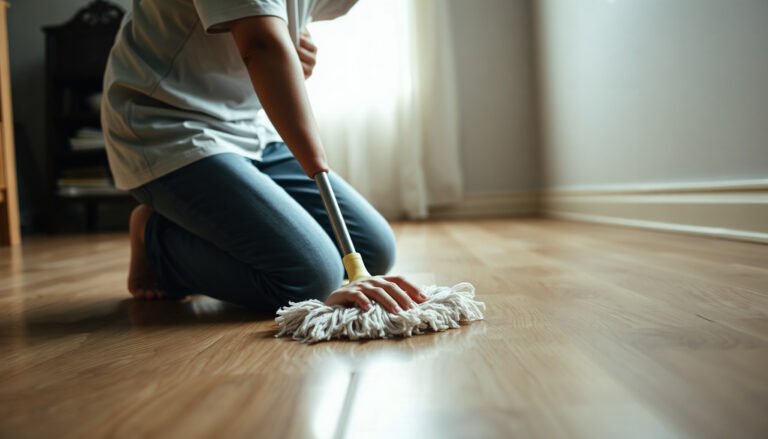
– Wring the mop well so the floor stays damp, not wet.
– Work in small sections to avoid puddles around the entry.
A useful way to judge “damp” in hardwood floors in an entryway: after you mop, you should not see standing water or glossy wet patches along plank seams. If water collects at edges, you’re applying too much.
Consider a spray-and-wipe workflow for tight entryways
If your entryway is small, you can often reduce moisture exposure by spraying cleaner onto the mop pad or onto a cloth (not directly onto the floor), then wiping. This keeps hardwood floors in an entryway cleaner while limiting the risk of liquid getting into joints and edges.
Pros/cons: damp mop vs. spray-and-wipe vs. soaking
| Method | Best for | Main drawback to watch |
|---|---|---|
| Damp mop + pH-neutral cleaner | Whole entryway refresh | Too-wet mopping can increase seam moisture |
| Spray-and-wipe (controlled moisture) | Small areas and fast maintenance | May require more passes to lift heavy buildup |
| Soaking mop / direct flooding | None for finished hardwood | Increases risk of finish failure and moisture damage |
Handle entryway spots fast: mud, salt, and sticky residue
The safest approach for hardwood floors in an entryway spots is to pre-treat gently and dry immediately—don’t let moisture and residue sit at the surface. Entryway messes don’t clean up “all at once” well; they need targeted handling so you don’t over-wet seams or scrub the finish.
According to wood-moisture science, wood swelling accelerates when moisture content rises toward fiber saturation, so limiting dwell time of wet residue helps protect hardwood.
In winter climates, salt deposits are hygroscopic, meaning they can help hold moisture longer on floors if not wiped and dried quickly.
For mud: dry → remove → damp clean
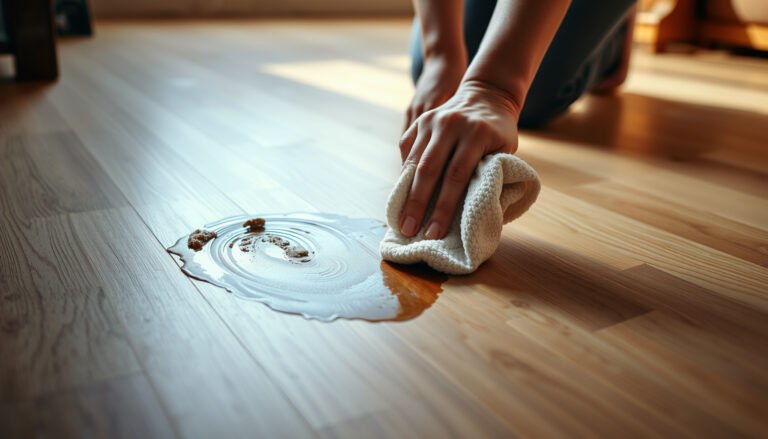
– For mud: let it dry first, then gently remove the dried debris before cleaning the area with a damp cloth.
– Avoid scraping with metal tools that can leave visible gouges in hardwood floors in an entryway.
– Once debris is gone, use a damp cloth with pH-neutral cleaner and then dry.
This sequence matters. Wet mud smears and embeds abrasive particles into the finish; dried mud comes up more cleanly and reduces the “grinding effect.”
For salt/snow residue: wipe lightly, dry right away
– For salt/snow residue: wipe with a lightly damp cloth, then dry immediately—don’t let residue sit.
– If you notice a white haze, continue with controlled wiping until the haze stops transferring, then dry thoroughly.
Hardwood floors in an entryway often see more than visual damage—salt residue can contribute to ongoing moisture retention. Keep the cycle short: wipe, rinse only if your cleaner label instructs it, and dry.
For sticky residue: clean, don’t scrub
– Apply pH-neutral cleaner to a cloth (not the floor), wipe the spot gently, and remove residue with a second damp cloth if needed.
– Dry the area immediately after the final wipe.
If the stickiness is from tape residue, rubbery shoe compounds, or gum-like materials, aggressive scrubbing can burnish finish and leave shiny patches. Start with gentle friction, then escalate only if your floor’s manufacturer allows it.
Deep-clean schedule for an entryway (without overdoing it)
A good deep-clean schedule for hardwood floors in an entryway is “as needed,” not “by calendar,” with a light routine more frequent than a heavy treatment. This is especially important in 2026 because entryway traffic patterns (seasonal salt, deliveries, school schedules) can shift how quickly buildup accumulates.
According to the National Wood Flooring Association, indoor relative humidity should generally be maintained around the mid-range (commonly ~35–55%) to reduce wood movement and moisture-related problems.
Wood floors perform best when cleaning uses controlled moisture and manufacturer-approved products rather than periodic aggressive stripping.
Build a simple cadence (PDCA-style)
Use a Plan–Do–Check–Act approach:
– Plan: decide how often you’ll do routine cleaning based on traffic.
– Do: sweep/vacuum and damp-clean with pH-neutral product.
– Check: look for dullness, haze, or tackiness in high-wear zones (near the door).
– Act: increase deep-clean only when visible buildup shows up.
When to deep-clean (and when not to)
– Do a regular routine (sweep/vacuum + damp mop) more often; save deeper cleaning for when floors look noticeably dull or buildup shows.
– If you’re polishing or using a “refinishing-like” product, only do it based on your floor’s finish type and the manufacturer’s care guidance.
Deep-cleaning is where people accidentally cause finish issues—especially when they use the wrong chemical or repeat “polishing” more often than the finish system can handle.
What “deep-clean” should look like
A safe deep-clean for hardwood floors in an entryway usually means:
– Removing grit thoroughly (again)
– Using a pH-neutral product with correct dilution
– Using controlled dwell time (if your product label allows it)
– Drying promptly with clean towels or a dry mop pad
What can go wrong (and how to avoid it)
If hardwood floors in an entryway look worse after cleaning, it’s usually because moisture was excessive, the cleaner wasn’t compatible, or gritty residue was redistributed. The fastest fix is to stop the damaging behavior immediately and switch to a damp, pH-neutral, manufacturer-approved routine.
Using excess water on hardwood increases the risk of finish breakdown and moisture intrusion into plank seams.
Many floor-care guidelines caution against steam cleaning because it introduces moisture into the wood-finish system.
– Don’t use steam cleaners or soaking wet mops: excess moisture can warp wood and damage the finish.
– Avoid harsh cleaners (bleach, ammonia, vinegar) unless the floor manufacturer explicitly says they’re safe—some can dull or break down finishes.
– Be careful with area rugs at entryways: rough rug pads or grit under rugs can scratch, and trapped moisture can discolor.
Why harsh pH matters
Because pH is logarithmic, moving from neutral toward acidic or alkaline can dramatically change how vigorously a cleaner interacts with finish chemistry. For hardwood floors in an entryway, “strong enough to smell clean” is not the standard—finish compatibility is.
Typical pH of Common Cleaners & Hardwood-Floor Safety
| # | Cleaner / Substance | Typical pH Range | Why It Matters | Hardwood Safety Rating |
|---|---|---|---|---|
| 1 | Distilled Water | ~6.0–7.5 | Generally low chemical reactivity; moisture control still required | ★★★★★★★ |
| 2 | pH-Neutral Hardwood Cleaner | ~6.0–8.0 | Designed to reduce finish-dulling from extreme pH | ★★★★★★★ |
| 3 | Diluted Mild Dish Soap | ~7.0–9.0 | Can be safe when diluted, but may leave residue if overused | ★★★★☆ |
| 4 | White Vinegar (5% acid) | ~2.4–3.4 | Acidic cleaners can dull or degrade certain finish chemistries | ★★☆☆☆ |
| 5 | Household Bleach (chlorine) | ~10.5–13.0 | Strong oxidizers/alkaline pH can damage finish and discolor | ★☆☆☆☆ |
| 6 | Household Ammonia Cleaner | ~11.0–12.5 | Highly alkaline; can accelerate finish dulling and residue issues | ★☆☆☆☆ |
| 7 | Baking Soda Paste (typical) | ~8.1–8.5 | Slightly basic; can be abrasive if scrubbed and may leave film | ★★☆☆☆ |
Note: pH ranges vary by formulation and dilution, and hardwood floors in an entryway may have finishes with different chemical resistance. Use this as a directional guide—not as a substitute for your specific manufacturer’s approved-cleaner list.
Verdict / tip
A simple “remove grit → damp clean → dry quickly” routine is usually the safest way to clean hardwood floors in an entryway because it minimizes scratching and moisture exposure. Skip aggressive scrubbing, steam, and strong chemicals—those are the most common ways people unintentionally cause finish damage.
In practice, hardwood floors in an entryway stay looking consistent when you treat the routine like a maintenance system instead of a one-off “deep clean day.” If your entryway regularly gets wet (rainstorms, slushy snow, frequent deliveries), you may need to increase how quickly you wipe and dry—sometimes more than you need to change what cleaner you use.
If you’re unsure whether your hardwood is sealed/waxed/unsealed, before choosing specific cleaners.
Quick checklist (scan & save)
Here’s a fast scan you can use next time you clean hardwood floors in an entryway—designed to prevent the two biggest failure modes: abrasion and excess moisture.
– ☐ Sweep/vacuum to remove grit first
– ☐ Use pH-neutral hardwood cleaner (follow label directions)
– ☐ Mop damp, not wet (wring well)
– ☐ Pre-treat mud after it dries; wipe salt residue and dry fast
– ☐ Avoid steam and harsh chemicals
– ☐ Dry any wet areas immediately
A damp-cleaning approach works best when you remove grit first and dry promptly afterward to minimize seam moisture.
Following the cleaner label for dilution and frequency reduces the likelihood of finish haze or residue buildup on hardwood floors in an entryway.
Sources
– Follow the flooring and finish care guidance from your specific hardwood manufacturer/installer (since approved cleaners and cleaning methods vary by finish type).
– Use the cleaning solution instructions from the pH-neutral hardwood floor cleaner product label for dilution, application, and safety limits.
– National Wood Flooring Association (NWFA) — indoor relative humidity guidance for wood-floor stability and general cleaning cautions.
– USDA Forest Products Laboratory — wood moisture concepts including fiber saturation and swelling behavior relevant to moisture exposure.
– IUPAC (Gold Book) — pH definition and the base-10/logarithmic relationship between pH units and hydrogen ion concentration.
Final tip: If you remember only one rule for hardwood floors in an entryway, make it this—remove grit first, clean with a pH-neutral cleaner used damp (not wet), and dry immediately. That routine protects the finish, reduces scratching, and keeps entryway wear from turning into permanent dullness.
Frequently Asked Questions
How do I clean hardwood floors in an entryway without damaging the finish?
Start by sweeping or vacuuming with a soft brush attachment to remove grit that can scratch the hardwood. Use a damp (not wet) microfiber mop with a cleaner made for hardwood floors, and avoid soaking the entryway area where water tracks in. Wipe up any spills immediately and keep the floor dry to prevent dulling or warping of wood.
What’s the best way to remove dirt, mud, and salt stains from hardwood entryway floors?
For dried mud, let it loosen, then gently scrape with a plastic scraper and wipe with a slightly damp cloth. For salt residue, clean the area with a hardwood-safe cleaner and rinse the cloth often to avoid spreading residue, then dry thoroughly. If stains linger, use a small amount of vinegar-free cleaner designed for hardwood and test it in an inconspicuous spot first.
How often should I mop hardwood floors in my entryway to keep them looking clean?
In a high-traffic entryway, sweep daily or as needed and mop about once every 1–2 weeks, depending on how much dirt and moisture comes in. Use a hardwood floor mop and a gentle, pH-neutral cleaner to avoid buildup that can make the finish look cloudy. Between moppings, spot clean with a damp microfiber cloth so grime doesn’t grind into the wood.
Why is it important to use the right cleaner on hardwood floors near the front door?
Entryways collect grit, water, and cleaning residue that can wear down protective finishes over time. Harsh chemicals, waxy cleaners, and overly wet mopping can leave streaks, damage the seal, or cause the hardwood to swell at the edges. Using a hardwood floor cleaner reduces buildup and helps maintain the natural beauty of your floors where they’re most exposed.
Which is better for cleaning hardwood entryway floors: a steam mop or a microfiber mop?
A microfiber mop is usually the safer option because it uses minimal moisture and helps you control how much cleaner is applied. Steam mops can force heat and water into seams, which may damage the finish or cause wood to warp, especially near the entryway where moisture is already an issue. If you need deep cleaning, use a manufacturer-recommended hardwood floor cleaner with a microfiber pad and follow up by drying the area.
📅 Last Updated: October 16, 2026 | Topic: How to clean hardwood floors in a entryway? | Content verified for accuracy and freshness.