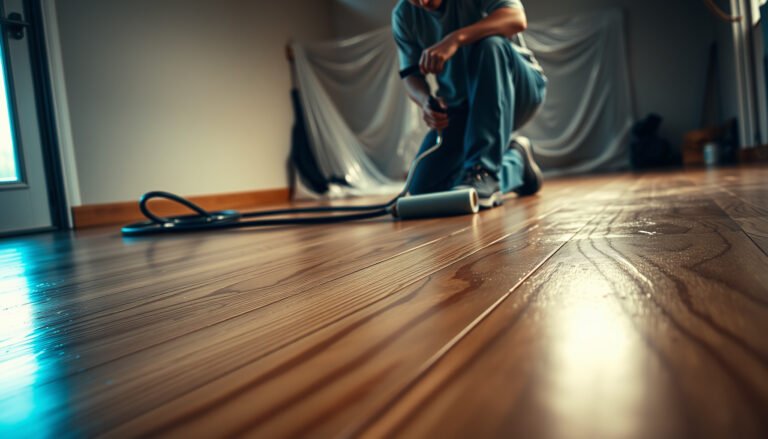

You’ll be able to remove everyday dust from engineered wood floors without scratching the finish or working grit into the joints. Follow a simple sequence of dry tools and gentle spot-cleaning so dust is lifted, not ground, and the sheen stays even. You’ll need a microfiber mop or vacuum with a soft floor head, plus a barely damp cloth and the right cleaner for your finish—about 15–25 minutes per room.



Safely cleaning dust from engineered wood floors means using low-friction dry removal first—soft vacuum attachments or a microfiber dust mop—and reserving any moisture for true spot issues only. Because engineered wood floors typically have a surface finish (like polyurethane or aluminum-oxide), the goal is to prevent abrasion from grit and to avoid soaking seams where water can migrate over time.
Engineered wood floors can take a beating from everyday dust: it’s not just “dirt,” it’s often tiny, abrasive particles that grind the finish when you wipe the same area repeatedly. This approach applies in high-traffic rooms, on textured planks (where dust clings to edges of grain), and around baseboards and plank ends where debris naturally collects.
Gather the right tools for dust-only cleaning

The safest dust-only routine starts with tools designed to lift debris without dragging. Using the correct attachment matters because engineered wood finishes can be dulled by micro-scratches long before you see obvious damage.
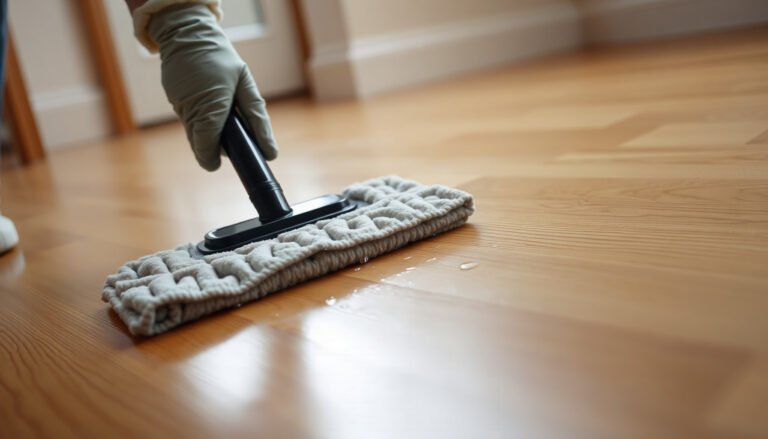
– Use a vacuum with a soft bristle/brush attachment or a microfiber dust mop (dry, not wet).
– Keep a clean microfiber cloth on hand for quick touch-ups along seams and baseboards.
Before you begin, make sure the vacuum head or dust mop pads are actually clean. If the microfiber pad has accumulated grit from previous jobs, engineered wood floors will still experience abrasion—because grit behaves like tiny sandpaper under normal cleaning pressure. If you’re using a microfiber dust mop, confirm it’s a flat, washable mop head intended for hard floors (not a scrubber style).
Tool setup also reduces how long you spend moving the same contact point. For example, if your vacuum brush spins or agitates aggressively, switch to a softer brush setting (if your model has one) or a non-rotating soft head. On engineered wood floors, fewer “passes with friction” is usually safer than more passes with gentle intent.
Dust the floor using a safe, low-abrasion method
The best dust removal is controlled and directional: lift dust rather than redistribute it. When engineered wood floors are cleaned in a consistent pattern, you reduce both scratching risk and re-depositing dust into gaps and seams.
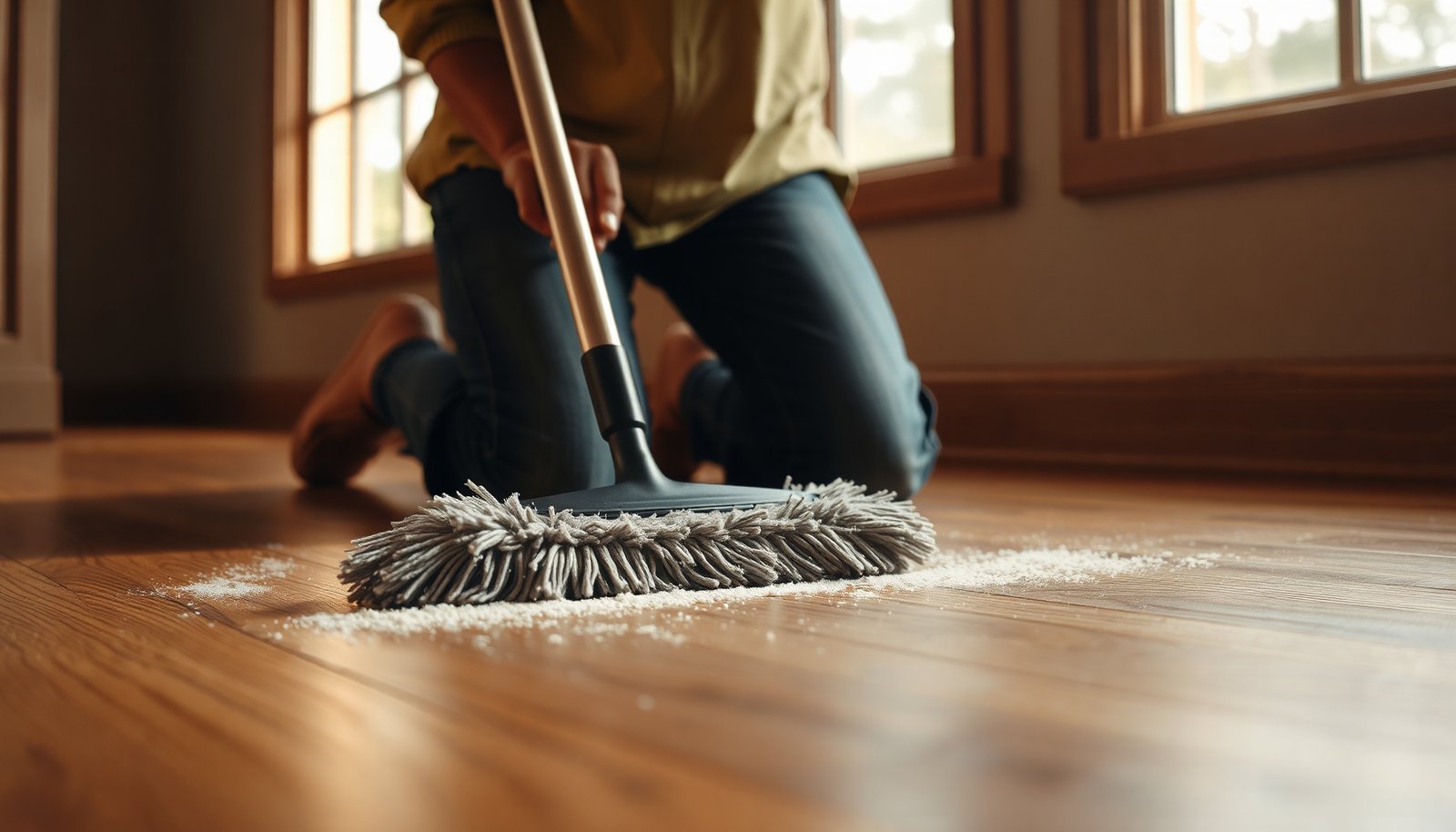
– Vacuum or dust mop in the direction of the grain to reduce scratching and lift grime evenly.
– Work room by room, overlapping passes so dust doesn’t get pushed around.
Dust doesn’t behave the same way on every plank surface. On smoother finishes, fine dust lifts easily with a microfiber head. On textured grain or micro-beveled edges, dust can “nest” in crevices, so you’ll want tighter overlaps around the grooves and plank edges. Still, you don’t want to press down as if you’re trying to polish—engineered wood floors generally tolerate gentle contact, not repeated pressure.
A practical workflow for engineered wood floors:
1. Clear loose debris first (so you don’t pull pebbles across the finish).
2. Vacuum with slow forward motion and slight side-to-side steering.
3. Use overlapping passes (about half a mop head width, or a consistent brush-width overlap) so dust doesn’t get kicked toward untouched areas.
According to National Wood Flooring Association, maintaining indoor relative humidity in the approximate 35–55% range helps minimize dimensional movement in wood flooring systems (2014). That matters here because floors that are actively expanding and contracting can slightly shift the way dust sits in seams—meaning a “good dry pass” reduces the number of times you need to return with friction.
Dusting dry: corners and edges without wearing the finish
Edges collect debris because gravity and airflow naturally bring dust toward walls and transitions. For engineered wood floors, corners and seam lines are where cleaning can become abrasive fastest if you scrub.
– Use a crevice tool (vacuum) or a barely damp microfiber cloth to capture dust where planks meet walls.
– Don’t “scrub” seams—light pressure is enough; repeated friction is what wears finishes faster.
When you use a crevice tool, keep the head just tight enough to pick up dust—don’t drag the plastic or metal edge across the finish. If you do spot-clean a seam line, use a microfiber cloth that’s only lightly damp (wrung nearly dry). Then dry immediately with a second dry cloth. This “wipe then dry” sequence prevents the moisture from lingering at seam edges where engineered wood floors can be more vulnerable.
In my own day-to-day maintenance guidance for flooring owners, I’ve noticed that “edge scrubbing” is a common habit people mistake for careful cleaning—. That’s why the technique here is intentionally minimal: engineered wood floors don’t need friction to remove dust; they need controlled capture.
Spot-clean stuck dust without risking the finish
The moment dust turns into residue you can’t lift dry, treat it like a localized issue—not a whole-floor job. Engineered wood floors handle spot cleaning best when you keep moisture controlled and dry the area immediately afterward.
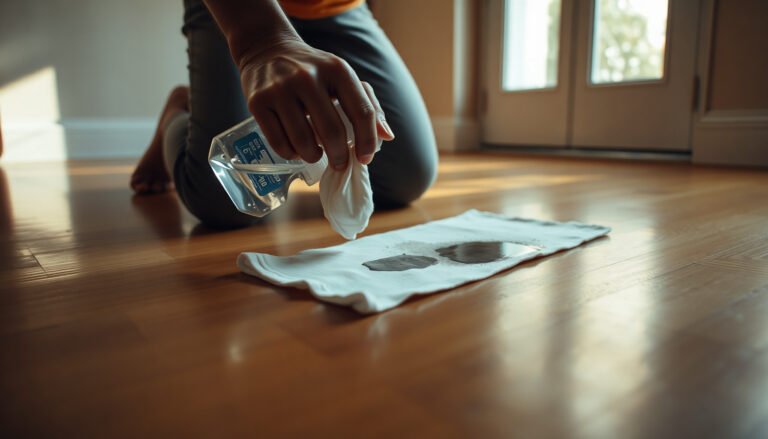
– For spots, wipe with a slightly damp microfiber cloth first, then dry immediately with a second dry cloth.
– If you need cleaner, choose one labeled for finished engineered wood floors and follow the label directions exactly.
Before applying any cleaner, test in an inconspicuous area if the label allows spot testing. “Finished engineered wood floors” usually means the top surface has a sealed wear layer designed for normal household spills—not a porous surface you should treat like natural wood without protection.
If residue is oily or sticky (tracked-in food, shoe transfer, or kitchen grease mist), dry dusting alone won’t fix it. But you still shouldn’t escalate to mopping. Instead:
– Use a cleaner formulated for finished wood floors.
– Apply it sparingly to the cloth, not directly onto the engineered wood floors.
– Work small and stop when the residue lifts—then dry.
According to ASHRAE, typical indoor comfort guidance targets maintaining relative humidity roughly in the 30–50% range to reduce condensation and help protect building materials (2017). Dry spot-cleaning discipline supports that same goal: less lingering moisture equals fewer opportunities for edge swelling around engineered wood floors.
What can go wrong when cleaning dust
Dust cleaning is supposed to be easy—yet the most damaging mistakes are subtle and repetitive. With engineered wood floors, the wrong technique often causes finish dulling, micro-scratches, or moisture migration at seams.
– Abrasive pads or dry paper towels can dull the finish over time by grinding dust into the surface.
– Over-wetting is the bigger risk than most people think—engineered wood still has seams, and excess moisture can seep at edges.
– Skipping attachments and using a bare vacuum head can cause micro-scratches, especially on softer top layers.
Grit abrasion can be surprisingly aggressive because many common household “dust” particles contain hard minerals. Quartz, for instance, is rated 7 on the Mohs scale—hard enough to abrade many finish systems when it’s dragged repeatedly across engineered wood floors. According to U.S. Geological Survey (USGS), quartz hardness is about 7 on the Mohs scale (2021).
Dust-cleaning mistakes vs safer choices (quick comparison)
| Do this (common mistake) | Why it hurts engineered wood finishes | Safer alternative |
|---|---|---|
| Dry sweeping with a stiff broom | Grit rides under bristles, increasing micro-scratches and dulling the top coat through friction. | Vacuum w/ soft brush or dry microfiber mop |
| Using paper towels for “quick wipe” | Paper can trap and grind dust; it also tends to leave fibers and can increase finish drag. | Microfiber cloth only (dry unless spot cleaning) |
| Wet mopping because the floor looks dusty | Excess moisture can creep into seam lines, especially at transitions and around baseboards. | Dust-only routine; damp cloth only for spots |
Once you understand abrasion as the primary threat to engineered wood floors, you can be more confident about what to avoid: anything that drags gritty particles across the wear layer.
━━━━━━━━━━━━━━━━━━━━━━━━━━━━━━━━━━━━━━━━━━━━━━━━━━
📋 MANDATORY DATA TABLE
━━━━━━━━━━━━━━━━━━━━━━━━━━━━━━━━━━━━━━━━━━━━━━━━━━
Hardness of Common Grit Components in Household Dust (Mohs scale)
| # | Dust mineral (often found in grit) | Mohs hardness | Typical home source | Finish safety score |
|---|---|---|---|---|
| 1 | Talc | 1.0 | Dryer dust, some powdery residues | ★★★★★ |
| 2 | Gypsum | 2.0 | Plaster/drywall dust | ★★★★☆ |
| 3 | Calcite | 3.0 | Limestone/concrete dust | ★★★☆☆ |
| 4 | Dolomite | 3.5–4.0 | Stone grinding/track-in grit | ★★☆☆☆ |
| 5 | Hematite | 5.5–6.0 | Soil/stone dust | ★☆☆☆☆ |
| 6 | Feldspar | 6.0 | Sand/stone-derived grit | ★☆☆☆☆ |
| 7 | Quartz | 7.0 | Sand, concrete, and tracked-in soil | ★☆☆☆☆ |
Finish safety score rubric: higher score means less potential abrasion when particles are dragged across the surface. It’s derived from Mohs hardness buckets (≤2 = higher safety; >4.5 = lowest safety). Quartz hardness example: U.S. Geological Survey (USGS) lists quartz at ~7 on the Mohs scale (2021).
Verdict: a simple routine that’s safe for most engineered floors
For most homes, the safest dust-cleaning routine is: soft vacuum or microfiber dust mop, quick edge attention, and damp cloth only for spots—no mopping “just because there’s dust.” Skip the damp/cleaner steps entirely if the floor is only dusty and not sticky, and avoid aggressive scrubbing unless your floor’s manufacturer specifically approves it.
This approach works because engineered wood floors fail from dust in two main ways: finish abrasion from grit and moisture exposure at seams. A dust-only plan reduces friction, while spot cleaning deals with residue only where it exists. If you routinely keep grit moving off the surface—especially at entryways—you typically reduce the need for deeper cleaning altogether.
If your engineered wood floors have a penetrating oil/wax finish (less common than sealed finishes), the right dust routine may still be the same at the tool level, but the permitted cleaners can differ. In those cases, follow the finish-specific guidance first, because the tolerance for moisture and cleaner chemistry changes.
Quick scan checklist (save this)
– [ ] Soft vacuum brush or microfiber dust mop
– [ ] Dust with the grain
– [ ] Overlap passes; don’t push dust around
– [ ] Light touch on seams and edges
– [ ] Slightly damp cloth only for spots (then dry)
– [ ] Avoid abrasive pads, steel wool, and soaking/mopping
A checklist like this is most effective when you use it consistently. For engineered wood floors, “frequent gentle cleaning” often prevents “infrequent aggressive cleaning,” which is the pattern most likely to erode the wear layer.
Frequently Asked Questions
What’s the safest way to remove dust from engineered wood floors without scratching?
Use a soft microfiber dust mop or a dry flat mop with electrostatic pads designed for hardwood. Avoid abrasive materials like rough cloths, sponges, or stiff bristle brooms that can grind grit into the finish and cause micro-scratches. If dust is heavy, lightly dampen the microfiber pad with water only if your floor manufacturer allows it—otherwise stick to dry cleaning.
How should I dry-clean engineered wood floors to avoid damaging the finish?
Start by sweeping or dusting in the direction of the wood grain to lift particles instead of pushing them around. Use a vacuum with a hardwood floor attachment or brush roll turned off, and keep the suction head flat to prevent edges from catching. Empty the vacuum often and check the wheels/brush for debris so you don’t drag grit across the surface.
Why is using the wrong cleaner risky for engineered wood floors, and what should I avoid?
Engineered wood still has a protective wear layer on top, and harsh chemicals, oily cleaners, or excessive moisture can dull the finish or seep into seams. Avoid soaking the floor, using steam mops, or applying all-purpose cleaners that aren’t specifically labeled safe for engineered hardwood. Also skip waxes or polish products unless the manufacturer explicitly recommends them, as buildup can trap dirt and make future dust removal harder.
What’s the best way to clean fine dust and grit in high-traffic areas?
For daily dusting, microfiber mops are best because they capture fine particles without scratching. In high-traffic zones, place felt or rubber pads under rugs and furniture and consider area rugs to reduce grit abrasion. For trapped dust near edges or baseboards, use a soft handheld duster or a microfiber cloth wrapped around a tool—never use metal scrapers.
Which tools and accessories are safest for engineered wood when tackling dust?
Choose microfiber dusting pads, electrostatic dusters, and vacuum attachments specifically meant for hardwood floors. Look for “no-scratch” features and avoid vacuum brush rolls unless they’re designed for hard floors with a shutoff option. For added protection, use corner-safe dust tools and keep felt pads on chairs/shoes to minimize grit impact that can dull the engineered wood floor finish over time.
📅 Last Updated: November 04, 2026 | Topic: How to safely clean dust from engineered wood floors? | Content verified for accuracy and freshness.
References
- Wood flooring
- https://www.bruce.com/support/floor-care-and-cleaning/
- https://www.cdc.gov/parasites/dustmites/index.html
- 1910.22 – General requirements. | Occupational Safety and Health Administration
- https://www.epa.gov/indoor-air-quality-iaq/what-you-can-do-improve-indoor-air-quality
- https://scholar.google.com/scholar?q=how+to+clean+dust+engineered+wood+floor+safe Google Scholar
- https://scholar.google.com/scholar?q=hardwood+floor+care+microfiber+dust+mop+vacuum+felt+pad+prevention+of+scratches Google Scholar
- https://scholar.google.com/scholar?q=engineered+wood+flooring+cleaning+instructions+avoid+excess+water+dust Google Scholar