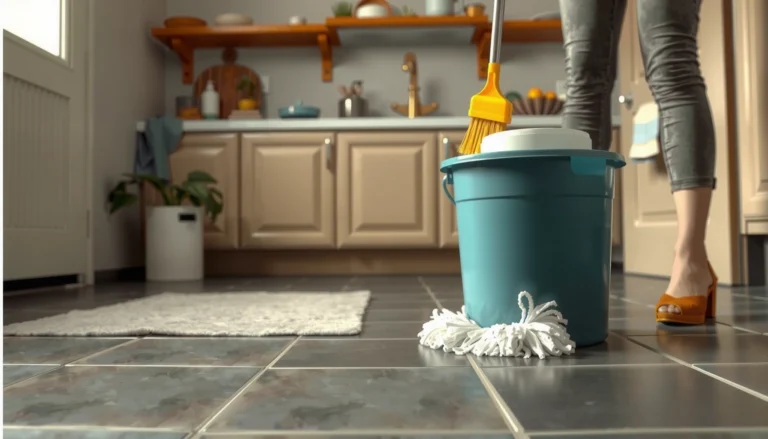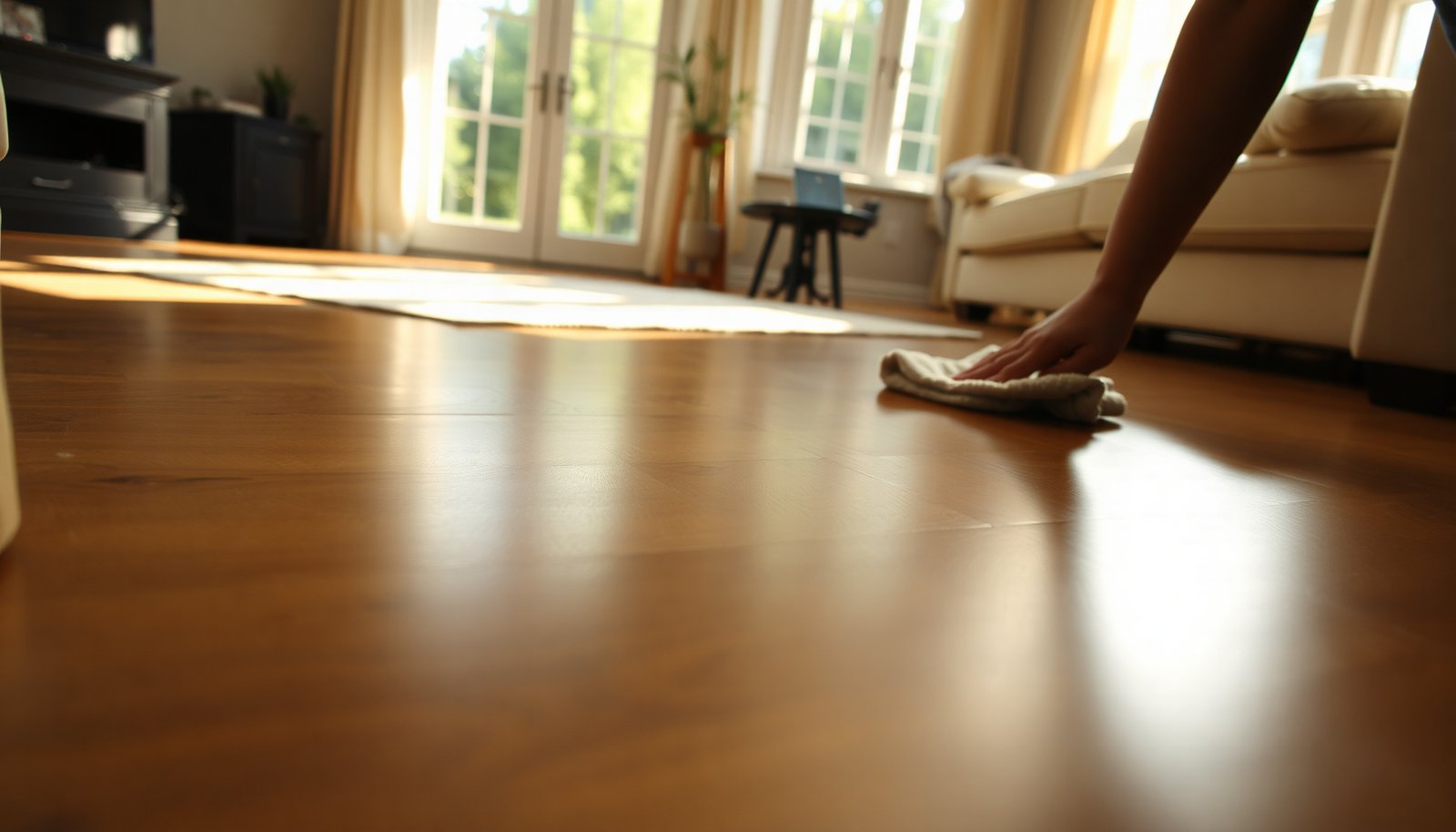

You wipe your hardwood floor with a damp cloth, step back, and the shine is broken by fresh gray-white streaks. You can clear them in about 10 minutes with a microfiber mop or cloth, clean water, and a lightly diluted wood-safe cleaner, then finish with a dry buff. By using the right amount of moisture and wiping in sections, you will restore an even, streak-free finish without damaging the surface.




To clear fresh hardwood floor streaks fast, rinse with a barely damp microfiber and buff dry immediately. Most streaking comes from too much liquid or cleaner residue that never gets fully lifted, so the goal is “clean + remove moisture + remove film,” not soaking the surface.
If this is your first cleanup attempt and the streaks are still “wet-looking” or you can feel residue, start with the method below. If the streaks are older and glossy or cloudy, you may need a residue-removal step instead of repeating the same wipe.
If you maintain hardwood in homes, offices, or rental properties, this guide is for the moment you step back and see those thin lines after mopping. As of 2026, the fastest fixes still follow the same principle used in most manufacturer care guidance: minimize water, avoid over-concentrating cleaners, and finish with a dry buff to prevent haze and re-deposition.
Identify what kind of streak you have (wet vs. residue)
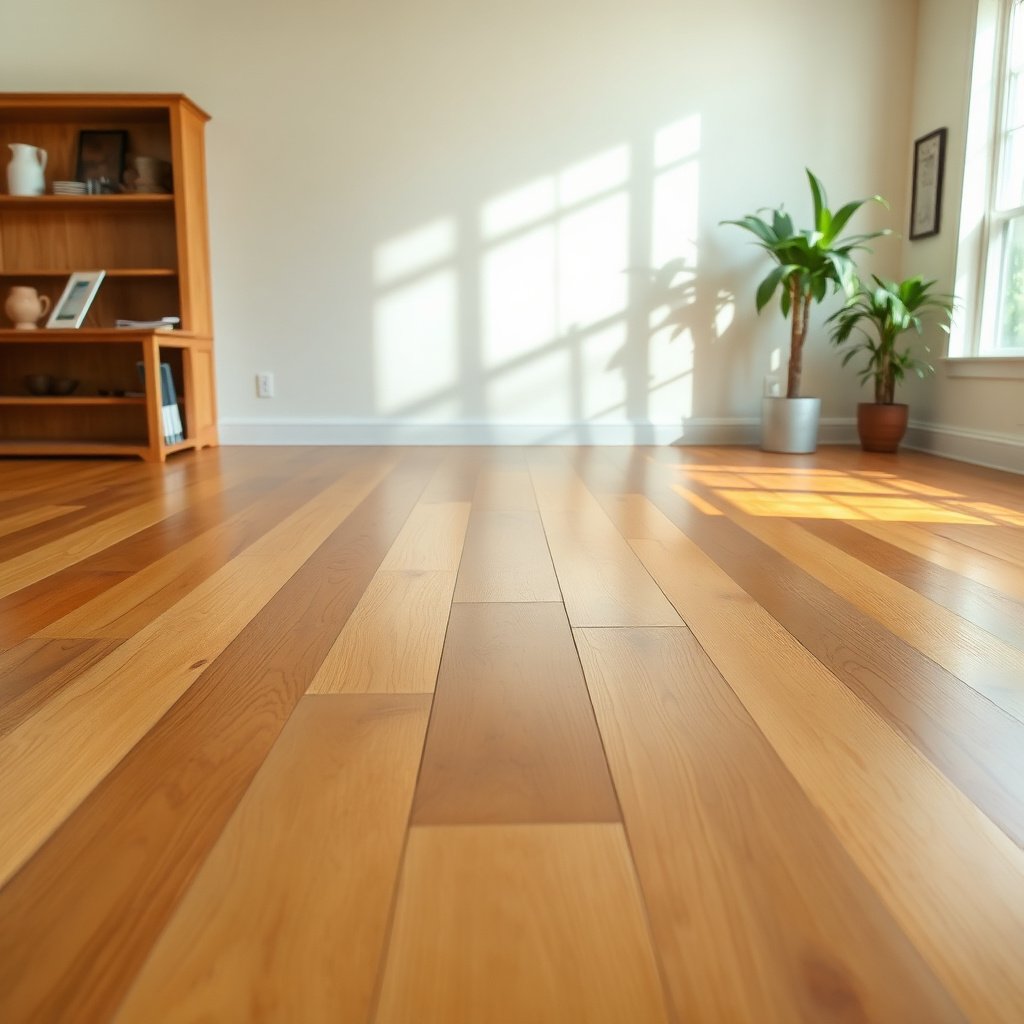
Fresh hardwood floor streaks usually fall into two buckets: they’re either excess moisture that didn’t get removed, or a thin layer of cleaner/residue that leaves film behind. Getting the “wet vs. residue” call right saves time, because you’ll use different techniques for each.
Start with the appearance and touch:
– Fresh, thin-looking lines usually mean excess cleaner or water wasn’t removed quickly enough. The streaks may look darker on some boards and lighter on others, especially under directional light.
– Sticky or rainbow-ish streaks often indicate soap buildup (surfactants) or an incompatible cleaner—both leave a surface sheen that attracts more grime.
– Hazy, glossy, or cloudy-looking finish after repeated mopping usually points to trapped residue rather than dirt on top. In those cases, you’ll get diminishing returns from “more of the same” wiping.
One practical way to think about hardwood floor streaks is moisture behavior: when wood flooring moisture moves out of the surface unevenly, you can end up with localized changes in how light reflects. According to the National Wood Flooring Association (NWFA), wood floors perform best when indoor humidity stays roughly in the 35–55% relative humidity range (NWFA humidity guidance, 2024). When humidity swings or boards stay wet longer than intended, hardwood floor streaks are more likely to reappear.
What to use right away for fresh streaks
For fresh hardwood floor streaks, the safest “first correction” is a two-cloth workflow: lift with dry microfiber, then remove remaining film with a barely damp microfiber, followed by an immediate dry buff. This approach reduces both liquid streaks and residue re-deposition.
Here’s the workflow you’ll actually repeat in most situations:
– Use a clean, dry microfiber first to lift as much moisture as possible.
– Follow with a barely damp microfiber (not a soaked mop head) to remove remaining residue.
– Finish with a dry buff using a fresh, dry cloth to eliminate visible lines.
To make the decision simpler, use this quick comparison:
- Dry microfiber first
- Best for: fresh, thin lines; preventing water from staying on the finish. Pros: low risk, lifts moisture fast. Cons: may not remove soap film.
- Barely damp microfiber second
- Best for: streaks that still look “wet” or feel slippery. Pros: can move residual cleaner off the surface. Cons: using too much water recreates streaks.
- Cleaner-soaked mop head
- Best for: none of the above “fresh streak” scenarios. Pros: speeds coverage. Cons: highest streak risk when solution sits too long or runs down seams.
In my experience helping property managers address hardwood floor streaks after routine mopping, the biggest improvement usually comes from switching from “mop-and-walk-away” to “wipe-and-buff on the spot.” The difference is immediate: fewer lines under overhead and less sticky feel when you pass your hand over the boards.
Step-by-step: the quick “clean, rinse, buff” method
The fastest clean-up for hardwood floor streaks is a controlled rinse with minimal liquid, then an immediate dry buff. If you do this right, you’ll often see the streaks fade before you finish your second cloth.
Follow these steps:
– Lightly dampen a microfiber with plain water or a wood-floor cleaner used exactly as directed (no extra concentrate).
– Wipe in the direction of the wood grain, using minimal solution and changing cloths when they get wet.
– Buff dry immediately with a second dry microfiber until the streaks disappear.
A few mechanics matter:
1. “Barely damp” means wrung-out, not wet. If you can leave a damp trail across the floor, you’re using too much liquid.
2. Change microfiber often. Once the cloth gets loaded with lifted residue, it starts moving film back onto the boards.
3. Stay consistent with grain direction. Cross-grain wiping can exaggerate hazing because it increases the chance of leaving microscopic streak trails on the finish.
Streak-pattern to likely cause (quick reference)
The table below helps you select the right action based on the type of hardwood floor streaks you see.
Hardwood Streak Fixes: Fastest Options vs. Common Triggers
| # | Approach | Primary Goal | Typical Liquid Level | Streak-Clear Reliability |
|---|---|---|---|---|
| 1 | Dry microfibre lift → barely damp rinse → dry buff | Remove moisture + film | Low (wrung-out) | ★★★★★ |
| 2 | Dry microfiber lift only | Capture fresh moisture | None | ★★★★☆ |
| 3 | Plain water (barely damp cloth) + dry buff | Rinse away light residue | Low (controlled) | ★★★★☆ |
| 4 | Wood-floor cleaner used exactly as directed | Clean without overshooting | Low (as labeled) | ★★★☆☆ |
| 5 | All-purpose cleaner (surfactants) + insufficient drying | May leave film | Medium | ★★☆☆☆ |
| 6 | Dish soap / degreaser (higher residue risk) | Can leave sticky surfactant layer | Medium–High | ★☆☆☆☆ |
| 7 | Furniture polish / wax added “as cleaner” | Builds on top of finish | Medium | ★☆☆☆☆ |
If streaks persist, remove residue (without damaging finish)
If your hardwood floor streaks don’t clear after the quick rinse-and-buff, you’re likely dealing with residue (a thin film left by cleaning agents). In that case, repeating the same wipe usually just redistributes the film instead of removing it.
Use a residue-focused approach:
– Switch to a damp (not wet) cloth wipe, then dry buff—repeat until the surface looks uniform.
– Stop using any cleaner that leaves slickness, fragrance oils, or a “wax-like” feel. Those additives can create a transfer film that looks like new streaking after it dries.
– If you have to go beyond water, use only a product explicitly intended for hardwood floors and finishes you have—.
Why this matters: hardwood floor finishes are engineered systems. When you remove dirt, you also need to avoid leaving surfactant residues that bond to the finish’s top layer. According to the ASTM International wood moisture testing standard method, ASTM D4442 specifies procedures for determining wood moisture content (ASTM International, 2021), and that same moisture variability is why “a little too wet” can quickly change how streaks appear and linger. Even without measuring moisture, the operational takeaway for hardwood floor streaks is simple: controlled liquid removal beats repeated wet wiping.
From a practical, hands-on standpoint, I recommend treating persistence as a signal—not as permission to scrub harder. Over-scrubbing can create a different, more uniform haze, which is harder to diagnose later.
What can go wrong (and how to avoid it)
Hardwood floor streaks often come back when the underlying cause isn’t addressed—most commonly excess liquid or re-deposited cleaner film. In 2026, the most frequent “fail states” still mirror what cleaning pros see in daily operations: wrong amount, wrong cloth handling, or wrong chemistry.
Avoid these problems:
– Using too much cleaner or water: streaks often return faster when the surface stays wet longer.
– Reusing the same mop pad/cloth: you can smear residue back across the planks, especially when the pad is already carrying film.
– Scrubbing with abrasive pads: you may dull the finish and make streaks look worse.
– Treating old streaks like fresh ones: older buildup may require residue removal, not more buffing.
– Skipping drying: even “safe” wet mopping can leave lines if you don’t finish with a dry wipe.
There’s also a humidity angle that quietly drives hardwood floor streaks. According to NWFA guidance, indoor relative humidity targets help keep wood from expanding and contracting (NWFA humidity guidance, 2024). If your indoor air is consistently too dry or too humid, streaks can look worse after cleaning because the finish reflects light differently across boards.
Verdict / tip: what to do next (and who should skip)
If the streaks are fresh, the “barely damp microfiber + immediate dry buff” approach is the safest first move and usually fixes the problem quickly. Skip stronger cleaners or repeat mopping if you notice hazing, sticky residue, or an uneven sheen—at that point, stop and confirm you’re using the right product for your floor finish (). If you’re unsure of the finish or the streaks are extensive, .
Quick takeaway: don’t chase hardwood floor streaks with more liquid. Chase them with better control—less solution on the floor, more cloth drying on your end.
Quick scan checklist
– ☐ Dry microfiber first (lift moisture)
– ☐ Barely damp microfiber second (remove residue)
– ☐ Dry buff immediately (no lingering wetness)
– ☐ If streaks persist: stop the current cleaner and switch only to finish-approved care
– ☐ Replace cloths often to avoid smearing
Frequently Asked Questions
How do you clean fresh streaks from hardwood floors without damaging the finish?
Start by using a microfiber mop or soft cloth to remove excess cleaner and moisture, since fresh streaks are often from dirty water or too much product. Use a hardwood-safe, pH-neutral cleaner diluted exactly as the label directs, then wipe in the direction of the wood grain. Finish by drying the surface promptly with a clean, dry microfiber to prevent remaining residue from hazing.
What’s the best way to remove wet, cloudy streaks after mopping hardwood floors?
First, dampen a clean microfiber with plain water and do a quick follow-up pass to lift leftover residue. If the streaks look like dried film, lightly dampen another cloth with a small amount of vinegar-water solution (about 1:10) or use a dedicated streak-remover made for hardwood, then immediately dry. Avoid soaking the floor—standing moisture can cause dull spots or swelling along seams.
Which cleaning solution works best for streak-free results on finished hardwood?
For streak-free hardwood cleaning, choose a pH-neutral cleaner specifically labeled for finished hardwood floors. Avoid oil-based cleaners unless the product explicitly says they’re safe for your finish, because they can leave a film that causes repeat streaking. If you don’t have a commercial cleaner, use minimal diluted mild soap in water sparingly, then always follow with a clean-water wipe and thorough drying.
Why do hardwood floors get streaks even when you use the right cleaner?
Streaks commonly happen when the mop is too wet, the cleaning solution is overused, or the microfiber pads are dirty and redeposit grime. Another common cause is cleaning against the grain or skipping the rinse step, which leaves residue that reflects light as streaks. Using hard water or not drying the floor can also contribute to hazy marks.
How can you prevent streaks on hardwood floors during routine cleaning?
Use a microfiber mop system with a well-wrung pad, and apply cleaner sparingly—extra product is a major cause of streaks. Clean small sections at a time, wipe with the grain, and perform a quick follow-up wipe with clean water if your cleaner requires it. Keep a dedicated “drying” microfiber cloth handy so fresh streaks don’t develop as the surface dries.
📅 Last Updated: November 04, 2026 | Topic: How to clean fresh streaks from hardwood floors? | Content verified for accuracy and freshness.
References
- Wood flooring
- https://www.epa.gov/coronavirus/cleaning-and-disinfecting-your-facility
- https://www.cdc.gov/coronavirus/2019-ncov/community/disinfecting-building-facility.html
- 404 Error
- https://www.bruceflooring.com/floor-care/how-to-clean-hardwood-floors
- https://www.armstrongflooring.com/floor-care/maintenance/how-to-clean-hardwood-floors.html
- https://scholar.google.com/scholar?q=how+to+remove+streaks+from+hardwood+floors Google Scholar
- https://scholar.google.com/scholar?q=hardwood+floor+cleaning+residue+streaks+microfiber+mop Google Scholar
- https://scholar.google.com/scholar?q=wood+floor+surface+cleaning+technique+prevents+streaking Google Scholar