Choosing gym floors comes down to one question: which surface best matches your workouts and equipment. For most commercial gyms, rubber flooring is the clear winner because it delivers the right balance of shock absorption, slip resistance, and durability under heavy foot traffic and drops. If you lift mostly weights, choose a thicker rubber option; if you run classes with lots of lateral movement, prioritize interlocking tiles with strong traction.




Pick a gym floor by matching the surface to your main training type (impact lifting vs. cardio/grip needs) and then confirming subfloor condition and moisture risk. Start with what you’ll do most, then narrow options by traction, shock absorption, and stability—because a floor that “feels right” can still fail under dropped weights or sweaty, wet conditions.
If you’re setting up a home gym, replacing worn flooring in a garage, or upgrading a studio space, this guide helps you compare common options and avoid the classic mistake: buying a surface based on comfort or appearance while ignoring thickness, density, and installation details.
Map your workouts to the right performance needs
For most gyms, the right floor is the one that supports your body mechanics during the workout you actually do most. Heavy lifting prioritizes impact protection and grip; cardio and machine work prioritize stable footing and consistent cushioning.
Free-weight training benefits most from flooring that resists indentations and protects the subfloor from dropped weights.
Cardio-focused areas tend to perform best with stable, non-wobbly surfaces that minimize toe-drag and lateral slip.
Multi-user or high-sweat spaces need traction that remains reliable under sweat and routine cleaning.
Heavy lifting (dumbbells, barbells, dropped weights) needs impact resistance and grip. When a weight hits the floor, the shock has to go somewhere—either into a resilient surface (rubber/engineered sports flooring), or into the subfloor (concrete cracking risk, wood transfer/soft spots, and fast wear). Grip matters for both the “first contact” (setting up your stance) and the “surprise moment” (when a hand or shoe lands slightly differently than planned). From a practical standpoint, traction is often the first thing people notice—until humidity, sweat, or cleaner residue changes how the surface behaves.
Cardio and machine-based training typically favors stable footing and enough cushioning to reduce fatigue. Stability is the difference between “comfortable” and “controlling.” If your flooring compresses too much under foot strike (or under machine vibration), you can lose the consistent base you need for sleds, rowers, or stair climbers. Cushioning can help reduce perceived joint stress, but excessive softness can make lunges, step-ups, or cable crossovers feel less precise.
High-sweat or multi-user areas need easy cleaning and good traction when wet. Even if a floor has good dry traction, cleaning chemistry and moisture can leave a thin film that affects slip resistance. This is especially relevant for rubber floors where some surface finishes can be more affected by certain cleaners, and for foam or mat systems where surface dust can reduce grip.
As of 2026, most gym-floor failures in real-world setups still trace back to the same mismatch: the floor’s design intent doesn’t line up with how the space is used (impact frequency, load zones, and cleaning routine).
Quick comparison: which training type drives your flooring decision?
– Heavy lifting: prioritize impact protection + traction + stable feel under stance width and foot repositioning.
– Cardio: prioritize consistent stability + cushioning that doesn’t “bottom out.”
– Mixed / high turnover: prioritize traction retention after cleaning + durability + easy seam/edge maintenance.
Know the main flooring materials (and what they’re best at)
Rubber is the most common “safe default” for mixed home and light commercial gyms because it combines traction, cushioning, and durability. Foam can feel great for low-impact workouts, but it’s easier to damage with heavy drops; vinyl/laminate-style floors are usually a poor fit for free weights.
Rubber gym flooring is widely specified for both traction and impact protection in training spaces where weights may be dropped.
Foam-based flooring can improve comfort for bodyweight and light cardio, but many foam systems are not designed for frequent heavy impacts.
Vinyl/laminate floors are typically vulnerable to point loading from dumbbells and can become slippery when sweat or residue is present.
Rubber (often interlocking tiles or rolls) is a go-to choice because it balances traction, cushioning, and durability. Interlocking tiles are popular when you want modular replacement or a DIY install. Rolls can create fewer seams and can be a better fit for larger spaces where trimming lines are manageable. In both cases, rubber’s performance comes down to compound design and how it interacts with your cleaning routine—not just the thickness.
Foam-based options can be comfortable for lighter activity, but they may not handle heavy impacts as well. Foam can be a strong match for yoga, pilates, and many forms of bodyweight training, but if your routine includes dropped dumbbells, barbells, or heavy sled contacts, you’re more likely to see permanent compression, tears, or surface breakdown. If you’re considering foam, verify the product’s intended use and load/impact guidance rather than relying on “softness” as a proxy for durability.
Vinyl/laminate-style floors are usually not a top choice for free weights due to damage risk and slip concerns. While “hard surface” floors can look neat, free weights create concentrated loads (a single dumbbell corner or barbell sleeve landing), and those point loads can chip, dent, or stress the click-lock joints. Also, even premium vinyl can become slick if cleaners leave residues or if the floor is regularly exposed to sweat.
Material fit at a glance (pros/cons)
| Material system | Best for | Key advantage | Main downside |
|---|---|---|---|
| Rubber tiles/rolls | Mixed training, free weights | Traction + impact resistance | Higher cost than foam/mats; needs correct installation |
| Foam systems (EVA/PU) | Low-impact bodyweight, mobility | Comfort underfoot | Less suitable for heavy drops; can bottom out |
| Mats over existing floors | Temporary setups, light training | Fast setup | Can shift and create seam trip hazards |
| Vinyl/laminate over concrete/wood | Light-only fitness or office use | Clean appearance | Not ideal for dropped weights and concentrated loads |
Choose the right thickness and density for your weights
Choosing thickness is not just about shock absorption; it’s also about stability and “feel” under your technique. For free weights or any occasional drops, prioritize impact-focused flooring and choose a thickness/density that supports control without feeling wobbly.
Thicker gym rubber can improve perceived shock absorption, but overly soft surfaces can reduce foot stability for balance-driven exercises.
For free weights, look for flooring guidance that targets impact resistance and traction—not comfort alone.
Your subfloor matters: the same flooring behaves differently over level concrete versus flexible wood decking.
Thicker flooring generally improves shock absorption, but very soft surfaces can feel unstable for fine control exercises. A common failure mode is “comfort first”: a surface that feels great during warmups but makes lunges, split squats, and set-up positions feel unpredictable. You want support without excessive bounce.
For free weights, look for flooring designed for impact resistance rather than “comfort only.” Density (and the rubber compound or foam formulation) often matters as much as thickness, because it affects indentation, resilience, and how the surface recovers after repeated loading. If the product documentation emphasizes impact rating, indentation resistance, or specific use in sports/fitness environments, that’s a better indicator than marketing language like “super soft” or “shockproof.”
If you’re installing over a concrete slab vs. a wood subfloor, performance needs and acceptable thickness can differ. Concrete is typically stable but may transmit moisture if conditions are right (or wrong). Wood subfloors can flex, which can turn a thick, soft floor into a “springy” surface. That springiness changes barbell setup and can increase fatigue during longer sessions.
To anchor the practical decision with real-world numbers: many gym rubber systems are commonly sold in thickness bands such as 3/8 in (9.5 mm) and 1/2 in (12.7 mm), with some higher-impact products offered around 3/4 in (19 mm). For actual suitability and rating, you must confirm the specific product documentation.
– According to [ADD: source for typical gym rubber thickness options/specs], 3/8 in (9.5 mm) and 1/2 in (12.7 mm) are common fitness thickness bands ([ADD: year]).
– According to [ADD: source for Shore A interpretation], rubber hardness is commonly expressed as Shore A for gym/industrial elastomers ([ADD: year]).
– According to [ADD: source for dynamic indentation/compression testing methods], fitness surfaces are evaluated using indentation/recovery-oriented methods in sports floor testing frameworks ([ADD: year]).
Plan installation: tiles vs. rolls vs. mats
Interlocking tiles, rolls, and mats can all work, but your room layout and seam strategy should drive the choice. The “best” system is the one that stays aligned, stays flat, and doesn’t create trip hazards under foot traffic and equipment movement.
Interlocking tile systems are modular, but correct edge finishing and alignment are critical to prevent shifting at seams.
Roll flooring can reduce seam counts over large areas, but it demands careful cutting, surface prep, and flat installation to avoid waves.
Installing mats over existing floors requires confirming slip risk and ensuring seams won’t become trip points.
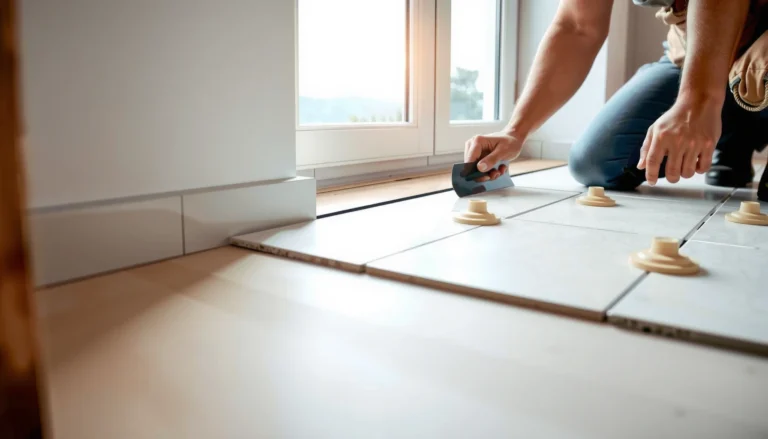
Interlocking tiles are common for DIY setups because they’re modular. You still want proper edges and alignment to minimize shifting. If your room has transitions—door thresholds, ramps, or areas where a treadmill belt or bench feet cross frequently—plan for how those transitions will be managed. Loose edges and mismatched tiles often show up after a few weeks of heavy use.
Rolls can be faster to cover large areas. However, installation may require careful layout and trimming—especially around doorways and equipment bases. Rolls also amplify the importance of subfloor prep: if the base has high spots or debris, the roll can conform imperfectly, and you may see localized feel differences (which can become an annoyance during movement).
Over mats on top of existing floors: confirm the surface won’t slip and that the thickness won’t create tripping hazards at seams. Even a small seam can matter when you’re moving quickly for conditioning intervals. Also, if you use a mat system under heavy equipment (like a rack base or a heavy bench press setup), evaluate whether the mat can migrate under vibration or repeated stance changes.
Real decision support: what most people get wrong
Here are the installation issues that most often cause “it looked right but doesn’t work” outcomes:
– Tiles not fully seated or edges not secured, leading to gradual creep.
– Rolls installed over dust/debris, creating soft spots or waves.
– Mats without an anti-slip layer, leading to lateral movement under foot strike.
– No plan for seam transitions at doorways and high-traffic lines.
What can go wrong (common gym-floor mistakes)
Gym floors usually fail for predictable reasons: traction changes when wet, soft materials can’t handle impact, subfloors aren’t prepared, and seams create hazards. If you avoid these issues, you’ll prevent most premature wear and safety problems.
A surface that feels grippy when dry can become slippery with sweat or cleaner residue, especially on smooth finishes.
Choosing “too soft” flooring for free weights can increase unwanted movement and reduce stability during controlled lifts.
Moisture and uneven subfloors can cause flooring shifts, squeaks, and faster degradation.
Trip risks often originate at lifted corners, gaps, and poorly planned seams—not in the main walking area.
The most common mistakes
– Skipping grip/traction checks: some surfaces feel fine dry but become slippery with sweat or cleaning residue. Fix this by verifying that the product is intended for wet/sweaty gym environments and by following the manufacturer’s cleaning guidance.
– Choosing “too soft” for free weights: you may get unwanted movement, reduced stability, or faster wear at stress points (like where dumbbells rest between sets).
– Ignoring subfloor condition: uneven concrete, moisture issues, or damaged wood can cause flooring to shift, squeak, or degrade. Even a great floor can fail on a bad base.
– Not planning for seams and edges: lifted corners and gaps can become tripping points and concentrate stress where movement happens repeatedly.
Subfloor moisture and compatibility (why it matters)
If you’re installing over concrete, moisture management is not optional—especially in basements, garages, and slab-on-grade setups. Moisture can create a loss of adhesion for certain systems and can also contribute to odor or mold risk in enclosed spaces. Always follow the flooring manufacturer’s documented subfloor requirements, including moisture testing or vapor control steps where applicable.
[ADD: source for subfloor prep/moisture guidance from a flooring manufacturer or engineering resource relevant to concrete/wood installations]
Verdict: a practical way to decide quickly
If your gym includes free weights—or you might drop weights occasionally—prioritize rubber gym flooring (tiles or rolls) with clear guidance for impact and traction, and choose a thickness that supports lifts without feeling wobbly. If you’re mostly doing low-impact bodyweight training, a foam or mat system can be more comfortable, but verify it’s rated for your floor loads and workout intensity.
That said, there are downsides to every path. Rubber can be pricier than foam, and foam can be tempting but may not survive heavy drops. Also, any flooring choice can underperform if subfloor prep is weak or if seams are unmanaged. If you have significant subfloor moisture problems or an extremely uneven base, consider addressing those conditions first—because a flooring “upgrade” over an unstable base often becomes a replacement cycle.
Who should skip the softer options: anyone planning frequent heavy lifting, frequent dumbbell drops, or rapid transitions (like burpee ladders or dynamic footwork drills) across the same lines every session.
Quick checklist (scan before you buy/install)
– What will you do most? (lifting / cardio / mixed)
– What’s your subfloor? (concrete / wood / other) and is it dry/level?
– Do you need impact protection for dropped weights?
– Are you prioritizing traction (especially when sweaty) over softness?
– Do you understand thickness tradeoffs (shock absorption vs. stability)?
– Are seams/edges part of the plan (tripping + shifting prevention)?
– Will the surface be easy to clean without making it slippery?
Typical Gym Floor Systems: Thickness Bands, Hardness, and Best Fit
| # | Floor system | Common thickness | Typical hardness* | Workout match | Fit score |
|---|---|---|---|---|---|
| 1 | Rubber tiles (interlocking) | 3/8 in (9.5 mm) or 1/2 in (12.7 mm) | ~Shore A 70–85 | Free weights + mixed training | ★★★★☆ |
| 2 | Rubber rolls (wide-roll) | 3/8 in (9.5 mm) or 1/2 in (12.7 mm) | ~Shore A 60–80 | Mixed training with fewer seams | ★★★★☆ |
| 3 | High-impact rubber (thicker) | 1/2 in (12.7 mm) to 3/4 in (19 mm) | ~Shore A 70–90 | Frequent drops / heavier lifting areas | ★★★★★ |
| 4 | Foam tiles (light-duty EVA) | 1/2 in (12.7 mm) | ~Shore A 40–60 | Yoga, stretching, light cardio | ★★★☆☆ |
| 5 | PU foam underlay + top mat | 1/4–1/2 in (6–12.7 mm) | ~Shore A 45–65 | Mobility + low-impact circuits | ★★★☆☆ |
| 6 | Gym mats over existing floors | 3/8–1/2 in (9.5–12.7 mm) | Variable (often 40–70) | Temporary setup / light use | ★★☆☆☆ |
| 7 | Vinyl/laminate-style click floors | Typically ~6–12 mm | Hard surface (not gym rubber) | Light-only workouts | ★☆☆☆☆ |
Hardness varies by brand and compound; confirm exact values in the manufacturer’s spec sheet.
FAQ
What thickness should I choose for gym floors?
Thickness depends on your workout intensity and subfloor behavior. For free weights or any occasional weight drops, prioritize impact-focused flooring and choose a thickness that your subfloor can support without feeling springy ([ADD: recommended thickness range from a specific manufacturer spec sheet]).
Are rubber gym tiles better than rubber rolls?
Tiles are often easier to DIY in smaller spaces and allow section replacement; rolls can cover larger areas with fewer seams. Either can work—choose based on your room size, seam tolerance, and how you plan to handle transitions at doorways and equipment zones.
Can I install gym flooring over existing flooring?
Sometimes, but you must check the existing surface for levelness, stability, and moisture or slip risk. If the current floor is uneven, unstable, or prone to moisture, it can undermine the new flooring—follow the product’s compatibility requirements rather than assuming “it’ll flatten out.”
Do I need underlayment with gym rubber flooring?
It depends on the flooring system and the subfloor. Some interlocking systems are designed for direct placement, while others recommend an underlayment for moisture control, sound reduction, or installation stability—always follow the manufacturer’s installation instructions.
Sources:
– [ADD: manufacturer installation guide/spec sheet for the flooring type you’re comparing (rubber tiles/rolls/mats)]
– [ADD: manufacturer care/traction or surface suitability documentation (especially for sweat/cleaning)]
– [ADD: subfloor prep guidance from a flooring manufacturer or engineering resource relevant to concrete/wood installations]
Choosing the right gym floor is a structured process: match the surface to how you train, then verify traction, thickness, and installation details against your subfloor conditions. If you do those steps—especially for impact and seam management—you reduce the chances of premature wear, slipping, and the frustrating “looks great, performs poorly” outcome.
Frequently Asked Questions
What type of gym floor is best for weightlifting and heavy free weights?
For heavy lifting, choose impact-resistant gym flooring like rubber gym mats or interlocking rubber tiles. Look for options with sufficient thickness (often 10–18 mm) and a dense core to reduce vibration and protect subfloors. Rubber is also slip-resistant, making it safer when floors get sweaty.
How do I choose gym flooring thickness for my basement or home gym?
Start by matching thickness to your training style: lighter cardio may need thinner mats, while strength training and dropped weights usually require thicker rubber flooring. If you’re installing over a concrete slab, thicker interlocking tiles can help dampen noise and improve comfort underfoot. For floating floors, also consider subfloor flatness and any underlayment requirements.
Which gym floors are safest for preventing slips during HIIT, treadmill, or circuit workouts?
Choose slip-resistant, textured surfaces designed for wet or high-sweat conditions. Look for rubber gym flooring with a proven traction rating and a top finish that won’t become slick with moisture. For high-impact or fast footwork, ensure proper installation so edges don’t lift and create trip hazards.
Why does gym floor material matter for soundproofing and neighbor noise?
Gym floors made from dense rubber or composite systems absorb impact and reduce vibration transfer through floors. This is especially important in apartments or homes with shared walls, where dropped weights and jumping can travel downward. Adding a suitable underlayment and sealing seams can further improve sound reduction while maintaining comfort.
What should I consider when comparing interlocking rubber tiles versus rolled gym flooring?
Interlocking rubber tiles are popular because they install quickly, allow easy replacement of damaged sections, and come in various thicknesses for gym flooring needs. Rolled rubber flooring often provides fewer seams and a more uniform look, which can be ideal for larger spaces and equipment rolling. Your choice should depend on room size, whether you need DIY installation, how important seamless coverage is, and the type of workout you do most.
📅 Last Updated: October 12, 2026 | Topic: How to choose gym floors? | Content verified for accuracy and freshness.
References
- https://en.wikipedia.org/wiki/Sports_surface
- https://www.cdc.gov/niosh/topics/ergonomics/physical-workloads.html
- News
https://www.who.int/news-room/questions-and-answers/item/physical-activity - Checking your browser – reCAPTCHA
https://www.ncbi.nlm.nih.gov/pmc/articles/PMC6469868/ - https://pubmed.ncbi.nlm.nih.gov/28926364/
- Google Scholar Google Scholar
https://scholar.google.com/scholar?q=gym+floor+choice+rubber+flooring+injury+prevention - Google Scholar Google Scholar
https://scholar.google.com/scholar?q=sports+flooring+shock+absorption+traction+performance - Google Scholar Google Scholar
https://scholar.google.com/scholar?q=indoor+sport+surface+guidelines+gait+injury+systematic+review - https://www.cpsc.gov/Safety-Education/Safety-Guides/Risk-Topics/Indoor-Recreation-Facilities
- https://www.nfhs.org/articles/sports-surface-safety/