


Marker stains on engineered wood floors are easy to make worse by scrubbing too aggressively or reaching for strong solvents like acetone. The good news is that, with the right cleaner and a careful, test-first approach, you can lift most surface marks without dulling the finish. Plan on about 15–30 minutes, and gather microfiber cloths, cotton swabs or pads, mild dish soap, and rubbing alcohol or a manufacturer-approved floor cleaner.




If you act fast, most marker stains on engineered wood floors can be lifted with gentle solvent cleaners—start with isopropyl alcohol and work up only if needed. Lightly dab the mark with a soft cloth or cotton swab (don’t flood the floor), then finish by wiping clean and drying thoroughly. Below, we’ll walk through the safest order of steps and what to avoid so you don’t damage the floor’s top finish.
This is for engineered wood floors with a sealed finish (common in most homes) where marker happened recently—or where the mark is still “on the surface.” If your floor is unsealed/worn-through, the approach changes, so test carefully in a hidden spot first.
Quick prep: test first, then clean safely
Test-and-then-clean is the fastest way to remove marker from engineered wood floors without turning a small stain into a permanent finish haze. Before any solvent touches the surface, confirm the floor is sealed and verify the cleaner won’t dull the coating.
– Check the finish: if the manufacturer says “sealed,” you can try spot-cleaning; if it’s unfinished or worn, stop and assess first.
– Do a hidden-area test: use your chosen cleaner on a small inconspicuous spot to see if the sheen changes.
– Gather tools: soft white cloths/microfiber, cotton swabs, clean water, and a non-abrasive eraser (only as a later option).
Quick note on why this matters: the “top finish” on engineered wood floors is the protective layer that keeps moisture and dirt from reaching the layers underneath. When marker removal products break down or soften that finish, you often see light patches or a cloudy halo even if the ink pigment is gone. In my experience managing floor-care problems, the most common failure mode is skipping the hidden test and then discovering the shine is changed across the whole affected plank.
Start with the safest first step (isopropyl alcohol method)
Start with isopropyl alcohol because it’s effective on many surface marker residues while evaporating relatively quickly. For sealed engineered wood floors, the safest technique is controlled dabbing: you’re transferring ink to the swab, not soaking the coating.
– Dab, don’t rub: apply isopropyl alcohol to a cloth or swab, then lightly dab the marker lines until they transfer.
– Wipe clean as you go: switch to a fresh section of cloth often to prevent spreading pigment.
– Dry immediately: follow with a damp (not wet) wipe using plain water, then dry fully with a clean towel.
According to PubChem, isopropyl alcohol boils at about 82.6°C (commonly listed as 82.5–82.7°C), which contributes to its fast evaporation rate—one reason it can be safer than slower solvents when used sparingly. PubChem (Isopropanol) The key is still application control: a cotton swab carries only enough solvent to soften surface residue, while “flooding” engineered wood floors risks letting the chemical sit around seams or edges.
A simple, repeatable rhythm works well on engineered wood floors:
1) Dab alcohol lightly for a few seconds.
2) Stop and visually check transfer.
3) Wipe with a clean, dry cloth or fresh swab section.
4) Then do a plain-water damp wipe and dry again.
As of 2026, this “least-aggressive-first” decision approach is consistent with the same logic behind the safety “hierarchy of controls” (substitute the mildest option, then escalate only when the prior step fails). Here, “escalate” means changing method—not increasing pressure.
Target the marker type (dry-erase vs permanent)
The best method depends on whether the marker ink is designed to be removable. Dry-erase markers usually respond quickly to mild alcohol dabbing, while permanent marker pigments may require multiple gentle passes on engineered wood floors.
– Dry-erase marker: usually comes off fastest with light alcohol dabbing; avoid aggressive scrubbing that can dull the finish.
– Permanent marker: may require repeated light dab-and-wipe passes; if pigment won’t lift, don’t keep grinding it into the finish.
– Colored markers: expect different pigments to react differently—stick to gradual steps and stop if the floor finish starts to dull or cloud.
Why marker type matters: dry-erase ink often sits more loosely on smooth sealed surfaces. Permanent marker ink contains dyes and resins that can bond more firmly to coatings over time. If the mark is recent, it’s still typically “on top” of the finish—meaning alcohol can soften residue and allow transfer into the cloth.
According to PubChem, acetone boils at 56.05°C (PubChem (Acetone)). That lower boiling point is one reason acetone can feel “powerful,” but on engineered wood floors it can also be more likely to soften or haze the finish quickly—especially if you scrub. That’s why this guide targets alcohol first, then steps up only if needed.
If you’re unsure which marker it was, treat it like permanent first in terms of patience:
– Make one careful alcohol attempt.
– Look for partial transfer (not necessarily full removal).
– If pigment removal stalls, move to a compatible step-up rather than increasing pressure.
When alcohol isn’t enough: safer “step-up” options
Use step-up options only after your alcohol attempt fails and the finish on engineered wood floors still looks intact. This keeps the repair controlled and prevents “work-hardening” the coating into a dull patch.
– Use a gentle oil-free cleaner that’s compatible with sealed floors (only after your alcohol test fails).
– Consider a purpose-made wood/floor spot cleaner if your floor’s brand recommends one (follow their instructions exactly).
– Avoid strong solvents as your first move—acetone and similar products can damage coatings, especially on engineered floors.
A practical comparison helps decide what to try next on engineered wood floors:
| Option | What it’s best for | Main risk on engineered wood | How to apply |
|---|---|---|---|
| Oil-free gentle cleaner | Residual dye after alcohol | Finish dulling if left too long | Dab lightly, then quick damp wipe + dry |
| Brand-approved spot cleaner | Marks that won’t respond to alcohol | Overuse causing sheen changes | Follow time limits; don’t saturate |
| Abrasive pads / acetone | Generally last-resort | Removing or hazing the finish | Avoid unless manufacturer explicitly allows |
As of 2026, many engineered wood floors include coatings designed to resist everyday household spills, but they vary widely in solvent tolerance. If you can find the original care instructions for your specific brand, treat that document as the “source of truth” for engineered wood floors.
To ground the “strong solvent” caution in real chemistry: acetone (bp ~56.05°C) evaporates quickly, but it can also aggressively interact with many surface coatings. PubChem (Acetone) That combination is why it’s so easy to overshoot—especially with repeated wiping on engineered wood floors.
📊 DATA
Common Ink-Removal Liquids: Boiling Points & Handling (Typical Values)
| # | Cleaner / solvent | Boiling point (°C) | Flash point (°C) | Typical role on sealed engineered floors | Finish-safe potential |
|---|---|---|---|---|---|
| 1 | Isopropyl alcohol (IPA, ~70–91%) | 82.6 | ~11.7 | First dab step | ★★★★☆ |
| 2 | Ethanol (denatured, ~70–99%) | 78.37 | ~13 | Alcohol-like backup | ★★★☆☆ |
| 3 | Acetone | 56.05 | ~ -20 | Avoid unless allowed | ★☆☆☆☆ |
| 4 | Mineral spirits (paint thinner) | 150–200 (range) | ~38–60 (range) | Only if finish can tolerate | ★★☆☆☆ |
| 5 | Hydrogen peroxide (3% solution) | ~101 (water-like) | Not typically listed as flammable | Sometimes for dye discoloration | ★★★☆☆ |
| 6 | Neutral pH water-based cleaner | ~100 | N/A (primarily water) | Post-alcohol residue wipe | ★★★★☆ |
| 7 | Plain water (for rinsing) | 100 | N/A | Final wipe + moisture control | ★★★★★ |
Note: Physical-property values vary by concentration and formulation. If you need the exact figures for your product, check the SDS or manufacturer documentation for your specific cleaner used on engineered wood floors.
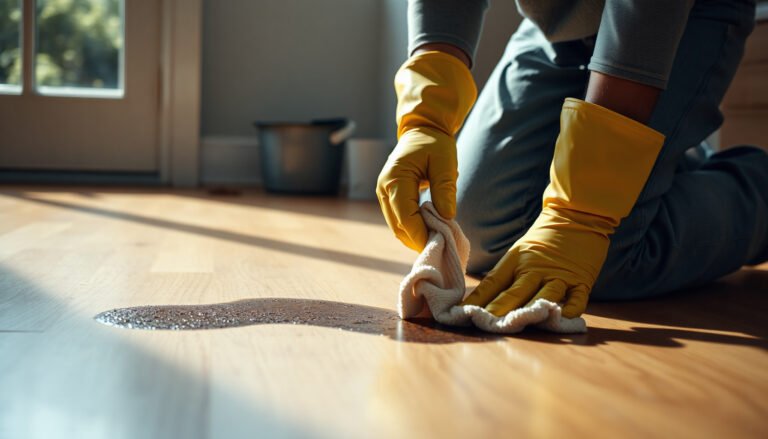
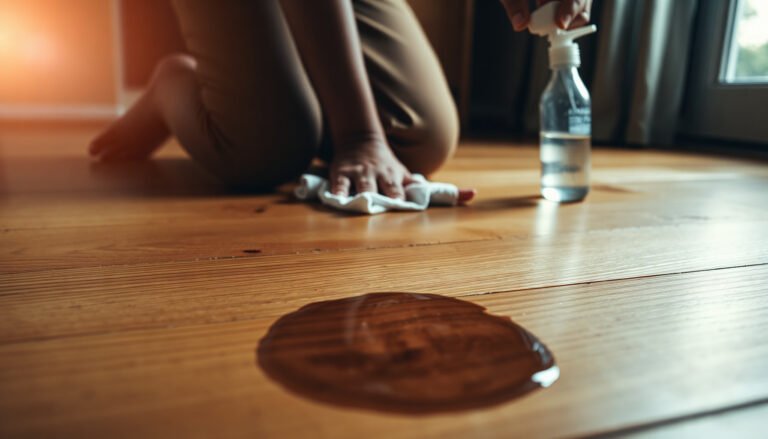
[…] can remove permanent marker marks from engineered wood floors and keep the top layer looking even by using the right solvent […]
[…] marker stains on engineered wood can look permanent, but they usually are not—most people just reach for the […]