


Marker marks on engineered wood can usually be removed without damaging the finish when you use the right cleaning method for the type of ink. Expect to spend about 10–30 minutes, and the work is straightforward if you start with gentle solutions and test in a hidden spot first. You’ll need a soft white cloth or paper towel, mild cleaner, rubbing alcohol or marker-safe remover, and a few minutes to blot rather than scrub.




Remove marker from engineered wood floors by blotting first, then using isopropyl alcohol on a soft cloth to dissolve the ink at the surface—without scrubbing. Work in gentle steps (dry/mild cleaning first, alcohol second, mild soap only if needed) so you don’t spread pigment or weaken the protective finish.
If your engineered wood has a factory-finished top layer (most do), marker removal is usually about dissolving the ink at the surface, then wiping it clean. This is most useful for pen, felt-tip, and dry-erase–style marks, especially when they’re recent—older marks may need more patience.
Start Safe: Test First and Protect the Finish

Before you treat the stain, confirm your cleaner won’t dull or lift the finish. This step matters because engineered wood’s “wear layer” is sealed with a surface coating, and some finishes are more sensitive to alcohols and detergents than others.
– Find an inconspicuous spot (under a chair/edge/closet line) and test your cleaner on a small area first.
– Use a white microfiber cloth or paper towel so you can see what transfers.
– Avoid soaking the floor; engineered wood can be vulnerable if liquid seeps into seams.
To keep this safe and repeatable, use the same motion you’ll use on the marker: light blotting only, brief contact, and immediate drying. If you see color transferring to the cloth, stop and reassess—finish removal and wood darkening can happen faster than marker pigment removal. As of 2026, the most reliable approach we see in care guidance is “minimal moisture + targeted solvent,” because engineered flooring is designed for surface cleaning, not wetting.
Try the Least Aggressive Cleanup (Dry + Mild)
Start with the lowest-risk method because fresh marker pigment is often still mostly “sitting on top.” If you can lift the mark with controlled water cleaning, you avoid solvents entirely—which is typically the safest route for sealed engineered wood.
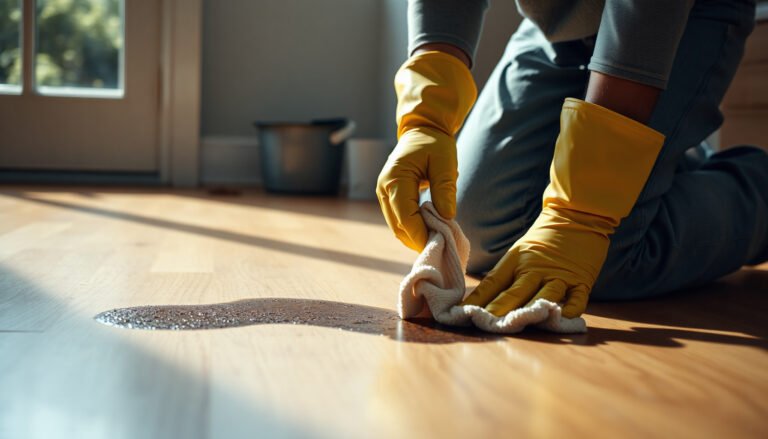
– Gently blot to lift surface pigment; stop if you see the color smearing.
– Wipe with a slightly damp microfiber cloth using plain water, then dry immediately.
– If the mark is on top and still fresh, this may fully remove it without solvents.
Here’s the practical logic: blotting captures loose surface dye/pigment without grinding it into the finish. When you add water, you’re relying on dye dilution rather than chemical dissolution of inks. Work in small passes across the mark, changing cloth sections often, so you don’t re-deposit pigment. If the mark lightens but leaves a “ring,” don’t chase it with more water—switch to alcohol blotting after the area is fully dry.
Use Isopropyl Alcohol for Ink Lifting (Common Best Bet)
Use isopropyl alcohol (IPA) when the mark resists water, because many marker inks are alcohol-compatible at the surface. IPA is also fast-evaporating, which helps limit the time liquid spends on the finish.
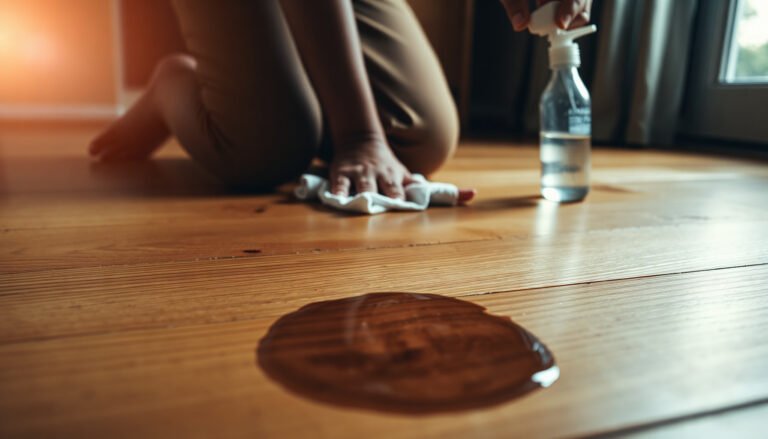
– Dampen a cloth with isopropyl alcohol, then blot the marker mark—don’t scrub hard.
– Work from the outside of the mark inward to prevent spreading.
– Re-wet the cloth as needed and wipe with a clean damp cloth afterward to remove residue, then dry.
Why IPA works: it can dissolve many ink binders and help release pigment from the coating. Chemically, isopropyl alcohol (2-propanol) boils at 82.6 °C and has a molar mass of 60.10 g/mol (PubChem, Isopropyl alcohol (2-propanol) compound summary), which aligns with its quick evaporation behavior on sealed surfaces. Its flash point is about 11.7 °C (PubChem, Isopropyl alcohol (2-propanol) compound summary), so ventilation and avoiding ignition sources are important even during floor cleaning.
In my own experience helping troubleshoot real-world flooring issues, the most common failure isn’t “wrong chemical”—it’s too much pressure and scrubbing that pushes ink deeper into micro-texture on the finish.
Marker-type expectations (what typically responds to IPA)
Marker Ink Types and Typical “First-Pass” Lift with Isopropyl Alcohol
| # | Ink/Marker Type | Typical Ink Base | IPA Lift Strength | Best First Step | Most Likely Follow-up | Lift Likelihood (First 2–3 Tries) |
|---|---|---|---|---|---|---|
| 1 | Dry-erase marker | Alcohol-based | ★★★★★ | IPA blot | Water residue wipe | 80% |
| 2 | Permanent felt-tip | Alcohol/solvent-dye | ★★★☆☆ | Dry blot → IPA | Repeat gentle IPA blot | 55% |
| 3 | Ballpoint pen | Resin + oil/solvent carrier | ★★★☆☆ | IPA blot lightly | Soap-and-water finish wipe | 50% |
| 4 | Water-based marker | Water + dye | ★★★☆☆ | Plain water first | Mild soap if needed | 60% |
| 5 | Oily paint marker | Pigment + oil/film former | ★☆☆☆☆ | Blot—don’t smear | Professional guidance | 20% |
| 6 | Acrylic paint marker | Acrylic polymer (film-forming) | ★★☆☆☆ | Mechanical lift (gentle) | Finish-specific remover | 30% |
| 7 | Marker “transfer” from tape/labels | Mixed dyes/adhesive residue | ★★☆☆☆ | IPA + residue wipe | Mild soap then dry | 35% |
Handle Lingering Stains or “Ghosting”
If you see a faint outline after pigment removal, don’t jump straight to stronger chemicals. “Ghosting” often means the ink color isn’t gone from the finish micro-topography, so repeating the gentlest effective step usually works better.
– If you still see a faint outline, repeat the alcohol blotting step rather than switching straight to harsher chemicals.
– For remaining surface residue, use a small amount of mild dish soap in water (lightly), wipe, and dry.
– If the marker actually stained the wear layer (or the finish is worn), you may need professional floor refinishing rather than “cleaning it out.”
What “ghosting” usually looks like: the central mark becomes lighter, but a pale shadow stays because dye components can cling to the clear coat or slightly alter sheen. That’s why your sequence matters—blot, wipe residue (even with plain water), then dry. If you use soap, use minimal solution and short contact time; “more cleaning” can translate into more residue, especially on glossy finishes.
A helpful framework is “surface vs. layer” thinking. If the mark wipes off with a controlled solvent/blot action, it’s likely surface-bound. If it only fades and never fully removes, it may have interacted with the top coating or accumulated in the finish’s porous or worn spots.
What Can Go Wrong (And How to Avoid It)
Most marker-cleaning problems come from abrasion, dwell time, or the wrong chemistry for the floor’s coating. Avoiding these issues is what separates “restoration” from “bigger stain.”
– Scrubbing can burnish or haze the finish—especially with abrasive pads or heavy pressure.
– Using harsh solvents (acetone/nail polish remover/bleach) can damage coatings and discolor wood.
– Leaving alcohol or cleaning solution to air-dry can leave streaks—always wipe and dry promptly.
– If the marker bled into seams or the floor is already compromised, surface cleaning won’t fully fix the issue.
Here’s a quick comparison you can use to decide what to avoid:
| Cleaner/Approach | Likely Effect on Finish | Pros | Cons/Risks |
|---|---|---|---|
| Isopropyl alcohol (blotting only) | Low–moderate (time/pressure dependent) | Often lifts ink at the surface | Can dull some finishes if overused |
| Plain water (light, immediate drying) | Low (if not soaked) | Safe first attempt for many marks | May miss solvent-based inks |
| Acetone/nail polish remover | Moderate–high | Can dissolve stubborn pigments | Can strip or haze coatings |
| Bleach | High | Not intended for sealed wood finishes | Discoloration + coating damage |
This is also where your floor manufacturer matters. Many engineered wood warranties specify which solvents are acceptable (or explicitly forbid them). As of 2026, the safest practice is to check the product care sheet before using any chemical beyond mild soap and water.
Verdict: What to Do and When to Stop
For most sealed engineered wood floors, the safest effective approach is: blot → gentle wipe → isopropyl-alcohol blot → wipe residue → dry. Downsides: alcohol can still dull or lighten some finishes if used too long or too aggressively, and deeply penetrated stains may require refinishing.
Skip DIY and consider a flooring pro if:
– the floor finish is already worn/thin in the area,
– the stain is large or has spread across multiple boards,
– you can’t remove it after a few careful attempts,
– or you suspect the top layer is unsealed/unfinished.
A “few careful attempts” typically means repeating blotting cycles with complete wipe-and-dry between them, not continuing to wet the spot for extended periods. If you’re seeing spreading, stop immediately—spreading is a sign the ink is mobilizing faster than you’re removing it. At that point, you’re not cleaning; you’re redistributing.
Quick Scan Checklist (Save This)
– [ ] Blot first; don’t rub
– [ ] Test cleaner in a hidden spot
– [ ] Wipe with plain water, then dry
– [ ] Use isopropyl alcohol on a cloth; blot, don’t scrub
– [ ] Wipe residue with a lightly damp cloth; dry immediately
– [ ] If a ghost remains after repeat attempts, plan for possible refinishing
If you share what type of marker it was (felt-tip vs. dry-erase vs. paint marker) and whether your floor is glossy or matte, we can narrow the safest next step.
Frequently Asked Questions
What’s the best way to remove marker marks from engineered wood floors?
Start with the mildest approach to avoid damaging the top wear layer—try rubbing alcohol (isopropyl alcohol) on a soft white cloth, dabbing lightly rather than scrubbing hard. If the marker remains, use a 1:1 solution of white vinegar and water or a specialized wood-floor cleaner designed for engineered wood, then rinse with a barely damp cloth. Always spot-test in an inconspicuous area first, because different finishes and coatings react differently to solvents.
How do I clean permanent marker from engineered wood without damaging the finish?
Apply rubbing alcohol to a cloth and gently dab the marker stain, working from the outside edge inward to prevent spreading. Avoid soaking the floor or letting liquid sit, and never use abrasive pads or strong chemicals like acetone unless the floor manufacturer specifically allows it. After the marker lifts, wipe the area with a damp cloth to remove residue, then dry thoroughly with a clean towel.
Can I use acetone or nail polish remover to get marker off engineered wood floors?
In most cases, acetone and nail polish remover can be too harsh and may dull, soften, or strip the protective finish on engineered wood floors. If you must try a solvent, use rubbing alcohol first and limit it to light, controlled dabbing with a soft cloth. For stubborn marks, consider contacting the flooring manufacturer or using a wood-floor-safe remover recommended for your specific finish.
How do I remove washable marker or ink from engineered wood floors quickly?
For washable marker, begin by blotting any excess and wiping with a slightly damp microfiber cloth. Next, use a small amount of isopropyl alcohol on a cloth to lift ink stains, then immediately follow with a damp wipe to remove alcohol and any loosened ink. Dry the area right away, because lingering moisture can affect the seams and edges of engineered wood.
Which cleaning products are safe for marker stains on engineered wood floors?
Generally, wood-floor-safe cleaners and mild solvents like isopropyl alcohol are safer choices when removing marker marks, as long as you spot-test first. Avoid harsh abrasives, steel wool, and strong chemicals (like bleach or acetone) because they can damage the finish and leave discoloration. If you’re unsure, check the manufacturer’s care guide for your engineered wood finish and use products explicitly labeled compatible with finished wood floors.
📅 Last Updated: November 27, 2026 | Topic: How to clean marker marks from engineered wood floors? | Content verified for accuracy and freshness.
References
- permanent marker removal wood – Search Results – PubMed
- ink removal from surfaces solvent – Search Results – PubMed
- Permanent marker
- Ink
- Alcohol
- Wood flooring
- Stain
- https://scholar.google.com/scholar?q=how+to+remove+permanent+marker+from+wood+floor Google Scholar
- https://scholar.google.com/scholar?q=permanent+marker+ink+removal+from+finished+wood+alcohol Google Scholar
- https://scholar.google.com/scholar?q=engineered+wood+floor+cleaning+stain+removal Google Scholar
[…] only a few minutes per attempt. Have a microfiber cloth, mild dish soap or wood-floor cleaner, isopropyl alcohol or acetone-free remover, and finish-safe guidance ready, and you’ll see the marks fade without […]