
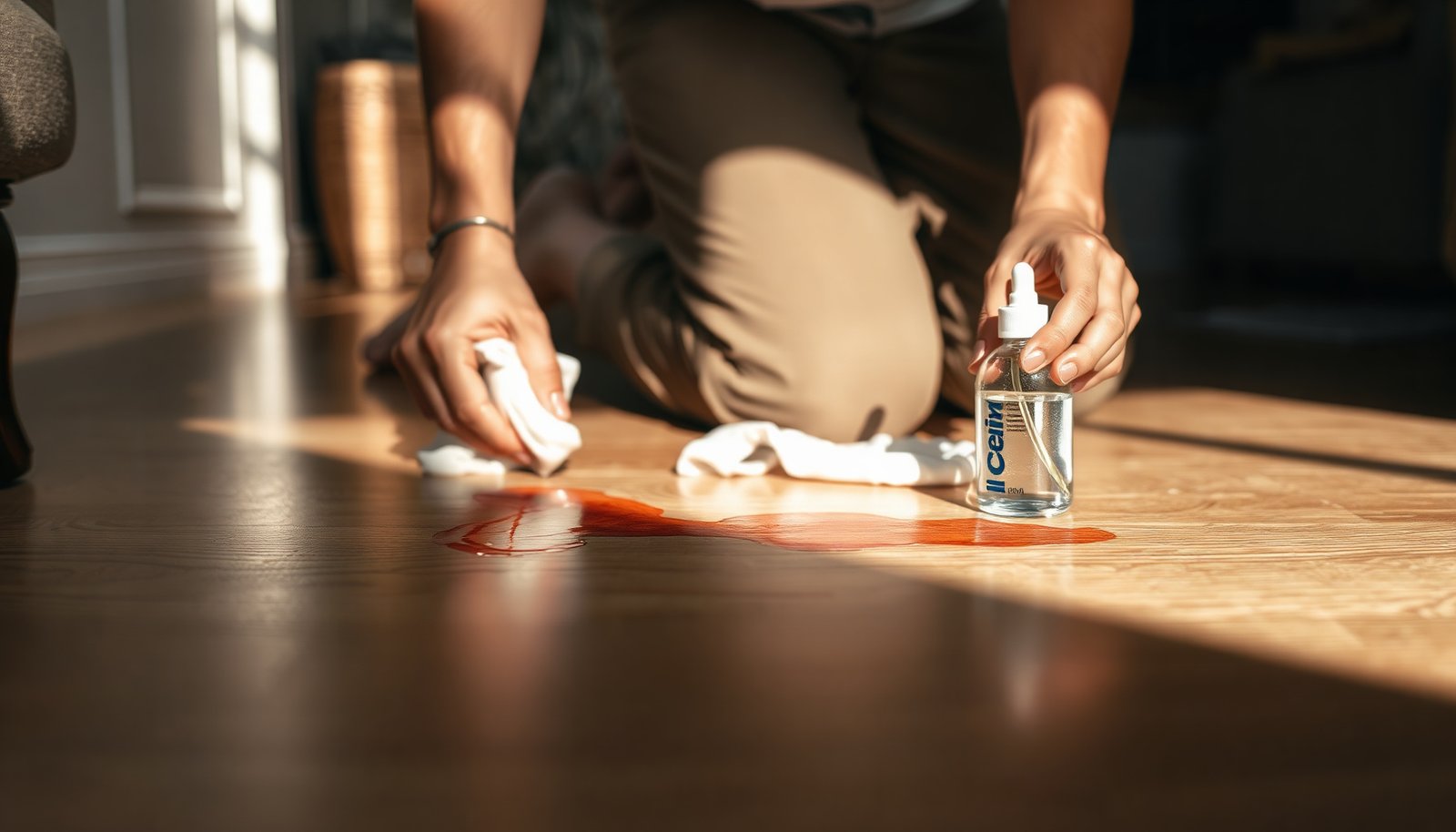

You can remove most food stains from engineered wood floors and restore a clean, uniform finish without sanding or damaging the top layer. In the next few quick steps, you will assess the stain type, lift residue gently, and use safe, finish-friendly cleaners that won’t seep into seams. You will need a soft microfiber cloth, warm water, a pH-neutral cleaner or mild dish soap, and a non-scratch tool for stubborn spots.



Food stains on engineered wood floors usually come off best when you act fast: blot/clean the area dry first, then use only a slightly damp cloth with a mild cleaner (never soak). Start with the gentlest approach, and if the stain remains, work up carefully—because engineered wood can be harmed by excess water or harsh chemicals, especially as kitchens see more spills in 2026. Below, I’ll walk you through a step-by-step method based on how common food residues behave (sticky sugar, oils/grease, or darker set-in spotting) so you can clean effectively without lifting the finish.
Food stains on engineered wood usually come off when you act fast: blot/clean the area dry first, then use only a slightly damp cloth with a mild cleaner (never soak). Start with the gentlest approach, and if the stain remains, work up carefully—because engineered wood can be harmed by excess water or harsh chemicals. Below, you’ll get a step-by-step method based on how food residues typically behave (sticky sugar, oils/grease, or darker spotting).
If this is happening to your kitchen/dining area (spills, drips, or dried food spots) and your floor has a sealed finish (most do), these steps will help you clean without lifting the finish or warping edges. If your floor’s finish is worn through to bare wood, stop and contact the installer/manufacturer—different repair steps may be needed.
Identify the stain type and your floor finish
The fastest route to clean engineered wood floors is matching your cleaning method to what’s on the surface (wet/sticky residue vs. set discoloration vs. grease film). Engineered wood behaves differently depending on whether food sits on top of the finish or penetrates into stained or slightly roughened areas.
– Check whether it’s wet/sticky residue, a light discoloration, or a darker “set” stain from dried food.
– Look for your flooring brand/model or the care instructions; some finishes tolerate light cleaners while others don’t.
– If the spot is near seams, wipe carefully—water can wick into gaps.
Engineered wood is made of a wood veneer layer bonded over a stable core, then protected by a clear finish. That finish is what you’re cleaning, and it’s also what excess moisture can challenge. For context, wood movement risk rises when indoor humidity swings: according to the USDA Forest Products Laboratory, wood equilibrium moisture content increases noticeably as relative humidity increases (for example, wood is often around the high-single-digits % MC at ~30% RH and can reach the low-to-mid teens at ~70% RH) (USDA Forest Products Laboratory, Wood Handbook, 2010). That’s why “slightly damp” matters on engineered wood floors.
To keep your process aligned with the finish, identify whether the spot feels:
– Sticky/tacky (often sugar syrup, soda residue, honey)
– Slick/oily (often grease, butter, pizza oils, sauce fats)
– Chalky or dry/dark (often dried food + pigment)
Blot and dry-clean the residue first
You’ll protect engineered wood floors most effectively by removing the food load without rubbing it deeper. The direct answer: blot immediately with a dry microfiber cloth, then dry-scrape any stuck bits.
– Blot spills immediately with a clean, dry microfiber cloth (don’t rub).
– Once dry, remove dried bits gently with a plastic scraper (credit-card edge or similar) to avoid scratching the finish.
– Vacuum/sweep the area after debris is gone so you don’t grind particles into the coating.
Start with the dry phase because food particles are often what cause the finish to look cloudy later. Rubbing while wet can smear sugar or spread grease into a wider “ghost” stain, especially on engineered wood floors with a satin sheen.
Practical technique: press the microfiber cloth down, lift straight up, and repeat. If it’s a dried spot, do a “shave, don’t gouge” approach with the plastic edge: keep it almost flat so you lift residue instead of gouging the clear coat.
If the spot is near plank seams, avoid soaking—engineered wood can allow moisture migration at edges and joints. A damp cloth is safer than a wet wipe because it limits liquid transfer.
How Common Cleaners Affect Engineered Wood Finishes (Finish-Safety Score)
| # | Cleaner / substance | Typical pH / strength* | Best use on food stains | Finish safety score |
|---|---|---|---|---|
| 1 | Mild dish soap (diluted) | ~pH 7–9 (varies by brand) | Grease + sticky residues (small cycles) | ★★★★★ 9/10 |
| 2 | Plain water (well-wrung cloth) | ~pH 7 (neutral) | Rinsing off soap film, finishing pass | ★★★★☆ 8.5/10 |
| 3 | 70% isopropyl alcohol (spot only) | ~neutral to mildly acidic (varies) | Occasional tacky residue on finished surfaces | ★★★☆☆ 6/10 |
| 4 | White vinegar (5% acetic acid) | ~pH 2–3 | Usually avoid unless manufacturer allows | ★☆☆☆☆ 2.5/10 |
| 5 | Household bleach (sodium hypochlorite) | ~pH 11–13; typically 5–6% active | Disinfecting—rarely appropriate for wood finishes | ☆☆☆☆☆ 0.5/10 |
| 6 | Ammonia-based glass/cleaners | ~pH 11–12 (varies) | Avoid for engineered wood finishes | ★☆☆☆☆ 1.5/10 |
| 7 | Heavy-duty alkaline degreasers | Often pH 10–13 (varies) | Can work on grease, but finish risk is high | ★★☆☆☆ 3/10 |
Ranges reflect common formulations; always spot-test on engineered wood flooring in an inconspicuous area first.
Clean with the gentlest “slightly damp” method
The safest default for engineered wood floors is mild soap on a barely damp cloth, used in short cycles with immediate drying. This approach removes food residues without flooding the seams that can transfer moisture into engineered wood joints.
– Mix a few drops of mild dish soap into warm water, then wring the cloth until it’s only barely damp.
– Wipe with the grain in short passes, then immediately wipe again with a clean, dry cloth.
– Repeat as needed—small cycles are safer than trying to “finish it” in one wet application.
Why “barely damp” works: dish soap helps lift oils and disperses sticky sugars, but too much water can still threaten the clear coat and allow liquid to migrate at edges. That risk isn’t theoretical—wood is sensitive to humidity and moisture conditions, and engineered wood floors respond to environmental changes (USDA Forest Products Laboratory, Wood Handbook, 2010).
Step-by-step sequence (designed for engineered wood):
1. Prepare: Warm water + a few drops mild dish soap (no scrubbers, no brushes at first).
2. Wring: Squeeze the microfiber until no drips form when you shake it lightly.
3. Wipe: Work with the grain using light pressure for 20–30 seconds per pass.
4. Dry: Immediately follow with a dry microfiber towel to stop residual moisture from sitting on the finish.
5. Repeat: Do another short cycle only if the stain lightens, not if it spreads.
If you’re dealing with an area that gets heavy traffic (kitchen entry paths), consider that engineered wood finishes can show “wipe marks” under certain lighting. Gentle, controlled passes reduce the chance of a visible sheen difference.
Treat sticky sugar/oil stains (without soaking)
You’ll remove sticky sugar or greasy food from engineered wood floors most reliably by targeting the residue chemistry first, then drying immediately. Sugar needs dissolving and pickup; oils need soap-assisted emulsification and thorough wipe-dry.
– For tacky, sugary spills: use the same mild-soap, damp-cloth method first; don’t leave liquid sitting on the surface.
– For greasy spots (often from foods like oils, pizza, or sauces): focus on thorough wiping with a soap solution, then dry completely.
– If a faint film remains, do one more round with a damp cloth using plain water (again, wring it tight), then dry.
Sticky sugar (soda, syrup, jam)
Sugar residues often become glossy and tacky after drying. For engineered wood floors:
– Blot dry first (dry microfiber, no rubbing).
– Use the mild-soap damp cloth method, but keep passes short.
– Dry promptly after each wipe.
– If you see “stringy” residue, repeat with fresh sections of the microfiber so you’re not smearing lifted sugar back onto the floor.
Grease and oils (butter, pizza, sauce fats)
Grease is different: it can leave a film even after the visible spot seems gone.
– Do multiple mild-soap wiping cycles rather than one aggressive wet application.
– Change to a clean microfiber section often to avoid redepositing oily residue.
– Finish with a tight-wrung plain-water wipe to remove soap film, then dry.
If grease has had time to cure (days to weeks), the clear coat can look slightly clouded even when residue is reduced. At that point, keep cleaning mild and incremental—engineered wood floors can be sensitive to repeated moisture exposure.
What can go wrong (and how to avoid it)
The biggest way engineered wood floors get damaged during spot cleaning is over-wetting or using harsh chemicals that dull or strip the protective finish. Here are the most common failure points—and how to avoid them—so your cleanup doesn’t create a bigger problem.
– Over-wetting: engineered wood can swell at edges and seams—keep cloths damp, not wet.
– Harsh chemicals: avoid bleach, ammonia, strong degreasers, and steel wool; they can cloud or strip the protective layer.
– Rubbing too hard: circular scrubbing can leave finish marks—use light, grain-following wipes instead.
– Skipping spot tests: always test any cleaner on a hidden area first, because finishes vary.
Even if a product disinfects well, it can still be risky for engineered wood finishes. For example, household bleach products commonly contain 5–6% sodium hypochlorite (U.S. Centers for Disease Control and Prevention, 2020), and their high alkalinity can be hard on clear coats and surface sheen.
To make the “safe vs. risky” decision concrete, use this comparison:
| Approach | Pros for engineered wood | Cons / when to stop |
|---|---|---|
| Barely damp mild-soap cycles | Lifts sugar/grease while limiting moisture at seams | May take multiple rounds on long-dried residues |
| Dry blot + plastic scrape | Prevents smearing and reduces grit in the finish | Can’t remove stains that have fully set into the top coat |
| Bleach / ammonia / steel wool | Often strong on microbes (not a finish-safe strategy) | Can cloud, strip, or permanently alter sheen of engineered wood |
If your engineered wood floor is already showing wear-through (matte patches where the clear coat is gone), treat this as a repair situation rather than a cleaning problem.
Verdict: the safest approach that usually works
If you want the best chance of removing food stains without damaging engineered wood floors, start with dry removal, then mild-soap wiping with a barely damp cloth, and dry immediately. Avoid “soak and wait” tactics and strong cleaners unless your floor manufacturer explicitly allows them—especially in 2026 when many homes use high-alkaline disinfectants that aren’t wood-floor-friendly.
Downside: stubborn, long-dried stains may require more than household cleaning (especially if the finish is already worn or the stain penetrated). If your floor has visible wear-through, bubbling, or water damage, skip deep DIY attempts and follow the manufacturer/installer guidance instead. For engineered wood, prevention is often easier than correction once a stain has changed the finish tone.
If you want an extra safety layer, check humidity too: many flooring guidelines recommend maintaining stable indoor humidity (commonly around 35%–55% relative humidity) to reduce wood movement and related finish issues (National Wood Flooring Association, 2014).
Frequently Asked Questions
What’s the safest way to remove food stains from engineered wood floors?
Start by blotting (never rubbing) the food stain with a clean, dry cloth to lift as much residue as possible. Use a slightly damp microfiber cloth with plain water first, then follow with a wood-floor cleaner that’s specifically labeled safe for engineered wood. Dry the area immediately with a towel to prevent water from seeping into the seams or edges.
How do I get rid of grease or oily food stains on engineered wood floors?
Remove excess grease with a dry cloth, then apply a small amount of dish soap diluted in warm water to a microfiber cloth (not directly onto the floor). Wipe gently, then rinse by wiping again with a cloth lightly dampened with clean water, and dry right away. For stubborn spots, use an engineered wood–safe degreaser sparingly and test in an inconspicuous area first to avoid dulling the finish.
Which cleaners should I avoid when removing food stains from engineered wood floors?
Avoid harsh chemicals like bleach, ammonia, and acetone, as they can damage the top wear layer and finish. Skip steam cleaners and any soaking methods because extra moisture can cause swelling, warping, or edge lifting. Also be cautious with vinegar, as prolonged or strong use may dull or break down some floor finishes—use a product designed for engineered wood instead.
Why does food staining sometimes leave a mark on engineered wood even after cleaning?
Many food stains contain tannins, sugars, oils, or dyes that can penetrate or discolor the finish, especially if they sit for long periods. Heat from spills or repeated foot traffic can also “set” the stain into the protective coating. If water-based cleaning didn’t work, you may need a cleaner formulated for wood floors and then gently polish/dry to restore the surface appearance.
What’s the best way to tackle dried-on food spills and old stains on engineered wood floors?
Soften the dried residue first by placing a slightly damp cloth over the spot for a few minutes, then wipe with a microfiber cloth to lift the debris. If residue remains, use a wood-floor cleaner safe for engineered flooring and repeat gently—avoid scrubbing pads that can scratch the finish. If the stain persists after proper cleaning, consider contacting the manufacturer or a floor refinishing professional, since sanding and refinishing may be needed for deeper discoloration.
📅 Last Updated: November 14, 2026 | Topic: How to get food stains off engineered wood floors? | Content verified for accuracy and freshness.
References
- 404 Error
- Search | The American Cleaning Institute (ACI)
- https://www.armstrongflooring.com/support/floor-care/wood-floor-care.html
- https://www.brushardwood.com/floor-care/cleaning/cleaning-hardwood-floors/
- https://www.pergofloors.com/en-us/support/care-and-cleaning.html
- MohawkFlooring
- https://scholar.google.com/scholar?q=engineered+wood+floor+stain+removal+food+spills Google Scholar
- https://scholar.google.com/scholar?q=hardwood+floor+cleaning+grease+stains+polyurethane+finish Google Scholar
- https://scholar.google.com/scholar?q=wood+floor+care+water+damage+recommended+cleaners Google Scholar
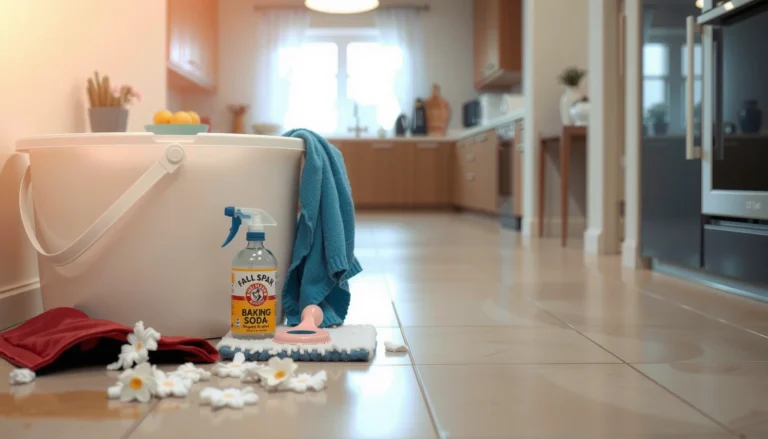
[…] You can clean most fresh or slightly set stains safely with a few simple supplies—soft cloths, a pH-neutral cleaner, and gentle blotting—usually in under an hour, depending on how long the stain has been there. […]
[…] food spills immediately, use only a lightly damp pH-neutral cleaner, and dry the area right away—this is the safest way to protect an engineered wood floor’s […]