
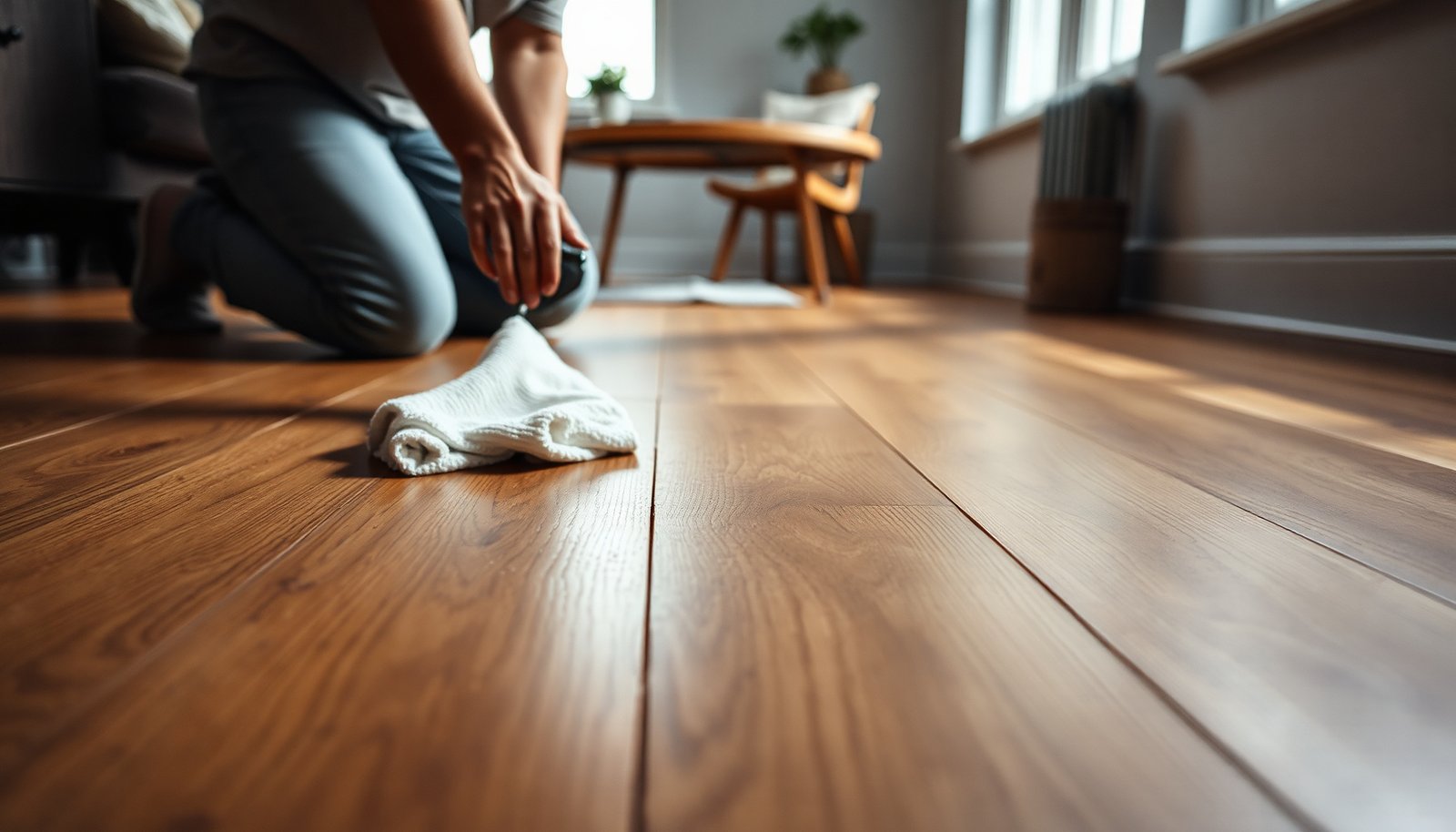

To clean engineered wood floors that are covered in oil, start by blotting and absorbing the excess, then wash the surface with a pH-neutral wood-safe cleaner applied lightly with a damp microfiber cloth. With the right materials—clean rags, absorbent pads, and a gentle cleaner—you can typically handle a small-to-moderate spill in about 30–60 minutes. Work slowly and avoid soaking or harsh solvents so the finish stays intact and the oil lifts cleanly.




Stop the spread fast, then remove the oily film with a wood-safe cleaner using minimal moisture and thorough drying. The goal is to lift the grease layer without soaking engineered wood seams or dulling the urethane/polyurethane topcoat—especially the glossy “oil sheen” that often turns hazy after the spill sits.
If you’ve got an oily spill (cooking oil, furniture oil, treated-wood oil, or a similar film) on an engineered wood floor, this is for you—particularly if your planks have a urethane/polyurethane finish. If you’re not sure what finish you have, proceed conservatively and check the flooring manufacturer’s care guidance first.
Who this is for / when it applies
This guidance is meant for homeowners and facility managers dealing with oil-type residue on sealed engineered wood floors—think kitchens, workshops, and entry areas where accidental drips and furniture-leather transfer happen. As of 2026, the safest approach for engineered wood floors with urethane topcoats is a “least-aggressive-first” routine: blot → gentle cleaner → wipe-rinse (only if recommended) → controlled drying.
Quick triage: what to do in the first 10 minutes
– Blot or wipe up excess oil immediately—don’t rub it wider across the floor.
– Turn off fans/airflow that could blow debris into the spill and keep the area contained.
– Pick up solids first (tape off or lift, don’t smear with a cloth).
– If you can, reduce traffic right away and keep the oily area clear so engineered wood floors don’t get scratched while the film is still wet.
– Use absorbent pads/paper towels and fold to expose a clean surface each time—engineered wood floors don’t need “scrubbing,” they need controlled removal.
Why speed matters: once oil spreads, it increases the surface area that can haze under polyurethane. It also gives the oil time to migrate toward joints and edges of engineered wood floors, where moisture and residue can linger.
Choose the right cleaner (and avoid water-soaking)
– Use a wood-floor cleaner that’s designed for engineered wood and the specific finish (poly/urethane-type products are usually the safe route).
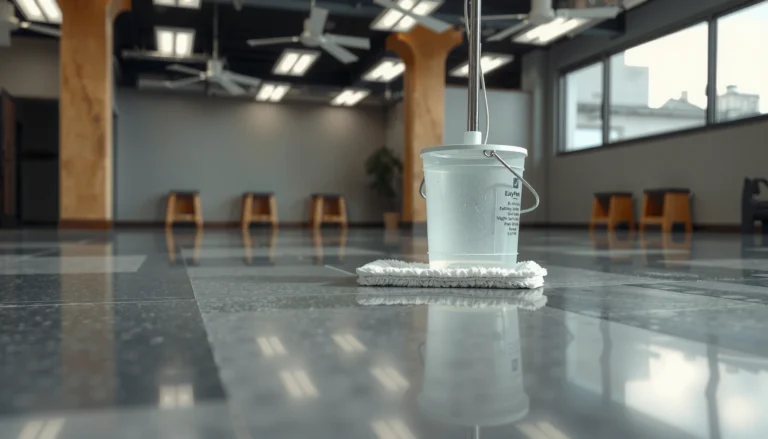
– Use a lightly damp (not wet) microfiber mop/cloth for cleaning—avoid pooling water at all costs.
– Skip harsh degreasers unless the manufacturer specifically allows them; they can soften or haze the finish.
– Prefer cleaners labeled “pH-neutral” for sealed floors when you’re unsure; acidic or solvent-heavy products can change sheen on engineered wood floors.
– If your cleaner requires a rinse step, follow it exactly—engineered wood floors are especially sensitive to residue that dries into a dull film.
A practical anchor: according to the National Wood Flooring Association, maintaining indoor relative humidity around 30–50% helps limit movement-related gapping on wood floors (NWFA, humidity guidance). When engineered wood floors are stressed by moisture and then exposed to extra liquid during cleanup, the combination is what most often leads to long-term haze or seam issues.
Oil type matters—here’s what usually behaves worst
Oil & Film Types That Commonly Leave Haze on Urethane-Finished Engineered Wood Floors
| # | Spill/film type | Dominant chemistry | Typical floor symptom | Finish-safe outlook |
|---|---|---|---|---|
| 1 | Cooking oil (vegetable/canola/olive) | Triglycerides (fatty-acid esters) | Slick sheen that turns hazy | ★★★★☆ |
| 2 | Furniture oil/wax (conditioners) | Mineral oils + waxes (often) | Greasy look with dust attraction | ★★★☆☆ |
| 3 | Treated-wood oil (penetrating) | Oils/resins (e.g., alkyd/drying oils) | Stain-like darkening and tack | ★★☆☆☆ |
| 4 | Motor oil | Petroleum hydrocarbons + additives | Thick residue and persistent grime | ★☆☆☆☆ |
| 5 | WD-40–type products (light oils) | Light petroleum distillates | Film that repels water but attracts dust | ★★☆☆☆ |
| 6 | Hand/body oils (skin transfer) | Fatty acids, esters, waxes | Smudgy “traffic” sheen spots | ★★★☆☆ |
| 7 | Cooking sprays (aerosol oils) | Oil droplets + propellant residues (often) | Halo haze around the drip point | ★★★☆☆ |
This table is a decision guide—not a guarantee. Engineered wood floors with different urethane thicknesses and maintenance histories can behave differently, so always start gentle and spot-test on an inconspicuous area.
Step-by-step cleaning method for oily residue
– After blotting, clean in small sections using gentle pressure and circular motions with a microfiber cloth.
– Follow with a clean, slightly damp cloth pass to remove cleaner residue, then immediately dry with a dry microfiber towel.
– Allow the floor to fully air-dry; keep the area closed off until it’s dry to the touch.
– Change microfiber cloths frequently. With engineered wood floors, a reused oily cloth can redeposit residue and create a shiny-but-dirty look.
– Work with the grain direction and avoid over-agitating the finish. If you see spreading haze, pause and focus on lifting residue rather than adding more moisture.
Here’s the “risk-first” logic: oil behaves hydrophobically (it repels water), so heavy rinsing can push residue into seams rather than removing it from the surface. In 2026, most manufacturer-care guides for urethane-finished engineered floors still converge on controlled moisture and immediate drying as the safest baseline.
A note on acids and DIY “natural” cleaners
According to PubChem, common white vinegar solutions are typically ~5% acetic acid (the acetic acid concentration is what drives the acidity) PubChem (acetic acid/vinegar composition references). That acidic chemistry can be fine on some surfaces, but on sealed engineered wood floors it can contribute to dulling or residue risk—especially if the topcoat is already compromised.
Dealing with stuck-on oil film (without damaging the finish)
– If the oil leaves a slick or hazy layer, repeat the cleaning step rather than switching to stronger chemicals right away.
– For extra grip, use the mildest approved method: multiple gentle passes typically work better than one aggressive scrub.
– If you have a finish that can’t handle abrasion, avoid scrub pads and use only soft microfiber.
– If haze remains after cleaning, re-clean with the same wood-safe cleaner and focus on thorough drying. In my experience, leftover oils often present as “shiny but tacky” until they’re fully lifted and the surface dries completely—.
– If the spill was furniture oil or penetrating treated-wood oil, do not assume it will behave like cooking oil. Engineered wood floors can show longer-lasting discoloration when oils contain resins or drying-oil components.
When oil is stuck, the failure mode is usually one of these: (1) the cloth is too wet, spreading residue; (2) the cleaner is too strong and softens the polyurethane; or (3) residue is removed but not rinsed (if rinsing is required for your product) and it dries as a dull film. The fix is always iterative and gentle on engineered wood floors.
What can go wrong (common mistakes and edge cases)
– Soaking the floor: even engineered wood can warp at seams if liquid pools and sits.
– Using the wrong solvent: some oils and “degreaser” products can dull or strip polyurethane/laminated finishes.
– Leaving residue: oily film can reactivate and attract dust if you don’t rinse/dry properly after cleaning.
– Unknown finish: if your floor is not sealed or you’re dealing with an old incompatible treatment, test carefully in a hidden spot first.
– Over-polishing: repeated dry buffing can temporarily look better but may polish through micro-topcoat areas on engineered wood floors with high-gloss finishes.
Cleaner choice comparison (finish safety vs. grease removal)
| Method | Finish safety on urethane | Oil-film removal | Key risk |
|---|---|---|---|
| pH-neutral wood-floor cleaner + microfiber | High | Good (with repeats) | Too much moisture can still spread oil |
| Diluted dish soap (small amount) | Medium | Moderate | May leave surfactant residue/haze |
| Baking-soda paste (very mild, short contact) | Medium-High | Helps for light haze | Must be removed fully; don’t scrub aggressively |
| Alcohol wipes (spot test only) | Low-Medium | Fair | Can soften some finishes if overused |
| Solvents/degreasers (mineral spirits, acetone, heavy degreasers) | Low | High (but risky) | Can dull/strip polyurethane |
| Finish compatibility with urethane | Best | — | Designed for sealed floors |
| Water pooling likelihood | Lower | — | Use lightly damp microfiber |
| Residue risk after drying | Lower | — | Avoid over-foaming cleaners |
| Sheen change probability | Lowest | — | Gentle agitation preserves gloss |
| Ability to remove oily film without abrasion | Yes | Repeatable | Microfiber lifts residue |
| Ventilation/odor needs | Low | — | Safer indoors |
| Spot-test friendliness | Best | — | Cleaner is predictable on sealed floors |
| Time to visible improvement | Fast to moderate | — | Often clears after 2–4 passes |
| Best for recent vs. aged oil | Both (aged needs more passes) | — | Avoid “escalation” to solvents |
| Skill level required | Beginner-friendly | — | Microfiber technique matters more than strength |
| Best For | Engineered wood floors with urethane topcoats | Oily residue and hazy spots | Safe DIY remediation |
Verdict / tip: when to DIY vs. when to stop
If you have a surface oil spill with visible residue, a careful blot → gentle cleaner → rinse/dry routine is usually the safest DIY path for engineered wood floors with urethane/polyurethane finishes. The tradeoff is time: you often need multiple controlled passes rather than a single “deep clean.” And if the oil has penetrated, reacted with the finish, or already left discoloration, DIY cleaning may not fully restore the original sheen.
Skip DIY escalation—and consider a flooring professional—if the oil has been down for a long time, the floor is sticky across large areas, you see discoloration beyond the spill shape, or you suspect finish failure (e.g., bubbling, peeling, or persistent tack). In 2026, manufacturers continue to warn that aggressive solvents and power scrubbing are among the most common ways engineered wood topcoats end up dull or mottled.
Quick checklist (scan & save)
– [ ] Blot excess oil immediately (don’t spread it)
– [ ] Use a wood-floor cleaner approved for engineered wood finishes
– [ ] Clean with microfiber using minimal moisture (no puddles)
– [ ] Wipe/rinse with a lightly damp cloth (only if the cleaner/product calls for it)
– [ ] Dry right away with a dry microfiber towel
– [ ] Repeat gentle passes if haze/stickiness remains
– [ ] Test any new product in a hidden area first
Frequently Asked Questions
What’s the safest way to clean engineered wood floors covered in oil?
Start by blotting up any excess oil with clean, dry microfiber cloths—don’t scrub yet. Mix a small amount of pH-neutral wood floor cleaner with warm water, lightly dampen a microfiber mop, and clean in the direction of the wood grain. Dry immediately with a second dry cloth to prevent moisture from seeping into the engineered wood layers. If the oil is heavy, repeat in small sections rather than using harsh solvents at first.
How do I remove oil stains from engineered wood flooring without damaging the finish?
Begin with the gentlest approach: a pH-neutral cleaner and minimal moisture. For deeper oil stains, apply a small amount of isopropyl alcohol to a cloth (not directly to the floor) and test in an inconspicuous area, then wipe gently and dry. Avoid acetone, bleach, or aggressive degreasers unless you’re sure the finish can handle them, since they can dull or strip protective coatings. If the stain won’t lift, you may need a specialty wood-safe degreaser or professional refinishing.
Why is it important to avoid soaking engineered wood floors when cleaning oil?
Engineered wood floors are built with layered wood and adhesives, so excess water can penetrate seams and edges, leading to swelling or edge separation. Oil can trap moisture and residue, making it harder to clean later if you spread it with too much liquid. Keep cleaning solutions lightly damp, use microfiber tools, and dry promptly to protect the floor’s finish and structural integrity. This approach also helps prevent cloudy spots and streaking from leftover oil.
Which cleaning products should I use for oily residue on engineered hardwood floors?
Use a pH-neutral cleaner specifically designed for hardwood or engineered wood floors, along with microfiber cloths and a microfiber mop. For spot treatment, consider a wood-safe degreaser that’s compatible with sealed finishes, and always follow label directions. Skip all-purpose cleaners, wax removers, and ammonia-based products that can leave residue or damage the finish. If you’re unsure, do a patch test first to confirm the cleaner won’t discolor or soften the coating.
Best way to prevent future oil buildup on engineered wood floors?
Clean spills immediately by blotting and then wiping with a damp microfiber cloth using a pH-neutral wood floor cleaner. Place mats under cooking appliances, use coasters under oily items, and consider area rugs in high-risk zones like kitchens or garages. Regularly sweep or vacuum with a soft attachment to remove dust that can mix with oil and form a sticky film. Periodic maintenance with an approved hardwood cleaner helps keep the engineered wood finish protected and easier to clean.
📅 Last Updated: November 14, 2026 | Topic: How to clean engineered wood floors covered in oil? | Content verified for accuracy and freshness.
References
- Engineered wood
- https://en.wikipedia.org/wiki/Oil_stain
- Wood flooring
- Wood finishing
- Wood flooring
- White spirit
- Turpentine
- https://scholar.google.com/scholar?q=how+to+clean+engineered+wood+floors+oil+stains Google Scholar
- https://scholar.google.com/scholar?q=removing+oil+from+wood+floor+surface+cleaning Google Scholar
- https://scholar.google.com/scholar?q=engineered+wood+floor+maintenance+cleaning+oily+residue Google Scholar
[…] top veneer. Expect to spend about 20–30 minutes, and plan to have soft cloths, mild dish soap or wood-safe cleaner, and a pH-neutral solvent only if […]