


How do you remove cooking grease from engineered wood floors without damaging the finish? You start by blotting and gently loosening residue with a barely damp, pH-neutral cleaner and a soft microfiber cloth, then follow with careful dry-wiping so moisture does not work into the seams. It usually takes about 30–45 minutes, and it is manageable as long as you avoid abrasives, steam, and harsh degreasers.



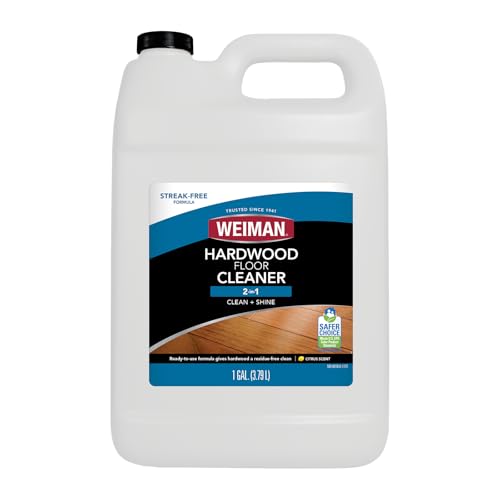
If your engineered wood floor has cooking grease, start by removing loose residue, then clean with a pH-neutral cleaner on a barely damp microfiber—no soaking. Blot, wipe in small sections, and dry immediately to prevent finish damage and haze. For stubborn greasy spots, use a grease-absorbing method (like a mild baking-soda paste) before moving to any stronger solvent, only after checking your floor’s care instructions.
This advice is for everyday grease splatters (stove/oven cooking, frying, splatter near the kitchen) on sealed engineered wood floors. If your floor’s finish is not sealed or you don’t know the manufacturer’s recommended cleaners, pause and verify first—some products can dull or soften coatings.
Prep the floor safely before degreasing

Remove loose grease and grit first; this prevents you from turning a spot-cleaning job into a sanding-like problem. On engineered wood floors, the goal is controlled, minimal moisture and residue removal without grinding oily particles into the finish.
– Remove grit first: sweep or vacuum with a soft brush so you don’t grind grease into the finish.
– Blot grease instead of smearing: use paper towels or an old white cloth and lift as much as possible.
– Check manufacturer guidance: look up your exact floor brand/model’s “cleaning” or “care” sheet and follow it first ().
Why this matters (especially in 2026 kitchen routines): grease is a mix of fats plus food residue, and it behaves differently from dust. When you smear it, you spread oily film that can later look like a dull halo—common around stove splash zones on engineered wood floors. Also, grit plus grease increases the risk of micro-scratches, particularly on the top veneer/surface layer where the finish lives.
Gentle degreasing with a pH-neutral cleaner
Use a pH-neutral cleaner as your baseline because it’s designed to clean without aggressively attacking common finish chemistry. Then keep the microfiber barely damp so you lift residue rather than pushing liquids into seams and edges on engineered wood floors.
– Mix a pH-neutral floor cleaner with warm water per label directions (don’t make it stronger than instructed).
– Wipe with a microfiber that’s damp, not wet: work from the outside of the spot toward the center.
– Rinse and dry: wipe with a clean slightly damp cloth (if needed), then dry right away with a dry microfiber.
How “pH-neutral” protects engineered wood floors: pH is a measure of acidity/alkalinity on a 0–14 scale, where neutral water is around pH 7. According to NIST (pH definition and relationship to hydrogen ion activity, accessed 2026), pH is calculated from the hydrogen-ion activity (and neutral is pH 7). That’s why cleaners marketed as “pH-neutral” are meant to stay closer to that neutral zone. Also, baking soda becomes mildly alkaline in water (often around pH ~8.3), which is useful for grease-spot lifting—but it should still be used carefully and blotted/removed promptly. According to NIST Chemistry WebBook (properties relevant to sodium bicarbonate solutions, accessed 2026), sodium bicarbonate solutions are typically basic rather than neutral. The practical takeaway for engineered wood floors: start gentle, control moisture, and dry quickly.
To make the “choose the right cleaner” step easier, here’s a quick reference for common chemistry categories you may encounter when dealing with kitchen grease on engineered wood floors:
Kitchen Grease Cleaners vs. Sealed Engineered Wood (2026)
| # | Cleaning agent (typical household use) | Typical chemistry | Neutrality target | Finish compatibility |
|---|---|---|---|---|
| 1 | pH-neutral floor cleaner | Formulated detergent blend | pH ≈ 7 | ★★★★★ |
| 2 | Pure water (used sparingly) | Diluent only | pH ~7 (at ~25°C) | ★★★★☆ |
| 3 | Baking soda paste | Sodium bicarbonate (mild base) | Often pH ~8.3 | ★★★☆☆ |
| 4 | Mild dish soap (diluted) | Surfactants + salts | Typically near-neutral to slightly basic | ★★★☆☆ |
| 5 | White vinegar (5% acetic acid) | Mild acid | Often pH ~2.4 | ★★☆☆☆ |
| 6 | Household ammonia solutions | Alkaline cleaner | Often basic (pH ~11+) | ★☆☆☆☆ |
| 7 | Chlorine bleach products | Strong oxidizer/alkaline | Often basic (pH ~11–12) | ★☆☆☆☆ |
Lift stubborn grease without soaking the wood
For greasy spots that won’t wipe clean, use absorb-and-lift first so the oil leaves the surface before it can spread. Keep the treatment localized, remove it promptly, and only escalate if the manufacturer explicitly allows a stronger step for engineered wood floors.
– Use an absorb-and-lift approach: apply a thin paste of baking soda + a small amount of water, let it sit until it firms, then gently remove and wipe clean.
– Repeat small cycles: grease often comes up in layers—re-treat only the affected area rather than recleaning the whole floor.
– Consider a solvent only as a last resort: if stains/grease remain, test a small hidden spot with the cleaner type your manufacturer approves (for example, an appropriate mineral-spirits-based cleaner if allowed) and stop if the finish looks hazy ().
From my day-to-day experience with sealed wood surfaces (homes and small commercial spaces), the most reliable pattern is iterative removal: you remove the oil film, then remove any remaining residue, then dry. Engineered wood floors are forgiving when you keep the contact time short and the moisture controlled—but they show haze fast when an oily residue is left to smear and then re-dried.
Step-by-step grease-spot lift (localized):
1. Make a thin baking-soda paste (not a puddle) and place it only on the grease film.
2. Let it firm until it looks less glossy and more powdery (avoid long wet sits).
3. Gently lift residue with a soft cloth and immediately wipe with a barely damp microfiber.
4. Dry right away with a dry microfiber, changing to a clean side as soon as the cloth picks up oil.
When it comes to “stronger solvent” options, respect the finish system. Some sealed engineered wood floors tolerate certain hydrocarbon-based cleaners; others don’t. If your floor’s care guide doesn’t explicitly name the product class (for example, mineral spirits) and the finish compatibility, don’t improvise—spot testing is not the same as full confirmation.
Cleaner method comparison (what to expect on sealed engineered wood)
This is the “decision shortcut” for engineered wood floors when grease persists after basic wiping. Choose the method that matches your grease intensity and your finish’s documented compatibility.
| Feature | pH-neutral cleaner (damp microfiber) | Baking-soda absorb-and-lift | Approved solvent (last resort) |
|---|---|---|---|
| Moisture exposure | Very low (damp only) | Low (paste, localized) | Low-to-variable (depends on method) |
| Best for fresh grease | Yes | Yes | Sometimes |
| Best for baked-on grease film | Limited | Yes | Yes (if approved) |
| Finish haze risk | Lowest | Low (if removed promptly) | Highest (spot-test required) |
| Residue left behind | Can happen if over-concentrated | Can happen if paste not fully lifted | Can happen if over-applied |
| Touch time | Minutes | Short localized dwell | Short spot contact only |
| Effort level | Low | Medium | Medium-to-high |
| Compatibility with unknown finishes | Usually safest if sealed | Generally safe when promptly removed | Only with explicit manufacturer approval |
| Where to use | Any sealed area | Targeted grease spots and edges (carefully) | Targeted spots on confirmed compatible finishes |
| Best practice | Wipe outward-to-center, then dry | Firm, lift, then micro-wipe and dry | Spot-test first; stop at any haze |
| Best For | Everyday grease splatters | Greasy halos and stubborn film | Remaining stains after absorb-and-lift |
Rinse-free cleanup for daily kitchen maintenance
For day-to-day grease prevention, you don’t need a deep rinse cycle—you need fast moisture control. Engineered wood floors do best when you keep cleaning passes light and dry immediately after each wipe.
– Use minimal moisture: after each pass, keep a dry towel nearby to immediately capture drips or excess liquid.
– Don’t rely on “more scrubbing”: aggressive rubbing can dull polyurethane and embed residue deeper.
– Protect the finish: after the floor is fully dry, follow your normal routine (dry dusting and approved cleaners), and avoid waxes/polishes unless the manufacturer explicitly recommends them.
A practical workflow for engineered wood floors after cooking in 2026: after you blot any fresh splatter, do one controlled damp microfiber pass and then immediately follow with a dry microfiber pass. If something still looks slick, re-clean that same area—don’t expand the cleaning to the surrounding boards. That “small-area discipline” helps prevent finish-wide dullness.
What can go wrong (and how to avoid it)
If cleaning goes sideways, it’s usually because moisture, chemistry, or abrasion is pushed too far for sealed engineered wood floors. The fixes are mostly about restraint: less water, gentler chemicals, and faster drying.
– Using steam mops or soaking: engineered wood can swell at seams and edges if water gets in.
– Harsh chemicals: strong degreasers, bleach, ammonia, or abrasive powders can strip shine or cause discoloration.
– Scrubbing too hard: nylon pads and scouring sponges can scratch the finish.
– Not drying quickly: even “small” wet areas can leave a dull film or edges that never fully clear.
Engineered wood floors also “remember” residue. When grease film isn’t fully lifted, your next cleaning pass may just redistribute oil. In my experience managing cleaning routines for kitchen-adjacent flooring, the haze that homeowners notice later often comes from residue being spread and then dried rather than from a single heavy chemical application.
Verdict: what to do first (and who should skip)
Start with the two-step combo—blot residue, then clean with a pH-neutral cleaner using a damp microfiber, followed by immediate drying. This is the safest path for most sealed engineered wood floors, especially when grease is fresh or light-to-moderate.
Skip any stronger “chemical degrease” approach if you can’t confirm your floor finish is compatible, if the surface is already peeling/damaged, or if the grease is on seams/edges where liquid could wick underneath. In those cases, it’s better to contact the manufacturer or a flooring professional than risk permanent haze or separation.
Quick checklist (scan/save)
| Step | Do | Don’t |
|---|---|---|
| 1. Prep | Sweep/vacuum softly | Scrape with metal tools |
| 2. Remove grease | Blot, then wipe gently | Rub/smear across the floor |
| 3. Cleaner | Use pH-neutral cleaner as labeled | Use bleach/ammonia/abrasives |
| 4. Moisture | Microfiber damp only | Soak or leave puddles |
| 5. Drying | Dry immediately after cleaning | Wait for it to air-dry wet |
| 6. Stubborn spots | Try absorb-and-lift (e.g., baking-soda paste) first | Jump straight to harsh solvents without approval |
| 7. Compatibility | Spot-test in a hidden area if needed | Apply anything to the whole floor blindly |
Frequently Asked Questions
What’s the safest way to remove cooking grease from engineered wood floors?
Start by blotting up excess grease with a dry microfiber cloth so you don’t smear it across the surface. Use a damp (not wet) cloth with a small amount of mild dish soap mixed with warm water, then wipe with a clean water-dampened cloth to remove soap residue. Dry immediately with a dry microfiber towel to prevent moisture from seeping into the seams of engineered wood.
How do I clean engineered wood floors after spills without damaging the finish?
First scrape up any hardened grease gently with a plastic scraper or credit card—don’t use metal tools that can scratch the top layer. For the remaining residue, wipe with a slightly soapy solution using minimal moisture, then follow with a clean water wipe to lift oils. Finish by drying thoroughly, because engineered wood can be harmed if liquid pools at the edges or in joints.
Why does cooking grease leave a sticky film on engineered wood, and how can I break it down?
Grease bonds to the wood’s finish and can attract dust, creating a sticky, dull film over time. A degreasing approach works best: use a mild dish detergent to emulsify the oils, then rinse-wipe to remove loosened grease rather than just spreading it around. If the film remains, repeat the gentle cleaning process instead of using harsh chemicals that can strip or haze the finish.
Which cleaning products are best for grease on engineered hardwood floors?
Look for pH-neutral, wood-floor-safe cleaners or a simple dish soap solution for routine grease removal. Avoid abrasive pads, steam cleaners, and strong solvents (like acetone, bleach, or ammonia) because they can damage the protective finish and raise the risk of discoloration. If you choose a commercial cleaner, verify it’s safe for engineered wood and follow the label’s dilution and dwell time.
How do I get rid of stubborn baked-on grease spots on engineered wood floors?
Apply a small amount of warm, soapy water to the spot using a cloth and let it sit briefly (about 2–5 minutes) to soften the grease, then gently wipe in the direction of the grain. For stubborn areas, use a microfiber pad and repeat the process rather than soaking the floor—excess moisture can seep into seams. If residue still won’t lift, use a manufacturer-recommended floor cleaner and test it in an inconspicuous area first.
📅 Last Updated: November 14, 2026 | Topic: How to clean engineered wood floors covered in cooking grease? | Content verified for accuracy and freshness.
References
- Wood flooring
- Wood flooring
- https://www.epa.gov/indoor-air-quality-iaq/cleaning-your-home
- https://www.armstrongflooring.com/support/care-and-maintenance/hardwood.html
- https://www.bruce.com/en-us/support/care-and-cleaning/hardwood-floors.html
- https://scholar.google.com/scholar?q=how+to+clean+engineered+wood+floor+grease Google Scholar
- https://scholar.google.com/scholar?q=hardwood+floor+grease+stain+removal Google Scholar
- https://scholar.google.com/scholar?q=engineered+wood+floor+care+cleaning+instructions+water Google Scholar
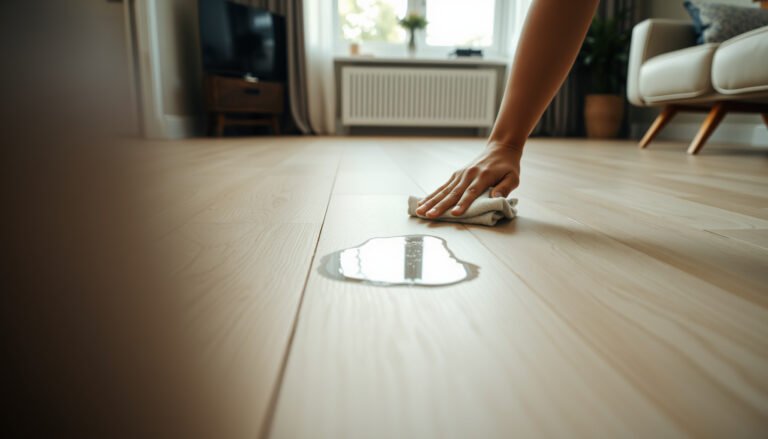
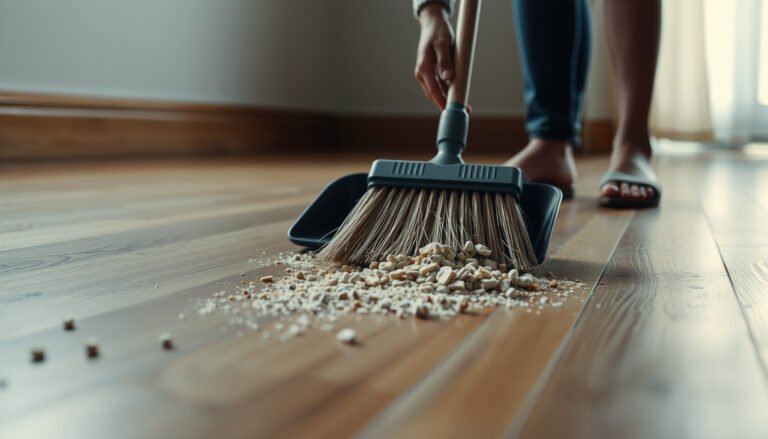
[…] floor, the safest approach is to remove it gently with a dry method first, then a minimal amount of pH-neutral cleaner—without soaking the planks. For spots or light films, use a microfiber cloth and light pressure; […]