
You’ve pulled away old baseboard caulk, only to find a cloudy, sticky residue still bonded to your hardwood. With the right softening agent (often a caulk remover or mild solvent), a plastic scraper, and microfiber cloths, you can loosen and lift the buildup without damaging the finish. Most stubborn spots take about 15–30 minutes per area, so you can restore a clean, even surface quickly.




Start by softening the caulk residue, then remove it gently with plastic scraping and a finish-safe cleaner. For most jobs, the safest approach is to test your method in a hidden spot first, work slowly to avoid scratching, and finish by cleaning and drying thoroughly. If the residue is already dried in place, you’ll likely need a solvent or heat to loosen it—especially for silicone caulk—before any scraping. This guide walks you through the least risky order of operations so you can get the residue up without harming your hardwood’s finish.
What to Know Before You Start
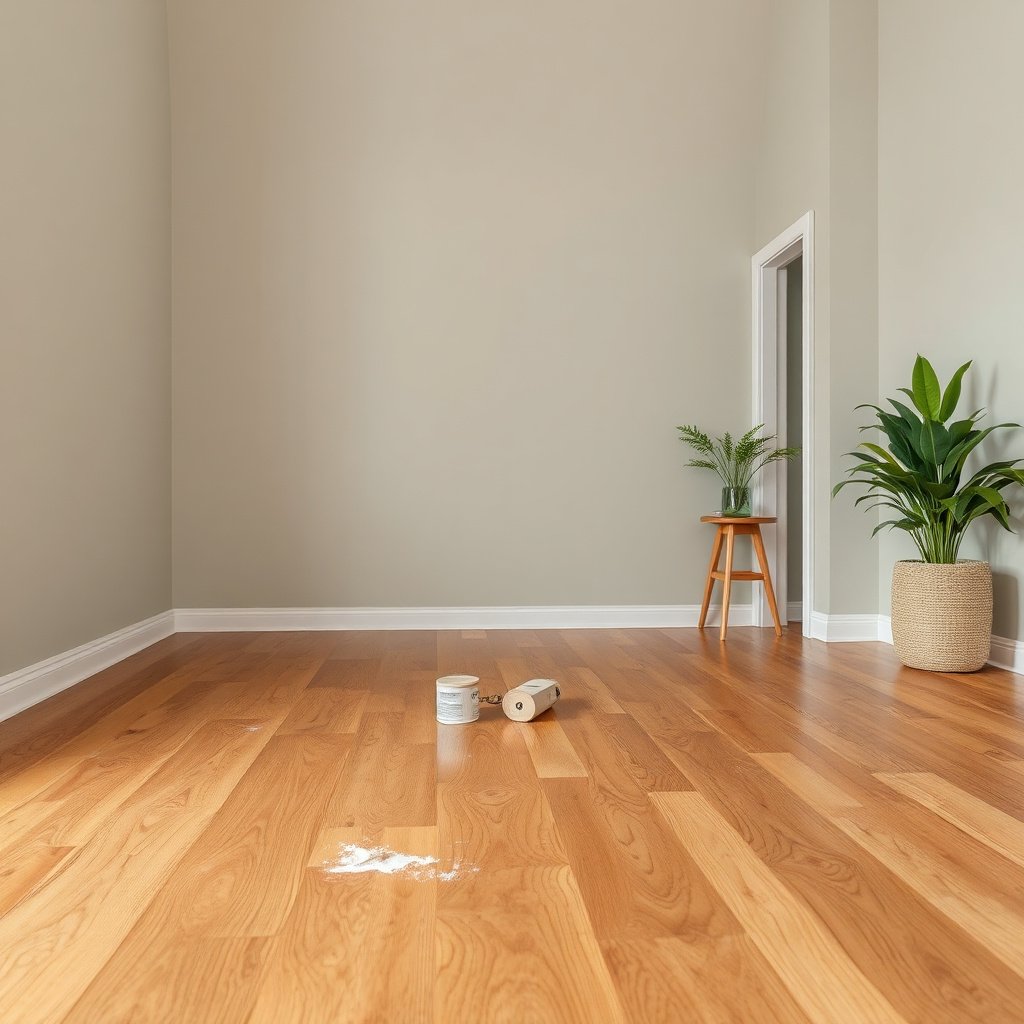
The best way to avoid finish damage on hardwood floors is to identify the caulk chemistry and control moisture exposure before you scrape. Caulk residue behaves very differently depending on whether it’s latex/acrylic (water-based) or silicone/hybrid (more chemistry-resistant), and that determines what “softening” actually means.
– Identify the caulk type if you can (latex/acrylic vs silicone), because silicone usually needs a stronger solvent approach.
– Figure out whether your hardwood has a sealed finish (most do) and treat all solvents as “test first” until you know they won’t dull or strip the surface. As of 2026, manufacturers still commonly recommend “damp, not wet” cleaning around sealed edges because standing moisture can creep into seams and cause long-term problems.
– Plan for patience: stubborn residue often comes off in layers, not in one pass. According to the National Wood Flooring Association, hardwood flooring is typically acclimated to about 6%–9% moisture content before installation, which is one reason soaking can cause mismatch and damage (NWFA).
Gather Safe Tools and Finish-Friendly Cleaners
The safest toolkit for hardwood floors is the one that reduces scratching and limits chemical spread while you lift caulk residue. In practice, most finishing failures come from metal tools, over-wetting, or letting solvents dwell too long.
– Use non-damaging tools: plastic scraper/putty knife, soft microfiber cloths, and cotton swabs for edges.
– Choose the least aggressive cleaner first: a mild, pH-neutral floor cleaner for general residue, then move up only if needed.
– If you use a solvent or caulk remover, apply it carefully (small amount, short contact time) and always follow the product label.
Sealant Residue Types Common in Hardwood Edges (Typical Finish-Safety of Starting Method)
| # | Sealant / Caulk Residue Type | Common Use Around Floors | Least Aggressive First Softening | Finish-Damage Safety | What Usually Escalates |
|---|---|---|---|---|---|
| 1 | Paintable latex / acrylic caulk (water-based) | Baseboards & trim gaps | Warm, damp pH-neutral cleaner cloth | ★★★★★ | Usually just more softening time |
| 2 | Acrylic latex (mildew-resistant variants) | Bathroom edges & low-traffic seams | Damp cloth + repeated wipe cycles | ★★★★☆ | More dwell time on dried spots |
| 3 | Hybrid polymer (e.g., silyl-terminated / MS polymer) | Cabinet seams & mixed-use areas | Damp softening + plastic scraping | ★★★☆☆ | Targeted remover may be needed |
| 4 | Polyurethane sealant | Higher-flex joints & durable trim work | Cleaner softening + swab work | ★★★☆☆ | Solvent escalation (small-area testing) |
| 5 | Silicone caulk (acetoxy cure) | Wet areas, bathroom transitions | Light cleaner softening (expect limited lift) | ★★☆☆☆ | Targeted silicone remover + careful wipe |
| 6 | Silicone caulk (neutral cure variants) | General-purpose wet/water-resistant seams | Cleaner softening in short, repeated cycles | ★★☆☆☆ | Remover/solvent escalation after test spot |
| 7 | Butyl rubber / tape-style sealant residue | Underlayment and edge sealing (varies) | Minimal moisture softening + mechanical lift | ★☆☆☆☆ | Often requires dedicated removal chemistry |
Step-by-Step: Loosen, Remove, Then Clean
The most reliable order for hardwood floors is: soften the caulk residue first, scrape lightly, then clean and dry immediately to protect the finish. This sequence prevents you from grinding the residue into the protective coating.
– Step 1: Try gentle softening
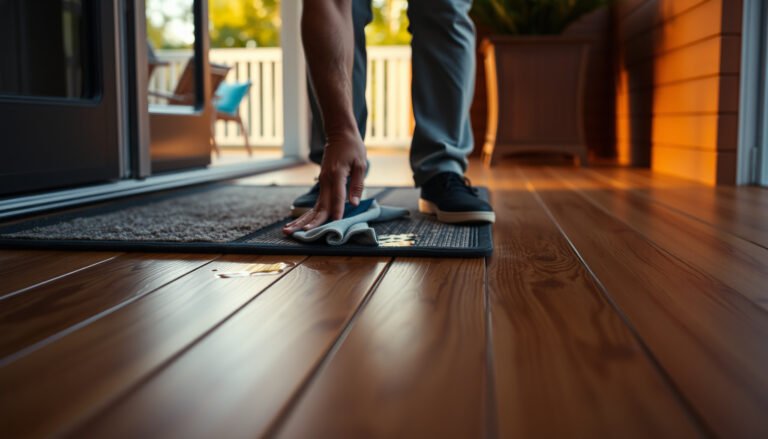
– Dampen a cloth with your chosen cleaner (or a small amount of the recommended solvent), place it over the residue for a short time, then wipe.
– Keep the floor from getting wet—hardwood doesn’t like soaking, especially at seams.
– If you’re dealing with silicone caulk residue, expect slower lift: many silicone sealant technical data sheets describe skin-over in roughly 10–30 minutes and cure progression around ~24 hours under typical conditions (but always follow the specific product label).
– Step 2: Scrape without gouging
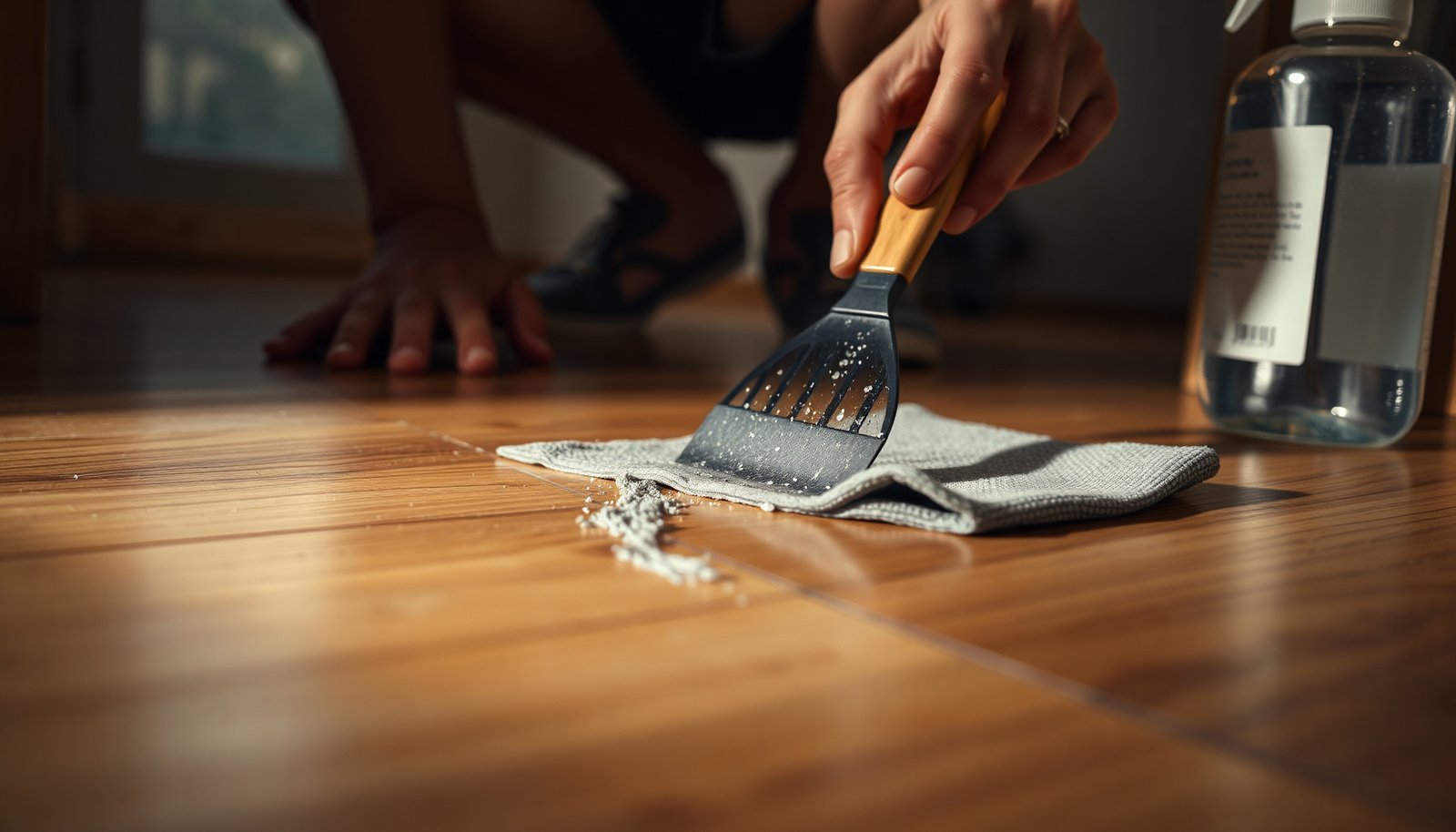
– Use a plastic scraper at a low angle and pull the softened residue toward you.
– Work in small sections and re-soften as needed rather than forcing harder scraping.
– As you scrape, keep re-checking the wood grain: if the scraper starts catching, stop—extra pressure usually turns a residue problem into a finish problem on hardwood floors.
– Step 3: Target stubborn bits
– For leftover haze or thin residue, dab lightly with your cleaner/solvent on a cloth or swab, then wipe immediately.
– Repeat until the surface looks clean, then do a final wipe with a lightly damp (not wet) cloth and dry with a clean microfiber.
Here’s the tradeoff to keep in mind as you work on hardwood floors with stubborn caulk residue:
| Approach | Pros | Cons / Risks |
|---|---|---|
| Soften → plastic scrape → finish-safe clean | Lower scratch risk, controlled moisture, usually compatible with sealed finishes | May require multiple rounds for thick or deeply bonded caulk residue |
| Solvent/heat first → scrape → clean | Faster loosen for silicone-like residue if you’re confident in a tested spot | Higher chance of finish dulling or spreading softened residue across hardwood |
From my experience working around common floor-install details (and consistent documentation across flooring best practices), the main “aha” is that silicone caulk residue often behaves like a film: once it smears, it can look worse than the original ridge.
Restore the Look After Residue Removal
Once the caulk residue is gone, the goal is to remove any chemical film and return the sheen level of your hardwood floors. Finish-safe cleaning and thorough drying matter as much here as the scraping.
– Once residue is gone, clean the area with a finish-safe floor cleaner to remove any chemical film left behind.
– Dry the area thoroughly—use a dry towel and let airflow continue for a while (especially if you used a solvent).
– If your floor looks slightly dull, you may need a light “spot” refresh using your floor’s recommended polish or maintenance product. In most maintenance routines, this means using the same manufacturer-approved maintenance cleaner/polish designed for your floor’s finish type (e.g., polyurethane-safe or oil/wax-specific), applied sparingly and buffed according to label directions.
What Can Go Wrong (And How to Avoid It)
On hardwood floors, most failure modes come from scratching or from dissolving/smearing caulk residue rather than removing it. If you avoid over-wetting and metal tools, you’ll eliminate the majority of preventable finish problems.
– Scratches from metal tools: steel scrapers/razor blades can permanently mark hardwood—stick to plastic or wood-safe tools.
– Finish damage from harsh solvents: products like acetone/paint thinner (and some “heavy-duty” removers) can dull, soften, or strip certain finishes. Always test first in an inconspicuous area.
– Over-wetting the floor: too much liquid can seep into seams and edges; apply to a cloth or swab rather than pouring.
– Caulk type mismatch: if you treat silicone like latex (or vice versa), residue may smear instead of lift—reassess and adjust.
As of 2026, a lot of modern hardwood finishes are protected by urethane/polyurethane topcoats that can still haze when exposed to strong solvents. Keeping chemicals localized to the caulk residue spot and minimizing dwell time reduces that risk significantly.
Verdict: The Safest Path (With Downsides)
If you want the best balance of results and lower risk, soften the residue first, scrape gently with plastic, and finish with a finish-safe cleaner. The downside is that this method can take multiple rounds—especially if the residue is thick or deeply bonded.
Skip this DIY approach if:
– You’re dealing with an unsealed/unfinished hardwood surface,
– You’re not sure what finish is on the floor,
– The residue is extensive across many boards and you can’t confidently test products.
Quick Checklist (Save This)
| Situation | First Move | Avoid |
|---|---|---|
| Dried residue on top | Softening cloth + gentle wipe, then plastic scraping | Steel tools, aggressive scrubbing |
| Silicone-like stubborn haze | Solvent/caulk remover applied carefully to residue, then wipe | Letting chemicals spread across a large area |
| Residue in seams | Use swabs for targeted cleaning | Soaking the gap or flooding with liquid |
| Finish looks dull after cleaning | Re-clean with finish-safe cleaner and dry fully; consider finish-specific maintenance | More scraping or harsher solvents immediately |
Frequently Asked Questions
What is the safest way to remove stubborn caulk residue from hardwood floors?
Start with the least aggressive method: soften the residue with a small amount of warm water (or mineral spirits for some adhesives) and gently scrape with a plastic scraper or old credit card. Avoid steel wool and harsh abrasives that can scratch hardwood finish and open the pores of the wood. If residue remains, use a hardwood-safe adhesive remover labeled for flooring, test in an inconspicuous spot, then wipe clean and dry thoroughly.
How can I clean silicone caulk residue off hardwood without damaging the finish?
Silicone residue often requires a solvent-based approach—apply a small amount of mineral spirits to a clean cloth, let it dwell briefly, and work from the edges inward. Use gentle pressure and avoid soaking the floor; hardwood can absorb liquids and swell. After removal, wipe with a damp microfiber cloth and finish by drying, then consider a light wood floor cleaner to restore clarity.
Which tools and products work best for stubborn caulk buildup on hardwood?
The best tools are a plastic scraper, microfiber cloths, and non-scratch pads designed for delicate surfaces. Look for products like adhesive removers or caulk/“goo” removers that are explicitly safe for hardwood floors or wood finishes, and pair them with gentle cleaning afterward. For water-based residues, mild soap and warm water may be enough, while oil- or solvent-based residues typically respond better to mineral spirits or a purpose-made remover.
Why does caulk residue stick to hardwood floors, and how do I prevent it from coming back?
Caulk residue adheres strongly because it bonds to the finish and cures into a tough film that clings to tiny surface pores. Once removed, prevention means wiping excess caulk immediately during installation and masking edges with painter’s tape to keep gaps clean. After re-caulking, ensure the bead is tooled and excess is removed before it cures, and use the right caulk type for flooring transitions.
What is the best method to remove old, dried caulk residue from prefinished or sealed hardwood?
For old, dried residue, soften it first with a solvent appropriate to the caulk type (often mineral spirits for many residue films) and give it time to loosen before scraping. Use a plastic scraper at a low angle and follow with a damp microfiber wipe to remove softened residue and solvent traces. Always test any cleaner in a hidden area, dry completely, and avoid repeated applications in one spot to prevent finish dulling or discoloration.
📅 Last Updated: November 04, 2026 | Topic: How to clean stubborn caulk residue from hardwood floors? | Content verified for accuracy and freshness.
References
- Caulk
- Silicone rubber
- Sealant
- Wood flooring
- Isopropyl alcohol
- White spirit
- Acetone
- https://scholar.google.com/scholar?q=remove+caulk+residue+from+hardwood+floor Google Scholar
- https://scholar.google.com/scholar?q=silicone+caulk+removal+residue+wood+floor Google Scholar
- https://scholar.google.com/scholar?q=adhesive+residue+removal+from+wood+solvents Google Scholar