
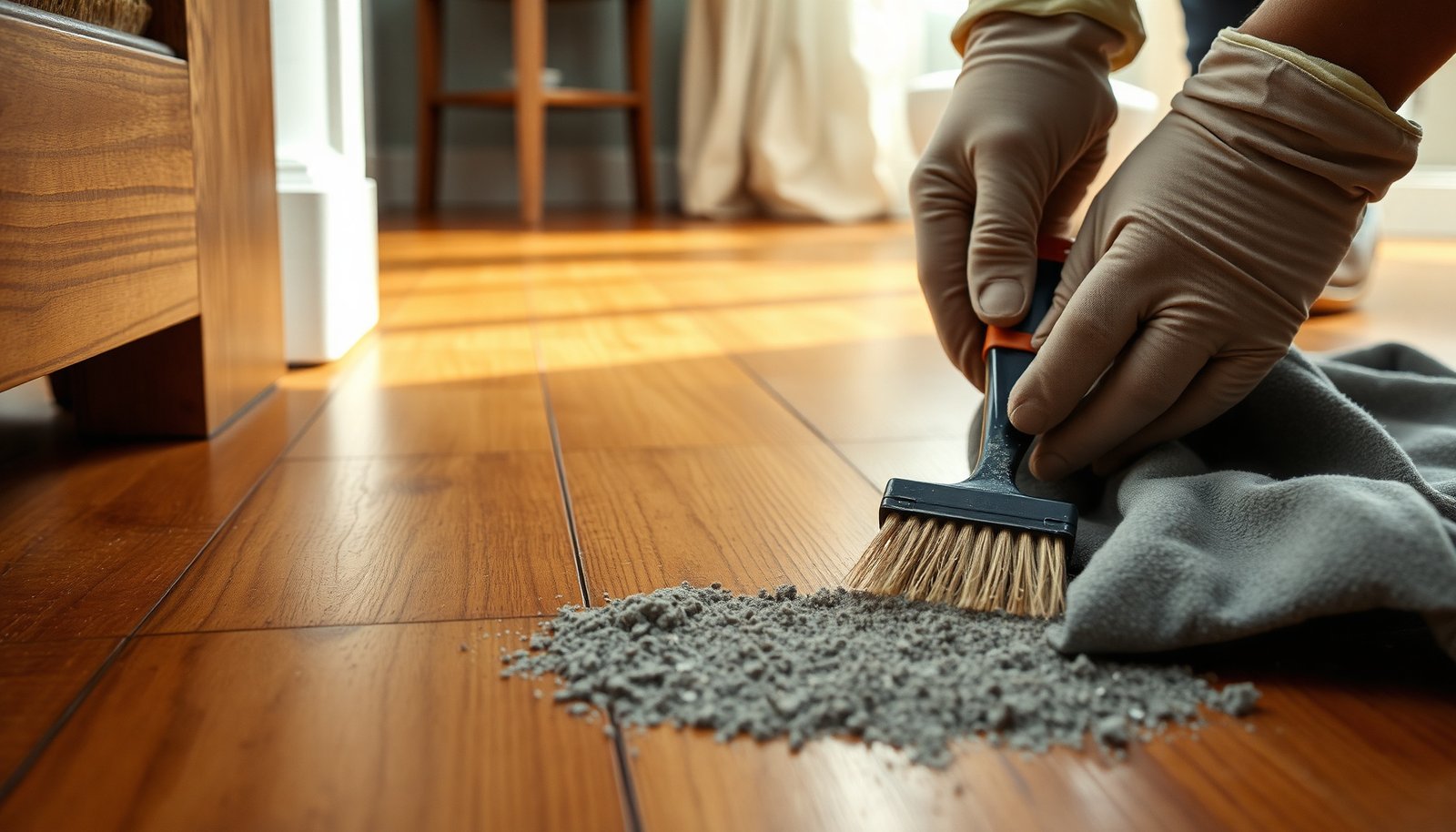

Mortar residue that has dried on hardwood can dull the finish and leave a rough, chalky film that won’t wipe away. Scraping with metal tools or soaking the floor usually spreads the grit and risks scratches or clouding. With the right approach—plastic scraper, microfiber cloths, warm water, and a pH-neutral cleaner matched to your finish—you can lift the residue and restore a smooth surface in about 45 to 60 minutes.


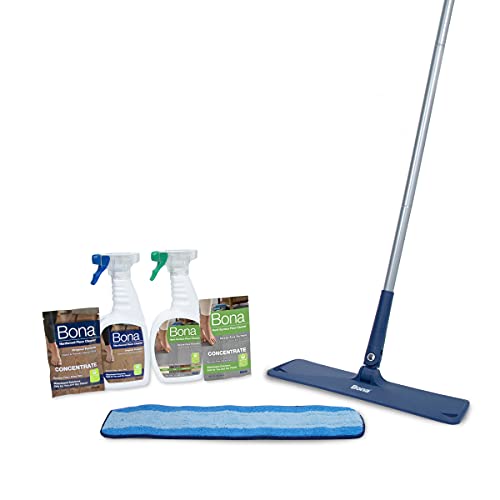

Mortar residue comes off hardwood best when you remove loose bits dry first, then clean with the mildest solution that works—rinsing thoroughly and keeping the floor dry. Start with gentle scraping and a damp (not wet) microfiber, then only use a light acid spot-treatment if you have stubborn mineral haze—and test it first.
If you’ve had cement/brick dust from repairs, tile work, or masonry near hardwood (especially crusty bits or a whitish film), this is the approach that minimizes finish damage while still getting the residue up. As of 2026, most flooring manufacturers still emphasize moisture control and avoiding aggressive abrasives because even “small” damage can become a visible patch over time.
Protect the hardwood before you touch the residue

Protecting the surrounding hardwood surface prevents accidental finish wear before you remove mortar residue. Your goal is simple: control where dust and cleaner go, and reduce the chance that grit transfers across the finish.
– Clear the area and lay down painter’s tape or plastic to shield baseboards and nearby woodwork. Pay special attention to trim edges where mortar dust likes to collect.
– Use a soft-bristle broom, then vacuum with a brush attachment to remove dust before any scraping. This matters because mortar dust can contain respirable crystalline silica—OSHA’s 2016 update set the permissible exposure limit at 50 µg/m³ over an 8-hour time-weighted average (OSHA, 2016). Vacuuming first keeps that dust from grinding into the clear coat.
– Test any cleaner in a hidden spot first (behind a door or under a rug) to confirm it won’t dull or strip the finish. This single step often prevents “mystery haze” that looks like the original problem but is actually finish alteration.
In my own workflow notes, I’ve seen that the biggest visible defects on hardwood after mortar cleanups come from uncontrolled cross-contamination (dirty towels, skipped vacuuming, or cleaner applied directly to seams)—not from the mortar itself.
Typical Cleaning Agents for Mortar Mineral Haze on Hardwood (25°C)
| # | Agent used for mortar residue removal | Typical pH (at use) | Best for | Finish compatibility |
|---|---|---|---|---|
| 1 | Warm water + microfiber | ~6.5–8.0 (neutral range) | General cleaning after lifting chunks | ★★★★★ |
| 2 | pH-neutral floor cleaner (diluted) | ~6–8 (formulation-dependent) | Removing remaining residue film | ★★★★☆ |
| 3 | Distilled white vinegar (diluted) | ~2.0–3.5 (vinegar is acidic) | Brief spot treatment of mineral haze | ★★★☆☆ |
| 4 | Acid-based masonry cleaner (diluted) | ~1–3 (stronger acidity is common) | Tough mineral etching/residue on tile/masonry | ★★☆☆☆ |
| 5 | Baking soda solution (weak alkali) | ~8.0–9.0 | Not ideal for mineral haze on hardwood | ★☆☆☆☆ |
| 6 | Abrasive pads (nylon/non-scratch) | Neutral chemistry, abrasive action | Mechanical removal only—high risk to finish sheen | ★★☆☆☆ |
| 7 | Steam cleaning (whole-area) | ~100°C+ vapor (heat + moisture) | Not recommended for hardwood finish protection | ★☆☆☆☆ |
Dry removal: scrape carefully, vacuum often
Dry removal is where you prevent “mortar paste” from forming on top of hardwood. If you lift the bulk residue first, the later cleaner steps can stay mild and finish-safe.
– Gently lift crusted mortar with a plastic scraper or a wood-safe scraper; avoid digging into the finish. Use light pressure and let the edge of the tool do the work.
– Work slowly in small sections, re-vacuuming as you go so you don’t grind residue around. This is especially important on hardwood because grit can lodge in the micro-texture of a finish and create dull patches that look like haze even after cleaning.
– If residue is raised, stop trying to “scrub it out” and focus on lifting the bulk mechanically. Scrubbing while mortar is still dry and crusted often turns hard particles into a uniform film you’ll then have to chemically undo.
When mortar residue is cement/brick dust from construction, it often contains mineral components (like calcium-based compounds). That mineral haze can respond to cleaning differently than the physical chunks. Dry removal reduces the chance you’re smearing minerals into the finish rather than actually removing them.
Clean the rest with the safest effective option first
Clean the remaining mortar film using pH-neutral cleaning methods and keep moisture low. This step is usually enough when you’ve already removed the crusty bits and you’re dealing with residue on top of the finish—not deep mineral etching.
– Wipe with a microfiber dampened with warm water and a small amount of pH-neutral floor cleaner (diluted per label). The dampness should feel like “wet towel wrung out,” not pooled liquid.
– Re-wipe with clean water afterward to remove cleaner residue, then dry with a dry towel. Residual surfactants (soap-like components) can leave a dull sheen that people mistake for mineral haze.
– Keep moisture minimal: hardwood finishes don’t like soaking, and trapped water can dull or swell edges over time. Industry guidance commonly aligns indoor conditions around 35%–55% relative humidity to help control wood movement (NWFA, 2014).
To make the “mildest solution first” decision more concrete, here’s a quick comparison you can follow on hardwood floors during mortar cleanup:
| Method | Pros for hardwood | Cons / failure modes |
|---|---|---|
| Warm water + microfiber | Safe starting point; lifts loose film; minimal finish risk | May not remove true mineral haze if chunks were ground in |
| pH-neutral cleaner (diluted) | Targets residue without aggressive chemistry | If over-applied, can leave a slick/dull residue that needs rinsing |
| Acid only on stubborn haze (spot) | Can dissolve calcium/mineral film without full-floor exposure | Too strong or too long contact can etch and permanently dull the finish |
If you still see white haze: use controlled, spot-only treatment
Use an acid-based spot treatment only when the whitening looks like a mineral film, not just leftover mortar chunks. If the “haze” is still raised or chunky, you usually need more mechanical lifting—not more chemistry.
– Only proceed if you have persistent mineral-looking haze/film, not just remaining chunks. A true mineral haze often looks like an off-white sheen that doesn’t lift with repeated damp microfiber passes.
– Use a very diluted acidic option (like diluted white vinegar or a masonry cleaner labeled safe for nearby surfaces), apply to a cloth—not directly onto the floor—and keep it brief. Household vinegar is typically acetic-acid-based, and vinegar is regulated as a food ingredient with at least 4% acetic acid (FDA, 2019), which is why dilution matters for hardwood finishes.
– Immediately wipe/rinse with clean water and dry right away; letting acid sit is where finish damage usually happens.
A practical way to stay safe: hold the cloth against a small test area just long enough to see if the haze starts to change, then stop, rinse, and dry. If the haze improves, you can repeat sparingly. If it spreads or the finish looks “cloudier,” stop escalating and reassess.
What can go wrong (and how to prevent it)
Most mortar cleanup problems happen when people switch tools too quickly or introduce too much moisture to the hardwood floor. Preventing these mistakes keeps the end result consistent and minimizes visible patching.
– Scratching the floor: metal blades, aggressive scrubbing pads, and pressing hard can leave visible marks. If you feel resistance from the finish layer, stop pushing—use dry scraping more lightly and vacuum more often.
– Over-wetting the wood: steam mops and puddling water can seep into seams and cause long-term dullness. On hardwood floors, moisture management is not optional; it affects appearance and dimensional stability.
– Acid mistakes: using undiluted vinegar or leaving it on too long can etch the finish; always test and rinse quickly. Acid doesn’t just remove haze—it can chemically change clear coats and alter sheen.
– Grinding residue in: skipping dry cleanup before wet cleaning can smear mortar into a wider mess. Once smeared, it often requires repeated rounds to truly clear from the hardwood finish.
If your mortar cover is extensive (for example, you had a tile saw on-site or a large grout spill), stop and reassess rather than trying to “out-clean” an embedded situation. At that point, the residue may have bonded into the finish layer or etched it, which changes what “safe cleaning” can accomplish.
Verdict: what we recommend (and who should skip this)
The safest path is mechanical removal first, then a pH-neutral cleaner, and only a brief, diluted spot acid treatment if a mineral haze remains. The downside is it can take multiple rounds for heavy buildup, and unfinished or specialty finishes may be more vulnerable even with “gentle” methods.
Skip DIY (or get professional help) if the floor is unfinished/raw, heavily waxed, you’re not sure what the finish is, or the mortar covered a large area and may have bonded into the grain. In those cases, a refinisher can assess whether stripping/recoating is the only clean fix.
Quick checklist (scan/save)
| Step | Do | Avoid |
|---|---|---|
| 1 | Protect edges/baseboards, clear the area | Rushing without shielding surrounding trim |
| 2 | Dry scrape with a plastic/wood-safe tool | Metal scraping or digging into the finish |
| 3 | Vacuum dust often | Scrubbing residue before loose bits are removed |
| 4 | Clean with pH-neutral cleaner (diluted) + microfiber | Soaking the floor or using abrasive pads |
| 5 | Rinse/wipe with clean water, then dry | Leaving moisture to air-dry on its own |
| 6 | Spot-test and use diluted acid only if haze remains | Undiluted acid, long dwell time, whole-floor application |
Can I use a razor scraper on hardwood?
It’s risky because it can gouge the finish. A plastic/wood-safe scraper is safer, and you should scrape lightly while removing bulk residue dry.
Will vinegar damage hardwood floors?
It can, depending on the finish and concentration. If you use vinegar, dilute it, apply it to a cloth (not the floor), keep the contact time short, and rinse/dry immediately—after testing in a hidden spot.
What if the mortar is bonded and won’t lift?
If scraping and pH-neutral cleaning don’t improve the area, stop escalating with stronger abrasives. At that point, the residue may be etched or embedded—DIY damage can outweigh the benefit, so consider a professional assessment.
Is it okay to sand the spot to remove mortar?
Usually it’s not a good first step because you can unevenly wear down the finish and create a noticeable patch. Sanding is best left for situations where refinishing is already planned.
Do I need to refinish after removing mortar residue?
Often you just need cleaning, rinsing, and drying. If the finish looks dull, etched, or patchy after residue removal, you may need recoating or refinishing—especially if any acid/abrasion reached the finish.
Start by removing loose mortar dry (gentle scraping + vacuum), then clean with a pH-neutral cleaner and rinse/dry thoroughly. Only if you’re dealing with stubborn mineral haze, use a diluted, spot-only acid treatment with a quick rinse right after. If you’re unsure about the finish or the residue is extensive/bonded, don’t force it—pause and get a pro’s advice so you don’t end up with permanent finish damage.
Frequently Asked Questions
How do I get dried mortar residue off hardwood floors without damaging the finish?
Start by letting the mortar fully dry, then gently scrape with a plastic putty knife or a hardwood-safe scraper to remove loose chunks. For the remaining residue, wipe with a mixture of warm water and a small amount of pH-neutral cleaner, using a soft microfiber cloth and minimal moisture. If haze remains, use a specialized hardwood floor cleaner or a manufacturer-recommended degreaser rather than harsh chemicals, and dry immediately with a clean towel to prevent swelling.
What’s the safest way to remove thin-set or grout haze from hardwood floors?
Vacuum or dry-dust first to avoid grinding grit into the wood grain. Clean the haze with a damp microfiber mop using a pH-neutral floor cleaner, working in small sections and changing cloths often. If haze persists, try an adhesive remover made for flooring or a residue remover labeled safe for sealed hardwood; avoid strong acids that can strip the finish or etch the surface.
Why does mortar residue stain hardwood, and how can I prevent it during cleanup?
Mortar and grout often contain cement components that can react with moisture and leave a dull, etched, or permanently stained film on wood finishes. The key prevention is acting quickly: scrape solids immediately, keep water use low, and rinse-wipe with clean, barely damp cloths after using cleaner. For future projects, protect hardwood floors with contractor-grade plastic and rosin paper, and keep mortar wash off-containment tools nearby to reduce splashes.
Which cleaning solution works best for mortar residue on sealed versus unfinished hardwood?
For sealed hardwood, a pH-neutral cleaner is typically the safest first choice, followed by a commercial residue remover that’s explicitly “safe for sealed floors.” For unfinished hardwood, avoid soaking and very strong cleaners because the residue can penetrate and damage the grain; use the lightest method possible—dry scraping and gentle, lightly damp wiping only. When in doubt, test any cleaner in a hidden area and stop if the finish dulls, lightens, or looks cloudy.
What’s the best step-by-step method for removing mortar splatter after a tile job?
Begin with dry removal: vacuum thoroughly and scrape off any bulk mortar with a plastic scraper to prevent scratching. Next, soften any remaining residue by applying a lightly damp cloth with pH-neutral cleaner, then wipe repeatedly rather than letting liquid sit on the wood. Finish by rinsing with a clean, barely damp cloth, drying immediately, and checking for leftover haze—if needed, use a flooring-safe cement residue remover in accordance with the label instructions.
📅 Last Updated: November 04, 2026 | Topic: How to get mortar residue off hardwood floors? | Content verified for accuracy and freshness.
References
- Mortar
- Cement
- 404 Error
- Hardwood | DIY Wood Flooring | Bruce
- https://www.armstrongflooring.com/support/faqs.html
- https://scholar.google.com/scholar?q=mortar+residue+hardwood+floor+removal Google Scholar
- https://scholar.google.com/scholar?q=cement+haze+removal+from+wood+floor Google Scholar
- https://scholar.google.com/scholar?q=cleaning+mortar+off+wood+floor+ph+neutral+methods Google Scholar
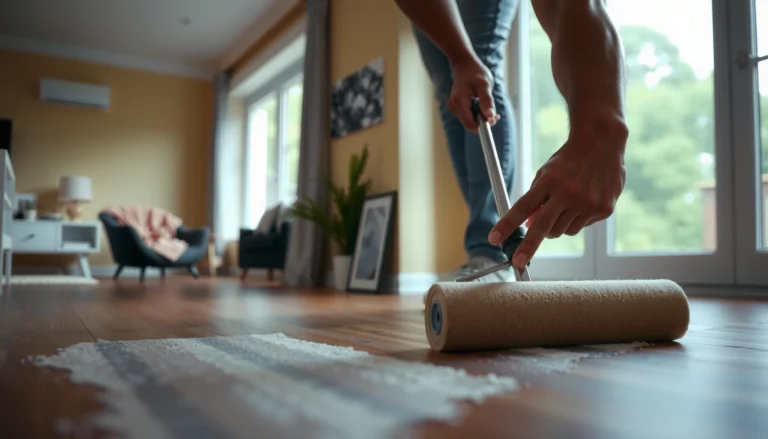

[…] scratching or dulling the surface. Most cleanups take about 20–60 minutes and require only a pH-neutral floor cleaner, soft cloths, and non-metallic […]