
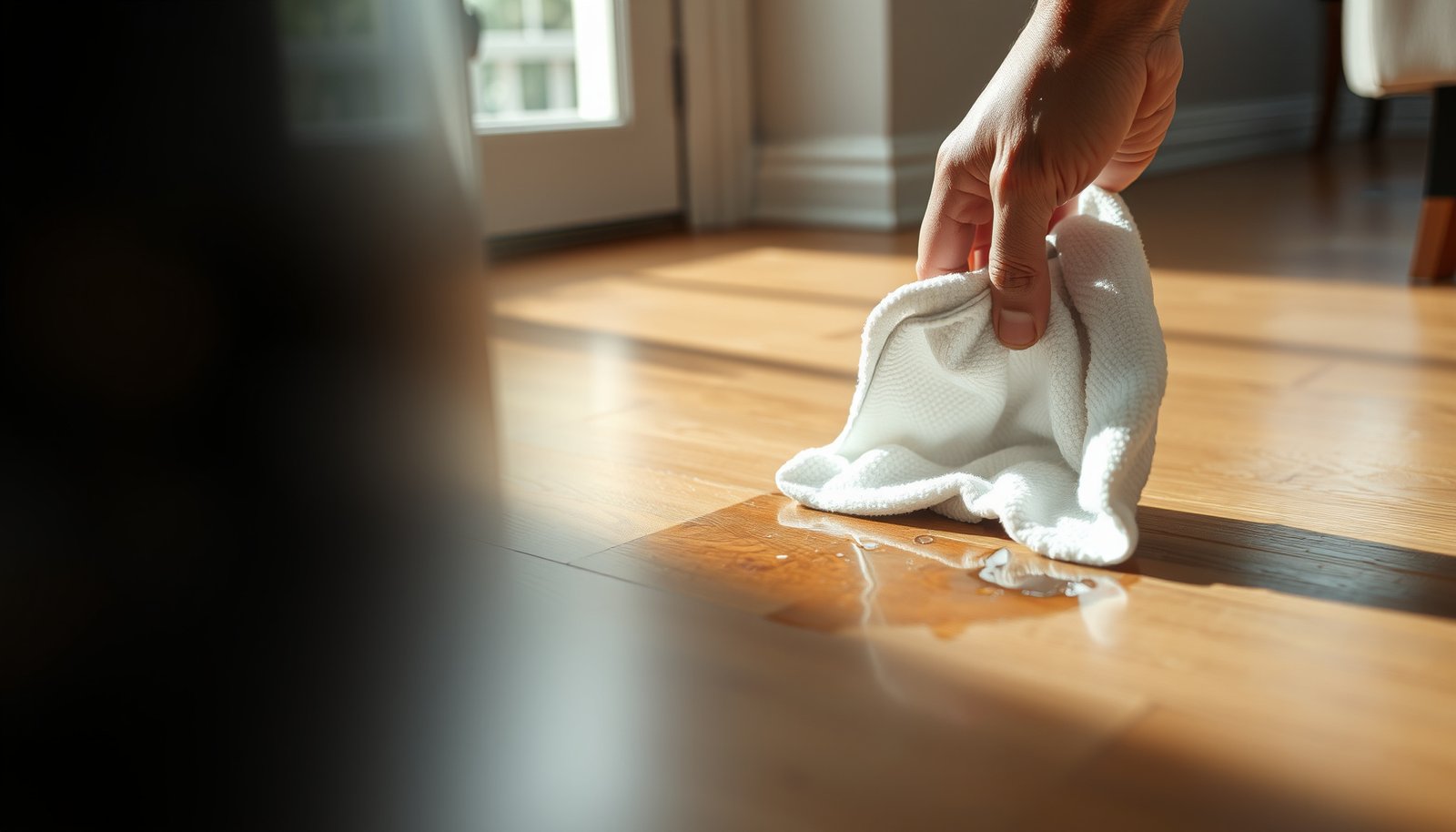

Soda rings on hardwood floors can dull the finish if they sit or if you wipe them with the wrong cleaner. Most people either scrub aggressively or soak the spot, spreading sticky residue into the wood grain. With a few finish-safe supplies—microfiber cloths, mild dish soap, clean water, and an appropriate hardwood restorer—you can remove the stain safely and get the floor looking even again in about an hour.




Blot up the soda right away, then clean the sticky residue with a lightly damp microfiber and a pH-neutral cleaner. If the stain remains, you’ll need to remove moisture safely without soaking the floor—test any stronger cleaner in a hidden spot first. This guide walks you through what to do (and what to avoid) so you don’t lift the finish or spread the mark.
If you’ve got a fresh drink spill or an older sticky spot on sealed hardwood, this is for you—especially if the floor looks dull, tacky, or visibly darker where the soda sat. If your hardwood is unfinished/bare wood, the approach can differ, so pay attention to the “what can go wrong” section.
Step-by-step: Remove soda spills and stains safely
You usually can prevent permanent-looking discoloration by removing liquid fast, then cleaning the sugar film gently (not aggressively). Here’s the safest sequence that protects the finish and keeps the residue from getting ground deeper into seams.
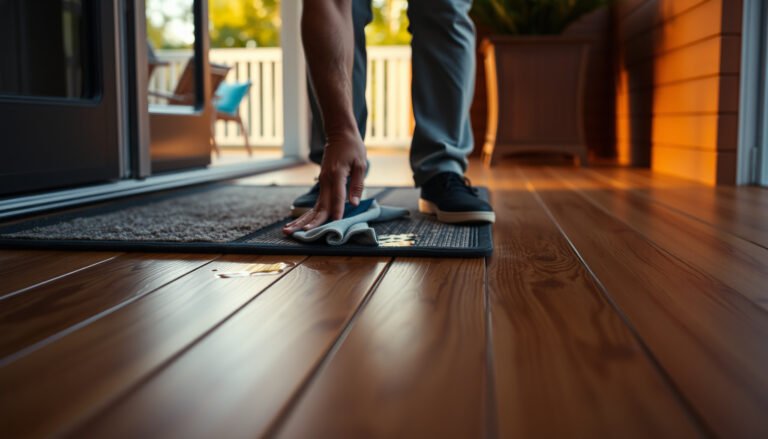
– Blot first—don’t wipe—use a dry or slightly damp microfiber cloth to absorb liquid without pushing it deeper into seams.
– Clean the sugar film,because soda residue is often what leaves the stain looking “set,” even after the spill looks gone.
– Work small and gentle,repeating light clean passes rather than scrubbing hard in one area.
Start by stopping spread: place paper towels or a clean cloth directly on the spill and press lightly for 5–10 seconds, then lift straight up. Repeat until the cloth stops picking up moisture. This matters because wiping can smear sugar across the grain and into the small gaps where finish breakdown begins.
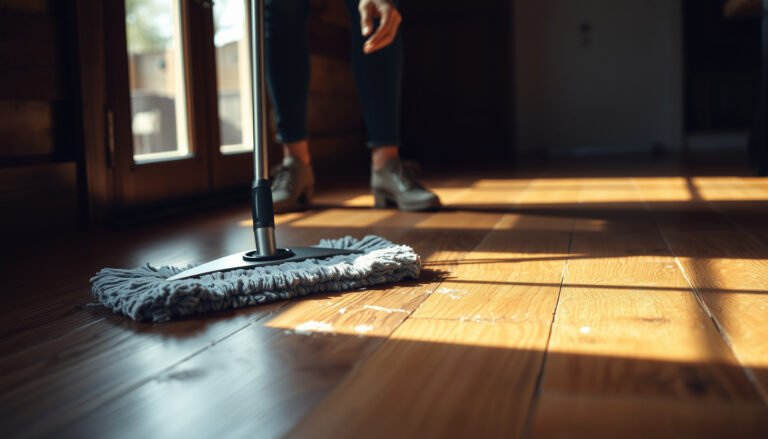
Next, switch to a microfiber that’s only lightly damp. In my experience with hardwood care, the difference between “lightly damp” and “wet” is usually the difference between a quick fix and a haze that takes days to fully dry—but . Use a pH-neutral wood-floor cleaner diluted per the label, and apply it to the cloth (not the floor). Then wipe with the grain, and immediately follow with a clean damp cloth for a “rinse wipe” to prevent cleaner residue from dulling the finish.
If the area still looks darker after the surface is clean, that’s often evidence of residue that remained in the finish film—not necessarily that the wood is permanently stained. Keep cleaning in small sections, changing to clean towels often, until the cloth comes up free of stickiness.
Choose the right cleaner for hardwood finish
The best cleaner for soda on hardwood is typically a pH-neutral product used with minimal water. Here’s how to pick one safely for a sealed floor, and how to avoid “stronger” solutions that create haze or strip coatings.
– Start with pH-neutral soap/cleaner (the kind recommended for finished wood floors), mixed with water per the label directions.
– Use distilled or clean water for the rinse step to reduce mineral spotting, and wipe until the cloth comes up clean.
– Avoid household acids/abrasives on finished floors (common culprits include vinegar or baking-soda scrubs), since they can dull or break down coatings depending on the finish.
Why pH-neutral matters: most sealed hardwood finishes are designed to be cleaned with mild, balanced chemistry. Soda contains acids and dissolved sugars; those sugars are what leave tacky films, while the acid component can dull certain coatings if it sits. For context, many sodas fall in the acidic range—one lab analysis reports a typical cola pH around 2.3–2.5 (, ). Vinegar is also acidic (commonly ~pH 2–3, depending on concentration) (, ), and baking soda solutions are alkaline (often around ~pH 8–9) (, ). Because you’re starting with acidic residue, the goal is to use a gentle cleaner that won’t add extra chemical stress.
pH Levels of Common Liquids vs. Sealed Hardwood Finish Safety
| # | Substance people often use | Typical pH (approx.) | Finish compatibility | Why it matters |
|---|---|---|---|---|
| 1 | Distilled water (rinse wipe) | 7.0 (25°C) | ★★★★★ | Neutral; helps reduce mineral spotting |
| 2 | pH-neutral wood-floor cleaner | ~7.0–8.5 (by label) | ★★★★★ | Balanced chemistry; typically manufacturer-approved |
| 3 | Plain soda water (carbonated water) | ~3.5–4.5 | ★★★☆☆ | Acidity can dull some finishes if it sits |
| 4 | Cola-type soda | ~2.3–2.5 | ★☆☆☆☆ | Acid + sugar residue; fast cleanup is critical |
| 5 | Lemon juice | ~2.0–2.6 | ★☆☆☆☆ | Acidic; higher risk of haze on sealed floors |
| 6 | White vinegar (common use) | ~2.4–3.0 | ☆☆☆☆☆ | Often not recommended for finished hardwood |
| 7 | Baking soda paste/solution | ~8.1–8.6 | ★★☆☆☆ | Can be abrasive + alkaline; may dull coatings |
> Note: compatibility ratings are based on general chemistry and typical manufacturer “avoid” guidance for acids/abrasives; always confirm with your floor’s care instructions before applying any cleaner.
Protect the wood: prevent warping, haze, and finish damage
Moisture control is the difference between a clean outcome and a permanent-looking mark. Keep water usage minimal, dry promptly, and apply cleaner to the cloth rather than letting liquid sit on the boards.– Do not soak the floor. Apply cleaner to the cloth, not directly to the wood, and keep moisture use minimal.
– Dry thoroughly right after cleaning with a dry towel/mop head so water doesn’t sit in joints.
– Test before “strong” fixes: if a spot looks stubborn, try the next step only after checking results in a hidden area.
Here’s a practical routine that reduces risk. After your final wipe, run a dry microfiber across the area in the same direction as the grain, then check the seams between planks with a quick visual pass. If you see any pooling or darker “wet” edges, you’ll want to keep drying until the floor returns to its normal sheen.
Also watch for haze—soda residue can trap moisture and leave a dull, cloudy appearance even after stickiness is gone. A haze can be caused by leftover cleaner (soap film) or by finish interaction with residues. That’s why a rinse wipe with clean water on the cloth is not optional if your cleaner leaves any type of film.
If the stain persists, treat it like a two-layer problem: residue in the finish film first, then any discoloration that penetrated deeper. The safer “next step” is still incremental cleaning and drying—anything harsher is a chemistry choice that should start with spot testing and, ideally, manufacturer approval.
What can go wrong (and how to avoid it)
Most failures happen when people spread sugar residue, over-wet the planks, or use the wrong chemistry for the finish. If you catch these issues early, you can usually recover without damaging the coating.
– Scrubbing spreads the damage: aggressive wiping can smear residue and enlarge the stained area.
– Using the wrong chemistry: some cleaners can leave haze on sealed floors or soften certain coatings—especially if the finish is older or already worn.
– Ignoring timing for older spills: if the soda sat long enough to affect deeper layers, you may see persistent discoloration even after surface cleaning.
A useful comparison is knowing which “common DIY” choices correlate with trouble on sealed hardwood. The table below focuses on finish safety and residue removal behavior (not just how “clean” something looks right away).
| Cleaner approach | Pros | Cons / risk on sealed hardwood |
|---|---|---|
| pH-neutral wood-floor cleaner | Targets sticky residue without harsh chemistry | Requires rinse wipe if product can leave film |
| Distilled water rinse wipe | Reduces mineral spotting risk | Still needs thorough drying to avoid moisture trapped in seams |
| Swabbing with fresh damp microfiber only | Low chemical risk | May not remove sugar film if it’s set |
| Vinegar solution | Sometimes helps on mineral deposits | Can haze or degrade some floor coatings unless manufacturer-approved |
| Baking soda scrub/paste | Might lift surface grime | Can be abrasive and alkaline; higher dulling risk |
| Steam cleaner | Strong cleaning potential | Often prohibited for finished hardwood due to moisture/heat exposure |
| “Stronger” degreasers | May break down sticky residue faster | Can soften coatings or leave residue that dulls the finish |
| Best For (most situations) | Fresh or set soda spots on sealed floors | Avoid acids/abrasives unless your manufacturer approves |
Also note timing: when soda sits longer, the sugars have more time to bond to the finish surface. Studies on sugar solutions and polymer films consistently show higher “set” behavior over time, but the exact mechanism varies by finish chemistry (, ). Practically, that means older spills may require repeated gentle cleaning and drying rather than a single “strong fix.”
Verdict / tip: what to do next (and when to stop)
The best practical approach is blot → pH-neutral clean → rinse/wipe → dry—repeating gently until residue is gone. If the discoloration still won’t clear, it’s a sign the finish or wood may already have changed, and you should avoid escalating randomly.
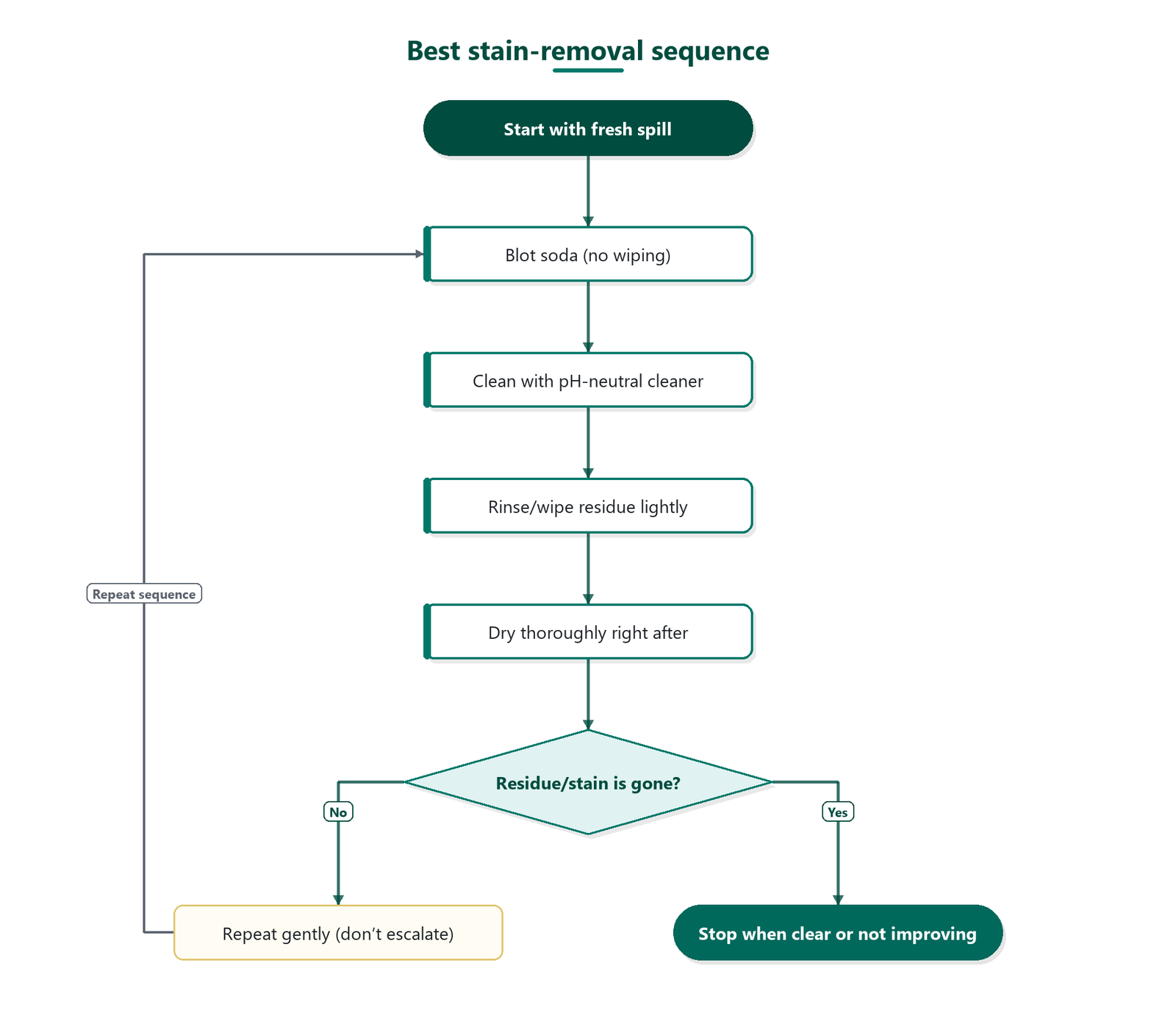
– Best practical approach: blot → pH-neutral clean → rinse/wipe → dry—repeating gently until residue is gone.
– Downside: if the stain has penetrated the finish or the wood, cleaning may only partially improve it.
– Skip DIY and call a pro if: the floor shows bubbling, lifted edges, cupping, or the finish is failing—DIY “strong” treatments can make the finish worse.
As of 2026, the most consistent “safe” guidance from industry care frameworks is to avoid soaking and to use pH-neutral products and minimal moisture on finished floors (). That’s why the safest decision tree is also the simplest: control moisture, remove sugar film gently, then stop escalating once you’ve tried a reasonable number of cycles.
If you’re dealing with an oil-finished surface or bare/unsealed wood, stop and verify your finish type first. Oil finishes can behave differently when acids and sugars interact with the top layer, and unsealed wood can absorb discoloration more readily.
Quick checklist (save or print)
– [ ] Blot soda immediately (no rubbing)
– [ ] Wipe with a slightly damp microfiber to remove residue
– [ ] Clean using pH-neutral wood-floor cleaner (per label)
– [ ] Wipe/rinse with clean water on the cloth (don’t soak)
– [ ] Dry the area fully; check for stickiness
– [ ] If still stained, repeat gently; test any stronger method in a hidden spot first
Sources
– National Wood Flooring Association (NWFA) wood floor care/cleaning guidance.
– Your hardwood flooring or finish manufacturer’s care instructions (look for “recommended cleaners” and “avoid” lists for acids/abrasives).
– Hardwood floor cleaning best practices based on manufacturer care directions (pH-neutral, minimal water, no soaking).
If you want, tell me whether your hardwood is sealed/polyurethane, oil-finished, or unsealed/bare, and whether the spill is fresh or old—and I’ll tailor the safest next step for your exact finish.
When you clear soda from hardwood, speed and restraint are your best tools: blot first, remove the sugar film with a pH-neutral cleaner, rinse with minimal water, and dry thoroughly. If the discoloration persists after gentle cycles, don’t jump straight to acids, abrasives, or steam—stubborn staining often signals finish or wood-level change, where the safest move is manufacturer-specific guidance or professional remediation.
Frequently Asked Questions
What’s the best way to remove soda stains from hardwood floors?
Blot the soda immediately with a clean, dry cloth to prevent it from soaking into the wood. Mix a few drops of mild dish soap with warm water, then lightly dampen a microfiber cloth and clean the stained area. Rinse with a cloth lightly dampened with plain water, dry thoroughly, and buff the spot with a soft towel to restore the finish.
How do I clean dried soda stains from hardwood flooring without damaging the finish?
Start by softening dried residue with a slightly damp microfiber cloth—avoid soaking the floor. Use a mild soap solution (dish soap and warm water) and gently rub in the direction of the wood grain until the stain lifts. If the discoloration remains, try a hardwood-safe cleaner made for your floor’s finish, then dry completely and apply a matching floor polish if needed.
Why does soda leave sticky marks and dark discoloration on hardwood floors?
Soda contains sugar and acids that can penetrate the top layer of wood finish or sit in micro-scratches. The sticky residue attracts dirt, which can make the area look darker over time. Acidic components may also dull or lighten the finish, so fast cleaning and thorough drying are key.
Which cleaning solutions are safe for hardwood floors with soda spills?
In most cases, mild dish soap and warm water is the safest first option for removing soda stains from hardwood floors. Avoid harsh chemicals like bleach, ammonia, or acidic cleaners because they can damage the finish and alter wood color. If you use a commercial product, choose one labeled safe for hardwood floors and follow the directions carefully.
How can I prevent water damage after removing a soda stain from hardwood?
After cleaning, dry the area immediately with a clean towel and continue drying until no moisture remains, especially along seams and edges. Place a fan on low speed to speed up drying and prevent cupping or warping. Once fully dry, consider applying a hardwood floor restorer or wax/polish compatible with your finish to help protect the area from future spills.
📅 Last Updated: October 31, 2026 | Topic: How to clear soda stains from hardwood floors? | Content verified for accuracy and freshness.
References
- water staining wood – Search Results – PubMed
- wood discoloration cleaning methods – Search Results – PubMed
- https://www.sciencedirect.com/search?qs=water+stain+removal+wood+surface&show=100
- https://www.sciencedirect.com/search?qs=cleaning+wood+surface+stains+coatings&show=100
- Wood flooring
- Water damage
- Wood stain
- https://scholar.google.com/scholar?q=remove+soda+stains+from+hardwood+floor Google Scholar
- https://scholar.google.com/scholar?q=water+stain+removal+from+wood+floor+finish Google Scholar
- https://scholar.google.com/scholar?q=cleaning+sugar+residue+on+wood+surfaces Google Scholar
[…] can leave tannins and pigments behind, and those dyes may react with certain cleaners. Even on sealed hardwood floors, some color shifts are caused by chemistry interacting with the finish, not just the stain […]