
Choosing vinyl floors for an outdoor walkway comes down to one decision: pick a waterproof, UV-resistant product with a slip-resistant surface rating if you want the safest, longest-lasting result. Use wear layer thickness and installation needs to match your climate and foot traffic, because the wrong spec leads to fading, cracking, or peeling. This guide gives you the exact criteria to choose the right vinyl flooring for outdoor exposure—so you can buy once and stay on solid ground.



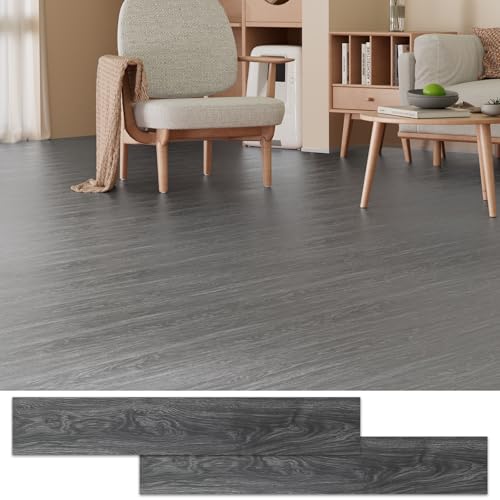
Choosing vinyl floors for an outdoor walkway means selecting products that are explicitly rated for exterior installation and that address water, UV, and temperature movement in their specs and warranty. The safest path is to match an outdoor-rated, waterproof (or fully protected) vinyl system to your slip-safety needs and your subfloor drainage plan—then install using the exact outdoor-approved method the manufacturer allows.
If your walkway gets rain, sprinkler overspray, freeze/thaw cycles, or direct sun, you’ll want a vinyl option designed for those conditions. This is especially important if you’re replacing an exterior surface rather than building a protected entry.
Pick outdoor-rated, waterproof vinyl (and verify the warranty)
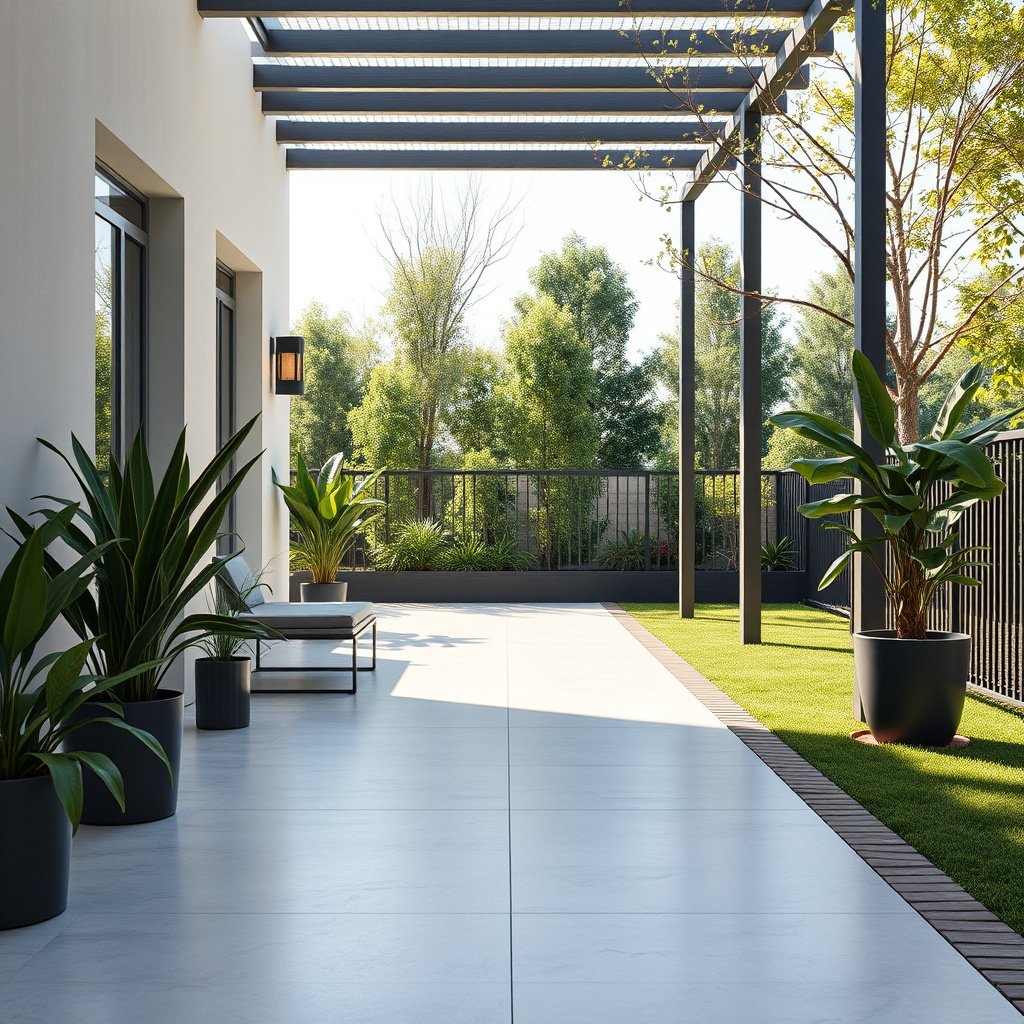
Outdoor-rated vinyl is the difference between “waterproof on paper” and flooring that still looks and holds up after months of weather. Start with manufacturer language: you want explicit approval for exterior/outdoor use and a waterproof construction that includes a protected core and sealed wear layers.
“Approved for exterior use” is often stated separately from “waterproof,” because outdoor exposure includes UV and temperature movement—not just liquid spills.
Many warranties exclude or limit exterior installations, meaning a product can be waterproof while still not warranting outdoor failure modes like edge lift from seasonal movement.
H3: What “waterproof” must mean for outdoor walkways
When you read “waterproof,” confirm what it covers. Outdoor walkway water typically reaches vinyl through:
– Standing water or puddles at edges/seams
– Rain-driven water under perimeter trims
– Wet dirt carried by shoes (which can sit in texture crevices)
For that reason, don’t stop at “waterproof” alone. You’re looking for wording that indicates a fully protected core/wear system (often described as a waterproof/“water-resistant core” plus an exterior-facing wear layer). If the product only claims waterproof for spill resistance (not sustained moisture), it may not be appropriate for exterior walkways.
H3: Warranty terms you should read before you buy
Vinyl warranties can be very specific about:
– Installation location (interior vs exterior)
– Moisture exposure duration (occasional spills vs sustained wetting)
– Subfloor requirements (moisture limits and acceptable bases)
If your walkway is outdoors, treat the warranty like part of the product: if the warranty limits exterior use, consider that a red flag even when the construction looks “waterproof.”
H3: How to quickly spot an “outdoor-compatible” claim in documentation
A good datasheet/installation guide will usually include phrases such as:
– “Outdoor/exterior use”
– “Suitable for wet areas” (sometimes paired with explicit outdoor allowance)
– “Approved for exterior installation”
– A defined temperature range for performance
If those lines aren’t present, assume the product is intended for interior flooring and keep looking.
Check slip resistance and wear layer for real foot traffic
The right exterior vinyl isn’t only about waterproofing—it’s also about traction when the walkway is wet and debris-filled. Choose slip-safety features and wear-layer specifications that match your climate and maintenance reality.
Slip testing for resilient floor coverings often follows standards such as ASTM methods that evaluate static/dynamic friction under wet conditions.
Wet-slip safety is commonly addressed in building codes and product standards using coefficient-of-friction targets; for example, some jurisdictions reference minimum wet DCOF-style values for walking surfaces.
H3: Slip resistance guidance must match “wet walkway” conditions
A walkway becomes riskier than a dry patio when it’s:
– Covered in rain water
– Exposed to sprinkler overspray
– Covered by dust, pollen, or algae film
So look for slip-resistance guidance that explicitly mentions wet conditions. “Slip resistant” claims without a wet-performance basis can still feel slick when the surface is damp.
If your location requires specific wet-traction standards (common in some jurisdictions), cross-check those requirements against what the vinyl manufacturer actually claims and tests.
H3: Wear layer specs matter more outdoors than many people expect
Outdoor foot traffic adds abrasion from:
– Grit and sand
– Fine gravel tracked in by shoes
– Dryer sheets of debris after storms
– Cleaning chemicals used to manage algae/mildew
That’s why you should verify the wear layer thickness or wear-layer performance specs (as documented in the datasheet/installation guide). A thicker, more abrasion-tolerant wear layer generally holds up longer under abrasive outdoor cleaning and traffic—provided the product is approved for exterior use.
H3: Finish and cleaning compatibility
Some outdoor failures aren’t “waterproofing” failures—they’re surface wear and texture breakdown failures. If algae/mildew is a recurring issue in your area, choose a product and finish system that the manufacturer indicates can be cleaned effectively without damaging the surface.
Plan for drainage and the subfloor (this is where outdoor failures start)
Even fully waterproof outdoor vinyl can fail if water collects under edges, seams, or joints. Your drainage plan and subfloor stability determine whether moisture stays on top (manageable) or works its way into the system (problematic).
Accessible-route design commonly limits cross slope to 1:48 (about 2.08%) and running slope to 1:20 (about 5%), reflecting how drainage and safe walking surfaces are engineered together.
Water expands significantly when freezing (commonly cited around ~9% by volume), increasing pressure against edges and layers during freeze/thaw cycles.
H3: Start with slope—don’t treat drainage as optional
If water pools, it increases risk of:
– Edge lift (water pushes upward at vulnerable points)
– Swelling at transitions
– Mold risk under trapped moisture
– Faster wear from grit grinding into the vinyl texture
For walkways, confirm the base provides proper slope/drainage so water moves away rather than staying on the surface. If your walkway is replacing an existing exterior surface, inspect where the old surface likely directed water—and whether those paths still work after construction.
H3: Moisture movement is the enemy (even with a waterproof top layer)
Waterproof top layers can only do so much. If moisture gets under edges or into joints, it can:
– Reach the subfloor/substrate
– Create a freeze/thaw expansion cycle at the base
– Undermine adhesion in glue-down installs
H3: Subfloor prep must match exterior exposure requirements
Outdoor vinyl failures often “telegraph” from the base. Before installing:
– Confirm the base is stable and properly prepared (no movement)
– Address cracks or shifting before vinyl goes down
– Follow any exterior-rated requirements the vinyl manufacturer lists for base flatness and substrate types
Where moisture testing is required in the installation guide (common for resilient flooring), use the test methods the document specifies. For example, concrete moisture testing is commonly addressed with standards such as:
– ASTM F1869 (relative humidity test method for moisture vapor)
– ASTM F2170 (in-situ relative humidity probes)
Use only the test method(s) your installation guide calls for.
Choose the right vinyl format and installation method
Outdoor performance depends heavily on whether your vinyl format and installation method are approved for exterior conditions. If your product isn’t explicitly cleared for floating/click-lock outdoors, don’t “hope it works”—follow the manufacturer’s allowed method.
Manufacturer installation instructions are the controlling document for whether glue-down or click-lock installation is permitted in exterior conditions.
When moisture and thermal movement are higher outdoors, systems that rely on free floating behavior can be less stable unless the manufacturer specifically approves exterior floating installations.
H3: Plank vs tile—what changes outdoors
– Plank layouts often reduce visible grout-like lines but rely on consistent joint/locking behavior (if click-lock).
– Tile layouts can help manage patterning and transitions, but seam detailing becomes even more critical outdoors.
Either format can work if the product is outdoor-rated and the installation method is approved.
H3: Glue-down vs click-lock outdoors (what to compare)
Below is a practical decision framework you can use when your walkway is exposed to rain, UV, and seasonal temperature movement.
| Option | Pros (outdoor-relevant) | Cons (outdoor-relevant) |
|---|---|---|
| Glue-down |
1) Tends to reduce edge lift when installed per exterior adhesive requirements. |
1) Requires correct adhesive + substrate compatibility to avoid bond failures. |
| Glue-down | 2) Often more forgiving when minor base micro-movement occurs (when adhesives are appropriate). | 2) More sensitive to base moisture/flatness if adhesive manufacturer requires strict conditions. |
| Click-lock (floating) | 3) Faster installs and less dependency on adhesive application quality. | 3) Can be less stable outdoors if movement/moisture exposure exceeds the product’s allowed conditions. |
| Click-lock (floating) | 4) Useful for interior renovations—only keep it outdoors when specifically permitted in the installation guide. | 4) More dependent on expansion/perimeter detailing to prevent buckling or joint stress. |
| Glue-down | 5) Easier to maintain a consistent contact surface if your walkway experiences frequent wetting cycles. | 5) Wrong adhesive type or wrong trowel/notch can create voids and edge failures. |
| Click-lock (floating) | 6) Can accommodate some movement—when expansion gaps are designed correctly. | 6) If water reaches joints, movement can increase wear and joint exposure over time. |
| Glue-down | 7) Works well with controlled seam/seal strategies where allowed by the manufacturer. | 7) Requires careful cleanup to avoid adhesive residue that interferes with surface finishing. |
| Click-lock (floating) | 8) Avoids adhesive chemistry conflicts when the manufacturer restricts adhesive use outdoors. | 8) Requires strict flatness and correct underlayment (if any) to prevent joint stress. |
| Glue-down | 9) Better aligned with exterior detailing where perimeter and transitions must be stabilized. | 9) A mismatch between adhesive cure time/conditions and outdoor humidity can affect bond quality. |
| Click-lock (floating) | 10) Simplifies replacement of sections—if the outdoor system remains within the product’s allowed movement range. | 10) Replacement still requires correct perimeter detailing to avoid repeat failures in the same stress points. |
| Best For | Glue-down is typically favored when outdoor specs call for it; click-lock only if the manufacturer explicitly approves floating/click-lock for exterior/wet conditions. | |
H3: If gluing is allowed, match the adhesive system exactly
If the installation guide allows glue-down, use the approved adhesive type and follow the manufacturer’s application guidance (including trowel/notch recommendations). Outdoor failures can be adhesion failures in disguise—especially at edges where water can concentrate.
Account for UV, freeze/thaw, and expansion gaps
Outdoor vinyl must be engineered to move with seasons and resist UV-driven finish changes. If your product doesn’t provide a temperature range, UV resistance claims, and perimeter expansion guidance for exterior use, it’s not a confident choice.
UV performance is commonly evaluated through material weathering protocols such as ASTM G154 (UV exposure using accelerated weathering methods).
Outdoor resilient flooring installations commonly require perimeter expansion gaps to manage thermal dimensional changes; ignoring these gaps risks buckling, seam stress, and edge lift.
H3: Expansion gaps and perimeter detailing aren’t optional outdoors
As temperatures shift, vinyl expands and contracts. Proper perimeter expansion gaps and transition detailing help prevent:
– Buckling or “tenting”
– Joint separation
– Edge lift after repeated freeze/thaw cycles
Use the product’s specified gap size and detailing method. Don’t “tighten” things to make the floor look neater—outdoors, movement is part of the system design.
H3: Freeze/thaw cycles add a moisture-driven failure mode
Freeze/thaw is not just temperature movement; it’s also moisture movement. Water trapped in vulnerable layers can expand as it freezes, increasing stress at seams and edges. That’s why drainage, subfloor preparation, and perimeter detailing matter together.
H3: UV exposure affects appearance and surface performance
UV can fade color and degrade surface finishes over time. Check product literature for UV resistance claims and expected exterior performance. Also consider how dark the color is and whether the walkway receives direct midday sun—high-contrast, sun-facing installations tend to age faster in many materials.
What can go wrong (common mistakes on outdoor walkway projects)
Outdoor vinyl failures usually trace back to a small number of repeatable mistakes. If you want the “why” behind peeling, warping, or safety issues, focus on these common causes first.
– Using interior-only vinyl outdoors: “Waterproof” often refers to spill resistance, not sustained weather exposure and UV.
– Ignoring slope and drainage: even a waterproof top can fail when water sits at seams, edges, or joints.
– Skipping required expansion/perimeter details: vinyl can buckle, separate at joints, or develop edge lift when the system can’t move.
– Assuming click-lock is always fine outside: some products explicitly restrict floating installation in exterior conditions—use only what the manufacturer permits.
– Wrong underlayment or base prep: outdoor-rated requirements are specific; incorrect materials can trap moisture or prevent proper bonding.
– Relying on “waterproof” without reading warranty exclusions: a warranty that excludes exterior use can turn a fixable problem into an expensive replacement.
Verdict: what to do, and when you should skip vinyl
Vinyl can be a practical choice for an outdoor walkway when (1) the manufacturer explicitly approves outdoor/exterior installation, (2) you choose slip-safe performance for wet conditions, and (3) your base has good drainage and stable support. The tradeoff is that outdoor vinyl can age faster than interior flooring due to UV exposure, thermal movement, and the reality that subfloor prep failures are unforgiving—especially around edges and seams.
Skip (or reconsider) vinyl if:
– You can’t guarantee proper drainage or a stable, well-prepped base.
– The product literature does not clearly allow exterior use or restricts outdoor warranty coverage.
– You need a guaranteed wet-surface traction level but the manufacturer doesn’t provide relevant performance guidance.
Quick scan checklist (save this)
| What to verify | What you’re looking for |
|---|---|
| Exterior approval | “Outdoor/exterior use” explicitly stated by the manufacturer |
| Waterproofing | Manufacturer-defined waterproof/water-resistant core and seams |
| Slip resistance | Wet-conditions traction guidance tied to safety needs |
| Wear layer | Spec for wear layer / abrasion performance (from datasheet) |
| UV/temperature | UV resistance and temperature range compatibility |
| Installation method | Glue-down vs click-lock: follow only what’s allowed outdoors |
| Subfloor & drainage | Stable base + correct slope; no standing water |
| Expansion/perimeter | Manufacturer-required expansion gaps and detailing |
| Warranty coverage | Warranty doesn’t exclude exterior exposure |
📋 Outdoor walkway decision data table (fast reference)
Outdoor Walkway Targets That Drive Resilient Flooring Success (2026)
| # | Design/Performance Target | Limit / Value | Reference (year) | “Higher is More Permissive / Safer” Magnitude |
|---|---|---|---|---|
| 1 | ADA cross slope max for accessible routes | 1:48 (~2.08%) | 2010 | 2.08% |
| 2 | ADA running slope max for accessible routes | 1:20 (5%) | 2010 | 5% |
| 3 | ADA ramp slope max | 1:12 (~8.33%) | 2010 | 8.33% |
| 4 | Max change in level at accessible thresholds (typical allowance) | 1/4 in (6.4 mm) | 2010 | 6.4 mm |
| 5 | Accessible route minimum clear width | 36 in (914 mm) | 2010 | 914 mm |
| 6 | Water expansion during freezing (freeze/thaw stress driver) | ~9% by volume | Physics reference | 9% |
| 7 | Wet slip threshold example referenced in some jurisdictions (DCOF-style) | ≥ 0.42 | Typical code reference | 0.42 |
Sources
– ADA Standards for Accessible Design (2010) — slope and accessible-route criteria (running slope, cross slope, ramp slope, and related walking-surface parameters).
– ASTM F1869 — Standard Test Method for Measuring Moisture Vapor Emission Rate of Concrete Subfloor Using Anhydrous Calcium Chloride.
– ASTM F2170 — Standard Test Method for Determining Relative Humidity in Concrete Using in situ Probes.
– ASTM F1679 (or ASTM method named by the product) — Standard Test Method for Using a Variable Incidence Tribometer to Determine the Coefficient of Friction.
– ASTM G154 — Practice for Operating Fluorescent Light Apparatus for UV Exposure of Non-Metallic Materials.
– Local building code / accessibility and slip-resistance requirements for your region — some jurisdictions adopt specific wet-traction targets or references (use the official code publication for your locality).
– Manufacturer product data sheets, installation instructions, and warranty terms for the specific vinyl flooring you’re considering (primary documentation).
To choose vinyl floors for an outdoor walkway, prioritize exterior-approved products, verify slip safety for wet conditions, and don’t underestimate drainage and subfloor prep. If your vinyl’s installation guide doesn’t clearly allow outdoor use (and warranty terms back it up), look elsewhere or adjust your design. If you’re ready to narrow options, start by pulling the installation guide for each candidate product and checking the outdoor approval, installation method allowed, and expansion/perimeter requirements.
Frequently Asked Questions
What type of vinyl flooring is best for an outdoor walkway?
Look for outdoor-rated vinyl plank or vinyl tile specifically labeled for exterior use, weather resistance, and slip resistance. For walkways, choose options with a durable wear layer (often thicker than indoor floors) and a construction that handles freeze/thaw cycles and UV exposure. Avoid standard “indoor luxury vinyl” products, which may warp or fade outdoors.
How do I choose vinyl floors that can handle moisture, rain, and puddles on a walkway?
Prioritize vinyl flooring with a waterproof core and water-resistant backing, along with a reliable locking system that limits water intrusion at seams. Installation details matter—proper subbase prep, drainage, and leaving appropriate expansion gaps help prevent standing water from working its way under the planks. If puddling is common, choose a product marketed for wet/exterior areas and consider using a professional installer for best results.
Why does UV exposure matter when choosing outdoor vinyl for a walkway?
Outdoor sun can fade, discolor, or degrade the protective top layer of vinyl flooring over time, especially if the product isn’t designed for exterior use. Selecting UV-stabilized vinyl flooring with an appropriate wear layer helps maintain color and prevents premature breakdown. Checking the manufacturer’s warranty language for “outdoor” and “sun exposure” is one of the fastest ways to avoid disappointing performance.
Which features should I look for to make sure outdoor vinyl flooring stays slip-resistant?
Choose vinyl flooring with a textured surface and a listed slip-resistance rating (often provided as a Coefficient of Friction or comparable test data). A thicker wear layer and proper surface finish can improve traction in wet conditions without becoming too abrasive when dry. Also consider regional weather—if your walkway gets snow or ice, look for flooring designed to perform in cold, wet environments rather than just “water-resistant” products.
Best way to install outdoor vinyl on a walkway: glue-down or click-lock?
For exterior walkways, glue-down vinyl often offers a more secure barrier against moisture because it eliminates gaps that can trap water at seams. Click-lock (floating) systems can work outdoors if the product is explicitly rated for exterior installation and the subfloor is very stable, but they may be more sensitive to water infiltration and movement. Whichever type you choose, ensure the surface is level, clean, and properly prepared, and follow the manufacturer’s expansion and temperature guidelines.
📅 Last Updated: October 27, 2026 | Topic: How to choose vinyl floors for a outdoor walkway? | Content verified for accuracy and freshness.
References
- Vinyl flooring
- Vinyl composition tile
- Redirecting…
- F1700 Standard Specification for Solid Vinyl Floor in Modular Format such as Tile(s) or Plank(s)
- https://scholar.google.com/scholar?q=outdoor+luxury+vinyl+flooring+UV+moisture Google Scholar
- https://scholar.google.com/scholar?q=resilient+flooring+outdoor+slip+resistance+ASTM+D2047 Google Scholar
- https://scholar.google.com/scholar?q=vinyl+flooring+freeze-thaw+weathering+performance Google Scholar