
Vinyl floors can survive an outdoor walkway, but only if you seal them the right way and block moisture, UV, and grit at the edges. This guide tells you exactly how to protect outdoor vinyl flooring—starting with the best sealants for water and UV resistance and ending with practical maintenance steps that prevent peeling and swelling. If you want the clearest path to durable, weather-ready vinyl, keep reading.



Use a barrier-first plan—mats/runners at entry points plus correctly sealed edges—to keep rainwater and grit from reaching vinyl seams. That single strategy protects outdoor vinyl floors from the two most common failure mechanisms outdoors: moisture intrusion and abrasion/UV wear.
If you’re dealing with a walkway that gets regular rain, tracked-in grit, or freeze/thaw conditions, this is the practical approach to reduce damage. It’s especially important if your specific vinyl product may not be rated for exterior exposure.
Barrier first: mats, runners, and perimeter protection
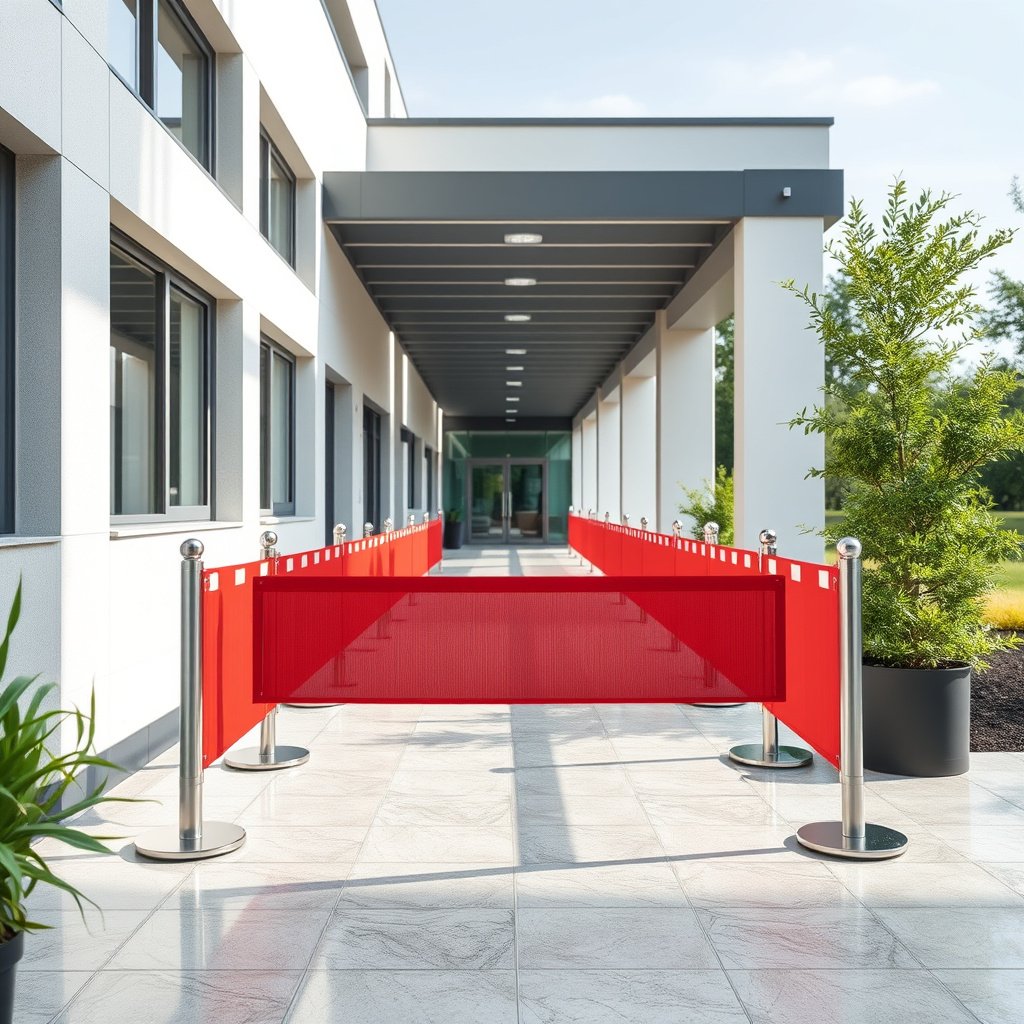
The fastest way to protect outdoor vinyl flooring is to stop water and dirt before they hit the seams and edges. Use outdoor-rated mats to catch sand/grit, and treat the perimeter like a “waterline” that needs a reliable seal—not just a basic trim finish.
Outdoor resilience depends less on “finishes” and more on preventing water pathways to the seams and perimeter edges. (See manufacturer installation/maintenance instructions for your specific vinyl product.)
If water can reach vinyl edges, it can travel into joints and underlayment, increasing the risk of lifting and edge curling on outdoor walkways.
Many resilient flooring warranties require use of approved exterior cleaning methods and installation details to maintain performance in wet conditions.
What to do at traffic entry points
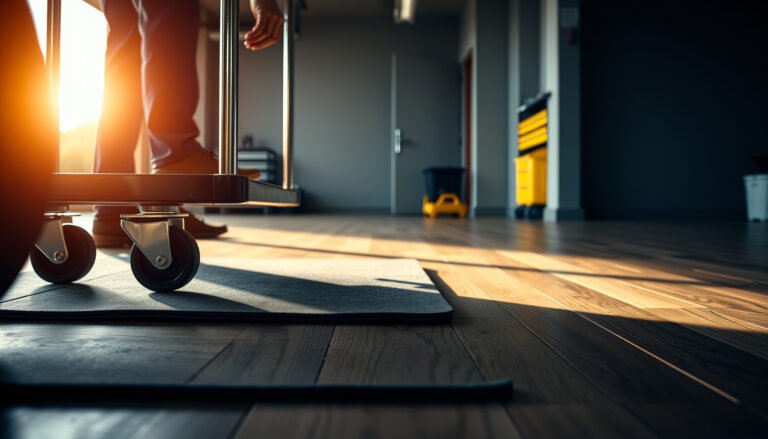
– Place a heavy-duty outdoor mat or runner to catch grit, sand, and standing water before it hits the vinyl.
How to seal the perimeter so water can’t creep underneath
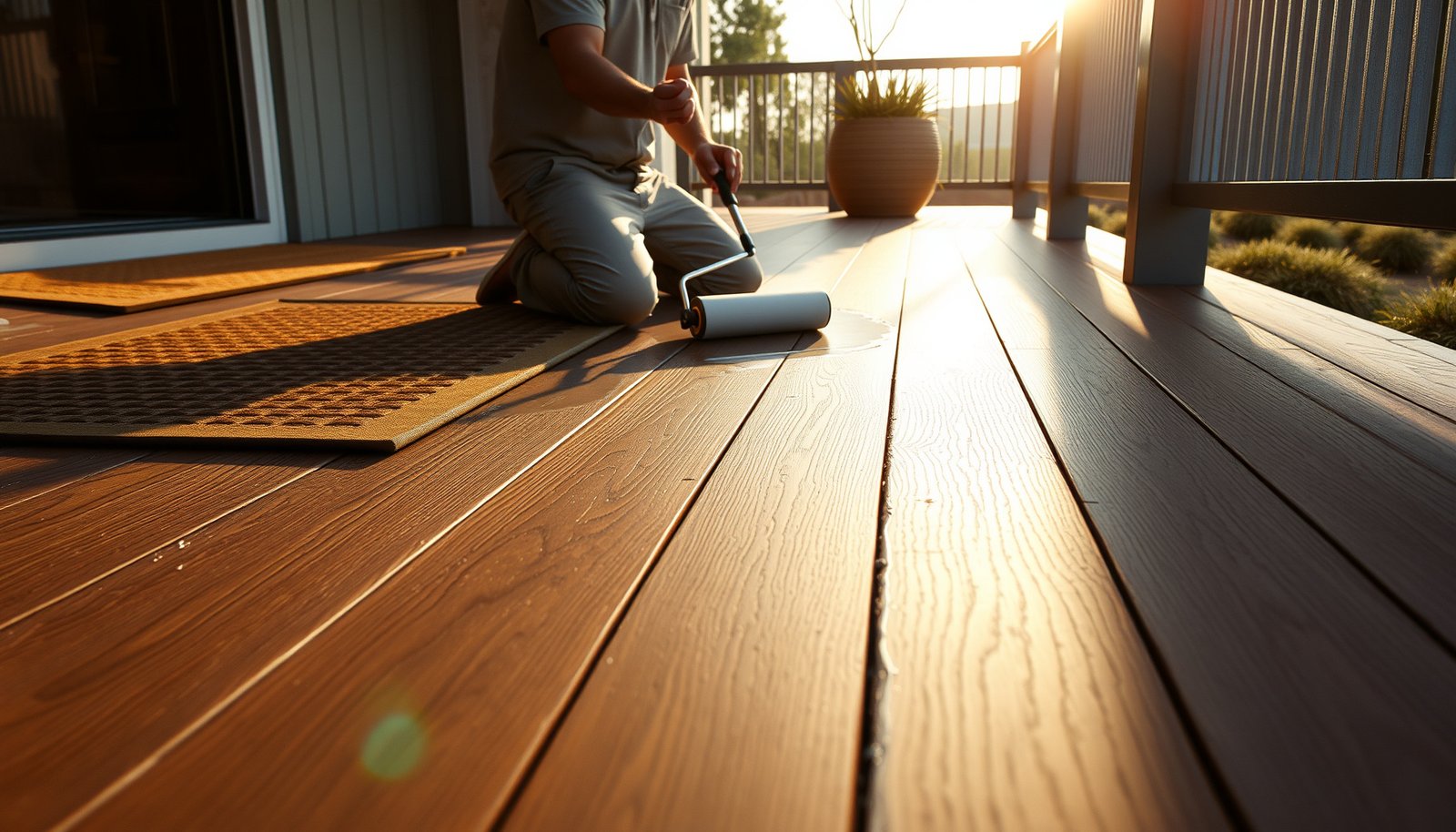
– Protect the edges: use an exterior-rated sealant/caulk at the perimeter and around transitions where water can pool ().
– Use threshold strips and keep the finish edges supported so water can’t creep underneath.
Why this matters for outdoor vinyl flooring: seams and edges are the “weakest link” in any resilient floor system. When rainwater wicks into a seam, the problem compounds: grit turns moisture into an abrasive slurry, and abrasion accelerates wear—especially under UV-exposed, sun-heated areas.
Prep matters: level base and drainage before anything else
The best barrier won’t help if the walkway holds water or the vinyl base isn’t stable. Before you focus on mats and sealing, confirm drainage and leveling so outdoor vinyl flooring stays dry enough for resilient materials to perform.
Standing water increases damage risk because it provides time for moisture to reach seams and edges and for debris to grind into the wear surface.
Resilient flooring failures often start with moisture trapped under the flooring system, especially at seams in wet or cyclic-freeze environments.
Drainage and flatness checks
– Confirm the walkway surface drains properly (avoid flat spots where water sits). Standing water is more damaging than light wetting.
– Make sure the base is stable and dry per the vinyl manufacturer’s installation requirements; moisture trapped under resilient flooring can cause failure at seams.
Expansion and fit rules (don’t “lock it in” too tight)
– Don’t skip proper expansion/fit rules—vinyl needs room to move with temperature changes ().
Outdoor takeaway (as of 2026): in many regions, outdoor walkway conditions swing quickly—morning sun heats the surface, afternoon storms cool it, and winter freeze/thaw cycles stress materials repeatedly. Outdoor vinyl flooring needs that room to move, and it needs a base that doesn’t pump water into the system.
Choose the right protective finish for outdoor exposure
The correct “finish” for outdoor vinyl flooring is whatever your manufacturer explicitly allows for exterior/UV conditions. Many generic coatings and waxes are more likely to trap moisture than to improve long-term protection.
Applying non-approved coatings can interfere with how resilient vinyl flooring moves and can trap moisture at seams and edges.
UV exposure and repeated wetting can degrade film-forming products faster than the flooring’s intended wear-layer design.
– Use only finishes that are explicitly compatible with vinyl and suited for outdoor/UV exposure—many “floor waxes” or off-label coatings can trap moisture and cause haze or peeling.
– If your flooring manufacturer recommends a specific seam sealer or topcoat, follow that guidance. If they don’t, treat “DIY seal everything” as risky.
– Prioritize seam protection where your system allows it (for example, manufacturer-approved seam sealers for click-lock products) rather than trying to coat every joint.
Finish compatibility comparison (what to use—and what to avoid)
Below is a practical decision guide for outdoor vinyl flooring on walkways.
| Feature | Manufacturer-approved seam sealer | Exterior-compatible clear topcoat (approved) | Generic “wax” or coating (not approved) |
|---|---|---|---|
| UV suitability | Designed/approved for your product system | Designed for exterior UV exposure (if approved) | Often not built for UV + repeated wetting |
| Moisture trapping risk | Lower when applied as directed | Can be low if breathable/compatible | Higher risk of trapping moisture under film |
| Floor movement compatibility | Typically aligned with seam design | Varies; approval matters | Film can crack and let water into seams |
| Haze/finish clouding potential | Lower (system-specific) | Moderate to low if approved | Common with unapproved coatings outdoors |
| Slip behavior in wet weather | Usually neutral to controlled | Must match outdoor slip requirements | Can become slick or unevenly worn |
| Application difficulty | Targeted (often seam-focused) | Requires careful outdoor conditions | Often tempting, but rarely system-matched |
| Maintenance implications | Designed for ongoing use | May require periodic recoat | Recoating cycles can worsen moisture issues |
| Warranty alignment | Most likely to match requirements | Only if explicitly approved | Often voids or complicates claims |
| Best use case | Targeting seams/transitions | When the whole system is rated for exterior wear | Usually not appropriate outdoors |
| Long-term risk | Lower when installed correctly | Lower only with correct product selection | Higher likelihood of peeling/haze over time |
| Best For | Seam-focused water blocking where your system allows it | Facilities that need a system-wide, approved exterior finish | Generally avoid on outdoor walkways with exposure to rain and UV |
Cleaning and drying routine for outdoor vinyl
The best maintenance for outdoor vinyl flooring is frequent dry removal of grit and fast drying after rain. Your goal is to remove abrasive particles early and to prevent water from sitting around seams and edges.
Abrasion accelerates when grit is allowed to accumulate; fine particles can behave like sand under foot traffic.
Residual moisture near edges can increase the chance of seam-related failures in resilient flooring systems.
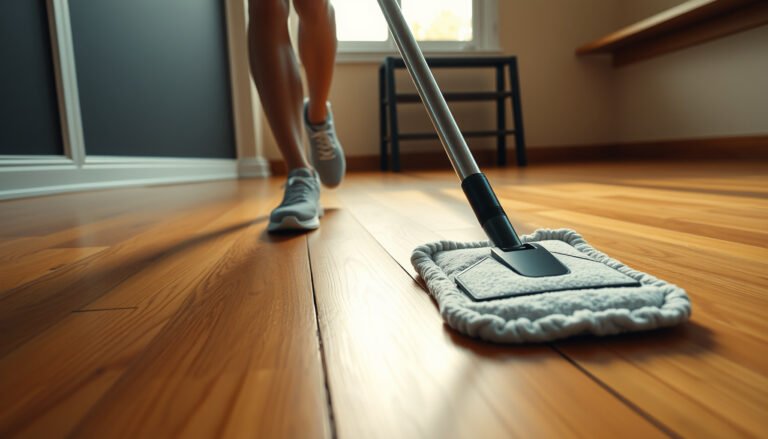
– Sweep/loosen debris often (soft broom preferred). Dirt acts like sand and grinds down the surface over time.
– After rain or heavy wet weather, rinse lightly and dry—especially along seams and edges. Avoid letting puddles linger.
– Use gentle, manufacturer-approved cleaner; avoid harsh degreasers and abrasive pads that can dull the finish or roughen the wear layer ().
A quick debris reality check (why “small dirt” is still a big problem)
Outdoor vinyl flooring doesn’t only face water—tracked-in particles drive wear. Quartz-rich sand is notably hard (about Mohs 7), while many common soft soils/clays can be much lower (often Mohs ~2–3), but once grit is trapped and cycled underfoot, even “softer” particles can dull finishes and expose areas to more moisture.
Abrasive Grit Types Most Commonly Tracked onto Outdoor Walkways (Typical Hardness & Interception)
| # | Tracked material | Typical particle size | Representative Mohs hardness | Mat interception likelihood |
|---|---|---|---|---|
| 1 | Quartz sand (silica-rich) | 0.25–1.0 mm | 7 | ★★★★★ |
| 2 | Weathered granite grit | 0.5–2.0 mm | 6–7 | ★★★★☆ |
| 3 | Fine silica dust | < 0.075 mm | 7 | ★★★☆☆ |
| 4 | Crushed limestone chips | 1–5 mm | 3 | ★★★★☆ |
| 5 | Clay soil grit | 0.002–0.075 mm | 2–3 | ★★☆☆☆ |
| 6 | Leaf/organic fragments | 5–30 mm | 1–2 | ★★★★☆ |
| 7 | Ice/chips from de-icing cycles | 0.5–10 mm | ~1.5 | ★★★☆☆ |
What can go wrong (and why it fails)
Outdoor vinyl floors fail when water pathways remain open or when maintenance introduces the wrong chemistry. When you address the barrier-first plan but ignore sealing, drainage, or approved cleaners, damage shows up quickly at seams and corners.
Even tiny seam gaps can become water pathways; repeated wetting can magnify the effect and lead to lifting or edge curl.
Freeze/thaw stresses resilient materials because expanding ice alters micro-gaps and can push water into vulnerable edges.
– Water intrusion at seams/edges: even small gaps let moisture travel, leading to lifting, edge curling, or swelling.
– Freeze/thaw cycles: expansion and contraction can widen gaps, especially if the base isn’t stable or drainage is poor.
– Wrong products: bleach, strong solvents, and some waxes/sealers can react with the vinyl surface or trap moisture, accelerating deterioration.
– Outdoor heat/UV: dark mat areas and direct sun can increase thermal movement and fading—so mat placement and periodic checks matter.
A few physics reminders that explain real-world damage
– Water expands when it freezes, increasing its volume by about 9%—a major reason freeze/thaw can push moisture into seams (USGS Water Science School: “Why does water expand when it freezes?”).
– UV energy outdoors is intense; Earth’s solar constant is about 1,361 W/m² at the top of the atmosphere (NASA: “Solar irradiance / solar constant” background pages).
– Hard grit matters: quartz is about Mohs 7, meaning it can abrade resilient wear layers more aggressively than many soils (USGS mineral hardness educational materials).
Verdict: the most reliable way to protect outdoor vinyl floors
The most reliable protection is reducing exposure, not “coating your way out” of the problem: outdoor mats + correct perimeter sealing + consistent cleaning/drying. Even then, protection can only go so far if the vinyl product isn’t intended for outdoor use.
– Best for: people willing to maintain (sweep, rinse after storms, dry edges) and willing to use outdoor-rated mats and proper sealing.
– Downsides to know: mats add upkeep (cleaning/replacing), and improper sealants/cleaners can cause more harm than good.
– Skip this approach if: your vinyl flooring isn’t rated for exterior/UV exposure, you regularly get standing water, or you can’t manage drying after rain.
Practical rule we use on walkways (and why): treat outdoor vinyl floors as a “system” (mat + seal + base + maintenance). If any one part fails—especially perimeter sealing or post-rain drying—the seams become the easiest route for moisture and grit to do their work.
Quick scan checklist (save this)
| Task | What it prevents |
|---|---|
| Use an outdoor mat/runner at traffic entry | Abrasion + grit buildup |
| Seal perimeter + transitions with exterior-rated materials | Water creeping under edges |
| Keep drainage clear; avoid pooling | Moisture intrusion |
| Sweep regularly; rinse lightly | Surface wear and staining |
| Dry after rain; inspect seams seasonally | Early lifting and edge damage |
| Replace damaged planks promptly | Spread of failure at seams |
Sources
– RFCI (Resilient Floor Covering Institute) maintenance guidance for resilient flooring (for general cleaning/maintenance principles): .
– USGS Water Science School. “Why does water expand when it freezes?” (USGS Water Science School)
– NASA. Solar irradiance / solar constant background information. (NASA Earth science / solar irradiance pages)
– USGS mineral education materials describing Mohs hardness scale (for general hardness reference). (USGS mineral/education pages)
Vinyl protection outdoors comes down to blocking water/dirt from reaching seams and edges and following the cleaning/finish rules from your flooring manufacturer. Start with outdoor mats and perimeter sealing, then keep the walkway dry and debris-free after weather. If you share your vinyl brand/type (LVP click-lock, glue-down, sheet vinyl, etc.) and how much rain/standing water you get, we can tailor the protection steps to what your product actually allows.
Frequently Asked Questions
What’s the best way to protect vinyl floors in an outdoor walkway?
Use a high-quality outdoor-rated vinyl or apply a protective exterior-grade sealant designed for waterproof vinyl flooring. Place a heavy-duty entrance mat to reduce dirt, grit, and moisture tracking onto the surface. Consider adding a clear outdoor finish or floor coating only if it’s compatible with your vinyl type and won’t void warranties. Regular cleaning with a pH-neutral cleaner helps prevent residue buildup that can dull or weaken the top layer.
How do I prevent water damage and warping on outdoor vinyl flooring?
Keep standing water to a minimum by ensuring the walkway has proper slope and drainage so rainwater flows away from the seams. Wipe up spills promptly and avoid pressure washing directly on the vinyl, which can force water into edges or joints. Seal or maintain any seams, especially around transitions and borders, using a product recommended for vinyl plank or tile. For heavy rain or snow, use a squeegee and towel the surface dry after storms to reduce prolonged moisture exposure.
Which protective mat or rug is safest for vinyl floors outdoors?
Choose a UV-stable, outdoor mat with a non-staining rubber or vinyl-free backing that won’t leave discoloration or residue. Look for a mat that traps grit and allows water to drain through while still cushioning foot traffic. Avoid rough-backed rugs and mats with abrasive textures that can scratch vinyl floors. Also ensure airflow under the mat so trapped moisture doesn’t promote damage along edges.
How can I stop scratches, scuffs, and surface wear on outdoor vinyl walkway flooring?
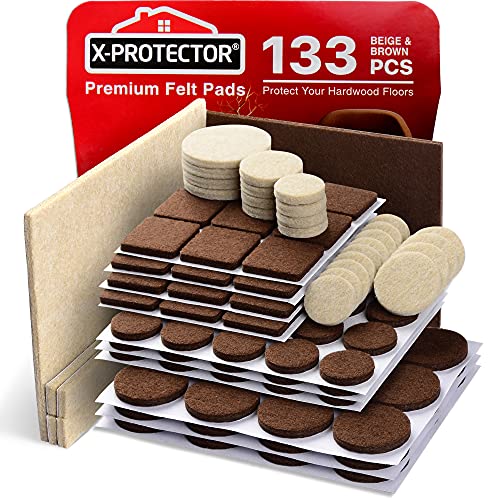
Use felt pads on any furniture or planters set on the walkway and avoid dragging items across the vinyl. For high-traffic areas, consider adding a transparent anti-scratch protector film or a compatible outdoor floor coating to create an extra wear layer. Sweep or use a soft-bristle broom frequently to remove sand and grit, since these act like abrasives. Keep footwear clean by adding mats at entry points and rinsing off mud before it reaches the vinyl.
Why does sun exposure affect vinyl floors outside, and what can I do about it?
UV rays can cause fading, discoloration, and premature breakdown of the protective wear layer on vinyl flooring in direct sunlight. To reduce UV damage, use blinds, awnings, or shade structures when possible, and select UV-resistant vinyl or coatings meant for outdoor applications. If the walkway is fully sun-exposed, prioritize products labeled for exterior use and reapply sealants or protective finishes on the recommended schedule. Regular cleaning also prevents heat-absorbing grime that can worsen sun-related wear.
📅 Last Updated: October 27, 2026 | Topic: How to protect vinyl floors in a outdoor walkway? | Content verified for accuracy and freshness.
References
- polyvinyl chloride ultraviolet weathering – Search Results – PubMed
- pvc plasticizer migration water aging – Search Results – PubMed
- Mold | US EPA
- https://www.cdc.gov/mold/default.htm
- Mold – Overview | Occupational Safety and Health Administration
- Vinyl flooring
- https://scholar.google.com/scholar?q=vinyl+flooring+outdoor+moisture+protection+uv Google Scholar
- https://scholar.google.com/scholar?q=polyvinyl+chloride+uv+weathering+outdoor+durability Google Scholar
- https://scholar.google.com/scholar?q=resilient+flooring+outdoor+installation+moisture+subfloor+guidelines Google Scholar
- https://scholar.google.com/scholar?q=how+to+protect+vinyl+flooring+from+water+and+sunlight Google Scholar