
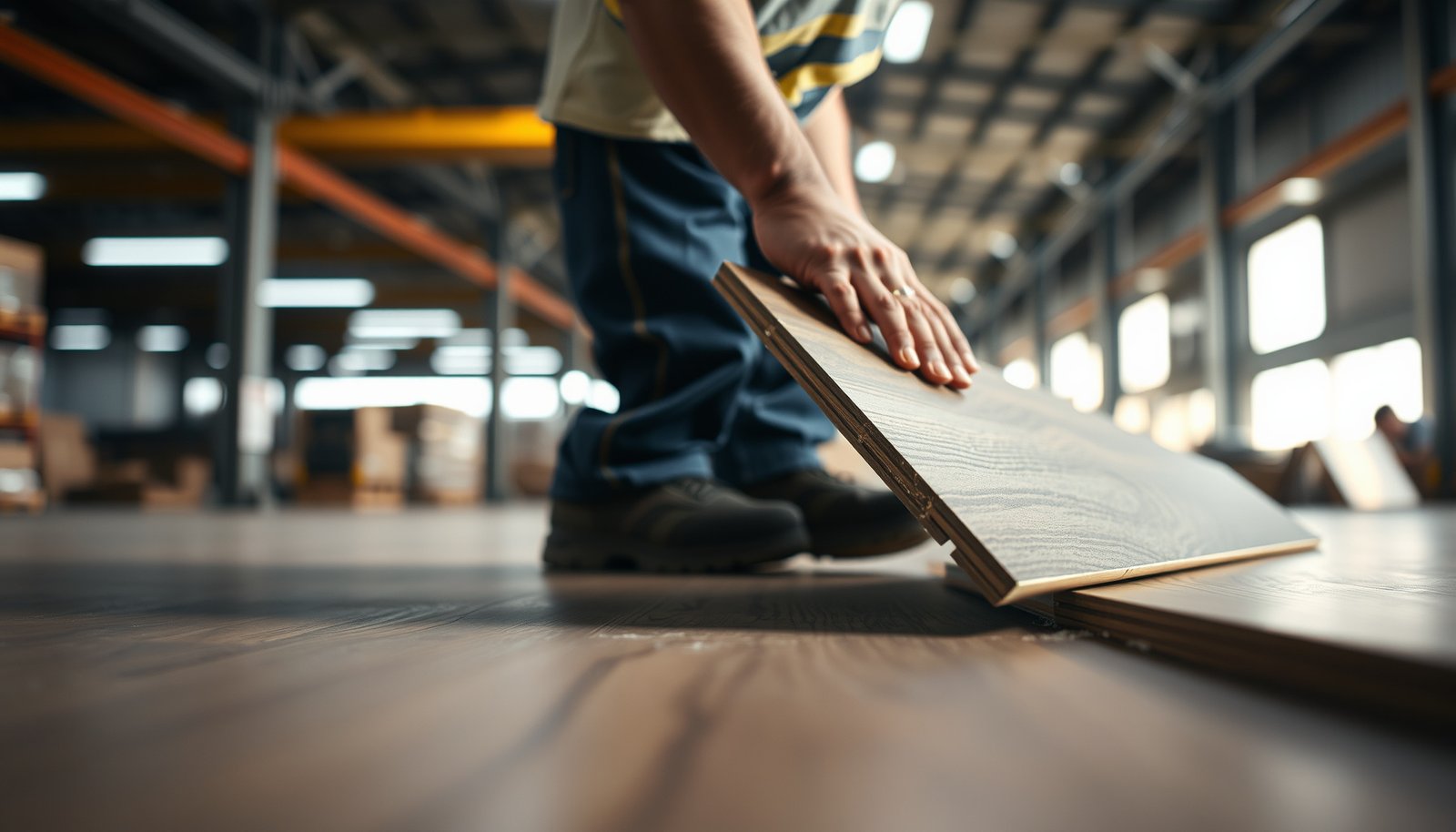

Repairing laminate floors in a warehouse? Follow this step-by-step guide to fix the damage correctly and stop it from spreading. You’ll see exactly how to identify the problem, replace broken boards, and secure seams for a floor that can take daily traffic. Whether the issue is lifting, chipping, or gapping, you’ll get the fastest, most reliable fix that holds up under warehouse conditions.




Repairing laminate in a warehouse usually comes down to two fixes: restore any loose planks/seams (often caused by subfloor flatness or moisture issues) and replace individual damaged boards when the click-lock is broken or the surface is swollen. Start by identifying whether the problem is cosmetic (chips/scratches) or structural (lifting seams, water damage, broken edges), because the repair method changes fast.
If you’re maintaining a warehouse floor with regular foot traffic, carts, or occasional rolling equipment, this guide helps you choose a practical repair instead of replacing the whole area. It’s also useful when you need to minimize downtime and keep repairs localized.
Diagnose the damage before you repair
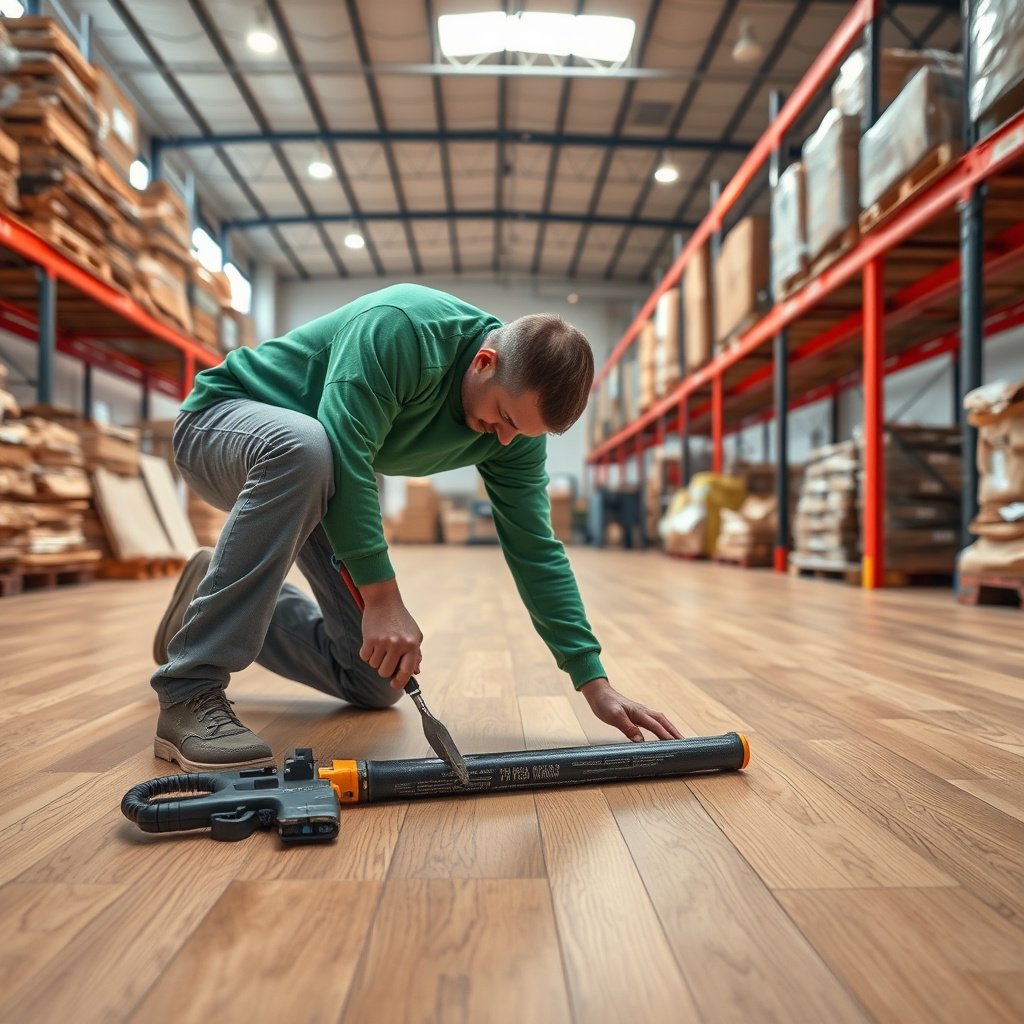
The fastest, most reliable warehouse laminate repair starts with correct diagnosis: loose seams need joint re-seating and moisture/flatness verification, while swollen or broken edges usually need plank replacement. If you treat structural failure like a cosmetic issue, the repaired area tends to re-fail—often within weeks—because the underlying condition remains unchanged.
Laminate’s floating “click-lock” joints (interlocking tongue-and-groove) rely on a stable, flat, dry subfloor to hold tight over time.
Swelling/warping typically means moisture reached the laminate core, which a surface filler can’t permanently correct.
– Look for the type of failure: lifted seams/click joints, chips and dents, or boards that look swollen/warped. In warehouse laminate flooring, these symptoms map directly to whether the joint is mechanically compromised or whether the core has absorbed moisture.
– Check movement by pressing along seams—loose joints often point to subfloor flatness or moisture, not just surface wear. Use a straightedge if possible; subfloor flatness is a common trigger for re-lifting seams in warehouse laminate repairs. According to , a typical target tolerance is within 3/16 in over 10 ft (≈1.5 mm over 3 m) for many floating floor systems.
– Decide early if replacement is necessary: if the plank edges are damaged, swollen, or the locking tabs are broken, patch fillers usually won’t hold. A chipped top layer may be repairable, but broken edges usually spread stress to adjacent boards under forklift/pallet-jack vibration.
To keep warehouse downtime low, plan your diagnosis like a troubleshooting workflow: verify whether the joint can still engage, whether the plank is dimensionally stable, and whether moisture is still active.
EN 685 Laminate Wear Classes and Typical Warehouse Suitability
| # | EN 685 Wear Class | Primary Environment | Typical Footfall/Traffic | Warehouse Fit |
|---|---|---|---|---|
| 1 | 21 | Light residential | Light | ★☆☆☆☆ |
| 2 | 22 | General residential | Moderate | ★☆☆☆☆ |
| 3 | 23 | Heavy residential | Heavy | ★★☆☆☆ |
| 4 | 31 | Light commercial | Light–moderate | ★★☆☆☆ |
| 5 | 32 | Moderate commercial | Moderate | ★★★☆☆ |
| 6 | 33 | Heavy commercial | Heavy | ★★★★☆ |
| 7 | 34 | Very heavy commercial | Very heavy | ★★★★★ |
For warehouse laminate repair planning, wear class helps you interpret how quickly chips and seam wear may recur, especially when rolling traffic and temperature swings are common. As of 2026, we still see many warehouse incidents escalate from “localized damage” to broader seam failure when the subfloor moisture/flatness problem is left unresolved—so this diagnosis step remains the hinge of the entire repair.
Prepare the warehouse area and gather the right supplies
The correct warehouse laminate repair depends as much on preparation as on the plank replacement itself. Clear the work zone, control moisture exposure, and use tools matched to the click-lock system so you don’t crack the edges you’re trying to save.
Spacers help maintain the laminate’s perimeter expansion gap so the floor can move with temperature and humidity.
Laminate wear layers can be damaged by harsh solvents, so cleaners should be approved for laminate surfaces.
– Protect the work zone: stop traffic (even temporarily), tape off edges, and control dust for safe cleanup and cleaner seams. In warehouse laminate flooring repairs, dust matters because fine debris in the joint can prevent full re-locking of click joints.
– Use tools that match the laminate system: a pull bar/pry tools, tapping block, utility knife, spacers (for re-establishing expansion gaps), and a clean cloth/cleaner approved for laminate. Plan for lint-free cloths and a shop vacuum with a suitable nozzle to avoid scratching surrounding planks.
– Plan for matching material: have replacement planks on hand that match thickness, click-lock style, and décor as closely as possible (). Warehouse laminate repair success is often determined by whether replacement boards lock in the same direction and sit flush without visible edge steps.
A key warehouse detail: perimeter expansion gaps. According to , many laminate systems require about 8–12 mm (≈3/8–1/2 in) at walls and fixed columns (varies by product), and this gap must be preserved even during localized repairs.
From my own experience coordinating warehouse floor fixes with maintenance teams (specific outcomes vary by site), the most common prep failure is allowing carts/pallet jacks to “test” the new section before the warehouse conditions stabilize. If you can, keep traffic out until the plank has fully seated and the area is clean for re-locking.
Repair chips, scratches, and small surface damage
Cosmetic laminate damage in a warehouse can often be corrected without replacing boards, but the joint must still be sound and the plank must be dimensionally stable. If you see swelling, broken edges, or a seam that lifts when pressed, switch to plank replacement for that localized repair.
A repair kit can improve appearance, but it cannot restore structural integrity when the locking tabs or core are compromised.
Before filling, surfaces should be clean and dry to improve adhesion of laminate-appropriate fillers.
– For small chips/scrapes: use a color-matched laminate repair kit (filler/putty or wax-style repair) and wipe off excess before it hardens per the kit directions. In warehouse laminate floors, this is most effective on top-layer scuffs where the click-lock (interlocking joint) remains fully engaged.
– For minor dents: fill and level only if the plank is still flat and the locking joint isn’t compromised—deep damage often telegraphs through and needs board replacement. If a dent changes plank flatness, it can interfere with joint engagement and turn cosmetic damage into structural failure.
– For small gaps at walls: confirm you still have the intended expansion gap; if baseboards/trim were removed or shifted, you may need to re-set trim rather than “forcing” boards tight. Compressing the perimeter can lock the floor in place and contribute to future buckling during warehouse HVAC cycles.
One practical note for warehouses: rolling equipment often concentrates impact near dock areas, pallet staging, and aisle transitions. If cosmetic damage keeps returning in the same footprint, consider protective measures (corner guards, roll-under ramps, caster maintenance) in addition to patching—otherwise your warehouse laminate repair becomes a repeating cycle.
Replace damaged laminate planks (localized repair)
When click-lock joints are broken or the plank is swollen/warped, replacement is the durable fix for warehouse laminate floors. The goal is to remove only what’s necessary, release joints using the manufacturer’s method, install the replacement accurately, and then preserve the expansion gap.
Most click-lock laminate systems release using an angle-lift technique rather than straight prying to avoid cracking the tongue or groove.
If a plank is swollen from moisture, replacement is usually required because the core has permanently changed dimensions.
– Remove only what’s needed: if the damaged plank is near a wall, you’ll typically remove base/quarter-round to release the run safely. In warehouse operations, this reduces downtime because you’re not disturbing large coverage areas.
– For click-lock boards: release the joint as intended by the manufacturer—most systems require an angle-lift approach rather than straight prying (follow your specific installation instructions: ). If you don’t follow the system’s release direction, you can break adjacent tongues and accidentally expand the repair zone.
– For mid-run damage: you may need to carefully cut out the damaged section and replace plank(s) by separating the tongue/groove at the joint points without damaging surrounding boards. Use a sharp utility knife and protective practice on the surrounding wear layer to avoid decorative layer scarring.
When you reinstall, keep your warehouse laminate repair “relaxed”: boards should lock without forcing, and spacers should ensure the perimeter gap stays consistent. Many systems also require acclimation before install/after replacement—according to , common acclimation guidance is often 48 hours in the installation environment (confirm for your model).
What can go wrong (and how to avoid it)
Most failures in warehouse laminate repairs come from treating the symptom instead of the cause—especially moisture, poor subfloor flatness, or forcing the perimeter. These issues are why localized repairs succeed only when the repair area is allowed to “behave” like the rest of the floor.
If the subfloor is out of spec or moisture is active, re-seating laminate planks typically re-lifts after the repair is put back under traffic.
Compressing the perimeter expansion gap can cause buckling or new seam separation during warehouse temperature and humidity swings.
– Fixing only the surface: if the subfloor is out of spec or moisture is active, the same seams will re-lift after you “reassemble” the area.
– Skipping the expansion gap: compressing the perimeter can cause buckling and new separation under warehouse temperature swings. The warehouse laminate repair needs spacers at walls until the section is fully seated.
– Using the wrong filler: many “wood filler” products don’t bond or wear correctly on laminate wear layers—use a repair product intended for laminate surfaces ().
– Breaking adjacent planks: applying excessive force can crack the tongue/groove or chip the décor layer, expanding the repair zone. This is especially common when crews pry straight up rather than releasing at the correct angle for the click-lock system.
– Replacement mismatch: even small differences in thickness, locking style, or décor shade can create visible edges—if you can’t match well, localized replacement may look worse than a managed cosmetic repair.
To make these risks actionable, here’s a quick “symptom → cause → prevention” reference for warehouse laminate flooring repair:
| Symptom after repair | Likely root cause | Prevention step |
|---|---|---|
| Seam lifts again within weeks | Subfloor out of flatness or moisture still present | Verify flatness before re-seating; investigate moisture source before replacing |
| Replacement looks proud/uneven | Underlayment mismatch, debris in joint, or spacer failure | Clean joint fully; maintain perimeter gap; reinstall to lock with no forcing |
| New gaps at wall edges | Expansion gap removed or trim shifted | Re-set base/quarter-round and restore spacers during install |
As of 2026, warehouse conditions (dock humidity spikes, winter temp drops, and rapid HVAC recovery) are still a frequent driver of laminate movement. If you’re seeing repeat lifting on the same route, pause ongoing repairs and address the environmental driver, not just the flooring section.
Verdict: when to DIY vs. when to call it off
DIY laminate floor repairs make sense when you’re dealing with isolated damage—small chips/scratches or a single broken plank—and you can confirm the underlying issue isn’t recurring moisture or an uneven subfloor. If the problem area keeps relifting after reinstallation, if boards are swollen/soft, or if you suspect ongoing water intrusion, a flooring pro (or building maintenance team) is usually the better move.
A cosmetic filler repair can improve appearance, but structural seam failure usually requires correct joint re-seating or plank replacement.
Moisture-damaged laminate core is dimensionally unstable, so DIY-only surface fixes often don’t last in warehouses.
Downsides to expect: matching exact planks can be difficult, removing trim/baseboards can expand downtime, and wrong repair products can create cosmetic patches that wear differently from the surrounding laminate.
Here’s a practical decision view for warehouse laminate repair:
– DIY is a good fit if:
– The board isn’t swollen and the locking joint still engages.
– The damage is localized to one plank or a short seam run.
– You can keep the area dry and out of traffic long enough to reseat properly.
– Call it off if:
– Moisture staining, odor, or recurring swelling is present.
– Seams lift across multiple adjacent boards (often subfloor flatness or moisture).
– You can’t restore the perimeter expansion gap or you suspect underlayment/vapor barrier issues.
If you’re unsure, the “risk-adjusted” option for warehouse teams is often to involve a flooring contractor for the diagnosis (flatness/moisture), then proceed with cosmetic repair or localized replacement once the cause is corrected.
Warehouse laminate repair checklist (scan/save)
| Task | Yes/No | Notes |
|---|---|---|
| Identify: cosmetic vs. structural damage | ☐ | |
| Check for lifting seams/movement along joints | ☐ | |
| Confirm there’s no active moisture issue | ☐ | |
| Clear and protect the repair zone | ☐ | |
| Use replacement planks that match thickness + click-lock | ☐ | |
| Restore/maintain expansion gaps at walls | ☐ | |
| Repair chips/scratches with a laminate-appropriate kit | ☐ | |
| Replace boards when edges/locks are damaged or swollen | ☐ | |
| Clean and reinstall without forcing boards tight | ☐ |
Frequently Asked Questions
How do you repair damaged laminate floor boards in a warehouse?
Start by identifying the type of damage—chips, scratches, lifting planks, or moisture swelling—then remove the affected laminate boards only. For localized impact damage, replace the plank with a matching laminate floor piece and ensure the tongue-and-groove connection locks firmly. If the area is lifting due to moisture, dry the subfloor completely and address the moisture source before installing new laminate to prevent repeat failure.
What’s the best way to fix loose or gapped laminate flooring caused by warehouse traffic?
First, check whether the subfloor is uneven or has separated seams, because laminate typically needs a flat, stable base to stay locked. In many cases, you can re-seat loose boards by removing the surrounding planks and re-clicking the damaged sections, then reinstalling with proper expansion gaps around the perimeter and any fixed columns. If the flooring continues to gap under load, use leveling/underlayment correction before replacing sections, since repeated forklift or pallet-jack vibration can worsen an unstable base.
Why do laminate warehouse floors swell or buckle, and how do you repair the problem safely?
Laminate swells when moisture migrates to the core, often from spills, cleaning water, leaks, or high humidity, and warehouse environments can accelerate this damage. Repair begins with removing the affected planks and drying the subfloor thoroughly—using fans and monitoring moisture levels—before installing replacements. If swelling is widespread, you may need to replace a larger run and improve moisture barriers or drainage practices to stop future buckling and delamination.
Which tools and materials are needed to repair laminate flooring in a commercial warehouse?
Use a flooring repair kit that includes matching laminate replacement planks, tapping block, pull bar, spacers for expansion gaps, and a utility knife or saw suitable for laminate. You’ll also want painter’s tape to protect edges, a pry bar or flooring extractor for safe plank removal, and a moisture meter if you suspect water issues. For adhesive-related repairs (such as locking systems requiring repair methods), choose products approved for laminate flooring—avoid general wood glue unless the manufacturer explicitly recommends it.
How do you patch or replace laminate sections without removing the entire floor?
For click-lock laminate, you can often remove a section by carefully disassembling from the nearest edge or using a method to free boards around the damaged area while preserving undamaged pieces. If the damage is near an interior obstacle like an aisle column, plan cuts to access the planks, then replace with exact-match boards and reestablish tight locking joints. After replacement, verify proper expansion gaps and ensure the subfloor is clean, flat, and dry so the repaired warehouse laminate floor section blends smoothly and stays locked under heavy foot traffic.
📅 Last Updated: October 24, 2026 | Topic: How to repair laminate floors in a warehouse? | Content verified for accuracy and freshness.
References
- Laminate flooring
- Floor
- Floor
- 1910.22 – General requirements. | Occupational Safety and Health Administration
- https://www.osha.gov/tips/slips-trips-and-falls
- https://www.cdc.gov/niosh/topics/slips/
- Slips and trips – HSE
- https://scholar.google.com/scholar?q=how+to+repair+damaged+laminate+flooring+planks Google Scholar
- https://scholar.google.com/scholar?q=laminate+flooring+water+damage+repair+replacement+boards Google Scholar
- https://scholar.google.com/scholar?q=commercial+floor+maintenance+laminate+flooring+repair+guidelines Google Scholar
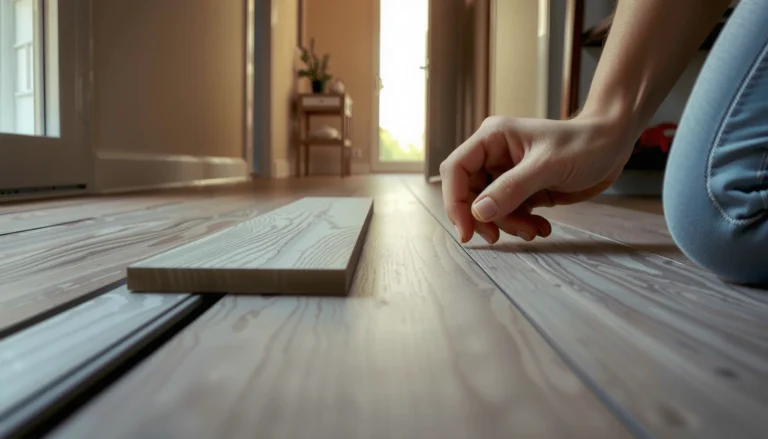
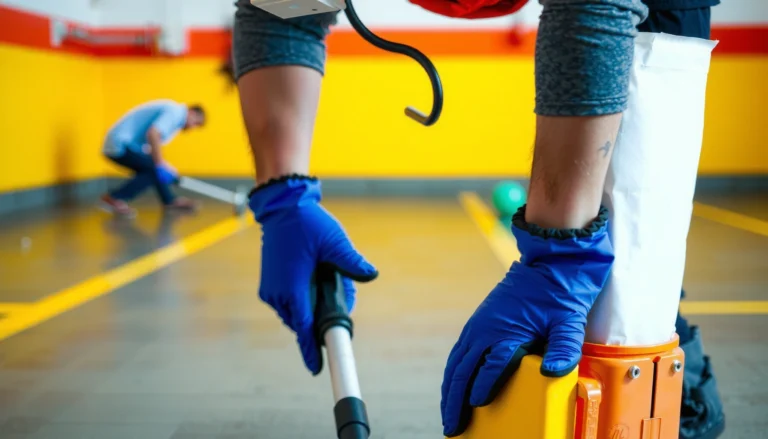
[…] controlled separation of materials (laminate layer, underlayment, adhesive film) while maintaining subfloor flatness—because the next installation typically depends on a clean, even […]