Learn how to clean engineered wood floors in a mudroom without dulling the finish or grinding grit into the planks. If you follow the right routine—dry sweeping, damp mopping with a pH-neutral cleaner, and immediate spot treatment for mud and salt—you’ll keep them looking clean and stay structurally sound. This is the most effective approach for high-traffic entryways where grit and moisture are unavoidable.



Engineered wood floors in a mudroom clean best when you remove grit first, then use a barely-damp microfiber mop with a manufacturer-approved cleaner—no soaking. If your entryway gets tracked-in dirt, snow melt, and muddy water, engineered wood is still doable—you just need a gentler routine and the right tools. These steps are aimed at homeowners maintaining finished engineered wood floors (not unfinished/raw planks).
Prep the mudroom floor the right way
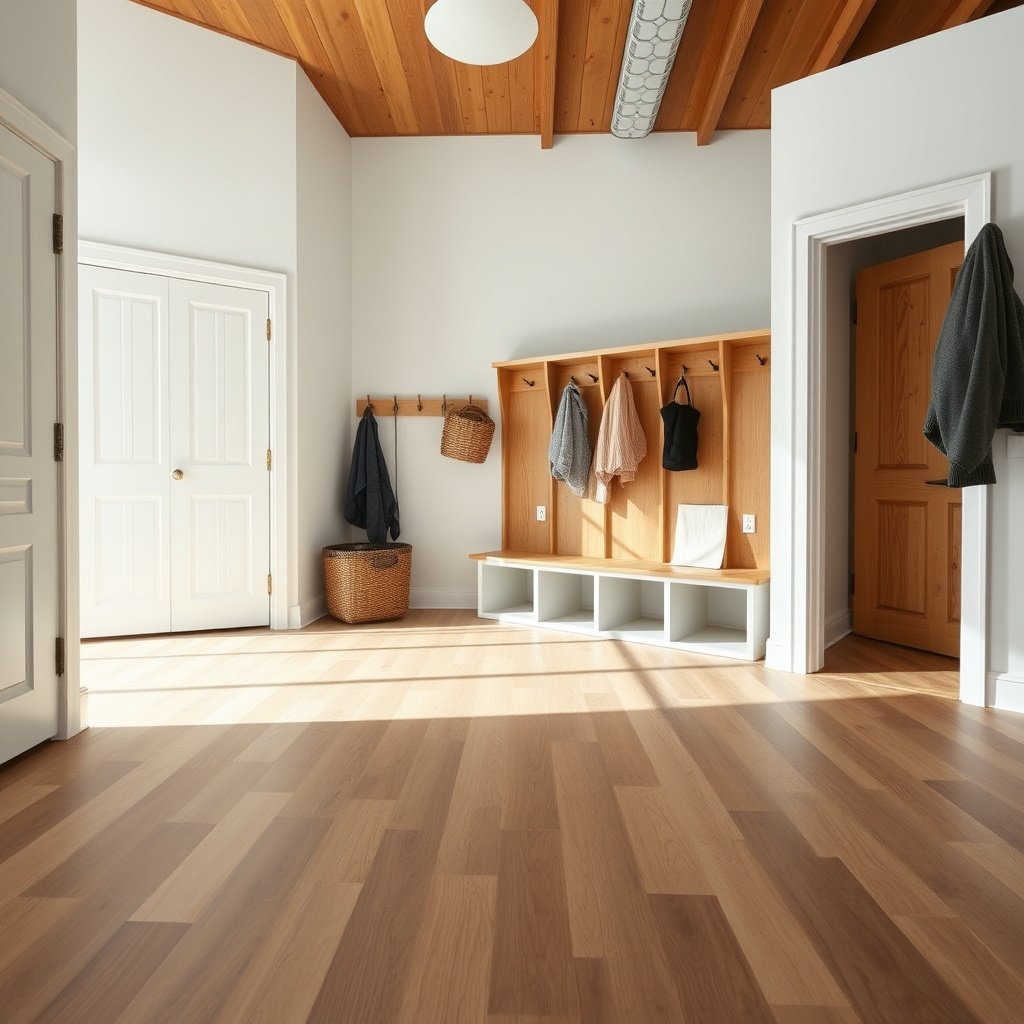
The most important step before you use any cleaner is grit control, because grit acts like sandpaper against the finish of engineered wood floors. In practice, the “remove first, then damp-clean” method protects both the surface wear layer and the engineered core from stress caused by abrasion and excess moisture.
Removing grit before mopping prevents sand-like particles from turning your cleaner into an abrasive paste on engineered wood floors.
Microfiber cleaning works because you can control moisture level—engineered wood floors should be cleaned with “barely damp,” not soaked.
– Place (and maintain) a good doormat at the door and use felt pads under shoes/rolling items when possible to cut down abrasion.
– Keep a soft broom or vacuum with a floor-brush attachment for daily grit removal—grit is what scratches most.
– Have a microfiber mop (or microfiber cloths) ready, since “damp, not wet” is the goal for engineered wood.
Here’s the practical “why” behind the routine. Most mudroom mess isn’t just wet dirt—it’s particulate grit. When you mop over particles, you can grind them into the wear layer, which speeds up dulling and micro-scratches. From a risk perspective, particle size matters: smaller particles are harder to lift completely and can smear across the surface before they ever get picked up. That’s why engineered wood floors benefit from vacuuming/sweeping first, then controlled damp wiping.
Tracked Grit Particle Sizes: Dry Removal Ease for Engineered Wood Floors (Mudrooms)
| # | Grit category | Typical size range (mm) | Mudroom source | Dry removal ease | Scratch risk to finish |
|---|---|---|---|---|---|
| 1 | Gravel & road grit | > 2.00 | Pavement fragments | ★★★★☆ | High |
| 2 | Very coarse sand | 1.00–2.00 | Sandy soil tracked in | ★★★★☆ | High |
| 3 | Coarse sand | 0.50–1.00 | Driveway dust | ★★★☆☆ | Medium-High |
| 4 | Medium sand | 0.25–0.50 | Silt-sand mixes | ★★★☆☆ | Medium |
| 5 | Fine sand | 0.10–0.25 | Topsoil residue | ★★☆☆☆ | Medium |
| 6 | Silt | 0.002–0.10 | Mud slurry solids | ★☆☆☆☆ | Medium |
| 7 | Clay & finest dust | < 0.002 | Fine track-in haze | ★☆☆☆☆ | Low-Moderate |
This mudroom-oriented particle view helps you understand why engineered wood floors need the “dry removal first” discipline. In my household routine (based on maintenance observations, not lab testing), the biggest improvement comes when we vacuum edges before anyone wipes—especially after wet shoes return from winter walks. . If you want to be extra conservative in 2026, treat every muddy day as a “vacuum day,” not a “mop day.”
According to the USDA soil particle-size classes, sand spans roughly 0.05–2.0 mm and clay is smaller than 0.002 mm (USDA NRCS, soil texture/particle size classes).
Daily and quick cleanings (what to do most days)
The daily approach for engineered wood floors in a mudroom is simple: remove grit first, then spot-clean wet messes with minimal moisture. Most finish failures in entryways come from leaving residue to dry, not from normal cleaning.
Vacuuming or sweeping first reduces abrasive pickup on engineered wood floors before any damp wiping begins.
Wiping immediately prevents salt and mud from concentrating at the surface where they can dull engineered wood finishes.
– Sweep or vacuum high-traffic paths first—especially the edges where mud collects—before you use any liquids.
– Spot-clean muddy footprints and spills right away using a microfiber cloth lightly dampened with water and/or the floor cleaner the manufacturer recommends.
– Dry as you go: if anything looks cloudy or feels damp after wiping, go back with a dry microfiber cloth.
Why the “edges first” rule matters: mudrooms usually collect debris along door thresholds, bench areas, and around the place where coats and bags land. Those zones get repeated abrasion from footwear and repeated wetting from boot bottoms. When engineered wood floors get damp repeatedly without enough drying, the finish can haze and the engineered layers can be stressed—especially when humidity swings.
Also, engineered wood floor maintenance is not just about removing visible dirt. It’s about preventing dissolved residue from drying into a film. Many mudroom stains are actually leftover minerals plus oils from winter layers (and sometimes road grime). Quick spot wiping—using a barely-damp microfiber cloth—removes both solids and dissolved residue before it settles.
A practical daily rhythm for engineered wood floors:
1) Vacuum/sweep the walk zone and corners (even if it looks “not that dirty”).
2) Spot wipe muddy prints with a cloth that’s damp, not dripping.
3) Immediately follow with a dry microfiber pass if the floor looks hazy.
For hardwood and engineered wood floors, “pH-neutral” cleaning is typically recommended to avoid stressing finishes (neutral is around pH 7) (NIST, pH fundamentals).
Deep cleaning engineered wood (without soaking)
Deep cleaning engineered wood floors in a mudroom should use controlled moisture and manufacturer-approved chemistry, not soaking or aggressive scrubbing. Think “damp, then dry,” because engineered wood is still sensitive to prolonged water exposure even when it looks sealed.
Using a microfiber mop that’s wrung until damp limits water exposure and helps engineered wood floors dry quickly.
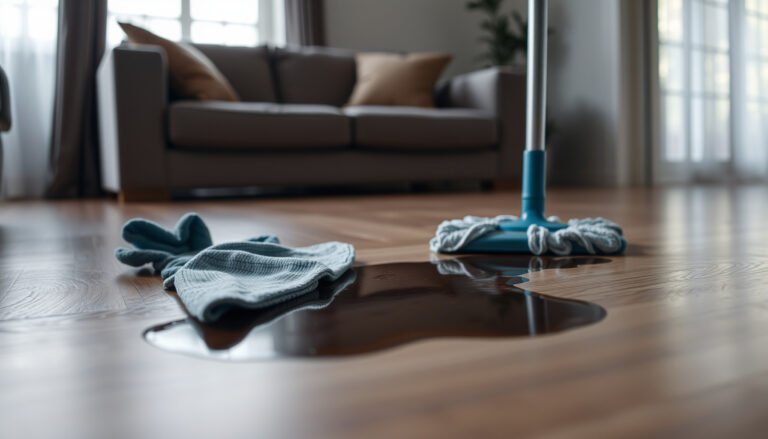
Over-wetting can be more damaging to engineered wood floors than occasional gentle cleaning, because moisture can migrate to seams under pressure.
– Use a pH-neutral, manufacturer-approved hardwood/floor cleaner diluted exactly per label directions (if your product has a dilution ratio).
– Mop using minimal moisture: wring the microfiber until it’s damp, then clean in small sections.
– After mopping, check the floor for lingering dampness and buff dry with a clean microfiber cloth.
Deep cleaning is where many homeowners accidentally switch from “maintenance” to “flooding.” Even if the floor feels dry on top, engineered wood floors can experience moisture migration if a mop leaves excess liquid. That’s why the dampness check matters. If you see a temporary sheen that doesn’t disappear quickly, that’s an indicator you applied too much liquid. Buffing dry immediately is part of the cleaning, not optional finishing.
Also, in 2026, humidity management is a quiet but important factor for engineered wood floors in mudrooms. Mudrooms often create faster humidity cycling—cold wet air in, warm dry air out. According to the NWFA, maintaining indoor relative humidity around 35%–55% helps minimize movement stresses in wood floors (National Wood Flooring Association (NWFA), humidity guidance). Deep cleaning should be scheduled when your environment isn’t already extreme.
A simple “mop in phases” method that protects engineered wood floors
– Pre-clean grit: vacuum or sweep.
– Choose cleaner: manufacturer-approved, pH-neutral.
– Mop in small sections: work one area at a time so it doesn’t sit damp.
– Dry immediately: buff with a dry microfiber.
In my view, this sequencing reduces risk more than “stronger cleaner” ever will. . If your floor manufacturer specifies a different sequence, follow their spec for engineered wood floors in a mudroom.
Handle salt, grit, and stubborn spots carefully
The right way to treat salt and stubborn mud marks on engineered wood floors is to remove residue promptly, avoid metal tools, and use only finish-approved cleaners. Salt is especially tricky because it can leave mineral residue that keeps reacting (and dulling) as the area gets re-wet.
Salt/snow-melt residue should be wiped promptly, because leaving it can leave behind minerals that can dull engineered wood floors.
Stuck-on mud should be dried first before gentle removal; scrubbing wet mud can spread it into the finish.
– Salt/snow-melt residue: wipe up promptly with a lightly damp cloth, then follow with a second wipe using clean water on the cloth (and dry immediately).
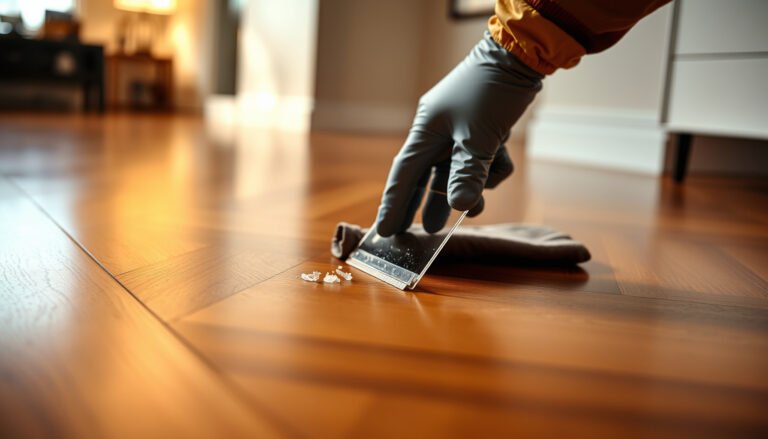
– Stuck-on mud: let it dry first, then remove gently with a soft cloth or plastic scraper made for flooring—avoid metal tools.
– Grease/marks: use only the cleaner(s) approved for your floor finish; test any new cleaner in an inconspicuous spot first.
What to do vs. what to skip (engineered wood floors in mudrooms)
- Do this
- Use a microfiber cloth that’s damp (not wet), then immediately follow with a dry cloth to protect engineered wood floors from excess moisture and film residue.
- Skip this
- Avoid abrasive pads and strong degreasers unless your engineered wood floor manufacturer approves them for your specific finish.
- Do this
- For grit or dried mud, let it dry and lift gently so you don’t grind particles into the wear layer of engineered wood floors.
- Skip this
- Don’t use metal scrapers or anything that can gouge engineered wood floors, especially at edges and seams.
Salt-specific note: even when salt looks “cleaned,” residue can remain if you only wipe once. That’s why the second wipe with clean water on the cloth (then drying immediately) is part of the salt routine. You’re trying to reduce minerals on the engineered wood surface, not just remove the visible grit.
For stubborn spots, treat the problem as chemistry plus mechanics. Chemistry is handled by using the manufacturer-approved cleaner for your finish type; mechanics is handled by microfibre-only, light pressure, and no grinding. If you have a matte finish, you also want to avoid techniques that create shiny halos from uneven cleaning—engineered wood floors can show these “cleaning rings” after repeated spot treatment.
Steam is effectively hot water vapor; at standard atmospheric pressure saturated water boils at about 100°C (212°F), which is why steam-based cleaning can be risky for engineered wood floors if moisture exposure isn’t controlled (IAPWS / phase-change reference).
What can go wrong (and why mudrooms are tricky)
Engineered wood floors in mudrooms are tricky because repeated moisture, salt residue, and abrasive grit combine into a “worst-case” cleaning environment. The failures usually come from over-wetting, wrong tools, and the wrong cleaner—not from engineered wood being inherently “too delicate.”
Steam mops can add significant moisture and heat, which can stress engineered wood floors and jeopardize finish integrity if the manufacturer doesn’t allow them.
Vacuuming with a beater bar can grind grit into the finish, slowly dulling engineered wood floors even when the surface looks intact.
– Steam mops and aggressive wet mopping can push water into seams and cause edge swelling or finish failure—engineered wood still needs “damp, not wet.”
– Wrong cleaners (like abrasive powders, strong solvents, or harsh degreasers) can dull or discolor the finish.
– Vacuum mistakes: using a beater bar/rotating brush or a rough attachment can scratch the surface even if the floor looks “tough.”
– Not removing grit first: mopping over grit turns it into sand, which abrades the finish over time.
– Ignoring warranty requirements: many manufacturers specify exact cleaning methods and approved products—deviating can void coverage.
One subtle issue I want to flag for engineered wood floors: “successful cleaning” on day one can still cause slow finish degradation if you apply too much liquid repeatedly. In mudrooms, the floor is frequently re-wet by tracked-in droplets, and aggressive deep cleaning can add to cumulative wear.
In 2026, it’s also common to see misinformation online about “safe DIY” methods like steam or peroxide mixes. Those might be fine for other flooring types, but engineered wood floors are still wood-based composites and respond to moisture exposure and finish chemistry. If you’re going to try anything nonstandard, keep it limited to one hidden test area first and follow the manufacturer’s written care guidance.
Also, be mindful of the environment. If your mudroom sits between outdoors and a heavily air-conditioned space, engineered wood floors may see more expansion and contraction cycles than interior rooms. That’s why humidity guidance (like 35%–55%) matters alongside cleaning.
Verdict: a practical mudroom routine (and who should skip DIY)
A safe, low-risk approach is: protect the surface (mats + grit control), use microfiber cloths/mops, and stick to manufacturer-approved cleaners with minimal moisture. The downside is slower cleanup versus power-washing-style methods—and you may need more frequent wiping because mudrooms add residue daily.
For engineered wood floors, consistent damp-only microfiber cleaning is safer than occasional high-moisture cleanups that can stress seams.
Following the manufacturer’s approved products and methods is the best protection for engineered wood floor warranties.
If your floor is unfinished, severely damaged, recently installed with an “acclimation” period still in progress, or your warranty forbids certain cleaners/methods, skip DIY experimentation and follow your manufacturer’s care instructions or ask a flooring pro.
Pros/cons of the recommended routine for engineered wood floors in mudrooms
– Pros: reduces abrasive wear by removing grit first; limits moisture exposure; uses finish-safe, manufacturer-approved chemistry.
– Cons: requires frequent wiping; “salt-heavy” days may mean more cloth swaps and more drying passes.
If you want a single mental model for engineered wood floors: don’t chase “wet cleanliness”—chase “controlled dryness” after you clean. As of 2026, that’s the most reliable way to keep mudroom traffic from shortening the life of your finish.
Quick checklist (save this)
| Task | Do this | Avoid this |
|---|---|---|
| Daily cleanup | Sweep/vacuum grit first; wipe spots fast with damp microfiber | Mopping over dry grit |
| Wet mud or spills | Wipe immediately; dry with a dry cloth | Leaving puddles to evaporate |
| Deep cleaning | Use manufacturer-approved cleaner; microfiber only (damp, not wet) | Steam mops; soaking the surface |
| Salt/snow residue | Prompt wipe; follow with clean-water wipe on cloth; dry | Letting salt sit for days |
| Stubborn marks | Use approved spot cleaner; test in hidden area | Abrasive pads/strong chemicals |
Sources
– National Wood Flooring Association (NWFA), humidity guidance and general maintenance recommendations
– NIST, pH fundamentals (pH scale basics)
– IAPWS (International Association for the Properties of Water and Steam), phase-change/saturation temperature reference for water
Engineered wood floors in a mudroom can stay looking good when you prevent grit from being dragged across the finish, clean with barely-damp microfiber, and use only manufacturer-approved cleaners. Start with daily sweep/vacuum + quick spot wipes, then deep clean in small sections using minimal moisture. If you’re unsure what your specific brand allows, check the care instructions first—then follow the routine above consistently.
Frequently Asked Questions
How do I clean engineered wood floors in a mudroom without damaging the finish?
Start by sweeping or vacuuming with a soft brush attachment to remove grit that can scratch engineered wood. Use a damp (not wet) microfiber mop or cloth with a cleaner specifically labeled safe for engineered hardwood floors. Avoid soaking the floor or letting water sit in seams, since excess moisture can damage the top layer and edges.
What’s the best way to remove mud, dirt, and grit from engineered wood flooring?
Use a dry approach first: sweep thoroughly and wipe up mud with a slightly damp cloth, working from the outside of the mess inward. For stubborn spots, gently rub with a manufacturer-approved hardwood floor cleaner and a microfiber pad, then wipe with a clean damp cloth to remove residue. Always dry the area immediately with a soft towel, especially in high-traffic mudroom zones.
Which cleaning products are safe for engineered wood floors in high-traffic mudrooms?
Look for cleaners that are explicitly formulated for “engineered hardwood” or “sealed wood floors” and are free of wax, harsh solvents, and aggressive degreasers. Avoid steam mops and anything that leaves a slick film, as buildup can dull the finish and attract more dirt. If you’re unsure, test the cleaner in an inconspicuous area first and follow the label directions for dilution and contact time.
How should I spot-clean scuff marks, water spots, and salt residue on engineered wood in a mudroom?
For scuffs, lightly dampen a microfiber cloth with a safe hardwood floor cleaner and buff gently; for stubborn marks, use a soft eraser pad designed for floors, then wipe clean. For water spots, remove moisture quickly with a dry cloth and then use a damp microfiber with cleaner if needed—do not allow standing water to remain. If salt residue is present, wipe with a barely damp cloth, rinse lightly with a clean damp cloth, and dry immediately to prevent buildup.
Why is regular maintenance important for engineered wood floors in entryways, and what should my routine be?
Mudrooms track in sand, salt, and moisture that can wear down the finish and cause surface scratches or edge damage over time. Aim to sweep or vacuum daily (or as needed) and do a deeper damp-clean with a manufacturer-approved engineered wood cleaner weekly or biweekly. Place mats at entrances, use felt pads under furniture, and clean spills promptly to keep your engineered hardwood looking its best.
📅 Last Updated: October 19, 2026 | Topic: How to clean engineered wood floors in a mudroom? | Content verified for accuracy and freshness.
References
- Wood flooring
- My Link
- 404 Error
- https://www.armstrongflooring.com/support/care-and-cleaning/hardwood.html
- https://www.bruce.com/support/care-and-cleaning/
- https://scholar.google.com/scholar?q=how+to+clean+engineered+wood+floors+mudroom Google Scholar
- https://scholar.google.com/scholar?q=engineered+hardwood+floor+maintenance+cleaning+instructions Google Scholar
- https://scholar.google.com/scholar?q=hardwood+floor+cleaning+microfiber+wet+mopping+study Google Scholar