
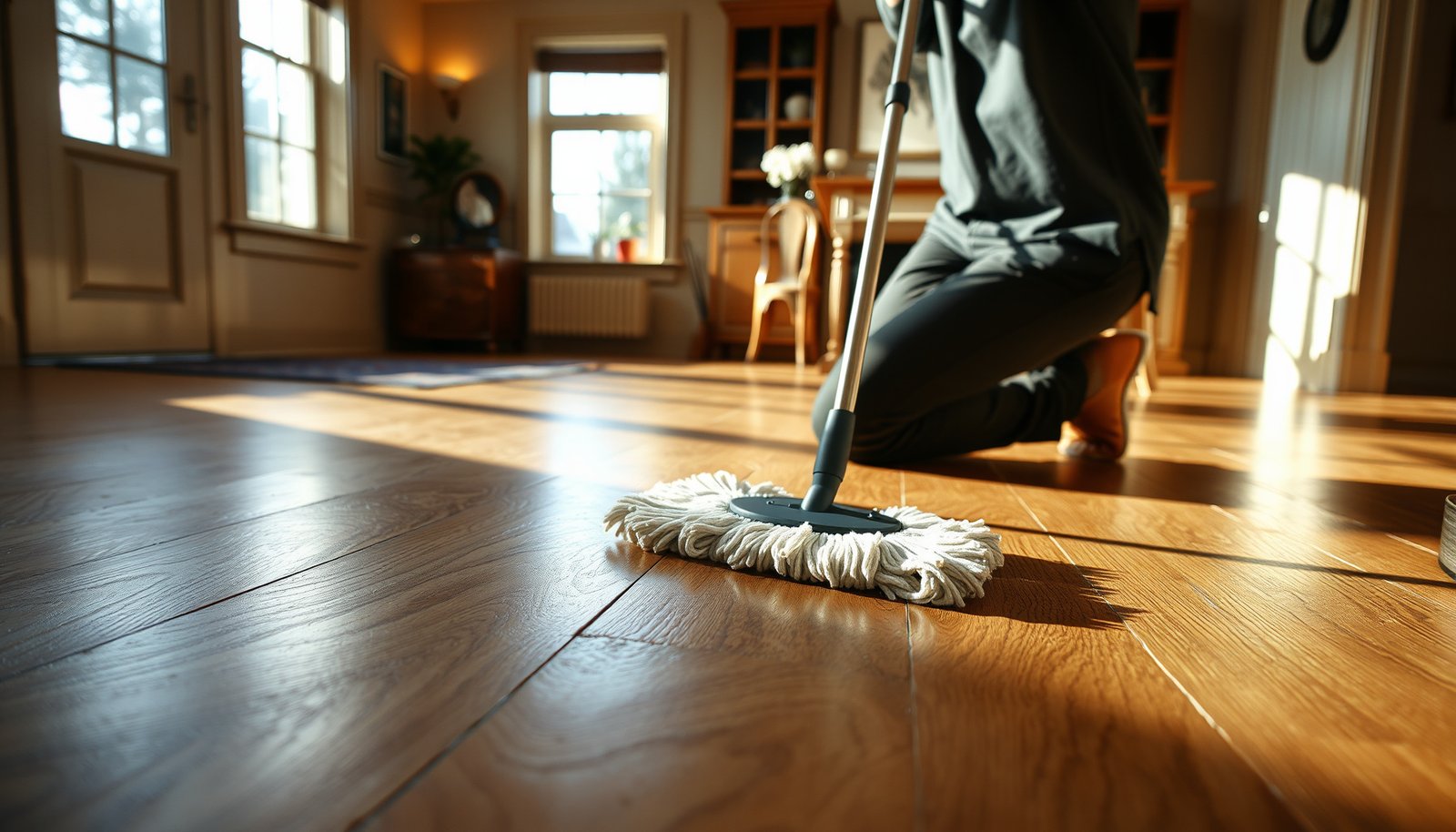

Cleaning engineered wood floors in a dining room is easiest when you follow the right wipe-and-dry routine—this step-by-step guide shows exactly how to do it without dulling the finish or swelling the planks. You’ll learn what to sweep, which cleaners to use (and which to avoid), and how to handle everyday spills and tracked-in grit fast. By the end, you’ll know the fastest, safest method to keep your dining room floors looking clean and new.


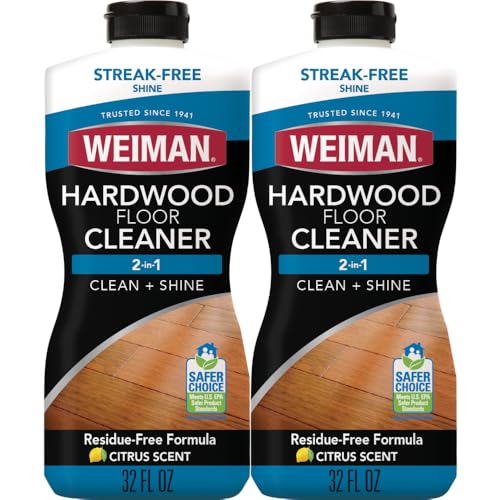

Clean engineered wood floors in a dining room by removing grit first (sweep or vacuum), then using a lightly damp microfiber mop or cloth with a cleaner made for finished wood floors—never soaking or steam. This approach protects the top finish layer while preventing moisture from creeping into seams around chair legs and spills.
If your dining area gets frequent chair movement, foot traffic, and the occasional drink or food spill, these steps help you keep the floor’s finish intact. The advice is especially important for engineered wood because the top layer is wood—so the finish care matters as much as the wood itself.
Gather the right supplies (and avoid the wrong ones)
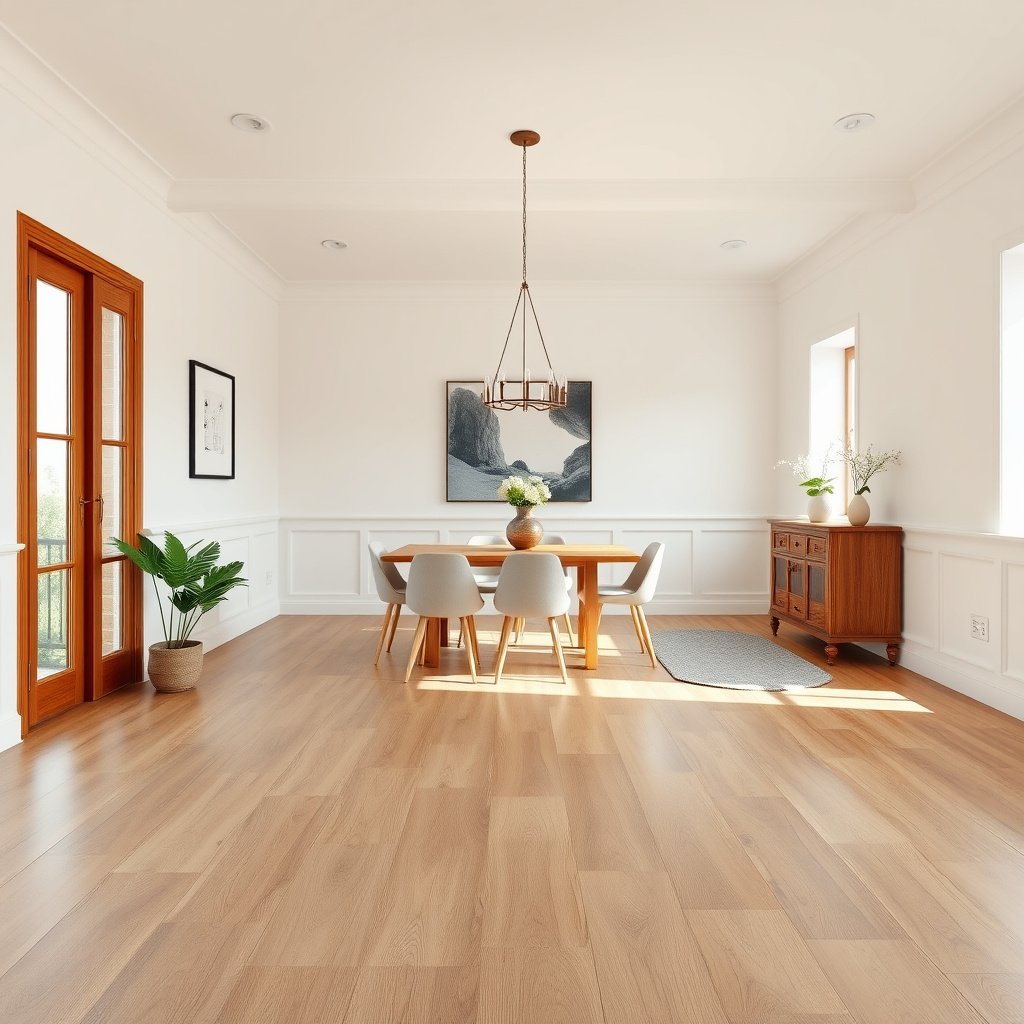
The fastest way to avoid damage is to assemble a “finish-safe” kit before you start cleaning engineered wood floors. The key is controlling abrasion and moisture: soft cleaning tools first, then a cleaner that’s designed for finished floors, used only when the mop/cloth is truly damp—not wet.
Engineered wood flooring care centers on protecting the factory-finished surface, so cleaning tools and cleaner chemistry matter as much as the cleaning frequency.
Avoiding water pooling and steam is a common manufacturer and industry recommendation because moisture can travel to seams and stress layered wood.
Using a microfiber mop or cloth reduces surface abrasion compared with abrasive pads, helping preserve the dining room’s sheen longer.
– Use a soft broom, microfiber dust mop, or vacuum with a floor-brush attachment (no beater bar).
– Choose a pH-neutral cleaner or one specifically labeled for engineered wood / finished hardwood floors; use only a damp mop, not wet.
– Avoid steam cleaners, abrasive pads, oil-based cleaners (some can leave residue), and “mop-and-leave” soaking.
What “finish-safe” really means for engineered wood floors
Engineered wood floors typically have a factory-applied wear layer and finish (often polyurethane or an oil/wax system). That finish is what resists scratches from dining chair movement and helps spills wipe up without staining. When you choose supplies carefully, you reduce two common finish threats: (1) grit abrasion and (2) moisture intrusion.
According to the National Wood Flooring Association (NWFA), routine maintenance is about removing grit and using cleaning methods that don’t leave excess water on the surface (NWFA care guidance, n.d.). Also, NWFA notes that controlling indoor relative humidity helps reduce dimensional movement that can lead to appearance changes over time (NWFA humidity guidance, n.d.)—which matters in dining rooms where seasons swing and HVAC cycles frequently.
Quick environmental anchor for engineered wood floors in dining rooms:
– According to NWFA guidance, maintain indoor relative humidity around 35–55% (NWFA humidity guidance, n.d.).
– According to NWFA guidance, keep typical indoor temperatures roughly in the 60–80°F range (NWFA temperature guidance, n.d.).
These ranges don’t replace good cleaning; they support the finish and the underlying wood stability while engineered wood floors see daily chair traffic.
Pros/cons: the two safe cleaning modes for engineered wood floors
When deciding between methods, treat it like a moisture-and-abrasion tradeoff. For engineered wood floors in a dining room, you generally want “dry removal” followed by “lightly damp cleaning.”
| Method | Pros for engineered wood floors | Cons / risks |
|---|---|---|
| Dry sweep/dust mop + soft vacuum | Removes grit that can scratch the finish; safe for chair-leg zones | Doesn’t remove sticky residue by itself; spills still need prompt wipe-up |
| Lightly damp microfiber mop/cloth (finish-approved cleaner) | Lifts grime without soaking; helps keep dining room finish even | Too-wet mopping can drive moisture toward seams; wrong cleaner can dull sheen |
| Steam cleaning | Can look “deep” | Heat + moisture can compromise finishes and increase risk of moisture issues at seams |
| Abrasive pads / scouring tools | None for finished floors | Scratches and finish wear accumulate quickly in dining rooms |
Do daily/weekly cleaning the easy way
For dining rooms, the best daily/weekly routine is simple: dry clean first, then spot-wipe with a slightly damp microfiber cloth using the right cleaner. This keeps engineered wood floors looking consistent by stopping gritty debris before it turns into sandpaper under chair legs.
Dry cleaning engineered wood floors (sweep or vacuum with a soft attachment) first prevents grit from grinding into the finish during later wiping.
Spot cleaning with a lightly damp microfiber cloth is a low-moisture approach that reduces the chance of water migrating into engineered wood seams.
– Dry clean first: sweep or dust-mop to remove crumbs and grit from chair legs and dining traffic lanes.
– Vacuum carefully: focus along edges, under chair zones, and any grooves—just don’t scratch the surface with hard wheels or attachments.
– Spot-wipe when needed: for smudges or sticky spots, use a slightly damp microfiber cloth with the approved cleaner, then immediately dry with a clean microfiber.
A repeatable “chair-zone first” routine for engineered wood floors
Dining rooms create a predictable wear pattern: chair legs drag slightly, feet track in grit, and spills concentrate near the center. If you clean engineered wood floors by focusing on chair zones first, you remove the abrasive particles before they get embedded in finish pores.
In practice, this means:
1. Sweep or dust-mop along the route chairs take (including around the table’s perimeter).
2. Vacuum the same lanes using a soft floor-brush attachment—avoid beater bars entirely.
3. Only then spot-wipe visible marks with a well-controlled damp cloth.
A detail that’s easy to miss: wipe marks in the direction the finish looks best (often with the grain), and don’t overwork one area. Overworking can leave uneven sheen, especially on gloss-leaning finishes.
How I handle sticky dining spots on engineered wood floors (without oversaturating)
I keep my approach conservative because engineered wood finishes vary widely; manufacturers usually expect “damp, not wet” cleaning.
Deep-clean when the floor looks dull or has buildup
Deep-clean engineered wood floors by using the damp-mop method in small sections, not by applying heavy water or extra product. If the finish looks dull or the surface feels tacky, the fix is usually controlled removal and rinsing with fresh, clean cloths—not soaking.
A “damp mop” technique reduces the risk of moisture creeping into seams, which is one of the most common problems in engineered wood floor cleaning.
If engineered wood floors feel tacky or look cloudy, repeating with fresh water/cloth is often safer than adding more cleaner.
– Use the “damp mop” method: dampen a microfiber mop (or cloth), wring it until it’s not dripping, and clean in small sections.
– Tackle residue in passes: if the floor feels tacky or looks cloudy, repeat with fresh water/cloth rather than adding more product.
– Let it dry fully: ensure airflow, and keep chairs off the area until the finish is fully dry to the touch.
The “small section + fresh cloth” logic for engineered wood floors
Over time, dining rooms tend to accumulate two types of residue on engineered wood floors:
– Organic film (oils from food, fingerprints, cooking aerosol fallout)
– Cleaner residue (from using too much product or using cleaners not designed for finished floors)
When you deep-clean engineered wood floors, you want to lift both without leaving excess moisture. That’s why the recommended method is to wring the microfiber so it’s barely damp, then work in tight sections. You’re not trying to flood the finish—you’re trying to clean it.
If you end up with cloudy appearance or tackiness, don’t “add more cleaner.” That’s a classic dining-room mistake because it can leave product build-up. Instead:
1. Switch to a new microfiber cloth/pad.
2. Use clean water on the mop/cloth (or follow the cleaner’s label dilution directions precisely if a rinse isn’t specified).
3. Finish with a dry microfiber pass to remove any remaining moisture.
Visual guide: finish-safe vs finish-risk cleaning choices
The following “finish safety” snapshot helps you quickly choose a method that aligns with how dining-room engineered wood floors are usually cared for (finish-safe = no pooling, no steam, minimal abrasion).
Finish-Safety Scorecard for Cleaning Engineered Wood Floors (Dining Rooms)
| # | Cleaning approach | Moisture level* | Scratch risk* | Finish-safety score | Net risk vs best practice |
|---|---|---|---|---|---|
| 1 | Soft broom / microfiber dry dusting | None | Low | ★★★★★ | Low |
| 2 | Vacuum w/ soft floor-brush (no beater bar) | None | Low | ★★★★☆ | Low |
| 3 | Spot-wipe: approved cleaner + microfiber (damp) | Light | Low | ★★★★☆ | Low |
| 4 | Damp-mop: wrung microfiber + finish-approved cleaner | Light | Low–Med | ★★★☆☆ | Moderate |
| 5 | “Spray and wipe” with excess cleaner on the floor | Med | Low | ★★☆☆☆ | Higher |
| 6 | Steam cleaning (heat + moisture) | High | Low | ★☆☆☆☆ | High |
| 7 | Abrasive pads / scrubbing tools | Variable | High | ★☆☆☆☆ | High |
Relative (generalized) risk for finished engineered wood surfaces in dining rooms, based on common care guidance: keep moisture light, prevent pooling, and avoid abrasion.
Dining room-specific tips (chairs, spills, and traffic)
In a dining room, engineered wood floors stay cleaner longer when you prevent scratches and stop spills immediately. Your goal is to control the two highest-impact events: chair wear from movement and liquid exposure near seams.
Felt pads or chair glides reduce micro-scratches from repeated dining chair movement, which helps maintain the uniform look of engineered wood floors.
Blotting spills quickly limits moisture spread and reduces the chance that liquid migrates toward seams in engineered wood flooring.
Steady indoor HVAC conditions support engineered wood stability, reducing appearance issues that can become more noticeable after cleaning.
– Protect chair wear: felt pads or glides under chair legs help reduce scratches from frequent movement and table setups.
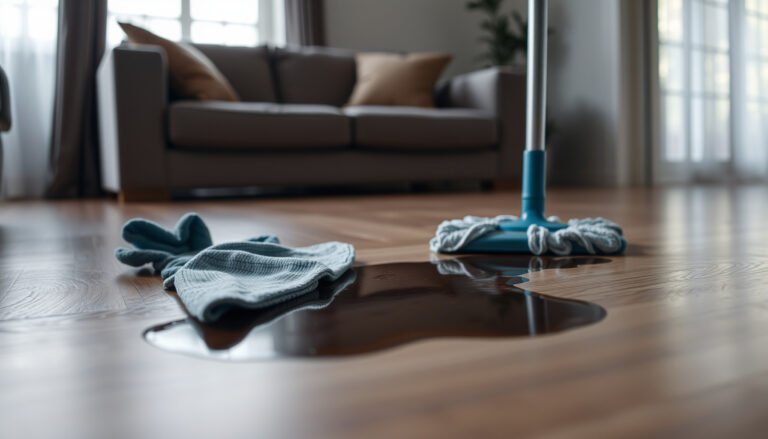
– Handle spills fast: blot immediately with a dry cloth; then lightly damp-wipe and dry again. Don’t let liquid sit near seams.
– Manage humidity and heat: keep HVAC steady where possible and avoid placing hot items (like a pot right after cooking) directly on the floor.
Chair legs: your hidden “abrasion engine” for engineered wood floors
Even if you never drag chairs hard, dining-room movement creates friction. That friction transfers tiny grit and causes finish dulling where traffic repeats. Felt pads help by separating wood-to-finish contact and spreading load slightly, which reduces the sanding effect of grit.
If chairs are on rolling casters (less common in dining, but it happens), switch to soft, floor-friendly wheels or use chair mats designed for hard floors. Avoid using harsh wheel types directly on engineered wood floors because they concentrate force and can generate faster finish wear.
Spills: how to clean without pushing moisture deeper
A spill near the center of a dining table often finds its way to edges and seams. For engineered wood floors:
1. Blot with a dry microfiber cloth first (don’t wipe aggressively).
2. Then lightly damp-wipe with a microfiber cloth and the approved cleaner.
3. Finally, dry immediately with a clean microfiber cloth.
This sequence is what protects the finish and reduces moisture migration risk. It also prevents “ring” marks and sticky residue that can appear when residue dries unevenly.
What can go wrong (common mistakes and limits)
Engineered wood floor cleaning goes wrong mostly because people add too much water, use the wrong chemicals, or skip the initial grit removal. If you address those three areas, you’ll avoid most dining-room finish problems.
Over-wetting engineered wood floors is a higher-risk cleaning error than using a correct damp microfiber method, because moisture can travel to seams.
Steam cleaning is frequently discouraged for finished wood floors because added heat and moisture can degrade the finish and change how it looks.
– Over-wetting: the biggest risk is letting water pool or seep into seams—always use a well-wrung mop/cloth.
– Harsh cleaners: bleach, ammonia, strong degreasers, and some “all-purpose” cleaners can damage finishes or dull sheen.
– Skipping grit removal: grit under chair legs acts like sandpaper—dry cleaning first prevents scratches.
– Using steam: steam can compromise finishes and may introduce moisture where it doesn’t belong.
– Not matching the finish: if your engineered wood has a specific factory finish (e.g., oil vs. polyurethane), the “right” cleaner can differ—check your floor’s care sheet.
Limits to this step-by-step for engineered wood floors
Even when you follow the right process, dining-room engineered wood floors can develop buildup from previous cleaning methods. If earlier owners used waxes, oils, or residue-heavy cleaners, the surface may look cloudy even after damp mopping.
Also, if your engineered wood floor finish is already failing (peeling, widespread dull clouding, or lifting edges), continued DIY cleaning can make the appearance worse. In those cases, the most practical “next step” is to stop and consult the manufacturer or a restoration specialist who can identify your finish and assess whether re-coating or refinishing is needed.
Pros/cons comparison to decide whether to DIY cleaning or escalate:
– DIY deep-clean may work if: the finish is intact and issues are localized to spills, footprints, or mild dullness.
– Professional assessment is better if: the finish is peeling, the floor is cupping, or you suspect coating build-up from unknown cleaners.
Verdict / tip (what we recommend—and who should skip this)
If you’re dealing with a typical dining room (food crumbs, chair traffic, occasional spills), the safest approach is: dry removal first, then lightly damp microfiber cleaning with an appropriate product, followed by thorough drying. This minimizes finish wear and moisture exposure.
Downsides to be aware of:
– If your floor has heavy buildup (years of wax/residue or unapproved cleaners), you may need a finish-safe professional restoration plan—DIY damp mopping won’t always fix it.
– If your floor’s finish is already failing (peeling, widespread clouding), aggressive cleaning can make appearance worse—stop and consult the manufacturer.
Who should skip this and go straight to the care manual or a professional:
– Floors with visible damage (lifting edges, cupping, peeling finish).
– Unknown coatings/previous products (especially if you suspect wax-like buildup).
– If you can’t identify the finish type and don’t have the manufacturer’s care instructions.
The “dry first, damp second” method is the most finish-friendly routine for engineered wood floors in dining rooms because it controls grit and limits moisture.
If your engineered wood floor shows widespread finish failure, cleaning won’t restore the finish—stop and follow the manufacturer’s restoration guidance.
Quick scan checklist (save this):
| Task | Do | Don’t |
|---|---|---|
| Routine cleaning | Sweep/dust-mop or vacuum with soft attachment | Use abrasive tools or drag rough brushes |
| Mop with cleaner | Use microfiber; wring until just damp | Soak the floor or leave puddles |
| Spills | Blot → lightly damp wipe → dry | Let liquid sit near seams |
| Chair traffic | Add felt pads/glides | Slide chairs directly on wood |
| Deep cleaning | Small sections; fresh mop/cloth | Steam clean or use harsh chemicals |
Frequently Asked Questions
How do I clean engineered wood floors in a dining room without damaging the finish?
Sweep or vacuum engineered wood flooring daily or as needed using a soft-brush attachment to prevent grit from scratching the surface. For damp mopping, use a microfiber mop and a cleaner specifically labeled safe for engineered wood and sealed floors. Avoid soaking the floor and never let standing water sit near spills or table legs.
What’s the best way to remove food spills and sticky spots on engineered wood floors?
Blot spills immediately with a dry cloth, then clean the area with a lightly damp microfiber cloth using an approved wood floor cleaner. For sticky residues, apply a small amount of cleaner to the cloth rather than pouring it directly onto the floor. Wipe again with a clean, barely damp cloth to remove any leftover cleaner, then dry the area thoroughly.
How often should I deep clean or mop my engineered wood dining room floor?
In a dining room, plan for regular light cleaning (sweeping or vacuuming) several times per week because crumbs and foot traffic build up quickly. Damp mopping with a manufacturer-approved product is typically enough once every 1–2 weeks, or when the floor looks dull or feels dirty. Deep cleaning should be occasional and gentle—follow the flooring manufacturer’s instructions to avoid damaging the top layer or protective coating.
Which cleaning products are safe for engineered wood floors, and what should I avoid?
Use cleaners designed for engineered wood or sealed hardwood floors, ideally those that are pH-neutral and free of harsh solvents. Avoid steam mops, wax-based cleaners, abrasive pads, and all-purpose cleaners with ammonia or bleach, as these can cloud or strip the finish. If you’re unsure, test the product in a small hidden area first.
Why do my engineered wood floors look dull after cleaning, and how can I fix it?
Dullness often comes from over-wetting, using the wrong cleaner, or leaving residue on the surface after mopping. Make sure you use only a barely damp microfiber mop, and always rinse/wipe with a clean damp cloth if your cleaner leaves any film. If the finish is already damaged, you may need to consult the manufacturer about polishing or refinishing options rather than repeatedly cleaning with stronger products.
📅 Last Updated: October 19, 2026 | Topic: How to clean engineered wood floors in a dining room? | Content verified for accuracy and freshness.
References
- Engineered wood
- https://www.armstrongflooring.com/support/care-and-maintenance.html
- MohawkFlooring
- Hardwood | DIY Wood Flooring | Bruce
- https://scholar.google.com/scholar?q=how+to+clean+engineered+wood+floors+dining+room Google Scholar
- https://scholar.google.com/scholar?q=engineered+wood+floor+cleaning+care+and+maintenance Google Scholar
- https://scholar.google.com/scholar?q=hardwood+floor+cleaning+best+practices+microfiber+vacuum+no+steam Google Scholar
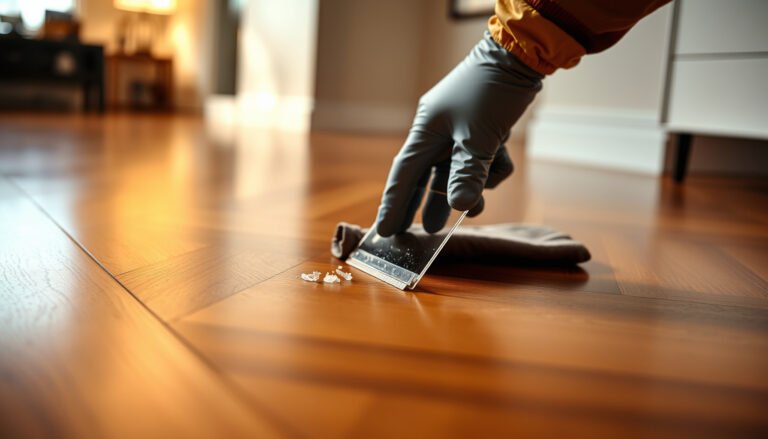
[…] the stain, clean with a pH-neutral cleaner using a barely damp microfiber cloth (never soak), then dry immediately. In most dining-room cases, […]