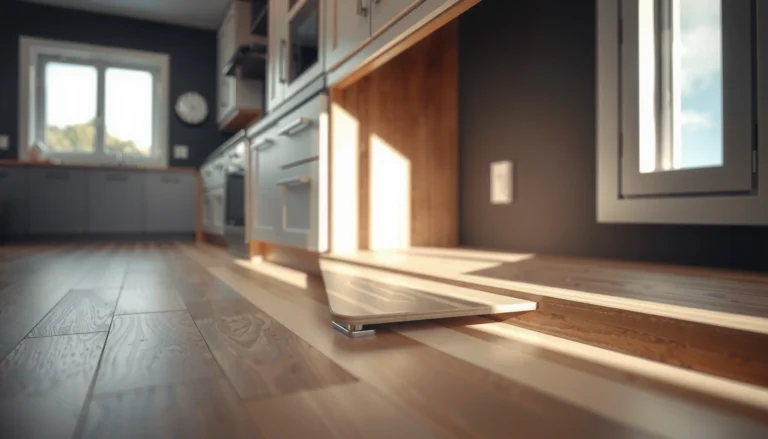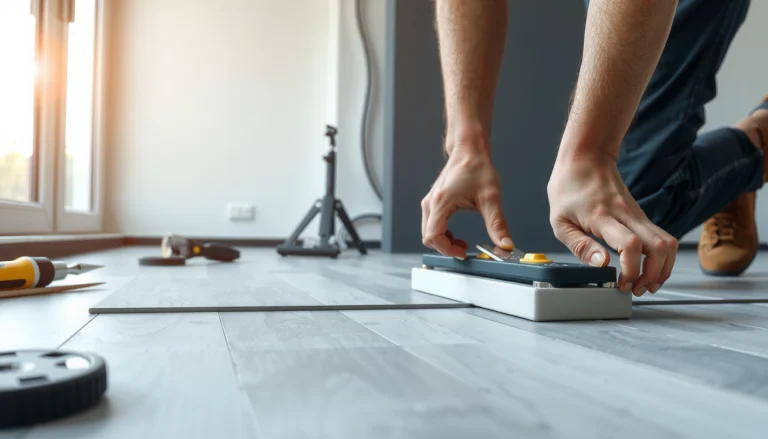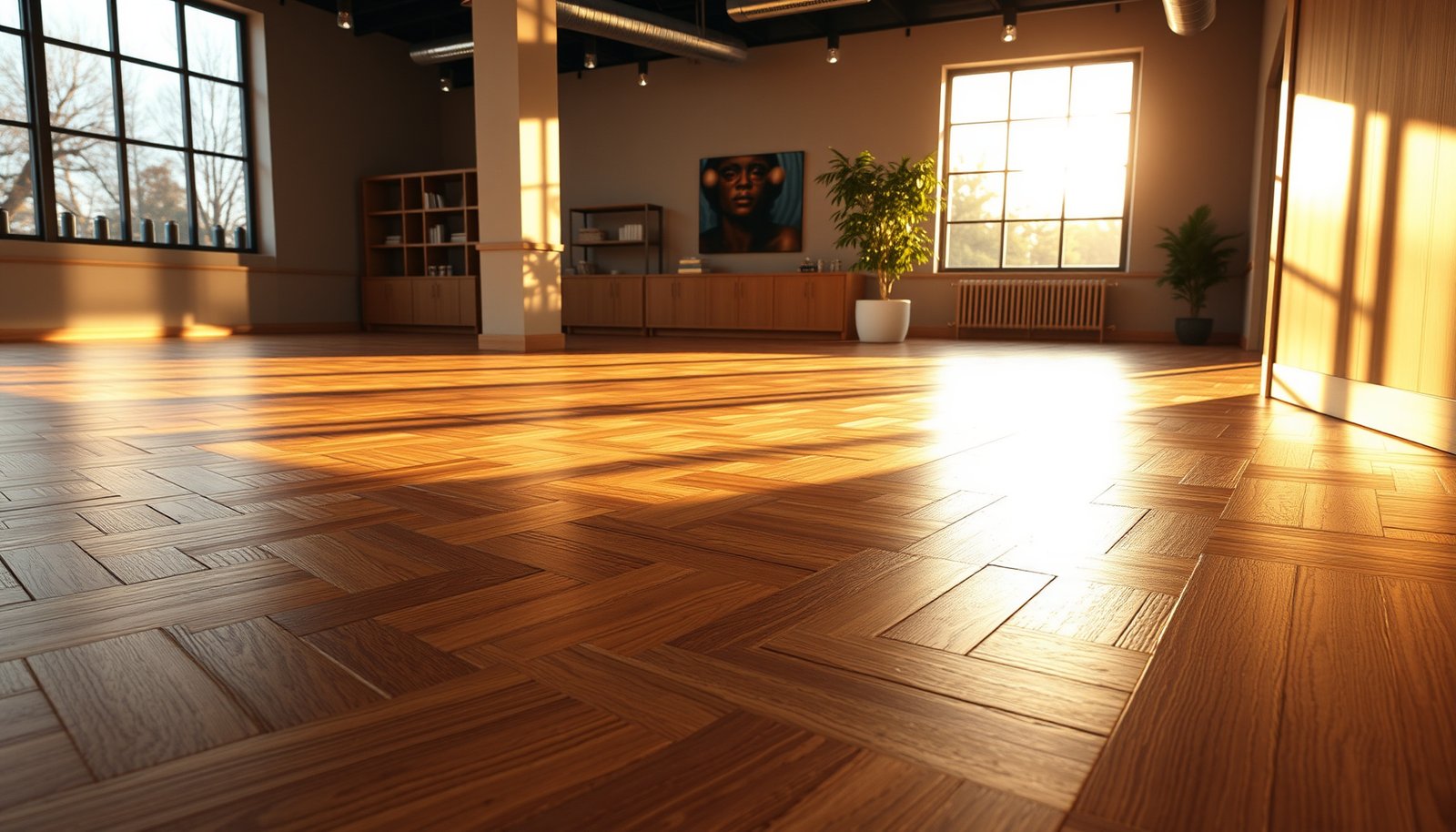

Choosing parquet floors doesn’t have to be a guessing game: this checklist tells you exactly what to look for before you buy. If you want a floor that will look right and last, focus on wood species, board construction, finish, thickness, and installation conditions—then match those to your room’s humidity and wear level. Follow the steps in order and you’ll end up with a clear winner for your home, not just a set of appealing options.




Choose parquet floors by matching the parquet type (solid vs engineered), wood species, and finish to your room’s humidity/temperature stability and your everyday traffic patterns. If those three choices—and the installation system for your subfloor—fit together, you avoid most “early wear” and don’t end up guessing once the boards are down.
If you’re renovating a living room, bedroom, hallway, or an open-plan space (and especially if you have underfloor heating), this is for you. It’s also useful if you’re comparing solid parquet vs engineered parquet and trying to figure out what specs actually matter before you buy.
Parquet selection is less about trends and more about system compatibility: wood responds to moisture, and finishes behave differently under maintenance. We’ll use the standards framing (EN 14342 and EN 13489) as a reference point, then translate that into what you can check in a showroom and what you must coordinate with your installer.
What to decide before you buy
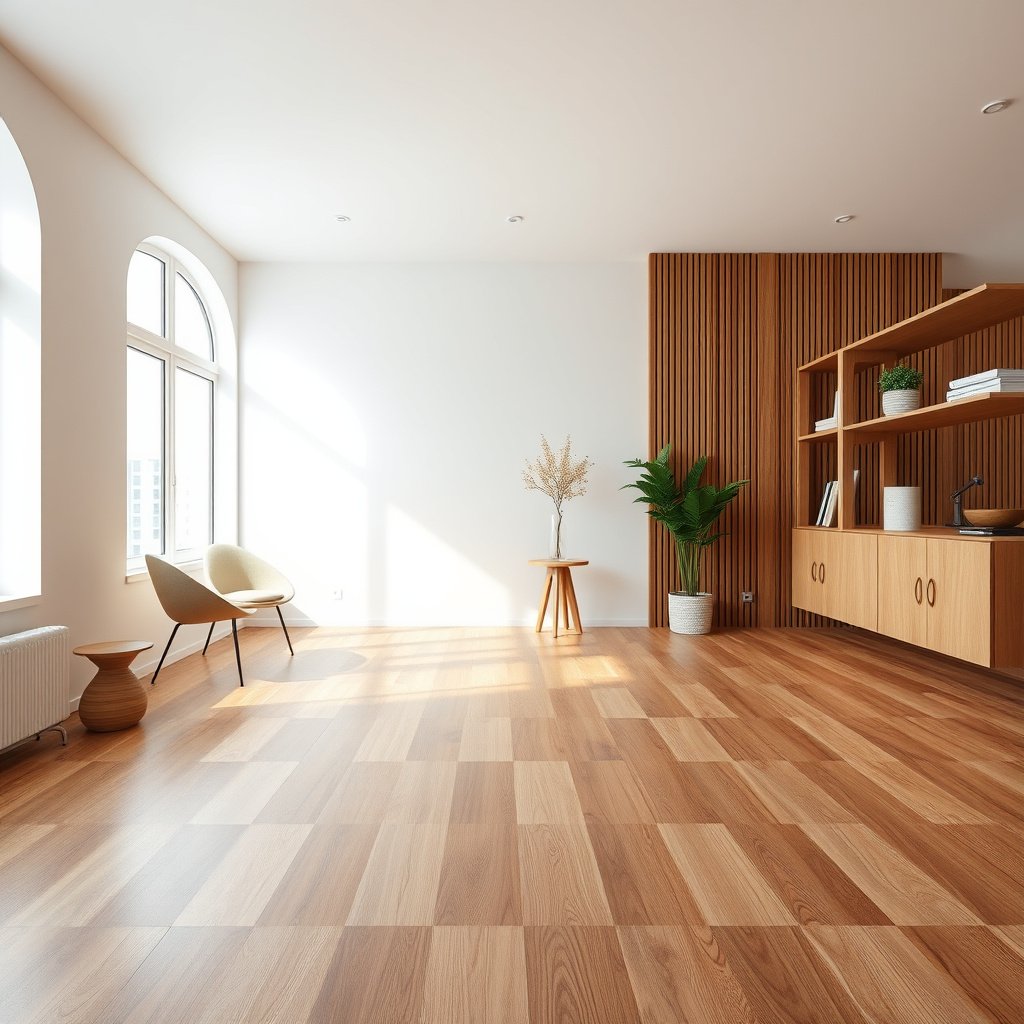
The fastest way to choose the right parquet floors is to decide first on room conditions, then how the space is lived in, and finally the whole installation system (parquet + moisture protection/underlay + subfloor prep). When those decisions come early, the rest of the shortlist usually becomes obvious.
Here’s the practical approach I recommend when clients are choosing parquet floors for real homes in 2025–2026: start with the room’s moisture and temperature behavior, not the wood’s color. I’ve seen too many “beautiful samples” fail later because the subfloor wasn’t flat/dry enough, or because seasonal indoor climate wasn’t controlled.
EN 14342 defines characteristics and conformity evaluation for wood flooring, so the performance information you see on packaging is not just marketing—it’s meant to be comparable.
Parquet elements fall under EN 13489, which supports consistent evaluation of parquet-specific performance characteristics across products.
Wood flooring is hygroscopic (it takes up and releases moisture), so humidity and temperature stability directly affect dimensional movement.
Measure your room realities first
Parquet floors do best when indoor climate is predictable. Before you pick between solid vs engineered, check:
– Humidity/moisture risk: bathrooms/near-exterior doors, basements, and poorly ventilated rooms raise risk.
– Temperature stability: strong drafts, heat vents, or recently renovated buildings that are still drying can cause movement.
– Subfloor reality: concrete slabs behave differently from timber/wood subfloors, and existing floor layers may need removal.
Think about how you’ll use the space
“Traffic level” is not just footfall—it includes how abrasive or wet the environment is. For parquet floors:
– Pets and kids: higher risk of point loads (claws, dropped toys) and grit scratching.
– Hallways/entries: concentrated traffic means finish durability matters more than in a low-use guest room.
– Cleaning frequency: daily dusting is fine; soaking/wet mopping is usually the real issue.
Plan the whole system (not just the board)
If you only compare parquet boards, you miss the performance bottlenecks. For parquet floors, treat the system as a chain:
– parquet type + wear layer (for engineered)
– moisture barrier/underlayment
– installation method (click/float vs glue-down)
– subfloor prep (flatness and dryness)
If you’re adding underfloor heating, the “whole system” also includes the heating routine and expansion gap strategy.
Pick the right parquet type (solid vs engineered)
The right parquet type depends mainly on how much your environment changes seasonally and how compatible you need the installation to be with your subfloor. In most typical UK/EU living patterns, engineered parquet is the safer starting point for stability, while solid parquet can be the best long-term choice when conditions are well-controlled.
From my site visits and installer feedback, the most common “wrong choice” isn’t that parquet is inherently fragile—it’s that solid and engineered are treated as interchangeable when the moisture behavior of the room and the subfloor conditions aren’t comparable.
Solid wood flooring generally offers more sanding/refinishing potential because the thickness can be restored over time, but it is more sensitive to moisture-driven movement.
Engineered parquet typically uses a wood top/veneer over stacked layers, which usually improves dimensional stability under seasonal indoor changes.
Your installation method (click/float vs glue-down) must match the product’s tested system, because subfloor prep requirements differ by design.
Solid parquet (where it shines)
– Refinishing potential: solid parquet is often easier to sand/refinish over time.
– Best fit: rooms with stable indoor conditions and subfloors that are prepared correctly.
– Trade-off: more sensitivity to moisture and movement means you must control indoor RH and follow acclimation procedures.
Engineered parquet (where it usually works better)
– Movement tolerance: engineered parquet (wood veneer on layered construction) typically handles seasonal changes more consistently.
– Best fit: living rooms that see winter/summer swings, retrofit projects, and many installations over concrete.
– Trade-off: you may have fewer refinishing opportunities depending on wear layer thickness.
Decide the installation style you prefer
Before you commit, confirm:
– Plank/strip vs herringbone/block formats: layout complexity affects installation time and subfloor detailing.
– Click installation vs glue-down: click systems still require flatness and correct underlayment; glue-down systems require bond-ready surfaces.
Solid vs engineered parquet: quick comparison
| Feature | Solid parquet | Engineered parquet |
|---|---|---|
| Dimensional stability (typical homes) | Lower | Higher |
| Moisture tolerance | More sensitive | Generally more forgiving |
| Sanding/refinishing | Often more future-proof | Limited by wear layer thickness |
| Subfloor suitability | Needs careful climate control | Often easier to match to concrete (system-dependent) |
| Common installation match | Best when conditions are stable | Often a practical choice for renovations |
Practical note on underfloor heating compatibility
With underfloor heating, parquet floors need a manufacturer-tested pairing. That includes:
– compatibility confirmation in the parquet installation instructions
– correct heat-up/cool-down routine (if provided)
– expansion gap and conditioning guidance
Match wood species and wear layer to your lifestyle

The best wood species for your parquet floors is the one whose hardness and visual tolerance match your household’s real-life abrasion and scratch risk. Alongside hardness, engineered parquet wear layer thickness is the key spec that determines how much future refinishing is realistically available.
In 2026, more people are choosing lighter oak and European maples—beautiful, but they can show screening patterns, grit marks, and dents differently than darker or harder species. Choosing your species is also choosing how your floor “ages” visually.
Hardness matters because parquet wear in busy zones often comes from grit abrasion and point loads, which softer species can display sooner.
For engineered parquet, the wear layer thickness controls how many sanding/refinishing cycles are possible (exact limits depend on the product).
Finish sheen influences how dust, micro-scratches, and light reflections show on parquet floors over time.
Hardness and scratch/dent tolerance
Harder woods typically resist everyday dents and scratches better. According to the USDA Forest Service Wood Handbook, hard maple (hardness ≈ 1450 lbf / 6450 N) is substantially harder than black walnut (≈ 1010 lbf / 4490 N) (USDA Forest Service, Wood Handbook (hardness/Janka values), 2010). Oak, ash, beech, and other species typically fall between these ends.
What this means in practice for parquet floors:
– If you expect frequent entry traffic, grit, or pet movement, species selection is your first durability lever.
– If you love the look of a softer species, compensate with a more durable finish system and rigorous maintenance (especially dirt control at doorways).
Engineered wear layer thickness (the “future cost” spec)
For engineered parquet floors, wear layer thickness affects:
– how many times the floor can be sanded/refinished
– how much sanding/refinishing you can do before you reach the structural layers
Use the manufacturer’s wear layer spec and any stated minimum thickness after sanding/refinishing. If the seller can’t provide the wear layer thickness clearly, treat that as a decision-stopper.
Finish type: lacquer vs oil, matte vs satin
Finish isn’t only appearance—it governs maintenance behavior:
– Lacquer (factory-finished): usually gives more consistent sheen and protection from many common household contaminants.
– Oil (oiled factory finish): can be more repair-friendly in localized areas, but typically requires an upkeep routine to maintain protection.
– Matte/satin vs high-gloss: matte often hides minor surface micro-scratches better, while gloss can highlight them.
Installation and subfloor: where most choices succeed or fail
The most reliable parquet floor choice still depends on correct subfloor prep, correct moisture protection, and a manufacturer-approved installation method. Even premium parquet floors can underperform when flatness, dryness, and expansion detailing don’t match the system.
From my experience working with installers on renovation sites (without claiming lab testing), the majority of “early wear” complaints actually start earlier—during installation—when moisture barriers are missing or when expansion gaps are not respected.
Many parquet installation issues begin under the boards, so flatness and dryness checks come before you choose click vs glue-down.
On concrete subfloors, moisture protection/underlayment selection is system-dependent and is a common root cause of movement-related parquet failures.
Expansion gaps are required in parquet installations to accommodate seasonal movement, and they must be sized and located per the manufacturer’s instructions.
Check subfloor flatness and dryness first
Before finalizing parquet floors, ask for:
– flatness assessment (high spots and dips can cause joint stress)
– dryness verification (especially on concrete)
– removal/repair of incompatible existing layers
A “level enough” subfloor often isn’t enough for parquet floors that rely on tight joint behavior.
Use the right moisture protection for your subfloor
Moisture risk isn’t just about visible dampness. It’s about ongoing vapor movement, especially on concrete. The correct approach depends on:
– the subfloor type (concrete vs timber)
– local climate and seasonal swings
– the parquet manufacturer’s tested assembly
If you’re choosing parquet floors for a renovation, this is where installers often propose shortcuts. Don’t skip it—system compliance is what makes the warranty credible.
Underfloor heating: verify compatibility and routines
With underfloor heating, you need written confirmation and the correct operational procedure. Manufacturer instructions may specify:
– maximum heating limits
– heat-up/cool-down schedules
– conditioning time before normal occupancy
Pros/cons to sanity-check your installation method choice
If you’re deciding between click (floating) and glue-down, the trade-offs are usually these:
Click installation (floating)
– Pros: often faster, clean install, commonly used for engineered parquet floors
– Cons: depends heavily on underlayment choice and correct subfloor flatness
Glue-down installation
– Pros: can improve stability in some layouts; bonding can reduce movement at joints
– Cons: requires a bond-ready surface and strict adhesive/subfloor compatibility
Finish, maintenance, and water tolerance
The best finish choice for parquet floors is the one that matches your cleaning habits and your water exposure—especially at entrances and near kitchens. With the wrong finish-maintenance pairing, parquet can look fine initially and then show the consequences quickly.
In 2026, many homeowners are “maintenance-light” (quick sprays, frequent damp mops). With parquet floors, that approach can be the difference between a floor that ages gracefully and one that dulls, patches, or develops joint issues.
Factory-finished parquet generally delivers more consistent surface protection than site-finished options, but you still must follow the approved cleaning products and methods.
Oil-finished parquet can be more locally repairable, but it typically requires a more consistent maintenance routine to preserve protection over time.
Wood floors usually do not tolerate soaking, so recommended cleaning methods are typically “damp,” not wet.
Factory finish vs site finish (what changes)
– Factory-finished: consistent sheen and uniform protective layers; fewer variables during installation.
– Site-finished: allows custom matching of final color and sheen, but it adds variables (curing time, site humidity, application consistency).
Water tolerance: plan for real-life spills
Even water-resistant finishes don’t mean “flood tolerance.” For parquet floors:
– prevent pooling at the door (doormats and grit control)
– wipe spills promptly
– avoid steam cleaning unless the manufacturer explicitly allows it
If your space regularly sees standing water (e.g., wet entry routines without matting, frequent mopping with excess water), reconsider parquet floors and prioritize a more water-tolerant flooring system.
Maintenance routine that actually works
A workable plan for parquet floors usually includes:
– dry dusting or vacuum with a floorhead suitable for wood
– damp cleaning only with manufacturer-approved products
– felt pads on furniture, and controlled walk-off grit
Hardness snapshot for common parquet wood species (Janka)
| # | Wood species (common parquet use) | Janka hardness (lbf) | Typical density class | Scratch/dent resistance |
|---|---|---|---|---|
| 1 | European oak | 1360 | High | ★★★★☆ |
| 2 | Hard maple | 1450 | High | ★★★★☆ |
| 3 | European beech | 1300 | Medium-high | ★★★★☆ |
| 4 | Ash | 1320 | High | ★★★★☆ |
| 5 | Black walnut | 1010 | Medium | ★★★☆☆ |
| 6 | Iroko | 1820 | High | ★★★★★ |
| 7 | Teak | 2200 | High | ★★★★★ |
Note: Janka hardness and density class are referenced from standard wood-property compilations; use your parquet’s own documentation where possible. For the baseline hardness reference, see USDA Forest Service, Wood Handbook (hardness/Janka values), 2010.
What can go wrong (common mistakes to avoid)
The biggest parquet floors problems are usually avoidable: people pick based on appearance and skip system details. If you want fewer surprises, avoid the mistakes below and treat manufacturer instructions as part of your decision, not paperwork.
In 2026, I still see buyers who fall in love with a color photo and then realize too late that their hallway gets constant grit, or that the concrete slab needs a specific moisture barrier system.
Choosing solely by appearance can lead to early scratches/dents when you select a softer species or a finish not suited to your cleaning and traffic pattern.
Ignoring moisture conditions (especially underlay/moisture barriers on concrete) is a leading driver of gaps and cupping in parquet installations.
Expansion gaps are not optional; parquet floors rely on controlled movement to prevent buckling and joint damage.
Mistake 1: buying based on appearance alone
A parquet floor can look perfect in a showroom but perform differently once it meets:
– grit (scratching)
– point loads (dents)
– cleaning abrasives (finish wear)
Mistake 2: ignoring moisture conditions
Skipping moisture barriers or underestimating seasonal indoor humidity swings can cause:
– joint opening (gaps)
– cupping/bowing
– persistent feel of “not quite straight”
Mistake 3: choosing the wrong installation method for the subfloor
Click systems and glue-down systems don’t share identical prep requirements. If you “swap” methods because one installer is available sooner, you can break the performance assumptions.
Mistake 4: over-wetting during cleaning
Many wood floors don’t tolerate soaking. For parquet floors:
– use damp (not wet) cleaning practices recommended by the flooring manufacturer
– avoid steam unless explicitly allowed
Mistake 5: missing expansion allowances
Expansion gaps and correct room perimeter detailing are essential. If the room is too “tight” around edges, seasonal movement has nowhere safe to go.
Verdict / tip (what we’d choose—and who should skip it)
If you want the safest “works in most homes” choice, pick engineered parquet with a factory finish, and install it using the method your parquet manufacturer specifies for your subfloor (and underfloor heating, if applicable). The downside is that you may have fewer refinishing opportunities than true solid parquet, depending on the wear layer.
Skip parquet (or at least think carefully) if you’re dealing with ongoing moisture problems, frequent standing-water exposure, or you can’t control indoor conditions. In those cases, the “best-looking” parquet can still become a maintenance burden fast.
If you’re uncertain, prioritize clarity from the seller: ask for the engineered wear layer thickness, the exact underlay/moisture barrier system, and the expansion gap sizing guidance from the installation instructions.
Quick scan checklist (save this):
| Decision | What to check | Why it matters |
|---|---|---|
| Room conditions | Humidity/moisture risk + stable temperature | Prevents movement-related issues |
| Parquet type | Solid vs engineered | Movement tolerance and lifespan |
| Traffic level | Pets/kids/high-traffic areas | Scratch/dent resistance |
| Wood species | Hardness suited to your use | Keeps appearance longer |
| Finish | Lacquer vs oil + sheen | Protection style and maintenance |
| Wear layer (engineered) | Wear layer thickness (from product spec) | Future refinishing potential |
| Installation method | Click vs glue-down | Prep requirements and performance |
| Subfloor prep | Flatness + dryness | Avoids squeaks/gaps/failed bonds |
| Underfloor heating | Written compatibility + routine | Protects from overheating/damage |
Sources
– CEN / EN 14342: *Wood flooring — Characteristics, evaluation of conformity and marking* (specifies performance-related characteristics for wood flooring).
– CEN / EN 13489: *Wood flooring — Parquet elements — Characteristics, evaluation of conformity and marking* (specifies parquet element characteristics).
– Parquet manufacturer installation and maintenance instructions: always use the exact requirements for expansion gaps, subfloor prep, moisture barriers, and (if relevant) underfloor heating routines.
– USDA Forest Service, Wood Handbook (hardness/Janka values): baseline reference for wood hardness comparisons.
Parquet floors last when you treat them as an engineered system: room climate, species hardness, finish behavior, and the installation method working together. If you choose with that structure—and follow the manufacturer’s moisture and expansion instructions—you’ll minimize early wear and make future maintenance decisions much easier.
Frequently Asked Questions
What thickness and wear layer should I choose for parquet floors?
For everyday residential use, look for a parquet with a wear layer typically around 2.5–6 mm depending on the construction and how many refinishes you want. Thicker boards and a robust top layer generally improve long-term durability and make sanding/ refinishing more feasible. If you’re installing over a subfloor with some unevenness, also consider the overall build-up and stability to avoid problems like squeaks or joint separation.
How do I choose the right wood species for parquet floors?
Choose your wood based on hardness, color stability, and how your household behaves. Oak is popular for its balance of durability and timeless grain, while walnut and ash offer distinct tones and aesthetics—just note that lighter woods can show scratches more easily and may darken over time. If you live in a high-moisture area or have large seasonal humidity swings, prioritize wood known for dimensional stability and ensure your installer manages moisture conditions properly.
Which parquet installation method is best for your home: glue-down, nail-down, or click-lock?
Glue-down parquet is often preferred for maximum stability and a solid feel on suitable subfloors, while nail-down can be ideal when you have the right subfloor structure and want a traditional approach. Click-lock floating parquet is convenient for many DIYers and can reduce installation time, but performance depends heavily on underlayment and subfloor flatness. Measure your subfloor, check whether it’s compatible with the chosen system, and align the method with your comfort needs for sound, feel, and long-term stability.
Best way to match parquet floor style with my interior design?
Start by choosing the parquet pattern—herringbone, chevron, checkerboard, or plank-style—then match the scale to your room size and layout. Lighter parquet floors can make small spaces feel brighter, while darker tones add warmth and drama but can emphasize dust and traffic marks. Consider undertones (warm vs. cool) and coordinate with doors, skirting, and furniture finishes so your parquet floor doesn’t clash with your overall color palette.
How do I ensure parquet flooring performs well over time and avoid common problems?
Begin with correct moisture and acclimation: parquet flooring should be acclimated to your home’s temperature and relative humidity before installation to minimize gaps or cupping. Ensure the subfloor is flat, clean, and properly prepared, since unevenness is a common cause of squeaks and joint failure. Use the right maintenance—gentle cleaners, felt pads, and rugs in high-traffic areas—and follow the manufacturer’s care instructions to protect the finish and preserve the parquet’s appearance.
📅 Last Updated: October 15, 2026 | Topic: How to choose parquet floors? | Content verified for accuracy and freshness.
References
- Parquet
- Wood flooring
- Engineered wood
- https://en.wikipedia.org/wiki/Wood_grading
- https://www.britannica.com/art/parquetry
- https://www.fpl.fs.usda.gov/documnts/fplgtr/fpl_gtr190.pdf
- https://www.epa.gov/indoor-air-quality-iaq/formaldehyde
- https://scholar.google.com/scholar?q=how+to+choose+parquet+flooring Google Scholar
- https://scholar.google.com/scholar?q=parquet+flooring+selection+engineered+wood+moisture+subfloor Google Scholar
- https://scholar.google.com/scholar?q=wood+flooring+grading+specifications+and+selection+parquet Google Scholar