
Want to know how to clean parquet floors without damaging the finish? Follow the safest daily routine and the correct deep-clean method to lift dirt while protecting the wood grain. You’ll learn what to use, what to avoid, and when to switch from quick maintenance to a more thorough clean.



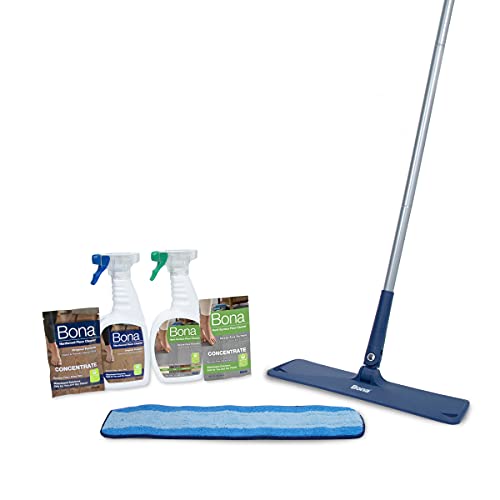
Clean parquet floors safely by removing grit first (vacuum or soft sweeping), then mopping only with a lightly damp microfiber using a pH-neutral wood-floor cleaner. Avoid soaking and harsh chemicals, because parquet’s finish and the wood below can react quickly to excess water and strong detergents.
If you want a floor that looks “freshly polished” instead of dull or hazy, you need a method that protects the parquet finish while still lifting daily grime.
For many homes—especially with pets, kids, or high foot traffic—parquet gets scratched not by large spills, but by tiny particles tracked in daily. The safest cleaning routine is therefore built around: (1) dry grit removal, (2) minimal-moisture wiping, and (3) fast drying.
Clean parquet floors using dry methods first (vacuum or soft sweeping), then a lightly damp microfiber mop with a pH-neutral wood-floor cleaner. Avoid soaking or harsh chemicals, because parquet and its finish can warp, dull, or separate from the subfloor. Below, you’ll get a simple routine for daily cleaning plus a safer approach for deeper grime.
If your parquet is finished with varnish, oil, or wax, your cleaning method should match that finish and the manufacturer’s care guidance. This is especially important in homes with pets, kids, or high foot traffic where grit can quickly scratch the surface.
Gather supplies and confirm your finish
You’ll get the best results when you prep the right tools first and confirm which finish is on your parquet. That one step prevents the most common failure mode: using a cleaner that’s technically “safe for wood” but wrong for your specific coating.
“Use a pH-neutral cleaner labeled for wood floors” is the most widely repeated instruction in finished wood flooring care guidance because extreme pH can dull film-forming finishes.
Microfiber is recommended for parquet care because it lifts dirt without scratching like abrasive pads or stiff bristles.
Parquet typically has a top layer (varnish/polyurethane film, penetrating oil, or a wax/oil-wax system). That top layer determines how much water you can tolerate and what detergents it can handle. If you’re not sure which finish you have, start with the gentlest approach: water-only microfiber wiping for the damp step, and always test in an inconspicuous corner first (dry, then check for streaks or color change).
From a practical standpoint, the goal is to remove surface grit without changing the finish chemistry. Research-backed maintenance guidance for wood floors also emphasizes keeping environmental conditions stable; for example, recommends maintaining indoor humidity in a mid-range window (commonly around 35–55% RH, depending on region and flooring system), because low or high humidity increases wood movement and the risk of joint/finish issues ().
Tools and cleaner choices that match finished parquet
– Use a soft broom and/or vacuum with a floor-brush attachment (no beater bars), plus microfiber cloths/mop pads
– Choose a pH-neutral cleaner labeled for wood floors; if you don’t know the finish, stick to the gentlest option (lightly damp microfiber + water-only)
– Avoid “all-purpose” degreasers and anything strongly acidic/alkaline unless the label explicitly allows use on parquet/wood finishes
To make this step more actionable, here’s a quick way to think about cleaner strength: pH-neutral cleaners are designed to be close to the chemistry of the finish layer, while strongly acidic/alkaline products can attack or haze films and accelerate dulling over time. Chemically, “pH-neutral” generally means near pH 7 (neutral point), while household cleaners often land far from that.
Typical pH of Common Household Cleaners (Quick Finish-Damage Risk Lens)
| # | Cleaner (typical product) | Typical pH | How close to pH 7 | Parquet finish risk (relative) |
|---|---|---|---|---|
| 1 | Distilled water | ~7.0 | 100/100 | Very low |
| 2 | Commercial “pH-neutral” wood cleaner (diluted per label) | ~6.5–7.5 | 90/100 | Low |
| 3 | Baking soda solution (moderate strength) | ~8.1–8.5 | 70/100 | Medium |
| 4 | Household ammonia (typical) | ~11–12 | 0/100 | High |
| 5 | White vinegar (5% acetic acid) | ~2.4–3.0 | 0/100 | High |
| 6 | Chlorine bleach (typical diluted household) | ~11–12.5 | 0/100 | High |
| 7 | Drain cleaner lye/caustic soda (strongly alkaline) | ~13+ | 0/100 | Very high |
Note: pH can vary by concentration, dilution, and product formulation. For parquet floors, the safest rule still remains: follow your parquet/finish manufacturer’s label and care instructions rather than generic household formulas.
Daily cleaning (quick routine that won’t damage the surface)
You should clean parquet floors daily by removing grit first and then using only a barely damp microfiber pass. That routine keeps the finish intact because the real enemy is abrasive particles trapped in the top coat.
Removing grit before mopping is a key protective step because sand-like particles can micro-scratch parquet finish over time.
“Lightly damp” microfiber wiping reduces the risk of water migrating into joints compared with wet mopping.
Here’s the simplest daily routine that aligns with how finished parquet behaves: you treat the top coat like a film that can be scratched and chemically dulled. If grit stays on the floor, it behaves like sand; if water is left behind, it increases swelling risk—particularly where boards meet or where the parquet is bonded.
According to , wood floors respond to moisture exposure by changing dimensions as humidity shifts, which is why routine cleaning should avoid puddling and over-wetting (). This is why daily parquet maintenance usually stays in the “dry removal + minimal moisture” zone rather than “wash like a kitchen tile floor.”
Quick steps for everyday parquet cleaning
– Sweep or vacuum first to remove grit that acts like sand
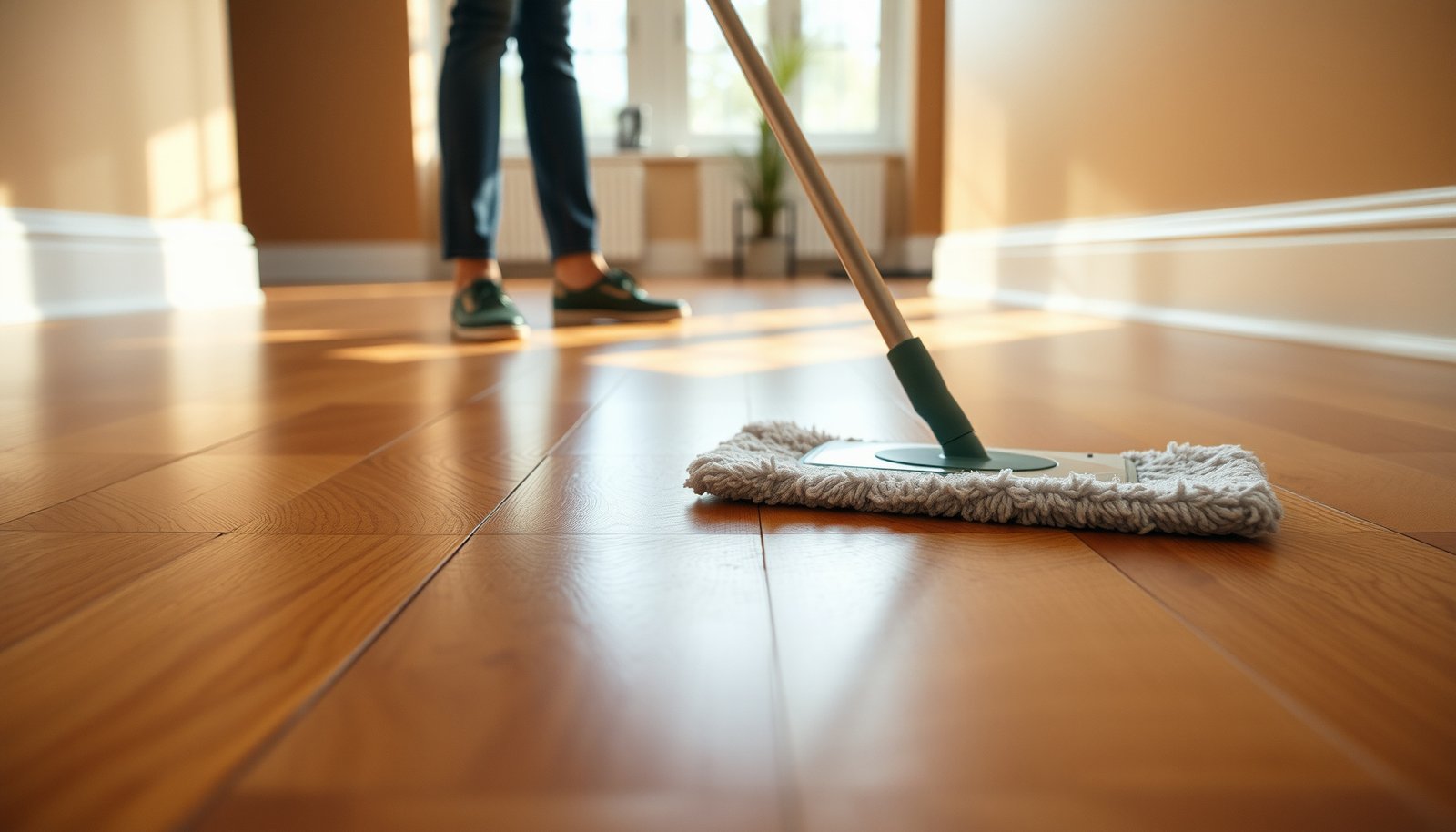
– For the damp step, wring the microfiber mop so it’s barely moist, then work in small sections
– Dry with a clean microfiber cloth if you see any streaking or wet spots forming
Practical tips that matter for parquet: use a vacuum with a floor-brush attachment (no beater bar), because aggressive brush heads can snag micro-abrasives and physically wear the finish. When mopping, use the microfiber mop pad like a buffer—if it’s dripping, it’s too wet. After each small section, check for streaks; streaking usually means too much product, too much water, or residue buildup.
Deep cleaning (for built-up grime, not constant scrubbing)
You should deep clean parquet floors only when grime has built up—otherwise, daily damp wiping plus dry grit removal is typically enough. The safe deep-clean approach is controlled moisture and finish-compatible products used exactly as directed.
Deep cleaning finished wood flooring should “don’t flood” the surface, because excess water can affect seams and finish appearance.
For sticky areas, spot-wipe and dry immediately rather than aggressively scrubbing the entire parquet field.
Deep cleaning is the moment people accidentally overdo it: they scrub harder, soak the floor, or switch cleaners. With parquet, that often turns into haze (finish cloudiness), dullness, or residue that collects in the sheen. If you’re trying to remove something from food, cooking residue, or pet incidents, focus on the spot—then let the rest of the floor remain protected.
Use damp microfiber, not flooding
– Use a damp microfiber approach with a wood-floor cleaner used per label directions—don’t flood the floor
– For sticky spots, try a slightly damp cloth on the area, then wipe dry; repeat as needed instead of aggressive rubbing
– If residue remains, use only the cleaner the floor manufacturer recommends (or a compatible wood-floor product), then re-wipe with a clean, barely damp cloth and dry
A helpful way to think about deep cleaning on parquet is chemistry + mechanics:
– Chemistry: the right cleaner breaks down residue without attacking the finish.
– Mechanics: microfiber lifts dirt without grinding the top layer.
From a process standpoint, follow a “test → spot clean → reassess” workflow. On varnished parquet, residue may look worse under bright angles; on oiled or waxed parquet, you may see darkening that looks like permanent stain but is actually finish saturation or uneven film reflow. That’s why you should never deep clean the full floor until you confirm compatibility in a small area.
Also, keep your indoor environment stable. According to , maintaining moderate relative humidity and temperature helps minimize expansion/contraction cycles that can make joints or finish edges more vulnerable ().
Comparison: what to choose for deep cleaning parquet
| Method | Control of moisture | Finish compatibility | Best for |
|---|---|---|---|
| Barely damp microfiber + pH-neutral wood cleaner | High | Usually best (if label matches) | Built-up grime without haze |
| Barely damp microfiber + water-only (unknown finish) | High | Safest default | Initial compatibility testing |
| Spot cloth wipe + immediate drying | Very high | Good (finish-dependent) | Sticky residue and small spills |
| Aggressive scrubbing or soaking | Low | Risky | None recommended for parquet maintenance |
Drying, protection, and maintenance between cleanings
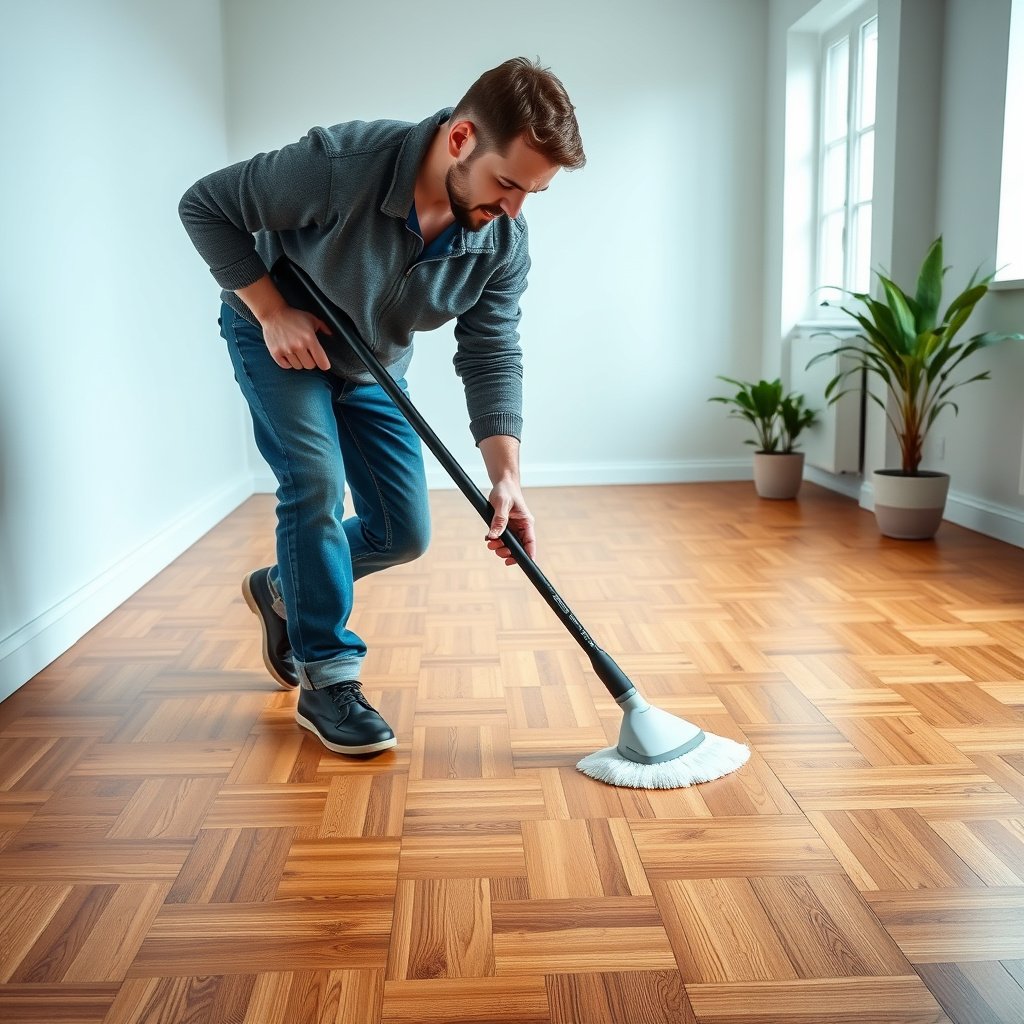
You keep parquet looking good by drying quickly, controlling indoor humidity, and reducing where scratches and grit enter. Between cleanings, this protection work often matters more than choosing a “stronger” cleaner.
Stable humidity reduces wood movement; that stability helps parquet finish and edges stay aligned and less prone to separation.
Floor mats at entryways and felt pads under furniture are preventive steps that reduce abrasive grit and micro-scratches.
Drying is not optional. When you use a damp microfiber mop on parquet, you’re relying on fast evaporation plus controlled moisture—not a wet dwell time. If you notice any moisture lingering, wipe it up with a dry microfiber cloth. This prevents cloudy finish appearance and reduces the chance water migrates into seams.
Protection is also a daily strategy:
– Use felt pads under furniture and keep them checked for wear
– Place mats at entryways so grit doesn’t migrate deeper into the parquet pattern
– Keep pets’ nails trimmed and paws clean, because repeated scraping can wear high points in the finish
Maintenance priorities for parquet floors
– Keep indoor humidity stable (very dry air can shrink wood; very humid air can swell it)
– Use felt pads under furniture and place mats at entryways to reduce scratches and grit
– Recoat/refinish timing depends on your finish wear—follow the product or flooring manufacturer’s schedule rather than guessing
If you have a varnished topcoat, you may eventually need refinishing when the film wears through. If you have an oil or wax system, maintenance can involve periodic re-oiling or re-waxing, but the exact schedule depends heavily on traffic and the product system. Use the flooring manufacturer’s recommendation, not a generic DIY timetable.
To anchor this in real wood-floor care practice: lists maintaining indoor relative humidity in a moderate window to minimize dimensional movement (). That matters for parquet because repeated movement can stress the finish edges.
What can go wrong (common mistakes and edge cases)
Parquet cleaning usually fails for predictable reasons: too much water, the wrong cleaner chemistry, or a mismatched technique for the finish. When problems show up—haze, dulling, sticky residue—those causes are almost always identifiable.
Over-wetting finished wood floors can lead to swelling in areas where moisture enters seams and joints.
Steam cleaning is often incompatible with finished parquet because heat and moisture can penetrate joints and soften or cloud finishes.
Here are the pitfalls to avoid, plus the edge cases where you should pause and reassess the approach for your parquet.
Common mistakes with parquet floors
– Over-wetting: mopping “normally” can leave water in seams and cause swelling or finish cloudiness
– Wrong cleaner: vinegar, ammonia, bleach, steam cleaners, and abrasive scrub pads can damage the finish or dull the sheen
– Glossy vs. matte finish mismatch: some cleaners leave residue that’s more visible on matte surfaces
– Floating vs. nailed parquet: if your floor is installed as a floating system, excess moisture is even riskier—stick to the lightly damp method
– Heavy stains: if staining penetrated beyond the surface finish, cleaning won’t fully restore it—plan for refinishing or localized repair
Edge case guidance: floating parquet systems are more sensitive to moisture movement because the “floating” construction can allow more relative movement as the wood reacts to humidity. If you don’t know your install method, assume caution and keep moisture minimal.
Also, “unknown stain” is a separate problem. If a stain is deeply embedded (for example, from water that penetrated beyond the top finish), cleaning can’t reverse the underlying color change. At that point, the solution is localized repair or refinishing—chosen based on how deep the penetration is.
Finally, avoid abrasive pads “for stubborn spots.” Many finishes can be worn down unevenly, leaving a permanent difference in sheen even after you clean the residue.
Verdict: the safest approach (and who should skip DIY deep cleaning)
The safest way to clean parquet floors is dry-first (vacuum/soft sweep), then lightly damp microfiber with a pH-neutral wood-floor cleaner used exactly as directed. DIY deep cleaning is usually fine for routine built-up grime, but you should stop and escalate to a professional or the manufacturer’s guidance if you see finish failure.
The safest general rule for finished parquet is minimal moisture: microfiber should be damp enough to lift residue, not wet enough to soak.
If finish edges are lifting or the top coat is peeling, cleaning won’t fix the underlying failure mode—assessment and possible refinishing is needed.
Here’s the honest trade-off: the “gentle” approach is slower than scrubbing, but it’s far less likely to cause haze, dulling, or seam damage. For most households, that balance is exactly what you want—especially in 2025–2026 where many DIY routines rely on harsh multipurpose chemicals that wood-floor manufacturers commonly warn against.
When to skip DIY deep cleaning
Skip DIY deep cleaning if:
– You see peeling, flaking, or lifting finish around edges or in traffic paths
– Your parquet has unknown or unstable coatings (former sealants you can’t identify)
– You have water-related warping, cupping, or persistent musty odor suggesting deeper moisture issues
– You’re dealing with heavy stains that may have penetrated beyond the top layer
If you’re unsure about your parquet’s finish type, the safest “middle path” is water-only microfiber wiping for the damp step until you can confirm compatibility.
Quick checklist (scan and save)
| Task | Do | Don’t |
|---|---|---|
| Remove grit | Vacuum with a soft brush / sweep | Skip dry cleaning (scratches happen fast) |
| Mop for routine cleaning | Microfiber lightly damp; wring well | Soak or leave puddles |
| Cleaner choice | pH-neutral cleaner made for wood floors | Vinegar/ammonia/bleach/strong degreasers |
| Tackling spots | Damp cloth + gentle wipe + dry | Abrasive pads or aggressive scrubbing |
| Drying | Wipe dry if any moisture remains | Let it air-dry wet |
Sources
Parquet floors stay beautiful when you treat cleaning as protection: remove grit first, use minimal moisture, pick a finish-compatible pH-neutral cleaner, and dry quickly. If anything suggests finish failure, trapped moisture, or unknown coatings, pause DIY deep cleaning and switch to manufacturer-approved assessment—because with parquet, preventing finish damage is always easier than fixing it later.
Frequently Asked Questions
How do I clean parquet floors without damaging the wood?
Sweep or vacuum with a soft brush attachment to remove grit that can scratch parquet. Use a damp (not wet) microfiber mop and a cleaner specifically labeled for wood or parquet—avoid soaking the floor. Immediately dry any excess moisture to protect the finish and prevent warping or cupping.
What’s the best way to remove sticky residue or scuffs from parquet flooring?
For light marks, try a slightly damp microfiber cloth with a pH-neutral cleaner made for wooden floors, wiping along the grain. For tougher sticky spots, use a small amount of the same wood-safe cleaner on the cloth rather than applying directly to the floor, then wipe dry. If scuffs persist, consider a parquet-safe floor cleaner booster or consult a professional for refinishing rather than sanding at home.
Which cleaners are safe for parquet floors, and which should I avoid?
Look for pH-neutral, wood-safe cleaners that are designed for finished parquet floors; they help lift dirt without stripping protective coatings. Avoid steam mops, harsh detergents, ammonia-based products, wax buildup removers, and abrasive scrubbing pads, as these can dull or damage the finish. Always follow the label instructions and test any product in an inconspicuous area first.
Why does parquet look dull after cleaning, and how can I prevent it?
Dullness often comes from over-wetting, leaving residue, or using cleaners that break down the varnish or sealant. Use a well-wrung microfiber mop, rinse if your cleaner requires it, and dry promptly to prevent film and moisture marks. Regular maintenance—gentle sweeping and occasional wood-floor cleaner use—helps keep parquet looking clean and glossy.
How often should I deep clean parquet floors, and what’s the right process?
For most homes, routine cleaning (dusting/sweeping) should happen regularly, while deep cleaning with a parquet-appropriate cleaner is typically every few weeks to a few months depending on foot traffic. Deep clean by pre-sweeping, mopping with a lightly damp microfiber pad, and wiping dry after the cleaner contact time. If your parquet has lost luster, you may need a parquet refinishing product or professional re-coating rather than frequent heavy washing.
📅 Last Updated: October 14, 2026 | Topic: How to clean parquet floors? | Content verified for accuracy and freshness.
References
- Parquet
- Wood flooring
- Wood flooring
- Floor cleaning
- Mop
- Wood finishing
- Varnish
- https://scholar.google.com/scholar?q=how+to+clean+parquet+floors Google Scholar
- https://scholar.google.com/scholar?q=parquet+floor+maintenance+cleaning+methods Google Scholar
- https://scholar.google.com/scholar?q=wood+floor+cleaning+water+damage+finish+surface+care Google Scholar