
Fix lifting on bamboo floors fast with targeted repairs that identify the cause and re-secure loose planks before the problem spreads. In most cases, the quickest, most reliable fix is addressing moisture-driven movement and fastening or re-adhering the affected boards with the right bamboo-floor method. Follow these short repair steps and you’ll restore a flat, stable surface without replacing the whole floor.



If your bamboo floor is lifting, the fastest fix is usually to stabilize moisture and re-seat (or re-secure) the affected planks—not to jump straight to replacement. Start by identifying why movement is happening (humidity, subfloor flatness/moisture, or missing expansion gaps), then repair only after the floor has dried and conditions have stabilized.
If you’re seeing edges pop up, gaps widen, or planks rocking when you step on them, this guide is for you. It fits most residential bamboo installations where the floor has moved due to moisture imbalance, improper acclimation, or subfloor problems—especially in bathrooms, basements, or rooms with seasonal humidity swings.
Identify the Cause of Lifting (Moisture, Subfloor, or Gaps)
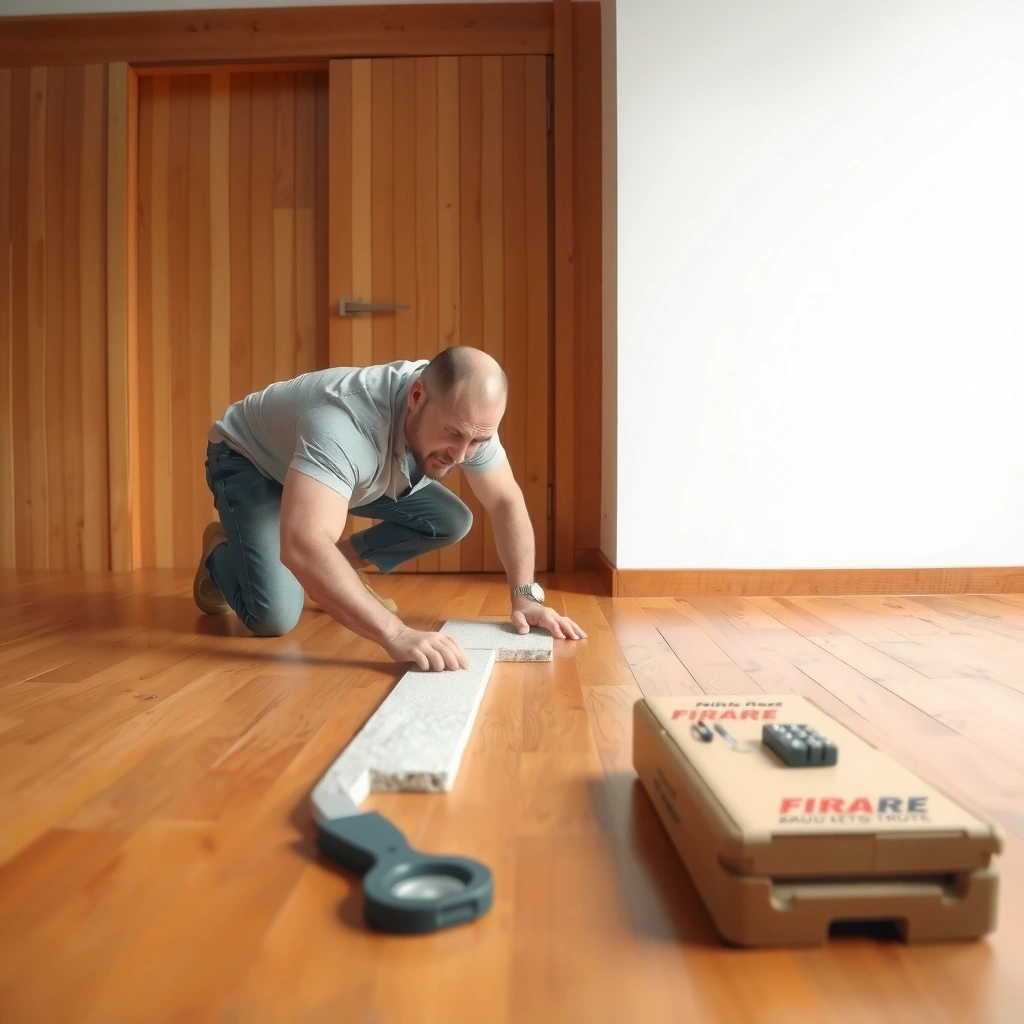
The best way to fix lifting bamboo floors is to stop the movement source first—because re-seating alone won’t last if the room’s humidity, subfloor moisture, or perimeter spacing is wrong. Here’s how to quickly narrow the cause before you touch any planks.
Moisture-related cupping and edge lift happen when the bamboo’s equilibrium moisture content shifts relative to indoor conditions. Stabilizing indoor humidity is usually prerequisite to lasting repairs.
Subfloor flatness matters: if the substrate has dips or high spots, re-adhesion or re-locking can fail even after the floor dries.
Perimeter expansion gaps prevent seasonal movement; removing that space can cause edge pop-ups along walls and baseboards.
– Check for moisture sources: recent spills, wet mopping, leaking plumbing, or persistently high humidity near exterior walls (especially on basements and lower levels).
– Look for installation red flags: missing/too-small expansion gaps at walls, furniture compressing areas, or planks that were not properly acclimated before install.
– Determine whether the lift is localized or widespread—localized lifting often points to a spot issue (a moisture pocket or a restricted perimeter area), while broad movement often signals a humidity/subfloor mismatch.
Quick “Cause Map” (how the pattern usually points you to the problem)
– Edge lift around the perimeter → expansion gap restriction, blocked airflow, or localized moisture along exterior wall lines.
– Buckling across the floor field → subfloor moisture/flatness or an installation system mismatch (e.g., vapor conditions not met).
– Rocking planks/joints → insufficient substrate support, adhesive bond failure (for glue-down), or click/tongue-groove compromise (for floating/click).
Fact anchors to guide your checks
– According to NWFA guidance commonly referenced for wood flooring installations, subfloor flatness tolerance is often targeted at ~3/16 in (about 4.8 mm) over 10 ft to reduce joint stress and failed bonding. [ADD: NWFA reference for subfloor flatness tolerance]
– According to ASTM F2170 and related moisture testing practices used in flooring work, flooring-flat installs often rely on measured moisture conditions (e.g., RH in-slab) staying within manufacturer limits; exceeding those limits increases cupping and edge lift risk. [ADD: ASTM moisture test standard used for wood/bamboo flooring]
– According to ASTM F1869 and common industry slab testing usage, flooring adhesives are typically used when moisture vapor emission rates are below the flooring system’s specified maximum; values depend on the product and system. [ADD: ASTM F1869 and manufacturer limits]
Assess How Much It’s Lifting (And What You Shouldn’t Do)
Before you repair anything, confirm how the boards behave—because “pushing it flat” on warped planks can create more damage than it fixes. Your goal is to decide whether you’re dealing with a re-seat job or a deeper correction.
If planks press back down easily and stay down briefly, you’re likely dealing with bond/connection failure rather than permanent distortion.
If boards remain cupped/warped, forcing them flat while drying can stress joints and widen gaps as conditions change.
Perimeter-only lifting is often consistent with expansion gap restriction; whole-field buckling is more consistent with moisture and/or subfloor flatness.
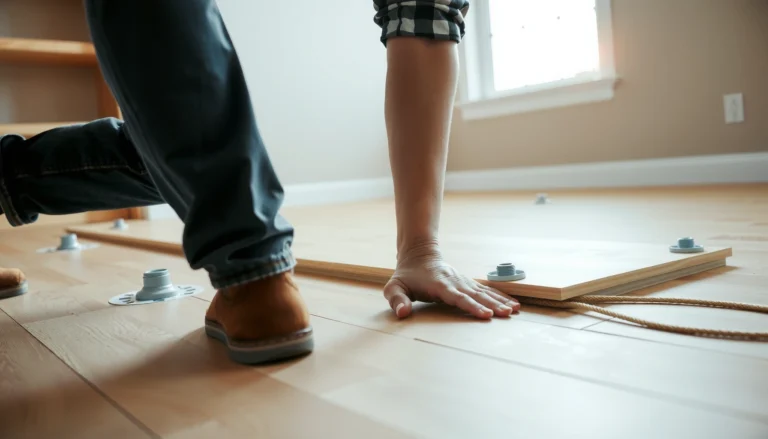
– Test gently with your hand: if planks can be pushed back down easily, the issue may be adhesive failure or slight moisture swelling.
– Avoid forcing boards flat if they’re cupped/warped—this can stress joints and create bigger gaps.
– Note the pattern: edge-lift along a perimeter can indicate expansion gap problems; buckling across the field often points to moisture/subfloor flatness.
What to check while the floor is “free to move”
– Gaps at the wall/baseboard line: look for consistent narrowing or widening after seasonal changes.
– Joint condition: check whether the tongue/groove area is chipped, crushed, or lifting unevenly (especially on click-lock installations).
– Plank height difference: run a straightedge across a lifted area to identify dips/high points and confirm whether the substrate is contributing.
Fix Small Edge Lifts by Re-seating and Securing
For small edge lifts, the fastest durable approach is to dry the area, remove debris, then re-seat and secure using the correct method for your bamboo installation system. Don’t start securing until the floor conditions are stable—otherwise the board will lift again as moisture equalizes.
Drying and stabilization come first: re-seating a moisture-swollen edge board before humidity stabilizes often results in repeat lift.
Even pressure matters: pressing a plank down evenly reduces the risk of joint misalignment and future clicking/gapping.
Use system-compatible repair materials: glue-down repairs require adhesives rated for that bond line, while floating/click repairs generally use different approaches.
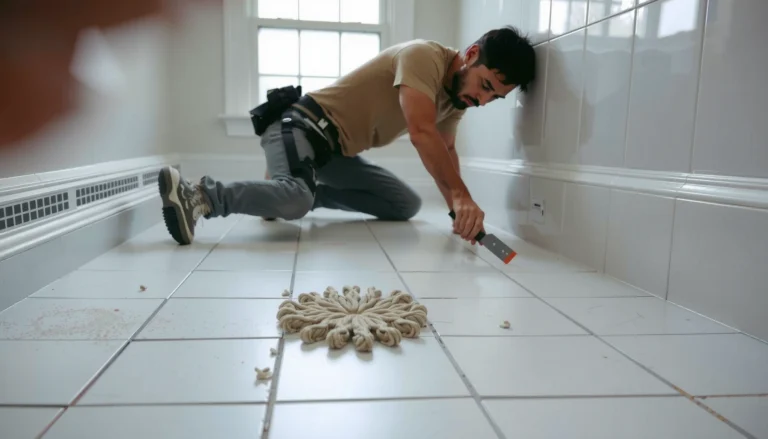
– Dry the area first: stop wet cleaning, increase ventilation, and let the room stabilize before attempting repairs.
– Re-seat the lifted plank: clean off any loose debris, then press the board down evenly.
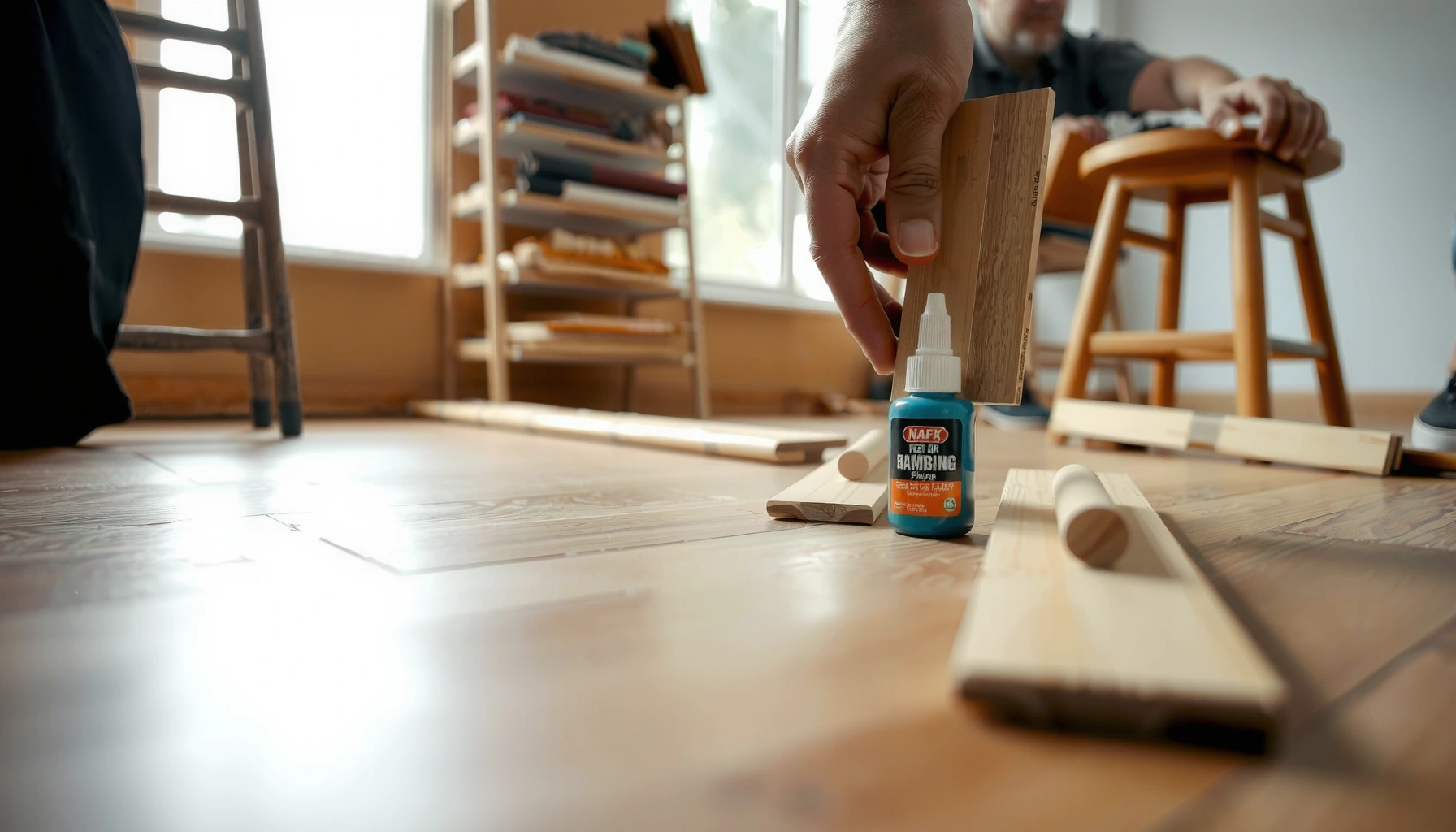
– Secure it appropriately: use manufacturer-recommended repair adhesive or fasteners if your bamboo type/installation method calls for it (follow your flooring instructions—[ADD: manufacturer name/model and attachment method]).
Pros/cons of edge-lift re-seating (quick scan)
| Approach | Best for | Pros | Cons / limitations |
|---|---|---|---|
| Re-seat + spot secure (correct method) | Local perimeter lift, slight bond/connection failure | Fast, minimal disruption, often effective if moisture cause is fixed | Won’t last if indoor humidity/subfloor moisture keeps shifting |
| “Force it flat” without stabilization | Avoid | Can temporarily reduce visible gaps | Risks joint stress, cracking, and repeat lift after conditions change |
| Spot replace only | Permanently damaged boards | More reliable when boards are compromised | More labor; requires matching thickness/tone and correct install system |
Repair Moderate Buckling or Loose Sections
For moderate buckling or loose areas, the best fix is usually to correct the underlying substrate/moisture issue, then re-adhere/re-lock (or replace) sections that can’t hold their shape. If you skip the root cause, you’ll likely see the same movement again.
Re-adhering over a subfloor that is not flat or not dry can create repeat failure even with the “right” adhesive.
For bamboo, the installation system (glue-down vs click-lock/floating vs nailed) dictates what repair materials and vapor-related steps are required.
If tongue/groove is damaged or boards are permanently distorted, replacement often outperforms patching.
– Check subfloor flatness: if the surface under the bamboo isn’t flat, re-adhering may fail again.
– Address the underlying movement: correct moisture issues and ensure the vapor barrier requirements were met for your installation type ([ADD: confirm your installation details: glue-down vs. click-lock vs. nailed]).
– Replace only what’s necessary: when planks are permanently warped or the tongue/groove is damaged, replacement is often more reliable than patching.
What “deeper correction” usually includes
– Re-checking perimeter spacing and removing any baseboard/sill restrictions that prevent expansion.
– Inspecting for leaks and re-routing wet areas (under-sink lines, toilet supply, shower pan failures).
– Confirming the moisture mitigation approach (vapor barrier underlayment, proper slab conditioning, or crawlspace ventilation).
Prevent Lifting From Coming Back (Humidity Control and Maintenance)
The most reliable way to stop repeat lifting is to run the floor inside the humidity band it was designed for and avoid moisture spikes. Most bamboo failures aren’t random—they’re a response to changing equilibrium conditions.
Seasonal indoor humidity swings are a common root cause of repeat lift in bamboo flooring because the material expands/contracts as moisture levels change.
Avoid soaking: routine cleaning that leaves standing moisture can push bamboo past its equilibrium and reopen gaps.
Expansion space isn’t optional—blocking it turns seasonal movement into edge pop-ups.
– Maintain stable indoor humidity (especially season to season) and avoid soaking the floor during cleaning.
– Keep the floor clear of persistent water exposure: use mats at entryways and avoid mopping with excessive water.
– Don’t block expansion space: leave required perimeter gaps and ensure vents/airflow aren’t obstructed.
Practical maintenance habits that reduce risk
– Use a microfiber mop lightly dampened with a manufacturer-approved bamboo cleaner (avoid “wet mopping”).
– Place felt pads under heavy furniture to prevent point-loading that can accentuate joint gaps.
– Monitor indoor RH with a basic hygrometer and aim for the manufacturer/spec band ([ADD: your floor’s approved RH range from manual]).
What Can Go Wrong (Common Mistakes and Edge Cases)
The biggest DIY failures come from treating the symptom (the lifted board) instead of the cause (moisture/subfloor/perimeter restriction). If you hit any of the risk points below, pause and reassess.
If the room stays humid or the subfloor remains damp, adhesive repairs can fail quickly—sometimes within the same season.
Overdriving fasteners can crack bamboo or damage joint geometry, which creates new lift pathways.
Forcing warped boards flat can look fixed temporarily but often returns once the board re-reads humidity.
– Skipping moisture diagnosis: if the room stays humid, any adhesive repair can fail again.
– Overdriving fasteners: can crack bamboo or damage the tongue/groove, making lifts worse.
– Trying to “force it” when planks are warped: you may temporarily flatten the board while it’s drying, then see re-lifting once conditions change.
– Using the wrong adhesive: bamboo installation systems vary (glue-down vs. floating/click); using an incompatible product can weaken joints or trap moisture.
– When to stop and call a pro: widespread buckling, significant subfloor damage, or signs of long-term water intrusion (discoloration, soft spots, musty odor).
Verdict: The Best Path Depends on Your Bamboo Type—Here’s the Rule of Thumb
If the lifting is small and the planks aren’t permanently cupped, focus on drying the area, restoring the correct moisture balance, and re-securing using the method your bamboo installation calls for. If the lift is widespread, the planks are warped, or the subfloor isn’t flat, plan for deeper correction (or replacement), because surface-only repairs often don’t last.
Rule of thumb: if the movement pattern is perimeter-only and boards remain flexible, re-seat/spot secure after drying is often the fastest fix.
If buckling crosses the room or planks remain permanently distorted, repairing joints without correcting subfloor moisture/flatness is likely to be temporary.
Downsides: re-seating can be temporary if humidity keeps swinging, and incorrect adhesives/fasteners can create new problems. Skip DIY repairs if you suspect hidden water damage, the subfloor is soft/compromised, or you’re unsure whether your bamboo is glue-down or floating—[ADD: confirm your installation type from the original manufacturer manual].
Indoor RH Bands and Lift Risk for Wood/Bamboo Floors
| # | Relative Humidity (RH) | Expected Floor Movement | Lift Risk | Best Action |
|---|---|---|---|---|
| 1 | 35%–38% RH | Moderate contraction | Low | Maintain RH band |
| 2 | 39%–42% RH | Small contraction | Low | Use humidifier if needed |
| 3 | 43%–50% RH | Minimal net movement | Very Low | Best operating zone |
| 4 | 51%–55% RH | Mild expansion | Medium | Avoid wet mopping |
| 5 | 56%–60% RH | Noticeable expansion | High | Dehumidify & ventilate |
| 6 | 61%–65% RH | Risk of cupping/edge lift | Very High | Stop repairs until stabilized |
| 7 | >65% RH | High likelihood of ongoing movement | Extreme | Investigate moisture intrusion |
[ADD: Reference for wood flooring recommended RH band—commonly cited 35%–55%]
Quick Scan Checklist (Save This)
– [ ] Find moisture source (leaks, wet cleaning, humidity spikes)
– [ ] Confirm lifting type: edge-lift vs. buckling vs. rocking planks
– [ ] Let the floor fully dry and conditions stabilize
– [ ] Verify your installation type: glue-down vs. click/floating vs. nailed (per instructions)
– [ ] Repair only compatible with your system (adhesive/fasteners as specified by the manufacturer)
– [ ] If planks are warped or subfloor isn’t flat, plan for replacement/deeper correction
FAQ
Can I fix lifting bamboo floors with glue alone?
Sometimes, but only if the lift is caused by a localized adhesive/bond issue and the moisture/subfloor cause is resolved. If conditions keep pushing the boards up, glue repairs usually fail.
Why do only the edges lift on my bamboo floor?
Edge lifting often points to expansion gap problems, perimeter restriction, or localized moisture along walls. Check for blocked gaps, poor airflow, or recent moisture exposure near that perimeter.
Is it safe to walk on lifting bamboo boards?
Use caution. If planks are rocking or repeatedly lifting, walking can widen gaps and damage the click-lock/tongue-groove or adhesive bond.
Should I replace bamboo planks that are lifting?
If boards are permanently warped, cracked at the joints, or the subfloor is out of flatness where re-securing won’t hold, replacement is typically the most dependable option.
How do I stop lifting from happening again?
Control indoor humidity, avoid soaking during cleaning, and ensure the installation meets required expansion gaps and (for applicable installs) vapor barrier requirements—using your manufacturer’s specs.
Sources
– [ADD: Manufacturer installation and repair instructions for your specific bamboo floor (glue-down vs. floating/click), including expansion gap and recommended repair adhesives/fasteners]
– [ADD: Official guidance from your bamboo flooring manufacturer on moisture/humidity requirements]
– [ADD: Subfloor flatness and moisture mitigation guidance from the flooring manufacturer or a referenced building standard/spec relevant to your installation]
When you fix lifting bamboo floors quickly, the winning strategy is still cause-first: stabilize moisture, confirm subfloor flatness and perimeter expansion, then re-seat or re-secure using the correct system method. If the boards are permanently distorted or the substrate is compromised, deeper correction (often replacement) is the honest path to a repair that lasts through the next humidity swing.
Frequently Asked Questions
What causes bamboo floors to lift or buckle?
Bamboo floor lifting is commonly caused by excess moisture, improper acclimation, or changes in humidity and temperature that push the planks out of their normal range. It can also happen if the subfloor isn’t flat, or if there’s not enough expansion gap around the perimeter and at fixed objects like posts and vents. In some cases, poor installation methods—such as applying glue incorrectly or failing to allow for movement—can contribute to raised edges or gaps.
How do I fix lifting bamboo floor planks without replacing them?
Start by checking the moisture conditions using a concrete moisture test (if it’s a slab) and measuring indoor humidity. If the lifting is minor, you may be able to re-secure planks by removing baseboards, adding appropriate fasteners (for nail-down systems), or re-gluing the affected boards with manufacturer-recommended adhesive. Then apply temporary weight or clamps correctly, ensure the floor is level and the expansion gaps are clear, and let the repair cure fully before walking on it.
How can I stop bamboo flooring from lifting due to humidity changes?
Maintain consistent indoor relative humidity—typically around 35–55%—using a humidifier in dry seasons or a dehumidifier in damp seasons. Verify that the room has proper ventilation and avoid direct water exposure from spills, wet mopping, or leaks under bathrooms and kitchens. For long-term stability, use a vapor barrier where required (especially over concrete) and confirm the floor was acclimated to local conditions before installation.
Which tools and materials are best for repairing lifted bamboo floors?
For spot repairs, you’ll usually need painter’s tape, a pull bar or flat pry tool, a clean microfiber cloth, and the correct bamboo flooring adhesive or patch system recommended by your flooring manufacturer. If the planks are nail-down, you may need finish nails or a compatible fastening kit and a hammer or pneumatic nailer setup. Always have spacers or shims for maintaining expansion gaps, and consider a straightedge/level and feeler gauges to diagnose uneven subfloor spots before re-securing.
Best way to re-install or re-attach bamboo floor planks after they lift?
Begin by removing any trim that blocks access, then lift the affected boards carefully to clean off old adhesive and debris so the surface is sound. Check the subfloor flatness; if it’s uneven, you may need to sand high spots or address low areas before reinstalling to prevent future lifting. Reinstall with the correct expansion gap, use the recommended adhesive method for your bamboo flooring type, and press/weight the planks evenly while allowing full cure time to restore a flat bamboo floor surface.
📅 Last Updated: October 11, 2026 | Topic: How to fix lifting on bamboo floors? | Content verified for accuracy and freshness.
References
- Google Scholar Google Scholar
https://scholar.google.com/scholar?q=bamboo+floor+lifting+repair+moisture - Google Scholar Google Scholar
https://scholar.google.com/scholar?q=bamboo+flooring+cupping+warping+humidity+fix - Google Scholar Google Scholar
https://scholar.google.com/scholar?q=wood+floor+lifting+causes+moisture+humidity+repair - https://en.wikipedia.org/wiki/Bamboo_flooring
- https://en.wikipedia.org/wiki/Wood_warping
- https://en.wikipedia.org/wiki/Dimensional_stability
- Mold | US EPA
https://www.epa.gov/mold - Mold | Mold | CDC
https://www.cdc.gov/mold/ - https://pubmed.ncbi.nlm.nih.gov/?term=wood+floor+moisture+humidity+warping
- Google Scholar Google Scholar
https://scholar.google.com/scholar?q=How+to+fix+lifting+on+bamboo+floors?