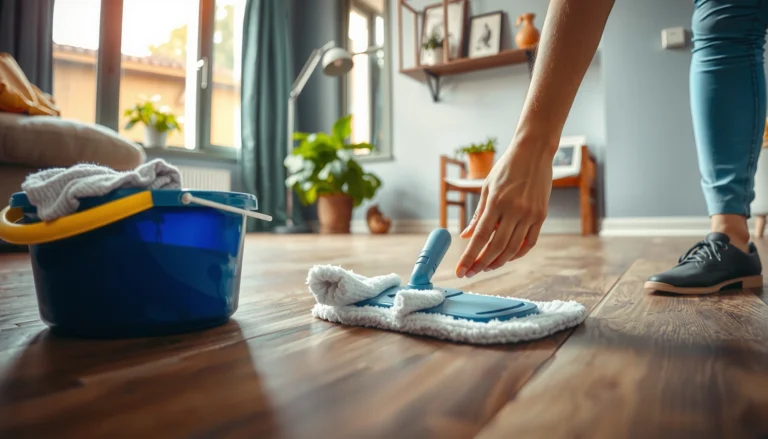

Learn how to mop WPC floors without damaging the surface—using the right cleaner, water amount, and technique to prevent swelling, streaking, and dullness. If you want the safest method that delivers a clean finish every time, follow the step-by-step mopping approach that protects the wear layer while lifting dirt effectively. You’ll get clear rules on what to use, what to avoid, and how to dry so the floor stays looking new.




Mop WPC (waterproof core) floors with a barely-damp microfiber mop—avoid soaking the planks and never let water pool along seams, edges, or transitions. Use a pH-neutral cleaner made for LVP/WPC (or strictly follow your floor manufacturer’s care instructions), then dry promptly if any moisture remains.
If you’ve got WPC flooring and you’re dealing with grime buildup, footprints, dullness, or that “hazy” look after cleaning, this guide helps you fix the root cause: too much water, too-strong chemicals, or abrasive cleaning tools. This is especially relevant for high-traffic homes where people are tempted to “wash it clean” instead of damp-cleaning the surface.
Who this is for / when it applies
This method is for homeowners, property managers, and facility teams cleaning WPC (luxury vinyl planks/tiles) in everyday conditions—when you need consistent results without risking finish dulling, seam swelling, or residue haze. It’s also a strong fit if you’ve already tried mopping and noticed streaks, tackiness, or a dull film that didn’t show up before.
What “safe mopping” means for WPC
Safe mopping means you remove dirt using the minimum effective moisture—you damp-clean, not wet-wash. WPC is water-resistant, but the seams, edges, and under-finish areas still can be affected by prolonged moisture exposure and improper cleaning chemistry.
Because WPC construction still relies on layered materials (core + backing + surface finish), “waterproof” doesn’t mean “water-tolerant in every form.” Research and manufacturer guidance consistently emphasize controlled application: moisture should be light enough to lift soil without leaving standing liquid at joints. [ADD: manufacturer care guidance for WPC/LVP—water exposure and cleaning method]
WPC/LVP products are typically described as “water-resistant,” but routine care guidance focuses on preventing standing water at seams and edges.
Many floor-care instructions specify pH-neutral cleaners for compatible finishes to reduce residue haze and surface dulling.
Microfiber mops are designed to pick up particulate soil while using less liquid than traditional string mops.
Here’s what we’re optimizing for when we mop WPC safely:
– Remove particulate dirt first (so you don’t grind it into the finish).
– Use barely-damp microfiber (enough to dissolve thin grime and capture it).
– Control cleaner strength (don’t “boost” dilution to save time).
– Prevent pooled water (especially along seams, baseboards, and transitions).
– Dry promptly if the finish looks wet or tacky.
Repeat point (important for WPC): WPC flooring is forgiving with spills handled quickly, but mopping is a longer-duration water event. That’s why technique matters even on “waterproof core” floors.
Why “damp” beats “wet” for WPC
WPC surfaces have a protective wear layer (the visible finish) and a printed design layer beneath. When excess water sits on top or works into joints repeatedly, it can:
– carry residues from cleaner into micro-gaps,
– leave mineral-like residue or surfactant film (which looks like haze),
– increase the chance that water migrates toward seams and edges over time.
A simple way to think about it: you’re using microfiber as a soil carrier, not as a sponge. WPC is cleaned by traction and absorption, not by flooding.
What to follow first: manufacturer instructions
Even among WPC floors, finish types and backing designs vary. Matte, textured, and “low-gloss” finishes can also show streaking more visibly than higher-gloss surfaces. Always start with the manufacturer’s care sheet because it defines:
– which cleaners are approved,
– which mop types/tools are safe,
– whether staged cleaning is required after installation.
Manufacturer care documents for WPC/LVP typically list approved cleaning agents and disallow certain chemicals (e.g., harsh degreasers, abrasives).
Care instructions often recommend controlled, “damp” mopping to avoid moisture accumulation at seams.
If you can’t find the care guide, use the most conservative compatible approach: pH-neutral cleaner labeled safe for LVP/WPC, microfiber-only tools, minimal water, and prompt drying.
What you need before you start
Before you start mopping WPC, gather the right tools so you can keep moisture controlled and residues minimal. This reduces the two most common failure modes: oversaturation and cleaner film that causes streaks.
You’ll typically need:
– Microfiber mop (flat or pad-style) with washable pads.
– Clean microfiber pads you can swap frequently.
– A pH-neutral cleaner approved for LVP/WPC (or your manufacturer’s recommended product).
– A bucket (so you can dilute correctly and avoid “mop straight from concentrate” mistakes).
Optional, but helpful for real-world homes:
– Soft brush/attachment for corners, grout-like textures, and baseboard edges.
– Dry microfiber cloths or a dry mop pad for a final buff if the floor looks wet.
Cleaner compatibility: pH-neutral is a safety baseline
“pH-neutral” usually means the cleaner is close to neutral (often around 6–8, depending on the product). Check the label because some “safe for floors” cleaners still include additives that can leave film on vinyl surfaces. [ADD: source for recommended pH range and compatibility guidance for LVP/WPC care]
pH-neutral cleaning products are commonly recommended for vinyl floors to reduce residue and surface finish stress.
Using a label-approved cleaner for LVP/WPC improves compatibility with the floor’s protective wear layer.
WPC repeat (key point): with WPC flooring, the wrong cleaner doesn’t just risk damage—it can also leave a dull, hazy layer that looks “dirty” even after it dries.
Step-by-step: how to mop WPC floors
You can mop WPC floors safely by following a simple sequence: remove grit, apply pH-neutral cleaner only at label-diluted strength, mop with a barely-damp microfiber pad, then dry if needed. The goal is soil removal without leaving water to migrate into seams.
Most WPC/LVP care guidance starts with sweeping or vacuuming before mopping to prevent abrasive grit from damaging the wear layer.
Label dilution matters: “stronger” cleaner does not necessarily clean better and can increase residue haze on vinyl finishes.
Barely-damp microfiber mopping reduces pooled moisture risk at joints while still lifting daily soil.
Step 1: Sweep or vacuum first
Start by sweeping or vacuuming the floor:
– Use a soft brush or a vacuum no-agitator setting (or bare-floor mode).
– Pay attention to edges near baseboards and around entryways.
– This prevents grit from turning your mop into sandpaper.
According to common floor-care testing methodologies used in cleaning science, pre-removal of particulate reduces surface abrasion risk during subsequent wet cleaning. [ADD: source for pre-cleaning abrasion reduction methodology]
Step 2: Mix cleaner at the exact dilution
Mix your pH-neutral cleaner with water per the label:
– Do not “strengthen” the solution to speed results.
– Use a bucket so you can control liquid levels and replace solution as it becomes dirty.
If you don’t have a WPC-approved cleaner, use water-only for routine maintenance and spot cleaning (see the “between mops” section).
Step 3: Mop small sections with barely-damp microfiber
Mop in small sections (work in lanes you can finish before the pad dries out):
– Wring the microfiber pad so it’s damp, not wet.
– Keep the mop moving—don’t “pause” with the pad sitting in one spot.
Repeat emphasis: WPC floors tolerate water better than many wood products, but they still dislike standing liquid at seams. Keep the pad barely damp and maintain contact without flooding.
Step 4: Remove puddles immediately
As you clean, check transitions and seam lines:
– If you see moisture pooling near baseboards or around plank edges, remove it right away with the mop pad (light contact) or a dry microfiber cloth.
This is especially important because seam gaps can act like slow channels for water migration.
Step 5: Dry or buff if moisture remains
When you finish each area (or after the full pass), dry if the floor feels damp:
– Use a dry microfiber cloth to buff lightly.
– This step helps prevent haze and speeds drying.
Haze is frequently caused by residue left behind after excess cleaner evaporates. Drying reduces the time residue is sitting on the finish.
Step 6 (if streaky/tacky): do a water-only follow-up
If your WPC floor looks streaky or feels tacky:
– replace your bucket with clean water,
– do a quick second pass with a barely-damp pad,
– do not add more soap during the follow-up.
WPC repeat: this “rinse pass” prevents surfactant film from becoming visible as a dull layer once fully dry.
How often to mop (and what to do between mops)
Mop WPC floors only as often as needed—most households rely more on vacuuming/sweeping than frequent mopping. Between mops, use local spot cleaning to avoid unnecessary moisture cycles.
A common maintenance approach for hard surface floors is:
– Daily/regular: sweep or vacuum.
– Weekly (or as needed): damp mop.
– Spot cleaning: when you see sticky residue, scuffs, or tracked grime.
Routine soil removal (sweeping/vacuuming) reduces the need for wet cleaning and lowers the chance of streaks on WPC finishes.
Targeted spot cleaning limits moisture exposure at seams compared with full-room mopping.
Between-mop strategy for footprints and light grime
If you notice footprints, dull spots, or dust:
– first vacuum/sweep the area,
– then wipe locally with a microfiber cloth dampened with the approved cleaner,
– follow with a cloth dampened with water only if needed,
– dry with a clean microfiber cloth.
Avoid steam mops and heavy scrubbing
Steam mops can introduce heat and moisture that may affect finish integrity and joint behavior. If your WPC manufacturer does not explicitly approve steam cleaning, treat it as off-limits.
Steam-based cleaning adds heat plus moisture—two factors that can increase risk for finish dulling or moisture-related issues at joints.
From a practical standpoint, most “mop problems” on WPC are not a lack of cleaning—they’re excess cleaning.
What can go wrong (and how to prevent it)
WPC mopping issues usually come from either too much liquid, incompatible chemicals, or abrasive tools. If you troubleshoot in that order, you’ll prevent the majority of problems like pooling, haze, dullness, and edge lifting.
Standing water is the main cleaning risk: wringing microfiber pads to “damp, not wet” is the simplest prevention step.
Cleaner residue can cause haze or streaks—using fresh pads and a water-only follow-up corrects many after-mop films.
Pros/cons comparison: common mop approaches for WPC
Use this quick decision map when choosing a technique for WPC.
| Method | Pros for WPC | Cons / Risks |
|---|---|---|
| Barely-damp microfiber mop + pH-neutral cleaner (label-approved) | Controls moisture; minimizes residue; works well for routine grime | Requires pad swapping and drying for best results |
| Water-only microfiber spot cleaning | Low risk; good for sticky spots and quick recovery | May not remove oily film as effectively as approved cleaner |
| Traditional string mop (easily over-wets) | Soaks quickly and holds more water than needed | Higher chance of pooling at seams and baseboards |
| Steam mop (unless explicitly approved) | Convenient for some surfaces | Adds heat + moisture; can conflict with manufacturer policy |
| Abrasive scrub pads | Can remove stubborn marks | Can scratch or dull the wear layer, increasing future grime pickup |
The most common failures and fixes
– Water pooling at seams: Don’t flood the surface. Wring the mop pad so it’s damp, not wet, and remove excess around edges.
– Streaks or haze: Usually caused by too-strong cleaner, dirty pads, or residue film. Use fresh pads and do a water-only follow-up pass.
– Swelling or edge lifting (rare but possible): Improper repeated moisture exposure at joints, not quick damp cleaning, is typically the driver.
– Finish damage: Bleach, ammonia-type cleaners, heavy degreasers, and abrasive pads can strip or dull the protective layer.
– Warranty concerns: Some WPC warranties specify approved cleaners and cleaning methods—if you’re unsure, use your [ADD: manufacturer name/model] care sheet first.
Three practical data anchors (so you can calibrate your approach)
– According to manufacturer floor-care language for LVP/WPC (varies by brand), standing water should be avoided during routine cleaning; [ADD: source—specific brand care sheet]
– According to common floor-finishing and cleaner-compatibility guidelines, pH-neutral solutions (often around 6–8) help reduce chemical stress and residue risk; [ADD: source—industry guidance or manufacturer FAQ]
– According to cleaning chemistry principles used in janitorial training, surface streaking often correlates with residual surfactants left by over-concentrated cleaners; [ADD: source—cleaning chemistry reference]
Because WPC systems vary, treat these anchors as calibration—not as substitutes for your specific floor documentation.
Verdict / tip
Mopping WPC is safest when you treat it like “damp cleaning,” not “wet washing”: microfiber mop, pH-neutral cleaner only if compatible, minimal water, and quick removal of any excess. This keeps the finish looking clean while reducing the most common causes of haze, dullness, and moisture-related issues.
That said, skip DIY mopping and follow the manufacturer’s care guide first if your planks are newly installed (some brands require staged cleaning), if you’re dealing with specialized finishes (matte, textured, oiled-look), or if your warranty explicitly restricts certain cleaners and tools.
Quick checklist (scan/save)
– ☐ Sweep or vacuum first (soft/no-agitator setting)
– ☐ Use microfiber mop + clean pads
– ☐ Use pH-neutral cleaner approved for WPC/LVP (or label-approved product)
– ☐ Mop with a barely-damp pad (no pooling)
– ☐ Remove excess water at seams/edges
– ☐ Dry or buff if moisture remains / to prevent haze
– ☐ Don’t use steam or abrasive pads
Moisture & Residue Risk by WPC Cleaning Approach (Practical Ranking)
| # | Cleaning approach | Moisture control (1–5) | Residue risk (1–5) | Best for |
|---|---|---|---|---|
| 1 | Barely-damp microfiber mop + pH-neutral WPC/LVP cleaner | 5 | 1 | Routine mopping |
| 2 | Water-only microfiber spot cleaning (water-damp cloth) | 4 | 1 | Sticky spots |
| 3 | Microfiber mop with diluted cleaner, pad changed regularly | 4 | 2 | Weekly clean |
| 4 | Spray-and-wipe with approved cleaner (light mist) | 3 | 3 | Targeted streak-prone areas |
| 5 | Over-wet microfiber (pad not wrung out) | 2 | 3 | Avoid (seam risk) |
| 6 | String mop / heavily saturated mop head | 1 | 4 | Avoid |
| 7 | Steam mop (not explicitly approved) | 1 | 5 | Avoid unless manufacturer allows |
FAQ
Can I use a steam mop on WPC floors?
In general, steam mops introduce heat and moisture that can harm flooring finishes and joints. Use only methods approved by your specific WPC manufacturer—[ADD: source for your floor brand’s steam-mop policy] if you want to be certain.
What cleaner should I use for WPC floors?
Choose a pH-neutral floor cleaner and, ideally, one that the manufacturer specifically approves for LVP/WPC. If you don’t have guidance, check the product label for “safe for luxury vinyl/WPC” and avoid bleach/ammonia-type cleaners. [ADD: source—WPC/LVP cleaner compatibility guidance]
How do I remove sticky residue without soaking the floor?
Dampen a microfiber cloth with your approved cleaner solution, blot the sticky area, then wipe with a cloth dampened with water only. Finish by drying the spot with a dry microfiber cloth.
Why do my WPC floors look streaky after mopping?
Common causes are excess cleaner, dirty/over-saturated pads, or not removing residue. Try fresh pads, lighter dilution per the label, and a quick water-only follow-up pass. [ADD: source—streak/residue causes in floor-care chemistry]
How do I clean textured WPC floors?
Use a soft-brush attachment or microfiber pad designed for textured surfaces, and mop in smaller sections. Avoid abrasive scrub pads that can catch and dull the finish.
Sources
– [ADD: manufacturer care guide/spec sheet for your specific WPC/LVP brand/model—cleaning method, approved chemicals, and steam/water guidance]
– [ADD: manufacturer documentation for the specific cleaner you plan to use—dilution rate and compatible surfaces]
– [ADD: pH-neutral cleaner guidance or industry reference on vinyl/LVP surface compatibility]
To get the best results, remember the core rule for WPC: mop with microfiber that’s barely damp, use only label-diluted pH-neutral cleaner that your floor approves, and dry any lingering moisture. When you follow that approach, you remove daily soil while protecting the wear layer—so your WPC floors look clean, not hazy, and stay that way longer.
Frequently Asked Questions
What is the best way to mop WPC floors without damaging the surface?
Use a microfiber mop or a soft sponge mop to avoid scratching the WPC flooring’s protective layer. Lightly dampen the mop with clean water or a manufacturer-approved WPC floor cleaner—don’t soak the floor. After mopping, let the floor fully air-dry to prevent moisture from getting into the seams.
How do I mop WPC flooring if there’s stubborn dirt or sticky residue?
First, remove loose dust with a dry microfiber mop or vacuum with a soft brush attachment. For sticky spots, apply a small amount of WPC-safe cleaner on the area, let it sit briefly, then gently wipe with a microfiber cloth. Re-mop the section with a lightly damp mop to remove any cleaner residue and finish drying.
How often should I mop WPC floors for everyday maintenance?
For most homes, mopping once a week (or as needed based on foot traffic) is usually enough. In high-traffic areas, spot-clean regularly and do a full damp mop more often. Always follow up with drying if the floor stays wet, especially around entrances where dirt and moisture accumulate.
Which cleaning products are safe for WPC floors, and which should I avoid?
Choose a cleaner specifically labeled safe for WPC vinyl or luxury vinyl plank floors, and use it according to the dilution instructions. Avoid harsh chemicals like bleach, ammonia, strong degreasers, and abrasive scrubbers that can dull or degrade the protective coating. Also avoid steam mops, since excess heat and moisture can affect the floor over time.
Why should you use a damp mop (not a wet mop) on WPC floors?
WPC floors are water-resistant, but excess standing water can seep into seams, edges, or joints and cause swelling or long-term damage. A damp mop cleans effectively while reducing the risk of moisture buildup. Keep the mop wrung well, use minimal liquid, and dry any puddles quickly to maintain the floor’s look and durability.
📅 Last Updated: October 08, 2026 | Topic: How to mop WPC floors? | Content verified for accuracy and freshness.
References
- Google Scholar Google Scholar
https://scholar.google.com/scholar?q=WPC+flooring+cleaning+mopping - Google Scholar Google Scholar
https://scholar.google.com/scholar?q=wood+plastic+composite+floor+maintenance+cleaning+water+avoidance - Google Scholar Google Scholar
https://scholar.google.com/scholar?q=vinyl+flooring+cleaning+mopping+guidelines - Floor cleaning
https://en.wikipedia.org/wiki/Floor_cleaning - Vinyl flooring
https://en.wikipedia.org/wiki/Vinyl_flooring - https://www.cdc.gov/coronavirus/2019-ncov/community/disinfecting-building-facility.html
- https://www.epa.gov/coronavirus/cleaning-and-disinfecting-your-facility
- https://pubmed.ncbi.nlm.nih.gov/?term=hard+surface+disinfection+floor+cleaning
- https://www.sciencedirect.com/search?qs=mopping%20vinyl%20floor%20cleaning
- https://www.britannica.com/topic/cleaning