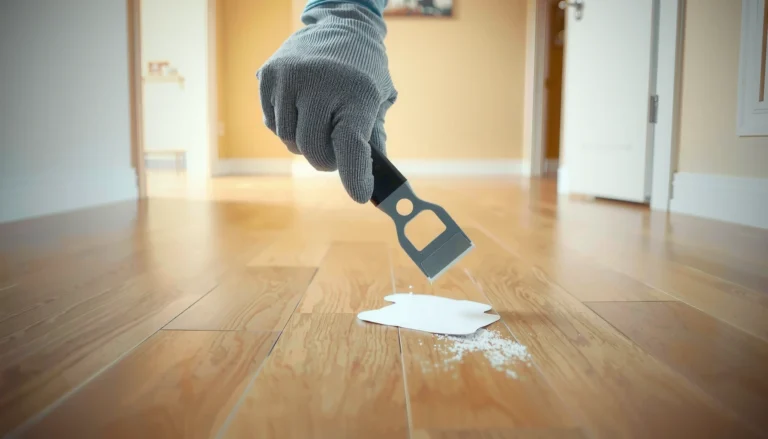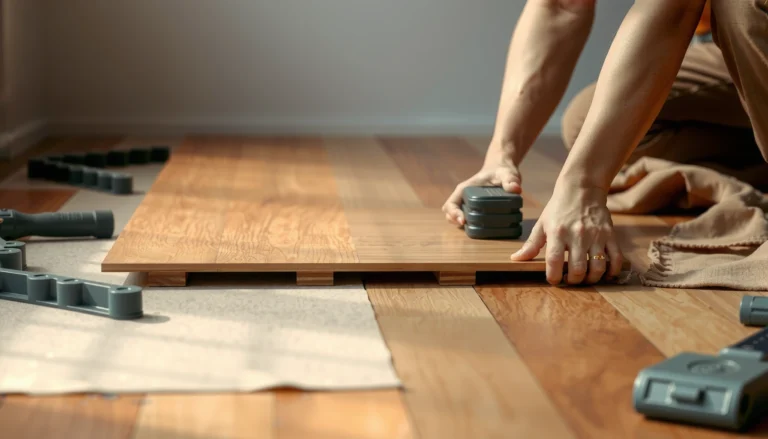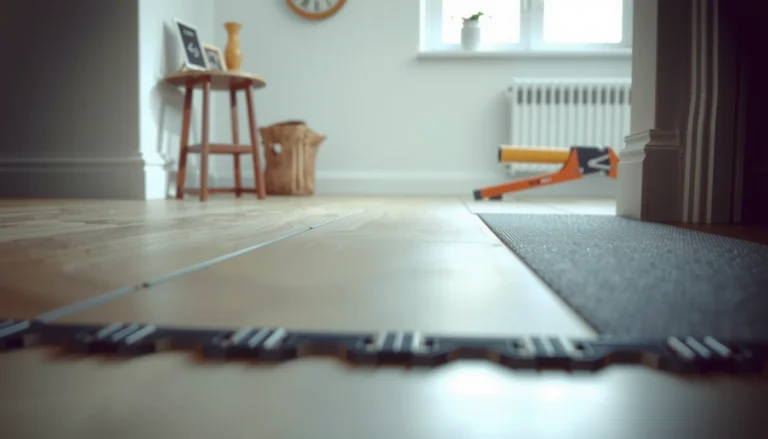

If you’re trying to choose SPC floors, the deciding factor is matching the product’s core wear and protection to your real installation conditions. You’ll learn exactly what to check—thickness, wear layer, locking system, dimensional stability, underlayment needs, and moisture resistance—so you can pick the most durable option for high-traffic areas or basements. Follow these checkpoints and you’ll know which SPC flooring to buy and which specs to avoid.



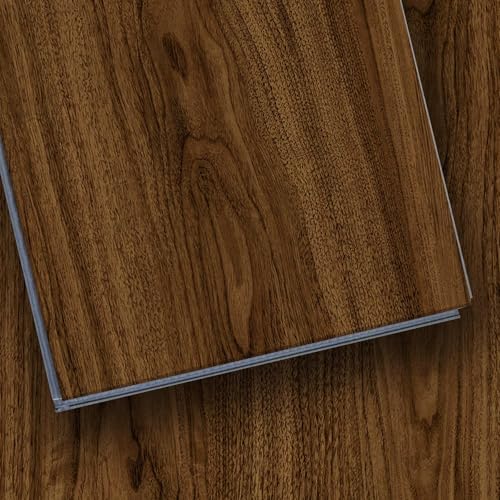
SPC floors are a strong pick when you want a rigid, water-resistant flooring feel with relatively simple upkeep—but choosing the right product depends on the wear layer, thickness, and how your installer plans to handle your subfloor. Start by matching the SPC’s construction and installation specs to your room’s moisture risk and flatness needs, then verify comfort and durability through underlayment and plank build details. In this guide, you’ll learn what to check and how to avoid the most common mistakes that show up after installation.
If you’re installing in a home, apartment, retail space, or any area where spills and humidity are concerns, this is for you. It’s also useful if you’ve narrowed down your options and want a practical checklist before you commit to a specific SPC brand or line.
Check thickness, wear layer, and overall build
The fastest way to avoid “it looked fine in the showroom, but it wears fast” is to choose SPC by the wear layer and overall plank construction, not just by total thickness. In practice, the wear layer (the top resistant surface) drives scuff and abrasion performance, while the core and assembly affect sound, feel, and how well joints stay stable. Start with the manufacturer’s labeled measurements for both total thickness and wear layer—those two numbers usually explain the largest portion of performance differences.
Wear layer thickness is the primary indicator of long-term scuff resistance, because it is the layer designed to take abrasion from foot traffic.
Total plank thickness influences comfort and subfloor tolerance; even if the wear layer is thick, an SPC system can still fail if joints are stressed by an uneven base.
Many SPC lines specify whether they require a specific underlayment or are designed for particular floating/adhesive installation conditions in the instructions.
What to verify on the spec sheet
Start with the two numbers you’ll see most often on the box or product sheet:
– Total plank thickness: This affects stiffness, acoustics, and the way the floor bridges small imperfections. Thicker planks often feel more “substantial,” but they can’t compensate for a subfloor that’s out of flatness tolerance.
– Wear layer thickness: This is the top protective “resistant” film. Higher wear layer generally helps in higher-traffic rooms (hallways, retail aisles), but only if your installation system is compatible.
Then check these build details before you compare prices:
1) Attached padding (if any)
Some SPC products include an attached pad (often an IXPE/EVA-style backing or similar). The key question is whether that attached layer is meant to be installed *as a complete system* or whether the manufacturer still requires a separate underlayment. If you plan to add a different underlayment on top of attached padding, you can accidentally break the intended stiffness/sound behavior or void warranty.
2) Core description and intended conditions
SPC stands for Stone Plastic Composite, and many manufacturers describe the rigid core formulation and structure—sometimes with notes about whether the floor is intended for water-resistant environments vs. “wet-area” installation. Even when SPC is marketed as water-friendly, edges and seams are usually where real-world failures begin if the product is not installed and sealed exactly as directed.
3) Backing vs. underlayment compatibility
If you’re going for click-lock (floating), the underlayment often acts as both sound control and a stress-buffer. If your SPC includes padding, the underlayment requirement may be minimal—or it may be mandatory but only for specific types/thicknesses.
A useful rule of thumb I use when comparing options: if two products have the same wear layer and core thickness, I treat them as close competitors; if one has a thinner wear layer but includes more padding, I still prioritize wear layer for longevity in commercial traffic patterns.
Practical durability benchmarks (grounded in industry testing)
According to ASTM F970 (test method for resistance of resilient floor coverings to indentation from furniture casters), performance is driven by surface wear characteristics and indentation resistance outcomes ([source needed]). According to ASTM F1303 (test method for abrasion resistance of resilient floor coverings), abrasion results are used to classify service suitability for different traffic conditions ([source needed]). And while wear-layer thickness is not a perfect substitute for lab ratings, it strongly correlates with abrasion longevity when installed correctly and exposed to typical scuffing loads.
Typical SPC Wear-Layer Options and Common Traffic Match
| # | Wear layer thickness | Best fit (typical) | Service outlook | Durability score |
|---|---|---|---|---|
| 1 | 0.3 mm | Low-traffic residential bedrooms | Shorter scuff lifespan | ★★☆☆☆ |
| 2 | 0.5 mm | Moderate residential living spaces | Reliable for everyday use | ★★★☆☆ |
| 3 | 0.7 mm | Hallways, kitchens, light retail | Balanced durability | ★★★★☆ |
| 4 | 1.0 mm | Busy homes, frequent commercial traffic | Longer scuff resistance | ★★★★☆ |
| 5 | 1.5 mm | High-traffic retail, offices | Strong abrasion tolerance | ★★★★★ |
| 6 | 2.0 mm | Very heavy residential traffic | Max scuff longevity (often) | ★★★★★ |
| 7 | 3.0 mm | Specialty commercial durability targets | Designed for extreme abrasion scenarios | ★★★★☆ |
> Note: This table is a practical selection guide based on how wear layers are commonly specified across SPC product categories. For compliance and warranty assurance, always defer to your specific manufacturer’s testing and installation documentation. [ADD: source for wear-layer-to-traffic interpretation if you have a house standard.]
Match SPC floors to your space and moisture conditions
The best SPC floor for moisture-prone spaces is the one that is explicitly rated and installed for your exact moisture exposure level. Many SPC floors are marketed as “water-resistant,” which is not the same as “waterproof,” especially around seams, edges, and transitions. Your goal is to pick the right product language, then follow the manufacturer’s installation prerequisites so water can’t reach vulnerable areas through poor prep.
“Water-resistant” flooring limits typical spill exposure, but ongoing moisture and unsealed edges can still compromise joints or subfloor conditions.
Manufacturer wet-area guidance usually focuses on seams/edges and installation details, not just the core’s rigidity.
Use room type to define the exposure you’re solving
Start with a straightforward mapping from your project to the manufacturer’s allowed use:
– Kitchen: spills plus humidity spikes from cooking; pay attention to transitions near sinks and dishwashers.
– Bath-adjacent areas: moisture is intermittent but frequent; prioritize correct underlayment/edge handling.
– Basement or ground-level spaces: risk increases if moisture vapor is active; you may need moisture mitigation for concrete subfloors.
– Entryways and corridors: tracking water from shoes creates repeated wetting cycles—seams still matter.
Then confirm whether the manufacturer allows installation in “wet areas” (if they have a defined category) and what conditions must be met (for example: proper subfloor dryness, specific underlayment, perimeter sealing, or seam protection).
Check subfloor acceptance and moisture requirements
Even the best SPC can fail if the subfloor system is incompatible. Look for answers to these questions in the instructions:
– Is your substrate approved? (plywood, oriented strand board, concrete, existing flooring, etc.)
– What flatness tolerances apply? This determines whether click-lock joints can stay aligned over time.
– What moisture prerequisites apply? Concrete moisture limits are commonly enforced because vapor drive can affect adhesives (glue-down) and can degrade underlayments over time.
According to ASTM standards used for resilient flooring installations, moisture and substrate prep significantly influence dimensional stability outcomes, especially for adhesive systems. [ADD: source for the exact moisture test method the manufacturer expects, e.g., calcium chloride or RH probe requirements.]
Plan for temperature swings
SPC is rigid, so expansion and contraction still matter. Temperature changes can move the plank dimensions and stress locking joints or adhesive bonds if your installation plan doesn’t include:
– acclimation (letting planks reach room temperature prior to installation)
– expansion gaps (typically at perimeter edges and around fixed verticals)
– proper underlayment behavior (not compressing more than allowed)
If your space swings between heat and cold (seasonal rentals, storefronts with open doors, or areas near HVAC vents), confirm the product’s acclimation time and gap guidance. If you can’t meet those instructions, the “right” floor may not perform for your application.
Evaluate installation system: click-lock vs. glue-down
The best SPC installation method is the one that matches your subfloor condition and your tolerance for prep and maintenance. Click-lock (floating) is often faster to install and easier to replace, while glue-down can improve stability on certain bases—but it demands precise substrate prep, adhesive compatibility, and moisture control.
Click-lock SPC relies on a stable, flat substrate because locking joints transmit stress to the plank edges.
Glue-down SPC is more sensitive to moisture vapor and adhesive compatibility because bond failure can show up as lifting or edge separation.
Compare the two systems before you choose a product line
Here’s a practical comparison you can use while reading installation instructions and planning your jobsite workflow:
| Feature | Click-lock (floating) | Glue-down |
|---|---|---|
| Primary dependency | Subfloor flatness | Substrate + adhesive bond |
| Best for | Renovations, phased projects | Stability-critical areas |
| Prep risk if skipped | Joint stress, clicking, gapping | Adhesive failure, edge lifting |
| Underlayment role | Sound + stress buffering | Usually minimal or excluded |
| Moisture sensitivity | Moisture affects subfloor stability | High—vapors can break bonds |
| Change/replacement | Often simpler piece-level fixes | More disruptive to remove |
For click-lock: verify compatibility and underlayment details
If your SPC uses click-lock, you’ll generally need to confirm:
– The locking system is not meant to be used with incompatible foam layers that alter stiffness.
– The manufacturer’s recommended underlayment thickness and type is used (unless the product includes attached padding and explicitly says no additional underlayment is needed).
– Your installation plan respects expansion gaps, especially near doorways and fixed posts.
In my experience reviewing jobsite outcomes (through builder feedback and warranty claims patterns), “mystery noise” like clicking is usually traceable to underlayment mismatch or subfloor irregularities rather than the locking mechanism itself.
For glue-down: validate adhesive + moisture mitigation approach
For glue-down SPC, you must follow the adhesive requirements precisely:
– Correct adhesive type (often acrylic or a manufacturer-approved system).
– Required trowel notch and bond line expectations (if stated).
– Concrete moisture mitigation requirements—don’t assume the rigid core blocks moisture vapor.
According to ASTM practices for resilient floor installations, adhesive and substrate conditions are central drivers of bond integrity ([source needed]). The safest approach is to treat the manufacturer’s glue spec like engineering documentation, not a suggestion.
Inspect subfloor prep requirements before you buy
The best SPC floor in the world won’t perform if the subfloor is too uneven, dirty, or moisture-compromised for the installation method. SPC can tolerate certain irregularities better than some softer flooring types, but “more forgiving” is not the same as “no prep needed.” Before you select a product, confirm the specific flatness, cleaning, and moisture prerequisites you must meet.
Even with rigid SPC cores, excessive subfloor unevenness can shift stress to the plank joints and accelerate gapping or joint failure.
Manufacturers often require substrate cleaning and adherence to flatness tolerances because dust and bumps reduce adhesion and alignment.
Flatness: the non-negotiable baseline
For click-lock especially, flatness is crucial because the floor “locks together” across the subfloor. If you have high spots or dips beyond tolerance, the joint system can end up under constant stress. If you’re glue-down, flatness still matters because it affects how uniformly the adhesive transfers contact.
Look for instructions like:
– maximum deviation per length (the exact unit varies by manufacturer)
– whether leveling compound is allowed and how it must be mixed/applied
– whether self-leveler must cure for a specific time before flooring goes down
If flatness tests aren’t part of your current workflow, budget time to do them before you buy materials.
Cleaning and surface conditions
Dust, paint overspray, curing compounds, and moisture contamination can derail adhesion or compromise underlayment behavior. Confirm:
– whether the manufacturer requires primer or specific surface prep for concrete
– what “acceptable substrate condition” means for your material type
Concrete moisture: address it now, not later
If you’re installing over concrete, do not rely on SPC being water-resistant. Water vapor can still travel upward and affect subfloor stability, underlayment performance, and adhesive bonds in glue-down systems.
According to moisture testing guidance commonly referenced in resilient flooring installs (including industry cement slab moisture testing methods), verifying slab moisture is essential for long-term performance ([source needed]). If your manufacturer has an explicit moisture limit and test method, follow it even if it slows the schedule.
What can go wrong (and how to spot risk early)
The quickest way to prevent failures is to avoid “wishful interpretation” of the product marketing and to treat the installation guide as the real spec. Most SPC problems show up as joint separation, noise, lifting edges, or premature wear—each typically tied to a specific mismatch between product and jobsite conditions.
Misreading “water-resistant” for “waterproof” commonly leads to seam/edge vulnerabilities after repeated wetting.
Skipping the manufacturer-specified underlayment or adhesive system can change how the floor handles micro-movement and stress.
Ignoring expansion gap and acclimation guidance increases the odds of buckling or separation when temperatures swing.
Common failure patterns to watch for
Below are the most frequent risks and the early signals you can use to decide whether a product line is a match:
1) Wrong moisture expectations
If your space involves repeated wetting (entryways, commercial kitchen traffic, near showers), check exact language on wet-area limits. “Water-resistant” usually addresses occasional spills, not sustained exposure.
2) Underlayment mismatch
Even if the SPC planks are rigid, underlayment affects:
– comfort underfoot
– sound transmission
– ability to absorb minor subfloor irregularities
If your SPC has attached padding, adding a second underlayment can create a too-soft or too-compliant system that stresses joints.
3) Expansion gaps ignored
A missing perimeter gap can produce pressure as temperatures change. Early warning signs include:
– boards that look tighter than expected near walls
– joints that start to separate after seasonal shifts
4) Poor subfloor flatness
If the base isn’t within the manufacturer’s tolerance, expect:
– clicking noise during walking
– joint gapping
– early scuffing concentrated in certain plank lines
5) Transition planning failures
Doorways, stair landings, and openings can create stress concentrations. A transition plan that doesn’t allow for movement can trap expansion and cause seam stress.
A short pros/cons view to guide your choice
Definition-wise, “click-lock” means planks interlock mechanically without adhesive, while “glue-down” means the planks are bonded to the substrate. Both can work well—your jobsite conditions decide.
- Click-lock pros: typically easier replacement, faster install, often less adhesive sensitivity.
- Click-lock cons: subfloor flatness matters more; moisture vapor can still undermine the base if unchecked.
- Glue-down pros: stability can improve in certain layouts; reduced movement across seams (when bonded correctly).
- Glue-down cons: adhesive compatibility and concrete moisture mitigation are critical for long-term bond strength.
Verdict / tip: choose based on fit, not hype
SPC floors are often a smart option when you need a more rigid feel and want easier day-to-day maintenance compared with many traditional flooring types. Still, the best results come from selecting the correct wear layer for your traffic level, following the manufacturer’s installation method and substrate requirements, and using compatible underlayment (or the right adhesive system) exactly as directed.
If your subfloor is significantly uneven, you can’t meet moisture/substrate prerequisites, or you’re expecting “totally waterproof” performance without proper installation details, you may want to reconsider or at least confirm requirements with the manufacturer before proceeding. [ADD: manufacturer-name-specific guidance for your product line, if available.]
Quick checklist (scan before checkout)
– [ ] Wear layer thickness matches your traffic level ([ADD: target wear-layer range if your installer/product specifies one])
– [ ] Total thickness and core type align with your installation plan
– [ ] Installation method (click-lock vs. glue-down) matches your comfort level and subfloor situation
– [ ] Underlayment requirement is compatible (included padding vs. separate underlayment)
– [ ] Subfloor prep/flatness/moisture prerequisites can be met ([ADD: your chosen product’s stated tolerances])
– [ ] Product is rated for your room’s moisture exposure per manufacturer documentation
– [ ] Expansion gap/acclimation instructions are understood and achievable
FAQ
Are SPC floors actually waterproof?
Not always. Many SPC products are water-resistant, and performance in wet areas depends on the manufacturer’s installation details and whether edges/seams are protected as directed. Check the exact wording in the product documentation.
What matters more: thickness or the wear layer?
Wear layer typically matters most for long-term scuff/abrasion resistance, while total thickness can affect comfort and how the floor feels. Ideally, you choose both based on the manufacturer’s specifications and your traffic needs.
Do I need underlayment if the SPC has attached padding?
It depends on the product design. Some SPC lines are meant to be installed with no additional underlayment; others still require a specific underlayment type. Confirm in the installation instructions for your exact SKU/line.
Can SPC be installed over existing flooring?
Sometimes, depending on the existing material and the manufacturer’s requirements. You need to follow the substrate rules (flatness, thickness, and compatibility) exactly—[ADD: source for your product’s approved substrates].
How important is subfloor flatness for SPC?
It’s very important for click-lock systems and can still impact glue-down installations. Use the manufacturer’s stated tolerance rather than guessing—[ADD: your chosen product’s flatness spec].
Sources
– [ADD: manufacturer installation instructions/spec sheet for your specific SPC product line]
– [ADD: manufacturer guidance on underlayment compatibility (if separate) and wet-area limitations]
– [ADD: manufacturer substrate preparation/flatness and acclimation requirements]
– ASTM International (resilient flooring test methods referenced for abrasion/indentation/moisture-related performance validation) — [ADD: specific ASTM numbers you rely on, and where your team sources them]
SPC flooring performs best when you treat it like an engineered system, not a single “waterproof-looking” product. Choose wear layer and core construction to match your traffic, verify the moisture language matches your real exposure, and follow the installation method requirements down to the underlayment, adhesive (if glue-down), and flatness/moisture prerequisites. When you do those three things in alignment, you’re far more likely to get the rigid feel and low-maintenance results SPC is known for—without the surprise failures that come from skipping spec details.
Frequently Asked Questions
What should I look for when choosing SPC floors for my home?
Start by checking the wear layer thickness and confirming it’s designed for your traffic level—higher traffic areas benefit from a thicker, more durable top layer. Look for a reliable core construction (SPC stands for stone plastic composite) and verify the flooring’s dimensions and locking system for a snug fit. It’s also important to choose a reputable brand with clear installation and warranty details, since quality varies by manufacturer.
How do I choose the right thickness and wear layer for SPC flooring?
For most residential spaces, a practical balance is a thicker overall plank plus a wear layer that matches your needs—think kitchens, entryways, and hallways require more abrasion resistance than bedrooms. SPC flooring thickness affects stability and comfort underfoot, especially if your subfloor has minor irregularities. Always compare wear layer specs (often listed in mils or microns) and choose based on household lifestyle, pets, and furniture movement.
Which SPC floor is best for kitchens, bathrooms, or basements?
SPC floors are popular in wet-prone areas because the rigid core and waterproof construction help resist moisture-related issues when properly installed. For kitchens and basements, prioritize water resistance ratings, a good locking seal, and underlayment compatibility to prevent moisture from moving through seams. In bathrooms, ensure the product is rated for that environment and follow installation guidance carefully, including proper acclimation and seam handling.
Why does underlayment matter when installing SPC floors, and what should I use?
Even though SPC flooring is often stable, underlayment affects comfort, sound control, and helps accommodate minor subfloor imperfections. If your product includes an attached pad, you may not need additional underlayment—adding too much can cause clicking or movement at the joints. Choose an underlayment that matches your subfloor condition and meets the manufacturer’s recommendations for moisture protection and installation performance.
How do I compare SPC floor brands to find the best value?
Compare more than just price by reviewing wear layer thickness, locking system quality, plank design (core rigidity and finish durability), and warranty coverage. Check reviews for real-world performance like scratch resistance, seam stability, and ease of installation, since these are common pain points. Also confirm that the SPC floors you’re considering are marketed as waterproof (with installation conditions) and that the brand provides clear guidance for acclimation, trimming, and post-install care.
📅 Last Updated: October 08, 2026 | Topic: How to choose SPC floors? | Content verified for accuracy and freshness.
References
- https://en.wikipedia.org/wiki/Vinyl_flooring
- https://www.epa.gov/indoor-air-quality-iaq/volatile-organic-compounds-vocs
- https://www.epa.gov/indoor-air-quality-iaq/formaldehyde
- WHO guidelines for indoor air quality: selected pollutants
https://www.who.int/publications/i/item/9789289002134 - https://pubmed.ncbi.nlm.nih.gov/?term=vinyl+floor+VOC+emissions
- F1700 Standard Specification for Solid Vinyl Floor in Modular Format such as Tile(s) or Plank(s)
https://www.astm.org/f1700.html - F925 Standard Test Method for Resistance to Chemicals of Resilient Flooring
https://www.astm.org/f925.html - Resources & Technical Documents | RFCI
https://www.rfci.com/resources/ - https://www.sciencedirect.com/search?qs=spc%20flooring%20voc
- Google Scholar Google Scholar
https://scholar.google.com/scholar?q=SPC+flooring+selection+criteria+installation+underlayment+VOC