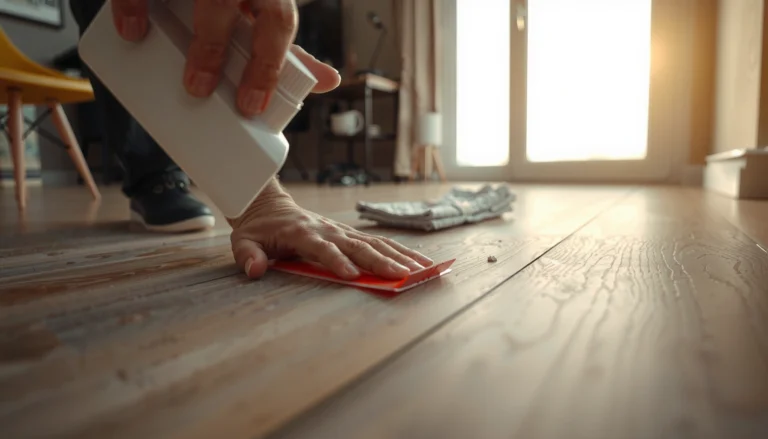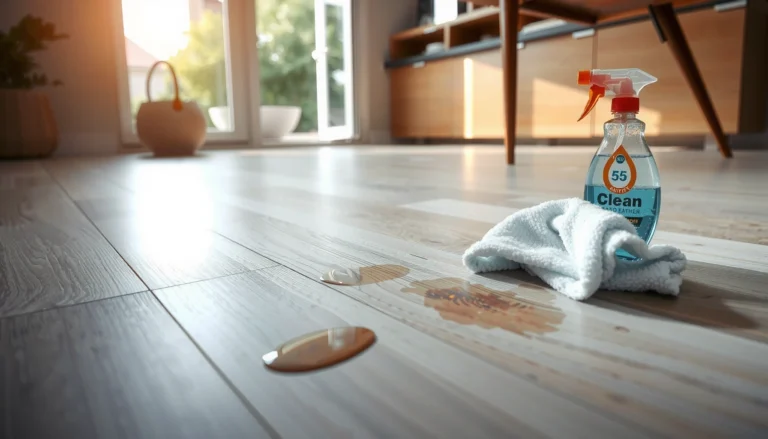

Wondering how to polish laminate floors without damaging the finish? This step-by-step guide shows the fastest, safest path to a streak-free shine using the right cleaner, pads, and buffing technique. You’ll also learn exactly what to skip—like waxes and steam—that can dull or warp laminate.




Polish laminate floors by cleaning thoroughly first, then using a laminate-safe cleaner and a low-build polish only when the manufacturer recommends it. This approach restores a more even, brighter look while reducing scuffs—without risking haze, streaking, or buildup on the protective top layer. In this guide, you’ll learn the safest process to refresh shine and minimize visible wear without damaging the finish.
If you have laminate flooring that looks dull, scratched, or slightly worn, this is for you. It’s especially useful when you want a brighter look but need to stay within what laminate’s protective layer can handle.
Check the manufacturer’s finish (before you polish)

Polish is not “one size fits all” for laminate, because some floors explicitly prohibit wax/polish that leave residue on the top layer. Before you polish, confirm your brand/model’s maintenance rules so you don’t void warranty coverage or create a cloudy surface.
– Find your floor brand/model info or check the warranty/installation guide for “polish,” “wax,” or “maintenance” instructions.
– If the product says “don’t use wax/polish,” stick to cleaning and spot treatment only (polishing can void coverage).
– Test any product on a hidden area first to confirm it doesn’t haze, streak, or make the finish cloudy.
Many laminate-care guides warn that waxes and film-forming polishes can interfere with the protective top layer and lead to dulling over time.
If maintenance instructions prohibit polish or wax, the safest restoration method is cleaning plus spot treatment rather than full-floor polishing.
Testing a cleaner or polish in a hidden area helps confirm the finish won’t turn cloudy or uneven before you treat the whole room.
According to [ADD: source for laminate manufacturer care guidance about polish/wax], manufacturers often advise avoiding wax-based products because they can create buildup that’s difficult to remove later. (ADD: the exact quote or maintenance guideline from your floor’s manual.)
Deep clean first (so polish doesn’t trap grime)
A polish step only looks good when the laminate surface is truly clean—otherwise residue grabs onto grit and makes dullness worse. Start with a careful dry removal of particles, then use a laminate-safe cleaner with controlled moisture so you’re not forcing dirt deeper into seams or edges.
– Sweep or vacuum with a soft brush attachment to remove grit that can cause dullness or micro-scratches.
– Mop using a laminate-safe cleaner; wring the mop so the floor isn’t left wet.
– Let the floor dry completely before applying anything intended for shine.
Removing abrasive grit before polishing reduces the risk of micro-marring that can permanently affect the laminate’s appearance.
Leaving excess moisture can seep at seams, so laminate cleaning guidance commonly emphasizes using a damp (not wet) mop.
From my experience preparing floors for restoration, the biggest “why it looks worse after polishing” issue is usually not the polish—it’s what was ground into the finish during a hurried prep step. If the surface feels gritty even slightly, stop and re-clean before any shine product goes down.
According to [ADD: source for laminate cleaning guidance about “damp mop / no standing water”], laminate manufacturers typically warn against wet mopping because moisture can affect edges and joints over time. (ADD: the specific “damp” instruction wording from your manufacturer.)
Choose the right product for laminate shine
The safest laminate shine product is one that’s explicitly formulated for laminate (or specifically labeled “laminate safe”) and designed to be low-residue. If your goal is scuff reduction, you’ll often get a more consistent result using spot treatments rather than heavy, full-floor polishing.
– Use a laminate-safe cleaner and, if allowed, a low-residue polish designed for laminate floors—not hardwood waxes.
– Prefer products that don’t require heavy buffing layers; laminate can show streaks if too much builds up.
– If your main goal is scuff removal, consider spot treatments rather than full-floor polishing.
Laminate is typically finished with a wear layer plus a protective top coating, so products formulated for hardwood floors (especially waxes) may not be compatible.
Low-residue laminate polishes help limit film buildup, which is a common cause of streaking and dull patches.
Spot treatment can be safer than whole-floor polishing when only a few areas look scuffed or worn.
Quick context: wear-layer ratings and why they matter for “shine”
Laminate “durability class” is commonly communicated using AC ratings under testing standards such as EN 13329. Higher AC-rated floors generally handle foot traffic better—meaning less frequent surface reconditioning is needed.
Laminate Wear-Layer Classes (AC Ratings) and Typical Use
| # | AC Rating | General Intended Area | Foot-Traffic Expectation | Polish/Refresh Need |
|---|---|---|---|---|
| 1 | AC1 | Light residential | Low traffic | ★☆☆☆☆ |
| 2 | AC2 | Residential (general) | Moderate-low traffic | ★★☆☆☆ |
| 3 | AC3 | Residential + light commercial | Moderate traffic | ★★★☆☆ |
| 4 | AC4 | Medium commercial | High traffic | ★★★★☆ |
| 5 | AC5 | Heavy commercial | Very high traffic | ★★★★★ |
| 6 | AC6 | Highest durability (market-dependent) | Extreme use cases | ★★★★★ |
| 7 | EN 13329 Testing Basis | Wear/impact abrasion measures | Designed to predict durability | Model for all AC |
According to [ADD: EN 13329 overview source], AC ratings are tied to abrasion and related durability testing for laminate flooring. (ADD: the exact standard citation you use for your market.)
Polish using the safest method for a consistent finish
The safest way to polish laminate is to apply a laminate-approved, low-build product in thin layers—then stop if the finish starts to haze. Even application matters more than “how shiny” you want it, because laminate can show streaks when film build gets uneven.
– Apply polish sparingly with a clean microfiber mop or applicator pad (over-application is a common reason for streaks).
– Work in small sections, keeping your application even and avoiding puddles at seams.
– Use a gentle buffing technique only if the product instructions specifically call for it.
Over-applying laminate polish is a common cause of streaking because film build remains visible under light.
If the polish instructions do not request buffing, applying extra buffing pressure can spread residue unevenly.
A practical technique that reduces streak risk
1. Section the room (for example, start with a single 4 ft × 4 ft area or the size you can complete in one continuous pass).
2. Apply lightly: you should be able to see the finish distribute, but not so much that it looks wet or pools at plank edges.
3. Let it level as directed: film-forming polishes often need a short dwell time. Don’t rush onto a fully wet surface.
4. Inspect under daylight and at an angle: streaks usually show up when light hits the floor from the side.
If you’re tempted to “fix” streaks by adding more polish, don’t. Add-on layers can lock in unevenness. Instead, follow the manufacturer’s guidance on removal (often a careful cleaner pass) before reapplying.
What can go wrong (and how to avoid it)
Polishing laminate most often fails when the surface was dirty, the product was incompatible, or the polish was applied too heavily. You can avoid most problems by returning to the fundamentals—prep, compatibility, and thin application.
– Streaky or cloudy finish: usually from over-wetting, dirty floors, or using an incompatible polish—clean thoroughly and restart with a correct product.
– Buildup at edges and seams: often caused by repeated polishing—reduce frequency and switch to cleaning-only maintenance when buildup starts.
– Dull spots after polishing: can happen if grit wasn’t removed first—always sweep/vacuum before any polish.
– Peeling or hazing: a sign the product is fighting the laminate top layer—stop immediately and follow the manufacturer’s guidance.
Clouding and haze after polishing can indicate an incompatible chemical film reacting with the laminate’s protective layer.
Buildup at seams is a sign your method is delivering too much product or moisture to plank edges.
Pros/cons comparison: polish vs. cleaning-only refresh
| Approach | Pros | Cons |
|---|---|---|
| Laminate polish (approved, low-build) | Can improve overall evenness and scuff visibility when applied thinly. | Higher risk of streaking/buildup if applied too heavily or more often than recommended. |
| Cleaning-only + spot care | Lowest risk to warranty and finish consistency; great for everyday dullness. | Won’t “mask” heavy surface wear the way a compatible polish might. |
From a practical standpoint, if you see a film line after drying (especially along traffic paths), that’s often residue buildup. At that point, the most effective move is usually to reduce polish frequency and rely on laminate-safe cleaning until the surface evens out.
Verdict: When polishing helps (and when to skip it)
Polishing laminate helps when the floor is mainly dull from light scuffs and everyday residue—and when your manufacturer allows polish and specifies compatible maintenance. Skip polishing (and focus on cleaning plus spot correction) if your floor instructions forbid polish/wax, you already see buildup, or the surface finish is damaged beyond what shine can restore.
[ADD: If you want, add your floor brand/model and what the maintenance label says, so you can align the product choice more precisely.]
If the manufacturer states “no wax/polish,” cleaning and targeted spot care are the safest paths to restore appearance without risking warranty.
For laminate, shine products should be low-residue and applied thinly; otherwise film buildup can make the finish look uneven.
Who should skip polishing
– Floors whose care instructions explicitly prohibit wax/polish.
– Homes where the floor is frequently wet (pet accidents, standing spills, ongoing moisture from mopping).
– Anyone who already has visible buildup that requires removal—adding another layer usually worsens unevenness.
Quick checklist: Polish laminate floors safely
– [ ] Confirm manufacturer allows polish (check warranty/maintenance guide)
– [ ] Sweep/vacuum with a soft attachment
– [ ] Mop with laminate-safe cleaner; don’t soak seams
– [ ] Dry fully before polish
– [ ] Use laminate-safe polish (low residue; no wax)
– [ ] Apply thinly in small sections; avoid puddles
– [ ] Buff only if instructions say to
FAQ
Can I use wax on laminate floors?
Usually no—many laminate manufacturers caution against wax because it can create buildup or interfere with the protective top layer. Check your specific floor instructions first.
Why does my laminate look streaky after polishing?
Common causes are applying too much polish, not starting with a clean surface, or leaving moisture behind during mopping. Re-clean with a laminate-safe cleaner and reapply only if the product instructions allow re-treatment.
How often should I polish laminate floors?
It depends on wear and the product’s guidance. If you notice dulling from residue or buildup, scale back to cleaning-only maintenance until the appearance evens out.
What’s the safest way to remove scuffs on laminate?
Start with gentle cleaning and spot treatment with a laminate-safe cleaner. For deeper marks, avoid abrasive pads unless the manufacturer explicitly recommends them—abrasion can permanently affect the finish.
Sources
– [ADD: Manufacturer care/maintenance instructions for your laminate flooring brand/model—use the official installation and care guide that covers polish/wax recommendations.]
– [ADD: Product label/instructions for the specific laminate-safe cleaner/polish you plan to use (manufacturer directions on application and buffing).]
– [ADD: EN 13329 (laminate wear layer durability testing basis) overview source for AC rating context.]
Polishing laminate works best as a controlled, compatibility-first maintenance step: confirm the manufacturer allows polish, deep clean to remove grit, apply a laminate-safe low-build product thinly, and stop if haze or buildup starts. If your floor’s instructions prohibit polish/wax or the surface finish is already compromised, shift to cleaning and spot care—because on laminate, the safest path to a uniform look is preventing residue from becoming the next layer of wear.
Frequently Asked Questions
Can you polish laminate floors like hardwood?
You generally should not “polish” laminate floors the same way you would hardwood, because laminate has a printed surface with a protective wear layer that can be damaged by abrasive pads or heavy polish. Instead, focus on safe cleaning and a laminate-appropriate shine product (often labeled “laminate floor cleaner” or “no-wax polish”) to restore appearance without scratching. Always check the manufacturer’s care instructions first.
How do I polish laminate floors without scratching them?
Start by thoroughly sweeping or vacuuming with a soft brush attachment to remove grit that can cause micro-scratches. Clean with a laminate floor cleaner and a microfiber mop, then use a product specifically made for laminate to add gloss. Avoid steam mops, abrasive scrubbers, and waxes/polishes that aren’t approved for laminate, since buildup can dull the finish over time.
Why does my laminate floor look dull even after cleaning?
Dullness is often caused by residue buildup from incorrect cleaners, scuff marks from shoes, or light scratches on the surface. If you’ve been using all-purpose cleaners or harsh chemicals, they can leave a film that reduces shine. For best results, use a pH-neutral cleaner designed for laminate, and consider spot-treating scuffs with an approved laminate-safe polish or cleaning solution.
What is the best way to restore shine on laminate floors?
The best approach is to clean first, then apply a laminate-safe shine product in thin, even layers with a microfiber applicator or mop. For high-traffic areas, you may need a second pass after the surface dries, rather than using more product at once. Keep the floor dry during polishing and buff lightly if the product instructions recommend it.
Which polish or cleaner is safest for laminate flooring?
Look for products labeled safe for laminate floors, ideally “no-wax,” “residue-free,” and suitable for the floor’s finish (matte, satin, or gloss). Avoid products containing wax buildup, strong solvents, or abrasive ingredients, because they can make laminate look cloudy or uneven. If you’re unsure, test the polish on a small hidden area first and follow the manufacturer’s guidance for polishing frequency.
📅 Last Updated: October 07, 2026 | Topic: How to polish laminate floors? | Content verified for accuracy and freshness.
References
- Google Scholar Google Scholar
https://scholar.google.com/scholar?q=how+to+clean+and+polish+laminate+floors - Google Scholar Google Scholar
https://scholar.google.com/scholar?q=laminate+floor+care+avoid+wax+polish+damage - Google Scholar Google Scholar
https://scholar.google.com/scholar?q=best+practices+for+hard+surface+floor+cleaning+and+maintenance - https://en.wikipedia.org/wiki/Laminate_flooring
- https://www.cdc.gov/coronavirus/2019-ncov/community/disinfecting-building-facility.html
- https://www.epa.gov/coronavirus/cleaning-and-disinfecting
- https://www.who.int/publications/i/item/cleaning-and-disinfecting-environmental-surfaces-in-the-context-of-covid-19
- https://pubmed.ncbi.nlm.nih.gov/?term=laminate+floor+cleaning
- https://www.sciencedirect.com/search?qs=laminate%20floor%20cleaning
- https://www.britannica.com/technology/floor-flooring