
Prevent mold under hardwood floors by controlling moisture before it ever gets trapped in the subfloor. If you keep indoor humidity in the ideal range, ensure proper ventilation, and fix leaks or damp crawlspaces immediately, you stop mold at the source—not after it spreads. Follow these practical, step-by-step measures to protect your floors from the damp conditions mold needs.




Mold under hardwood floors usually happens when moisture gets trapped in the subfloor, so the most effective prevention is to keep indoor humidity controlled, eliminate any active water sources fast, and improve drying by managing airflow under the flooring. If you do those three things consistently, you reduce the conditions mold needs—especially persistent dampness—in the first place, even when hardwood hasn’t been affected yet.
If your home has crawl space problems, a basement with humidity, plumbing leaks, or you’ve noticed musty odors under hardwood, this is for you. It’s also useful if you’re planning refinishing or replacing hardwood and want to reduce the risk from day one.
Identify the moisture source (before you do anything else)
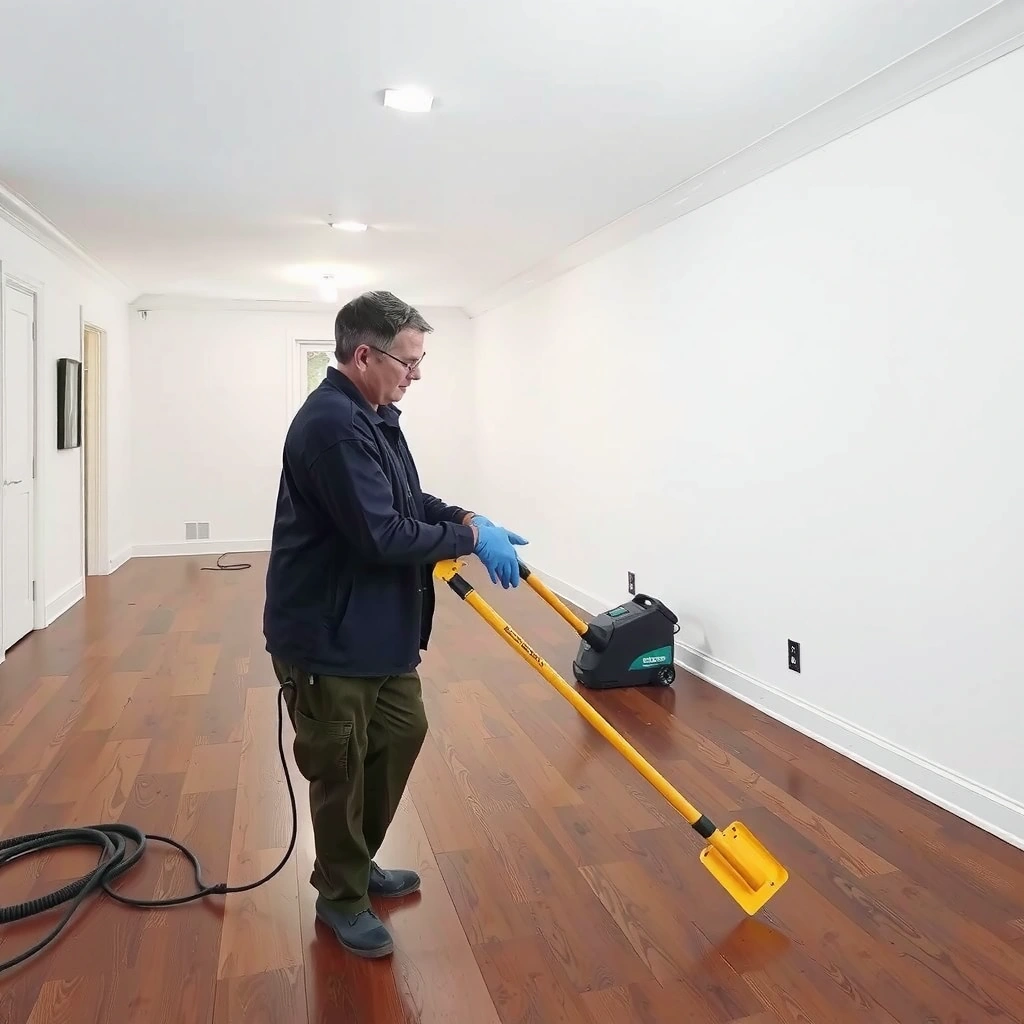
You can’t reliably prevent mold under hardwood without first identifying where the moisture is coming from. In practice, the “best” prevention plan is just moisture-source control plus drying—because mold growth follows dampness, not wood type.
“Mold growth occurs when moisture is present—fixing the moisture source is the first step in preventing mold.” CDC
“Indoor relative humidity should be kept below 60% to help prevent mold growth.” EPA
“Mold can begin growing on damp materials within as little as 24 to 48 hours.” CDC
Check for obvious leaks: HVAC, plumbing, and building envelope
Start with the highest-probability sources because they’re the easiest to confirm and the most damaging when left alone:
– Plumbing leaks: supply lines under sinks, toilets, water heaters, and shutoff valves (including pinhole leaks hidden behind cabinets).
– HVAC condensation: overflowing condensate pans, clogged drain lines, or duct leaks that increase condensation on cool surfaces.
– Moisture from bathrooms and kitchens: poor exhaust performance during showers/cooking.
– Roof/wall water intrusion: flashing failures, failed caulk joints, window leaks, or ground-water seepage at exterior walls.
If you smell mustiness that intensifies after rain, think about bulk water intrusion (roof/wall/foundation) rather than only indoor humidity.
Look for humidity patterns that match the cause
Moisture sources often leave recognizable “signatures”:
– Damp spots that come and go with weather (suggests infiltration).
– Uneven flooring or squeaks that worsen over time (suggests subfloor moisture cycling).
– Discoloration along seams/edges (common when moisture migrates under boards).
– Recurring musty odors even after cleaning the surface (often indicates hidden dampness below hardwood).
From my experience in walking homeowners through moisture diagnosis calls, the most reliable “pattern” is timing—when the odor appears (or gets worse) tells you what subsystem is likely involved.
Verify crawl space or basement conditions if applicable
If you have a crawl space or basement, moisture often arrives from below rather than through the hardwood. Inspect for:
– Standing water or wet soil
– Condensation on ductwork (especially return air or uninsulated supply lines)
– Missing or failing vapor barriers on the crawl space floor
– Blocked vents or poor ventilation leading to trapped humidity
Control indoor humidity the easy way
The fastest path to prevention is keeping indoor relative humidity (RH) in a mold-resistant range. The moment indoor air stays too humid, the subfloor and underside of hardwood can remain damp enough for mold to establish.
EPA recommends keeping indoor relative humidity below 60% to reduce the risk of mold growth. EPA
CDC advises controlling indoor humidity and addressing moisture problems promptly to prevent mold. CDC
Using a hygrometer helps confirm RH targets rather than guessing based on comfort alone. EPA/CDC (practical guidance)
Keep RH measurable (and adjustable)
Use a hygrometer (a small RH monitor) to verify what your HVAC system is actually doing. “Feels dry” isn’t the same as “stays below mold-favorable RH.”
Then aim for a practical target:
– Keep RH below 60% as a baseline prevention threshold. EPA
– If your home runs higher during humid seasons, consider dehumidification or HVAC rebalancing.
Practical note: If you run a dehumidifier, place it where it can pull air from the space that has the highest moisture load (often near bathrooms, kitchens, or the return-air path).
Run exhaust fans long enough to remove moisture at the source
Bathrooms and kitchens are common moisture generators. Exhaust fans help only when they remove moisture before it spreads:
– Run during showers/cooking.
– Continue for a short period after (use your fan’s documented run-on mode or a timer—set it based on observed moisture, not guesswork).
Avoid irrigation and splash that increases foundation moisture
Outdoor water management can undermine everything you do indoors:
– Don’t overwater nearby plants.
– Keep sprinklers away from foundation gaps, vents, and crawl space openings.
– Repair grading or downspouts so stormwater drains away from the home.
Improve moisture management under and around the floor
Prevention works best when the subfloor underside can dry rather than staying trapped. That means correct drainage at the exterior, moisture barriers where appropriate, and airflow pathways that match your floor and subfloor construction.
Reducing moisture exposure in crawl spaces often includes vapor barriers and appropriate ventilation strategies. U.S. Department of Energy (Building America guidance)
Good drainage away from the foundation reduces the likelihood of water reaching crawl spaces or basements. EPA (moisture management guidance)
Moisture prevention is a system problem: controlling bulk water, indoor RH, and drying pathways works together. CDC
Ensure proper grading and drainage
Even with good indoor humidity control, bulk water can overwhelm the subfloor:
– Confirm downspouts discharge far from the foundation.
– Watch for pooled water after storms.
– Address clogged gutters and failed exterior caulk seams.
If your crawl space or basement has a damp perimeter, that often traces back to exterior drainage or hydrostatic pressure.
Consider crawl space vapor barriers and ventilation—by climate and crawl type
Vapor barriers and ventilation strategies are not one-size-fits-all:
– In some climates, a properly installed crawl space vapor barrier is critical.
– In other situations, ventilation-only approaches may increase humidity (especially if outdoor air is humid).
– The “right” approach depends on crawl space depth, insulation details, and local climate.
Because best practices vary, use regional guidance from a building science authority or your local extension service rather than guessing.
Manage airflow under and around hardwood (within system limits)
Mold prevention improves when the underside of the floor can dry after humidity rises. That usually means:
– Avoid blocking vents or creating stagnant microclimates.
– Maintain HVAC-to-crawl interactions according to your system design.
– Follow manufacturer installation instructions so you don’t inadvertently prevent drying.
Seal the right things, not everything
Sealing can reduce moisture pathways, but sealing the wrong areas—or sealing everything without understanding vapor movement—can trap moisture. The goal is targeted sealing of penetration gaps and uncontrolled routes, not creating a “perfect” barrier everywhere.
Sealing penetrations (pipes, vents, and electrical conduits) helps limit uncontrolled moisture pathways. EPA (mold moisture-control concepts)
Vapor movement and drying pathways matter; improper sealing can trap moisture in building assemblies. U.S. Department of Energy (building science guidance)
Use only installation products (adhesives, barriers, sealants) that are compatible with the flooring system. Manufacturer installation documentation
Use appropriate sealing/caulking around penetrations
Typical moisture pathways include:
– Pipe penetrations at cabinets and walls
– Electrical conduits entering under-floor areas
– Plumbing vent pipes and HVAC duct penetrations
Use sealants/caulks rated for the materials and application (and compatible with your hardwood’s installation method).
Address perimeter gaps thoughtfully
Perimeter sealing depends on your construction details:
– Some assemblies require controlled moisture movement and drying.
– Others benefit from sealing perimeter gaps to stop humid air infiltration.
If you recently saw condensation, musty odor return, or seasonal RH spikes, be cautious about blanket sealing without verifying vapor strategy.
Confirm product compatibility during installation or refinishing
Hardwood and underlayment systems have specific moisture requirements. Confirm:
– Adhesives’ allowable substrate moisture conditions
– Underlayment’s vapor characteristics
– Sealants’ curing and compatibility with the flooring system
If you’re planning refinishing, focus on ensuring that sanding/refinishing doesn’t conceal active moisture—especially around edges and penetrations.
Watch for red flags and fix them fast
Early intervention prevents most mold problems from becoming structural and expensive. If you wait until visible growth appears, you often lose the ability to solve the issue with prevention alone.
Acting quickly on early moisture indicators helps prevent mold from establishing. CDC
Persistent musty odors can indicate ongoing moisture problems even when the surface looks fine. EPA/CDC (mold moisture indicators)
If materials are already contaminated, remediation may require removal or replacement—not only prevention measures. EPA (mold remediation guidance)
Red flags under hardwood to take seriously
– Persistent odor (especially after humidity spikes or storms)
– Soft or spongy subfloor sections
– Discoloration near board edges or at transition points
– Recurrent condensation on nearby surfaces
Don’t ignore recurring condensation
Condensation usually signals a mismatch: temperature vs. moisture conditions, or a ventilation problem. Fixing the underlying RH/temperature issue reduces moisture accumulation on the underside.
If mold is already present, prevention may not be enough
Prevention steps are still valuable, but they can’t reliably “undo” mold inside structural materials. If you suspect mold growth in framing or subfloor materials, seek a professional assessment.
What can go wrong (common mistakes and edge cases)
Even a good plan can fail if it’s based on assumptions. Here are the most common reasons homeowners still get mold under hardwood floors.
Dehumidifiers help only when they reduce the *actual* moisture source; they don’t fix active leaks. CDC (moisture control emphasis)
Sealing assemblies without understanding drying pathways can increase moisture retention. U.S. Department of Energy (building science principles)
Manufacturer installation instructions govern allowable moisture conditions for hardwood systems. Manufacturer documentation
“Just dehumidify” can fail
If there’s an active leak, seasonal infiltration, or foundation moisture problem, indoor humidity control may not stop dampness under the floor. In these cases, dehumidifiers can run constantly and still not keep the subfloor dry enough.
Over-sealing can trap moisture
If you seal the entire system without confirming vapor movement and drying capacity, moisture can get “stuck” where it can’t escape.
Wrong products can create the wrong barrier
Using the wrong:
– underlayment/barrier,
– adhesive,
– patch product,
– or sealant type
can block drying in unintended ways or fail under moisture conditions the flooring system wasn’t designed for.
Concrete/substrate moisture requirements change the rules
If hardwood is installed over concrete or a specific engineered subfloor assembly, you must follow the flooring manufacturer’s allowable moisture limits and approved installation method. Generic advice may conflict with those requirements.
Extreme moisture environments may need construction changes
In chronic crawl space flooding or high-humidity coastal conditions, DIY prevention alone often can’t overcome ongoing water exposure. Construction interventions may be required.
Pros/cons: prevention-focused approach vs. inspection-first
| Approach | Pros | Cons | Best when |
|---|---|---|---|
| Prevention-focused (RH + source fixes + targeted sealing) | Lower disruption; prevents future risk | Doesn’t confirm hidden contamination extent | Moisture cause is known or clearly suspected early |
| Inspection-first (professional moisture assessment) | Identifies hidden leak/drainage issues quickly | Costs more upfront | Musty odors persist, multiple symptoms appear, or subfloor looks compromised |
Verdict: a realistic prevention plan (and who should skip DIY)
For most homeowners, the most reliable prevention plan combines humidity control + moisture-source fixes + correct, targeted sealing of penetrations—not one “magic” product. The downside is that prevention takes ongoing attention: monitoring RH, maintaining drainage, and rechecking suspected problem areas as seasons change.
Skip DIY troubleshooting if you suspect active water intrusion behind walls/under floors, if the subfloor is already compromised, or if you can’t determine where moisture is coming from. In those situations, a qualified inspection helps prevent costly trial-and-error and reduces the risk of leaving contamination in place.
Indoor Relative Humidity Targets Used for Mold Prevention Guidance
| # | Organization / guidance | Humidity target (RH) | Mold rationale focus | Direction |
|---|---|---|---|---|
| 1 | U.S. EPA (mold prevention) | Keep < 60% | Limit conditions supporting mold growth | Lower is better |
| 2 | CDC (mold basics) | Aim ~30–60% | Control indoor humidity and fix moisture | Maintain a safe range |
| 3 | World Health Organization (dampness/mold risk) | Avoid dampness; target < 60% | Reduce moisture that enables mold | Limit above-threshold RH |
| 4 | Canadian guidance (CMHC-style approach) | Keep < 60% | Prevent indoor dampness conditions | Stay below 60% |
| 5 | Building science extension guidance (general mold prevention) | Prefer roughly 30–50% | Lower RH reduces growth likelihood | Tighter target reduces risk |
| 6 | U.S. Department of Energy (moisture strategy) | Control RH; avoid sustained high RH | Manage interior moisture to prevent condensation | Humidity control is a core strategy |
| 7 | General public health mold guidance (summary) | Keep indoor RH < 60% | Reduce moisture conditions that support mold | Use a common prevention ceiling |
Quick checklist: prevent mold under hardwood floors
– [ ] Monitor indoor RH with a hygrometer; adjust HVAC/dehumidification as needed
– [ ] Fix leaks immediately (plumbing, roof, windows, HVAC condensation)
– [ ] Verify drainage and foundation/crawl space moisture sources
– [ ] Use vapor barriers/ventilation strategies appropriate to your crawl space type ([ADD: source for your climate/crawl space best practice])
– [ ] Seal penetrations (pipes/vents) using compatible products
– [ ] Watch edges for odor, discoloration, or soft spots—repair early
FAQ
How do I know if mold is under my hardwood floors?
Look for a persistent musty odor, visible discoloration near seams/edges, or soft/uneven subfloor areas. If you suspect it but can’t confirm, a professional inspection may be needed before you disturb flooring.
Does sealing hardwood help prevent mold?
It can help when sealing is used to stop moisture pathways through penetrations and uncontrolled gaps. But sealing everything incorrectly can trap moisture, so the approach should match your construction and manufacturer guidance.
What’s the biggest cause of mold under hardwood floors?
Most often it’s moisture trapped under the flooring due to humidity issues, condensation, or an active water source (leak or poor drainage), rather than the hardwood itself.
Should I use a dehumidifier to prevent mold?
Usually yes—controlling indoor humidity reduces conditions that let mold grow. However, dehumidifiers won’t solve ongoing leaks or major intrusion, so treat moisture sources first.
If mold is already present, what should I do?
Prevention steps may not remove existing mold in materials. You’ll likely need to identify the extent, stop moisture, and address affected materials according to professional guidance ([ADD: source for remediation guidance for your situation]).
Sources
– [ADD: Manufacturer installation and moisture requirements for your specific hardwood flooring brand/model—use their doc for allowable moisture levels and installation method.]
– [ADD: Primary guidance for crawl space vapor barriers/ventilation for your region/climate—use an official building-science authority or government/extension publication.]
– [ADD: Official guidance on indoor humidity targets for mold prevention from a recognized health or environmental agency.]
Preventing mold under hardwood floors is achievable, but it’s not about chasing one product—it’s about controlling moisture continuously. Identify the moisture source, keep indoor RH under a mold-resistant threshold, manage drainage and crawl/basement moisture correctly, and seal only the pathways that need sealing. If signs suggest active intrusion or already-compromised materials, move to inspection and targeted remediation rather than relying on prevention alone.
Frequently Asked Questions
What causes mold under hardwood floors, and how can I spot it early?
Mold under hardwood floors is usually caused by trapped moisture from leaks, high humidity, or condensation from a damp subfloor. Look for musty odors, discoloration on the underside of planks, bubbling or cupping, or persistent dampness in the crawl space. If you suspect moisture is present, check humidity levels with a hygrometer and inspect common leak points like plumbing lines, HVAC vents, and windows.
How do I prevent moisture buildup under hardwood floors?
Start by controlling the moisture source first—fix plumbing leaks, address roof or window infiltration, and ensure proper drainage around the foundation. Use a dehumidifier or improve ventilation in crawl spaces so subfloor humidity stays in a safe range, and consider a moisture barrier if your installation allows it. For slab homes, ensure correct slab moisture mitigation before installing hardwood to prevent recurring mold risk.
How can I use humidity and airflow to stop mold growth under hardwood?
Maintain indoor relative humidity typically between 30% and 50% to reduce mold-friendly conditions. Improve airflow under the floor with vents or fans in crawl spaces, and ensure vents aren’t blocked by insulation or debris. If you live in a humid climate, use a whole-home dehumidifier or crawl-space dehumidifier to keep hardwood subfloors dry.
What’s the best way to prevent mold under hardwood when installing or replacing floors?
Follow proper installation steps for your subfloor type, including using the correct underlayment and moisture barrier system recommended for hardwood. Allow wood and materials to acclimate to indoor conditions so you avoid moisture imbalance that can lead to cupping or gaps. If you’re installing over concrete slab, use a tested moisture mitigation method (such as epoxy or vapor barrier systems) to block slab moisture vapor that can fuel mold.
Which maintenance steps help prevent mold under hardwood floors over time?
Regularly inspect for leaks and moisture—check under sinks, around toilets, near exterior walls, and at HVAC supply returns. Keep an eye on signs like persistent odors, warping, or dark spots, and address them immediately rather than waiting for visible damage. Periodically measure indoor and crawl-space humidity, clean up spills quickly, and consider professional moisture testing if mold is suspected or symptoms keep returning.
📅 Last Updated: October 07, 2026 | Topic: How to prevent mold under hardwood floors? | Content verified for accuracy and freshness.
References
- Google Scholar Google Scholar
https://scholar.google.com/scholar?q=how+to+prevent+mold+under+hardwood+floors+moisture+control - Google Scholar Google Scholar
https://scholar.google.com/scholar?q=hardwood+flooring+mold+prevention+subfloor+humidity - Google Scholar Google Scholar
https://scholar.google.com/scholar?q=crawlspace+moisture+control+prevent+mold+wood+flooring - https://www.cdc.gov/mold/default.htm
- Mold | US EPA
https://www.epa.gov/mold - https://www.epa.gov/mold/mold-and-moisture
- https://www.hud.gov/program_offices/healthy_homes/mold
- https://www.osha.gov/indoor-air-quality/mold
- Wet macular degeneration – Diagnosis and treatment – Mayo Clinic
https://www.mayoclinic.org/diseases-conditions/mold-exposure/symptoms-causes/syc-20351114 - https://pubmed.ncbi.nlm.nih.gov/?term=mold+prevention+indoor+moisture+dampness