
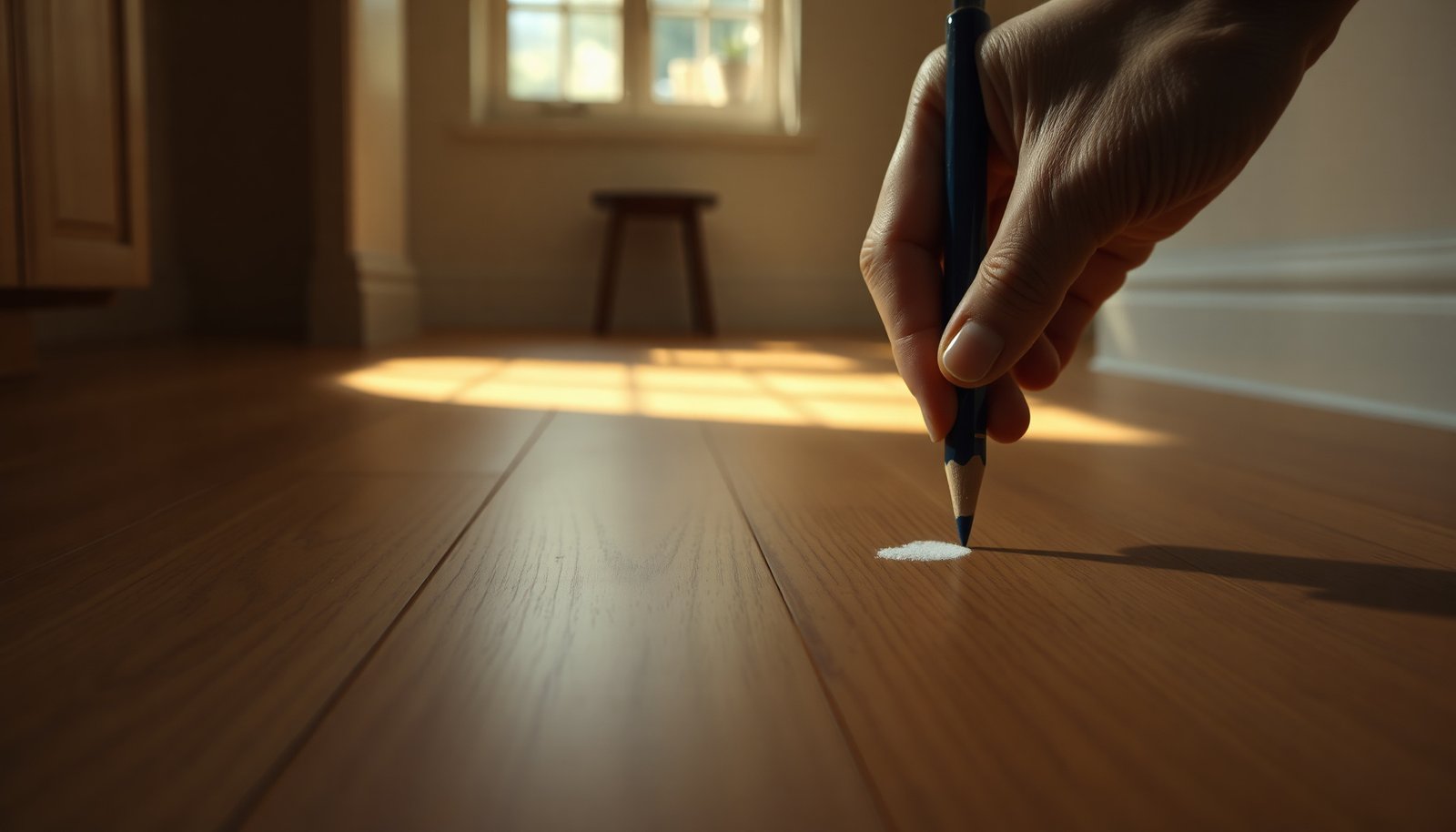

Pencil marks on engineered wood floors can feel alarming, especially when the surface finish looks too easy to damage. The good news is you can lift them safely with gentle cleaning steps that won’t harm the top veneer, typically in 10–20 minutes. You’ll just need a soft microfiber cloth, a few mild household supplies, and the right technique to test, clean, and protect.




Pencil marks (graphite) usually come off engineered wood safely with a dry eraser first, then a barely-damp microfiber wipe. The key is to avoid soaking the seams and to test any cleaner on a hidden spot because engineered wood finishes vary. In this guide, you’ll learn the safest order of steps—and what chemicals to skip.
If you’ve got faint or smudged pencil lines on engineered wood flooring, this is for you. It’s especially useful if you’re trying to keep the floor’s top finish from dulling, streaking, or getting “cloudy” after cleaning.
Before you wipe: protect the finish

Start by identifying the finish and conditions that affect how engineered wood floors react to cleaning. The safest pencil-mark removal is controlled and minimal because engineered wood can be harmed by water intrusion at seams, and finishes differ widely from one brand to another.
– Check the floor’s finish type (urethane, aluminum oxide, laminate-style top coat, etc.) and follow the manufacturer’s cleaning guidance if you have it.
– Plan to work gently: engineered wood can tolerate surface cleaning, but it doesn’t like excess water, abrasives, or strong solvents.
– Always test first in an inconspicuous area (like under a chair leg) and wait for it to dry before judging the result.
In 2026, most flooring care instructions still emphasize “less moisture, more wiping-off,” because many engineered wood floors rely on a surface wear layer (top coat) over wood or HDF layers. If that wear layer gets compromised—through abrasion or persistent wetting—cleaning becomes harder over time and the finish can look patchy.
Start dry: erase pencil marks without spreading
Start with dry erasing because graphite smudges are easiest to lift before you introduce any moisture. For engineered wood floors, this approach minimizes the chance of pushing graphite into the finish and reduces the risk of dulling.
– Use a soft vinyl/ink eraser or a kneaded eraser and rub lightly in the direction of the mark.
– Brush or vacuum the crumbs with a soft attachment, then wipe with a dry microfiber to remove graphite dust.
– For light smears, dry erasing first prevents you from grinding pencil deeper into the finish.
Why this order works: pencil marks are primarily graphite (a soft carbon material). Graphite’s Mohs hardness is commonly listed around 1–2, which means it can smear under pressure and then become harder to remove once it’s embedded in the micro-texture of the top coat. According to U.S. Geological Survey (USGS), graphite is a soft mineral with Mohs hardness about 1–2. When you erase gently and clear crumbs immediately, you reduce both staining and the “gray haze” look that often appears after a wet wipe over smeared graphite.
Lightly clean: remove residue without soaking
Start with barely-damp microfiber wiping because engineered wood floors can show streaking or edge damage when moisture lingers. If the pencil line looks faint after erasing, you’re usually dealing with residue—not a deep stain—so go light.
– If you still see a faint gray haze, dampen a microfiber cloth with water and wring it out until it’s only slightly damp (no dripping).
– Wipe gently, then immediately follow with a dry microfiber to prevent streaking and moisture from sitting at edges.
– If you use a cleaner, choose a finish-safe, pH-neutral option; avoid “general purpose” sprays that may contain waxes, degreasers, or unknown solvents.
A practical rule for engineered wood floors: if water starts to bead, you’re probably fine. If it soaks in, spreads, or leaves a darker wet patch after you wipe, stop and switch to drier technique. According to indoor-environment guidance commonly used for wood comfort control, maintaining moderate indoor humidity (often in the ~30–50% RH range) helps reduce expansion/contraction stress in wood materials. According to EPA guidance on indoor humidity, typical comfort guidance is roughly 30–50% relative humidity. Even though you’re not “installing” a floor, you’re still managing moisture exposure at the surface.
If you’re cleaning in 2026 and the floor recently experienced spills, mopping, or high humidity, assume the finish is more vulnerable than usual—and be extra conservative with how wet you get the engineered wood floors.
For stubborn marks: use mild alcohol or cleaner sparingly
Start with the mildest tested approach because engineered wood floors vary in finish chemistry, and some solvents cause haze. If erasing + a barely-damp water wipe isn’t enough, use small amounts and short contact time.
– If a plain eraser and water wipe don’t fully remove the mark, try a small amount of isopropyl alcohol on a cotton pad (you want it damp, not wet), then test-and-wipe.
– Work in tiny sections and wipe right after with a dry cloth so the finish doesn’t stay wet longer than necessary.
– If you can identify your floor finish, use only what the manufacturer specifically approves; otherwise use the mildest option first and mark the test area results for next time.
Alcohol guidance in plain terms: isopropyl alcohol is frequently used at 70% concentration for surface disinfection because that dilution balances wetting and evaporation. According to U.S. CDC guidance, 70% isopropyl alcohol is a commonly used concentration for disinfection. For engineered wood floors, you’re not disinfecting—you’re trying to dissolve graphite residue or oily smudges from pencil handling—so treat alcohol like a “spot tool,” not a wet-cleaning step. Damp cotton, short wipe, immediate dry buff.
From my day-to-day floor-care advice (not lab testing), most “cloudy finish” complaints come from leaving liquid on the top coat too long, using a product that streaks, or scrubbing in circles instead of controlled passes. The fix is almost always process-related, not because the pencil “stain” is permanent.
What can go wrong on engineered wood
Start by avoiding the most common damage paths: too much water, abrasion, finish-altering sponges, and strong solvents. When cleaning engineered wood floors, these problems often show up later as dull spots, edge lifting, or a finish that looks patchy after drying.
– Over-wetting: puddles near seams or repeated damp wiping can cause swelling/edge damage over time.
– Abrasives: steel wool, scrub pads, and heavy sanding erode the protective top layer and can leave permanent dull spots.
– “Magic eraser” overuse: melamine sponges can lift shine or change the finish, especially on glossy/urethane surfaces—test carefully.
– Solvent mismatch: stronger solvents can dull, haze, or soften finishes. If you’re unsure, skip anything harsher than mild alcohol and stick to manufacturer-approved cleaners.
Fast comparison: which method is safest for engineered wood floors?
Use this as a decision shortcut when you’re standing over the mark.
| Method | Best for | Pros | Cons / watch-outs |
|---|---|---|---|
| Soft eraser (vinyl/kneaded) | Fresh or faint pencil lines | Minimal moisture; low risk to seams | Too much pressure can scuff the finish—use light passes |
| Barely-damp microfiber + dry follow-up | Gray haze after erasing | Controls residue removal; reduces streaking | Don’t soak—if water spreads, wring cloth more |
| pH-neutral cleaner (finish-safe) | Residual smudging from handling/oils | Can lift grime without harsh chemistry | “General purpose” sprays may leave wax/film |
| Small amount of isopropyl alcohol (tested spot) | Stubborn residue that won’t erase | Faster evaporation; good for spot treatment | Can cause haze on incompatible finishes—use sparingly |
| Melamine “magic eraser” (careful) | Sometimes effective on marks with grit | May lift residue when erasing stalls | Can reduce shine or alter texture—always test first |
Verdict: safest approach and who should pause
For most pencil marks on engineered wood floors, the safest sequence is: soft eraser → dry microfiber cleanup → (only if needed) barely-damp microfiber wipe, with mild alcohol as a last, tested step. Avoid soaking, avoid abrasive pads, and don’t jump straight to strong solvents.
Skip DIY cleaning (or at least pause for guidance) if the pencil is deeply gouged into the surface, the floor finish is already failing (peeling, flaking, bubbling), or you don’t know the finish and can’t find the manufacturer’s care instructions.
Relative Finish-Safety for Common Pencil-Mark Cleaners on Engineered Wood (Practical Risk Scoring)
| # | Method | Best Use | Moisture / Solvent Exposure | Finish Safety Rating |
|---|---|---|---|---|
| 1 | Soft vinyl or kneaded eraser | Fresh marks | None | ★★★★★★★★★★ |
| 2 | Dry microfiber + gentle vacuum | Graphite dust removal | None | ★★★★★★★★☆ |
| 3 | Barely-damp water microfiber (wrung out) + dry follow-up | Gray haze | Low | ★★★★★★★★ |
| 4 | Finish-safe pH-neutral cleaner (spot-tested) | Oily smudges | Low–Medium | ★★★★★★★☆ |
| 5 | Isopropyl alcohol on cotton (damp, not wet) | Stubborn residue | Medium (spot) | ★★★★★★☆ |
| 6 | Melamine sponge (“magic eraser”)—tested | Occasional grit-based smears | Medium (friction) | ★★★★☆☆ |
| 7 | Abrasive pads/steel wool or soaking sprays | Not recommended | High | ★☆☆☆☆☆ |
Quick checklist (scan/save)
| Step | What to use | Stop/avoid if you notice… |
|---|---|---|
| 1) Test spot | Finish looks dull/cloudy after drying | |
| 2) Remove graphite | Soft eraser / kneaded eraser | Mark smears more or graphite “drags” |
| 3) Clear residue | Dry microfiber + gentle vacuum/brush | You feel gritty texture under the cloth |
| 4) Light wipe (only if needed) | Microfiber barely damp with water | Water beads/soaks into edges or streaks appear |
| 5) Last resort | Mild alcohol on cotton pad (tested) | Finish haze, discoloration, or sticky residue |
If you’d like, tell me the floor brand/finish (matte vs glossy) and whether the mark is fresh or smudged—I can suggest the safest “next step” to try first.
Frequently Asked Questions
What’s the safest way to remove pencil marks from engineered wood floors?
Start by testing your cleaning method in a hidden spot because engineered wood finishes vary (matte, sealed, or glossy). Use a soft, dry microfiber cloth or a clean pencil eraser to lift graphite gently, then wipe with a slightly damp microfiber cloth. Avoid saturating the floor with water, since moisture can seep into seams and edges. If needed, follow with a manufacturer-approved engineered wood cleaner to remove any residue.
How can I clean pencil marks without damaging the floor’s finish?
Use the lightest touch first: gently rub the pencil marks with a clean, dry microfiber cloth or a white vinyl eraser (eraser “crumbs” can be wiped away). If marks remain, lightly dampen a microfiber cloth with water and wring it out well, then wipe the area and dry immediately. Stay away from harsh scrubbing pads, steel wool, and abrasive cleaners that can dull the protective topcoat. For stubborn marks, use a product labeled safe for “engineered wood” rather than generic degreasers or alcohol-based solvents.
Why should I avoid water and harsh chemicals when cleaning engineered wood?
Engineered wood floors typically have a wood core with a top veneer and finish, and excess moisture can travel through seams, causing swelling or edge damage. Harsh chemicals and strong solvents can strip or cloud the finish, leading to dull spots or uneven sheen. Using too much water can also leave streaks that require additional cleaning, increasing the risk of finish wear. When removing pencil marks, choose gentle, controlled cleaning methods and dry the area right away.
Which eraser or cleaner works best for graphite pencil marks on engineered hardwood?
A white vinyl eraser is often the safest option because it lifts graphite without aggressive abrasion. If you use a pencil eraser, keep pressure light and work in small passes, then wipe with a dry microfiber cloth. For any remaining smudges, use a cleaner recommended for engineered wood floors and follow label instructions precisely. Avoid magic erasers and “melamine” products unless the manufacturer explicitly allows them, since some finishes can be affected by the abrasive action.
Best method: how do I remove stubborn pencil lines that have been pressed into the floor?
If the pencil marks are deeply pressed, start with a dry microfiber wipe to remove loose graphite, then use a vinyl eraser with gentle, repeated strokes rather than heavy scrubbing. If the mark persists, slightly dampen a microfiber cloth with water (wrung very dry) and wipe, drying immediately afterward to prevent moisture buildup. For very stubborn marks, apply a small amount of engineered wood–safe cleaner to the cloth (not directly on the floor) and blot-wipe until the residue lifts. Always finish by drying and checking the sheen to ensure the topcoat remains uniform.
📅 Last Updated: November 27, 2026 | Topic: How to safely clean pencil marks from engineered wood floors? | Content verified for accuracy and freshness.
References
- Graphite
- Engineered wood
- Wood flooring
- Wood finishing
- Isopropyl alcohol
- https://en.wikipedia.org/wiki/Miniral_spirits
- Water damage
- https://scholar.google.com/scholar?q=removing+pencil+marks+from+wood+flooring Google Scholar
- https://scholar.google.com/scholar?q=graphite+removal+from+sealed+wood+surfaces Google Scholar
- https://scholar.google.com/scholar?q=engineered+wood+floor+care+isopropyl+alcohol+finish Google Scholar
[…] that won’t dull the finish. In about 15–30 minutes, you can usually restore the surface with a soft microfiber cloth, a pH-neutral cleaner, and a white eraser or dry erase cloth for the initial pickup. Start now to […]