
Want to remove odors from basement floors for good? The fastest, most reliable method is to find and fix the source of the smell—usually moisture or trapped organic grime—then deep-clean and dry the slab thoroughly. Follow proven steps like vacuuming debris, using an odor-neutralizing cleaner, and controlling humidity, and you’ll stop the odors from coming back. If you need a clear plan, this guide lays it out from first inspection to final odor control.




If your basement floor smells, the fastest fix is to stop the moisture first, then clean and deodorize based on the cause (mold/mildew, spills, or organic odors). Start by drying the area and scrubbing the surface with the right cleaner, then use an odor-absorber or neutralizer that targets the source so the smell doesn’t come back. In this guide, you’ll learn how to identify the likely source and choose the safest cleaning/deodorizing approach.
If the odor is worse after it rains, comes from corners/around drains, or you suspect dampness, the steps below will help you target the root problem. If you’re dealing with unknown chemicals, sewage contamination, or significant water intrusion, you’ll also see when to stop and call a professional.
Find the odor source (and why it’s lingering)
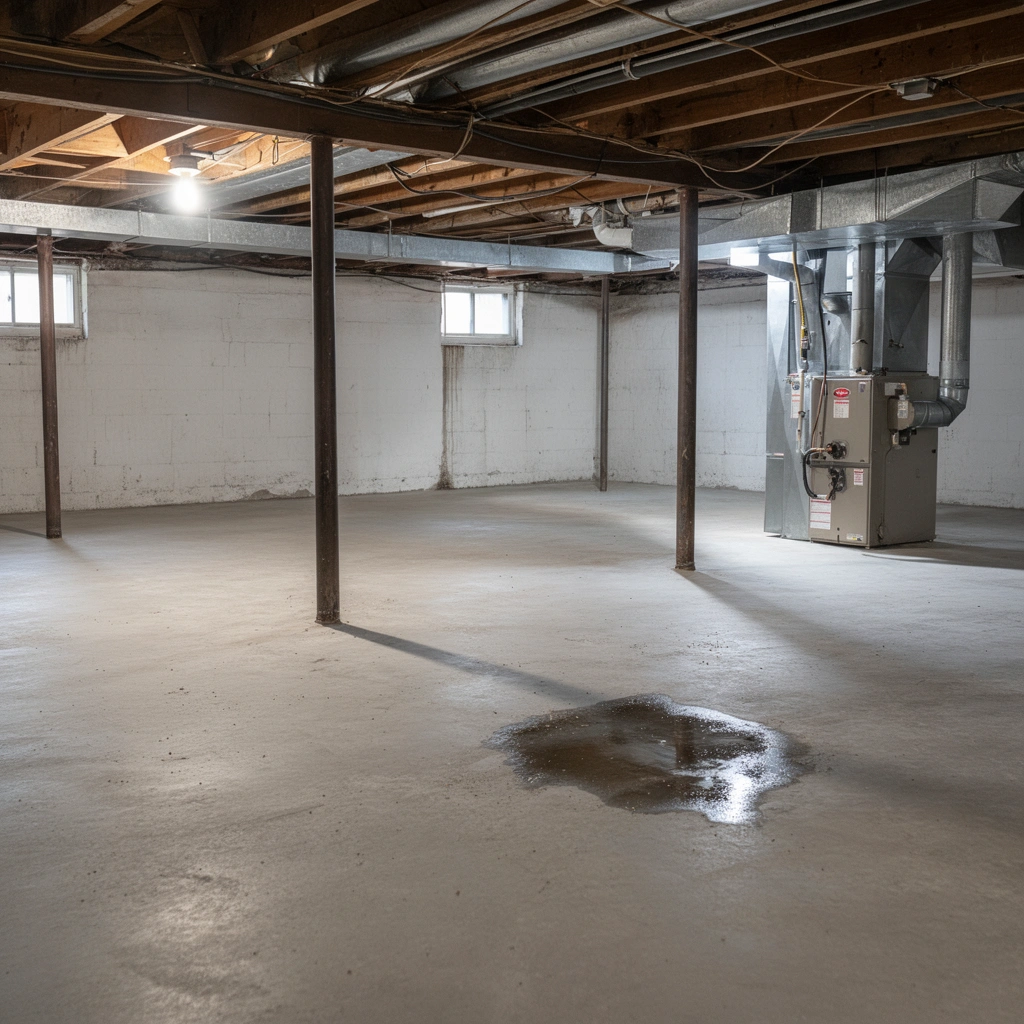
You remove basement floor odors faster when you identify whether the smell is coming from moisture-driven growth (mold/mildew), residues from spills (including pet accidents), or sewage. The odor “lingers” because many odor compounds either grow inside damp porous concrete or soak into pores, then re-aerate when humidity rises.
According to the U.S. EPA, mold can begin growing on damp materials within 24–48 hours, which is why odors often return quickly if moisture isn’t controlled. (EPA)
According to the CDC, visible mold or musty odors are key indicators that moisture is present and must be addressed during remediation. (CDC)
Odor compounds in porous concrete often off-gas again when relative humidity climbs, so drying and cleaning must work together rather than deodorizing alone.
– Check for moisture: damp concrete, condensation, efflorescence (white powder), or musty air near walls and corners. Efflorescence indicates water movement through masonry, which can carry dissolved organics and salts that later smell musty.
– Identify likely causes: mildew/mold (musty, earthy), spills/pets/food (localized, sometimes sweet/ammonia), or sewage (strong, harsh, persistent, sometimes accompanied by staining).
– Look for hidden pathways: cracks, sump pit residue, floor drain traps, and gaps where water travels. In many basements, the smell travels along the path of moisture—often from exterior grading or interior plumbing leaks—before it becomes obvious on the slab.
Most basements fit one of these odor “patterns”
If the smell is worst:
– In corners and along basewalls: think moisture through exterior walls, slab edges, or condensation on cold surfaces.
– Near a floor drain: think trap failure, dried/failed seal, residue in the plumbing, or intermittent sewer gas backflow.
– After rainfall or storms: think bulk water intrusion (even minor), rising dampness, or water that enters behind finishing materials.
Here’s what to do next: once you spot the pattern, you can choose cleaning chemistry and odor control that matches the source rather than guessing.
Common Basement Floor Odor Sources and the Best First Action
| # | Odor pattern (what you notice) | Most likely source | Best first action (before deodorizer) | Odor risk if skipped |
|---|---|---|---|---|
| 1 | Musty/earthy smell, especially near walls | Mold or mildew on damp surfaces | Dry area + clean with a mold/mildew-rated cleaner for hard surfaces | ★★★★★ |
| 2 | Strong mildew smell after high humidity | Humidity-driven surface growth | Lower relative humidity (dehumidify/ventilate) before deodorizing | ★★★★☆ |
| 3 | Localized ammonia-like or sour smell | Pet urine or organic residue | Use an enzymatic cleaner to break down odor-causing compounds, then rinse/wipe per label | ★★★★☆ |
| 4 | Sweet/rot-like smell from a past spill | Food/organic spill contamination | Clean first to remove residues; then neutralize odor with the right product type | ★★★☆☆ |
| 5 | Persistent harsh odor, sometimes with visible staining | Sewage contamination or sewer gas intrusion | Stop DIY if contamination is suspected; follow safety guidance and contact a qualified remediation professional | ★★★★★ |
| 6 | Chemical smell (solvent/gasoline-like) | Unknown chemical spill or fuel-related residue | Identify/contain source first; do not mix cleaners—use label/safety guidance or call experts | ★★★★☆ |
| 7 | General “basement” smell, no clear spot | Low-level moisture + porous absorption | Dry-out + whole-area cleaning plan; then deodorize only after the slab is clean | ★★★☆☆ |
Remove standing moisture and dry the floor
You eliminate many basement odors by removing moisture first, not by masking the smell. Once the slab and nearby materials dry, the odor compounds stop being re-released from inside pores and seams.
According to the U.S. EPA, controlling moisture is the key to preventing mold growth and must be part of any cleanup strategy. (EPA)
According to the CDC, drying water-damaged areas promptly is essential because damp conditions enable microbial growth. (CDC)
– Run dehumidification and improve ventilation to reduce relative humidity until the slab and surrounding materials dry out. As a practical target, many moisture-control programs recommend keeping relative humidity below ~60% to discourage mold growth; for exact targets, follow local guidance and manufacturer instructions.
– Clear water pathways: keep drains functional, address pooling, and avoid leaving wet mops or towels. Even small recurring puddling at slab edges can keep odor sources active.
– If you recently had a leak, clean and dry promptly—odors often “set” as organic material soaks deeper into porous concrete.
What “drying” really means on concrete
Concrete dries from the surface, but it also exchanges moisture with air and nearby materials (rim joists, wall cavities, and floor edges). If you only dry the top layer, the odor may return after the next humidity spike.
From my experience troubleshooting basement odor complaints, the most common failure point is stopping once the concrete looks dry—then the smell reappears within a day or two when indoor humidity rises again.
Clean and deodorize: choose the right method
You get the best results when you match the cleaner to the odor source and only deodorize after the contamination is removed. Cleaning reduces what deodorizer has to neutralize; deodorizing without cleaning often leaves residue that keeps feeding the smell.
EPA guidance emphasizes that cleaning (removing materials) is a critical step because odors and mold are often tied to contaminated surfaces—not just smell in the air. (EPA)
If you suspect mold or mildew, the CDC advises addressing moisture and cleaning properly rather than relying on odor masking. (CDC)
– For musty/mildew odors: scrub with a mold/mildew-rated cleaner formulated for hard, non-porous surfaces; work the cleaner into seams and cracks. Concrete is porous, so follow label instructions closely and rinse/wipe as directed.
– For organic odors (pets/food/spills): use an enzymatic cleaner designed to break down odor-causing compounds, then rinse/wipe as directed by the product label. Enzymes are formulated to target biological residues rather than just trapping smell.
– For general concrete odors: use a degreasing or general-purpose cleaner first, then follow with deodorizing/odor-neutralizing steps once the surface is clean. Degreasing is especially relevant for basement slabs that store workshop oils, laundry residues, or tracked-in grime.
Pros/cons: cleaning first vs. deodorizing first
| Approach | Pros | Cons |
|---|---|---|
| Clean → Dry → Deodorize | Targets the source (residue/moisture), reduces recurrence, works on porous slabs when steps are followed | Takes planning/time; may require repeat cleaning after full dry-out |
| Deodorize only | Quick odor reduction in the short term; less labor | Masks symptoms, not the underlying contamination; smell typically returns with humidity |
A quick safety anchor for bleach-based cleaning
If your plan involves disinfectants on non-porous, hard surfaces, follow CDC-style dilution guidance and never mix chemicals. For example, CDC household guidance commonly references 1 cup of bleach per 1 gallon of water (verify the product’s sodium hypochlorite concentration and follow the label) for certain disinfection uses on hard surfaces. (CDC)
For porous concrete, many products are not interchangeable—always follow the label and test in a discreet area first.
Treat porous concrete vs. sealed floors differently
You prevent repeat odors by tailoring your chemistry and expectations to whether the concrete is porous or sealed. Sealed/painted floors behave differently because they don’t absorb as readily, while porous slabs can hold odor compounds under the surface.
Moisture and odor control are linked: deodorizer effectiveness depends on whether moisture is still reaching the slab surface and pores.
EPA moisture-control principles apply differently depending on surface type—porous materials retain contamination longer than smooth, sealed surfaces. (EPA)
– Porous slabs: expect more absorption—use a cleaner appropriate for concrete, and consider repeating after drying to catch what migrated. If the odor source is organic residue, enzymatic cleaners generally outperform fragrance-only products.
– Sealed/painted floors: avoid overly harsh chemistry that can damage coatings; stick to label-approved products for the coating type. Some sealants can be dulled by strong degreasers or repeated harsh oxidizers.
– Dry-out matters: even the best deodorizer won’t stay effective if moisture keeps returning under or through the slab.
A note on “sealed” floors
Many basement “sealed” floors are actually lightly painted, densified, or have unknown coatings. If you can’t confirm the coating type, treat the surface as porous and use label-compatible cleaners at conservative strength.
What can go wrong (common mistakes and limits)
You can make odors worse by treating the symptom only, damaging surfaces, or handling contamination unsafely. Odor removal is usually successful when you control moisture, clean correctly, and avoid risky chemical combinations.
CDC and EPA emphasize that chemical mixing can create dangerous fumes; always follow labels and ventilation requirements. (CDC, EPA)
If you cannot identify the contamination or if sewage is involved, professional remediation may be the safer option than repeated DIY cleanup. (EPA)
– Deodorizing without cleaning: masks odors temporarily, but the source (mold, residue, moisture) remains. The next humidity cycle reactivates the smell.
– Skipping moisture control: the smell often returns after humidity rises. Even if the slab “looks fine,” relative humidity inside the room and within wall cavities can keep odor sources alive.
– Using the wrong chemical: mixing cleaners (especially bleach with acids/ammonia) can create dangerous fumes—follow label directions exactly. When in doubt, stop and switch to products that match the label use instructions for your scenario.
– Over-scrubbing or pressure-washing improperly: can spread contaminants into cracks or damage coatings. Pressure washing can force contaminated water deeper into porous concrete.
– If the smell suggests sewage, hazardous spills, or significant water damage, DIY cleaning may be unsafe—stop and get help. “Unsafe” looks like visible sewage, contaminated standing water, strong persistent sewer odors at drains, or signs you can’t contain (e.g., widespread staining, rising waterline, or unknown chemical odor/fumes).
Verdict / quick tip on the best approach for most basements
For most basement floor odor problems, the winning sequence is: dry the area, clean thoroughly (for the right type of odor), then deodorize with a product that neutralizes—not just covers—odors. Downsides: you may need more than one round if the slab is deeply contaminated or moisture keeps cycling; and some deodorizing products require time to work and may leave residue if you don’t follow directions. Skip DIY and consider professional remediation if you suspect sewage, suspect hidden mold growth behind walls, or can’t keep the area dry after cleaning.
Scan-friendly checklist
– [ ] Check moisture sources (leaks, condensation, drains, corners)
– [ ] Dry the slab and surrounding area (dehumidify/ventilate)
– [ ] Clean the surface based on the odor type (mildew vs organic)
– [ ] Use an odor-neutralizer that matches the cause
– [ ] Rinse/wipe only as directed by the label
– [ ] Re-check after drying—odors that return usually mean moisture is still present
FAQ
Will baking soda remove odors from basement floors?
It can help with mild, surface-level odors by absorbing some odor compounds, but it won’t fix the underlying moisture or contamination source. For persistent musty or organic smells, cleaning and moisture control usually matter more.
Do I need to seal the floor after removing odors?
Sometimes. If moisture is truly addressed and the odor source is cleaned, sealing may help prevent future absorption—especially on porous concrete. If dampness is still present, sealing can trap moisture and worsen problems.
Can I use bleach to remove basement floor odors?
Bleach may help with certain mildew situations, but it’s not a universal solution—especially for organic odors or porous contamination. Always follow the product label and avoid mixing chemicals.
What if the smell is strongest near a floor drain?
That often points to residue or a dried/failed trap issue. Clean the drain components as directed by the manufacturer’s instructions and make sure the plumbing trap isn’t letting odors rise.
How long should it take for odors to go away?
If the source is moisture-related, odors often improve as drying continues, but lingering smells may take days—especially on porous slabs. If the odor returns soon after humidity rises, the root cause isn’t fully resolved.
Sources
– U.S. Environmental Protection Agency (EPA) — Mold remediation and moisture control guidance, including the 24–48 hour mold growth window on damp materials.
– U.S. Centers for Disease Control and Prevention (CDC) — Guidance on cleaning/drying and health considerations related to dampness and mold.
– [ADD: manufacturer instructions/spec sheets for the specific cleaner/deodorizer you plan to use]
– [ADD: concrete cleaning product label directions (dilution, dwell time, and compatibility with coatings)]
If you want basement floors to stop smelling for good, don’t treat this as a “spray and hope” problem. Control moisture, clean to remove the source (mildew vs. organic residue), then neutralize odors appropriately—otherwise the smell will usually return when conditions change again.
Frequently Asked Questions
What’s the fastest way to remove odors from basement floors?
Start by identifying the source—most basement floor smells come from moisture, spills, or mold growing in concrete. Dry the area completely using fans and a dehumidifier, then clean the floor with a pH-neutral cleaner designed for concrete. If the smell persists, use an odor neutralizer (often enzyme-based for organic odors) rather than just masking with fragrance.
How do I remove musty basement floor odors caused by mold or mildew?
First, reduce humidity to below 50% and remove visible mold using a mold-safe cleaner according to label directions. Scrub the basement floor thoroughly, paying attention to cracks, expansion joints, and along baseboards where moisture collects. After cleaning, apply a mold- and odor-fighting treatment made for concrete and allow the floor to fully dry before sealing or finishing.
Why do my basement floors smell even after cleaning?
Persistent odors usually indicate trapped moisture, contaminants in concrete pores, or organic growth under the surface. Even if the surface looks clean, odors from sewage backups, pet accidents, or mold can remain embedded in the concrete and resurface when humidity rises. Consider testing for leaks, checking humidity levels, and using an odor eliminator formulated to penetrate concrete rather than a typical disinfectant.
Best way to remove urine or pet odors from basement concrete floors?
Blot up any wet spots and wash the area with a concrete-safe cleaner to remove residue, then use an enzyme cleaner specifically designed for urine and organic odors. Enzyme products work by breaking down odor-causing compounds instead of covering them up. Let the treated area dry completely and repeat if the smell returns, especially in cracks where urine can seep.
Which odor eliminator works best for basement floor odors—baking soda, charcoal, or enzyme cleaners?
Baking soda and activated charcoal can help absorb mild odors, especially when the humidity is under control, but they don’t remove deeper contamination. For sour, musty, or urine-like smells, enzyme cleaners are often the most effective because they target the source. For ongoing basement odors tied to moisture, pair any odor eliminator with dehumidification and moisture control, since continued dampness will bring odors back.
📅 Last Updated: October 11, 2026 | Topic: How to remove odors from basement floors? | Content verified for accuracy and freshness.
References
- Mold | US EPA
https://www.epa.gov/mold - https://www.epa.gov/indoor-air-quality-iaq/mold-indoor-air
- https://www.cdc.gov/mold/default.htm
- https://www.cdc.gov/disasters/floods/cleaning.htm
- https://www.who.int/news-room/fact-sheets/detail/dampness-and-mould
- https://www.hud.gov/program_offices/healthy_homes/mold
- Mold
https://en.wikipedia.org/wiki/Mold - https://pubmed.ncbi.nlm.nih.gov/?term=dampness+mold+remediation
- Google Scholar Google Scholar
https://scholar.google.com/scholar?q=basement+mold+odor+removal - Google Scholar Google Scholar
https://scholar.google.com/scholar?q=concrete+floor+odor+mold+cleaning+guidelines