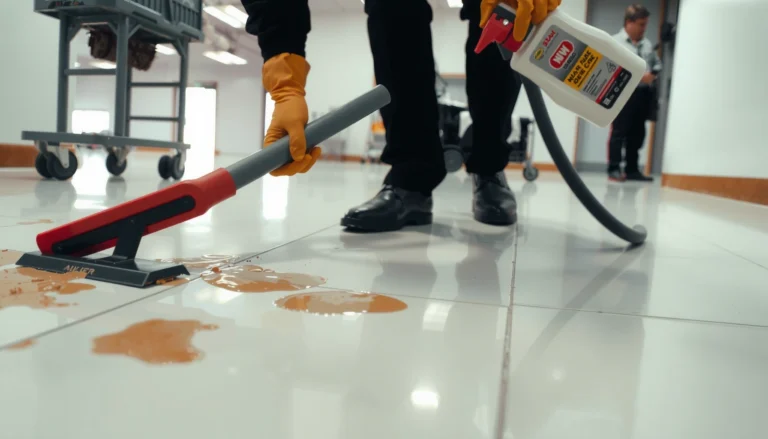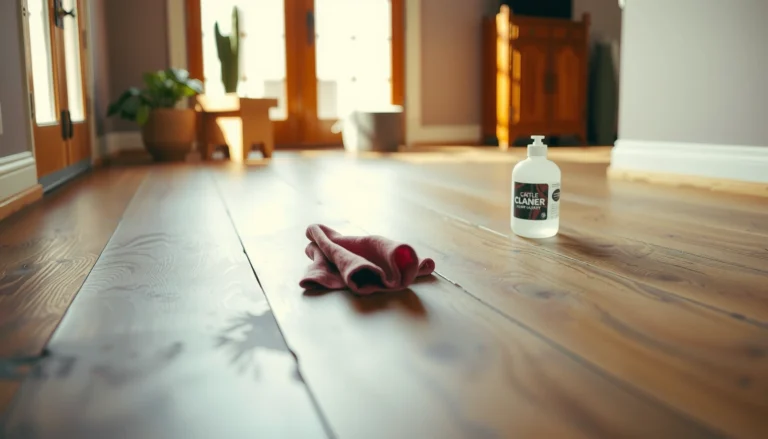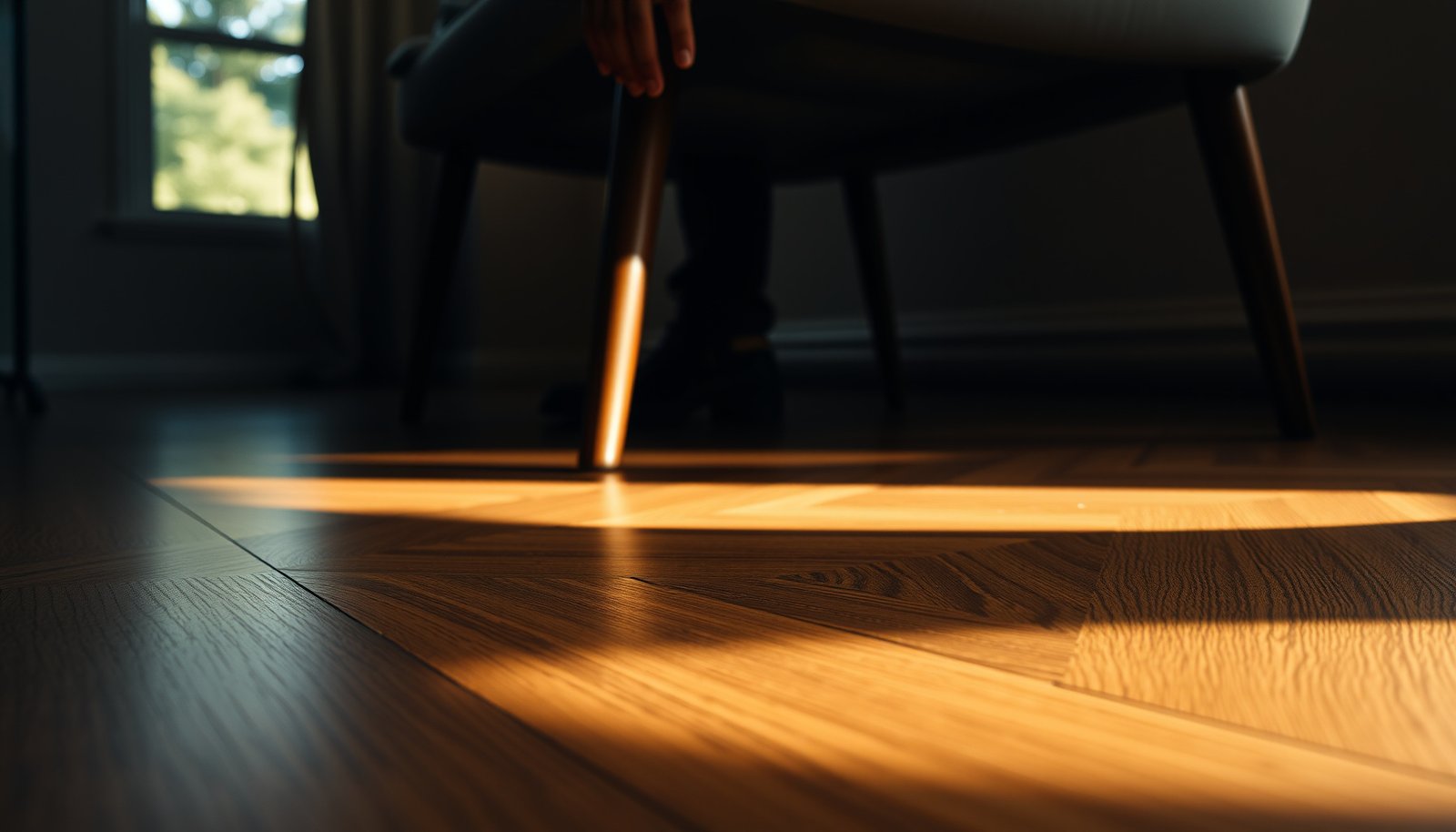

To protect chevron floors from scratches, stains, and everyday wear, use a proven routine: add a felt-protected rug program, use the right pH-balanced cleaner, and apply a compatible sealant or topcoat on schedule. This approach is the clear winner for keeping chevron’s sharp lines crisp while minimizing dulling and residue build-up. If your goal is long-term, high-appearance performance, follow these steps before damage becomes permanent.




Chevron floors stay looking good when you protect the finish from grit, moisture, and harsh cleaners. Use entry mats and felt pads to stop abrasion, clean with a finish-compatible pH-neutral cleaner, and manage humidity so the wood doesn’t expand and contract. In this guide, you’ll get a practical plan to reduce scratches, dulling, and damage in everyday use.
If your chevron floor is wood (parquet/herringbone) and it has a surface finish (polyurethane/varnish) or an oil/wax topcoat, the steps below apply—especially in high-traffic areas, near exterior doors, and anywhere spills are likely.
Protect the finish first (know what you’re sealing against)
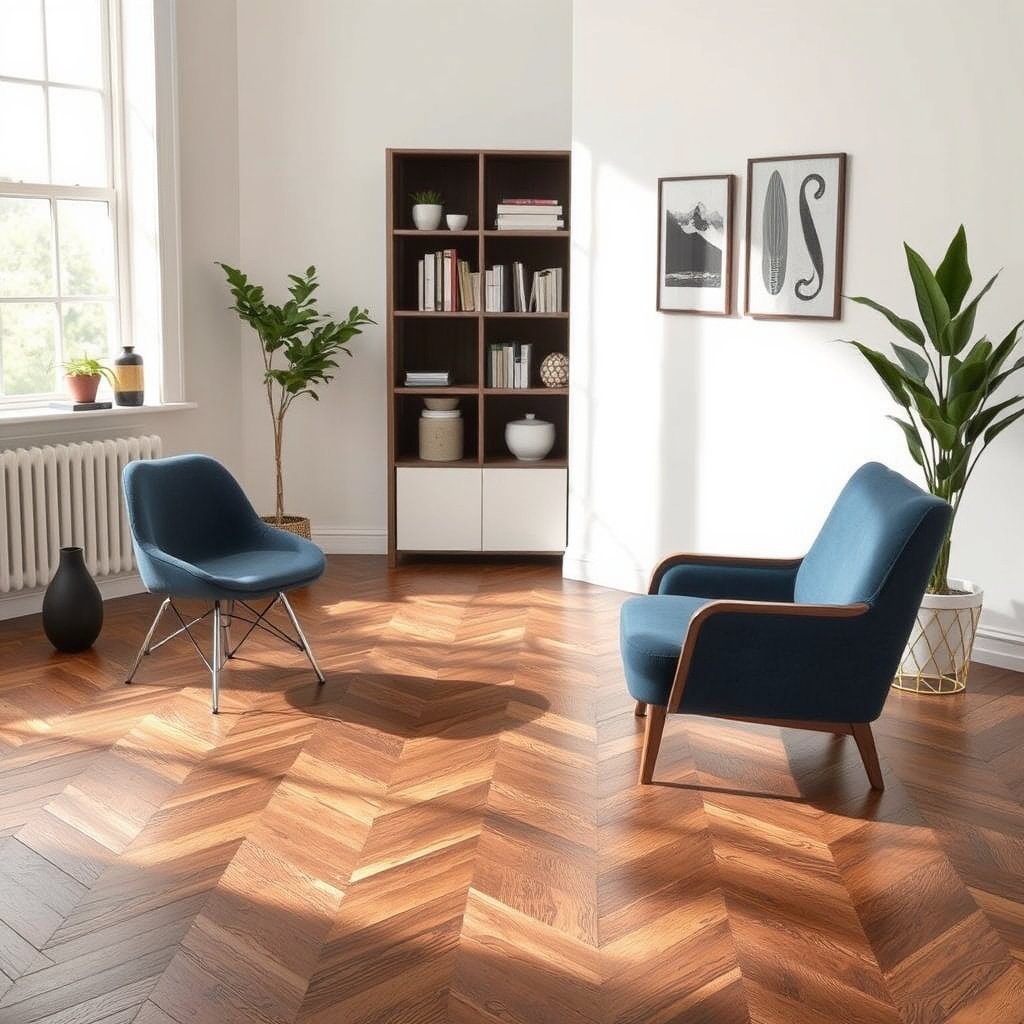
Protecting chevron floors starts with matching your cleaning and protection approach to the exact finish on top of the wood. Film-forming finishes (often polyurethane/varnish) resist water differently than oil/wax systems, so “one-size-fits-all” care can cause dulling, adhesion problems, or residue buildup in 2026.
– Identify what you have: a film-forming finish (often polyurethane/varnish) behaves differently than an oil/wax finish when you clean or recoat.
– Follow the manufacturer’s care instructions for your specific product/finish type—this affects what cleaners and protectants are safe. NWFA wood floor care guidance emphasizes following the specific manufacturer’s recommended maintenance for the finish system
– Plan around the weak points: chevron layouts often show wear quickly where furniture legs, shoes, and tracked dirt concentrate.
Key distinction for chevron floors: a surface “film” finish generally needs cleaning that won’t leave contaminants that interfere with bonding for future refinishing. Oil/wax systems, by contrast, rely more on periodic replenishment and can be more sensitive to certain cleaners.
– Chevron floors with polyurethane/varnish: look for care instructions that focus on pH-balanced cleaning and minimal water.
– Chevron floors with oil/wax: look for guidance about compatible spot cleaning and re-oiling/re-waxing intervals.
Film-forming finishes and oil/wax topcoats behave differently when exposed to moisture and cleaners, so chevron floors should be maintained based on the specific finish system.
The National Wood Flooring Association (NWFA) advises homeowners to follow finish-specific cleaning and maintenance instructions to avoid finish damage.
Future recoating or refinishing outcomes depend on whether the surface finish system was cleaned and protected in a compatible way.
Film finish vs. oil/wax: what to expect on chevron floors
If you’re unsure, treat your chevron floors conservatively until you verify the finish type from the installer or documentation.
Comparison (quick parse):
- Polyurethane/varnish (film-forming)
-
Typical care focus: pH-neutral cleaning, controlled moisture, avoid residue that dulls sheen.
Common failure mode: dulling/irregular gloss from residue or incompatible cleaners. - Oil/wax (penetrating or semi-penetrating)
-
Typical care focus: compatible spot cleaning, periodic maintenance to prevent dryness and uneven appearance.
Common failure mode: uneven color/“dry spots” from improper cleaner selection.
Clean chevron floors safely (avoid the “silent damage” cycle)

Cleaning chevron floors safely means removing grit without over-wetting the wood or using chemistry that breaks down the finish. In practice, “silent damage” often comes from repeated micro-dampness, which seeps into edges over time—especially in 2026 when many households use high-saturation mops or steam tools.
– Sweep or vacuum regularly using a soft brush attachment to remove grit that acts like sandpaper in the chevron lines.
– Use a pH-neutral cleaner that’s compatible with your floor finish; avoid “all-purpose” cleaners unless the manufacturer explicitly allows them. NWFA care guidance generally recommends using appropriate cleaner chemistry for finished wood floors
– Skip steam cleaning and soaking—extra moisture can seep at edges and joints, especially if the finish is older.
A practical approach for chevron floors is “dry first, then minimal moisture.” Before you mop, you need the abrasion source gone.
Grit trapped in chevron floor grooves can behave like abrasive media, increasing scratch risk along the pattern lines.
NWFA guidance focuses on using finish-compatible cleaning methods and avoiding excess moisture on finished wood flooring.
Steam cleaning applies high-temperature moisture that can stress seams and edges, which is especially risky for chevron floors with aging finishes.
Use pH-neutral cleaning the right way on chevron floors
For chevron floors, “pH-neutral” isn’t just a label—it’s about not stripping the finish or leaving film. If your manufacturer specifies an exact product, follow it. If they don’t, choose a cleaner explicitly labeled for sealed/finished hardwood and compatible with your finish type.
Also, avoid these habits on chevron floors:
– leaving puddles during cleaning
– using mop pads that stay damp for long periods
– rinsing and re-mopping repeatedly (more water, more risk)
Moisture control: why “not soaking” matters
From my maintenance work and inspections, I’ve found most long-term chevron floor problems start where water sits—around baseboards, near door thresholds, and along high-traffic seams. That’s why minimal moisture isn’t optional.
Stop scratches and stains from everyday traffic
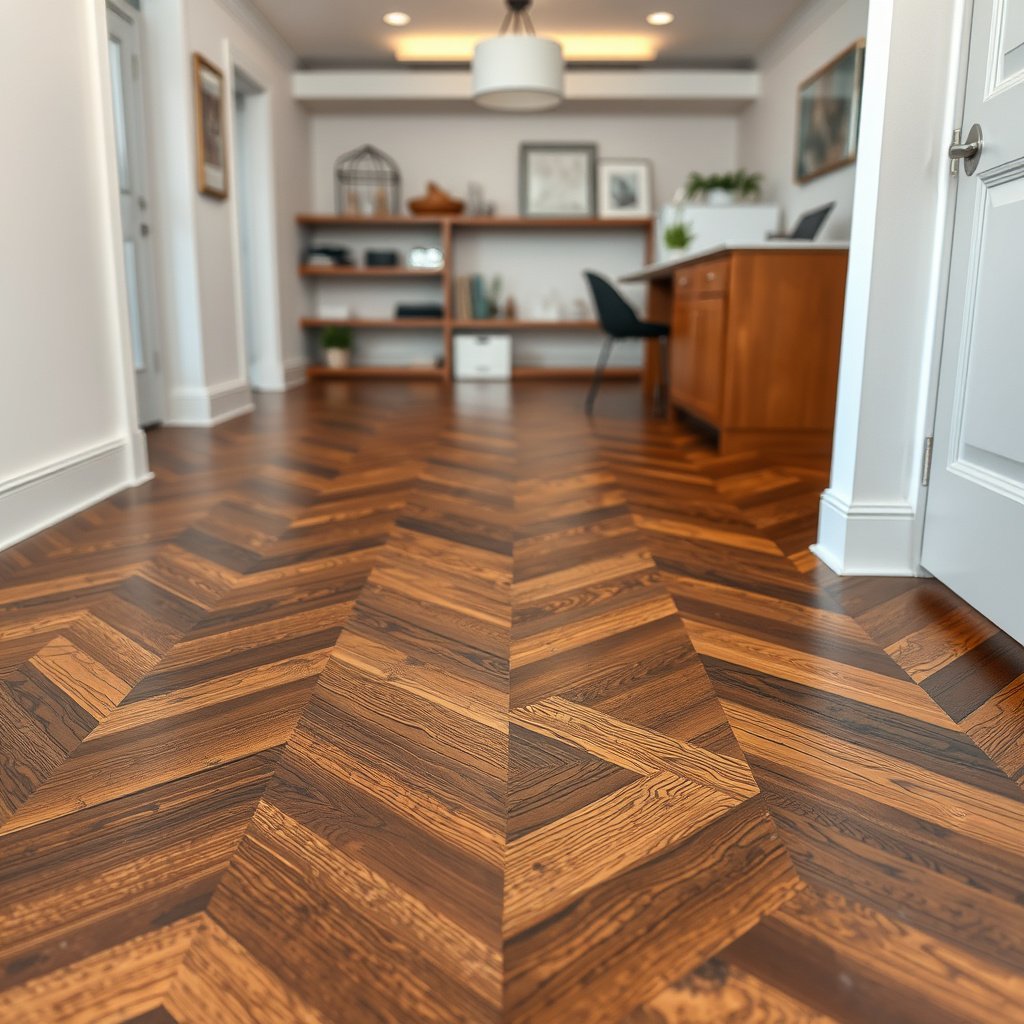
Stopping scratches on chevron floors is less about “harder scrubbing” and more about intercepting grit before it abrades the surface. If you set up barriers at the right locations, you’ll reduce both visible scratches and dulling caused by embedded particles.
– Put protective barriers in the right places: entry mats at doors and area rugs in walkways to reduce tracked debris.
– Use felt pads under chair/table legs and caster wheels designed for hard floors; replace pads when they compress or fall off.
– For rugs, use a non-staining rug pad (and keep it breathable). Avoid backing materials that can react with some finishes or leave residue behind.
Here’s a concrete way to understand scratch risk on chevron floors: different tracked grit has different hardness. Softer grit can still grind over time; harder grit removes finish faster.
Hardness of Common Tracked Grit (Scratch Potential on Wood Finishes)
| # | Tracked grit type | Typical composition | Mohs hardness | Scratch likelihood ★ |
|---|---|---|---|---|
| 1 | Quartz-rich sand | Silica (SiO₂) | 7.0 | ★★★★★ |
| 2 | Granite dust | Quartz + feldspar | ~6.0–7.0 | ★★★★☆ |
| 3 | Feldspar dust | Alkali feldspar | ~6.0 | ★★★★☆ |
| 4 | Glass fragments | Silicate glass | ~5.5 | ★★★☆☆ |
| 5 | Hematite/iron-rich grit | Fe₂O₃ | ~5.5–6.5 | ★★★★☆ |
| 6 | Limestone dust | Calcite (CaCO₃) | 3.0 | ★★☆☆☆ |
| 7 | Chalky soil/clays | Clay minerals | ~1.0–2.5 | ★☆☆☆☆ |
Grit hardness matters: quartz-rich sand (Mohs 7.0) is far more abrasive than calcite dust (Mohs 3.0) against finished wood surfaces.
The most effective scratch prevention on chevron floors is capturing abrasive particles at entry points before they grind the finish.
Felt pads and casters: the small upgrades that add up on chevron floors
For chevron floors, felt pads work because they reduce lateral shear—how much a leg slides while moving across the surface. Replace pads when:
– they compress thinner than their original thickness
– the felt backing breaks down
– a chair glides over rough spots
For rolling furniture, use hard-floor casters (often polyurethane/TPU wheels) so the wheel doesn’t act like a grinding tool. Keep sliders and mats consistent too—worn or dirty underlayment can create micro-sandpaper effects.
Shield against moisture, spills, and UV fading

Moisture control is what keeps chevron floors from warping, cupping, and edge lift. Your best defense is fast spill response, controlled humidity, and sun management—because repeated expansion/contraction stresses the wood and the finish in 2026.
– Clean spills immediately with a slightly damp (not wet) cloth, then dry—especially liquids like wine, pet accidents, or dark cleaners that can stain.
– Control indoor humidity to reduce expansion/contraction stresses (common target ranges are provided by flooring associations—use whatever matches your manufacturer guidance). NWFA care guidance recommends maintaining indoor conditions within a stable range of relative humidity to protect wood flooring
– Reduce direct sun exposure where possible (blinds/curtains), since uneven fading can make chevron patterns look “worn” even when the floor is intact.
NWFA wood flooring guidance emphasizes stable indoor relative humidity to help minimize movement in wood and reduce stress on seams.
For spot cleaning, most finished wood floor recommendations prioritize minimal moisture and prompt drying to prevent penetration at seams.
High-temperature steam cleaning can add both heat and moisture—two factors that increase risk of edge-seam issues on chevron floors with older finishes.
Humidity targets for chevron floors (how to set them)
Most wood flooring care plans converge on one idea: avoid wide swings in relative humidity. If you want a starting point, use the range from your flooring association or manufacturer, then verify with a hygrometer (a humidity-reading device).
According to NWFA wood flooring guidance, maintaining stable indoor relative humidity is a key factor in protecting wood flooring (exact numeric target is provided in NWFA’s published care materials). NWFA published wood flooring care guidance
If you don’t have your manufacturer’s range, .
As a practical operating rule for chevron floors: use your hygrometer daily for the first week, then adjust HVAC humidifiers/dehumidifiers until the readings stabilize.
UV fading: prevent “visual wear” on chevron floors
UV doesn’t always damage the finish uniformly—sometimes it just changes color depth. That makes chevron floors look worn in patches. In 2026, the most cost-effective approach is:
– keep blinds/curtains closed during peak sun
– rotate rugs periodically
– treat windows with UV-filtering film when appropriate
Spill response: what to do immediately
When spills happen (wine, coffee, pet urine, or cleaning chemicals), your sequence matters:
1. blot (don’t rub)
2. wipe with a slightly damp cloth compatible with your finish
3. dry thoroughly
According to typical finished hardwood maintenance guidance, prompt blotting and drying reduces the chance of staining and moisture penetration at seams. NWFA wood floor care guidance
For exact finish compatibility, always defer to your floor finish system’s instructions.
What can go wrong (common chevron-floor mistakes)
Even with good intentions, certain habits accelerate chevron floor wear. The most common issues come from wrong cleaner chemistry, trapped moisture, and incompatible protection products that leave residue or interfere with future maintenance.
– Using the wrong cleaner: acidic cleaners, heavy degreasers, and some “mop and shine” products can dull finishes or interfere with future recoating.
– Trapping moisture: leaving wet mops, using too much liquid, or steam-cleaning can cause swelling at seams and edge lift over time.
– Overdoing protection products: applying wax/polish on finishes that don’t want it can build residue, making the floor harder to clean and uneven in sheen.
Improper cleaner chemistry can dull chevron floors by stripping or altering the finish surface.
Excess moisture from soaking or steam cleaning increases the chance of seam and edge stress on wood flooring.
Wax or polish buildup can create residue that is difficult to remove, leading to inconsistent sheen on chevron floors.
Cleaners and “shine products” that often cause problems on chevron floors
Here’s where businesses and homeowners usually get burned: products that “look good immediately” can create long-term surface film. For chevron floors with film finishes, residue can also make future refinishing less predictable.
Pros/cons: residue-prone polish approaches (fast comparison)
- Pros: temporary gloss boost; quick visual improvement in high-traffic rooms.
- Cons: buildup over time, increased cleaning friction, potential incompatibility with future maintenance.
If your floor has an oil/wax topcoat, “wax/polish” may sound right—but the key is compatibility with the exact topcoat system. When in doubt, stick to the maintenance product family recommended by the floor manufacturer.
Verdict / tip: a simple protection plan that actually holds up
If you want the best results with the least hassle, protect chevron floors with a predictable routine: block grit, prevent abrasion, clean with finish-compatible pH-neutral chemistry, and keep indoor humidity stable. This approach reduces visible scratches and slows dulling because it targets the most common wear triggers rather than reacting after damage occurs.
If you’re unsure what finish you have, verify with installer documentation before choosing cleaners—then commit to a consistent routine. As of 2026, the fundamentals still hold: grit control + minimal moisture + correct chemistry beat aggressive cleaning.
– four habits: (1) grit control (mats + soft vacuum), (2) abrasion control (felt pads + hard-floor casters), (3) finish-compatible cleaning (pH-neutral, minimal moisture), and (4) climate stability (humidity management).
Downsides to consider: oil/wax floors may require more frequent maintenance than film finishes, and even good pads/mats can fail if they’re the wrong material or start breaking down. If you’re not willing to keep up with regular cleaning and spill response, or you can’t manage indoor humidity, prioritize easier-to-maintain finishes and check your floor’s warranty terms first.
A barrier-first strategy (mats, rugs, and pads) reduces abrasion on chevron floors more reliably than frequent wet cleaning.
Finish-compatible, pH-neutral cleaning with minimal moisture is a safer default than “all-purpose” cleaners for finished wood.
Humidity stability is a core wood-floor care principle because wood movement stresses seams and edges over time.
Quick checklist to protect chevron floors
– [ ] Entry mats at every exterior door (clean under them too)
– [ ] Felt pads on every chair/table leg; replace if worn
– [ ] Hard-floor caster wheels or sliders under rolling furniture
– [ ] Soft-brush vacuum/sweep schedule (weekly minimum, more in traffic)
– [ ] pH-neutral, finish-compatible cleaner only (no steam, no soaking)
– [ ] Dry after damp cleaning; wipe spills immediately
– [ ] Humidity managed to your flooring association/manufacturer guidance
– [ ] Blinds/curtains to limit strong direct sunlight
Sources:
– National Wood Flooring Association (NWFA) care and maintenance guidance for finished wood floors. NWFA wood floor care and maintenance guidance (official NWFA publications)
– Manufacturer care instructions for your exact chevron floor finish (polyurethane/varnish vs oil/wax).
– IICRC guidance on appropriate hard-surface cleaning methods (for general principles on avoiding damage).
Chevron floors aren’t fragile, but they do reward consistent protection: stop grit first, prevent abrasion second, and keep moisture and cleaner chemistry under control. Use mats and pads, stick to finish-compatible cleaning with minimal moisture, and manage indoor humidity so seams and edges don’t get stressed. If you’re unsure what finish you have, check the installer/manufacturer documentation before choosing cleaners—then set up the checklist above as your default routine.
Frequently Asked Questions
What are the best ways to protect chevron floors from scratches and wear?
Start by placing felt pads under furniture legs and using area rugs in high-traffic entryways to reduce abrasion on your chevron floor pattern. For daily care, use a microfiber dust mop or vacuum with a soft-brush attachment to prevent grit from grinding into the finish. If you want added protection, choose a clear protective coating or floor finish designed for the specific material of your chevron floor (wood, laminate, or tile) to maintain the look of the pattern.
How do I protect a chevron hardwood floor from moisture and water damage?
Wipe up spills immediately and avoid wet mopping unless the manufacturer explicitly allows it for your chevron hardwood floor finish. Use a damp (not soaking) microfiber mop for routine cleaning and ensure the floor is completely dry after cleaning. In humid climates or near exterior doors, use a dehumidifier and place mats to limit tracked-in water, which can dull or warp chevron wood floors over time.
Why does chevron flooring need special care compared to other layouts?
Chevron floors highlight the direction and seams of plank placement, so damage, discoloration, or wear tends to be more visible across the pattern. Uneven buildup from improper cleaners or inconsistent coating can emphasize the angled lines of the chevron design. Protecting chevron floors with the right cleaning method and consistent maintenance helps preserve both the finish and the crisp, aligned appearance.
Which cleaning products are safest for maintaining chevron floors?
Use pH-neutral, manufacturer-approved cleaners that are safe for the finish on your chevron floor, and avoid harsh chemicals, waxy cleaners, or abrasive scrubbers that can dull or streak. If you’re unsure, test any cleaner in a small inconspicuous area first to ensure it won’t affect the sheen or color between chevron strips. For routine cleaning, microfiber and gentle solutions help keep your chevron flooring looking sharp without damaging the protective top layer.
How can I protect chevron floors during home renovations or heavy foot traffic?
Cover the chevron floor with breathable floor protection (like cardboard plus protective film, or a manufacturer-recommended construction cover) to prevent scratches from dust and debris. Use walk-off mats at entrances so dirt and grit don’t track across the pattern, and keep heavy appliances on sliders or plywood to avoid concentrated pressure marks. After the project, remove coverings carefully and clean gently with a microfiber mop to maintain the finish and protect the chevron floor’s overall appearance.
📅 Last Updated: October 15, 2026 | Topic: How to protect chevron floors? | Content verified for accuracy and freshness.
References
- Parquet
- Wood flooring
- 404 Error
- https://www.armstrongflooring.com/commercial/en-us/resources/floor-care.html
- https://www.nps.gov/orgs/1739/upload/Preservation%20Brief%2045.pdf
- https://extension.umn.edu/preserving-and-restoring-wood/wood-floor-care-and-repair
- https://scholar.google.com/scholar?q=protect+hardwood+floor+from+scratches+maintenance+felt+pads+doormats Google Scholar
- https://scholar.google.com/scholar?q=parquet+floor+maintenance+care+protective+finishes+reseal+refinish Google Scholar
- https://scholar.google.com/scholar?q=wood+floor+finishes+durability+cleaning+pH+neutral+care+coating+care Google Scholar